

You're pregnant, your body is changing quickly, and your skin may feel like it didn't get the memo about staying predictable. Maybe your bump feels tight after a shower, your thighs are suddenly rougher than usual, or the skin on your chest and arms looks dull and uneven. Then you pick up a product with lactic acid and wonder whether it's a smart choice or something you should avoid for now.
That uncertainty is common. A lot of skincare advice in pregnancy focuses on facial products, while body care gets reduced to vague warnings or generic reassurance. Yet UK antenatal forum discussions highlighted by CeraVe show repeated questions about using lactic acid around the bump or on inner thighs, and whether it might worsen pigmentation or irritation.
If you're also trying to work out whether your skin is dry, dehydrated, or both, this guide on dry skin vs dehydrated skin can help you make sense of what your body is asking for before you choose a cream.

Table of Contents
- Welcome to Your New Pregnancy Skin
- What Is Lactic Acid and How Does It Work
- The Benefits of Lactic Acid During Pregnancy
- Choosing a Pregnancy Safe Lactic Acid Cream
- How to Introduce Lactic Acid Into Your Routine
- Your Pregnancy Skincare Questions Answered
Welcome to Your New Pregnancy Skin
Pregnancy skin can be confusing because it often changes in two directions at once. You may feel dry and itchy, but also more reactive. You may notice dullness on your legs, tiny bumps on the backs of your arms, or tightness over your bump even when you're moisturising daily.
That's why many mums-to-be start looking for something that does more than just sit on the surface. A body cream with lactic acid can be helpful because it isn't just a moisturiser and it isn't just an exfoliant. When it's formulated well, it can support smoother texture while also helping the skin feel more comfortable.
Why pregnancy changes your usual skincare rules
Hormones can make skin behave differently from month to month. A product you used happily before pregnancy might suddenly sting. Areas that were never dry before can become flaky or rough, especially around the belly, chest, hips, and thighs.
At the same time, many women become more careful about ingredients, and rightly so. You want clear answers about what's suitable for home use, what needs extra caution, and whether “gentle acid” still counts as safe when your skin is stretching and more sensitive than usual.
Pregnancy skincare should feel calmer, not more complicated.
The question most articles skip
Most guidance talks about acids for the face. Very little of it answers body-specific questions like these:
- On the bump: Will it sting stretched skin?
- On inner thighs: Could it worsen friction or sensitivity?
- On pigmented areas: Might it affect the linea nigra?
- On stretch marks: Is it useful for new texture changes?
Those are the questions that matter when you're choosing a body product in real life. Lactic acid deserves a closer look because it sits in a useful middle ground. It's active enough to improve rough, dry skin, but it's also known as one of the more approachable acids when used in sensible strengths and supportive formulas.
What Is Lactic Acid and How Does It Work
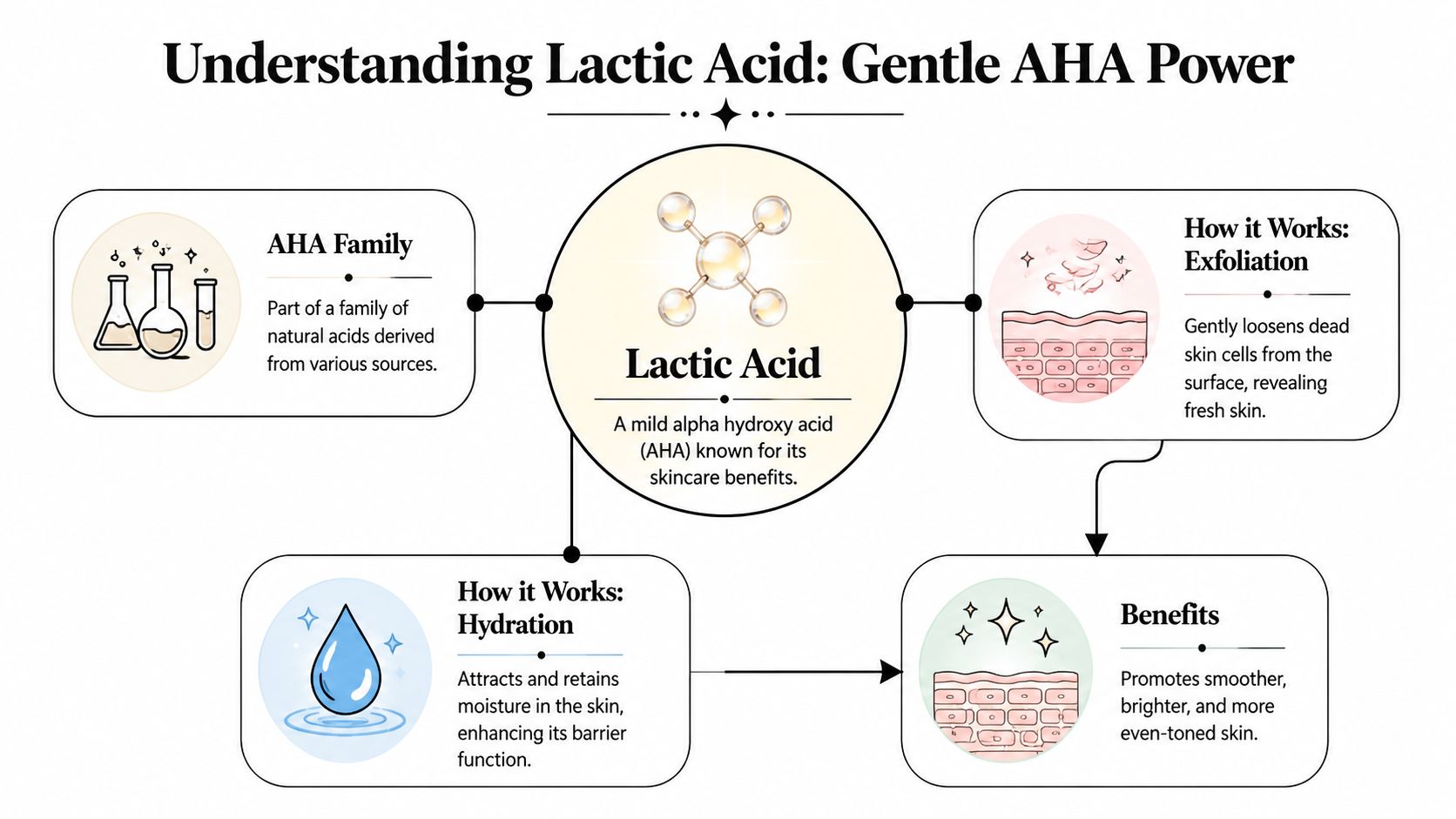
Lactic acid is part of the alpha hydroxy acid (AHA) family. If that sounds technical, think of it this way. It helps skin let go of old surface cells more neatly, instead of leaving them to build up into rough, flaky patches.
It's not a grainy scrub. It doesn't buff skin by friction. It works more like a gentle polisher that loosens the bonds between dead skin cells so they can shed more evenly.
A gentle acid, not a harsh scrub
That “loosening” action is why lactic acid can help with rough elbows, bumpy upper arms, dry lower legs, and skin that feels thick rather than soft. Instead of forcing the issue with abrasive exfoliation, it nudges the skin renewal process along.
What makes lactic acid especially interesting is that it also behaves as a humectant, which means it helps attract water to the skin. So unlike some exfoliating ingredients that mainly strip away, lactic acid can also support hydration when the product is designed well.
Here's the simplest way to understand it:
| Skin concern | What lactic acid helps do |
|---|---|
| Flaky, dull surface | Loosens built-up dead skin cells |
| Rough or bumpy texture | Smooths the feel of the skin over time |
| Tight, thirsty skin | Helps draw moisture into the outer layer |
| Heavy body creams that sit on top | Can make moisturising feel more effective by improving the skin surface |
Why body skin often responds well
Body skin is thicker than facial skin in many areas, so it often benefits from ingredients that tackle both texture and dryness together. That's why a body cream with lactic acid can feel more useful than a plain lotion if your skin is rough, uneven, or no longer absorbing moisturiser well.
It's also why concentration matters. Lower strengths are generally chosen for steady, regular use, while stronger formulas are more potent and can be more irritating if your skin barrier is already under strain.
Practical rule: Lactic acid is best thought of as a “smoother plus hydrator”, not just an exfoliator.
For pregnancy, that balance matters. You don't want aggressive resurfacing. You want a product that helps stubborn dry texture without turning sensitive skin into sore skin.
The Benefits of Lactic Acid During Pregnancy
Many pregnant women don't need dramatic skincare. They need relief. Skin can feel rougher, drier, itchier, and less even in tone, especially on the bump, hips, thighs, chest, and upper arms. Given these issues, a well-formulated body cream with lactic acid can be highly beneficial.
One reason is hydration. In a 28-day clinical trial published in a peer-reviewed medical journal, daily use of a lactic acid wash on sensitive external skin increased skin hydration, with moisture levels rising by 24.82% by day 28, while the formula did not increase dryness or irritation. That matters because it shows lactic acid, in the right formula, can moisturise rather than only exfoliate.
Where it can help most
Pregnancy often exaggerates skin texture problems you may already have had in a mild form. Think of the tiny bumps on the backs of the arms, roughness around knees and elbows, or lower legs that never seem fully smooth no matter how much cream you apply.
A body cream with lactic acid may help in these situations:
- Dry, tight body skin: It can support hydration while helping dead skin shed more evenly.
- Rough patches: It's often useful where skin feels thick or scaly rather than inflamed.
- Bumpy areas: It can improve the feel of skin that's not sore, just uneven.
- Dull-looking limbs: By smoothing the surface, it can help skin look fresher and less ashy.
That doesn't mean every pregnant woman needs it. If your skin is already very reactive, broken, or actively inflamed, barrier repair usually comes first.
What about stretch marks and uneven tone
Expectations need to stay realistic. No body cream can promise that stretch marks won't happen. Stretch marks are influenced by stretching, genetics, and skin structure, not just the quality of your moisturiser.
What lactic acid may do is help the skin feel softer and more supple. On areas where new textural changes are appearing, that can make skin feel less rough and look smoother. It may also help older, drier marks feel less raised or flaky.
For pigmentation, caution makes sense. The linea nigra is hormonally driven. A body cream with lactic acid is not a targeted treatment for it, and there isn't clear pregnancy-specific evidence showing that applying lactic acid there is beneficial.
If your main issue is itch, dryness, and roughness, lactic acid may be helpful. If your main issue is active rash, irritation, or unexplained pigmentation changes, get medical advice first.
Choosing a Pregnancy Safe Lactic Acid Cream
Not every lactic acid product is a good pregnancy body product. The safest choice usually isn't the strongest one. It's the one that gives you enough activity to smooth and hydrate without pushing your skin into irritation.
UK-facing dermatology guidance indicates that over-the-counter body creams are generally considered appropriate for home use when they contain 10% or less lactic acid and have a pH of 3.5 or higher, which helps minimise irritation risk, as explained in this Medical News Today review of lactic acid for skin.
A good visual summary can help when you're checking labels and comparing products:
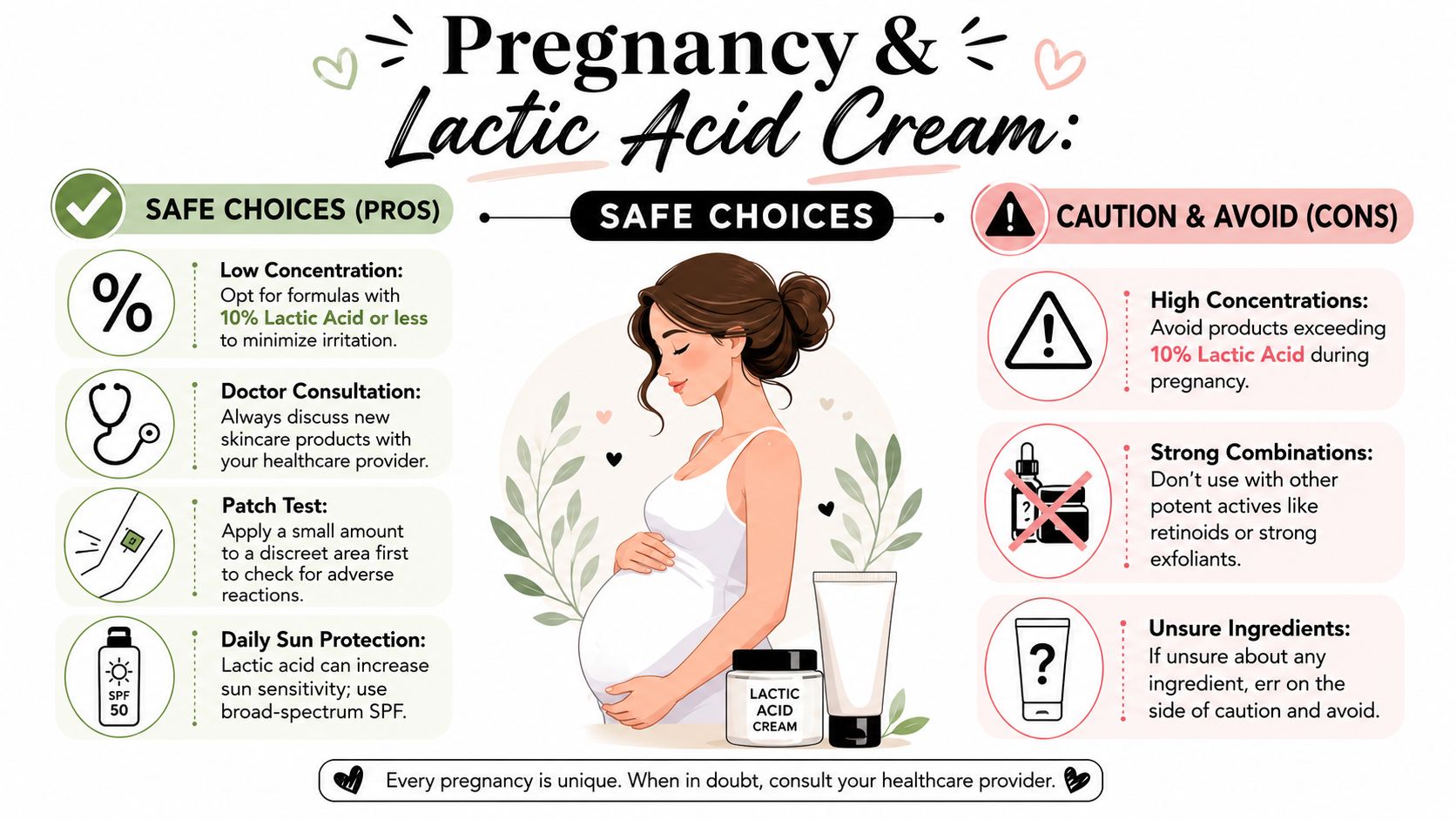
The label details that matter
If you're standing in the bathroom or scrolling a product page, focus on three things.
First, look at the strength. For pregnancy, lower-strength consumer products make more sense than high-strength intensive exfoliants.
Second, think about the whole formula, not just the acid. The best body creams pair lactic acid with rich supportive ingredients so the skin barrier doesn't get left behind.
Third, be honest about your skin's current state. Stretched, itchy pregnancy skin often needs gentleness more than intensity.
A helpful shopping checklist:
- Choose sensible strength: Home-use body creams with 10% or less lactic acid are the most reassuring place to start.
- Look for barrier support: Ceramides, richer emollients, and nourishing oils can make an acid cream far easier to tolerate.
- Avoid “peel-like” positioning: If the product sounds like a professional treatment, it's probably not your best first choice in pregnancy.
- Check whether your skin is intact: Don't use active exfoliating creams over cracked, raw, or irritated areas.
If you'd like a broader look at textures and formulas that exfoliate without feeling harsh, this guide to an exfoliating lotion for body may help you compare options.
A dermatologist's video explanation can also make the safety points easier to digest:
What to avoid or treat cautiously
Some products go beyond gentle daily care. A controlled dermatology study found that 12% lactic acid increased epidermal thickness and dermal firmness, while 5% lactic acid produced epidermal but not dermal effects, showing that stronger concentrations can affect deeper layers, according to this Journal of the American Academy of Dermatology study summary.
That doesn't make higher strengths automatically unsafe in every context. It does mean they deserve more respect, especially in pregnancy, when skin can react differently and comfort matters.
Use extra caution with products that are:
- High strength: More likely to sting stretched or sensitised skin.
- Combined with other strong actives: Especially if you're layering multiple exfoliants.
- Marketed for rapid resurfacing: Fast results often come with a higher irritation trade-off.
- Used without sun protection habits: That creates unnecessary risk.
Stronger isn't better if your skin barrier is already working overtime.
How to Introduce Lactic Acid Into Your Routine
The best way to use a body cream with lactic acid in pregnancy is slowly. Skin usually tells you what it can handle, but only if you give it a calm starting point.
A simple starting plan
Start with a patch test. Apply a small amount to a discreet area such as the outer thigh or side of the lower leg. Wait and watch for stinging that lingers, unusual redness, or a rash-like response.
If your skin stays comfortable, begin with occasional use rather than daily use. Many dermatology professionals advise starting once or twice weekly, then increasing gradually if your skin remains settled.
A simple rhythm looks like this:
- Patch test first: Don't skip this because you've used acids before pregnancy.
- Apply to dry or slightly damp skin: This tends to be more comfortable than rubbing onto hot, freshly scrubbed skin.
- Use a small amount on target areas: Rough arms, legs, knees, or dry patches are better starter zones than highly sensitive skin.
- Increase only if skin stays calm: No rush. Consistency beats intensity.
If you want help fitting an exfoliating product into the rest of your routine, this pregnancy-friendly guide to a pregnancy skincare routine can help you keep things simple.
Do and don't rules that prevent problems
Sun protection is of utmost importance. The NHS advises that daily broad-spectrum SPF 30+ is essential when using chemical exfoliants like lactic acid because they increase photosensitivity, as noted in this PubChem safety summary referencing cosmetic safety assessments and NHS guidance.
Use these rules to stay on the safe side:
- Do protect exposed skin: If treated areas will see daylight, apply broad-spectrum SPF 30+.
- Do keep the rest of your routine gentle: Pair active body care with bland, barrier-supportive moisturisers.
- Don't apply on broken skin: Cracks, grazes, shaving nicks, or visibly irritated areas should be off limits.
- Don't use it on a rash you haven't identified: Pregnancy itching can have more than one cause.
- Do stop if your skin becomes more reactive: Tingling that passes can happen. Persistent burning is a sign to stop.
If your skin feels more stingy with each use, your routine is too strong for where your body is right now.
Your Pregnancy Skincare Questions Answered
Can I use it while breastfeeding
For most women, a body cream with lactic acid used sensibly on body skin is approached differently from ingredients that are clearly avoided in pregnancy and nursing. Keep it off broken skin and avoid applying it where a baby's mouth will have direct contact. If you're treating the chest area, simpler moisturisers are usually the easier choice.
Can I apply it on the linea nigra
You can, but that doesn't mean you should. The linea nigra is driven by pregnancy hormones, and there isn't clear evidence that a lactic acid body cream usefully changes it during pregnancy. If that strip is sensitive, itchy, or darker than the surrounding skin, I'd lean toward a bland moisturiser there instead of active exfoliation.
How do I layer it with oils and butters
Use the lactic acid cream first on clean skin, then add a richer butter or oil on top if you need more comfort. That approach lets the active cream sit against the skin while the richer layer helps reduce tightness and water loss. Don't pile on lots of competing actives in the same routine.
Should I stop in the third trimester
Not always, but it's a time to be more selective. The later stages of pregnancy often bring more stretching, more itch, and more reactivity. Since concentration affects depth of action, and a controlled study found 12% lactic acid had a more pronounced effect than 5%, lower-strength products are the more cautious choice if your skin is feeling vulnerable, as noted earlier from the dermatology study.
If the skin over your bump feels fragile, shiny, or irritated, switch focus from exfoliation to comfort. You can always return to stronger smoothing products later.
If you want bump-focused skincare that keeps comfort front and centre, The Happy Bump Co offers UK-made pregnancy body care designed for stretching, thirsty, changing skin. From rich belly butters to nourishing oils and gentle exfoliating support, it's a thoughtful place to build a routine that feels safe, simple, and kind to your bump.