

You're standing in the bathroom, looking at two bottles you used to love. One is your vitamin C serum. The other is retinol. Then you remember you're pregnant, or trying to conceive, or breastfeeding, and the simple question suddenly feels loaded: can you use retinol with vitamin C?
It's a fair question because most skincare advice online is written for the general public, not for expectant mothers. That's where the confusion starts. For someone who isn't pregnant, the answer is usually about timing and tolerance. For someone who is pregnant or breastfeeding, the answer starts with safety, and that changes everything.
Table of Contents
- Meet the Powerhouse Ingredients Retinol and Vitamin C
- The Definitive Answer for Pregnancy and Breastfeeding
- Brighten Your Bump with Pregnancy-Safe Alternatives
- How to Combine Retinol and Vitamin C After Pregnancy
- Starting Your New Routine and Managing Side Effects
- Sample Skincare Routines for Every Stage
-
Your Pressing Skincare Questions Answered
- Can products with both ingredients in one bottle work
- Do you need to wait between products
- What about breastfeeding and restarting retinol
- Is vitamin C enough on its own during pregnancy
- What if I used retinol before I realised I was pregnant
- Can you use retinol with vitamin C if your skin is sensitive
Meet the Powerhouse Ingredients Retinol and Vitamin C
If skincare labels feel like chemistry homework, you're not alone. These two ingredients get mentioned constantly because they're both effective, but they do very different jobs.
What vitamin C does during the day
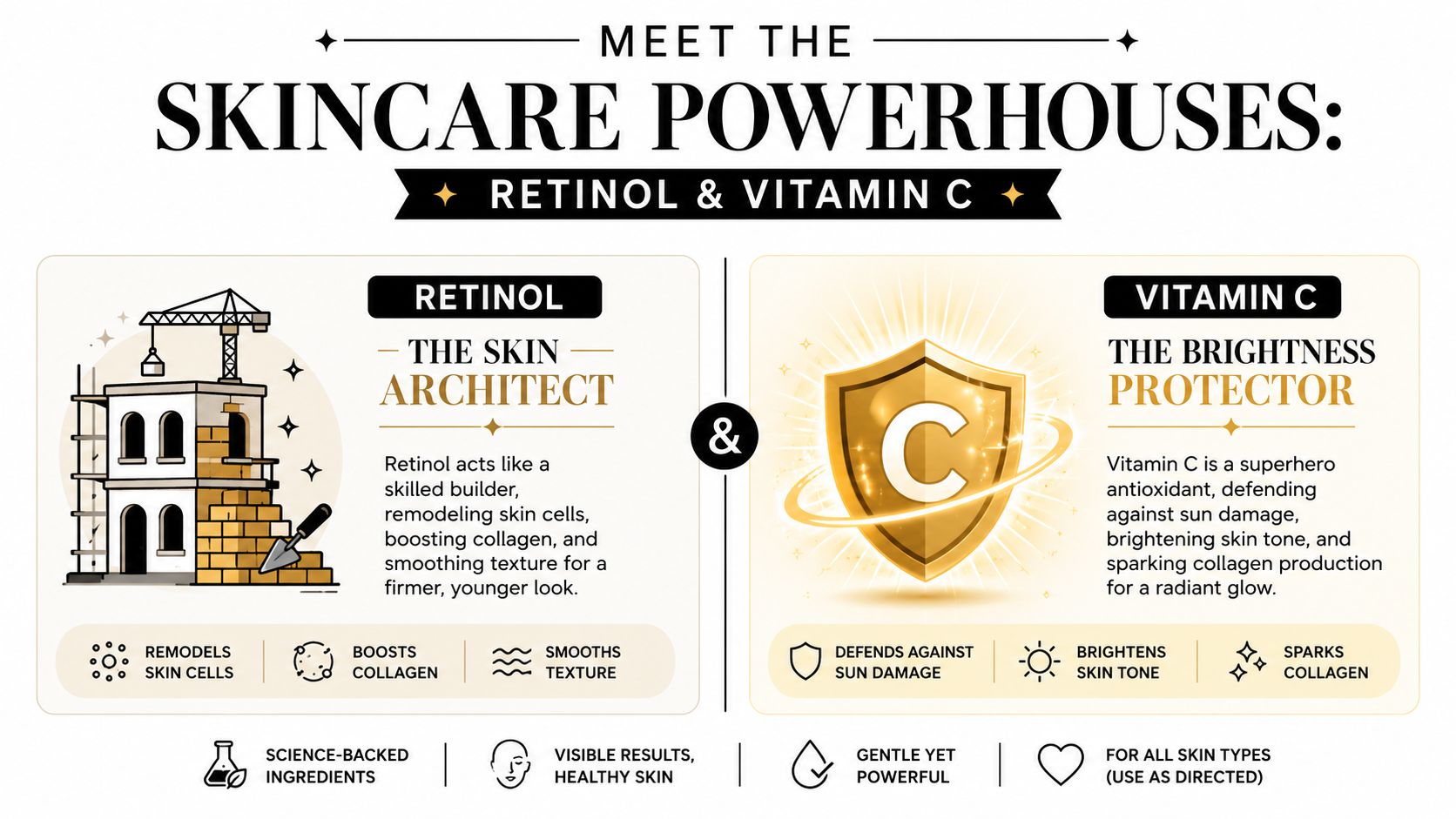
Think of vitamin C as your skin's daily bodyguard. It helps defend skin from the outside world, especially the things that make skin look dull or uneven over time. It's often used to support brightness and help skin look more even-toned.
If your skin has been looking tired, blotchy, or a bit flat, vitamin C is often the ingredient people reach for first. It fits naturally into a morning routine because daytime is when your skin faces pollution, sunlight, and general environmental stress.
A simple way to think about it is this:
- Vitamin C protects: It helps skin deal with daily exposure.
- Vitamin C brightens: It's often used when dark marks or patchiness are a concern.
- Vitamin C supports glow: Many people like it because skin can look fresher and less tired.
What retinol does at night
Retinol is more like a personal trainer for your skin cells. It pushes skin to renew itself more actively, which is why it's so well known for smoothing texture and softening the look of ageing concerns.
That's why retinol often gets recommended for skin that feels rough, looks uneven, or has visible fine lines. It's a night-time ingredient because it's associated with renewal rather than daytime protection.
Retinol builds. Vitamin C protects. That's why people are so interested in using both.
If you've ever wondered about the difference between basic retinol and prescription-strength relatives, this guide on retinol vs Retin-A can help clear up the terminology.
Here's where many readers get tripped up. Because both ingredients are powerful, people assume using them together must mean using them in the same routine, or even the same minute. That isn't automatically true. “Together” can mean they both exist in your wider skincare plan, each doing a different job at a different time.
The Definitive Answer for Pregnancy and Breastfeeding
For pregnancy and breastfeeding, the answer needs to be direct.

The pregnancy rule is simple
If you're pregnant or breastfeeding, retinol isn't recommended. Camden Medicals states that retinol (Vitamin A1) is “NOT recommended in pregnancy or breastfeeding” due to potential teratogenic risks, while topical vitamin C is described as a pregnancy-safe alternative in its clinical guidance on retinol use.
That means the question “can you use retinol with vitamin C?” changes in pregnancy. It's no longer mainly a mixing question. It becomes a safety question. Once retinol is involved, the answer for pregnancy is to leave it out.
This is the part many expectant mothers need to hear clearly: you do not need to find a clever workaround. You do not need to sandwich it, buffer it, or use it less often. If a product contains retinol, it doesn't belong in your pregnancy or breastfeeding routine.
Why this matters even if your skin misses retinol
Pregnancy can make skin feel unpredictable. Some women suddenly develop dryness. Others get breakouts, extra sensitivity, or dark patches. It's understandable to want the strongest products back, especially if retinol used to be your reliable fix.
But pregnancy skincare isn't about squeezing in every effective ingredient. It's about choosing the ingredients that make sense for this phase of life. That often means swapping “powerful” for “appropriate”.
Practical rule: During pregnancy and breastfeeding, don't ask whether retinol can be paired better. Ask what should replace it safely.
If your skin is reactive right now, gentler exfoliating options may feel more suitable. Some readers also find it useful to learn about polyhydroxy acids in pregnancy skincare, especially when they want something milder than traditional strong actives.
A pause on retinol isn't a step backwards. It's a temporary shift in strategy. Your skin can still look bright, calm, and healthy without it.
Brighten Your Bump with Pregnancy-Safe Alternatives
One of the biggest gaps in skincare advice is this: during pregnancy, vitamin C doesn't just become retinol's partner. It often becomes retinol's replacement.
Vitamin C becomes the lead ingredient
Pregnancy can trigger melasma, the dark patches many women notice on the cheeks, forehead, or upper lip. In UK coverage featuring dermatologists including Dr. Kluk, pregnancy-related melasma is highlighted as a common concern, and vitamin C is presented as a primary treatment while retinol is strictly off the table in this Vogue pregnancy skincare guide.
That matters because most articles treat vitamin C and retinol like a dream duo for general anti-ageing. Pregnancy changes the script. For melasma-prone skin, vitamin C often moves from supporting role to centre stage.
If you think of your routine as a team, pregnancy isn't the season for your old star player. It's the season for a different line-up.
- Vitamin C helps target dullness and uneven tone
- Vitamin C suits a morning routine well
- Vitamin C is often chosen when pigmentation becomes more noticeable in pregnancy
Other gentle brighteners that can support your routine
Vitamin C doesn't have to work alone. Many pregnant women also look at ingredients such as azelaic acid or niacinamide when they want a more even-looking complexion without stepping into retinoid territory.
I'd think about it like this:
| Skin concern | Pregnancy-friendly direction |
|---|---|
| Uneven tone or melasma-prone skin | Vitamin C in the morning |
| Easily irritated skin | Keep the routine short and bland |
| Breakouts plus post-blemish marks | Ask your clinician about azelaic acid |
| General dullness | Vitamin C plus a nourishing moisturiser |
The main point isn't to build an elaborate routine. It's to build a calm one. Pregnancy skin often behaves like skin with a shorter fuse. The fewer unnecessary actives you pile on, the easier it is to see what's helping and what's aggravating things.
When skin is hormonal and unpredictable, a simpler routine often performs better than an ambitious one.
A gentle cleanser, a vitamin C serum you tolerate well, a moisturiser, and daily sunscreen is often a much stronger pregnancy plan than chasing your old retinol results with unsafe products.
How to Combine Retinol and Vitamin C After Pregnancy
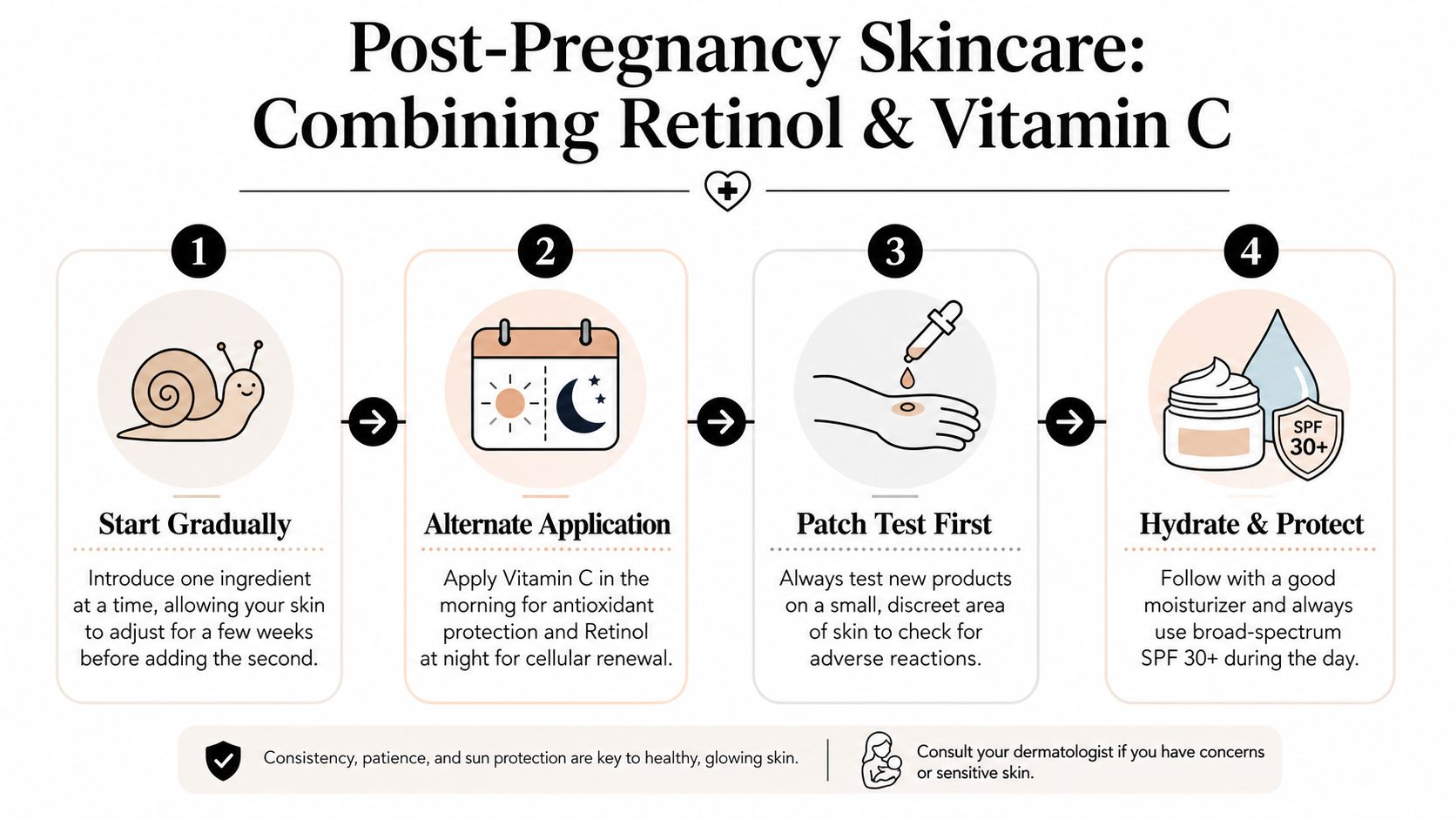
After pregnancy and breastfeeding have fully finished, many women want to know when they can bring retinol back and how to do it without upsetting skin that may still feel more reactive than it did before. The short answer is yes, retinol and vitamin C can both have a place in your routine. The calmer approach is to give each ingredient its own time of day rather than putting them on together.
Why separate timing usually works best
These ingredients are both effective, but they behave differently. SkinCeuticals UK's guide to mixing retinol explains that retinol is more stable in a less acidic range, while pure vitamin C, specifically L-ascorbic acid, performs best in a more acidic one.
A simple comparison helps here. It works like trying to store two foods at different temperatures in one small lunchbox. One does best chilled. The other keeps better at room temperature. They are both useful, but they do not share conditions especially well.
That is why many dermatologists prefer the AM/PM method after pregnancy:
- Morning: Vitamin C, then moisturiser, then sunscreen
- Evening: Retinol, then moisturiser
This approach is also easier on skin. New mothers often find that sleep changes, hormones, and a simpler daily schedule affect how much skincare their skin can comfortably tolerate.
A careful way to bring both back
If retinol has been off your shelf for months, restart slowly. Your skin may not pick up exactly where it left off.
A sensible approach looks like this:
- Begin with one active. Use vitamin C first or restart retinol first, depending on your main skin goal.
- Give your skin time to settle. A couple of weeks of calm, predictable use is more helpful than adding everything at once.
- Introduce the second active on the opposite shift. Keep vitamin C for the morning and retinol for the evening.
- Keep the rest of the routine boring in the best way. Gentle cleanser, plain moisturiser, daily sunscreen.
If you want a practical refresher before bringing vitamin C back, this guide on how to use vitamin C serum safely and simply can help.
This video also gives a helpful visual overview of timing and routine building.
Starting Your New Routine and Managing Side Effects
You buy a new active, use it a few nights in a row because you want results quickly, and by the end of the week your skin feels hot, tight, and cross. That pattern is common, especially after pregnancy, when skin can be more reactive than it used to be.
The safest approach is to treat active skincare like returning to exercise after a long break. Start below what you think you can tolerate, then build slowly if your skin stays calm.
How to introduce active skincare without upsetting your skin
If you have been pregnant or are breastfeeding, pause here for the safety reminder first. Retinol is not for use during pregnancy, and many clinicians advise avoiding it while breastfeeding as well. If you are only using pregnancy-safe actives right now, the same slow-start rule still applies. Skin that is dealing with hormones, dryness, or melasma often needs a gentler hand.
Once retinol is back on the table after pregnancy, or if you are starting vitamin C now, keep the routine plain around it. Gentle cleanser. Simple moisturiser. Daily sunscreen. Boring routines usually calm skin faster than busy ones.
A careful starting plan looks like this:
- Patch test first: Try a small amount on a discreet area for a few days before using it more widely.
- Add one product at a time: If your skin reacts, you can spot the cause more easily.
- Start with fewer applications: Two or three times a week is often easier to tolerate than daily use.
- Use moisturiser generously: Well-moisturised skin usually copes better with actives.
If you later use both vitamin C and retinol after pregnancy, keep them on opposite schedules rather than layering them together right away. As noted earlier, pairing them in the same application is more likely to trigger redness, peeling, or stinging, especially in skin that is already dry or sensitive.
How to tell adjustment from irritation
This is the part that trips people up.
A little dryness, mild flaking, or a brief feeling of tightness can happen while skin adjusts to retinol. Ongoing burning, bright redness, soreness, or a rash-like reaction points more toward irritation. The difference matters because adjustment means slow down, while irritation means stop and repair the skin barrier.
| Reaction | More likely meaning | What to do |
|---|---|---|
| Mild dryness or tightness | Skin adjustment | Use it less often and add more moisturiser |
| Redness that lingers | Irritation | Pause the active and keep the routine bland and soothing |
| Burning on application | Irritation | Wash it off if needed and stop using it |
| Itchy rash or swelling | Possible reaction | Stop and seek medical advice |
If your skin feels raw, do not try to push through it. That usually makes recovery take longer.
Sunscreen matters just as much here. Actives can make skin more reactive to sunlight, and pigmentation such as melasma gets darker more easily with UV exposure. If you are pregnant or recently postpartum and trying to keep dark patches from worsening, daily SPF is part of treatment, not an optional extra.
Sample Skincare Routines for Every Stage
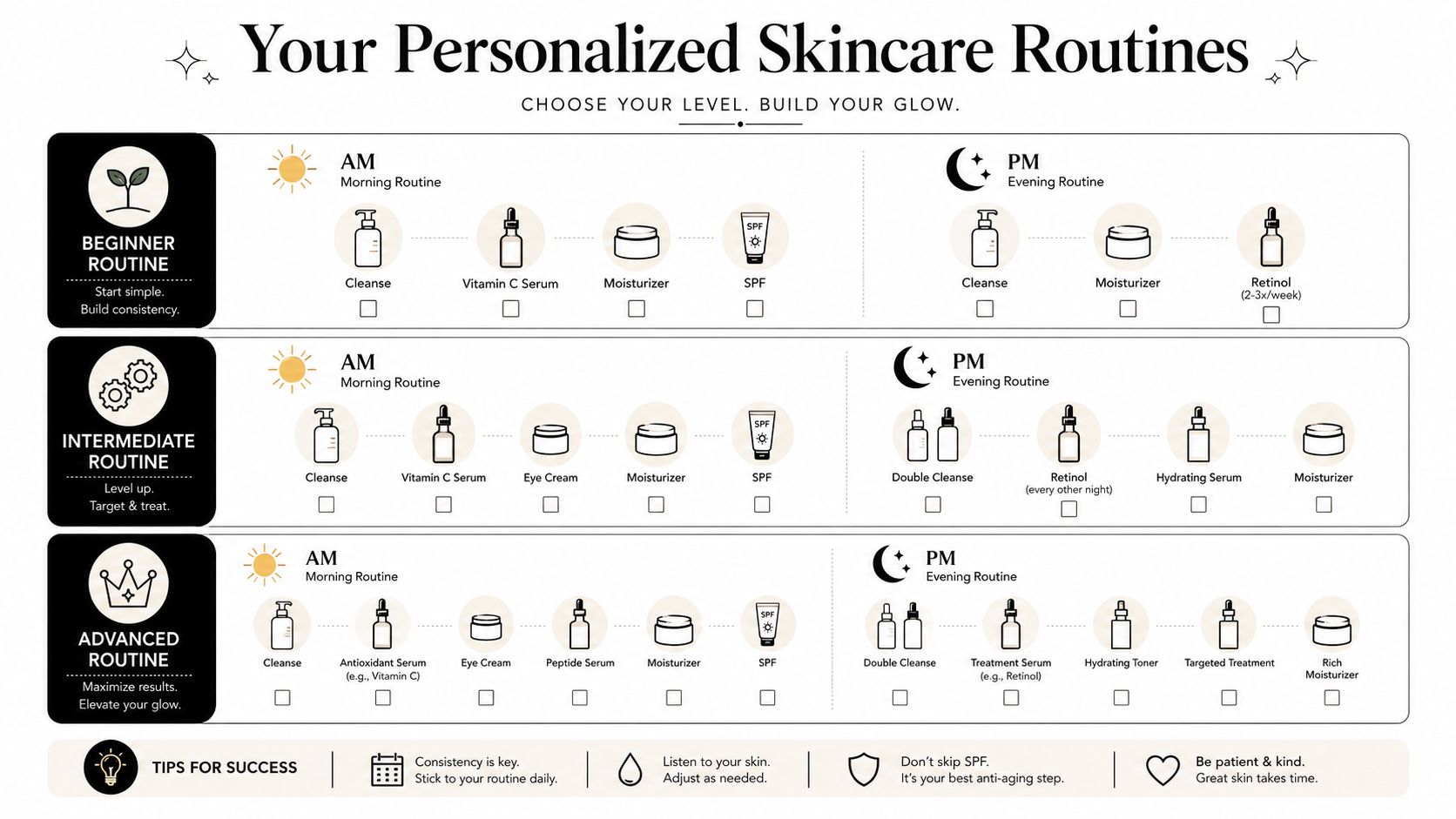
Advice becomes much easier to follow when you can see it laid out plainly. These routines are deliberately simple so you can copy the shape of them and adapt the specific products to your own skin.
Pregnancy-safe glow routine
This routine suits someone who is pregnant or breastfeeding and wants brightness without retinol.
Cleanser
Vitamin C serum
Moisturiser
Broad-spectrum SPF in the morning
For the evening, keep things soothing.
Cleanser
Hydrating serum or simple moisturiser
Optional pregnancy-compatible brightener such as azelaic acid if advised for you
Nourishing cream
A few notes make this work better in real life:
- If your skin is sensitive: Use vitamin C less often at first.
- If melasma is the main issue: Be especially consistent with sunscreen.
- If you're tired and rushing: Cleanser, moisturiser, and SPF is still a good routine.
Post-pregnancy power routine
This suits someone who is no longer pregnant or breastfeeding and wants to bring both actives back in safely.
| Time | Routine |
|---|---|
| Morning | Cleanser, vitamin C serum, moisturiser, SPF |
| Evening | Cleanser, retinol, moisturiser |
You can also soften retinol use by applying moisturiser before and after it if your skin tends to feel dry. Some people prefer to use retinol only on certain nights and keep the other evenings focused on hydration.
Here are two examples of how that can look:
- Minimal version: Morning vitamin C daily, evening retinol on selected nights, plain moisturiser on the others.
- Comfort-first version: Morning vitamin C every other day, evening retinol spaced out, richer moisturiser every night.
The best routine isn't the most advanced one. It's the one your skin can stick with comfortably.
Your Pressing Skincare Questions Answered
A few questions almost always come up once the basics are clear.
Can products with both ingredients in one bottle work
Chemistry is a key factor. Some formulations may try to combine multiple actives, but the pairing raises practical concerns because these ingredients prefer different conditions. If you're pregnant, this question is easy anyway, because retinol products don't belong in your routine.
For pregnancy specifically, the wider safety line is firm. A Health.com review of vitamin C and retinol during pregnancy notes the consensus that no retinoid products are deemed safe for use during pregnancy.
Do you need to wait between products
It depends on what you're applying. In a simple routine, you usually only need enough time for one layer to settle before the next. You don't need to turn skincare into a stopwatch exercise.
The exception is when skin is easily irritated or when you're working with strong actives. In those cases, less crowding tends to work better. Let each layer settle, keep the routine uncluttered, and prioritise comfort over speed.
What about breastfeeding and restarting retinol
If you're breastfeeding, treat retinol as off-limits, as covered earlier. Once breastfeeding has ended, many women consider restarting it. The safest route is to reintroduce it gradually rather than jumping straight back into your old routine.
Is vitamin C enough on its own during pregnancy
For many women, yes. If the main goals are brightness, antioxidant support, and help with uneven-looking tone, vitamin C can be a very sensible centrepiece. Add moisturiser and sunscreen, and you already have a strong pregnancy routine.
What if I used retinol before I realised I was pregnant
This is the moment that causes a lot of panic. Don't spiral. Stop using the product and speak to your GP, midwife, or clinician for personal advice. The right next step is medical reassurance, not self-blame.
Can you use retinol with vitamin C if your skin is sensitive
Outside pregnancy, possibly, but sensitive skin usually does best with separation rather than layering. Think morning and evening, not all at once. Introduce slowly, keep the rest of the routine bland, and don't treat tingling as proof that something is working.
If you're building a pregnancy-safe routine and want products made specifically for changing skin, The Happy Bump Co offers UK-made bump care designed for expectant mums who want gentle, nourishing formulas without the ingredients they'd rather avoid.