

If you've been searching for the best cream for stomach during pregnancy, you've probably seen the same promise again and again: moisturise daily and you can stop stretch marks before they start.
That advice sounds comforting, but it isn't honest. No cream or oil has been shown to prevent pregnancy stretch marks. What a good belly cream can do is still worthwhile. It can soften tight skin, ease dryness, support your skin barrier, and turn a few minutes of your day into a small act of care.
That shift matters. Instead of asking, “What will fix my bump?”, a kinder question is, “What will help my skin feel comfortable and safe while my body does something remarkable?” When you look at cream for stomach during pregnancy through that lens, the choice gets simpler. You're not buying a miracle. You're choosing comfort, ingredients you feel good about, and a routine that helps you feel looked after.
Table of Contents
- Your Guide to a Happy and Healthy Bump
- Understanding Your Amazing Pregnant Skin
- The Pregnancy Safe Ingredient Checklist
- Choosing Your Perfect Stomach Cream
- Your Daily Bump Care Ritual
- Beyond Creams When to Call Your Midwife or GP
- Frequently Asked Questions
Your Guide to a Happy and Healthy Bump
Pregnancy changes your skin quickly. One week your belly feels normal, and the next it can feel stretched, warm, dry, or oddly itchy. That's often when people start looking for a cream for stomach during pregnancy and hoping for one product that does everything.
The more useful approach is to separate comfort, safety, and expectations.
A comfort-first cream helps when your skin feels tight after a shower, rubs against clothes, or seems thirstier than usual. A safety-first cream skips ingredients that aren't a good fit for pregnancy. An expectation-first mindset reminds you that caring for your bump is still valuable even if it doesn't “prevent” every visible change.
Practical rule: Choose your bump cream the same way you'd choose a good pair of maternity leggings. It doesn't need to change your body. It needs to support you comfortably while your body changes.
Many mums feel disappointed when they hear there isn't a proven stretch mark cure in a jar. I think that truth is freeing. It takes the pressure off. Your body isn't failing if marks appear, and you haven't done anything wrong if your skin changes despite a careful routine.
What helps most is consistency and gentleness. A product that feels soothing, absorbs the way you like, and doesn't leave you worried about the ingredient list is usually the best one for daily use. That's true whether you prefer a rich butter before bed, a light lotion in the morning, or an oil for a slow belly massage after a shower.
Understanding Your Amazing Pregnant Skin
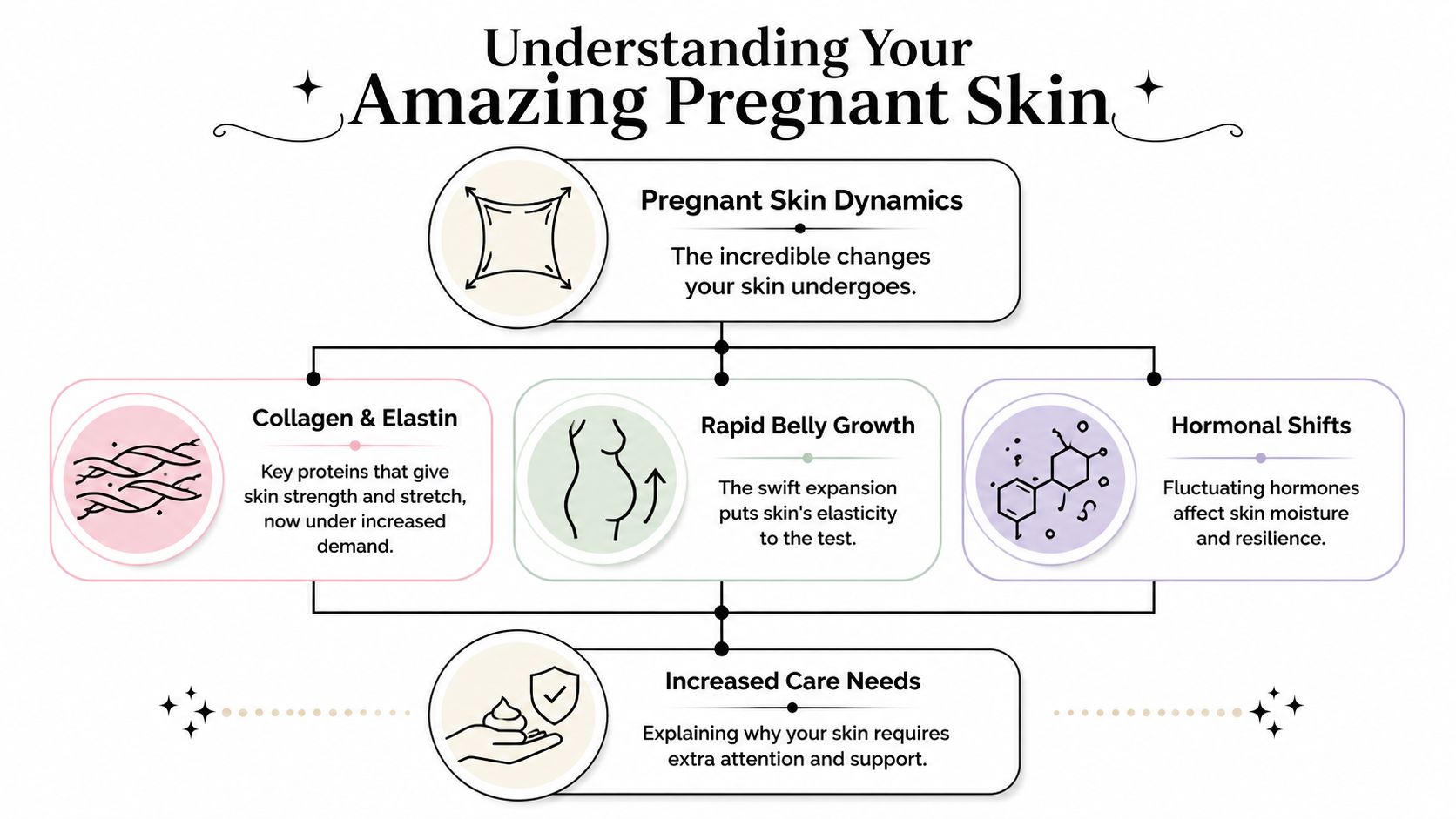
Pregnant skin is doing a big job. Your belly isn't just “getting bigger”. The skin has to expand over time while deeper support structures work under more tension than usual. That's why the surface can feel different long before you notice visible marks.
Why your belly skin feels different
A helpful way to think about skin is fabric with stretch built in. Good fabric can flex, but if it's pulled steadily and repeatedly, it may start to feel taut. Pregnancy adds another layer because hormones also influence how skin behaves, including how resilient and comfortable it feels.
That combination explains why your bump may feel:
- Tight by evening because the skin has been under tension all day
- Dry after washing because the surface loses moisture easily
- Itchy in patches because stretching skin can feel irritated even without a rash
- More sensitive than usual because pregnancy can change how products feel on contact
If you're also trying to work out whether your skin is dry, dehydrated, or both, this guide on dry skin vs dehydrated skin can help you spot the difference.
What cream can do and what it can't
This is the key truth most articles skip. Approximately 89% of pregnant women in the UK develop striae gravidarum, and strong clinical evidence confirms that no cream or oil can effectively prevent them, with the NHS and dermatological experts acknowledging there is “no specific treatment” to stop them as skin stretches naturally, according to this review of stretch marks in pregnancy.
That doesn't make moisturising pointless. It just changes the goal.
A cream works on the surface and upper layers of the skin barrier. Stretch marks form because of deeper structural changes linked to stretching and hormones. So a cream can make skin feel softer, less rough, less itchy, and more comfortable. It can't rewrite the deeper biology.
Stretch marks are not proof that you used the wrong product. They're a common part of how many bodies adapt to pregnancy.
Once you let go of prevention promises, you can choose products more wisely. The best cream for your pregnant stomach is often the one you'll enjoy using every day because it supports your skin's feel, not because it claims to outsmart nature.
The Pregnancy Safe Ingredient Checklist
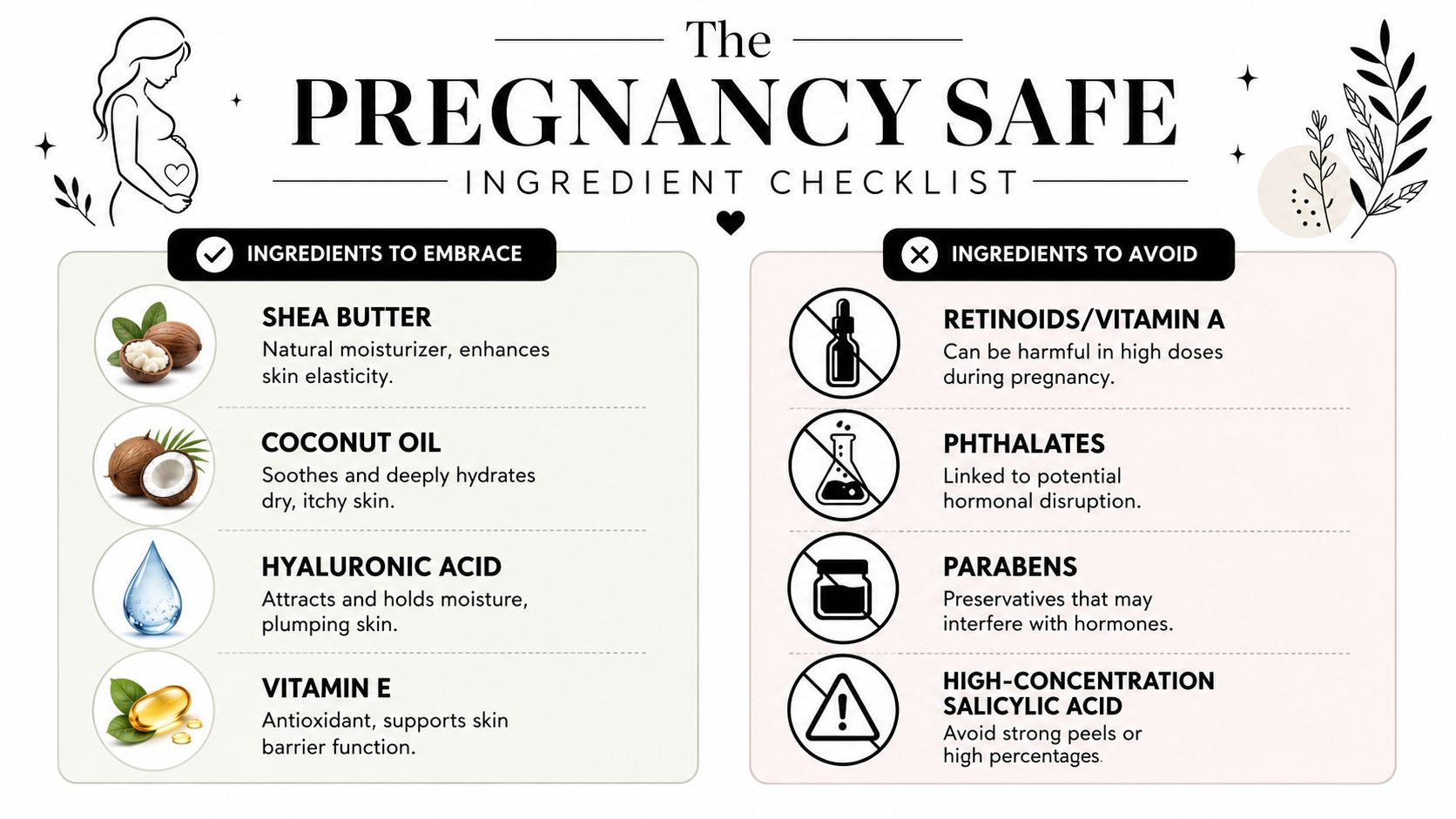
When you're pregnant, ingredient lists can suddenly feel like revision notes for an exam you didn't know you were taking. The easiest way through that overwhelm is to focus on two questions: what helps skin feel comfortable, and what belongs in the “leave it on the shelf” category?
Ingredients worth looking for
For daily belly care, simple hydrators and barrier-supporting ingredients tend to be the most useful.
- Hyaluronic acid helps attract water to the skin, which can make a tight belly feel more comfortable.
- Shea butter gives a rich, cushioned feel and suits bedtime routines or colder weather when skin feels extra dry.
- Cocoa butter is a classic moisturiser. It's fine to use for softness and comfort, but it shouldn't be treated as a proven stretch mark solution.
- Squalane feels silky rather than greasy and can help reduce that papery, over-stretched feeling.
- Ceramide-focused formulas can be helpful when your skin barrier feels a bit “leaky”, especially if your belly stings after washing.
- Vitamin E is often included in nourishing body products because it supports the skin barrier feel.
If you've wondered whether newer skincare ingredients are automatically off-limits, this explainer on what peptides are in skin care is a useful starting point for understanding one commonly discussed category.
Ingredients to avoid or question
The clearest red flag is topical retinoids. In the UK, the only ingredient class explicitly prohibited for use on stomach skin during pregnancy due to safety concerns is topical retinoids such as retinol, tretinoin, and isotretinoin, as outlined in this pregnancy skincare safety guide.
That same guidance also notes caution around potent topical corticosteroids used in large cumulative doses during pregnancy. It reports that 3 out of 10 studies found an increased risk of low birth weight, with 30.43% in one cohort, when potent to very potent topical corticosteroids were used in this way.
A few other ingredient categories deserve a careful look too:
- Retinoids or vitamin A derivatives should be avoided altogether in pregnancy skincare.
- Hydroquinone is commonly flagged for caution because of high systemic absorption.
- Potent topical steroids aren't routine belly moisturisers. If you've been prescribed one for a skin condition, ask your GP, midwife, or pharmacist exactly how and where to use it.
- Fragrance blends with vague labelling can be tricky. Terms like “fragrance” or “natural fragrance” may not tell you much about what's included.
- Parabens and hidden fragrance concerns come up often in pregnancy conversations because ingredient transparency isn't always as clear as shoppers expect.
Ingredient shortcut: If a product promises anti-ageing, resurfacing, peeling, or corrective treatment, check the label more carefully than you would for a simple moisturiser.
You don't need a ten-step routine. One gentle, well-formulated cream, butter, or oil with a straightforward ingredient list is usually enough for daily bump care.
Choosing Your Perfect Stomach Cream
Texture matters more than people think. A product can have a lovely ingredient list and still end up ignored if it feels sticky, takes ages to sink in, or leaves your clothes clinging awkwardly. The right cream for stomach during pregnancy is the one that suits your skin and your real routine.
How each texture feels on skin
Some people love a dense belly butter at night. Others want something quick in the morning before getting dressed. None of these formats is “best” in the abstract. They do different jobs.
| Product Type | Best For | Texture | Absorption |
|---|---|---|---|
| Belly Butter | Tight, dry skin and overnight comfort | Rich and thick | Slower |
| Belly Oil | Massage and a supple skin feel | Silky and slip-heavy | Moderate |
| Lotion | Daytime use and quick application | Light and fluid | Faster |
A belly butter tends to suit late pregnancy, cooler months, or anyone whose skin feels stretched and flaky. It creates a more cocooning finish and often works well before bed.
A belly oil is less about “sealing in magic” and more about glide. If you like slow circular massage over the belly, hips, and sides, oil makes that feel easy and soothing.
A lotion is the practical one. It disappears quickly, layers well under clothes, and is usually the easiest option for busy mornings.
When itch needs something more targeted
There is a difference between everyday dryness and intense itch. If your bump just feels mildly tight, a standard moisturiser may be enough. If the itch is more distracting, you may need a more specific option.
In UK clinical guidance for pregnancy-related itching, aqueous menthol 1% cream is accepted as a first-line topical treatment to relieve symptoms, producing a cooling sensation that distracts from pruritus and making it suitable during all trimesters under midwife or GP supervision, according to NHS Wales guidance on itching in pregnancy.
That makes menthol cream a targeted comfort product, not your everyday belly moisturiser.
A simple way to choose:
- If your skin feels dry and taut, go for butter.
- If you want massage and softness, choose oil.
- If you want low-fuss daytime hydration, pick lotion.
- If itch is persistent and hard to ignore, ask your midwife or GP whether menthol 1% cream is appropriate.
You can also mix formats. Lots of women use lotion in the morning and something richer at night because skin needs can change across the day.
Your Daily Bump Care Ritual
The nicest belly routine isn't the most complicated one. It's the one you can keep doing even when you're tired, running warm, and ready to get into bed.
A simple routine that feels good
A warm shower often leaves belly skin feeling clean but slightly stripped. That's a good time to apply cream, butter, or oil because your skin is still a little damp and the routine feels natural rather than forced.
Try this:
- Pat, don't rub your belly dry after washing.
- Warm the product in your hands for a moment before applying it.
- Use gentle circular movements across your bump, sides, hips, and anywhere else that feels stretched.
- Pause for a breath or two instead of treating it like another task to tick off.
Some mums start this as soon as their skin begins to feel tight or itchy. Others only really need it later. There isn't a perfect week to begin. Your skin usually tells you.
For anyone comparing textures before building a routine, this guide to belly oil can help you decide whether an oil-based product suits your preference for massage and glide.
Small details that make it easier to keep up
What turns bump care into a ritual rather than a chore is often the smallest thing. The product lives by the bed. You apply it after your evening shower. You use the same slow motion each time, so your body starts to read it as a cue to soften.
Some days the real benefit of belly cream isn't what it does to your skin. It's that it gives you a quiet minute to check in with yourself.
A few practical habits make a big difference:
- Keep one product visible so you don't forget it.
- Choose a texture you enjoy rather than the one social media says you should like.
- Reapply when needed if your skin feels uncomfortable later in the day.
- Listen to your senses. If a scent suddenly feels too much, switch to something milder.
This kind of care doesn't need to be perfect to matter. It just needs to feel supportive.
Beyond Creams When to Call Your Midwife or GP
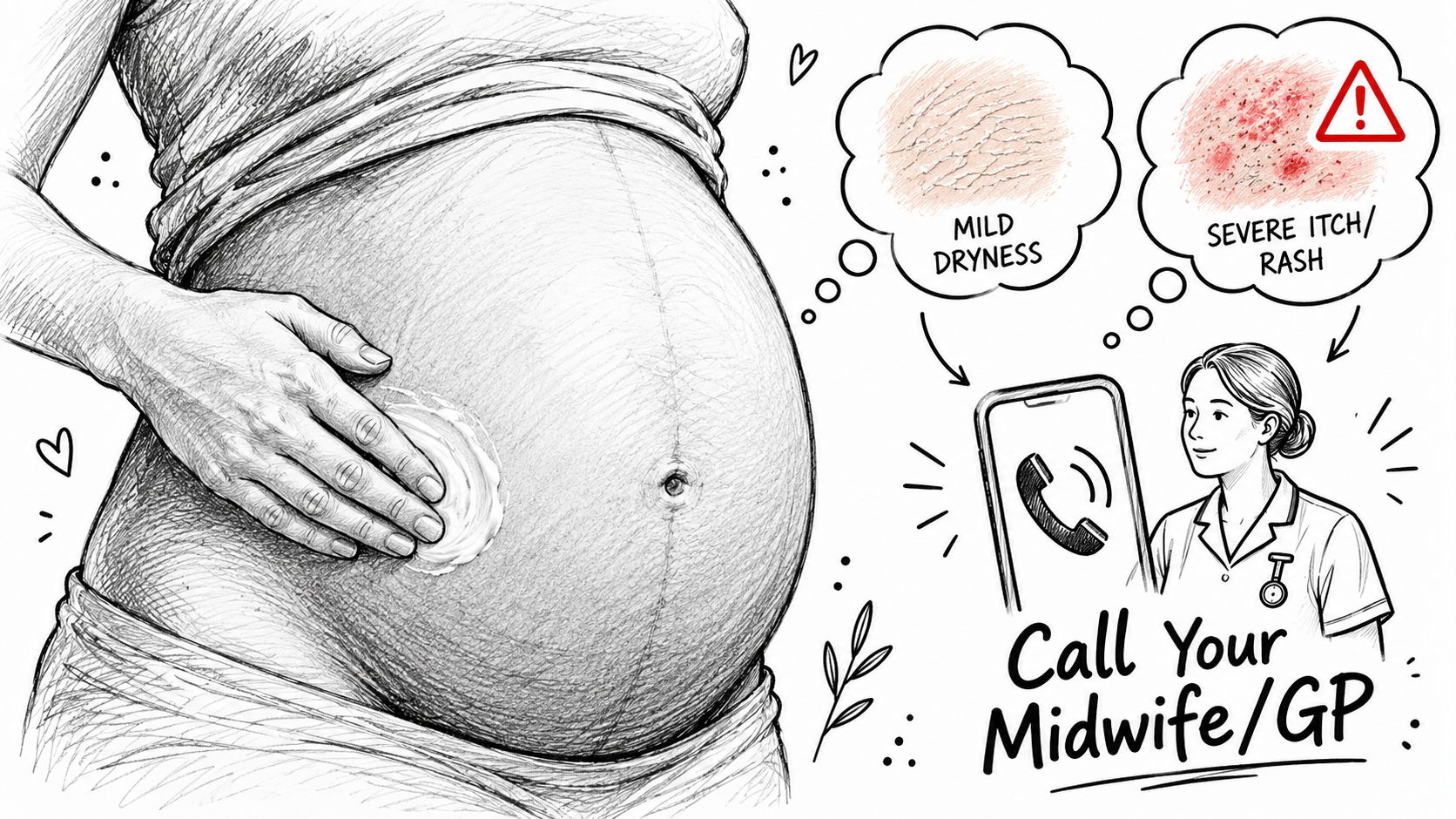
Most pregnancy belly discomfort is ordinary skin discomfort. Dryness, mild itchiness, and a stretched feeling are common. But there is a point where skin symptoms stop being a home-care issue and need medical advice.
Normal skin discomfort versus symptoms to check
If itching is severe, keeps you awake, feels unusual, or doesn't settle with basic moisturising, call your midwife or GP. The same applies if you have a rash, broken skin, or you're uneasy about how it feels.
Not all itching in pregnancy is just “skin stretching”. Some patterns of itch need proper assessment, especially when they feel persistent or out of proportion to what you'd expect from dryness.
Cream won't help internal stomach symptoms
A common point of confusion is the word stomach itself. Sometimes people search for cream for stomach during pregnancy when what they mean is burning, reflux, or upper tummy discomfort.
The NHS notes that indigestion and heartburn are common pregnancy symptoms requiring dietary changes or antacids rather than topical applications, as explained in this NHS guidance on indigestion and heartburn in pregnancy. A belly cream can help skin on the outside. It won't treat acid reflux, indigestion, or internal pain.
If the discomfort feels inside your body rather than on your skin, think less about moisturiser and more about speaking to a healthcare professional.
When in doubt, trust that instinct. Pregnancy advice should make you feel supported, not second-guess yourself.
Frequently Asked Questions
Can I use ordinary body lotion on my bump?
Usually, yes, if the ingredient list is pregnancy-appropriate and it feels comfortable on your skin. The main issue isn't whether it says “belly” on the label. It's whether it avoids ingredients you don't want to use during pregnancy and gives enough moisture for your needs.
Is oil better than cream for a pregnant belly?
Not necessarily. Oil gives more slip for massage, while cream or butter may feel more cushioning on very dry or tight skin. If you're choosing based on comfort alone, texture preference is often the deciding factor.
Should I apply belly cream once or twice a day?
Go by how your skin feels. Some women are happy with one evening application. Others like morning and night, especially when their belly feels stretched or weather changes make skin drier.
Are DIY belly oils a good idea?
They can be, but keep them simple. Pregnancy isn't the time to throw lots of essential oils into a homemade blend without checking whether they're suitable. If you like DIY, the safest route is usually a very minimal formula and a patch test first.
What if my current product suddenly starts to sting?
Stop using it. Pregnancy skin can become more reactive, even to products you've used before. Wash it off, keep the routine basic, and ask a pharmacist, GP, or midwife if you're unsure what caused the irritation.
Can I keep using belly products after birth?
Yes, if they still feel good on your skin. The postpartum period brings another round of skin changes, and many women like keeping the same comforting ritual for a while.
If you want bump care that focuses on comfort, gentle ingredients, and a lovely daily ritual, have a look at The Happy Bump Co. Their UK-made range includes Belly Butter, Belly Oil for Stretch Marks, and Pregnancy Tummy Scrub, all designed to support changing skin with a nurturing, bump-first approach.