

The most common advice about stretch mark creams is also the least helpful: “Start early and you can prevent them.” That sounds reassuring, but it sets many pregnant women up to feel they've failed if marks appear anyway. Your skin hasn't failed. Your routine hasn't failed. Pregnancy skin is doing an enormous job.
A better way to think about cream stretch marks is this: a good cream can support comfort, hydration, and skin suppleness, but it isn't a guaranteed shield. That distinction matters. It helps you choose products with calm, realistic expectations instead of chasing promises no cream can keep.
If you're already noticing changes on your bump, hips, breasts, or thighs, you're not behind. You're in the middle of a very normal body change, one that deserves both honest evidence and kind self-care.
Table of Contents
- The Truth About Stretch Marks in Pregnancy
- Do Stretch Mark Creams Actually Work
- Decoding Labels Safe Ingredients for Your Bump
- Your Daily Bump Care Ritual Application and Tips
- Choosing a Product and Ingredients to Avoid
- Frequently Asked Questions for Mums-To-Be
The Truth About Stretch Marks in Pregnancy
Stretch marks in pregnancy are common enough that they should be discussed as an expected possibility, not a rare complication. The NHS says around 8 out of 10 pregnant women develop them, usually on the abdomen, upper thighs, and breasts as pregnancy progresses, and also notes that they aren't harmful or a medical problem according to NHS guidance on pregnancy stretch marks.
That matters emotionally as much as medically. A very visible body change can still feel upsetting even when it's normal. Many mums know stretch marks are common and still feel shocked when they first see pink, red, purple, or brown streaks appear.
Why they show up
A simple way to picture stretch marks is to think of fabric being pulled faster than its inner threads can comfortably adapt. Skin is more complex than fabric, of course, but the image helps. During pregnancy, the skin expands quickly, and the deeper support structure has to keep up.
The exact cause isn't fully clear, but in everyday terms, several things are likely happening at once:
- Rapid stretching: your abdomen, breasts, hips, and thighs may change quickly over a short period
- Changes in skin structure: pregnancy hormones affect the skin's support fibres
- Genetic tendency: some people's skin is more prone to marking than others
Stretch marks are a body response, not a sign that you cared for your skin badly.
What they look like over time
Fresh marks usually look more colourful. On some people that means pink or red. On others it may look purple or brown. Later, they often become paler and flatter.
The NHS notes that after birth they may fade and become less noticeable, but they probably won't disappear completely. That can be frustrating to hear, but honest expectations are kinder than false hope.
If you want more everyday guidance on prevention habits and skin support, this guide on how to prevent stretch marks during pregnancy offers practical ideas without promising miracles.
Do Stretch Mark Creams Actually Work
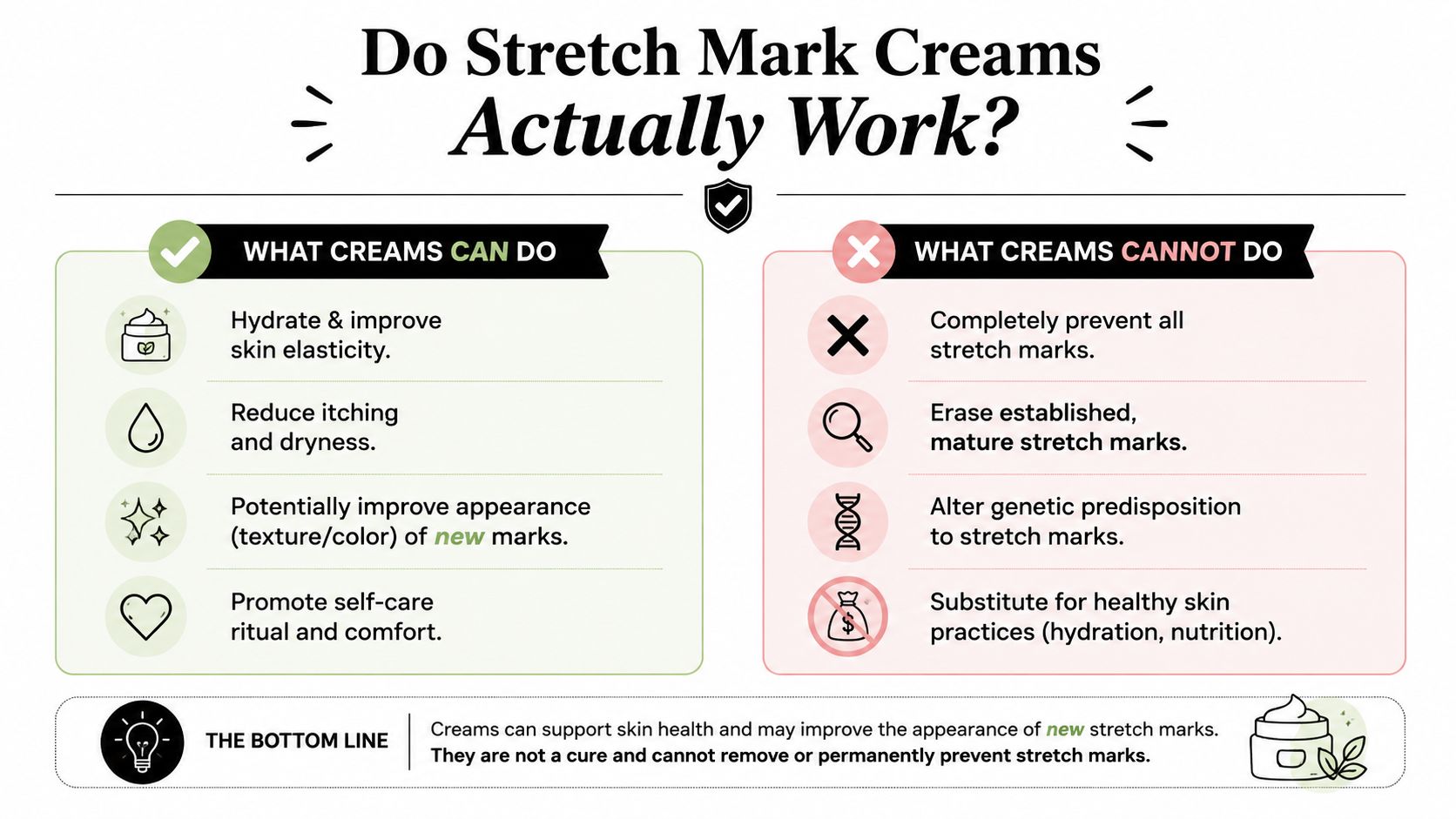
The short answer is: not in the way marketing often suggests. If a cream promises that no stretch marks will form, or that existing marks will vanish, the evidence doesn't support that claim.
Early in your search, it helps to separate three different goals. Preventing marks. Reducing severity. Making your skin feel more comfortable. Those aren't the same thing, and one product can be helpful for one goal without delivering the others.
What the best evidence says
The strongest UK guidance is sobering but useful. NICE reviewed six randomised trials involving 800 women and concluded there is no high-quality evidence that any topical preparation prevents stretch marks in pregnancy, as summarised in this NICE evidence review on striae gravidarum.
That finding can feel disappointing, especially if you've been faithfully applying a product every day. But it also takes pressure off. If marks appear, it doesn't mean you chose the wrong cream or missed your chance.
A lot of confusion comes from mixing “no proven prevention” with “no possible benefit at all”. Those are different statements.
Why some creams still feel worthwhile
Some clinical research suggests that specific formulations may help reduce the severity of striae and improve the appearance of newer marks. The evidence here is more mixed and more product-specific than marketing admits, but it supports a more realistic role for creams: not miracle prevention, but skin support.
That role can still be valuable:
- Hydration matters for comfort: well-moisturised skin often feels less tight, itchy, and dry
- Massage adds benefit: the act of applying cream can encourage gentle skin awareness and care
- Newer marks may respond better cosmetically: some ingredients appear more relevant earlier than later
- A routine can be grounding: daily bump care often gives women a small, calming moment in a changing body
Here's a visual summary of that balance:
Practical rule: Use a stretch mark cream because it may support comfort and skin condition, not because anyone can promise a mark-free pregnancy.
The biggest mindset shift is this. A cream stretch marks routine can still be worth doing even if it doesn't guarantee prevention. If your skin feels softer, less itchy, and more cared for, that's a real benefit. Pregnancy skincare doesn't have to be all-or-nothing to be useful.
Decoding Labels Safe Ingredients for Your Bump
Once you stop expecting a cream to do the impossible, ingredient lists become easier to read. You're no longer hunting for a magic claim. You're looking for ingredients that support hydration, suppleness, and a healthy skin barrier.
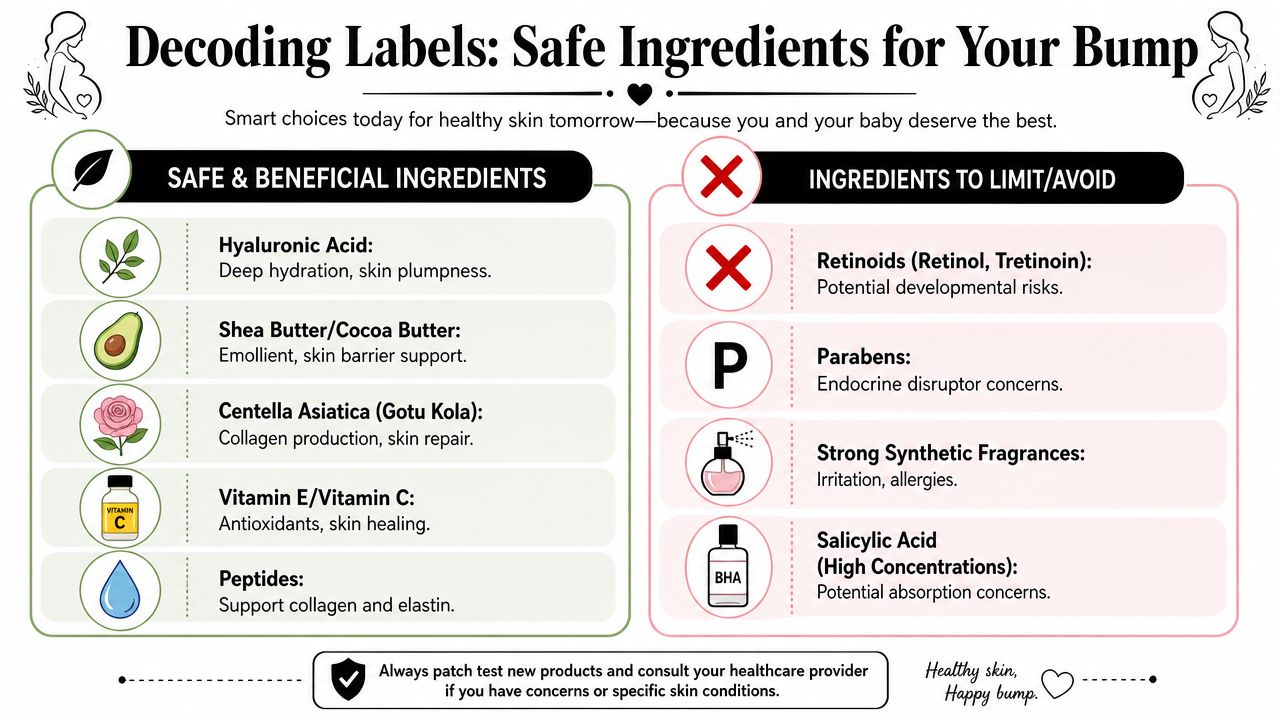
One ingredient worth knowing is hyaluronic acid. Clinical research suggests that specific anti-stretch mark creams can reduce the severity of striae, and ingredients such as hyaluronic acid, used daily from the onset of skin expansion, may help improve the final appearance, according to this PubMed summary of clinical trial findings.
Ingredients that support comfort and suppleness
You don't need a complicated formula. You need one that makes sense.
- Hyaluronic acid helps draw water into the skin, which can make skin feel plumper and more flexible.
- Shea butter and cocoa butter act as emollients. They soften the skin surface and help reduce that dry, stretched feeling.
- Centella asiatica is often included in targeted body products because it's associated with skin support and repair.
- Vitamin E and vitamin C are commonly used for antioxidant support in skincare formulas.
- Peptides are included in some modern body creams to support the skin's structural feel.
Not every good product contains all of these. A shorter ingredient list can still be excellent if it's gentle and pleasant enough for regular use.
How to read a label without overthinking it
Many pregnant women get stuck comparing dozens of products and end up overwhelmed. A simple filter helps.
Look for these signs of a sensible formula:
- Hydration first: water-binding and barrier-supporting ingredients should appear clearly on the label.
- Comfortable texture: if a cream feels sticky, greasy, or heavily perfumed, you probably won't use it consistently.
- Pregnancy-safe positioning: the brand should be clear about avoiding ingredients that aren't suitable in pregnancy.
- Daily-use practicality: the best product is often the one you'll apply every morning and evening.
A useful question to ask isn't “Will this erase marks?” It's “Will this support my skin enough that I'll want to keep using it?” For most women, that leads to better decisions than chasing dramatic claims.
Your Daily Bump Care Ritual Application and Tips
A bump cream routine works best when it fits naturally into your day. If it feels like another task on an already long list, it's harder to keep up. If it feels calming and simple, it tends to last.
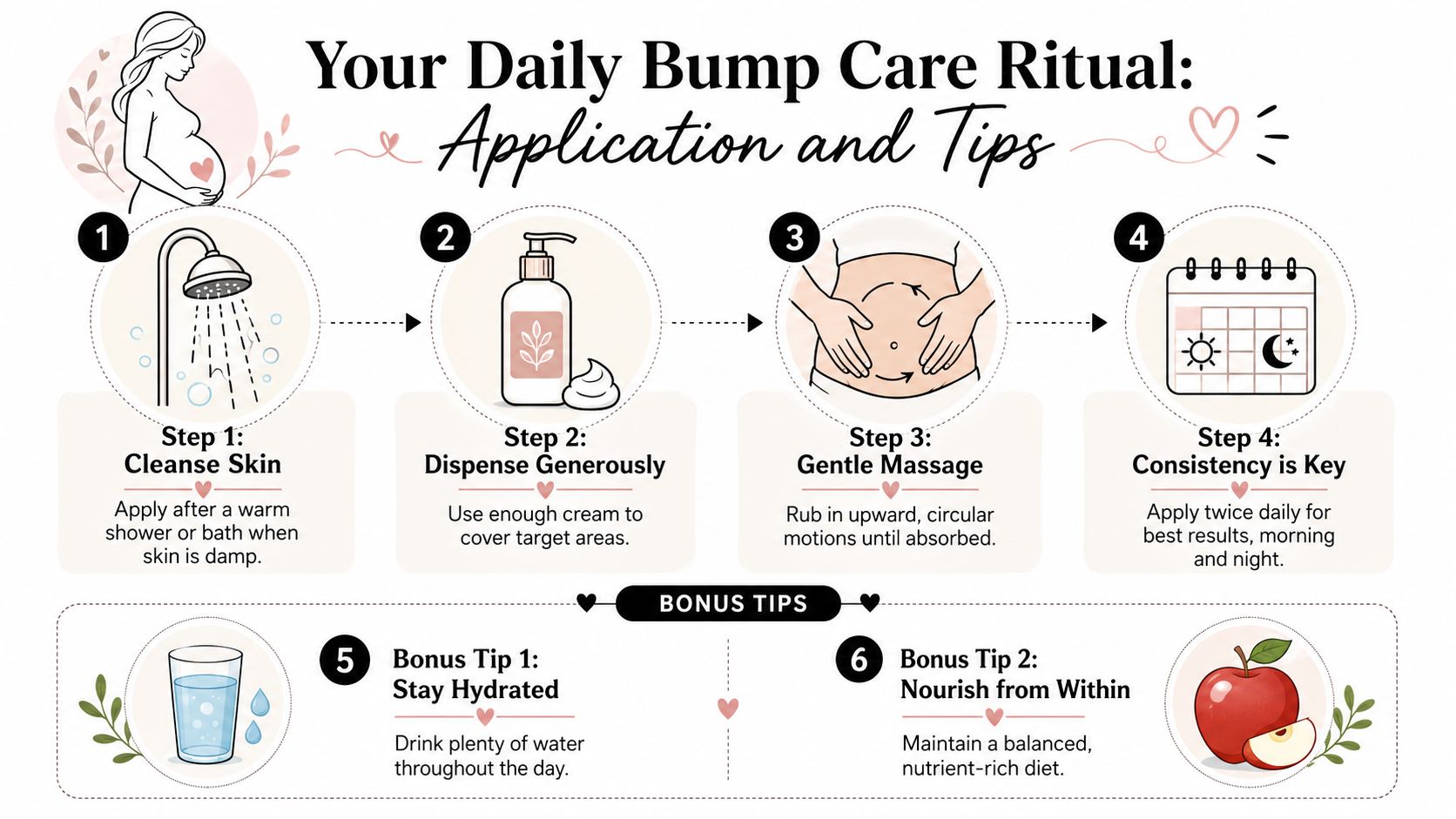
The application itself also matters. Pregnancy-safe skincare sources often recommend daily massage with emerging marks, and many women find that gentle touch helps both product spread and body awareness.
A simple routine you can stick to
Try this sequence once or twice a day:
- After washing: apply your cream after a shower or bath, while skin still feels slightly damp
- Use enough product: don't be shy with it. Cover the bump, breasts, hips, thighs, and anywhere else that feels stretched
- Massage gently: use circular or upward strokes rather than rubbing aggressively
- Pause for a breath: this tiny step turns skincare into a moment of connection rather than maintenance
Some women prefer a cream in the morning and a richer balm or oil at night. Others want one texture they can use all the time. Both approaches are fine if the formula is suitable and feels good on your skin.
Small habits that make the routine feel better
A stretch mark cream routine isn't only about what's in the jar.
Consistency usually matters more than choosing the most expensive product on the shelf.
These habits often help:
- Keep the product visible: place it by the bed or next to your toothbrush
- Apply before itching starts: it's easier to maintain comfort than chase irritation later
- Wear soft fabrics after application: this can make newly moisturised skin feel less irritated
- Choose a moisturiser you enjoy using: texture and scent tolerance are part of the routine
If you're unsure how a body cream differs from a more general moisturiser, this guide on body lotion moisturiser options during pregnancy can help you think through texture and daily use.
Choosing a Product and Ingredients to Avoid
A lot of skincare confusion comes from one awkward fact: an ingredient can be useful for stretch marks in one stage of life and still be unsuitable during pregnancy or breastfeeding. That's why safety has to come first.
A key example is tretinoin. It's clinically proven to improve the appearance of new stretch marks, but it's strictly contraindicated for pregnant or breastfeeding women due to safety risks, while safer options such as hyaluronic acid can support skin plasticity without that concern, as explained in this UK dermatology-focused overview of stretch mark creams.
What to avoid while pregnant or breastfeeding
Retinoids are the headline ingredient group to avoid. They may appear under names such as tretinoin, retinol, or retinyl-based derivatives. If you've used active skincare before pregnancy, this is the label family to check most carefully.
Beyond that, many women also prefer to be cautious with strongly fragranced products or formulas packed with unnecessary extras, especially if pregnancy has made their skin more reactive.
A simple shopping mindset helps:
- Skip aggressive actives: pregnancy skin often prefers gentle support over intense treatment
- Avoid products with confusing claims: “erase”, “reverse”, and “guaranteed prevention” are red flags
- Choose formulas made for regular body use: they should feel soothing, not medicinal
- Patch test first: even safe categories can still irritate your individual skin
For women deciding between creams, butters, and oils, this guide to the best oils for stretch marks is useful alongside cream-based options.
Pregnancy skincare ingredients safe vs avoid
| Ingredient Category | Pregnancy-Safe Heroes (Look For) | Ingredients to Avoid |
|---|---|---|
| Hydrators | Hyaluronic acid, glycerin | Retinoids such as tretinoin and retinol |
| Emollients | Shea butter, cocoa butter | Strong synthetic fragrances if your skin is reactive |
| Skin-supporting botanicals | Centella asiatica | Harsh formulas with unnecessary active blends |
| Barrier and comfort support | Vitamin E, gentle peptides | Products that make unrealistic medical-style claims |
The safest choice usually isn't the product with the loudest promise. It's the one with a calm formula, clear labelling, and ingredients you'd feel comfortable applying day after day.
Frequently Asked Questions for Mums-To-Be
The most common questions usually come after the marks have already appeared. That's also when a lot of online advice becomes confusing, because prevention advice and treatment advice get blurred together.
The simplest way through that confusion is to ask a more specific question. Are you trying to feel more comfortable now, help newer marks look softer over time, or explore more intensive treatment later on?
Can stretch marks fade after birth
Yes, they often do fade. The NHS says stretch marks may gradually become paler scars and less noticeable after birth, but creams don't remove them once they've appeared. For more significant improvement, dermatologists may recommend in-clinic options such as microneedling or laser after pregnancy, as discussed in this consumer guide covering NHS advice and post-pregnancy treatment direction.
That answer can feel bittersweet. Fading is common. Full disappearance usually isn't the expectation.
Is it too late to start using a cream
No. Starting earlier may feel more proactive, but starting later can still help with dryness, itch, and the overall feel of the skin. If your marks are already there, the role of cream becomes support and comfort rather than removal.
Cream or oil which is better
It depends on what your skin likes. Creams often feel more cushiony and water-based. Oils can feel more sealing and nourishing. Some women prefer cream during the day and oil at night. The best option is the one you'll use consistently and comfortably.
Newer, coloured marks are usually the stage where topical care makes the most sense cosmetically.
Can anything help postpartum stretch marks
At home, moisturising can keep the area comfortable and support the skin as it settles. For more visible change, the conversation often shifts away from shop-bought creams and towards professional treatment. That doesn't mean everyone needs treatment. It means there's a difference between supportive skincare and clinical procedures.
If you're newly postpartum, give your skin some time before judging the final appearance. Early marks often look more dramatic than they will later.
If you want pregnancy-safe skincare that treats bump care as both practical support and daily comfort, explore The Happy Bump Co. Their UK-made range is designed for changing pregnancy skin, with gentle bump-focused products that help turn moisturising into a reassuring self-care ritual.