

You're halfway through pregnancy, your usual routine has stopped working, and your skin feels tight before you've even finished breakfast. Your cheeks are flaking, your shins itch under your tights, and your bump feels stretched and uncomfortable despite the moisturiser you've used for years. Adding another product often makes the problem worse because pregnancy dry skin needs better barrier support, not just more layers.
This guide gives you a practical UK-friendly dry skin care routine for pregnancy. It focuses on the decision most beauty content skips: choosing the right format, whether that's a lotion, cream, ointment or balm, then applying it often enough to make a difference.
Table of Contents
- Why Pregnancy Skin Needs a Different Dry Skin Care Routine
- Choosing a Cleanser That Protects the Barrier
- Layering Hydration the Right Way
- Matching Product Format to Body Area
- Exfoliation, Body Care and Stretch Mark Support
- Pregnancy-Safe Ingredient Swaps
- When Dry Skin Signals Something More Serious
Why Pregnancy Skin Needs a Different Dry Skin Care Routine
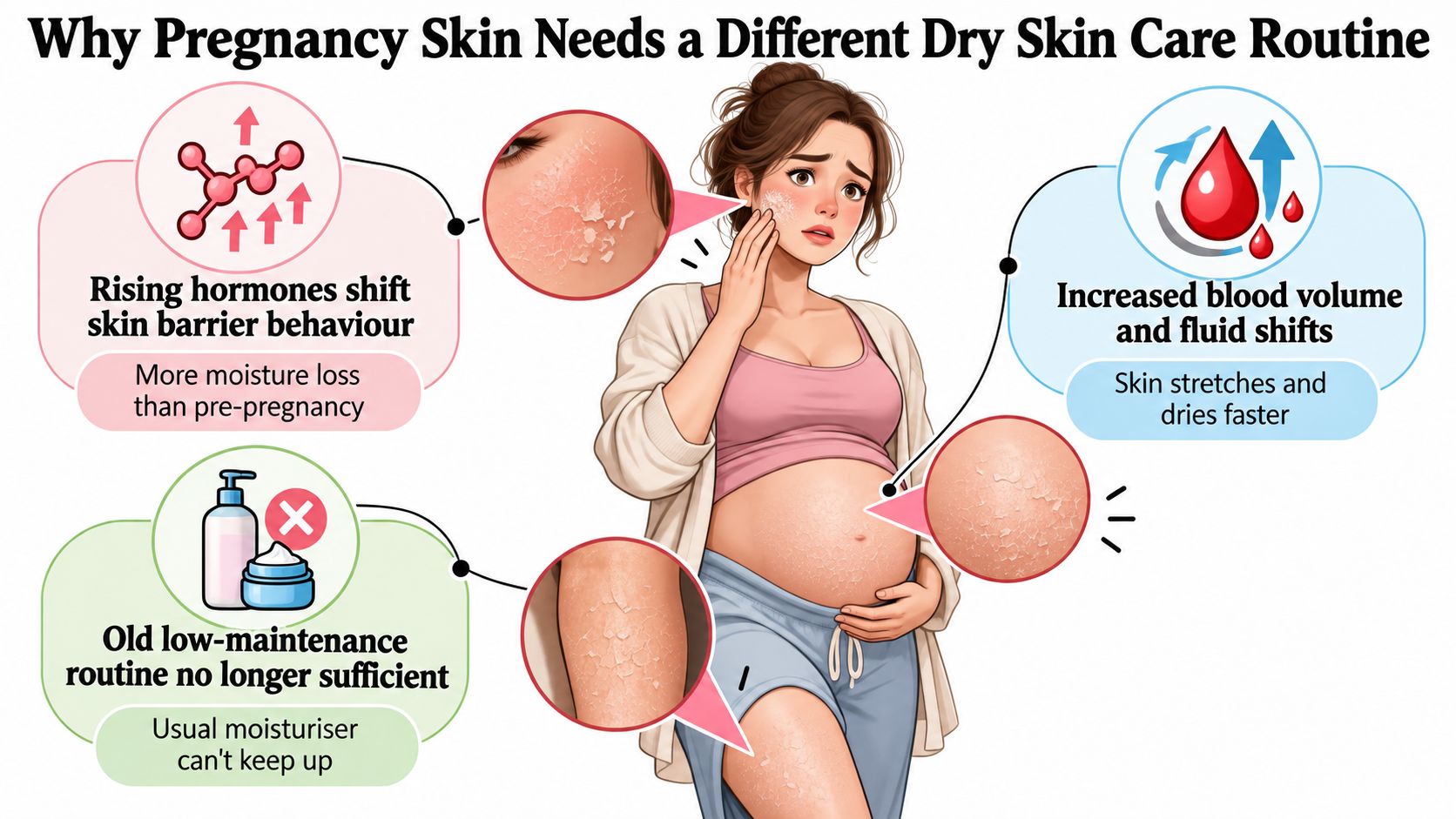
Your usual moisturiser can stop feeling effective during pregnancy. Skin may feel tight after cleansing, itch beneath clothing, or become flaky across the cheeks, shins, breasts and bump. The answer is not automatically the thickest product. Pregnancy dry skin needs better barrier support, not just more layers.
Three habits commonly make the problem harder. Applying a heavy product when a lighter emollient would be easier to use can lead to inconsistent care. Repeated cleansing removes more of the skin's protective surface, while layering oils alone adds occlusion without enough water.
Hydration and occlusion do different jobs. Hydration increases water in the outer skin. Occlusion slows its evaporation. A reliable routine uses both in sequence: apply moisture, smooth on an emollient, then reserve a more sealing format for particularly dry areas. This format-based approach works better than forcing one lotion, cream or oil to cover every part of the body.
Pregnancy can change how that balance feels. Hormonal changes, increased blood flow, fluid shifts and stretching skin may make familiar products less comfortable or less protective. Adjust the texture and frequency to the area rather than treating the whole body identically.
The barrier comes before the beauty routine
The skin barrier is a surface of corneocytes and lipids. Hot water, forceful cleansing and irritating fragrance can disturb it. Adding richer products without removing those triggers leaves the underlying problem in place.
Follow NHS emollient guidance: apply emollients generously and frequently, smooth them over the skin instead of rubbing, and apply them while skin remains moist after bathing. That advice applies whether you use a basic cream or a balm.
The causes of dry skin during pregnancy vary, but the first response should stay simple. Cleanse gently, apply leave-on moisture promptly, and choose the format that suits the area.
In the UK, eczema affects about 1 in 5 children and up to 1 in 10 adults, according to NHS Cheshire and Merseyside guidance on eczema. Emollient care is therefore practical barrier support, not a cosmetic extra, especially for reactive, dry or repeatedly irritated skin.
Choosing a Cleanser That Protects the Barrier
Your cleanser should leave skin comfortable, not polished, tight or unusually matte. If your face feels stretched immediately after rinsing, the product has probably removed too much of the protective lipid film.
The safest approach is to use the mildest format that removes what you need to remove. A low-foam cream cleanser usually works well for morning and evening facial cleansing. A cleansing milk is even more comfortable for reactive skin, although it may leave a slight film. Micellar water is useful for a quick morning refresh or removing light make-up, but rinse it if it leaves your skin stinging. An oil balm is excellent for dissolving make-up and sunscreen at night, followed by a gentle cream cleanser if you need a second cleanse.
| Format | Barrier Impact | pH Effect | Best Use |
|---|---|---|---|
| Low-foam cream cleanser | Low when fragrance-free | Usually skin-friendly | Morning and evening facial cleansing |
| Cleansing milk | Very low | Usually mild | Reactive mornings and dry facial skin |
| Micellar water | Low to moderate, depending on formula | Usually mild | Light cleansing or make-up removal, followed by rinsing if needed |
| Oil balm | Low if emulsifying and rinsed well | Usually mild | Evening make-up and sunscreen removal |
| Foaming gel | Moderate to high if stripping | Can feel harsh on a compromised barrier | Only if genuinely gentle and tolerated |
| Soap bar | High for dry or reactive skin | Often disruptive | Avoid as a routine facial or body cleanser |
| Fragranced wash | Variable, with a higher irritation risk | Depends on formula | Avoid during active sensitivity |
What to use in the morning
When your skin feels reactive, skip cleanser in the morning and rinse with lukewarm water only. That removes overnight sweat without adding another surfactant exposure. Use cleanser in the evening when you need to remove SPF, make-up, pollution or body products.
You don't need a dramatic lather to clean effectively. Foaming gels, soap bars, bubble bath and fragranced washes can worsen dryness, and NHS emollient advice specifically warns against normal soap and hot water when the barrier is dry or eczema-prone.
For a UK-available routine, look for products labelled fragrance-free, soap-free, non-foaming or barrier-supporting. CeraVe Hydrating Cleanser, La Roche-Posay Toleriane Dermo-Cleanser, Avène Tolérance Extremely Gentle Cleanser and an unperfumed cleansing balm are reasonable format examples. Choose the texture your skin tolerates, not the most expensive bottle.
Practical rule: Cleanse twice daily only if your skin needs it. For many pregnant women with dry skin, a gentle evening cleanse and a water-only morning is the better ceiling.
Layering Hydration the Right Way
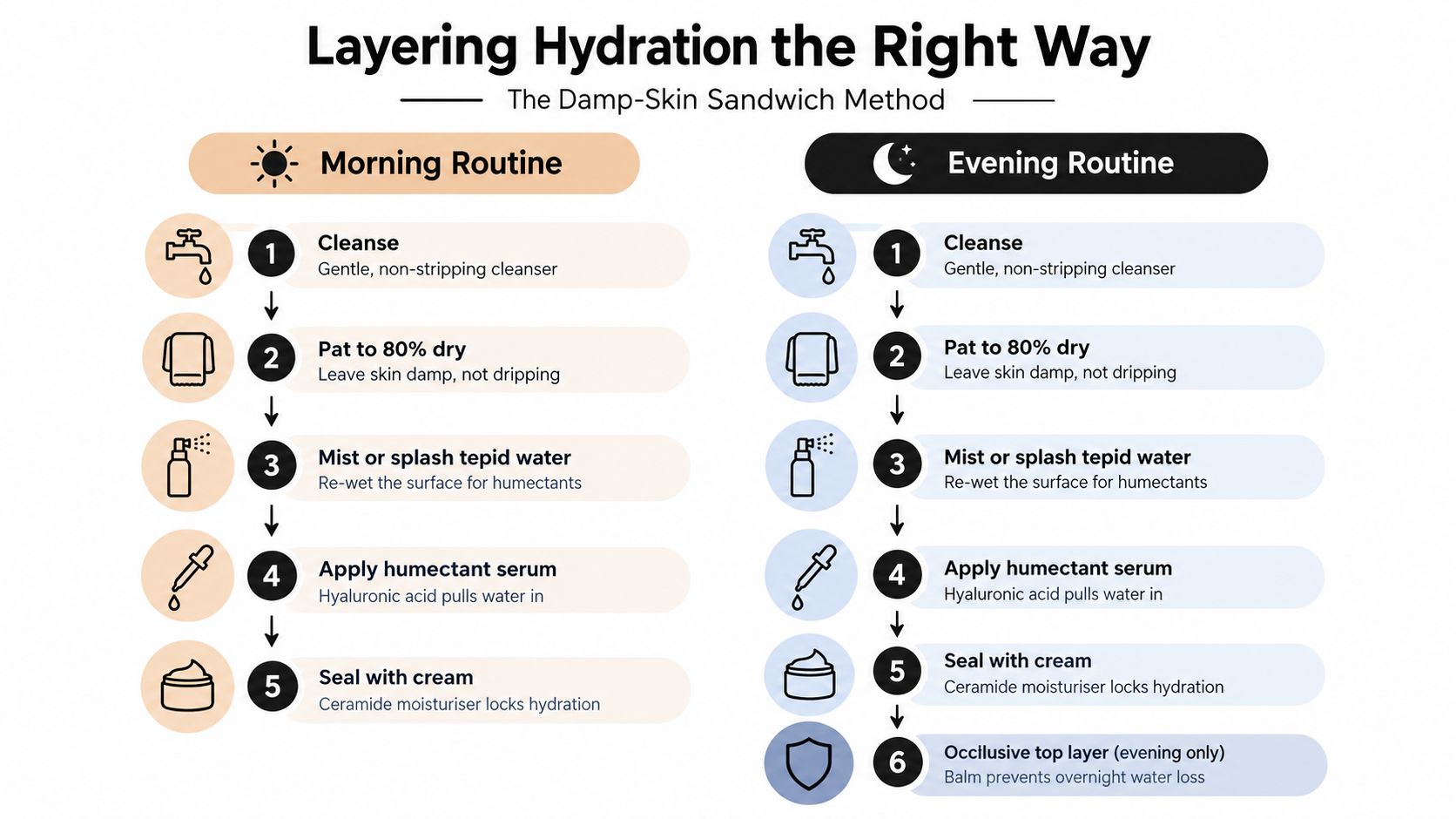
Pregnancy skin often feels tight minutes after moisturising because the barrier loses water quickly. A damp-skin sandwich addresses that problem with a simple sequence: add water-based hydration, then apply an emollient to slow evaporation. You need a repeatable order, not a crowded bathroom shelf.
Your morning order
- Cleanse gently. Use a cream cleanser, cleansing milk or lukewarm water according to how reactive your skin feels.
- Pat to roughly 80% dry. Leave the surface damp, not dripping.
- Re-wet lightly. Splash with tepid water or use a fragrance-free, alcohol-free hydrating mist.
- Apply a humectant. A serum containing glycerin, hyaluronic acid or polyglutamic acid helps draw water into the outer skin.
- Seal with cream. Smooth a ceramide-, glycerin- or squalane-based moisturiser over your face, neck and chest.
- Apply SPF. Let the moisturiser settle for about five minutes, then use a pregnancy-appropriate mineral sunscreen.
Humectants draw in water, emollients soften roughness and occlusives reduce water loss. A rich cream still works on dry skin, but slightly damp skin gives it moisture to retain.
Your evening order
Remove make-up and SPF with an oil balm or cleansing milk. Use a gentle cleanser afterward only when residue remains or your skin needs a second cleanse. Pat dry, lightly re-dampen, apply your hydrating serum, then finish with cream.
Reserve an occlusive balm or ointment for the driest areas, such as the sides of the nose, lips, elbows or fissured shins. If you already tolerate a separate active treatment, apply it before the emollient and allow around 20 minutes before sealing the area. Pregnancy is the wrong time to add several unfamiliar actives together.
NHS emollient guidance supports applying products immediately after bathing while skin remains moist and smoothing rather than rubbing. It also supports frequent application, so technique and repetition matter more than a luxury price tag.
Avoid stacking exfoliating acids, multiple facial oils, or unfamiliar vitamin C and niacinamide products because a social media routine recommends them. Burning means the routine is too complicated. Return to cleanser, emollient and SPF until the skin settles.
For the body, body oil before or after lotion depends on the formula. Apply oil after a water-containing lotion or cream when your aim is to reduce evaporation. Oil alone does not provide the same water-holding routine.
Matching Product Format to Body Area
The most useful product question isn't “Which moisturiser is best?” It's “Which format will I apply consistently to this area?” A lotion may be perfect for your arms but useless on cracked shins. An ointment may protect an elbow overnight but feel unbearable beneath maternity clothes.
| Format | Absorption | Occlusion Level | Best Body Area | Notes for Pregnancy |
|---|---|---|---|---|
| Lotion | Fast | Low | Arms, thighs and hair-bearing legs | Comfortable during the day, but may need frequent reapplication |
| Cream | Moderate | Medium | Face, neck, chest and bump | Good balance between comfort and barrier support |
| Ointment | Slow | High | Shins, knees, elbows and fissures | Excellent overnight, but can feel greasy |
| Balm | Moderate to slow | Medium to high | Lips, periareolar skin and splitting patches | Use a thin layer and patch-test first |
Use lighter textures where clothing rubs
A lotion works well on arms and legs when the skin is dry but intact. It spreads quickly, makes dressing easier and encourages regular use. If your legs still feel tight after application, move up to a cream rather than applying several layers of lotion.
Choose a richer cream for your face, neck, chest and bump. The bump usually needs a product that absorbs within a few minutes, because sticky residue under clothing can make you abandon the routine. Look for glycerin, ceramides, squalane, colloidal oatmeal or shea butter, and avoid strong fragrance when the skin feels reactive.
Reserve heavy protection for damaged patches
Petroleum jelly and paraffin-based ointments are useful for fissured shins, elbows, knees and small areas that repeatedly split. Apply them last, particularly at night, over a cream. A balm offers similar targeted comfort with a more spreadable texture, making it useful for lips, periareolar dryness and patches around stretch marks that feel tight.
For whole-body treatment, NHS dermatology guidance gives an operational benchmark of roughly 600 g of emollient per week for an adult and 250 to 500 g per week for a child, as described in Newcastle Hospitals' eczema guidance. You won't necessarily need those quantities for ordinary pregnancy dryness, but the figures show why a tiny dab once daily often fails when treating extensive dry skin.
Use thicker formats at night and lighter ones by day. Patch-test a new occlusive on the underside of the bump before applying it widely, especially if you've developed new sensitivity during pregnancy.
Exfoliation, Body Care and Stretch Mark Support
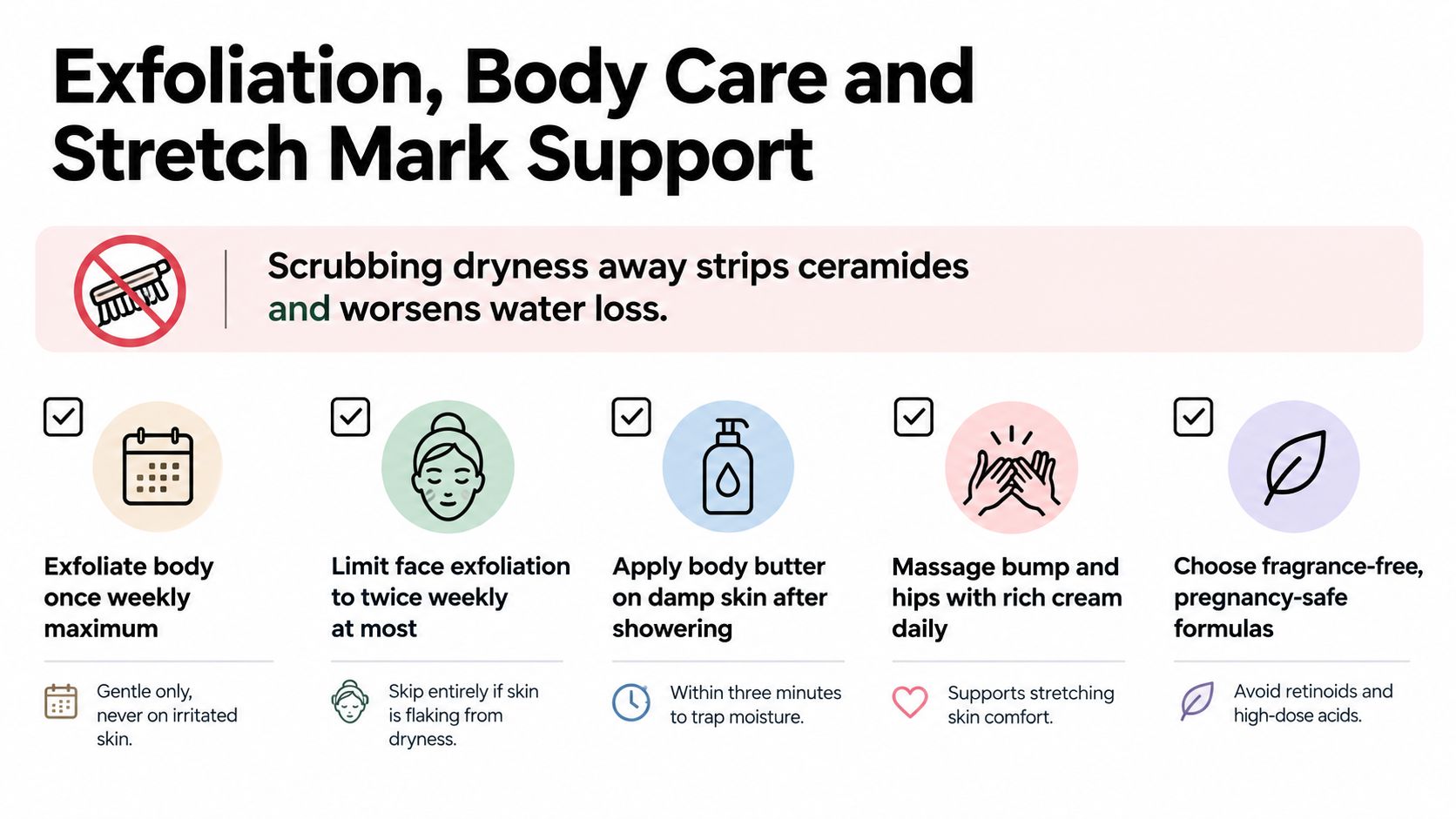
Pregnancy dryness often worsens when flakes are treated as a cleansing problem. Scrubbing can make skin feel smoother briefly, but it also strips barrier lipids and increases reactivity. Support the barrier first. Exfoliation has a limited role.
Exfoliate the body no more than once weekly, using a gentle method on intact skin. Limit facial exfoliation to twice weekly at most, and only on areas that are not sensitive. Stop if your face flakes, burns or itches. Keep exfoliants away from the bump, breasts and every patch with active irritation.
Make the shower do less damage
Keep baths and showers lukewarm. Limit a bath to ten minutes, since a short soak is less likely to aggravate dryness than prolonged hot water. Choose a non-foaming emollient wash, rinse without vigorous rubbing, and pat the skin dry instead of dragging the towel across it.
Apply body emollient within three minutes of bathing, while the skin remains damp. Smooth it on with comfortable downward strokes rather than forceful massage. Use gentle, non-stretching movements on the bump and breasts. The goal is even coverage, not manipulation of the tissue.
NHS emollient guidance recommends smoothing emollients in the direction of hair growth because rubbing can irritate skin and block follicles. Follow this approach especially when skin feels sensitive or itchy.
What topical products can and cannot do
Oils, butters and creams can reduce tightness, improve comfort and make stretching skin feel more supple. They cannot guarantee prevention of stretch marks. Striae involve deeper structural changes that topical moisturisers cannot fully control.
Build the routine around comfort, not promises. Apply a rich cream or balm daily to the bump, hips and breasts, particularly after washing. Watch for new marks instead of scrubbing them. Stop any product that stings.
Use this practical checklist:
- Cleanse gently: Use an emollient wash and lukewarm water.
- Apply promptly: Seal damp skin with lotion, cream or balm.
- Target dry zones: Reserve ointment for cracked or persistently rough areas.
- Avoid irritants: Remove fragrance, essential oils and harsh scrubs from actively dry skin.
- Monitor changes: Look for new redness, a spreading rash, weeping, pain or itch that does not fit ordinary dryness.
For a body product, this guide to exfoliating lotion for the body is relevant only when skin is calm and intact. Do not use exfoliating lotion to attack active flaking or pregnancy-related itch.
Pregnancy-Safe Ingredient Swaps
Pregnancy skincare should be boring in the best possible way. Choose ingredients with a clear job, keep the formula simple, and don't add an active just because dryness has made your texture look uneven.
Ingredients worth keeping
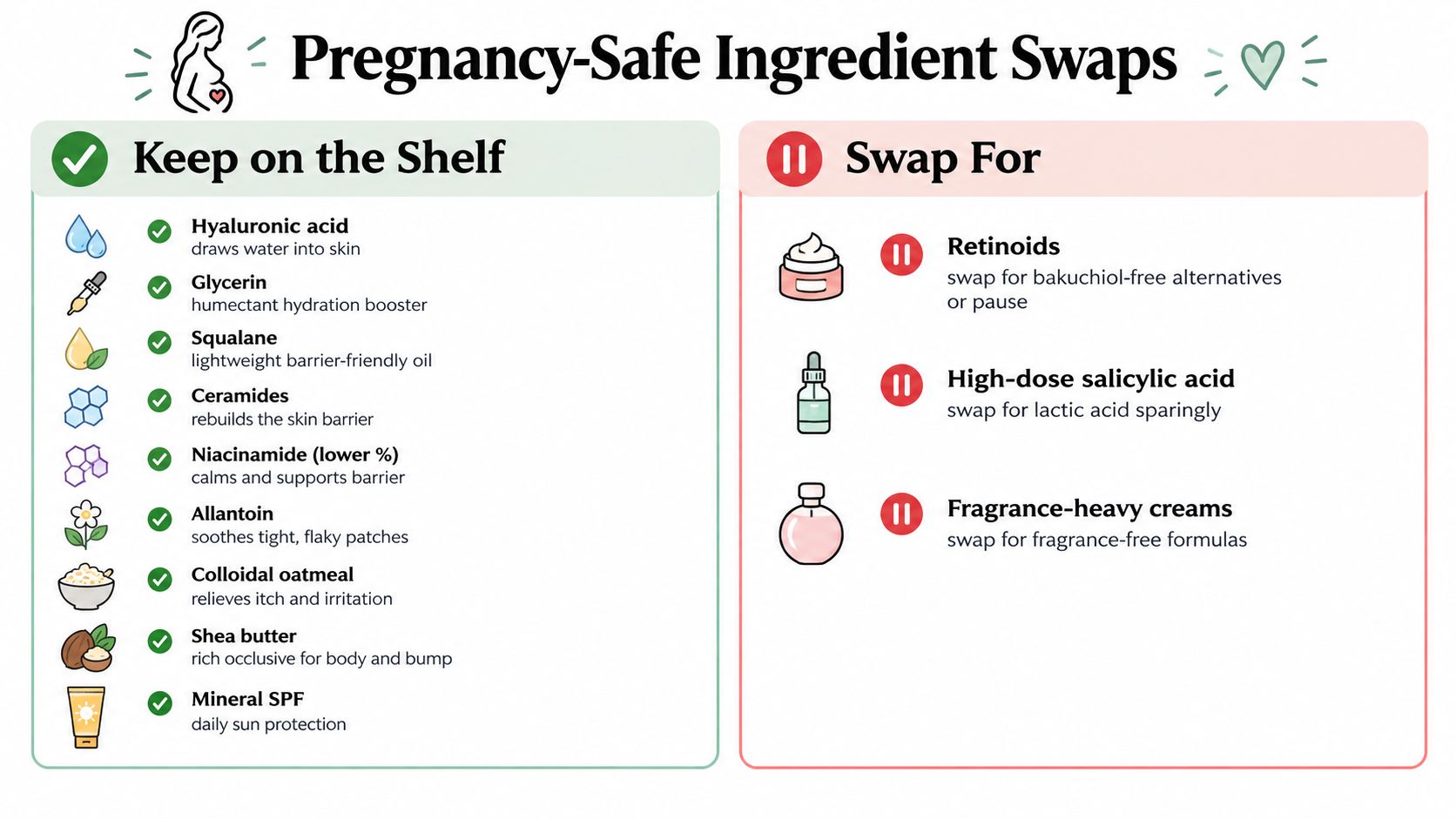
- Hyaluronic acid: Helps attract water to the skin's surface, but apply it to damp skin and seal it with cream.
- Glycerin: A dependable humectant that supports comfortable hydration without requiring a complicated routine.
- Squalane: A lightweight emollient oil that can soften dry areas without the heaviness of a thick ointment.
- Ceramides: Support the lipid structure of the skin barrier and pair well with creams.
- Lower-strength niacinamide: Can support barrier comfort, but stop if it causes flushing or stinging.
- Allantoin and colloidal oatmeal: Useful choices when tightness and itch accompany dryness.
- Shea butter: A richer option for body skin and the bump.
- Mineral SPF: Use zinc oxide or titanium dioxide-based protection during the day.
Ingredients to pause or replace
Set aside prescription retinoids, including tretinoin, isotretinoin and adapalene, unless your maternity or dermatology team gives specific advice. Replace a retinol-style routine with a simpler barrier routine, or discuss bakuchiol or azelaic acid with a clinician. If you choose azelaic acid, a 10% formula is a commonly available option, but introduce it only if your skin is calm.
Avoid high-dose leave-on salicylic acid, particularly formulas above 2%, and avoid strong chemical peels. For occasional texture concerns, ask a pharmacist or clinician whether azelaic or mandelic acid is appropriate rather than escalating exfoliation yourself.
Fragrance, denatured alcohol and essential oils can worsen sensitivity or dryness. Leave-on lavender, tea tree, rosemary and clary sage products are poor choices for an already reactive barrier. Vitamin C can remain in your routine if you already tolerate it, but a lower-strength, buffered formula is the safer practical switch when stinging begins.
Read the INCI list from the bottom upwards to understand the supporting ingredients, while remembering that ingredients are listed in descending concentration at the top of the list. If you have a prescribed product or a complicated medical history, ask your midwife, GP or pharmacist before changing treatment.
When Dry Skin Signals Something More Serious
Ordinary pregnancy dryness usually improves when you reduce stripping products and apply emollient consistently. It shouldn't automatically explain intense itching on the palms and soles, itch without a rash that is worse at night, rapidly spreading redness, or skin that is cracked and weeping.
Pregnancy-specific conditions need a different response. Intrahepatic cholestasis of pregnancy can present with significant itch, often without an obvious rash, and requires medical assessment. Polymorphic eruption of pregnancy, also known as PEP or PUPPP, can produce raised itchy bumps around stretch marks. Atopic eruption and contact dermatitis may cause dry, inflamed or irritated patches, particularly after a new product or fabric exposure.
Use symptoms, not product loyalty, to decide
Contact your midwife or GP promptly if itch is persistent, severe, unexplained or concentrated on the palms and soles. A suspected intrahepatic cholestasis assessment may include liver function and bile acid blood tests. Don't wait for another cream to prove it can help.
Seek urgent advice for a rapidly worsening rash, facial swelling, breathing difficulty, severe pain, fever or signs of infection. For less urgent but persistent changes, your midwife can guide the next step and arrange GP, dermatology or obstetric review where appropriate.
Ask yourself three questions each evening:
- Where is the itch? Is it limited to dry patches, or is it affecting palms, soles or the whole body?
- Is there a rash? Are there raised bumps, blisters, weeping areas or no visible change at all?
- Is it progressing? Is it worsening at night, spreading or failing to respond to gentle care?
| Symptom Pattern | Likely Category | Action |
|---|---|---|
| Mild tightness and flaking that improves with emollient | Barrier dryness | Simplify cleansing and moisturise consistently |
| Raised itchy bumps along stretch marks | PEP or PUPPP-like eruption | Contact your midwife or GP for assessment |
| Intense palm or sole itch, especially without rash | Possible obstetric liver condition | Make a same-week call to your maternity team or GP |
| Itch without a rash that worsens at night | Needs medical review | Don't rely on product changes alone |
| Cracked, painful, weeping or crusted skin | Possible infection or severe dermatitis | Seek prompt clinical advice |
| Rash spreading or worsening despite removing irritants | Dermatitis or pregnancy-specific rash | Arrange medical review rather than exfoliating |
Emollients support a damaged barrier, but they can't resolve obstetric skin disease. If your instinct says the itch feels different from ordinary dryness, trust that signal and make the call.
The Happy Bump Co offers bump-focused body care, including Belly Butter and Belly Oil for Stretch Marks, designed for daily application to dry or stretching areas such as the belly and breasts. Visit The Happy Bump Co to explore pregnancy-focused options and build a comfortable, consistent routine around your changing skin.