

You've stepped out of the shower, dried your hair and noticed that familiar tight feeling across your bump. The skin over your abdomen feels itchy, your breasts are uncomfortable under your clothing, and your thighs seem drier than usual. You may be wondering whether you need to drink more water, change your moisturiser or mention it to your midwife.
Dry skin during pregnancy is very common, particularly as skin stretches over the abdomen, breasts and thighs. UK NHS guidance recommends regular moisturising for relief and notes that you can start caring for uncomfortable skin during pregnancy, rather than waiting until the final weeks. NHS guidance on itching and rash in pregnancy also helps confirm that this experience is often part of ordinary pregnancy skin changes.
The useful shift is to think beyond dehydration. Your skin has a protective barrier, and pregnancy can make that barrier less effective at holding on to moisture. Once you understand that, a gentle cleanser, well-timed moisturiser and suitable sealant make more sense than applying more product at random.
This guide will help you understand why your skin feels different, build a practical morning and evening routine, compare ingredient types, and recognise the patterns that need clinical advice. By the end, you'll have a simple way to decide what your skin needs today and when self-care should give way to a conversation with your midwife or GP.
Table of Contents
- Introduction to Dry Skin During Pregnancy and What to Expect
- Why Pregnancy Changes Your Skin Barrier
- Daily Care Routine That Soothes Dry Skin Gently
- Safe Ingredients and Products for Pregnancy Dry Skin
- When Dryness Needs Clinical Advice
- Prevention Rituals and Bump Care Through Each Trimester
- Your Calm Confident Plan for Comfortable Skin
Introduction to Dry Skin During Pregnancy and What to Expect
Pregnancy skin rarely changes in just one way. One day your bump may feel comfortably soft, and the next it may feel tight after dressing. A bra can rub against dry skin on your breasts, while the growing shape of your abdomen makes previously comfortable fabrics feel irritating.
That doesn't mean you've done anything wrong. The UK NHS describes dry and itchy skin as very common in pregnancy, with symptoms often becoming more noticeable as skin stretches across the abdomen, breasts and thighs. UK NHS-linked pregnancy guidance recommends regular moisturising to ease discomfort.
The skin's outer barrier works like a protective covering. It slows moisture loss and helps keep irritants out. Pregnancy can place extra demands on that covering, so the answer isn't always “drink more water”. Fluids support your general wellbeing, but topical care helps address the surface barrier where tightness, flaking and irritation begin.
The reassuring starting point: common dryness usually responds better to calm, consistent barrier care than to aggressive scrubbing or a shelf full of new products.
Your routine doesn't need to be complicated. A mild cleanse, lukewarm water, immediate moisturising and comfortable clothing can reduce daily irritation. You can then adjust the texture, from a light lotion to a richer balm or oil, depending on whether your skin feels mildly tight or visibly flaky.
It's also important not to dismiss every type of itching as ordinary dryness. Persistent or unusual symptoms deserve attention, particularly if moisturiser isn't helping or the itch has a distinctive pattern. Knowing that difference lets you care for your skin without either panicking over normal changes or waiting too long to ask for support.
Why Pregnancy Changes Your Skin Barrier
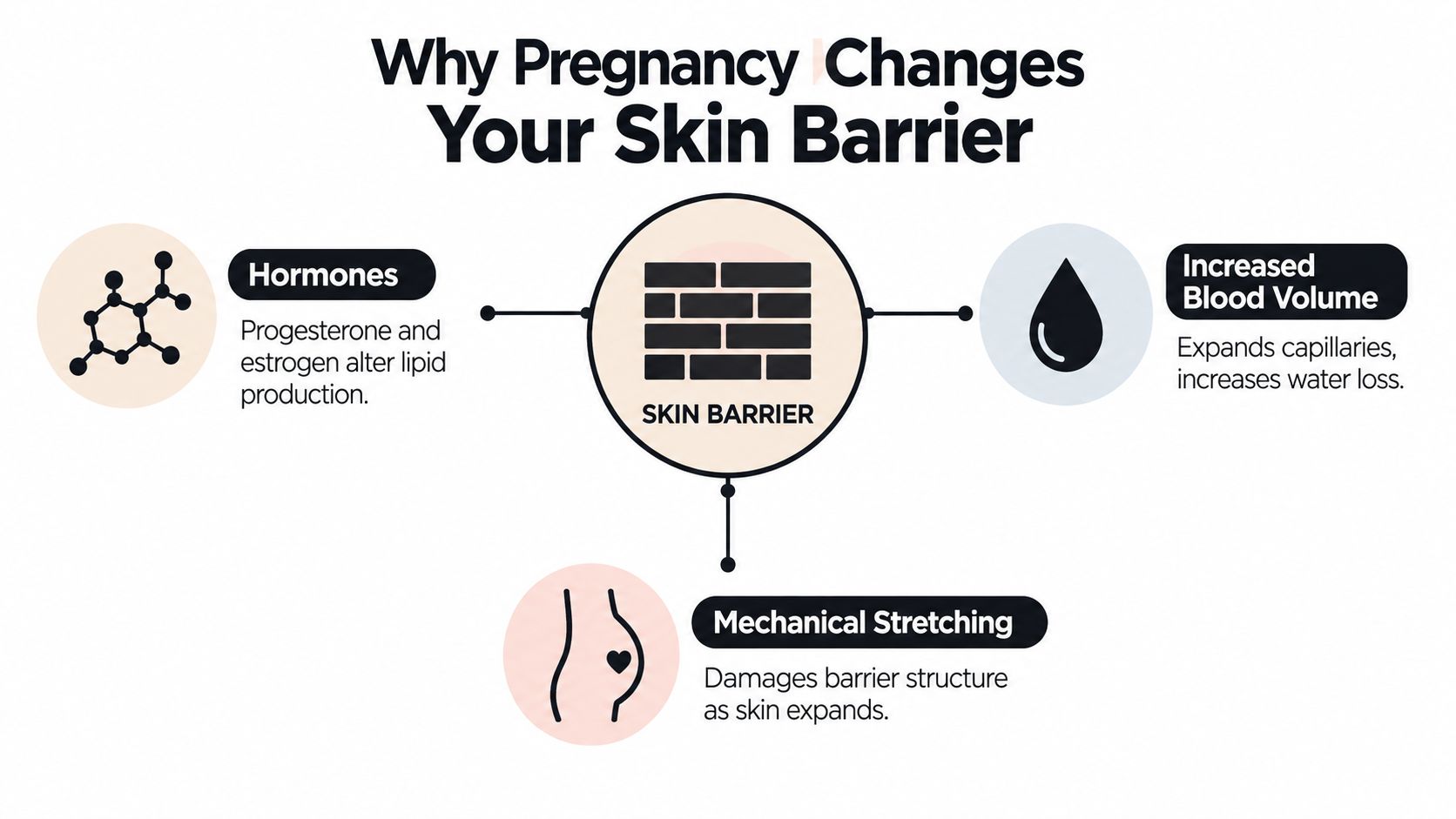
Think of your skin barrier as a wall. Skin cells form the bricks, while natural oils and lipids act like the mortar between them. A well-maintained wall keeps moisture inside and reduces the impact of soap, heat, friction and environmental irritants.
During pregnancy, several changes can make that wall feel less secure. Hormonal shifts can alter how the skin produces and organises its surface lipids. Increased blood volume can influence warmth and circulation, while physical expansion stretches the skin's structure. Together, these changes can leave the surface feeling tight, rough or more reactive.
Why stretched areas complain first
The abdomen, breasts and thighs often feel uncomfortable because they're changing shape and experiencing more friction from clothing. When the outer layer becomes less flexible, ordinary movement can create a sensation of pulling. Scratching may bring brief relief, but it can also create tiny breaks in the surface and increase irritation.
Seasonal conditions add another layer. Cold outdoor air, indoor heating and low humidity can make already-sensitive skin feel rougher. Hot showers and baths can strip some of the surface oils that help hold moisture, while strongly fragranced products may irritate a barrier that's already struggling.
You can read more about the structure and texture of the skin if you'd like a deeper explanation of how the outer surface affects comfort.
Dryness isn't always the whole story
Mild tightness that improves after applying an unperfumed emollient commonly fits a straightforward barrier-care pattern. Dry patches, scaling or a history of eczema may point towards increased sensitivity or an eczema flare, though only a healthcare professional can assess the cause.
The practical lesson is simple. Treat the barrier gently first, then observe how your skin responds. If discomfort persists, spreads or develops a pattern that doesn't resemble surface dryness, don't keep escalating products on your own.
Daily Care Routine That Soothes Dry Skin Gently
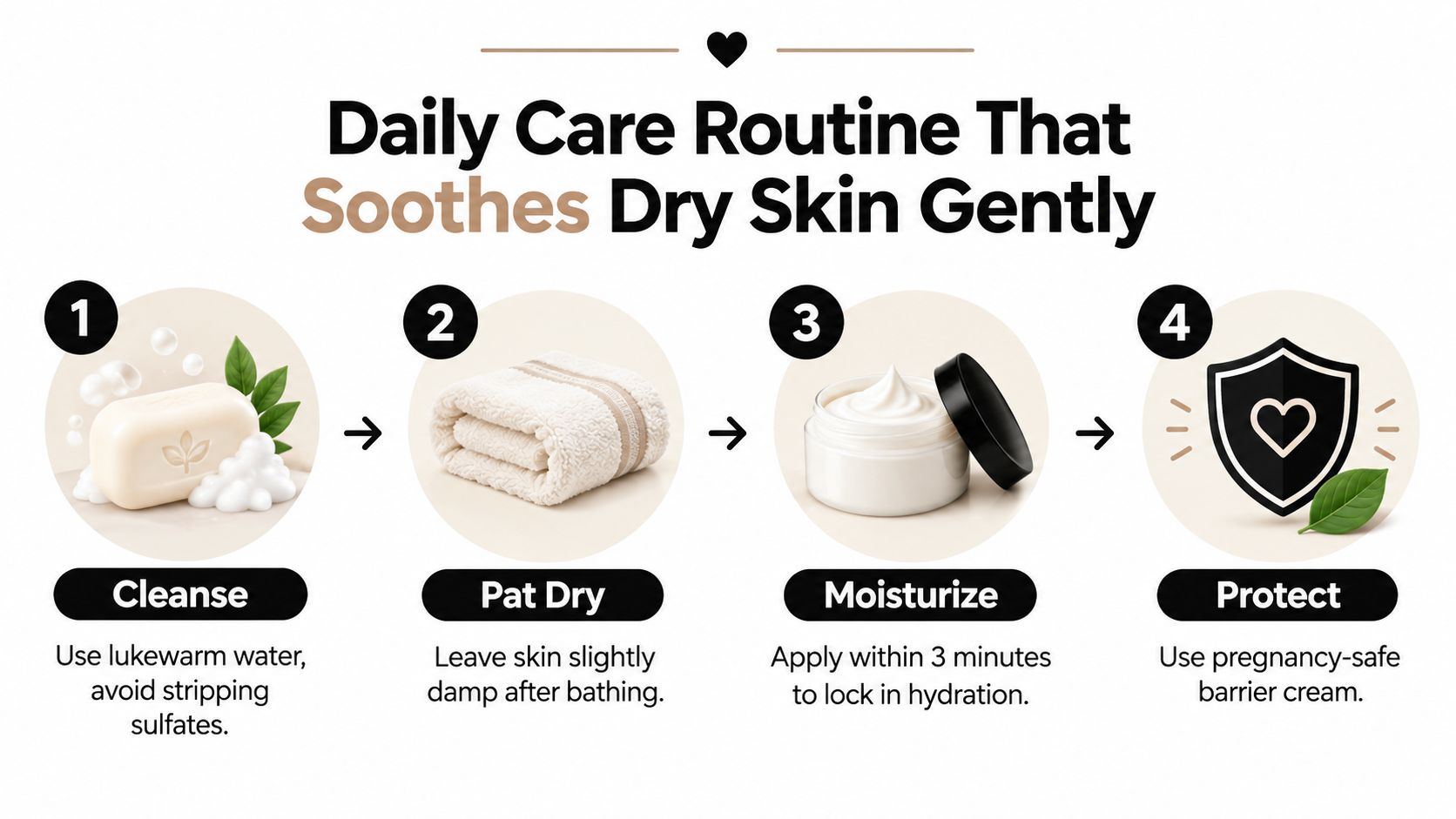
A helpful routine follows the order in which your skin loses and regains moisture. The aim is to clean away sweat and product residue without stripping the surface, then replace and seal moisture before the skin has a chance to dry fully.
Start with a low-irritation wash
Use warm or cool water rather than hot water. UK NHS advice recommends keeping baths and showers below a prolonged soaking routine, with baths limited to under 20 minutes, and choosing an unperfumed moisturiser or emollient regularly. NHS advice for itching in pregnancy explains why reducing heat, water exposure and fragrance can matter when skin is dry and itchy.
Apply cleanser mainly where you need it, such as the underarms, feet and groin. A gentle, fragrance-free body wash is usually kinder than a strongly foaming product used over every part of the bump. Don't use a scrub on flaky skin. Flakes are not dirt that needs removing, they're often a sign that the surface needs support.
Replenish before the skin dries
Pat yourself dry with a soft towel, leaving the skin slightly damp. Apply your moisturiser promptly, while that light surface dampness remains. This gives humectants and emollients a better environment to work in, while a richer layer can reduce further moisture loss.
For mildly tight skin, try a cream or lotion containing humectants such as glycerine or hyaluronic acid. For rough, visibly flaky areas, follow with a thicker cream or balm containing barrier-supporting lipids, shea butter or an oil-based emollient.
Build morning and evening versions
In the morning, use a lighter layer if clothing feels uncomfortable over rich products. Choose soft, breathable fabrics and avoid waistbands that rub directly against the bump. If the air at home feels dry, improving room humidity may make the environment more comfortable, but avoid turning skincare into a complicated project.
In the evening, cleanse gently, moisturise while damp and add a thin occlusive layer to the driest patches. Massage in slow, light circles rather than pressing hard. A bump-focused routine can become a calming pause, but stop if the skin feels sore, hot or increasingly irritated.
This short video can help you visualise a gentle application routine:
Use the smallest amount that leaves skin comfortable, and patch-test any new product on a small area first. If your skin reacts, return to the simplest routine and ask a healthcare professional or pharmacist for advice.
Safe Ingredients and Products for Pregnancy Dry Skin
“Moisturise more” is frustratingly broad advice when your skin has different levels of dryness. A light lotion may suit skin that feels tight after washing, while rough, peeling areas usually need a denser combination of water-binding and moisture-sealing ingredients.
Ingredient families each do a different job. Humectants, including glycerine and hyaluronic acid, attract and hold water near the skin surface. Barrier-supporting ingredients, such as ceramides and niacinamide, can help support the outer layer. Occlusives and emollients, including shea butter and suitable plant oils, soften roughness and slow water loss.
UK pregnancy skincare coverage discusses ingredients such as ceramides, shea butter, glycerine, niacinamide and hyaluronic acid, but comparative pregnancy-specific effectiveness information remains limited. Pregnancy skincare ingredient guidance from Vichy UK is useful background, but individual tolerance still matters more than chasing a perfect formula.
Match the texture to the symptom
| Dryness Level | Best Ingredient Focus | How to Layer |
|---|---|---|
| Mild tightness after washing | Glycerine, hyaluronic acid and a simple cream | Apply the hydrating product to slightly damp skin, then use a cream if tightness returns |
| Rough or flaky patches | Ceramides, niacinamide, shea butter and emollient oils | Use a barrier cream first, then add a thin richer layer to the most affected areas |
| Very dry, uncomfortable skin | A fragrance-free cream or balm with occlusive and emollient ingredients | Keep cleansing brief, apply immediately after bathing and repeat when the skin feels tight |
| Skin that stings easily | A short, fragrance-free formula with fewer ingredients | Stop fragranced products and introduce changes one at a time |
Oils are useful, but they aren't a complete routine
An oil can soften the surface and reduce the rough feeling, but it won't provide the same water-binding function as a humectant. Apply it over a cream if your skin is very dry, rather than assuming oil alone will replace every step. You can explore practical considerations around oil for dry skin while keeping the same principle in mind: use texture and layering to match your symptoms.
Fragrance-free products are generally the safer starting point for reactive skin. “Natural” doesn't automatically mean non-irritating, and essential oils may still trouble sensitive skin. If you're considering an active treatment, prescription product or a formula with ingredients you're unsure about, check with your midwife, GP or pharmacist before using it.
When Dryness Needs Clinical Advice
Most pregnancy dryness is uncomfortable rather than dangerous, but itching isn't always caused by dry skin. The decision depends on the pattern, severity and response to basic care.
UK clinical guidance describes prurigo of pregnancy as recurring in 50 to 70% of cases, and notes that it can skip pregnancies. Another UK guideline states that itch in pregnancy affects approximately 1% of pregnancies in the UK. These figures refer to specific clinical patterns, not ordinary dry skin, but they show why persistent symptoms deserve proper assessment. UK guidance on pregnancy-related skin conditions provides the relevant clinical context.
Use a simple check before worrying
Ask yourself three questions:
- Does the itch improve with gentle care? If regular unperfumed emollient use settles mild tightness, continue the routine and mention ongoing concerns at your next appointment.
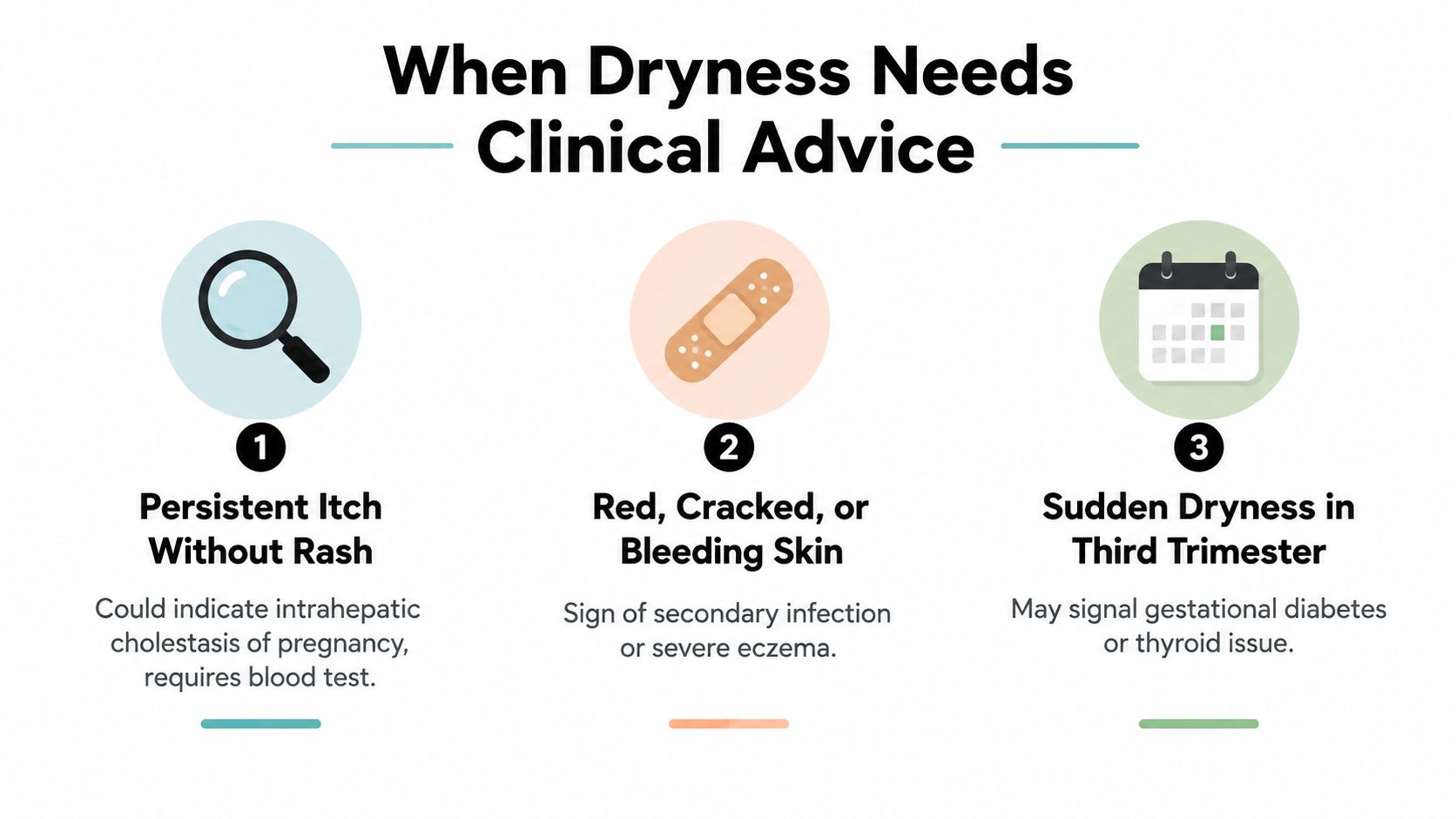
- Is there a visible skin change? Weeping, cracked, bleeding or inflamed patches may need assessment for eczema or infection rather than another moisturiser.
- Does the itch have an unusual pattern? Persistent itch without a rash, especially intense itching affecting the palms or soles, should be reported promptly because it can require investigation for pregnancy-specific conditions.
Contact your midwife or GP if symptoms are persistent, worsening or interfering with sleep. Don't wait for a dramatic rash before asking for help. Guidance on how to stop itching during pregnancy can support your comfort routine, but it shouldn't replace clinical assessment when warning signs appear.
A practical boundary: moisturiser can support the skin barrier, but it can't diagnose the reason for ongoing pregnancy itch.
Keep a brief note of when the itching began, where it appears, whether there's a rash and what products you've used. That information can help your care team decide what needs checking.
Prevention Rituals and Bump Care Through Each Trimester
Prevention works best when it's ordinary enough to repeat. You don't need an elaborate routine that becomes another pregnancy task. You need a few small actions that protect the barrier before discomfort has a chance to build.
Adapt the same foundations
In the first trimester, keep your routine simple if nausea or tiredness makes strong scents unpleasant. A fragrance-free cleanser and one dependable moisturiser may be enough. Keep a small tube beside the bed or in your changing bag so you can apply it without adding another complicated step.
As your body changes, focus on areas that experience stretching and friction. Apply cream after washing, choose comfortable clothing and avoid vigorous exfoliation. If you enjoy a gentle exfoliating product, use it sparingly and stop if the skin feels sensitive, sore or more irritated afterwards.
Later in pregnancy, dryness may feel more noticeable because the bump and breasts are under greater mechanical strain. Increase the richness of your moisturiser if your skin needs it, but don't keep adding layers when the problem is persistent itching rather than surface roughness. That's the point at which your care team should help you decide what's happening.
Make prevention fit real life
A busy morning version can be brief: rinse or cleanse only where needed, pat dry, apply cream to the bump and dress in soft layers. An evening version can include a slower massage, but keep your touch light and avoid rubbing areas that are already cracked.
Travel can dry skin further through unfamiliar water, heated rooms or air conditioning. Take the same unperfumed emollient you already tolerate rather than testing a new product away from home. Drink regularly for general pregnancy wellbeing, while remembering that topical barrier support remains central to surface dryness.
Consistency beats intensity. Gentle care repeated each day is more useful than occasional aggressive treatment after the skin has become sore.
Your Calm Confident Plan for Comfortable Skin
Dry skin during pregnancy becomes easier to manage when you separate three questions. Why does it feel this way? Stretching, hormonal changes and environmental irritation can weaken moisture retention. What can I do now? Cleanse gently, moisturise promptly and layer a richer product where needed. When should I ask for help? Persistent, unusual or treatment-resistant itching deserves clinical advice.
Your next seven days can stay simple:
- Observe the pattern. Note whether the skin is tight, flaky, visibly inflamed or itchy without a rash.
- Simplify cleansing. Use lukewarm water, keep bathing time limited and avoid strongly fragranced products.
- Moisturise promptly. Apply an unperfumed emollient while skin is still slightly damp.
- Adjust the texture. Use a lotion for mild tightness and a richer cream or balm for rough patches.
- Protect the surface. Choose soft clothing, avoid scratching and reduce unnecessary friction.
- Escalate when needed. Speak to your midwife or GP if symptoms persist, worsen or follow an unusual pattern.
You don't need to treat your bump as a problem to be fixed. Moisturising can be practical skin care and a quiet moment of connection with your changing body. If a routine helps, keep it steady. If it doesn't, that response is useful information, not a personal failure.
The best plan is one you can follow comfortably and explain clearly to your care team. Your skin deserves support, and your concerns deserve to be taken seriously.
The Happy Bump Co offers UK-made pregnancy body care, including Belly Butter, Belly Oil for Stretch Marks and Pregnancy Tummy Scrub, for expectant mums building a gentle bump-care routine. Visit The Happy Bump Co to explore options for supporting comfortable, moisturised skin throughout pregnancy.