

You're reaching for your favourite bath oil to ease an aching back when you notice clary sage on the label. You've used it before, but now you're pregnant, even familiar products can leave you wondering what's suitable.
Natural doesn't automatically mean suitable for pregnancy. Essential oils are concentrated preparations, and Leicester Hospitals' pregnancy aromatherapy guidance advises speaking to an aromatherapy-trained midwife or another qualified professional before using them. It also says never to swallow essential oils, apply them straight from the bottle, or massage them into broken skin.
When searching for essential oils to avoid when pregnant, you'll find confident lists that don't always explain the evidence behind them. The important distinction is between an oil specifically restricted in maternity guidance and an oil that hasn't been established as suitable for your circumstances. Those aren't the same thing.
The oils below are sensible ones to pause and discuss before self-use, rather than a claim that every exposure causes harm. Clary sage has a specific pregnancy restriction in the supplied NHS guidance; for the others, the available evidence doesn't justify equally precise claims.
Start simply: Put an uncertain product aside, keep its ingredient list, and ask your midwife or pharmacist before using it again.
You can still enjoy a comforting bump-care routine. A simpler formulation, clear ingredients and advice suited to your pregnancy offer a more useful starting point than a reassuring scent or a natural label.
Table of Contents
- 1. Clary Sage (Salvia sclarea)
- 2. Rosemary (Rosmarinus officinalis)
- 3. Peppermint (Mentha piperita)
- 4. Juniper Berry (Juniperus communis)
- 5. Cinnamon Bark (Cinnamomum zeylanicum)
- 6. Basil (Ocimum basilicum)
- 7. Pennyroyal (Mentha pulegium)
- 8. Fennel (Foeniculum vulgare)
- 8 Essential Oils to Avoid During Pregnancy: Comparison Guide
- Nurture Your Bump With Confidence and Calm
1. Clary Sage (Salvia sclarea)
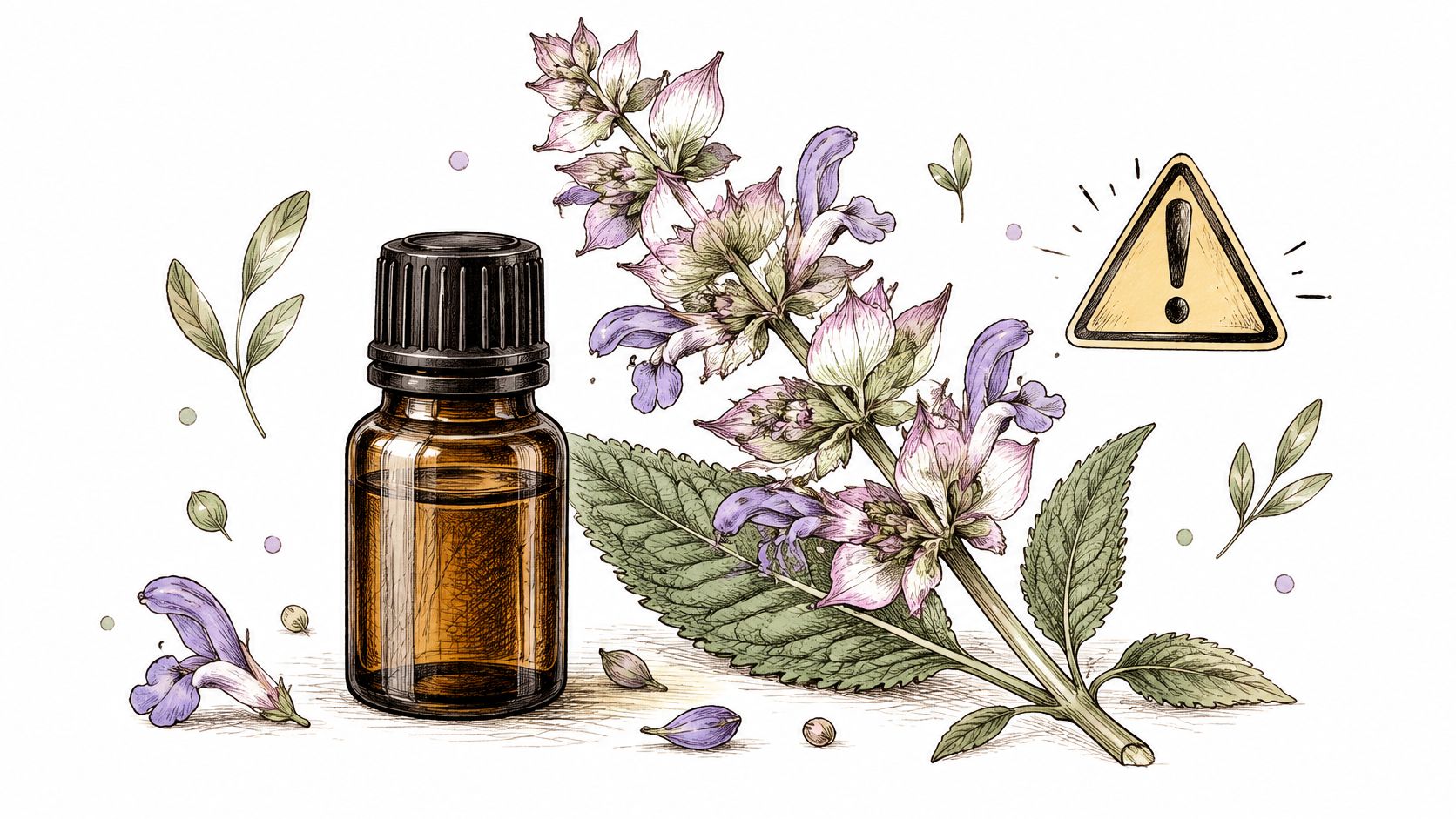
Clary sage deserves particular attention because NHS maternity guidance gives a clear timing restriction. North Tees and Hartlepool NHS Foundation Trust states that it's contraindicated during pregnancy until after 37 weeks.
That isn't permission to begin using it yourself once you reach that point. Clinical aromatherapy involves an assessment and professional direction, rather than choosing an oil because you're approaching your due date.
When your usual bath oil needs another look
Suppose you turn over a massage-oil bottle and find Salvia sclarea in the ingredients. Rather than guessing whether the amount is small enough, pause use and show the label to your midwife.
The same approach makes sense if someone offers you a homemade massage blend. Without a full ingredient list and concentration, you don't have enough information to judge whether it's appropriate.
- Check the whole blend: Don't stop at the ingredient highlighted on the front.
- Keep the packaging: Your maternity professional may need the product name and directions.
- Avoid improvising: Don't add clary sage to your normal moisturiser or bath product.
For everyday body-care choices, The Happy Bump Co's body oil guidance offers a starting point for thinking about your routine. Treat skincare advice as support for label checking, not a substitute for your own maternity assessment.
If you've already used a product containing clary sage, that information alone doesn't establish what the exposure means for your pregnancy. Explain what you used, how you used it and whether you have any symptoms, rather than assuming either danger or complete reassurance.
2. Rosemary (Rosmarinus officinalis)
A hair oil can be easy to overlook when you're reviewing pregnancy skincare. You might check everything you put on your bump while continuing a familiar scalp routine without another glance.
If your scalp serum lists rosemary essential oil, put it on your list of products to discuss before continuing. The verified maternity guidance supplied here doesn't establish a rosemary-specific pregnancy rule, so it wouldn't be accurate to claim that every diluted rosemary product is prohibited or that a particular exposure causes contractions.
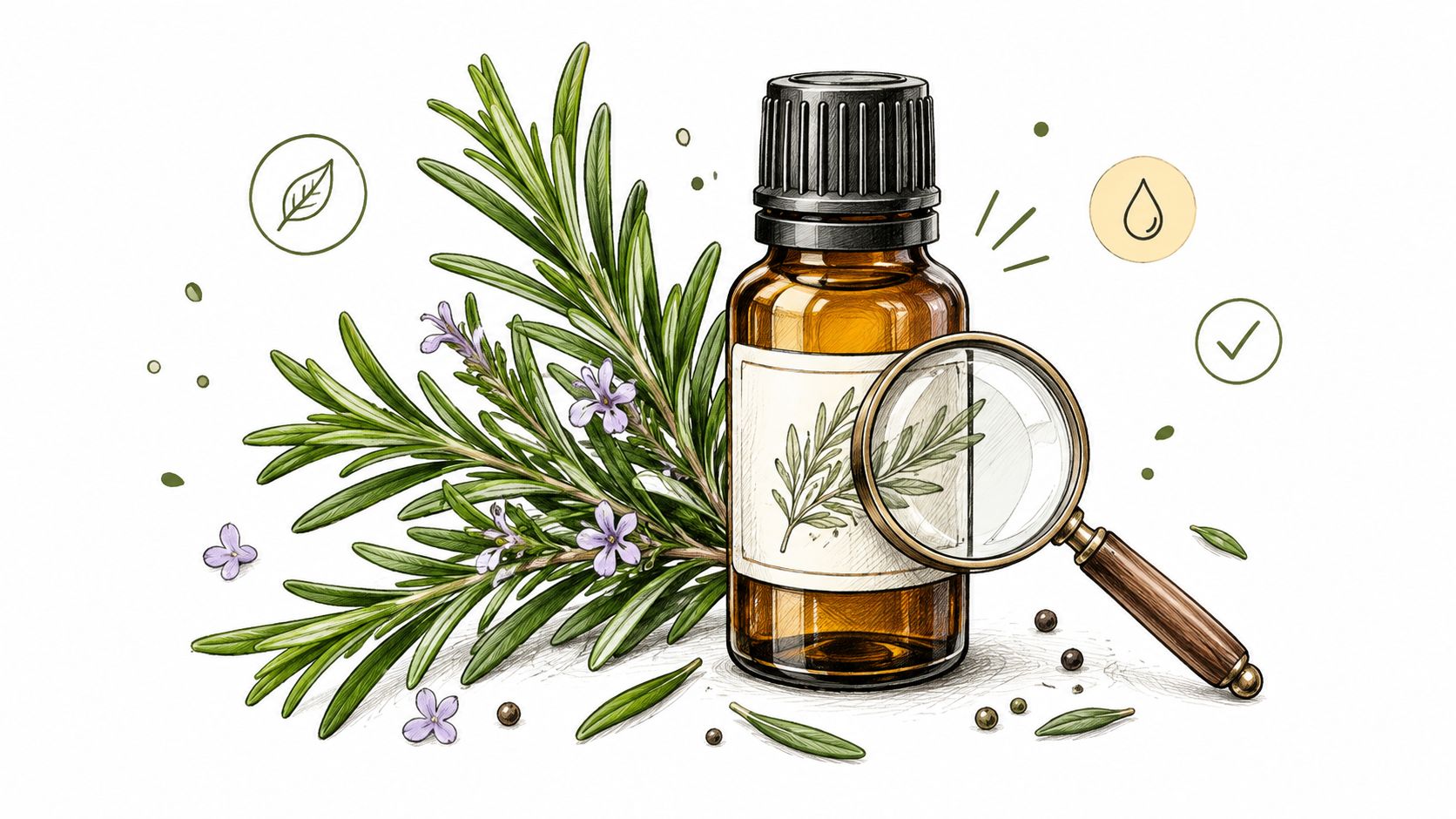
The practical issue is uncertainty, not a proven outcome from your usual hair wash. A concentrated bottle intended for blending needs a different conversation from a finished product with its own directions and ingredient information.
Bring the actual product to the conversation
Consider a scalp oil promoted online as plant-based and suitable for a relaxing evening routine. Neither description answers whether it's appropriate during your pregnancy.
Before your appointment, photograph the front, ingredient list and instructions. Ask whether the formulation is suitable for you, rather than asking only whether rosemary is safe in the abstract.
- Identify the preparation: Is it a concentrated essential oil or a finished hair product?
- Describe your use: Explain where you apply it and whether you rinse it off.
- Mention your circumstances: Include relevant health conditions, medicines and any reaction.
You don't need to prove that a product is dangerous before deciding to leave it out. Pausing an optional essential-oil treatment is a reasonable precaution while you get a clear answer.
Equally, don't turn uncertainty into a prediction about harm. An ingredient name on a label isn't enough to assess an exposure retrospectively.
3. Peppermint (Mentha piperita)
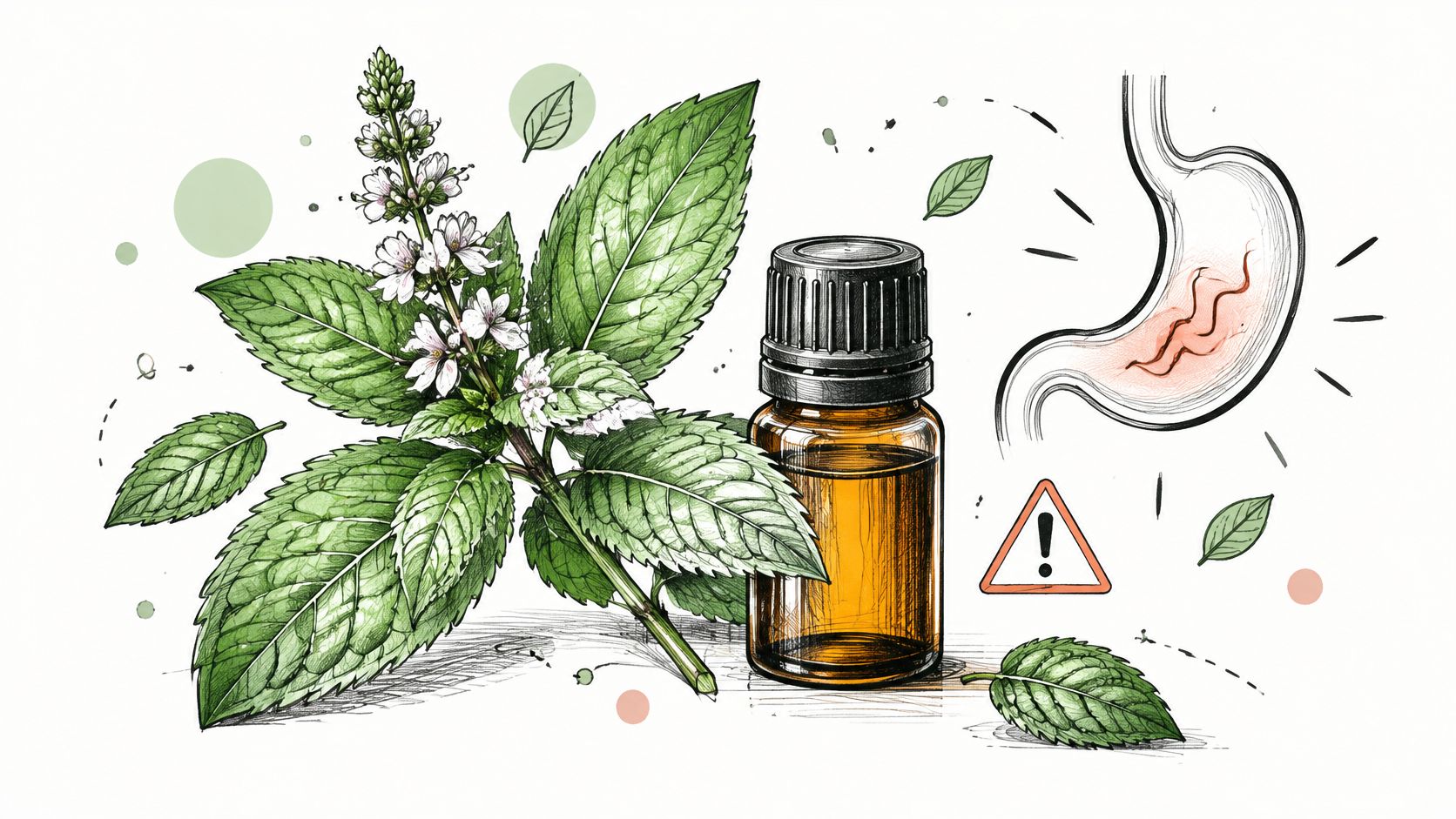
You might reach for a cooling balm after a tiring day, then notice peppermint among the ingredients. The useful question isn't whether the product smells minty, but what it contains, how it's intended to be used and whether it's suitable for you.
The verified information doesn't support a peppermint-specific claim about miscarriage, heartburn or a particular trimester threshold. It does support taking concentrated essential-oil use seriously and seeking individual advice.
For the wider timing question, NHS Borders' midwifery aromatherapy guideline advises avoiding essential oils during the first trimester. It also requires specific training and informed consent for midwives providing aromatherapy, which shows why a home blend isn't equivalent to supervised maternity care.
Check balms as carefully as body oils
Imagine a friend gives you a mint-scented foot rub. Before using it, look for the full ingredient list and any pregnancy instructions, then ask your pharmacist or midwife if the answer remains unclear.
If it's a medicinal rub rather than a cosmetic moisturiser, ask about that exact product. Don't replace prescribed or recommended treatment solely because a general essential-oil list mentions peppermint.
A familiar smell isn't enough information to approve a product, and it isn't enough information to condemn it either.
For routine moisturising, you may prefer to remove the fragrance question altogether. The Happy Bump Co's fragrance-free body oil guidance can help you consider a simpler approach.
Check that any alternative meets your actual preference, whether that's fragrance-free, essential-oil-free or both. Don't rely on a soothing product name as confirmation of its contents.
4. Juniper Berry (Juniperus communis)
A body oil described as a detox treatment can sound appealing when your body feels unfamiliar. During pregnancy, though, you don't need to choose a product on the promise of correcting or cleansing your changing shape.
If a product you're considering lists juniper berry essential oil, pause before adding it to your routine. The supplied verified information doesn't establish a juniper-specific effect on the kidneys or uterus, so those claims shouldn't be presented as settled facts here.
There is, however, a clear reason to discuss your medical history before aromatherapy. York Hospitals' pregnancy aromatherapy guidance identifies kidney or liver dysfunction, cardiac disease, epilepsy, clotting disorders, unstable diabetes, hypertension and certain skin conditions among circumstances that affect eligibility.
Separate the skincare goal from the marketing
Suppose you're comparing a juniper-containing body blend with a straightforward moisturiser. Ask yourself what you want from the purchase: comfortable skin, a pleasant massage routine or relief from dryness.
You can pursue those goals without choosing an aromatherapy treatment. You also don't need a detox claim to justify taking time for yourself.
- Read beyond the promise: A body-shaping or cleansing description isn't pregnancy-safety information.
- Share relevant history: Don't assume a cosmetic product is irrelevant to your medicines or health conditions.
- Choose transparency: If the ingredients or directions are unclear, leave the product aside.
If you have kidney disease, don't interpret this as evidence that juniper has caused a problem. The point is that your condition makes individual assessment more important.
Skip self-prescribed juniper aromatherapy while you seek advice. That's a proportionate precaution, not a diagnosis and not a reason to worry about every product you've previously used.
5. Cinnamon Bark (Cinnamomum zeylanicum)
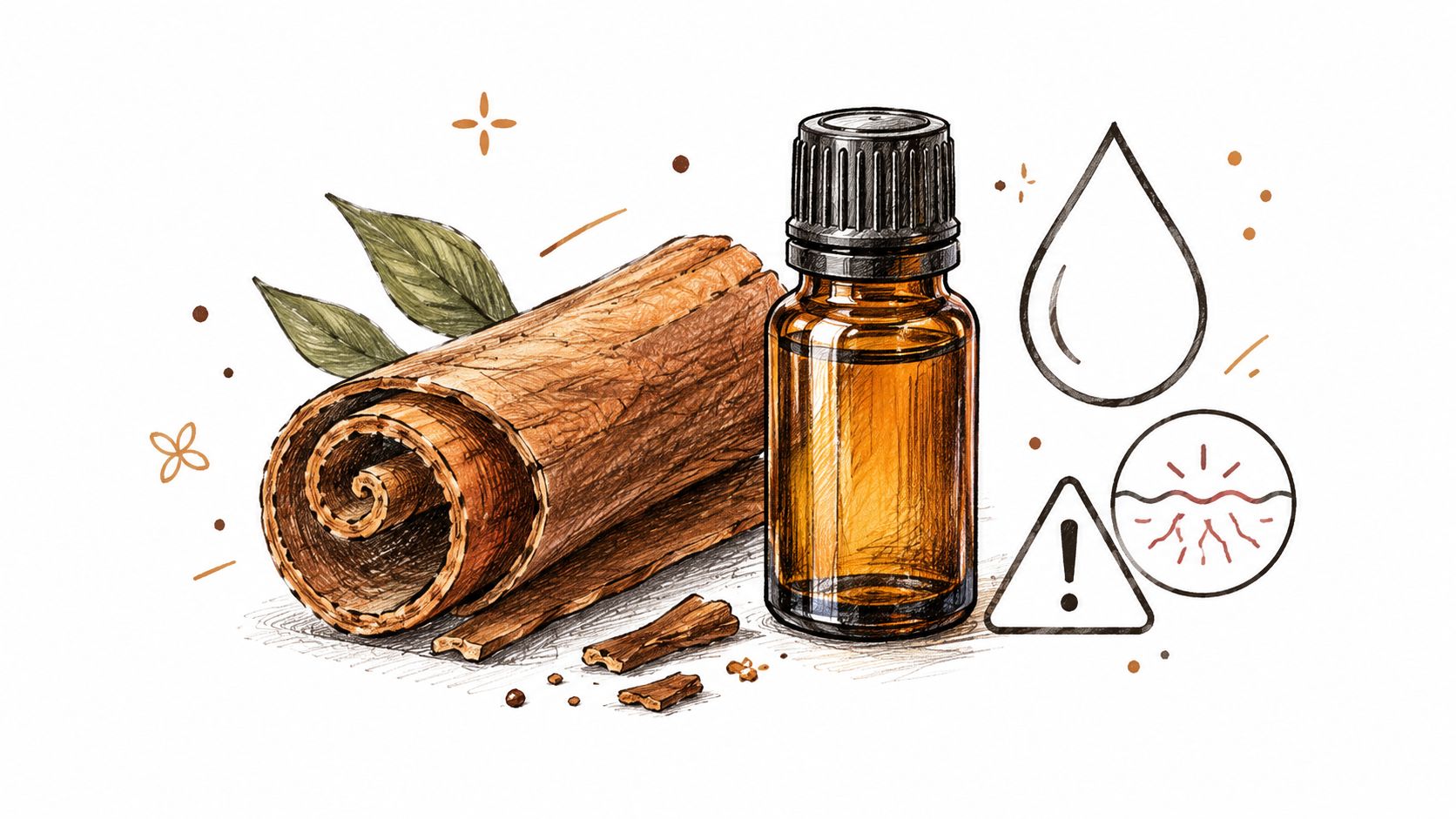
A warming bath product can feel like an easy route to comfort. If its label lists cinnamon bark essential oil, don't assume that a cosy scent or seasonal packaging answers the pregnancy question.
The verified evidence supplied for this article doesn't establish cinnamon bark's chemical composition, an oil-specific pregnancy ban or a measured risk of skin irritation. A responsible recommendation is therefore to leave concentrated cinnamon bark out of homemade pregnancy blends and seek advice about finished products.
Dilution isn't a universal safety certificate
The NHS Borders clinical aromatherapy protocol includes pregnancy dilution limits of 1% or a maximum of 1.5%, depending on the preparation and clinical instructions. Those limits belong within a professional protocol; they don't mean any essential oil becomes suitable if you dilute it to that level.
Avoid converting that information into a home recipe. You'd still need an appropriate oil, an appropriate formulation and an assessment of your circumstances.
Consider a bath oil whose label doesn't disclose its total essential-oil concentration. Rather than estimating from the ingredient order, ask the manufacturer for clarification and your maternity professional for advice.
- Don't add extra drops: A finished bath product isn't an invitation to strengthen the blend.
- Don't rely on a patch test: A small-area test can't answer every pregnancy-safety question.
- Stop if it irritates: Don't continue using a product that causes discomfort while waiting for advice.
A candle and a leave-on body oil also involve different routes of exposure. Don't assume advice about putting an oil on your skin automatically answers every question about a scented room.
For daily bump care, a clearly labelled moisturiser is a simpler choice than experimenting with a warming essential-oil blend.
6. Basil (Ocimum basilicum)
A botanical name is useful information, but it isn't a safety assessment. If a diffuser blend or massage oil lists basil essential oil, you still need to know what the preparation is and whether it's appropriate for your circumstances.
The verified evidence doesn't establish a basil-specific pregnancy outcome or justify claims here about particular compounds causing liver damage. It's more accurate to recommend pausing optional use than to describe an unsupported mechanism as fact.
A realistic example is a mood blend bought before pregnancy. You may have the bottle but no longer have its outer packaging, instructions or full ingredient information.
Missing information is a reason to pause
Don't fill those gaps with assumptions about the brand or the word natural. Ask the manufacturer for the full formulation information available to customers, then discuss the product with a suitably qualified professional.
- Check the exact ingredient: Don't rely only on an image of basil leaves or a blend's name.
- Identify the intended route: A diffuser product shouldn't become a skin treatment.
- Avoid homemade combinations: Don't mix several uncertain oils into a product you already tolerate.
A useful question: Would you still choose this product if you couldn't smell it? If your goal is simply moisturising, you may not need the essential oil at all.
Changing the route of use doesn't remove the need for advice. If you've been told to avoid a particular blend, ask before assuming that diffusing it is an acceptable workaround.
You don't need to remove every familiar pleasure from your day. You can keep the quiet bath, comfortable chair or gentle skincare ritual while leaving an uncertain essential-oil blend out of it.
That approach keeps the decision practical. It avoids both unnecessary experimentation and alarming claims that the available evidence can't support.
7. Pennyroyal (Mentha pulegium)
Don't self-prescribe pennyroyal essential oil during pregnancy. If you've swallowed it, seek urgent medical advice rather than waiting for an online ingredient comparison.
The verified NHS advice against swallowing essential oils applies regardless of the bottle's natural, traditional or wellness branding. The information supplied here doesn't support quoting a pennyroyal-specific toxic dose, predicting an outcome or making a precise claim about organ damage.
If you've already used it
Put the product aside and keep the bottle. When you contact a healthcare professional, give a clear account of the exposure rather than trying to decide its significance yourself.
- Name the product: Read out the ingredients or provide a photograph.
- Explain the route: Say whether you swallowed it, applied it or used it another way.
- Describe the circumstances: Include when it happened, your pregnancy stage and any symptoms.
- Mention relevant treatment: Include medicines and known medical conditions.
For breathing difficulties or a severe reaction, seek emergency help. If you feel unwell after an exposure, don't delay seeking advice because you're unsure whether the oil is responsible.
You don't need to prove that an exposure was dangerous before asking for help.
It's understandable to feel worried after noticing an ingredient you hadn't checked. Your healthcare professional needs accurate information, not an apology or a conclusion you've reached yourself.
For a calmer review of everyday products, The Happy Bump Co's pregnancy skincare guidance can help you organise questions about your routine. It isn't an emergency assessment or a substitute for advice after ingestion.
Keep general video information separate from decisions about a specific exposure.
8. Fennel (Foeniculum vulgare)
A product labelled tummy massage oil may seem especially relevant to pregnancy. But a reference to the tummy doesn't establish that the formulation was designed for pregnant users.
If the ingredient list includes fennel essential oil, leave it aside until you've checked its suitability. The verified material supplied here doesn't establish fennel-specific effects on the uterus or developing baby, so it wouldn't be responsible to present those effects as proven.
Think of a digestive roll-on you already own. Before applying it to your bump, check its intended use, full ingredients and pregnancy directions rather than assuming its location on the body makes it appropriate.
Choose according to the job you need done
If you want to moisturise your bump, choose a product intended for that purpose. If you want help with a physical symptom, describe the symptom to your midwife or pharmacist instead of trying to treat it with an uncertain oil.
Those are different decisions. A cosmetic routine shouldn't become a substitute for getting advice about discomfort that concerns you.
- Check the purpose: Is the product a moisturiser, an aromatherapy preparation or a symptom-focused treatment?
- Check the complete label: Don't stop at a reassuring front-of-pack description.
- Ask about uncertainty: If the maker can't clarify the formulation or intended use, choose something easier to assess.
Being further along in pregnancy doesn't automatically resolve those questions. The timing restrictions discussed earlier are examples of clinical decision-making, not a rule that all oils become suitable later.
Fennel belongs on your pause-and-check list rather than in a homemade bump blend. You can make that choice without assuming that a previous application harmed your pregnancy.
A simpler routine leaves fewer ingredients to query and gives you a clear starting point for a conversation with your maternity team.
8 Essential Oils to Avoid During Pregnancy: Comparison Guide
| Essential Oil | Pregnancy Guidance ⭐ | Main Safety Concern | Common Uses or Products | Practical Check 💡 |
|---|---|---|---|---|
| Clary Sage (Salvia sclarea) | Generally advised to avoid during pregnancy | Traditionally considered a uterine stimulant; may be sedating | Massage oils and bath blends | Check blend labels and ask a midwife or GP before use |
| Rosemary (Rosmarinus officinalis) | Generally advised to avoid, including when diluted | May stimulate uterine activity; some chemotypes contain camphor | Hair oils, scalp serums and muscle blends | Check hair and scalp product ingredients |
| Peppermint (Mentha piperita) | Avoid concentrated oil, particularly in the first trimester, unless advised by a healthcare professional | May worsen heartburn; undiluted oil can irritate skin | Chest rubs, cooling sprays and digestive blends | Ask a midwife or pharmacist before using menthol-based products |
| Juniper Berry (Juniperus communis) | Generally advised to avoid during pregnancy | Traditionally considered an emmenagogue and diuretic; caution with kidney conditions | Massage, “detox” and cellulite-focused body oils | Check ingredient lists, especially on detox-themed products |
| Cinnamon Bark (Cinnamomum zeylanicum) | Generally advised to avoid during pregnancy | Cinnamaldehyde can cause skin irritation and sensitisation | Seasonal bath products and fragrance blends | Choose products without cinnamon bark; patch testing does not establish pregnancy safety |
| Basil (Ocimum basilicum) | Generally advised to avoid unless a healthcare professional recommends it | Some chemotypes contain estragole; chemotype may be unclear on labels | Diffuser and mood-focused blends | Check the botanical name and chemotype |
| Pennyroyal (Mentha pulegium) | Do not use during pregnancy | High toxicity risk, including liver and nervous system harm | Few modern cosmetic uses; historically used in folk remedies | If used or swallowed, seek urgent medical advice |
| Fennel (Foeniculum vulgare) | Generally advised to avoid unless under medical guidance | Contains estragole and is considered an emmenagogue | Digestive blends, tummy oils and roll-ons | Check ingredients in products marketed for bloating |
Nurture Your Bump With Confidence and Calm
The sensible approach to essential oils to avoid when pregnant isn't to memorise a frightening list. It's to recognise when an optional product needs a closer look and when you need advice specific to your pregnancy.
Clary sage, rosemary, peppermint, juniper berry, cinnamon bark, basil, pennyroyal and fennel are the oils discussed here. They don't all have the same evidence or the same restriction: clary sage has a specific NHS timing caution, while the supplied verified evidence doesn't establish equivalent oil-specific rules for the others.
For those other oils, pausing self-directed use is a precaution, not a claim that every exposure is harmful. Keep that distinction in mind if you discover an ingredient after you've already used a product.
Keep your daily routine straightforward
Read the full ingredient list before using a bath oil, body blend or scalp treatment. If you can't establish what's in it or whether it's intended for pregnancy, put it aside while you ask.
- Choose clear information: Look for accessible ingredients and understandable directions.
- Avoid DIY aromatherapy: Don't add concentrated oils to your bath, butter or body oil.
- Respect the earlier precautions: Follow the advice on ingestion, undiluted application and broken skin.
- Review changes: Recheck products if your health, medicines, pregnancy circumstances or breastfeeding status changes.
Dilution matters, but it can't turn an unsuitable oil into a suitable one. Likewise, a successful patch test doesn't establish pregnancy safety, and a pregnancy-themed product name doesn't replace ingredient information.
If you've already used something uncertain, keep the packaging and contact your midwife, pharmacist or GP for an individual assessment. Seek prompt help after ingestion, breathing symptoms, an allergic reaction or significant irritation, and contact your maternity team about concerning pregnancy symptoms rather than assuming an oil explains them.
For a daily bump ritual, The Happy Bump Co Belly Butter, Belly Oil for Stretch Marks and Pregnancy Tummy Scrub are UK-made, bump-focused options to consider. The brand describes its range as designed to nourish changing skin during pregnancy, but check each current formulation rather than assuming every product is fragrance-free or essential-oil-free.
You don't need an elaborate routine to care for yourself. Choose a product whose ingredients you understand, use it as directed, and let your midwife help with any uncertainty so that your self-care feels reassuring rather than complicated.
The Happy Bump Co offers pregnancy-focused body care, including Belly Butter, Belly Oil for Stretch Marks and Pregnancy Tummy Scrub, for a straightforward bump-care routine. Visit The Happy Bump Co to explore the range and review the ingredient lists, then discuss any essential-oil questions with your midwife before introducing something new.