

You've showered, moisturised your bump, and still feel that tight, itchy pull across your abdomen by bedtime. Your breasts, thighs, or sides may feel just as uncomfortable, especially when clothing rubs or central heating dries the air. This is a familiar pregnancy problem, but “common” doesn't mean you have to tolerate it without a plan.
The most effective answer to how to help dry skin during pregnancy isn't an expensive “pregnancy-safe” label or a complicated routine. It's consistent barrier care: gentle cleansing, lukewarm water, liberal use of an unperfumed emollient, and knowing when itching needs medical assessment rather than more cream.
Table of Contents
- Understanding Why Your Skin Changes During Pregnancy
- Building a Gentle Daily Cleansing and Moisturising Routine
- Navigating Pregnancy-Safe Ingredients and Targeted Treatments
- Lifestyle Adjustments and Environmental Hydration Hacks
- Recognising When to Seek Medical Advice for Itchy Skin
- Your Daily Bump Care Checklist for Lasting Hydration
Understanding Why Your Skin Changes During Pregnancy
A growing bump can make the skin across your abdomen feel stretched, tight, and prickly. You might notice the same sensation across your breasts or thighs, where the skin is also changing quickly. Dryness and itching are very common during pregnancy, and UK NHS guidance links them with hormonal changes and skin stretching, particularly around the abdomen, breasts, and thighs. NHS pregnancy guidance on itching and rash recommends keeping the skin moisturised and asking a pharmacist to help select a suitable moisturiser for your condition.
Hormonal shifts can alter how your skin behaves, while physical stretching places extra pressure on its protective outer layer. When that barrier becomes less effective, the skin loses water more readily, a process known as transepidermal water loss. The result can be roughness, tightness, flaking, and itching that feels worse after washing.
That's why treating the skin only when it starts to itch usually isn't enough. A barrier needs regular support, not occasional rescue. Think of moisturiser as part of your daily maternity care, much like applying lip balm when your lips are prone to cracking.
Practical rule: Don't wait for discomfort to appear. Apply an unperfumed emollient routinely, especially after washing.
The texture of your skin can change across the body, so a single lightweight lotion may not suit every area. A richer cream or balm can work better on the abdomen and breasts, while a lighter emollient may feel more comfortable on areas that become warm or sweaty. For a useful explanation of how pregnancy can affect skin texture, see this guide to changes in the texture of the skin during pregnancy.
Itching can also become significant enough to interfere with sleep or daily life. NHS advice treats hydration-focused self-care as a standard first step because reducing moisture loss and avoiding irritants can calm ordinary dryness before it becomes a repeating cycle of scratching and irritation.
Building a Gentle Daily Cleansing and Moisturising Routine
Your shower can either support your skin barrier or strip it further. Hot water, perfumed body washes, vigorous rubbing, and long baths all make dryness harder to control, particularly when pregnancy has already made your skin more sensitive.
Make washing less disruptive
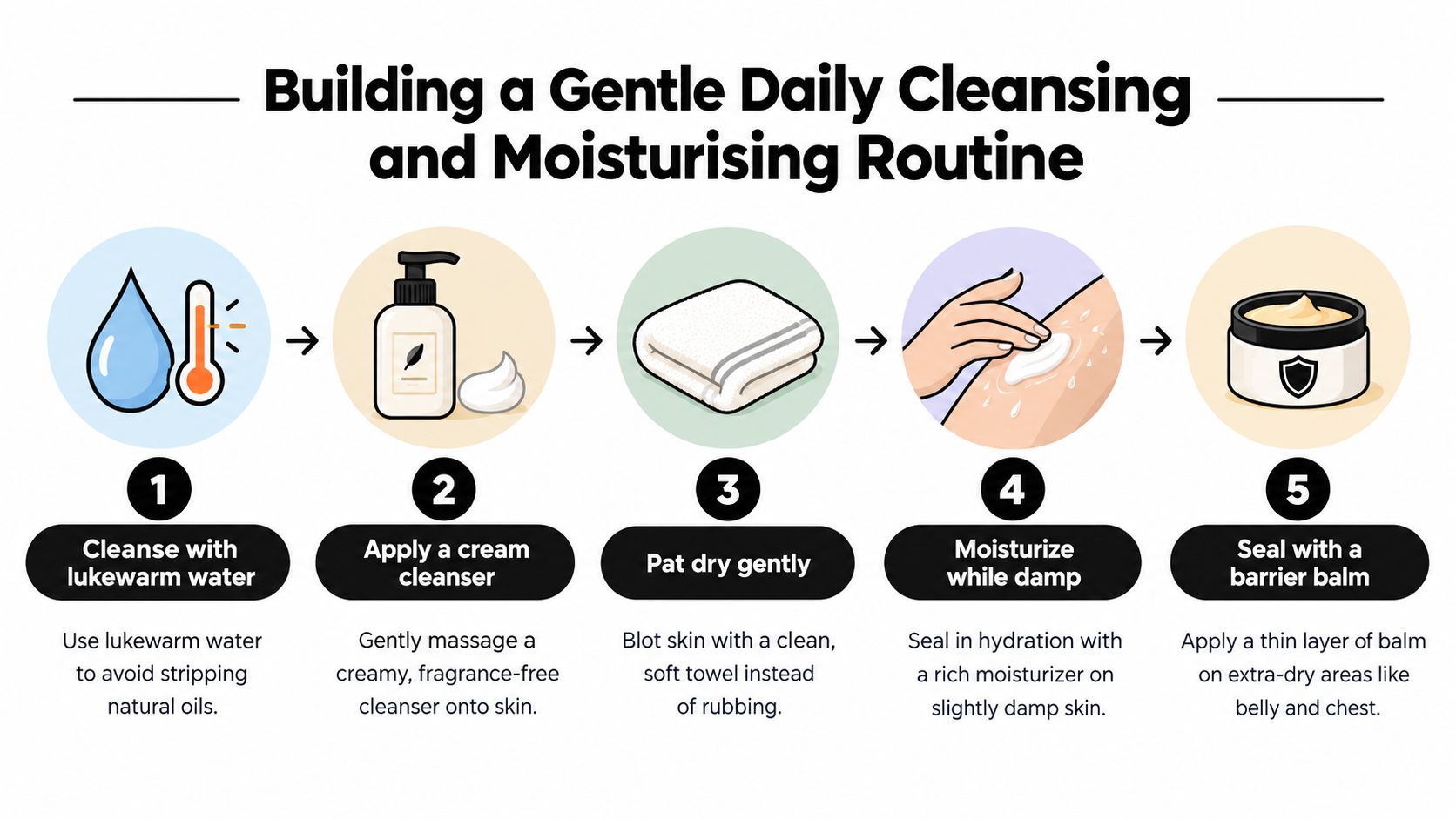
Start with cool or warm water rather than hot water. UK NHS pregnancy advice also recommends avoiding perfumed soaps and moisturisers, and keeping baths or showers to no longer than 20 minutes. NHS advice on pregnancy itching and intrahepatic cholestasis supports this gentle approach, particularly when itching is persistent.
Use a small amount of an unperfumed, creamy cleanser on areas that need it. You don't need to scrub your bump to make it clean. Friction can aggravate already dry skin, so use your hands rather than a rough exfoliating mitt, then rinse thoroughly.
Pat your skin dry with a soft towel. Leave it slightly damp instead of rubbing until it feels completely dry. The moisture left on the surface gives your emollient something to hold in.
Moisturise before the skin dries
Apply your moisturiser immediately after bathing, while the skin is still damp. UK dry-skin guidance commonly recommends applying moisturisers liberally three to four times a day, with particular attention after washing or bathing. UK NHS self-help guidance on dry skin and moisturising also advises avoiding harsh soaps and long, hot baths.
A practical order looks like this:
- Cleanse gently with lukewarm water and an unperfumed cleanser.
- Pat dry, leaving a light layer of moisture on the skin.
- Apply an oil or lighter emollient to areas that feel tight.
- Follow with a rich cream or belly butter over the abdomen, breasts, hips, and thighs.
- Reapply during the day whenever the skin feels tight, rough, or itchy.
A tummy scrub can have a place, but it shouldn't become an aggressive treatment for flaking. Use a gentle product occasionally, massage with a light touch, and stop if your skin stings, reddens, or feels more irritated afterwards. Your priority is barrier comfort, not polishing the skin.
For help choosing a pregnancy-focused moisturiser, compare textures and application guidance in this UK guide to pregnancy-safe moisturiser options.
Navigating Pregnancy-Safe Ingredients and Targeted Treatments
“Pregnancy-safe” marketing often creates more confusion than clarity. A product label may use reassuring language without explaining which ingredients matter, while online advice can make ordinary moisturising ingredients sound frightening.
The sensible approach is to separate hydrators and barrier-supporting ingredients from actives that deserve caution. Hyaluronic acid, niacinamide, shea butter, and plant oils are commonly used to attract or hold moisture and improve comfort. They belong in the supportive part of a routine, not the “high-risk active” category.
A practical ingredient guide
| Ingredient category | Pregnancy safety status | Best used for |
|---|---|---|
| Hyaluronic acid | Generally used as a hydrating skincare ingredient | Adding surface hydration to dry or tight skin |
| Niacinamide | Generally used in moisturising and barrier-support products | Supporting comfort and the appearance of irritated skin |
| Shea butter and plant oils | Rich emollient ingredients used to soften and condition skin | Sealing in moisture on the bump, breasts, hips, and thighs |
| Retinoids | Avoid during pregnancy | Do not use for anti-ageing or acne treatment without professional guidance |
| High-strength salicylic acid | Treat with caution and seek professional advice | Targeted exfoliation only when a clinician recommends it |
| Perfume and fragranced products | Best avoided when skin is dry or reactive | Choose unperfumed alternatives to reduce irritation |
This isn't an argument for adding lots of actives. Dry pregnancy skin usually needs fewer variables, not more. If a product burns, tingles persistently, or leaves the skin red, remove it from your routine.
Layer products by function
Use a lightweight oil when you want slip and conditioning, then apply a thicker cream or balm to reduce moisture loss. An oil can make the skin feel supple, but it doesn't replace an emollient cream for every person or every degree of dryness.
For a belly oil designed around moisturising changing skin, review the ingredients and application guidance in this guide to oil for dry skin during pregnancy. The Happy Bump Co's Belly Oil for Stretch Marks is one option that uses sweet almond, argan, coconut, and avocado oils to support skin hydration and elasticity.
Retinoids should stay out of a pregnancy routine. High-strength salicylic acid also deserves caution, particularly when applied over larger areas. If you're treating acne, eczema, a rash, or severe inflammation, ask your midwife, GP, dermatologist, or pharmacist before using a medicated product.
Lifestyle Adjustments and Environmental Hydration Hacks
Your moisturiser has a difficult job if dry air, heat, and fabric friction keep irritating your skin. Small environmental changes can make the topical routine more comfortable, especially during colder weather or when indoor heating runs regularly.
Make hydration easier to maintain
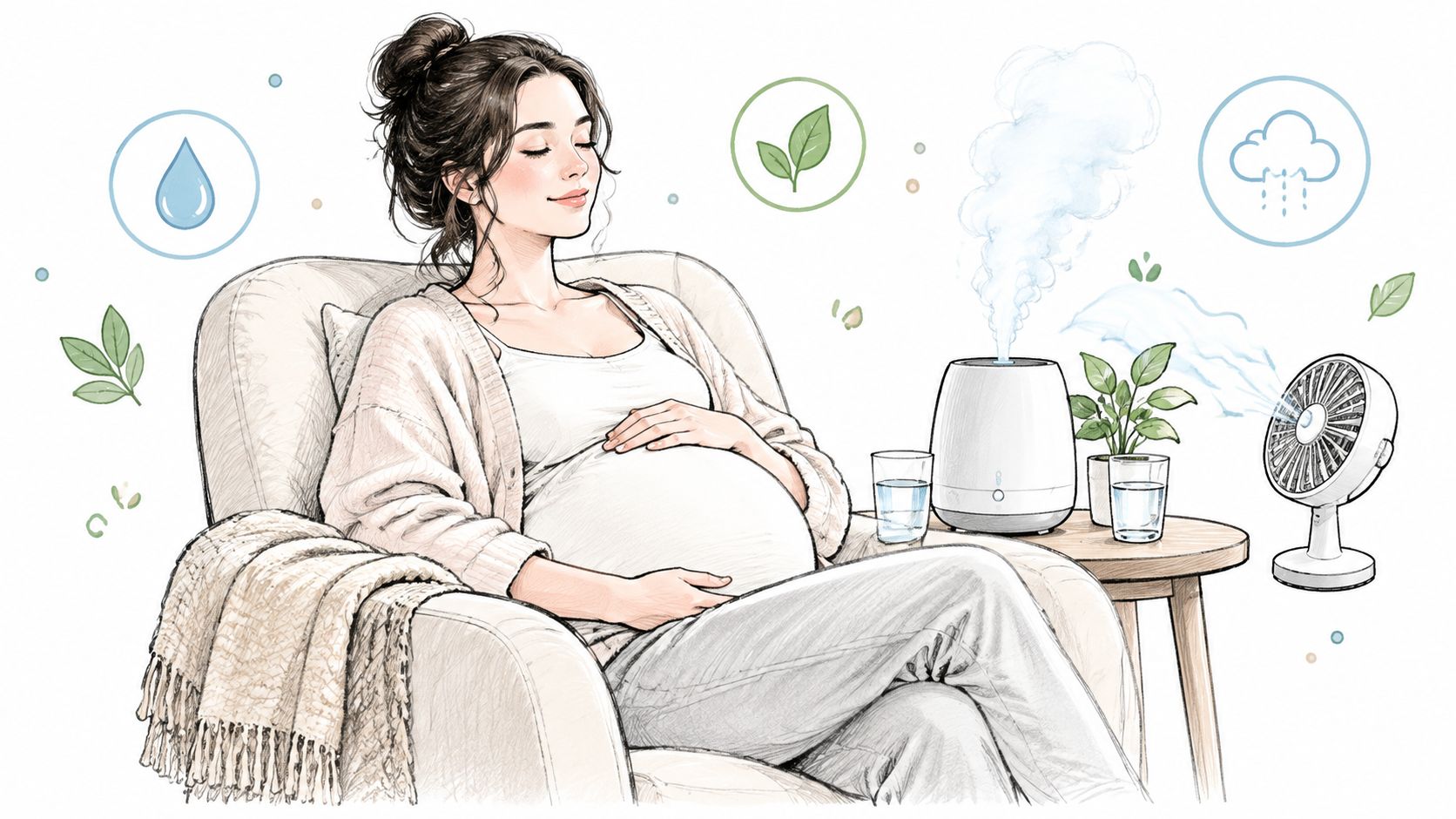
Drink regularly rather than waiting until you feel thirsty. If nausea makes plain water difficult, try taking small sips throughout the day, keeping a bottle within reach, or choosing fluids that you tolerate comfortably. Hydration supports your general wellbeing, but it won't replace direct moisturising when the skin barrier is dry.
Choose loose, breathable clothing where possible. Cotton layers can reduce rubbing and heat build-up around the bump, breasts, and thighs. Avoid waistbands or fabrics that repeatedly scrape itchy areas, particularly overnight.
Keep nails short and smooth. Scratching can create tiny breaks in the skin, which then make irritation worse. When the urge is strong, press a cool, clean cloth against the area instead of dragging your nails over it.
Adjust the bedroom environment
Central heating can make bedroom air feel dry, so a humidifier may make the room more comfortable during colder months. Clean and maintain it according to the manufacturer's instructions, because a poorly maintained device can introduce unwanted irritants into the air.
Don't overheat the room or pile on heavy, scratchy bedding. Heat and sweat can increase the urge to scratch, while breathable sleepwear helps your skin stay calmer.
A short, warm shower followed by immediate moisturising is more useful than a long hot soak followed by a quick application of lotion. The order matters because moisturiser works best when it traps water that's already on the skin.
This video offers a visual reminder of the gentle habits that can support comfort during pregnancy.
Recognising When to Seek Medical Advice for Itchy Skin
Not every itchy patch is dry skin. Moisturiser is a reasonable first response when your skin feels tight, flaky, or irritated, but severe or unusual itching deserves a conversation with your maternity team.
Contact your midwife or GP promptly if the itching is intense, keeps worsening, or interferes with sleep and normal activities. Pay particular attention to itching on the palms of your hands or soles of your feet, especially if there isn't an obvious dry rash.
Know the warning patterns
Obstetric cholestasis, also called intrahepatic cholestasis of pregnancy, can cause significant itching and needs medical assessment. Don't try to diagnose it from skincare symptoms alone. Your midwife or GP can decide whether you need further checks.
A raised, sudden, or spreading rash is another reason to seek advice, particularly if it affects large areas or feels different from your usual dryness. Conditions such as polymorphic eruption of pregnancy can look unlike simple flaking and may need a different treatment approach.
Seek urgent help if itching occurs with symptoms that make you feel seriously unwell, or if you develop swelling affecting your face, lips, or breathing. You should also contact your maternity team if the itching is severe without a rash, rather than repeatedly increasing the amount of moisturiser.
Don't dismiss persistent itching as “just pregnancy”. A quick call to your midwife is more appropriate than guessing from online product advice.
Normal stretching-related dryness tends to respond at least somewhat to gentle cleansing and regular emollient use. Medical conditions may not, and that difference matters. Keep a note of when the itching began, where it appears, whether it's worse at night, and whether you can see a rash. Those details will help your clinician assess what's happening.
Your Daily Bump Care Checklist for Lasting Hydration
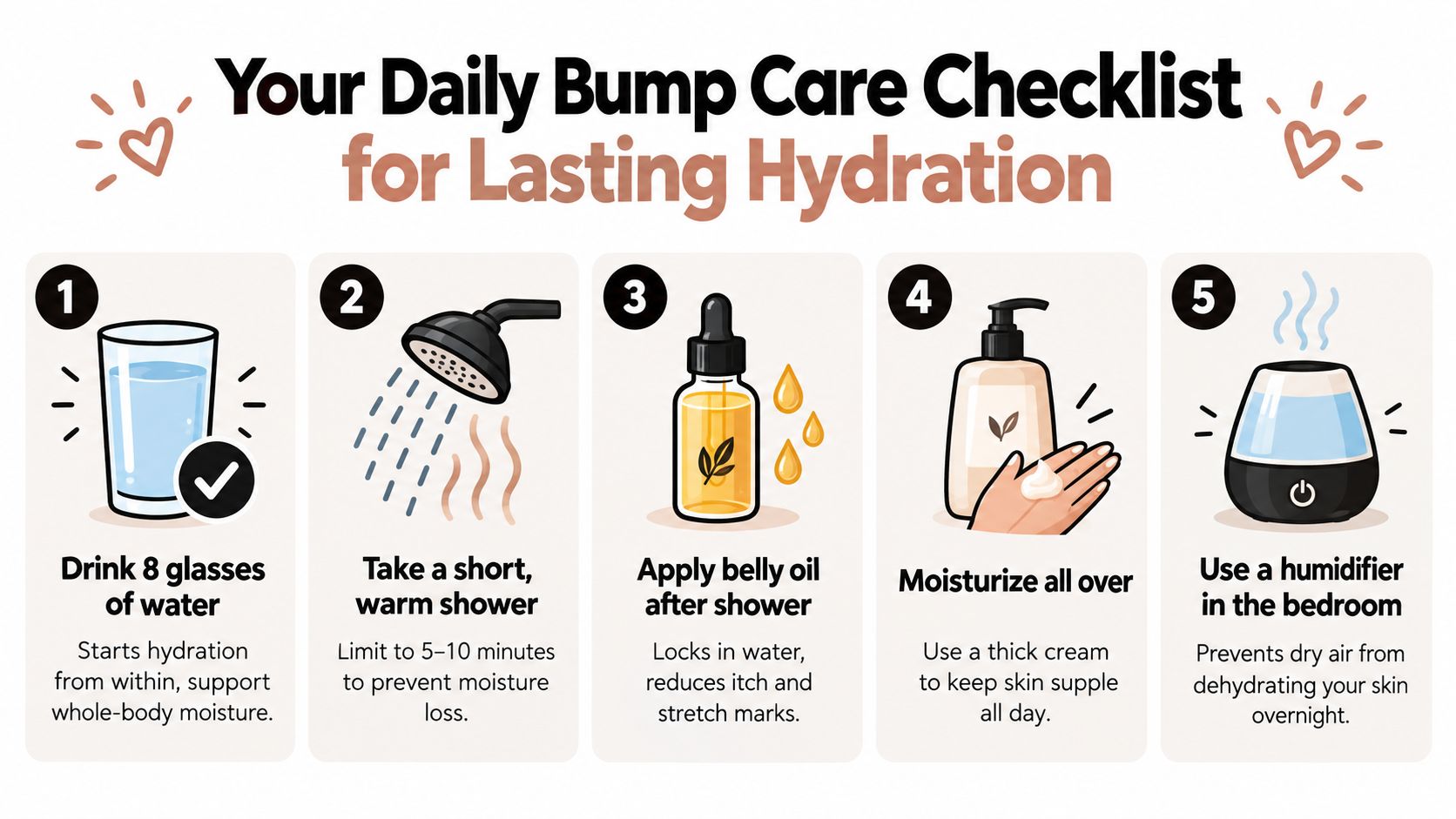
A reliable routine should be simple enough to follow when you're tired. Aim to reduce water loss, avoid irritation, and replenish the barrier repeatedly rather than chasing instant relief with stronger products.
Morning
- Check your skin: Notice tightness, flaking, redness, or new areas of itching.
- Apply an unperfumed moisturiser: Use enough to leave dry areas comfortable, not merely lightly coated.
- Dress for less friction: Choose breathable fabrics and avoid tight seams over the bump.
After washing
- Keep water warm, not hot: Shorten bathing time and avoid perfumed cleansers.
- Pat rather than rub: Leave the skin slightly damp.
- Layer thoughtfully: Apply oil if you like the feel, then seal with a richer cream or balm.
Evening
- Reapply before bed: Focus on the abdomen, breasts, hips, thighs, and any patches that feel rough.
- Reduce bedroom dryness: Use a clean, well-maintained humidifier if indoor air feels dry.
- Avoid scratching: Use a cool cloth or press the area gently instead.
A gentle exfoliating product may be used occasionally if your skin tolerates it, but stop at the first sign of stinging or increased redness. Exfoliation isn't essential for treating dryness. Consistent emollient use is the part that deserves your attention every day.
If the itching becomes severe, changes location, appears on your palms or soles, or comes with a new rash, contact your midwife or GP instead of just adding another product.
The Happy Bump Co offers bump-focused care including Belly Butter, Belly Oil for Stretch Marks, and Pregnancy Tummy Scrub, designed to nourish and hydrate changing skin during pregnancy. Visit The Happy Bump Co to explore a simple routine for dry skin, stretch-mark care, and comfortable daily bump care.