

No cream reliably prevents or removes stretch marks during pregnancy, and around 8 in 10 pregnant women will still notice them. The bigger win is to keep skin comfortable now, then plan for gradual fading and clinician-led options later.
Pregnant skin can change fast. One week you're just moisturising out of habit, the next you catch a pale line across your bump or a deeper mark on your hips and wonder whether you should have done something sooner. You probably haven't failed your skin at all, because these marks are a normal part of pregnancy for most women.
Table of Contents
- What Stretch Marks Really Are During Pregnancy
- Building a Pregnancy-Safe Daily Bump Routine
- Ingredients That Are Safe Now and Ones to Avoid
- Why No Cream Will Magically Prevent Them
- What to Consider After Birth and Beyond
- When to Speak to a Midwife, GP, or Dermatologist
- Your Realistic Stretch Mark Game Plan
What Stretch Marks Really Are During Pregnancy
Stretch marks, or striae, are the skin's response to growth and stretching, not a sign that you skipped the right cream. The NHS says they affect around 8 in 10 pregnant women, they are not harmful, they do not cause medical problems, and there is no specific treatment that reliably removes them. That matters, because it takes the guilt out of the conversation straight away. NHS guidance on stretch marks in pregnancy
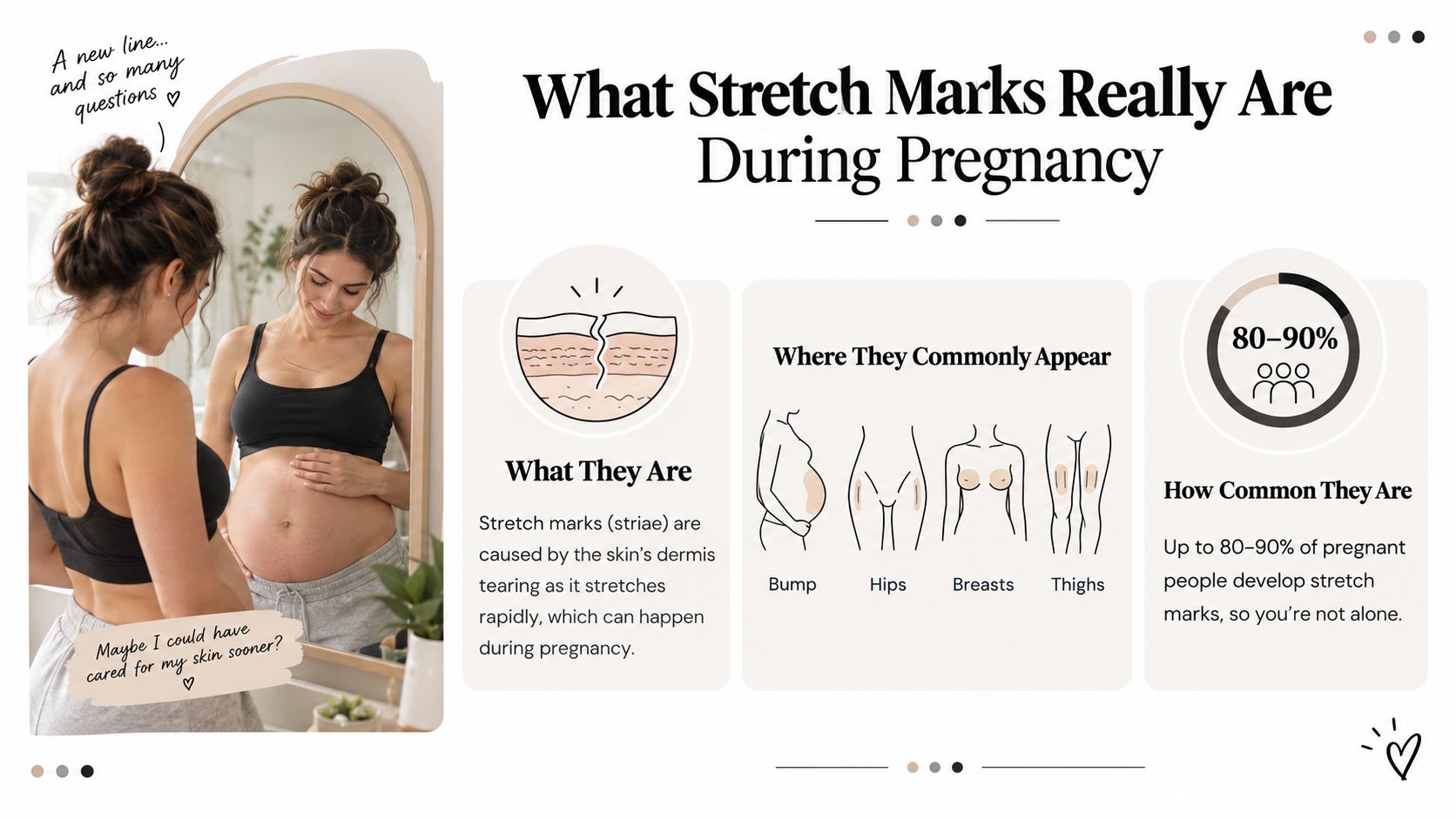
They usually show up where skin is expanding the fastest, on the bump, hips, breasts, buttocks, and thighs. A UK pregnancy clinic notes they commonly appear after six months of pregnancy and can be itchy, which is why people sometimes panic and assume something is wrong when it's usually just skin adjusting to a changing body. London Road Clinic advice on pregnancy stretch marks
Practical rule: if the lines are gradual, symmetrical, and tied to stretching skin, treat them as pregnancy stretch marks. If the skin is angry, blistered, or rapidly changing, don't guess.
The real target during pregnancy is comfort and calmer-looking skin. After birth, you can focus on appearance improvement. Long term, if the marks still bother you, procedures become the conversation. The question of how to reduce the appearance of stretch marks changes with each stage, so stop chasing one fix for every phase.
Building a Pregnancy-Safe Daily Bump Routine
A good routine should feel boring in the best way. Wash, dry, moisturise, massage, repeat. That's the level of consistency that makes skin feel less tight, less dry, and more comfortable as your bump grows, and it's why I always tell mums not to chase the fanciest jar on the shelf.
Use the product as support, not the promise
The British Journal of Dermatology review found that creams, lotions, and ointments are used by up to 78 percent of pregnant women, yet products tested for prevention were generally not considered effective. The review also suggested that the massage used while applying them may be part of the benefit, which fits what I see in practice, too. British Journal of Dermatology review
That means the application matters more than the label. Warm the product in your hands, then use slow circular movements over the bump, sides, breasts, and hips. Don't scrub, don't tug, and don't try to force redness away.
A simple rhythm works well:
- After showering, apply moisturiser while skin is still slightly damp.
- At night, repeat the same step so the skin doesn't feel tight by morning.
- When skin itches, use more product, not more pressure.
Best use case: think of belly butter or oil as comfort care. It can support softer-feeling skin, but it's not a prevention guarantee.
If you want one cohesive routine rather than mixing random products, a UK-made option like The Happy Bump Co fits that kind of daily bump care approach. Their range is built around pregnancy body care, so it sits naturally in a comfort-first routine rather than a miracle-cure mindset.
Ingredients That Are Safe Now and Ones to Avoid
The safest pregnancy skincare products are usually the plainest ones. Look for emollients that soften skin, humectants that hold water in the skin, and simple plant oils or butters that help reduce the feeling of dryness. The point is not to find a magic ingredient, it's to avoid irritation and support your skin barrier while your body changes.
Good pregnancy-friendly basics
Ingredients like glycerin, shea butter, cocoa butter, sweet almond oil, oat-based moisturisers, and other bland emollients are the sort of things I'd expect to see in a sensible bump routine. They're there to make skin feel more comfortable, not to promise that stretch marks won't happen. If a product feels rich, spreads well, and doesn't sting, that's often enough.
Ingredients to put on hold
Retinoids need to wait until after pregnancy, and if you're breastfeeding, you should check with a clinician before using any prescription-strength treatment. NHS-linked guidance notes that retinoid creams such as tretinoin may help some new stretch marks, but they should not be used during pregnancy because of potential harm to the baby. NHS Wales encyclopaedia on stretch marks
“Natural” also doesn't mean automatically gentle. Essential oils can still irritate pregnancy skin, and a product being plant-based doesn't make it safer by default. Read the label for function, not marketing.
| Ingredient | Safe during pregnancy | Notes |
|---|---|---|
| Glycerin | Yes | Holds moisture in the skin and supports comfort |
| Shea butter | Yes | Rich, simple, and useful for dry skin |
| Sweet almond oil | Yes | Often used for massage and softness |
| Oat-based moisturiser | Yes | Good for skin that feels itchy or tight |
| Retinoids | No | Hold off until after pregnancy, and check breastfeeding advice |
| Prescription tretinoin | No | May help some new marks later, but not during pregnancy |
| Strong actives aimed at resurfacing | Usually no | Get clinician advice before using them |
For a fuller breakdown of retinoid and peptide questions, see this guide from The Happy Bump Co.
Why No Cream Will Magically Prevent Them
The industry likes a simple story, because simple stories sell. Buy this oil, apply it twice a day, and your stretch marks won't show up. The problem is that the evidence doesn't back that promise.
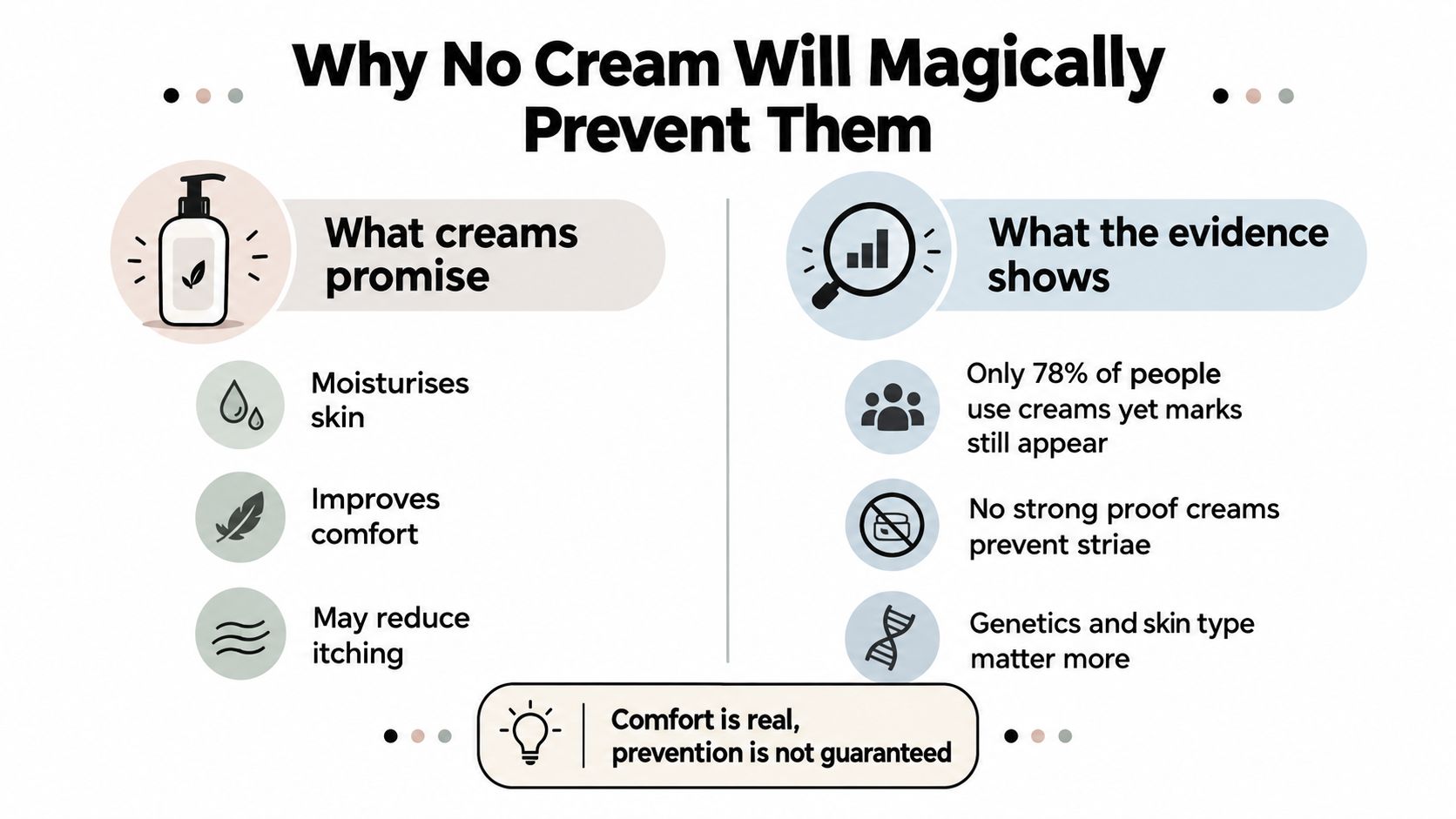
The NHS says many creams and lotions claim to prevent or remove stretch marks, but the evidence that they do so is limited or unreliable, and the Advertising Standards Authority says moisturisers may make skin feel smoother and more supple, but there isn't enough evidence that they prevent or remove stretch marks. That's the line I want readers to trust, not the shiny product page. NHS pregnancy stretch mark guidance
What creams can do
They can reduce dryness. They can make skin feel more elastic and less tight. They can support a good massage habit that helps you check in with your body.
What creams can't do
They can't reliably stop the deeper stretch process. They can't guarantee prevention. They can't promise removal once marks have formed.
The UK-authored review in the British Journal of Dermatology backs that up, because it found that products used by pregnant women were generally not effective for prevention. That's why spending more money isn't the answer. Spending it better is.
Comfort is real. Prevention is not guaranteed.
If your goal is how to reduce appearance of stretch marks, put your energy into comfort, consistency, and sensible weight management, not into chasing the next miracle jar. Skin that feels calmer is a win. Skin that eventually fades is normal. Skin that never stays perfectly smooth is also normal.
What to Consider After Birth and Beyond
After birth, the conversation changes fast. You're not trying to stop new stretching anymore, you're deciding whether the marks need help fading more neatly or whether you're happy to let time do the heavy lifting. Most marks soften and lighten on their own, but that process takes patience.
The NHS-linked guidance is clear that laser or light therapy and microdermabrasion may make established marks look better, but they will not get rid of them. It also notes that retinoid creams such as tretinoin may help some new stretch marks, but they should not be used during pregnancy because of potential harm to the baby. Wales NHS stretch mark encyclopaedia
Side by side, the realistic options
- Laser or light therapy. This is a clinician discussion, not a self-buy product. It's about appearance improvement, not erasing marks.
- Microdermabrasion. This may smooth how the skin looks, but it still won't remove stretch marks.
- Retinoids. These are for later, not pregnancy, and they need proper advice if you're breastfeeding.
- Clinical peels. These are best treated as specialist territory, because stronger isn't always smarter on postpartum skin.
The postpartum stage is also where body image can sting. New mums are often tired, touched out, and very aware of every change in the mirror. That's why I tell people to aim for one calm decision at a time, not a dramatic overhaul. If the marks bother you, book a conversation with a clinician. If they don't, leave them alone and keep moisturising for comfort.
For more on practical postpartum skin care, this The Happy Bump Co guide sits in the right place, after birth rather than during pregnancy.
When to Speak to a Midwife, GP, or Dermatologist
Normal stretch marks are usually easy to recognise once you know what to look for. They develop gradually, often on the bump, hips, breasts, or buttocks, and they may itch a bit. They should not be sharply painful, blistered, or wildly inflamed.
The line between “common” and “needs checking” matters. UK pregnancy guidance notes that intense itching, blistering, or a rapidly changing rash should be assessed by a clinician rather than assumed to be ordinary stretch marks. That's the point where you stop applying more cream and start asking questions. UK pregnancy guidance on stretch marks
If the skin looks irritated rather than stretched, get it looked at.
A simple decision guide
- Call your midwife if the marks are itchy enough to bother you, or if you're unsure whether what you're seeing is normal.
- See your GP if the skin is painful, the rash is spreading, or you want help deciding whether a treatment is suitable.
- Ask about a dermatologist if marks are causing ongoing distress after birth and you want to discuss appearance-focused treatment.
Don't try to self-diagnose a rash as “just stretch marks” when the skin is behaving differently. Pregnancy skin can be sensitive, but there's a clear difference between normal stretching and a problem that needs attention. If it feels off, trust that feeling and get it checked.
Your Realistic Stretch Mark Game Plan
A practical plan starts with timing. During pregnancy, keep skin comfortable and supported. After birth, let the skin recover before you decide whether you want to treat appearance more actively. Long term, aim for gradual fading and better texture, not perfection.
Three stages, one clear approach
During pregnancy, use a rich moisturiser or oil after bathing, while skin is still damp, and keep massage light. That is about comfort, flexibility, and staying consistent. If you want to support skin from the inside too, the guide on how to increase collagen production is a useful place to start, as long as you keep expectations realistic.
In the first months after birth, keep the routine simple. Cleanse gently, moisturise if the skin feels dry, and give yourself time before judging whether marks have faded. If you want treatment, ask a clinician first rather than buying the strongest option you can find.
Long term, decide whether you want to leave them alone or explore appearance-focused options such as laser, light therapy, or microdermabrasion. This is also the stage for asking whether a retinoid suits you. For many women, the best result comes from steady care, not chasing a fast fix for how to reduce appearance of stretch marks.
A simple month-by-month mindset
0 to 3 months after birth: protect, hydrate, rest.
3 to 6 months after birth: reassess what still bothers you.
After 6 months: consider clinician-guided treatment if you still want visible improvement.
Keep this checklist close. Moisturise after bathing, massage gently, avoid harsh actives in pregnancy, watch for irritation, and reassess after birth before spending money on treatments. The Happy Bump Co offers bump care that fits this routine without promising miracles.