

If you're pregnant and your bump skin has started to feel dry, tight or itchy, you're experiencing one of pregnancy's most ordinary changes. Maternity belly oil is often presented as the answer, usually with a promise that it will stop stretch marks from appearing. That promise needs a calmer look. The oil itself can be useful, but for comfort and moisturising, not for guaranteed prevention.
Table of Contents
- Introduction
- What Maternity Belly Oil Does for Your Skin
- Ingredients to Look For and Avoid
- Safety Considerations for Pregnancy Skin
- How to Choose the Right Belly Oil
- How to Use Belly Oil for Best Results
- Conclusion
Introduction
The starting point is striking. The NHS guidance on stretch marks in pregnancy reports that stretch marks affect approximately 8 in 10 pregnant women. In other words, if a group of friends compare bumps at an antenatal class, most of them are likely to see some change in the skin. Those marks, sometimes called striae gravidarum, often show on the abdomen, breasts, hips, thighs or buttocks as skin expands. They may first look pink, red, purple, brown or darker than the surrounding skin, then fade after birth.
That's why belly oils sell so well. They speak to something real: skin that's stretching, feeling drier than usual, and sometimes uncomfortable by the end of the day. A maternity belly oil is, in plain terms, a body oil made for that changing skin. You rub it in, usually with a short massage, to soften and moisturise the surface and help the bump feel more supple.
The honest expectation to set first
The same NHS guidance is clear about the limit. It says there's limited evidence that oils or creams prevent stretch marks and no reliable evidence that creams remove marks once they've appeared. That doesn't make oil pointless, but it changes why you use it. You're choosing it for hydration, comfort and a soothing ritual, not because science has shown it will keep skin unmarked.
Stretch marks themselves are harmless, and they aren't a sign you've done your skincare wrong. Pregnancy stretching and your own susceptibility both matter. One mum can apply oil faithfully and still develop marks, while another uses none and has few. Holding those two truths together stops the guilt that some marketing creates.
Practical rule: Judge a belly oil on whether it keeps your skin feeling comfortable and moisturised, not on whether the label promises prevention.
You'll get more from this guide if you keep that rule in mind throughout. The useful questions aren't about miracles. They're about what the oil does on the surface, which ingredients suit pregnancy, how to handle fragrance or sensitive skin, how to choose a product you'll enjoy, and how to apply it in a routine that feels good. Answer those well, and belly oil becomes a small, reliable piece of self care during a demanding time.
What Maternity Belly Oil Does for Your Skin
Think of your bump skin like a balloon being inflated slowly over months. The outer surface is under more tension than usual, so it can feel tight after a shower or itchy under waistbands. An oil doesn't change the balloon, but it can make that outer surface feel softer and less dry. That's the simplest mental model for what maternity belly oil does.
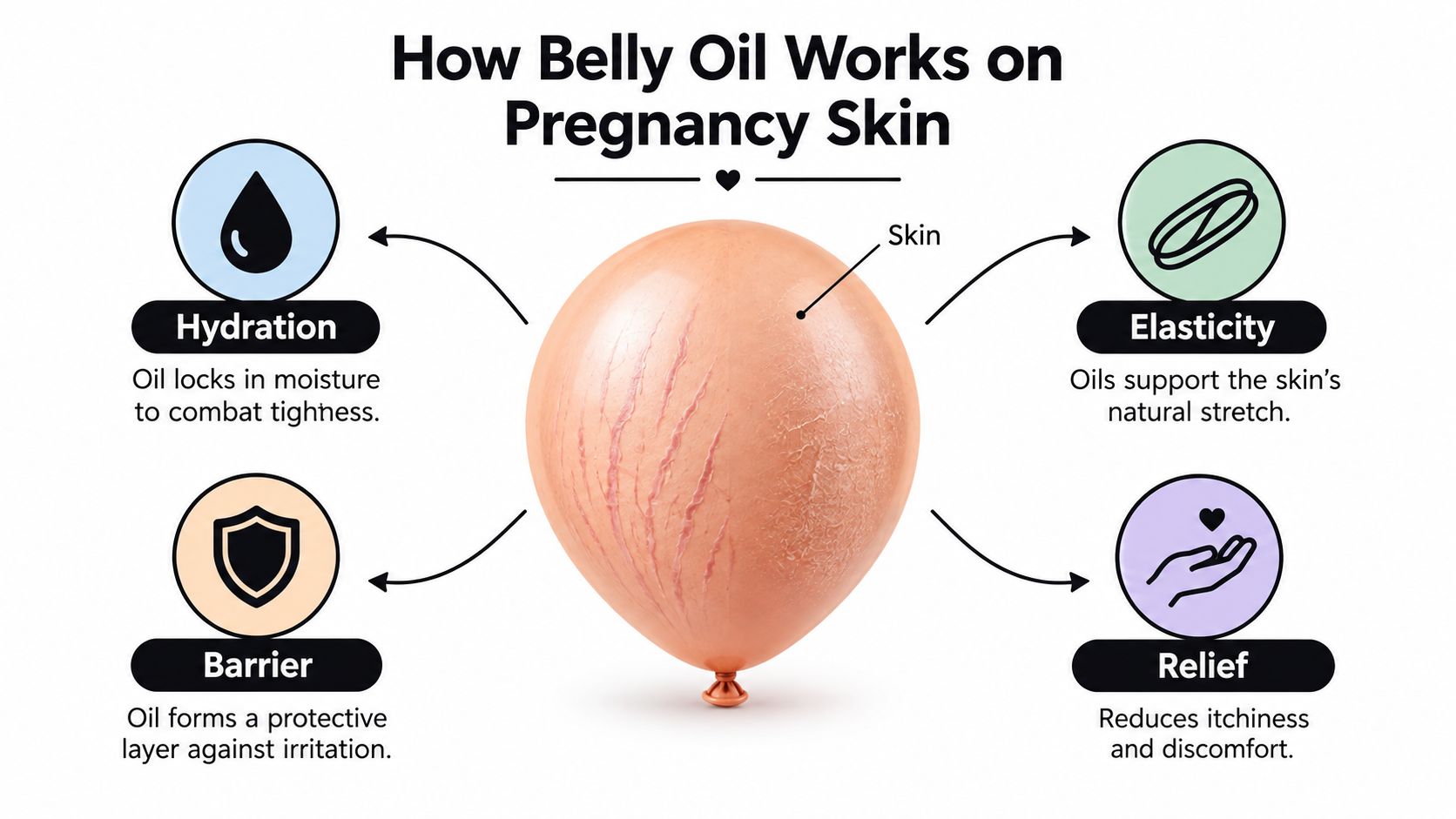
Oils are emollients, which means they sit on and soften the surface and help reduce the rough feeling of dry skin. Many women notice the biggest benefit is not how the skin looks, but how it feels. The tight pull across the abdomen in the evening often eases after massaging oil in. For example, if your skin feels fine in the morning but uncomfortable after a day in maternity jeans, oil applied after a bath targets that end of day dryness.
Comfort and prevention are not the same claim
Plenty of people buy these products hoping for prevention. A UK-linked survey of 753 pregnant women found that 589 women, or 78.2%, reported using a product intended to prevent or reduce stretch marks, and 210 respondents had used two or more products. That tells us how much women care, and how often they switch when they're unsure.
Use doesn't equal proof, though. The same source summarises a Cochrane review conclusion that there's no high-quality evidence supporting creams, oils or other topical products for preventing pregnancy stretch marks. So a popular product can be pleasant and still be unproven for prevention. If you're reading around the topic, a practical guide on how to think about preventing stretch marks during pregnancy can help you separate comfort claims from prevention claims.
The massage matters as part of the experience
- Hydration you can feel: Oil helps dry outer skin feel smoother after application.
- A pause for connection: The few minutes spent rubbing it in can become a calm daily ritual.
- Coverage beyond the bump: Many mums also use it on hips, thighs and breasts, where skin also stretches.
None of that requires an exaggerated promise. Softer, less tight feeling skin is a worthwhile benefit on its own, especially when sleep and comfort already feel harder. Expecting only what oil can realistically offer also makes you less likely to overbuy, switch constantly, or blame yourself if marks still appear.
Ingredients to Look For and Avoid
Labels can look reassuring while telling you very little. Words like natural, pure and botanical sound safe, but they don't tell you the concentration, whether the product stays on skin, or whether an ingredient suits pregnancy. Start by looking for the ingredient list, not the front of the bottle.
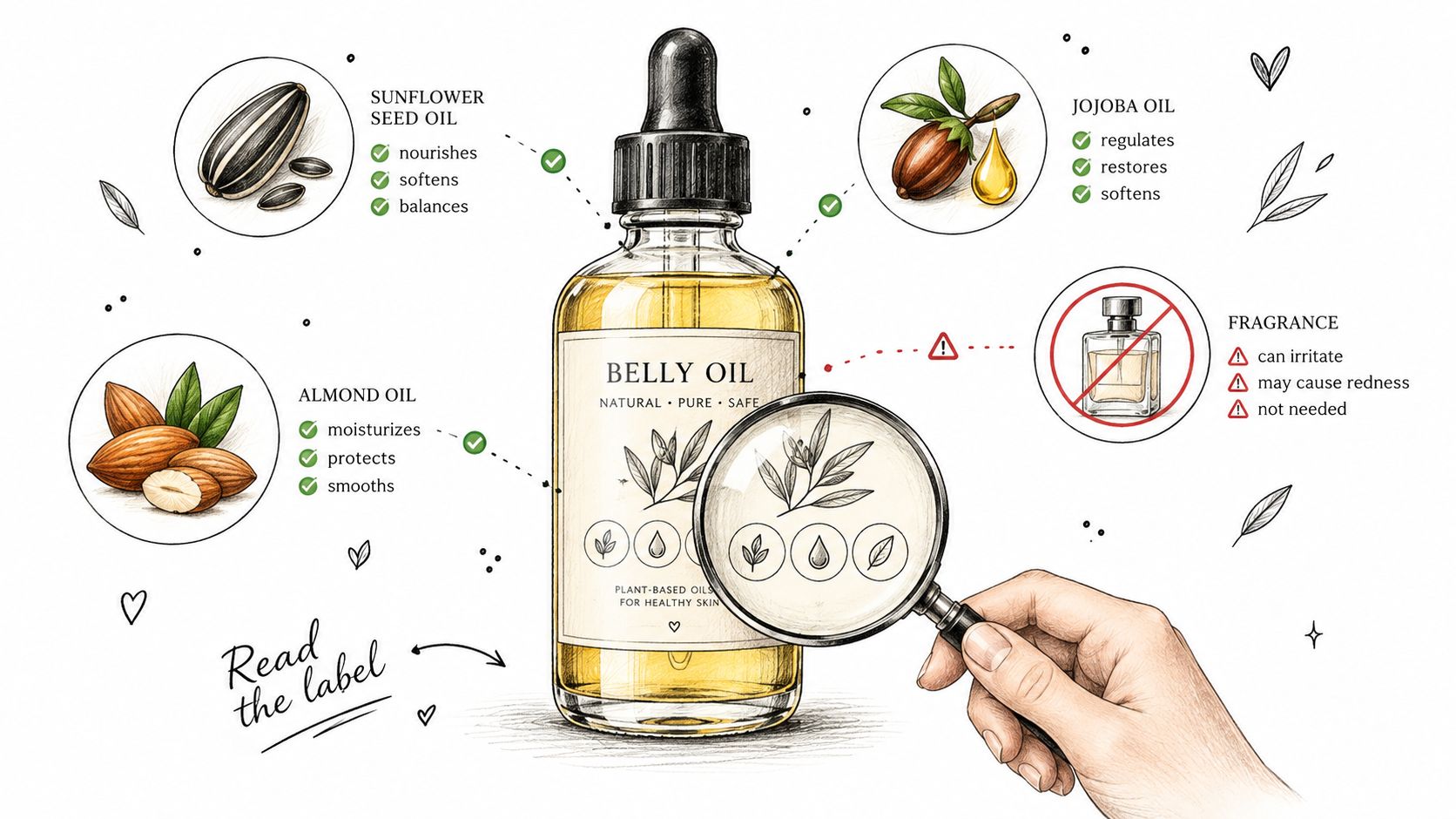
For a maternity belly oil, favour well characterised emollient carrier oils and simple, transparent formulas. Carrier oils are the main oils that make up the product and give it its slip and softening feel. Common examples in pregnancy products include sweet almond, argan, coconut and avocado oils. Their job here is moisturising, and that's how you should judge them.
What the dermatology evidence actually shows
A British Journal of Dermatology review of stretch mark preparations found limited evidence for centella and possibly massage with bitter almond oil, while cocoa butter and olive oil were not effective for preventing or reducing stretch marks. It also concluded reliable prevention methods remain scarce and many studies lack rigorous randomised trial design. That's useful context when a familiar kitchen oil or butter is presented as proven.
The clearest avoid is also in that evidence base. Retinoid treatments should not be used during pregnancy because they may harm the baby. Retinoids belong in acne and anti ageing products, not in a pregnancy bump routine. If you used one before pregnancy, keeping it in a drawer for later is a separate conversation with a clinician after birth.
This short video is a helpful pause before you turn label reading into a habit.
A simple way to read any label
- Identify the base: Are the first ingredients recognisable carrier oils?
- Spot fragrance separately: Look for parfum and concentrated essential oils, not just plant derived wording.
- Check for retinoids: Avoid products listing retinoids in pregnancy.
- Prefer disclosure: Choose brands that explain each ingredient rather than hiding behind natural claims.
Natural doesn't automatically mean safer, and synthetic sounding doesn't automatically mean harmful. The specific ingredient, its amount and how you use it matter more than the marketing category.
Safety Considerations for Pregnancy Skin
Pregnancy skin can react differently from the skin you had before. A scent you loved can suddenly trigger nausea, and an oil that felt fine on your legs might sting on a stretched, itchy bump. Caution here isn't anxiety. It's a few sensible checks before a product becomes part of your daily routine.
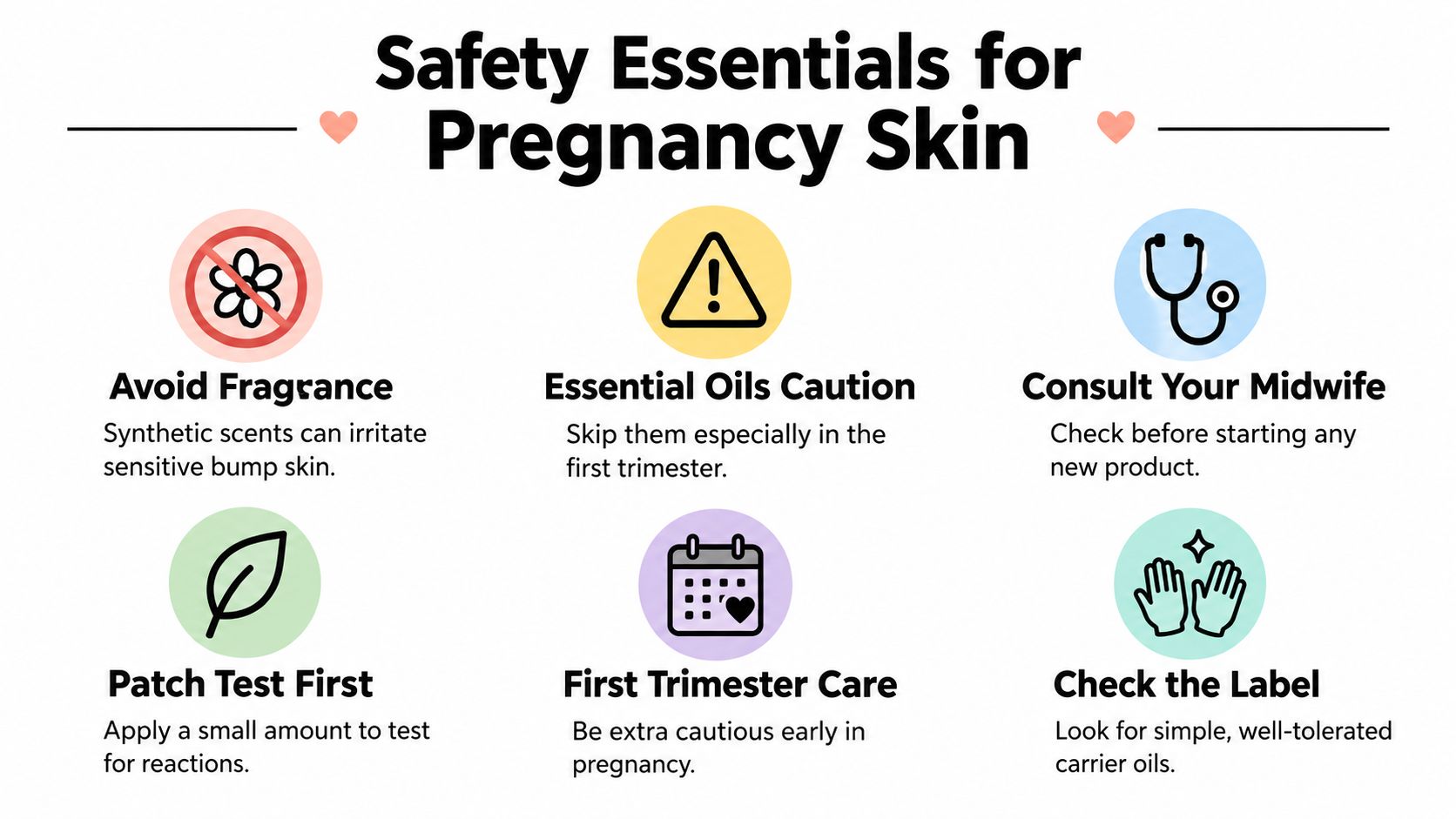
Essential oils need nuance rather than a blanket slogan. UK guidance on safe skincare use in pregnancy and breastfeeding notes that some essential oils, including rosemary, clary sage and jasmine, may be associated with uterine contractions, although the evidence is limited. It also reports that NHS advice is to avoid direct essential oil contact in the first trimester, and that suitability can depend on concentration and product format.
That last point explains why lists online often conflict. A rinse off wash is not the same as a leave on belly oil you massage in and keep on all day. A tiny amount in a finished cosmetic is also different from applying a concentrated essential oil directly. When you're unsure, ask a midwife, pharmacist or GP rather than relying on a social media list.
Checks that protect sensitive skin
- Patch test first: Apply a little to a small area and wait to see how your skin responds.
- Keep off broken skin: Don't massage oil into cracked, broken or very irritated patches.
- Choose low fragrance if scent troubles you: Fragrance free options help if smells trigger nausea or headaches.
- Stop if irritation builds: A product meant to soothe shouldn't leave persistent redness or worsening itch.
If you have eczema, allergy prone skin, a persistent rash or severe itching, stop the new product and seek advice from a midwife, pharmacist or GP. Belly oil is a cosmetic moisturiser, not a treatment for pregnancy specific skin conditions. For wider background before you buy, read about safe skincare choices during pregnancy and compare it with the label in your hand.
If an oil makes your skin more itchy, red or uncomfortable, that's useful information. You don't need to push through a reaction to be consistent.
How to Choose the Right Belly Oil
The right oil is partly about ingredients and partly about whether you'll reach for it on a tired evening. A formula can look ideal on paper and still fail because it's too greasy, smells too strong, or stains the pyjamas you like. Treat comfort and preference as real criteria, not extras.
Start with transparency. Brands that list ingredients clearly and explain what each one does are easier to trust than brands leaning on chemical free language. Then check fragrance level, especially if your sense of smell has changed. Finally, think about texture. Some mums love a rich oil at night and a lighter, faster absorbing one before getting dressed.
| Look For | Avoid |
|---|---|
| Full ingredient list: Clear carrier oils and honest explanations | Vague promises: Prevention or removal claims without evidence |
| Low or no added fragrance: Easier if you're nauseated or reactive | Strong scent you dread: A smell that stops you using it |
| Simple emollient base: Formulated to moisturise and soften | Retinoids: Not suitable during pregnancy |
| Patch test guidance: Practical advice for sensitive skin | Natural equals safe wording: No detail on essential oils or format |
| Texture you enjoy: Absorbs in a way that fits your routine | Irritated skin reaction: Burning, rash or worsening itch |
Make the choice personal
For example, The Happy Bump Co offers a Belly Oil for Stretch Marks 200ml formulated with sweet almond, argan, coconut and avocado oils for daily use on the belly, breasts and other areas prone to stretching. Presented that way, it's one option to assess with the same label checks you'd apply to any brand. Does it disclose ingredients, suit your skin, and feel pleasant enough to use regularly?
Price and bottle size matter too, but only after those checks. A smaller bottle can be sensible for a first try if you're fragrance sensitive or prone to reactions. If you already know you like oil and want a nightly ritual, a larger size may suit you better. Your skin and your habits should make the final call, not a before and after photo.
How to Use Belly Oil for Best Results
Best results here means skin that feels moisturised and a routine you can keep up without thinking too hard. Most mums find after a warm shower or bath is the easiest moment, when skin is clean and slightly damp. The oil spreads more easily then, and the bathroom already gives you a few private minutes.
Warm a small amount between your palms first. That simple step makes the oil feel less cold on the bump and helps you avoid tipping out too much. Start with less than you think you need, because you can always add another drop for hips or thighs.
A gentle routine you can start tonight
- Patch test the first time: Try a small area before covering the whole bump.
- Apply to slightly damp skin: Pat dry after washing, then massage the oil in.
- Use slow upward strokes: Keep pressure gentle and comfortable, never deep.
- Include other stretching areas: Add a little to breasts, hips, thighs or buttocks if they feel dry.
- Give it a moment to absorb: Wait briefly before dressing to reduce marks on clothing.
How often depends on your skin. Some women like a morning and evening application, while others stick to one longer evening ritual. If your bump feels tight by mid afternoon, that can be your cue for a second light application. If you want more ideas on technique and timing, advice on how to use body oils well can help you build the habit.
Enjoyment is not a bonus: A ritual you look forward to is the one you'll repeat on ordinary, tired days.
Try not to turn application into an inspection. Checking every centimetre for new marks can steal the calm the routine is meant to give you. Think of it as moisturising, massaging and taking a breath with your hands on your bump. That framing keeps expectations realistic and makes the habit kinder.
Conclusion
Maternity belly oil is easiest to enjoy when you know exactly what it's for. It can moisturise dry skin, soften a tight feeling bump and turn application into a steady ritual. It isn't a clinically proven way to prevent stretch marks, and it isn't a treatment that removes marks once they've appeared. That honesty doesn't reduce its value. It protects you from disappointment and unnecessary self blame.
Your most reliable tools are simple ones. Read the ingredient list, distinguish carrier oils from concentrated essential oils and added fragrance, and avoid retinoids during pregnancy. Be extra careful with leave on fragranced products if you're sensitive, allergic, eczema prone or put off by scent. Patch test, watch how your skin responds, and ask a midwife, pharmacist or GP if irritation or severe itching continues.
Choice then becomes personal in the best sense. Pick a transparent formula with a texture and scent you'll happily use, apply it after washing with gentle strokes, and let consistency come from enjoyment rather than pressure. Your bump is doing a great deal of changing. Caring for the skin over it can be a calm, practical way to care for yourself too.
If you're ready to choose a belly oil with clear ingredients and a gentle daily ritual in mind, The Happy Bump Co makes UK made bump focused body care, including belly oil, belly butter and tummy scrub for changing pregnancy skin. Visit The Happy Bump Co to explore the range and find the texture and routine that feel right for your bump.