

You've probably done some version of this already. You catch sight of your bump in the mirror, notice your skin feels tighter than it did last week, and open your phone to search for one simple answer: what should I put on my skin now that I'm pregnant?
Within minutes, you're buried in advice. One product promises prevention. Another promises elasticity. A blog says natural is always best. A forum thread says nothing works anyway. It's no wonder so many mums-to-be feel torn between wanting to care for their skin well and wanting clear, trustworthy guidance.
Organic cacao butter often comes up early in that search. It sounds wholesome, smells comforting, and has a long history in body care. For many women, it becomes part of a lovely daily ritual. But the honest question isn't whether it feels nice. It's what it can do, what it can't, and how to use it safely and sensibly during pregnancy.
If you're trying to build a routine that feels calm instead of confusing, a simple pregnancy skincare routine can make the whole experience feel much more manageable.
Table of Contents
- Your Pregnancy Skincare Journey Begins
- What Exactly Is Organic Cacao Butter
- The Truth About Cacao Butter and Stretch Marks
- How to Use Cacao Butter in Your Pregnancy Skincare Routine
- Choosing a Quality Organic Cacao Butter Product
- Frequently Asked Questions About Cacao Butter
Your Pregnancy Skincare Journey Begins
Pregnancy changes your skin in a very physical way. One week your tummy feels normal. The next, it feels stretched, warm, itchy, or suddenly much drier than usual. That can feel unsettling, especially if you've never had to think much about body skincare before.
A lot of women start with the same hope. They want one safe product that will protect their skin and stop stretch marks before they start. That hope makes sense. When your body is changing quickly, you want something steady you can do each day.
The emotional side of bump care
There's also more going on than skin alone. Applying a balm or butter can become a grounding part of the day. It gives you a moment to slow down, check in with your body, and care for skin that's working hard.
You don't need a complicated shelf full of products. You need a routine that feels safe, practical, and kind to your skin.
That's where organic cacao butter often earns its place. It's rich, simple, and easy to understand once you strip away the marketing language. But honesty matters here. A product can be useful without being magical.
What most mums-to-be actually need
In real life, pregnancy skincare usually comes down to a few straightforward goals:
- Comfort for tight skin so your belly, hips, and thighs feel less dry and uncomfortable.
- A reliable moisturising habit that you'll keep up with each day.
- Pregnancy-safe choices that don't leave you second-guessing the ingredient list.
- Realistic expectations so you're not blaming yourself if your skin still develops stretch marks.
If you're feeling overwhelmed, that doesn't mean you're behind. It usually means you care, and you want to make thoughtful choices. That's a good place to start.
What Exactly Is Organic Cacao Butter
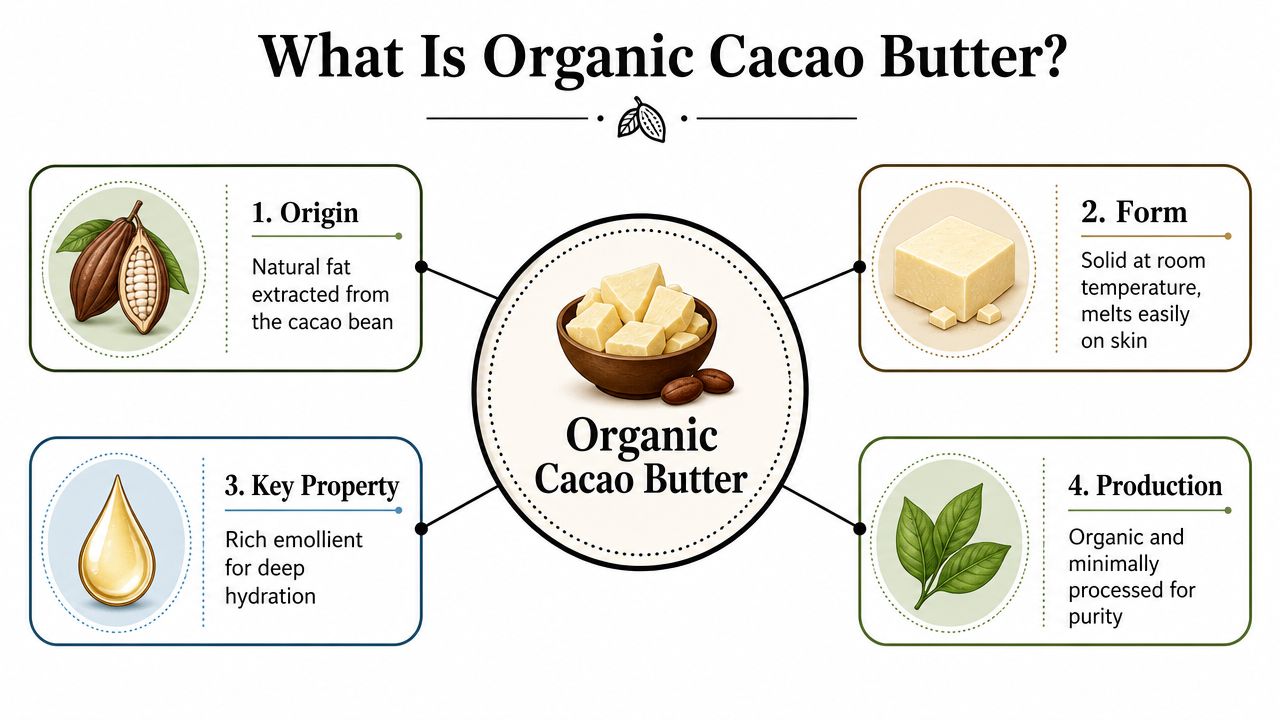
Organic cacao butter is the natural fat pressed from cacao beans. It's the pale, creamy part of the cacao bean that gives chocolate some of its smooth melt. In skincare, that same fat is used because it feels rich on the skin and helps soften and seal in moisture.
At room temperature, it's usually solid. Once it touches warm skin, it starts to melt, which is why it can feel luxurious and cocooning when massaged onto a growing bump.
From bean to butter
The easiest way to think about cacao butter is this. The bean contains several parts, and one of those parts is the fat. When that fat is separated and purified for use, you get cacao butter.
People often use cacao butter and cocoa butter as if they mean exactly the same thing. In everyday shopping, they're often used interchangeably. In natural beauty circles, though, “cacao” often suggests a less heavily processed version, while “cocoa” may suggest more heat processing. A simple analogy helps:
- A minimally processed cacao butter is a bit like a fresh salad. Closer to its original form.
- A more processed cocoa butter is a bit like cooked vegetables. Still useful, but changed by heat and handling.
That distinction isn't always perfectly regulated on packaging, so don't rely on the front label alone. The full ingredient list and product description tell you more.
Why the word organic matters
When a product is described as organic cacao butter, shoppers usually expect a simpler ingredient with fewer unwanted extras from farming and processing. For pregnancy skincare, many women prefer that because it feels more aligned with a stripped-back routine.
That said, organic doesn't automatically mean perfect for everyone. A product can be organic and still feel too heavy for one person, too scented for another, or too grainy in texture if it's poorly made.
Here are the qualities that stand out:
| Feature | What it's like in practice |
|---|---|
| Texture | Firm in the jar or block, then softens with warmth |
| Scent | Naturally chocolatey or earthy |
| Feel on skin | Rich, protective, slow to absorb compared with a light lotion |
| Best use | Dry, tight, stretched-feeling areas |
Practical rule: If a body butter feels dense and takes time to sink in, that isn't a flaw. It usually means it's best applied to slightly damp skin, not rushed onto completely dry skin five minutes before getting dressed.
For many pregnant women, the main appeal is simple. Organic cacao butter feels comforting, creates slip for massage, and leaves skin feeling protected for longer than a watery cream.
The Truth About Cacao Butter and Stretch Marks
This is the question behind almost every search about organic cacao butter. Will it prevent stretch marks?
A lot of marketing says yes, or strongly hints yes. That's why this topic gets confusing so quickly. The promise sounds reassuring, but reassurance and evidence aren't always the same thing.
What the evidence says
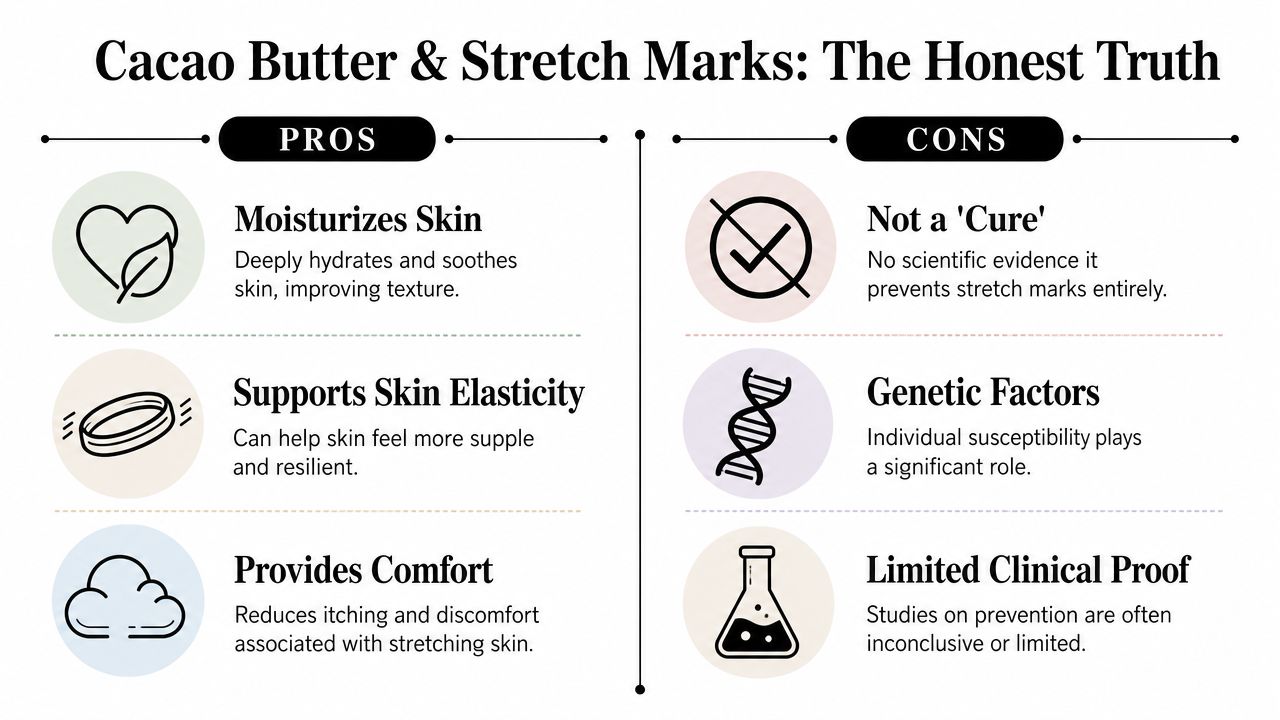
According to evidence reviewed by The Happy Bump Co, cocoa butter has “not been shown to prevent stretch marks or even reduce their overall appearance”, based on clinical research cited from the Cleveland Clinic. The same review notes that a 2025 review by the British Journal of Dermatology reached a similar conclusion, and that in the UK, 78% of pregnant women report stretch marks as a top concern according to the NHS Maternity Survey 2024.
That matters because it helps separate two different ideas:
- What people hope a product will do
- What it has been shown to do
Stretch marks develop deep in the skin as it stretches and remodels. Genetics, skin structure, and the pace of body changes all play a role. That means a rich butter can support comfort at the surface without being able to guarantee prevention underneath.
A lot of women feel disappointed when they learn this. Some even feel they've somehow used the wrong product. You haven't. The issue isn't personal failure. It's that skincare marketing often oversimplifies a process that's far more complex.
If you'd like a product-focused look at texture and use, a cocoa butter lotion guide can help you compare richer and lighter formats.
What cacao butter does well
It's important to give organic cacao butter a fair assessment. It may not be a proven stretch mark preventer, but it can still be very helpful during pregnancy.
It's especially good at improving skin comfort.
- It softens dry areas by coating the skin with a rich layer of emollient moisture.
- It reduces that tight feeling many women notice across the tummy, bust, hips, and thighs.
- It can ease itchiness linked with dryness and stretching.
- It makes massage easier which can turn skincare into a calming ritual instead of a chore.
That's not a small benefit. Skin that feels less tight and irritated can make day-to-day pregnancy feel better.
Skin comfort is a real outcome. It isn't lesser just because it isn't the same as prevention.
A more realistic way to think about it
A better expectation sounds like this: organic cacao butter may help your skin feel softer, calmer, and more supple while your body changes. It won't reliably stop stretch marks from forming if your skin is going to develop them anyway.
That may sound less glamorous than the label on a jar, but it's much more useful. Realistic expectations help you choose products for what they're good at, rather than chasing promises no topical butter can guarantee.
How to Use Cacao Butter in Your Pregnancy Skincare Routine
Using organic cacao butter well is less about fancy technique and more about timing, consistency, and comfort. The best routine is the one you'll keep doing even on tired days.

A simple daily method
The easiest time to apply it is after a bath or warm shower, when your skin is still slightly damp. Damp skin gives the butter something to hold onto, so you're not just sliding oil over a dry surface.
Try this routine:
-
Warm a small amount first
Scoop a little into clean hands and rub your palms together until it softens. -
Start with your belly
Use broad circular motions rather than quick rubbing. Gentle pressure is enough. -
Move to the areas that often feel neglected
Hips, sides, lower back, thighs, and bust often become dry and tight too. -
Give it a minute to settle
Rich butters need time. Loose pyjamas or a robe make this easier than fitted clothing.
Some women prefer butter in the evening and a lighter oil in the morning. If that sounds more manageable, there's useful guidance on layering and technique in this article on how to use body oils.
Small technique changes that help
Application matters more than people think. If the butter feels draggy, hard, or waxy, it usually needs a better method rather than immediate replacement.
A few adjustments can make a big difference:
- Use less than you think. Too much can sit on top of the skin.
- Apply to warm skin. Cold skin makes solid butters harder to spread.
- Press, then glide. Pressing the butter onto the skin first helps it melt.
- Repeat on itchy patches. You don't need to reapply everywhere every time.
If your skin stings, goes red, or feels hotter after application, stop using that product and check the full ingredient list. The issue may be fragrance or another added ingredient, not the cacao butter itself.
Two easy DIY ideas
If you like simple home skincare, organic cacao butter works well as a base. Keep recipes basic and avoid adding lots of essential oils during pregnancy unless you've checked they're appropriate.
Whipped belly butter
This gives you a softer, fluffier texture than a hard block of butter.
You'll need:
- Organic cacao butter
- A plain carrier oil such as jojoba oil or sweet almond oil
- A clean bowl and spoon or hand mixer
- A sterilised jar
Method:
- Gently melt the cacao butter.
- Stir in a little carrier oil until the texture looks looser.
- Let it cool until partly set.
- Whip until light and creamy.
- Spoon into a jar and keep it somewhere cool.
This works well if straight cacao butter feels too firm or takes too long to melt in your hands.
Soothing itch-relief cubes
These are handy in warmer weather or when your tummy feels hot and itchy.
What to do:
- Melt organic cacao butter gently.
- Pour it into a clean silicone tray.
- Let it set in the fridge.
- Rub one cube lightly over itchy areas for a cooling, protective layer.
Because these are solid, they're also less messy than dipping fingers into a jar several times a day.
A quick visual demo can make routine-building easier:
When to pause and check in
Pregnancy skin can become more reactive than usual. Even products you've used for years can suddenly feel different.
Pause and reassess if:
| Sign | What to do |
|---|---|
| Itching gets worse after use | Stop and look for fragrance or added actives |
| You notice a rash | Discontinue and speak to a pharmacist, midwife, or GP if needed |
| The skin feels greasy but still dry | Apply on damp skin or switch to layering with a lighter product |
| The scent turns your stomach | Try an unscented alternative or use less often |
You don't need to force a product to work just because it's popular. Comfort is the goal.
Choosing a Quality Organic Cacao Butter Product
Shopping for organic cacao butter can get oddly complicated. The front of the pack may say “natural”, “pure”, or “for stretch marks”, but the actual clues are usually on the back.
What to look for on the label
Start with the ingredient list. If you're buying a finished balm or butter, look for Theobroma Cacao Seed Butter near the top rather than tucked near the end after lots of fillers.
A strong product usually feels straightforward rather than crowded. You want to know what's doing the moisturising and why it's there.
Use this quick checklist when comparing options:
-
Ingredient priority
If cacao butter is the star ingredient, it should appear high on the list. -
Processing language
Terms like unrefined or cold-pressed often suggest less processing, though brands don't always use these terms consistently. -
Added fragrance
If you're sensitive to smell in pregnancy, a heavily perfumed formula may be more irritating than helpful. -
Texture match
A hard block suits DIY users. A whipped balm suits anyone who wants convenience.
The best product on paper still has to suit your skin, your tolerance for scent, and your daily routine.
If you're buying raw butter rather than a finished blend, expect a firmer texture and more natural variation in smell and colour. That isn't necessarily poor quality. It often means the product is less standardised.
Cacao butter compared with other body butters
Cacao butter isn't the only rich plant butter used in pregnancy skincare. Shea butter and mango butter also show up often, and they feel quite different.
| Butter | Texture | Scent | Skin feel | Good for |
|---|---|---|---|---|
| Cacao butter | Firm and dense | Chocolatey, earthy | Protective and rich | Tight, dry, stretched-feeling skin |
| Shea butter | Soft to dense, depending on type | Nutty | Cushiony and nourishing | Dry, flaky skin that needs softness |
| Mango butter | Smoother and often lighter | Mild | Silky, less heavy | Those who dislike very rich finishes |
This is less about which one is “best” and more about fit.
Choose cacao butter if you like a substantial layer and enjoy massage. Choose shea if your skin feels rough and needs softness. Choose mango if you want a lighter body butter feel without as much heaviness.
Some of the nicest formulas combine more than one butter so the texture feels balanced rather than waxy. If you dislike the drag of pure cacao butter, blends are often easier to live with.
Frequently Asked Questions About Cacao Butter
Is the chocolate smell a problem
Usually, no. The natural scent of organic cacao butter is an inherent part of the ingredient. It doesn't mean sugar has been added, and it doesn't make the product unsafe. The practical question is whether you enjoy the smell while pregnant. If scent sensitivity is high, a more neutral butter may feel easier.
Can I use it on a newborn
Parents often ask this because they already have a jar at home. Simpler products are usually preferable for babies, but newborn skin is delicate and individual. If you're considering it, keep the formula very plain, patch test cautiously, and check with your health visitor or GP if your baby has eczema, broken skin, or any skin concerns.
Why is my butter so hard
That's normal for cacao butter. It's naturally solid at room temperature and softens with warmth. Hardness doesn't automatically mean it's old. Hold a small amount in your hands first, or warm the container slightly between your palms before use.
What if it feels grainy
Natural butters can sometimes develop a grainy texture after temperature changes. That usually affects feel more than usefulness. Melting and resetting the product gently can help smooth it again if you're making your own blends.
Can I use it every day
Yes, if your skin likes it. Daily use makes sense for comfort and consistency. If your skin feels congested, sticky, or irritated, reduce the amount or switch to using it once a day instead of twice.
Is organic always better
Not automatically. Organic can be a helpful quality marker, especially if you want a simpler routine, but the full formula still matters. A well-made product with a short, sensible ingredient list is often a better choice than one that relies on marketing words alone.
If you want bump care that feels comforting, simple, and pregnancy-considered, explore The Happy Bump Co. Their UK-made range is designed for changing skin, with nourishing options like Belly Butter, Belly Oil for Stretch Marks, and Pregnancy Tummy Scrub to support your daily routine with care.