

You've stepped out of the shower, your bump feels tight, and the skin across your abdomen is starting to itch. You reach for a bottle labelled “stretch mark oil” and wonder whether it can really prevent the changes your body is going through, or whether it's just a pleasant moisturiser.
A pregnancy belly oil can be useful, but its most dependable role is more grounded than many product labels suggest. It can soften dry skin, reduce the uncomfortable feeling of tightness, and turn daily skincare into a calming ritual. It shouldn't be treated as a medical treatment or a guaranteed way to prevent stretch marks.
Table of Contents
- Understanding Pregnancy Belly Oil and Its Purpose
- Comparing Belly Oil and Belly Butter for Your Bump
- Navigating Pregnancy-Safe Ingredients
- The Reality of Stretch Marks and Skin Hydration
- How to Apply Belly Oil for Maximum Comfort
- Building a Complete Bump Care Ritual
Understanding Pregnancy Belly Oil and Its Purpose
As pregnancy progresses, the skin over your abdomen has to accommodate a growing bump. That can leave it feeling dry, taut, itchy, or generally more sensitive than usual. You may notice the same sensations across your breasts, hips, thighs, or lower back, particularly after washing or when clothing rubs against the skin.
A belly oil works mainly as an emollient. Its oily ingredients help smooth the skin's surface and reduce moisture loss, especially when you apply it while the skin is still slightly damp. The result isn't a change to the underlying structure of the skin. It's a more comfortable, supple surface that feels nourished rather than stretched and parched.
What a belly oil can realistically do
Think of the product as part of supportive skin care, not as a cure. A well-formulated oil may help you:
- Relieve dryness: Oils leave a softening layer over skin that feels rough or tight.
- Make massage easier: The slip allows your hands to move gently across the bump without pulling at dry skin.
- Support a regular routine: Applying oil can create a quiet pause in a busy day.
- Care for other dry areas: Many pregnancy oils can also be used on the breasts, hips, thighs, and lower abdomen, provided the label gives no restrictions.
The NHS explains that stretch marks commonly result from hormonal changes and skin stretching as the bump grows. They usually appear on the tummy, breasts, thighs, and bottom, and they often fade gradually after birth, becoming paler and less noticeable over time. You can read the NHS guidance on stretch marks in pregnancy for a clear overview.
Practical rule: Choose a belly oil because it makes your skin feel more comfortable and your routine easier to maintain, not because its packaging promises a guaranteed cosmetic result.
Your personal experience matters, too. If fragrance makes you feel nauseous, select an unscented formula. If you're prone to irritation, a short ingredient list may be preferable. And if itching becomes intense, widespread, or keeps you awake, speak to your midwife or GP rather than assuming it's ordinary dryness.
Comparing Belly Oil and Belly Butter for Your Bump
Oil and butter can both support dry, stretching skin, but they feel very different on the body. Oil spreads quickly and usually leaves a lighter finish, while butter tends to sit more heavily on the surface and provides a longer-lasting occlusive layer.
Neither format is automatically better. The most suitable choice depends on how dry your skin feels, when you want to apply the product, and whether you prefer a fast-absorbing or richer texture.
| Feature | Belly Oil | Belly Butter |
|---|---|---|
| Texture | Fluid, smooth, and easy to spread | Thick, rich, and cushiony |
| Skin feel | Usually lighter and less heavy | More protective and occlusive |
| Best timing | After a shower, during the day, or before dressing | Evening use or whenever skin feels particularly dry |
| Massage | Excellent slip for gentle massage | More drag, especially if applied generously |
| Clothing | Often easier to layer under clothing once absorbed | May feel heavier or transfer to fabric |
| Routine role | Hydrates and softens | Helps seal moisture over the skin |
| Useful for | Normal, dry, or mildly tight skin | Very dry patches and overnight comfort |
When oil is the better fit
Choose an oil if you want something that glides easily over your bump. It's practical after bathing, when damp skin needs a softening layer, or during the day when you don't want a thick product beneath your clothes.
A lightweight formula can also make massage more comfortable. You can use a small amount across the abdomen and extend it towards the sides, hips, and breasts if the product instructions allow it. If the oil leaves your skin slick for a long time, you may be applying too much or dressing too quickly.
When butter earns a place
A butter may suit you when your skin feels persistently dry, rough, or tight. Its richer texture can be useful before bed, when you have time to let it settle and don't mind a more noticeable layer.
You don't have to choose one format forever. Some people prefer oil in the morning and butter at night. Others use oil after bathing and reach for butter only on areas that need extra protection. The point is to match the texture to your comfort rather than follow a rigid schedule.
The Happy Bump Co's range includes both a belly oil and belly butter, so using the formats together is one option if you prefer a lighter daytime product and a richer evening layer. Always check the current product label, especially if your skin is reactive or you're sensitive to fragrance.
Navigating Pregnancy-Safe Ingredients
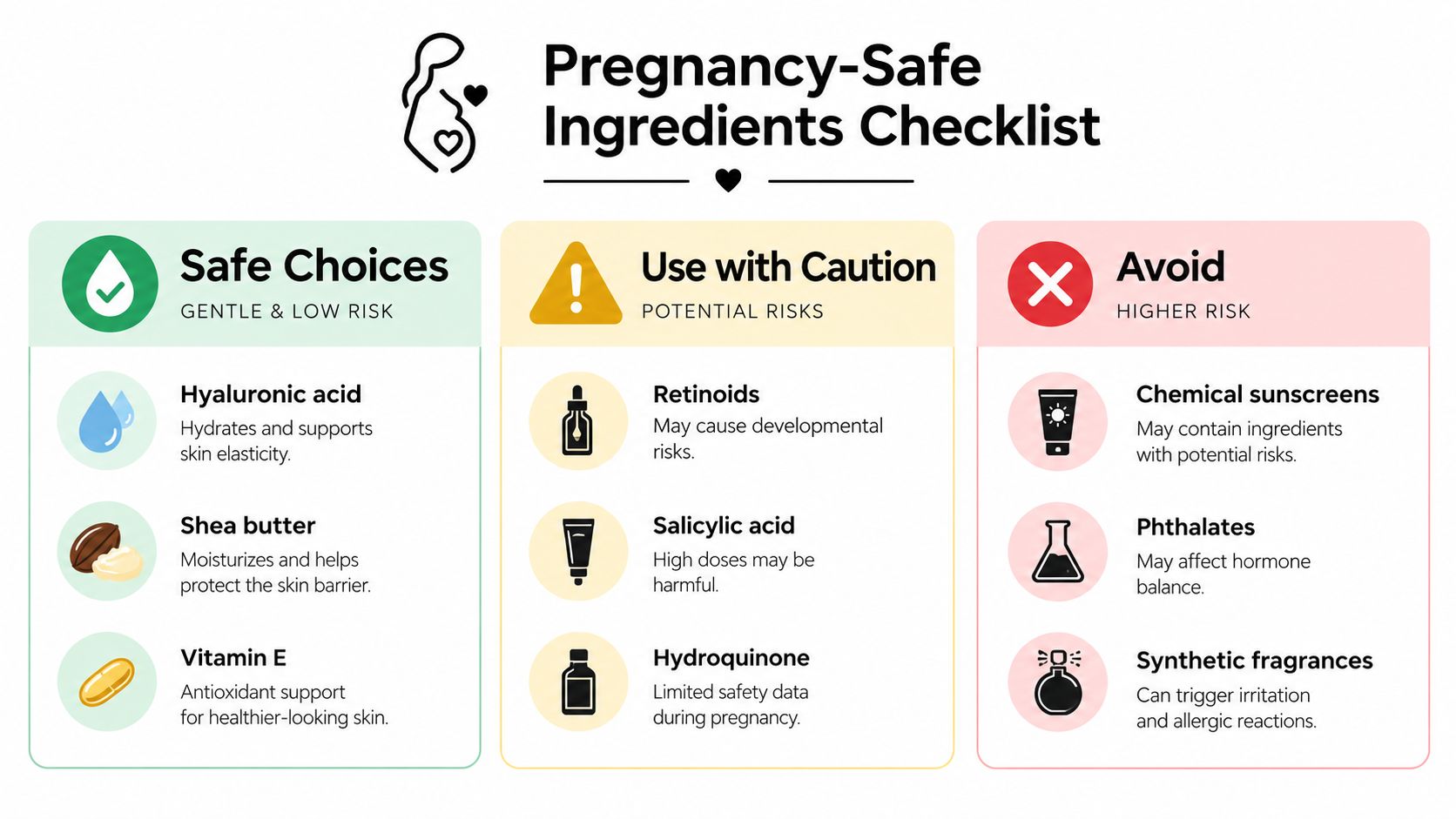
“Natural” describes an ingredient's origin, not its suitability during pregnancy. A plant-derived fragrance can still irritate sensitive skin, and an essential oil can require careful dilution. Pregnancy changes how cautious many people want to be, so reading the full ingredient list is more useful than relying on front-of-pack words such as natural, clean, or botanical.
The NHS Borders aromatherapy guidance stresses that not all essential oils are suitable during pregnancy and that essential oils shouldn't be applied undiluted to the skin. This is particularly relevant to belly oils because massage can cover a broad area of skin.
Read the label in layers
Start with the base oils. Ingredients such as sweet almond, jojoba, sunflower, olive, or rosehip oil are commonly used to soften and condition the skin. That doesn't make every formula suitable for every person, though. If you have a nut allergy, check whether the product contains almond oil and ask a healthcare professional or manufacturer for clarification before use.
Next, look for fragrance. “Parfum” may represent a blend of fragrance materials without listing each one individually. A fragrance-free product can be a sensible choice if your skin is reactive or pregnancy has made smells difficult to tolerate.
Essential oils need extra scrutiny. The label should identify them clearly, and they should already be diluted in a carrier oil. Don't add drops of essential oil to a plain body oil yourself, and don't use essential oils neat on the bump.
Ingredients that deserve caution
Vitamin A derivatives, including retinoids, are another important category. UK skincare guidance advises avoiding retinoids and vitamin A forms during pregnancy. If you see terms such as retinol, tretinoin, retinal, or retinyl palmitate, pause and ask your midwife, GP, pharmacist, or dermatologist for personalised advice before using the product.
You can also use this UK pregnancy-safe skincare guide as a starting point for reviewing labels. It shouldn't replace medical advice, particularly if you have eczema, allergies, a diagnosed skin condition, or a complicated pregnancy.
- Prefer transparent labels: You should be able to identify the carrier oils, fragrance, preservatives, and essential oils.
- Patch test first: Apply a small amount to a limited area and watch for irritation before covering the whole bump.
- Stop if your skin reacts: Burning, swelling, a spreading rash, or persistent redness warrants stopping the product and seeking advice.
- Treat “safe” as context-dependent: A product may be suitable for one person and unsuitable for another because of allergies, asthma, eczema, or fragrance sensitivity.
A simple, clearly labelled formula is often easier to assess than a heavily perfumed blend with a long list of botanical extracts. Safety is about the complete formulation and how you use it, not whether the bottle features a leaf illustration.
The Reality of Stretch Marks and Skin Hydration
Many pregnancy products are marketed as though stretch marks are a problem you can prevent if you apply the right oil often enough. NHS guidance gives a more honest picture. Stretch marks are one of the most common skin changes in pregnancy, affecting around 8 out of 10 pregnant women in the UK, according to the NHS pregnancy guidance.
The same guidance links them with hormonal changes and the stretching of skin as the bump grows. They commonly appear on the tummy, breasts, thighs, and bottom. Their appearance isn't evidence that you failed to moisturise, chose the wrong product, or didn't massage for long enough.
What the evidence means for your routine
The NHS says there's no strong evidence that creams or oils prevent stretch marks or remove them after birth. It also notes that no reliable cream can erase pregnancy stretch marks once they appear, and that prevention isn't always possible. You'll find the detail in the NHS information on stretch marks.
That doesn't make belly oil pointless. It changes the reason to use it. An oil can act as a moisturising emollient that helps dry skin feel smoother and more comfortable. Massage can also give you a deliberate moment to notice how your body feels, which can be valuable even when the appearance of stretch marks remains outside your control.
Your skin can be healthy, cared for, and moisturised while still developing stretch marks. Those facts can exist together.
Stretch marks also commonly become paler and less noticeable after birth. They're part of a physical process that varies between individuals, and comparing your skin with another pregnant person's skin can create unnecessary pressure.
If you want a deeper discussion of realistic product claims, read whether stretch mark oil works. Look for language about hydration, softness, and comfort rather than guarantees to prevent, erase, or cure.
How to Apply Belly Oil for Maximum Comfort
Application matters because a good product can still feel unpleasant if you use too much, apply it to irritated skin, or rub aggressively. The aim is to spread a thin, comfortable layer without creating friction.
UK pregnancy oil product guidance commonly recommends using a small amount and applying it regularly, with examples including 3–8 drops or massage 2–3 times daily. These recommendations are described in the Maternis pregnancy stretch marks oil guidance. Follow your own product's label first, particularly if its dispenser uses pumps rather than drops.
A gentle application sequence
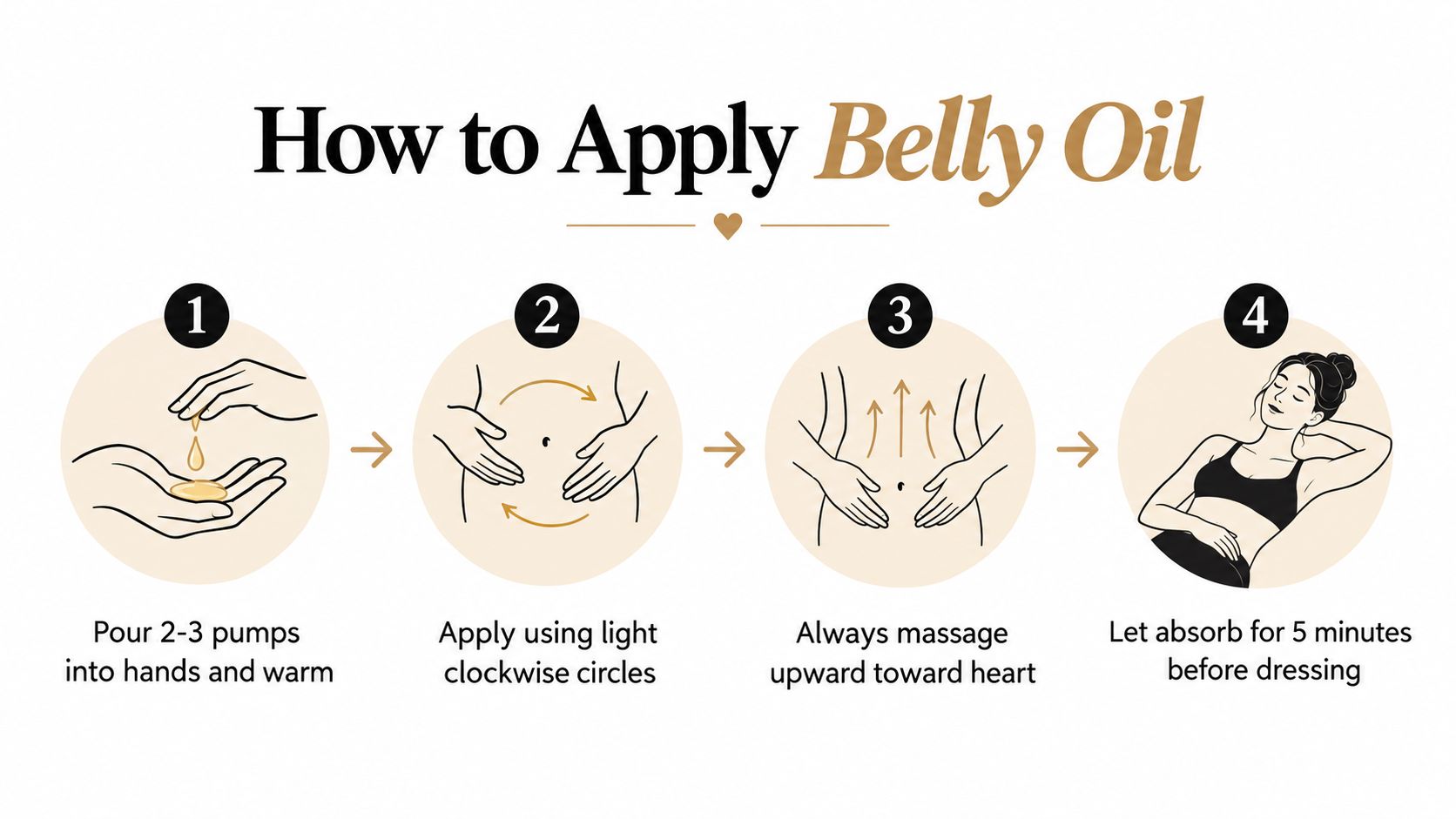
- Start after bathing. Pat your skin dry rather than rubbing it briskly. Leave it slightly damp so the oil can spread easily and help reduce moisture loss from the surface.
- Use a modest amount. Place the recommended quantity in your palm and warm it between your hands. If you need more coverage, add a little rather than pouring a large amount at once.
- Begin with light contact. Rest your hands on the bump and use slow, comfortable movements across the abdomen. Circular motions can help distribute the oil, but there's no need to press hard.
- Include surrounding areas. If the label permits, move across the sides of the abdomen, hips, breasts, or thighs where the skin also feels dry. Avoid broken, inflamed, or freshly shaved skin.
- Give it time to settle. Wait before putting on tight clothing if the surface still feels very slippery. Cotton or breathable fabrics may feel more comfortable when your skin is sensitive.
This routine is about comfort, not forcing the oil deeper into the skin. Vigorous rubbing won't improve the product's ability to prevent stretch marks, and it may aggravate itching or irritation.
The belly oil massage guidance from The Happy Bump Co offers another practical reference for making application slower and more intentional.
If your bump becomes painful, the itching is severe, or you develop a rash, stop treating the symptom as ordinary dryness. Contact your midwife, GP, or maternity unit for advice.
Building a Complete Bump Care Ritual
A useful routine doesn't need a shelf full of products. It needs a gentle cleanser, a moisturising step you'll consistently use, and enough flexibility to adapt when your skin or energy levels change.
Keep everyday care simple. Wash with lukewarm water and a mild cleanser, pat your skin dry, and apply belly oil while the skin is slightly damp. On very dry areas, a richer belly butter can follow once the oil has settled, creating a more protective finish without requiring a large amount of either product.
A practical weekly rhythm
- Most days: Apply belly oil after bathing or whenever tightness becomes distracting. Use slow movements and treat the process as a comfort measure.
- When dryness persists: Add belly butter to the driest areas, particularly in the evening.
- Occasionally: If you choose a pregnancy tummy scrub, use it gently and only on intact skin. Avoid vigorous exfoliation, especially if your skin is itchy, inflamed, or prone to eczema.
- After exfoliation: Rinse thoroughly, pat dry, and moisturise. Don't use a scrub as a way to remove or prevent stretch marks, because NHS guidance doesn't support that expectation.
- Whenever irritation appears: Stop the new product and return to a simpler routine until you've worked out what your skin tolerates.
The most valuable part of the ritual may be the pause itself. Sit comfortably, notice whether your skin feels dry or sore, and ask someone you trust to help if reaching your lower bump becomes awkward. A partner can massage the oil lightly, but pressure should always remain comfortable.
Your bump doesn't need to meet an ideal appearance to deserve care. Use pregnancy skincare to support softness, reduce the distraction of dryness, and give yourself a calm daily moment, while accepting that stretch marks may still develop as a normal part of pregnancy.
The Happy Bump Co offers pregnancy-focused bump care, including Belly Oil for Stretch Marks, Belly Butter, and Pregnancy Tummy Scrub, designed for daily nourishment and comfort during pregnancy and beyond. Visit The Happy Bump Co to explore the range and choose a routine that suits your skin, ingredient preferences, and stage of pregnancy.