

By evening, your skin may feel unfamiliar. Your bump is tight after a day of movement, your usual body lotion suddenly stings, and the effort of reaching for a product can feel like a task in itself. You want comfort, a little calm, and something that helps you feel connected to your changing body, but pregnancy skincare shelves often make simple choices seem complicated.
Pregnancy self care products can support that daily pause. The most useful approach isn't to chase a promise of perfect, mark-free skin. It's to build a gentle ritual that helps dry or itchy skin feel more comfortable, gives you a moment to breathe, and uses ingredients you can understand. This guide focuses on bump care, bath and body comfort, physical support, and sleep-friendly routines, with UK-relevant ingredient guidance throughout.
Table of Contents
- Introduction to Pregnancy Self Care That Supports You
- What Pregnancy Self Care Products Really Include
- Key Categories of Pregnancy Self Care Products Explained
- How to Check Safety and Ingredients With Confidence
- Building a Simple Daily Self Care Routine for Pregnancy
- Smart Buying Considerations Without the Hype
- Embracing Your Bump Care Ritual With Confidence
Introduction to Pregnancy Self Care That Supports You
After a shower, you notice your tummy feels dry. The cream you usually use suddenly seems too heavily fragranced, while tired legs, broken sleep, and the wish for ten quiet minutes compete for attention. These small moments can show what kind of care would help today.
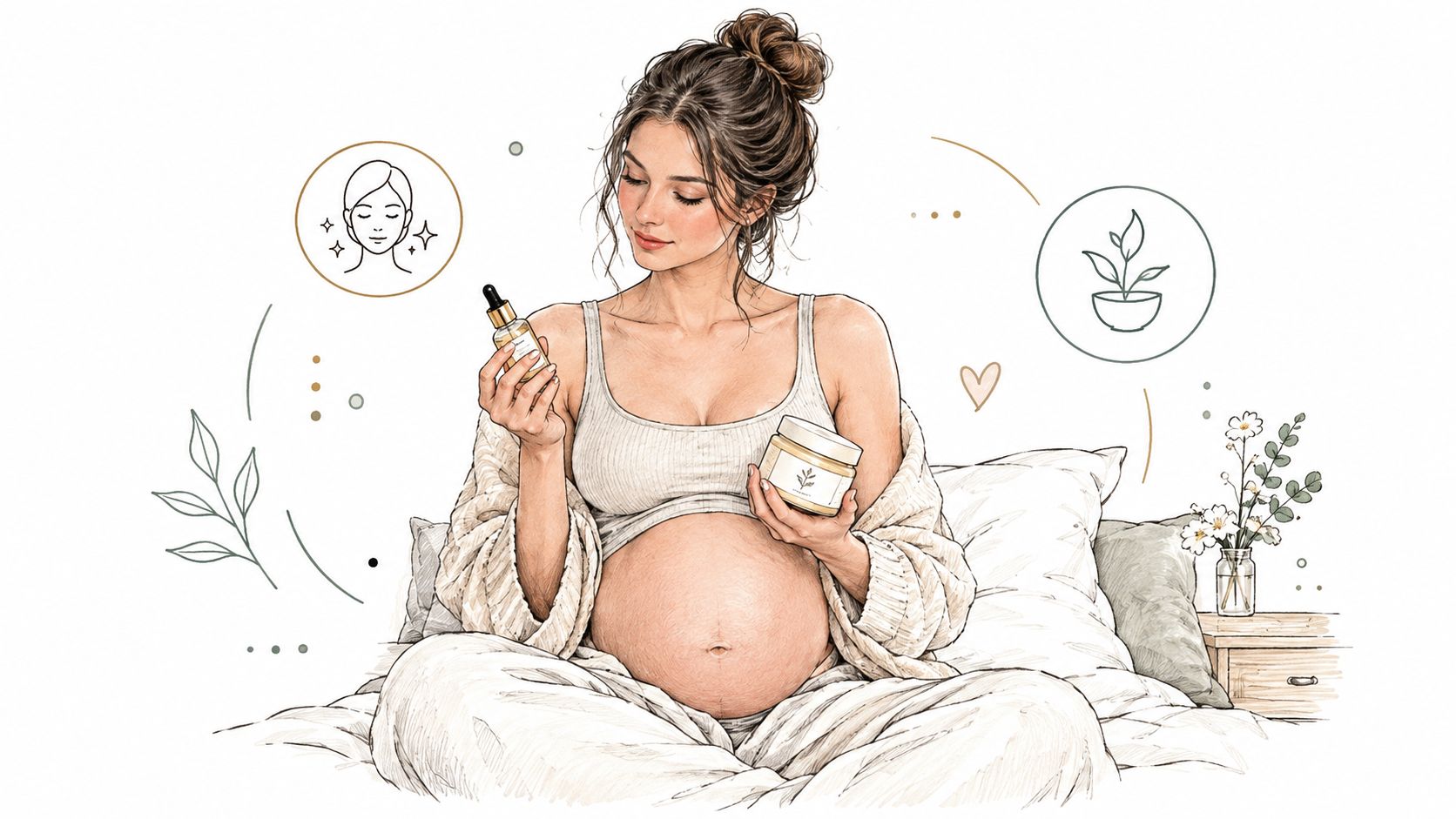
That is why pregnancy self care products need a broader role than stretch-mark prevention. A belly butter, body oil, calming bath product, supportive pillow, or simple breathing ritual can each support a different part of your day. Their value is practical and personal: helping skin feel more comfortable, making rest easier, or creating a calm pause while your body changes.
Comfort matters more than perfection
A UK dermatology review reported that creams, lotions, and ointments are used by up to 78% of pregnant women, while products marketed to prevent stretch marks were not generally effective according to the British Journal of Dermatology review. This changes how you judge a moisturiser. Its useful job is comfort, not a promise of perfectly mark-free skin.
Hydration may leave dry skin feeling softer and ease discomfort linked with dryness or itch. Applying it slowly can also act like a daily anchor, especially alongside steady breathing or a few minutes away from your phone. A basic, fragrance-free moisturiser may therefore meet your needs, while a premium product may earn its place through texture, scent, packaging, or the pleasure of making the routine feel special.
The Happy Bump Co is a UK-made, bump-focused brand with products including belly butter, belly oil, and a pregnancy tummy scrub. You do not need the full range. Choose according to your skin's comfort, check ingredients against UK pregnancy safety guidance, and compare the experience of a premium ritual with straightforward hydration. This approach keeps self-care useful during pregnancy and adaptable after birth.
What Pregnancy Self Care Products Really Include
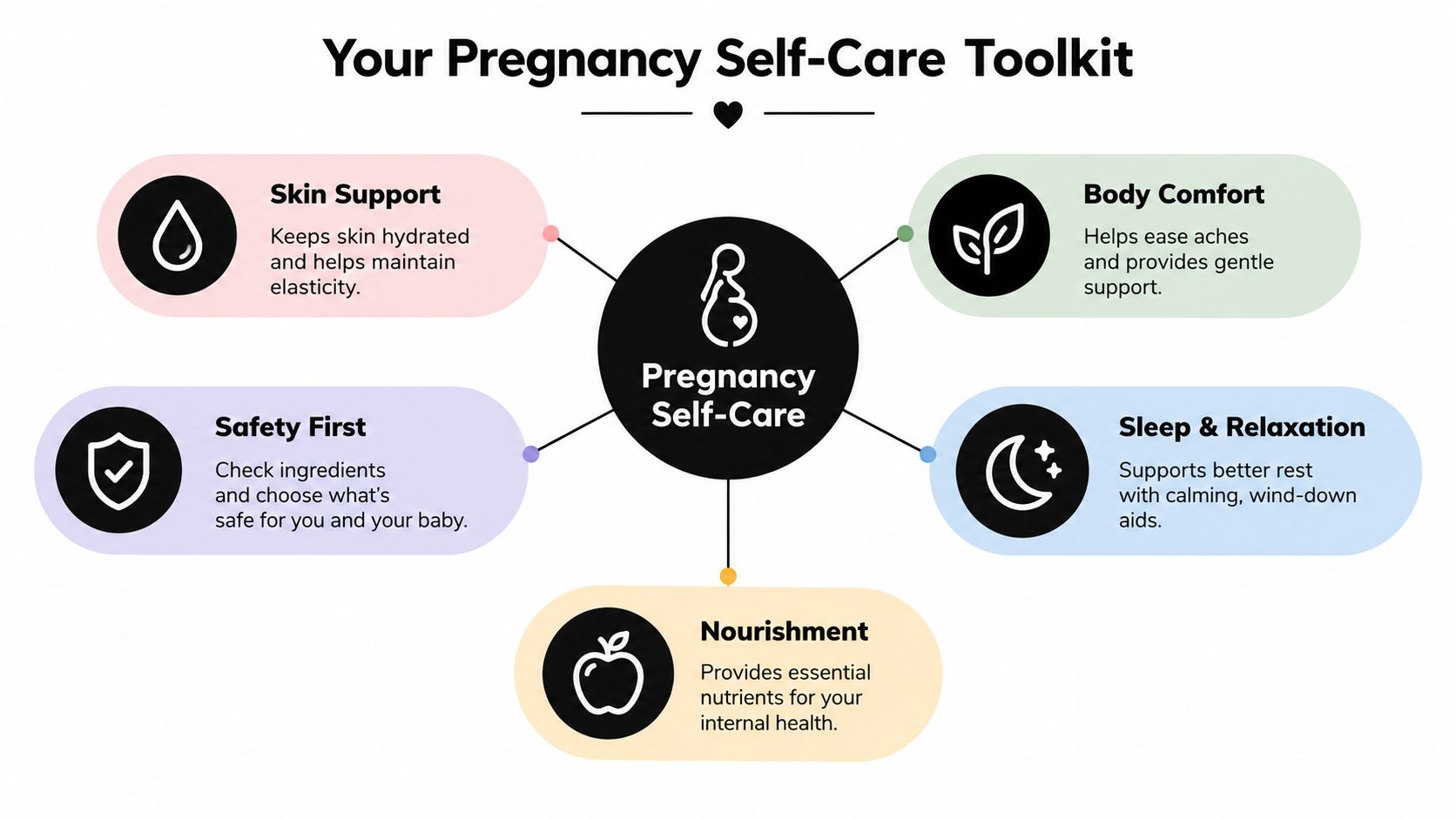
Think of pregnancy self-care as a support toolkit. A toolkit works well because each tool has a job. You wouldn't use a screwdriver to measure a wall, and you don't need a scrub to solve every skin concern. Choosing becomes easier when you start with the comfort you want rather than the product category on the shelf.
Five jobs within one toolkit
Skin support includes belly butters, oils, lotions, creams, gentle cleansers, and selected exfoliants. These products mainly address moisture, tight-feeling skin, rough texture, and the sensory experience of caring for a growing bump.
Body comfort covers items such as support cushions, maternity pillows, warm baths, foot-care products, and clothing that reduces pressure. These aren't skincare, but they can make rest and movement feel more manageable.
Sleep and relaxation includes a consistent wind-down routine, a comfortable pillow arrangement, low-stimulation lighting, and carefully chosen scented or unscented products. If fragrance makes you feel queasy or gives you a headache, an unscented ritual may be the kinder choice.
Nourishment belongs in the wider picture too. Food, fluids, rest, and support from other people can't be replaced by a jar of cream. Self-care products should complement these foundations, not suggest that a cosmetic routine can treat a medical problem.
Safety first means checking the ingredient list, considering sensitivity, and asking a pharmacist, midwife, or other maternity professional when you're unsure. “Natural” isn't a complete safety assessment, and “premium” doesn't automatically mean more suitable.
What these products can and can't do
Pregnancy changes can bring stretching, dryness, sensitivity, and disrupted sleep. A product may improve how your skin feels or make a routine more pleasant, but it can't promise to control every change your body makes. In particular, a cosmetic product shouldn't be treated as a guaranteed stretch-mark prevention method.
A helpful starting question: “What would feel better after I use this?” If the answer is softer skin, less surface dryness, or a calmer bedtime, you've identified a realistic purpose.
This guide stays with gentle, ritual-based care. Persistent itching, a rash, pain, swelling, or symptoms that concern you need proper medical advice rather than another product.
Key Categories of Pregnancy Self Care Products Explained
Different formats suit different moments. A rich butter may feel comforting after a shower, while an oil can make massage easier. A bath product may support relaxation, but it won't replace a moisturiser if your skin feels dry. Matching the product to the job prevents clutter and over-application.
Skin care for a changing bump
Butters and creams create a richer, cushioned feel and may suit skin that feels dry or tight. Oils spread easily and work well with slow, light massage, though you'll want to take care around slippery bath or shower floors. Scrubs can smooth rough surface texture, but sensitive skin may prefer occasional, gentle use rather than frequent exfoliation.
The practical benefit is comfort and a more enjoyable routine. If you're comparing oils with creams, the choice often comes down to texture, absorption, fragrance, and how much time you want to spend applying the product. A guide to belly oil can help you think through where an oil fits within bump care.
Bath and shower comfort
A warm shower can mark the start or end of your routine. Gentle body washes, fragrance-free cleansers, soft flannels, and moisturiser applied while skin is still slightly damp may work better for someone whose skin feels reactive. If you use scented products, keep the aroma mild and stop if it worsens nausea, headache, or irritation.
Physical support
A maternity pillow, additional cushion, supportive footwear, or a comfortable place to rest can be more useful than another skincare purchase when your main concern is back, hip, leg, or bump discomfort. These aids don't need to look luxurious. Their job is to help you find a position that feels supported while you read, rest, or sleep.
Sleep and relaxation
A repeatable wind-down cue can be simple. Dim the lights, put your phone aside, apply a familiar moisturiser, and take a few slower breaths. A pillow, soft eye mask, or unscented body lotion may support the ritual, but no product needs to guarantee sleep.
| Product Category | Primary Purpose | Typical Textures and Formats | Best Time to Use |
|---|---|---|---|
| Bump skincare | Surface hydration and comfort | Butter, oil, lotion, cream, gentle scrub | After washing or whenever skin feels dry |
| Bath and shower care | Cleansing and relaxation | Wash, bath soak, cloth, moisturiser | During bathing and immediately afterwards |
| Physical comfort aids | Support and pressure relief | Pillow, cushion, footwear, support garment | Rest, sitting, sleep, or movement |
| Sleep and relaxation aids | A calmer wind-down | Pillow, mist, eye mask, low-scent or unscented care | Before bed or during a quiet break |
The best category is the one that answers today's need. You might use only a moisturiser during an exhausting week, then add a longer massage ritual when you have more energy.
How to Check Safety and Ingredients With Confidence
A label can look intimidating, but you don't need to memorise every cosmetic ingredient. Start with two questions: what should I avoid during pregnancy, and what supports the skin barrier without unnecessary intensity?
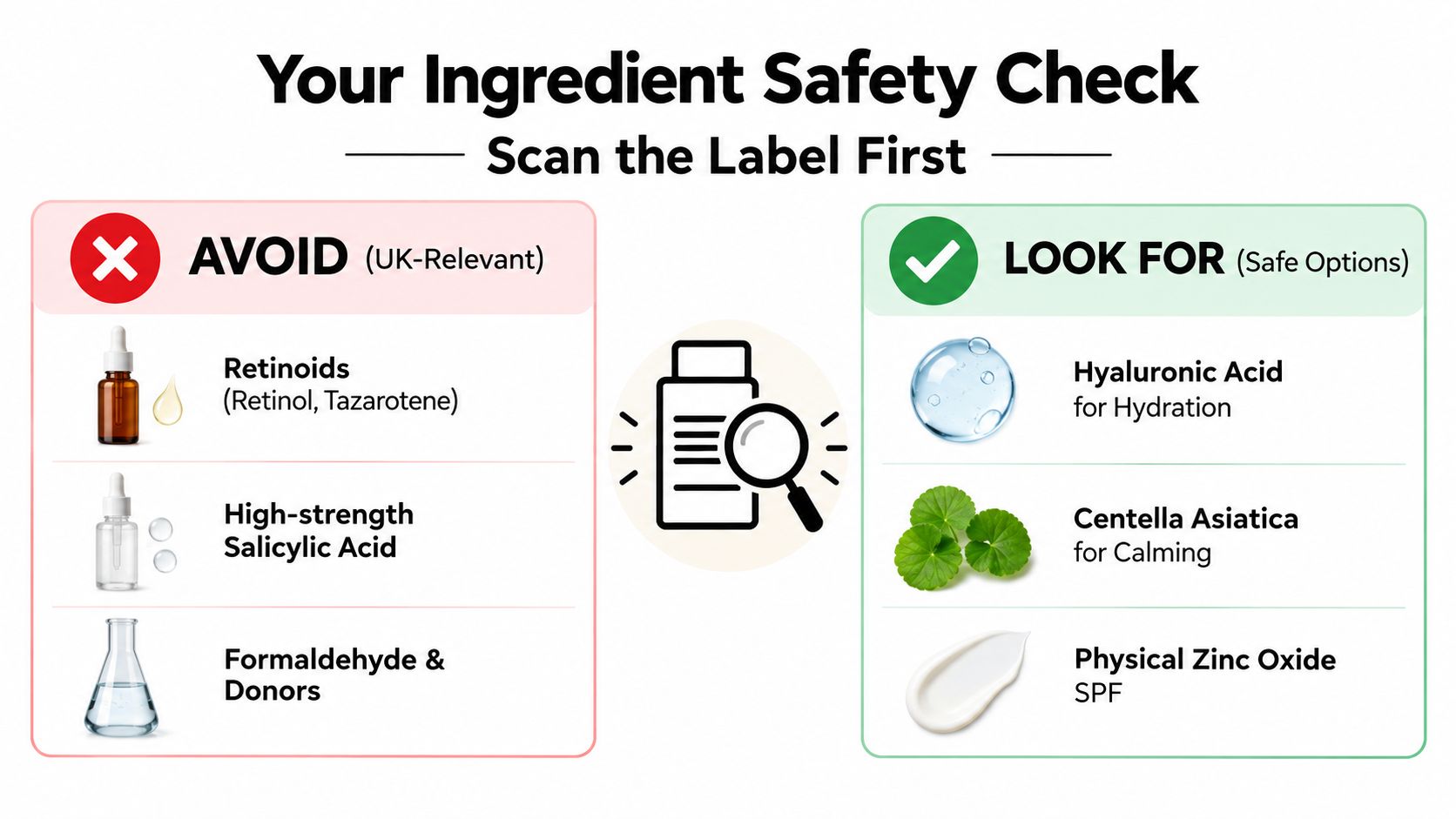
UK-oriented pregnancy skincare guidance advises avoiding retinoids, including topical retinol, retinal, and tretinoin, during pregnancy. The concern remains relevant even though topical absorption is low, so a pregnancy routine should leave vitamin A derivatives out unless your own healthcare professional gives you specific advice. Guidance also cautions against high-strength salicylic acid and discourages daily-use salicylic-acid body products during pregnancy as outlined in UK-facing ingredient guidance.
Ingredients that support a gentler routine
Pregnancy-oriented UK guidance identifies hyaluronic acid, niacinamide, vitamin C, ceramides, shea butter, panthenol, zinc oxide, and titanium dioxide as commonly used ingredients generally considered acceptable in pregnancy in this ingredient overview. These ingredients have different jobs. Hyaluronic acid helps a formula focus on hydration, ceramides support the barrier, and shea butter provides a richer emollient feel.
Mineral filters such as zinc oxide and titanium dioxide can be useful in sun protection. A simpler formula may be more comfortable than a crowded one, particularly if pregnancy has made your skin or sense of smell more sensitive.
A label-reading habit
Use this quick check before buying:
- Scan for retinoids: Look for terms such as retinol, retinal, or tretinoin, and leave the product aside during pregnancy.
- Question strong exfoliation: Be cautious with high-strength salicylic acid and ask a pharmacist or clinician if you're unsure.
- Choose your sensory profile: Fragrance-free may be preferable if scent triggers nausea, headaches, or irritation.
- Check the product purpose: A moisturiser can support comfort, but it isn't a treatment for a medical skin condition.
- Patch test thoughtfully: Apply a small amount to a limited area first, especially when trying a new formula.
The UK pregnancy skincare guide from The Happy Bump Co can be a useful starting point, but personal medical advice always comes first. Ask your midwife, pharmacist, GP, or dermatologist if you have eczema, an allergy, a persistent rash, or a prescribed skincare product you're considering continuing.
Building a Simple Daily Self Care Routine for Pregnancy
A routine should fit the body and energy you have today. Three carefully chosen products used consistently can be more supportive than a crowded shelf that makes every wash feel like a project.
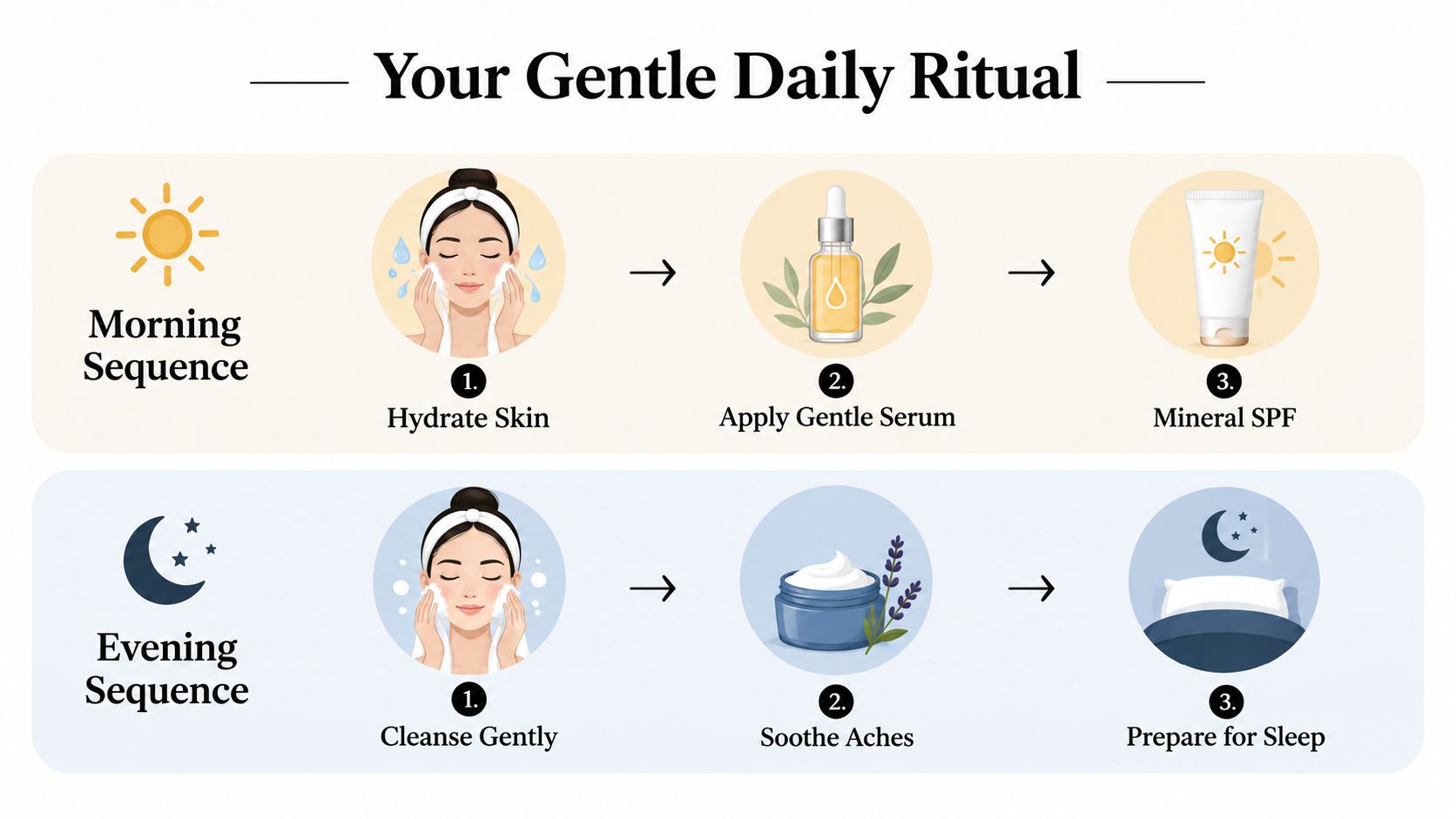
Morning sequence
Begin with gentle cleansing if you need it, or apply moisturiser after washing. Use a lotion, cream, or body butter on areas that feel dry, paying attention to the tummy, hips, breasts, and legs without rubbing aggressively.
If your face or exposed skin needs protection, choose a pregnancy-conscious sunscreen and consider mineral filters such as zinc oxide or titanium dioxide. Keep the morning short. The purpose is to leave your skin comfortable and your day started, not to complete a lengthy treatment.
Evening sequence
The evening can carry more of the ritual. After a bath or shower, pat rather than scrub your skin dry, then apply a richer product while the skin still feels slightly damp. If you enjoy oil, use a small amount and massage slowly, allowing the movement itself to signal that the day is ending.
A scrub belongs occasionally, not automatically every night. Over-exfoliating can leave sensitive skin feeling worse, so let your skin decide. If your bump feels tight but not dry, a light lotion may be enough. If it feels rough or uncomfortable, a richer butter may suit you better.
Make the habit easy to keep
Store products where you already change clothes or prepare for bed. Sit down if standing feels tiring, and pair application with a slow breathing pattern, an audiobook, or quiet music. Gentle touch can turn a functional task into a moment of connection with your bump.
Consistency beats quantity. A small routine that feels pleasant is easier to repeat than a complicated one that leaves you feeling behind.
Your routine may change across pregnancy. Nausea can make fragrance unbearable, tiredness can reduce care to one product, and skin can shift from comfortable to dry without warning. The pregnancy skincare routine guide offers another way to organise the sequence, but your own skin response should guide the final choice.
Smart Buying Considerations Without the Hype
A premium jar can feel appealing, yet a higher price does not show that it will suit pregnancy skin. A useful purchase balances ingredient suitability, sensory comfort, useful texture, transparent claims, and how likely you are to use it. The best product is often the one that fits your skin and your day, rather than the one with the most elaborate packaging.
Read the claim before judging the product. “Helps skin feel moisturised” describes cosmetic comfort that you can assess through your own experience. “Prevents stretch marks” makes a much stronger promise. As noted earlier, the UK dermatology review found that products marketed to prevent stretch marks were not generally effective. Paying more for that promise may therefore offer limited value. A product can still earn its place for softness, massage, or the calm of a repeated ritual. Assess it for those benefits instead.
A practical value filter
Ask yourself:
- Will I use it comfortably? A carefully formulated product that smells too strong or feels sticky will be difficult to repeat.
- Does the label make sense? Clear ingredients and pregnancy-conscious exclusions offer more help than vague “clean” language.
- Does it meet my current need? Choose hydration for dryness, a support aid for pressure, or a soothing cue for restless evenings.
- Can I patch test it? This gives you a safer way to check a new product when your skin feels reactive.
- Will it remain useful later? A gentle moisturiser or body oil may support dry skin after birth, while a narrowly framed product may have a shorter role.
Use the list like a shopping filter. If a product fails on scent, texture, or clarity, its premium price cannot make it a better daily choice.
UK-made provenance may matter when it reflects manufacturing transparency and fits your buying values. It does not replace ingredient checking. Fragrance-free options may deserve more attention than trend-led extras if pregnancy has made your senses or skin unsettled.
The growing UK maternity personal care market helps explain why belly butters, oils, and scrubs are increasingly presented as routine-care products rather than niche purchases. Industry projections suggest the category is growing, although figures vary by source, including the UK maternity personal care market report. More choice can be useful, but it also makes calm comparison important. Judge the value of a premium ritual by the comfort and consistency it gives you, not by a stretch-mark prevention promise.
Embracing Your Bump Care Ritual With Confidence
Pregnancy self-care works best when it supports comfort, connection, and consistency, not pressure. Your skin may stretch and change despite careful moisturising. That doesn't mean you failed, and it doesn't make your routine pointless.
Choose by need. Check the UK-relevant avoid list, favour gentle barrier-supporting ingredients, and select a texture you'll enjoy using. Start with one or two products, perhaps a simple moisturiser and a richer evening option, then add anything else only when it earns a place in your day.
A ritual can be brief. Smooth product over your bump, notice how your skin feels, take a slow breath, and let that moment belong to you. The same approach can continue beyond pregnancy, particularly when you choose products that support changing skin rather than relying on narrow prevention claims.
You don't need perfect skin or a perfect routine. You need care that feels safe, manageable, and kind to the body carrying your baby.
The Happy Bump Co offers UK-made bump-focused care, including Belly Butter, Belly Oil for Stretch Marks, and Pregnancy Tummy Scrub, designed to nourish and support changing skin during pregnancy and beyond. Visit The Happy Bump Co to choose a gentle product that can become part of your own daily comfort ritual.