

Yes, stretch marks on the legs and thighs are a common, well-documented part of pregnancy. A clinical study found that 27 out of 110 pregnant women, or 25%, developed stretch marks on the thighs, so leg marks aren't a sign that anything is wrong.
You may notice them while getting dressed, stepping out of the shower, or catching your reflection in the second or third trimester. Perhaps the skin on your upper thighs feels tighter, looks pinker or purplish, or has started to itch. It can be unsettling when most pregnancy skincare advice talks about the tummy, but your legs are part of the same normal process.
The NHS says stretch marks affect around 8 out of 10 pregnant women, and commonly appear on the tummy, upper thighs, breasts, bottom and thighs as pregnancy progresses. They often become noticeable around 22 to 24 weeks, although related NHS pregnancy guidance places their appearance around 17 to 22 weeks in some pregnancies. They usually fade into paler silver lines after birth rather than disappearing completely. NHS guidance on pregnancy stretch marks offers the reassuring baseline: these marks are normal, common and linked to the skin changing quickly.
Your aim isn't to control every line. It's to understand what's happening, keep your skin comfortable and choose gentle habits that fit real pregnancy life.
Table of Contents
- Why Your Legs Change During Pregnancy
- How Stretch Marks Actually Form on the Skin
- Legs and Thighs Compared with the Tummy
- What Makes Some Mums More Likely to Get Leg Marks
- A Pregnancy-Safe Skincare Routine for Your Legs
- How to Massage and Moisturise Legs Without Overdoing It
- Common Myths About Stretch Mark Creams
- Living Comfortably with Leg Stretch Marks
Why Your Legs Change During Pregnancy
By the second or third trimester, your thighs may feel fuller, tighter or more sensitive before any visible line appears. Trousers can rub differently, the backs of your thighs may itch, and standing can leave your lower body feeling heavy. These sensations often reflect pregnancy-wide changes rather than a skin problem.
Several changes arrive together
Pregnancy alters your blood volume, hormones, weight distribution and posture. As your centre of gravity shifts forwards, your hips and thighs help you balance and support your changing body. This added demand does not create stretch marks by itself, but it can increase tension while the skin is adapting.
Fluid retention may make your legs feel puffy or tender, especially later in pregnancy or after standing. The skin can then feel tight, and dryness may make itching more noticeable. These feelings usually call for comfort, not aggressive treatment. A gentler, regular routine can help your skin feel calmer.
Practical rule: Treat tight, itchy skin kindly. More pressure and harsher products will not make it adapt faster.
The upper thighs deserve attention because they are a recognised pregnancy stretch-mark site, not because they need a special cure. The NHS week-by-week pregnancy guidance includes the thighs among areas where marks may develop. Giving your legs a little moisturising care can therefore be as reasonable as caring for your bump.
A small ritual is enough: apply a fragrance-free moisturiser after bathing, choose clothing that does not rub, and pause if a product stings. These habits support comfort without promising to prevent every mark.
What to notice
Check your skin occasionally rather than repeatedly. New marks may be flat and reddish, pink, purplish or darker than the surrounding skin, depending on your natural skin tone. They can be easy to miss until light catches them or clothing rubs across the area.
A spreading rash, blistering, infected-looking skin or intense, widespread itching differs from ordinary stretch-related discomfort. Contact your midwife or maternity team if these symptoms appear.
How Stretch Marks Actually Form on the Skin
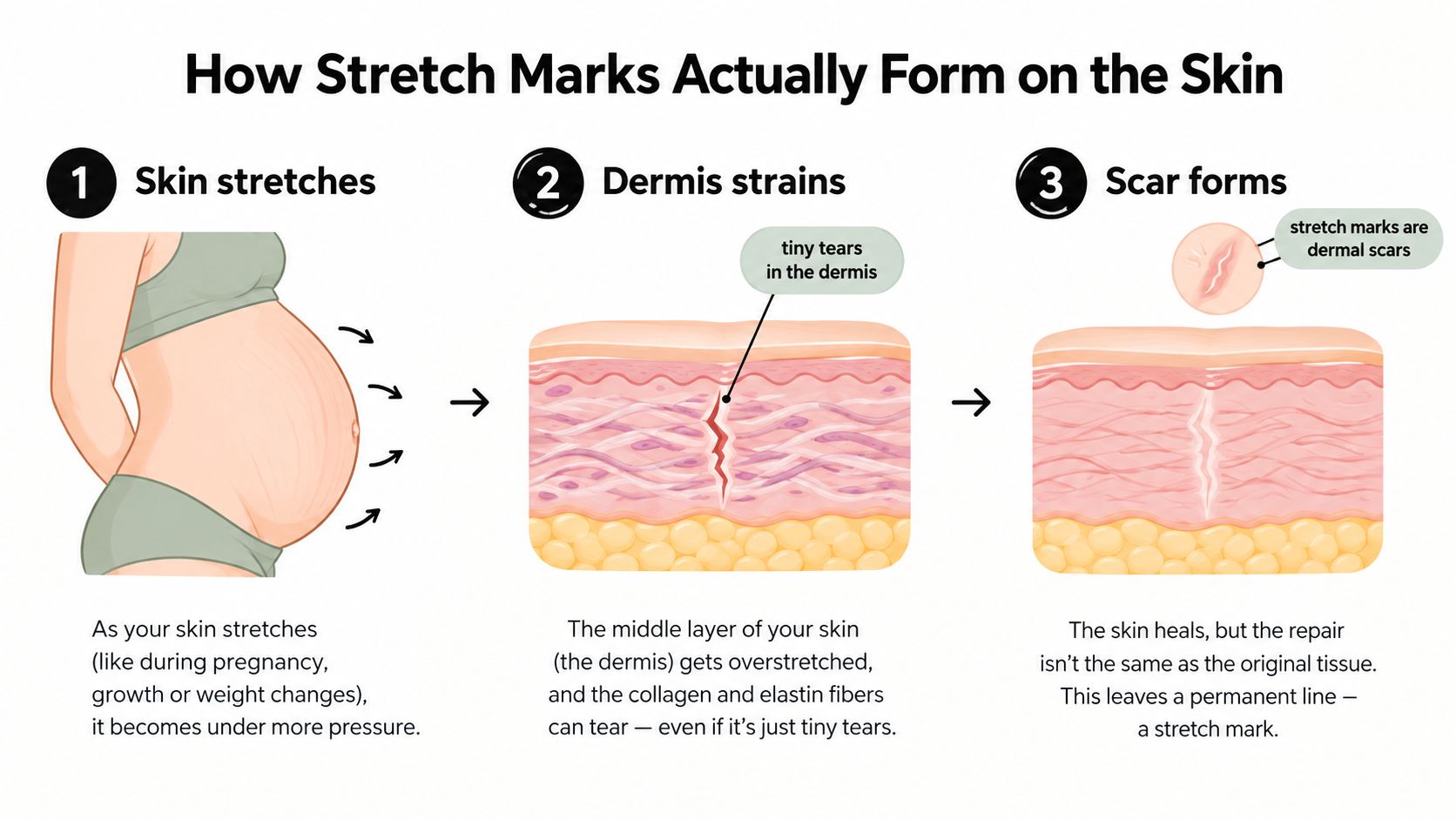
Stretch marks, medically called striae gravidarum, form in the deeper middle layer of the skin, known as the dermis. The surface may look intact, but the collagen and elastin framework underneath has been stretched and altered. That makes stretch marks a type of dermal scarring, not a patch of dry skin.
The two forces involved
Mechanical stretching is the easiest part to picture. As your shape changes, the surface of the skin expands. The thighs may widen around the hips, take more load as your posture changes, or rub against clothing and each other. The dermis has to reorganise its supporting fibres while all this is happening.
Hormonal change adds another layer. Pregnancy hormones, including rising cortisol and oestrogen, can affect collagen and elastin, the proteins that give skin strength and flexibility. When those fibres become more vulnerable under tension, the dermis can develop tiny areas of damage as the body expands.
The outer thigh can also feel more vulnerable because the dermal support isn't identical across every body area. Skin thickness and connective-tissue structure vary from person to person, so one woman may mark on her thighs while another marks mainly on her tummy or breasts.
Colour changes over time
Early stretch marks are called striae rubrae. They may look red, pink or purple and can feel itchy as the surrounding skin stretches. Later, they commonly mature into striae albae, paler silver or white lines that may be less noticeable but can remain visible.
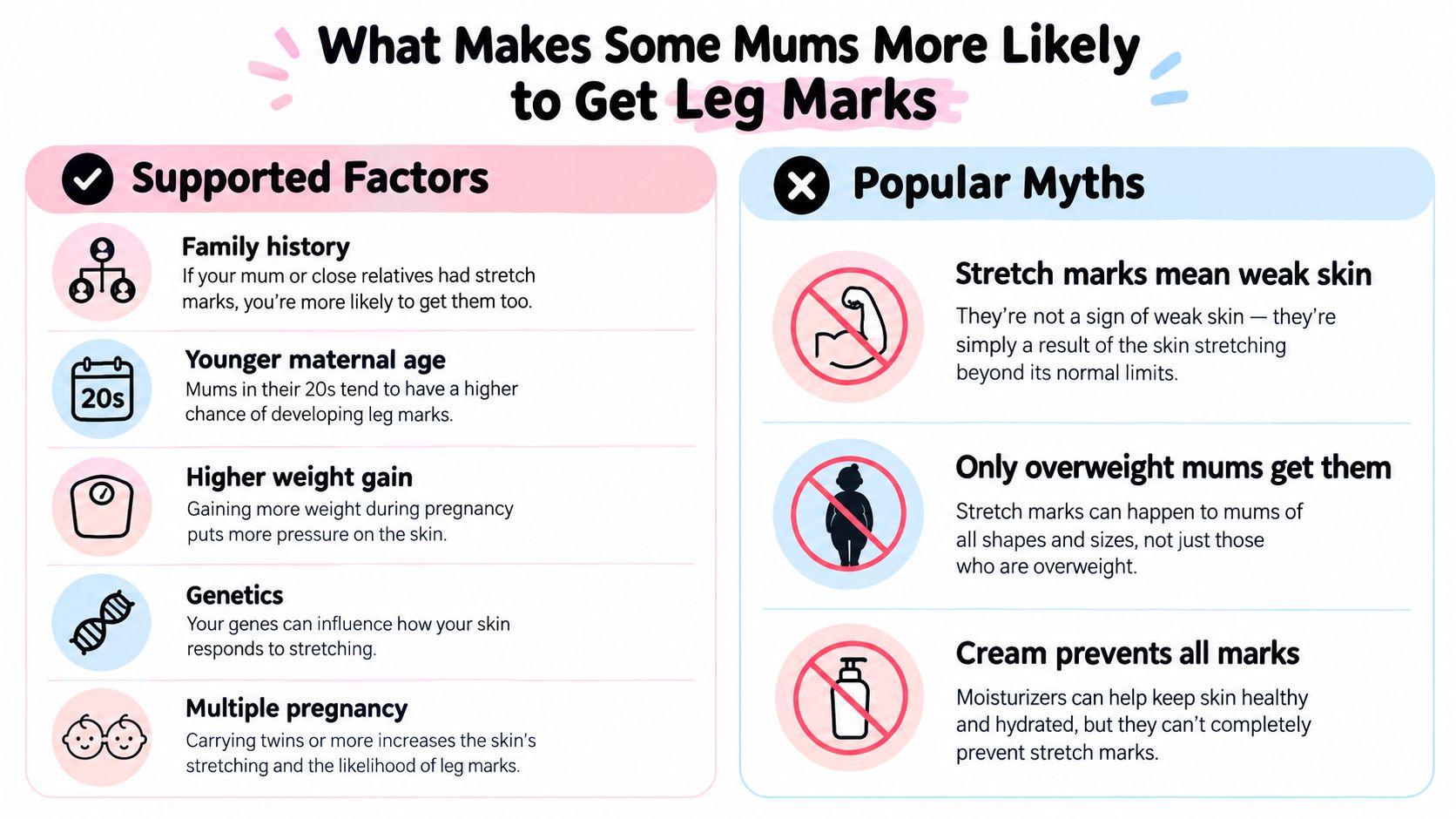
Moisturiser can reduce dryness and improve comfort, but it can't completely override the stretching and hormonal forces involved. A routine is worth keeping because comfortable skin matters. It shouldn't become a promise that you can prevent every mark through perfect effort.
Legs and Thighs Compared with the Tummy
If your skincare routine has centred on the bump, new lines on your thighs can feel unexpected. The tummy gets attention because its growth is easy to see, while the upper thighs are often treated as an afterthought. They are a recognised site of pregnancy stretch marks, alongside the abdomen and breasts. The NHS pregnancy guidance includes the upper thighs among common locations.
The same skin process can feel different in each area. As the uterus grows, the abdomen stretches forwards. The thighs and hips may change around their shape, carry more load as balance shifts, and experience rubbing during walking or dressing. Marks on the inner, upper or back thigh can also stay out of sight until you use a mirror.
| Feature | Legs and Thighs | Abdomen |
|---|---|---|
| Main movement | Skin may change around the hips and thighs as the lower body adapts to altered balance and weight distribution. | Skin stretches forwards as the bump grows. |
| Where marks hide | The back, inner and upper thighs can be difficult to inspect without a mirror. | The lower tummy and sides may be easier to notice as the bump expands. |
| How they feel | Tightness, rubbing and itch may be more noticeable during walking or dressing. | Tightness often follows the expanding bump. |
| Public attention | Leg marks are often overlooked in pregnancy skincare conversations. | Tummy care is commonly treated as the main focus. |
| What they mean | They reflect the same dermal changes as marks elsewhere. | They also reflect skin stretching and hormonal changes. |
A useful ritual is to check your thighs as gently as you check your bump. After a shower, apply a plain moisturiser to the upper, inner and outer thighs, and use a mirror if you want to see the backs of your legs. This supports comfort and helps you notice irritation, while avoiding any promise that skincare can prevent every mark.
Pregnancy stretch marks are well documented on the thighs, not a sign that you have cared for your skin incorrectly. They can begin during the later months of pregnancy and may gradually become paler with time. The NHS pregnancy information describes these changes as part of the ordinary range of pregnancy skin changes.
What Makes Some Mums More Likely to Get Leg Marks
Stretch marks don't measure how carefully you've looked after yourself. The strongest influences are often genetics, family history and the way your individual skin responds to hormonal and physical change. A peer-reviewed study of 299 pregnant participants found that 71.2% developed stretch marks at at least one site, with pre-pregnancy BMI, family history and birthweight identified as independent predictors. The British Journal of Dermatology study also found that thigh stretch marks weren't a risk-enhancing marker in that model.
Factors with stronger support
- Family history: If close relatives developed pregnancy stretch marks, your own skin may have a similar tendency. This can include the upper thighs.
- Pre-pregnancy BMI: This was identified as an independent predictor of stretch marks overall in the study above. It doesn't mean body size determines whether you will mark.
- Birthweight: The same research identified birthweight as an independent predictor, which may reflect the amount of physical change the skin accommodates.
- Hormonal sensitivity: Connective tissue responds differently between individuals, so hormonal softening may make some skin more likely to mark.
- Previous thigh marks: Striae from earlier growth or body changes can show that your thighs are a place where your skin has marked before.
The plan notes often associated with stretch marks also mention younger maternal age, rapid weight gain, carrying more than one baby and corticosteroid exposure as possible contributors. These factors can affect overall risk, but they don't predict the exact location with certainty. A thigh mark isn't evidence of a uniquely high-risk pregnancy.
A kinder interpretation: Risk factors explain patterns. They don't assign blame.
You can explore skin-supporting habits in this guide to collagen production, but don't turn prevention into a test you're expected to pass. No single food, exercise plan or cream can guarantee mark-free skin.
A Pregnancy-Safe Skincare Routine for Your Legs
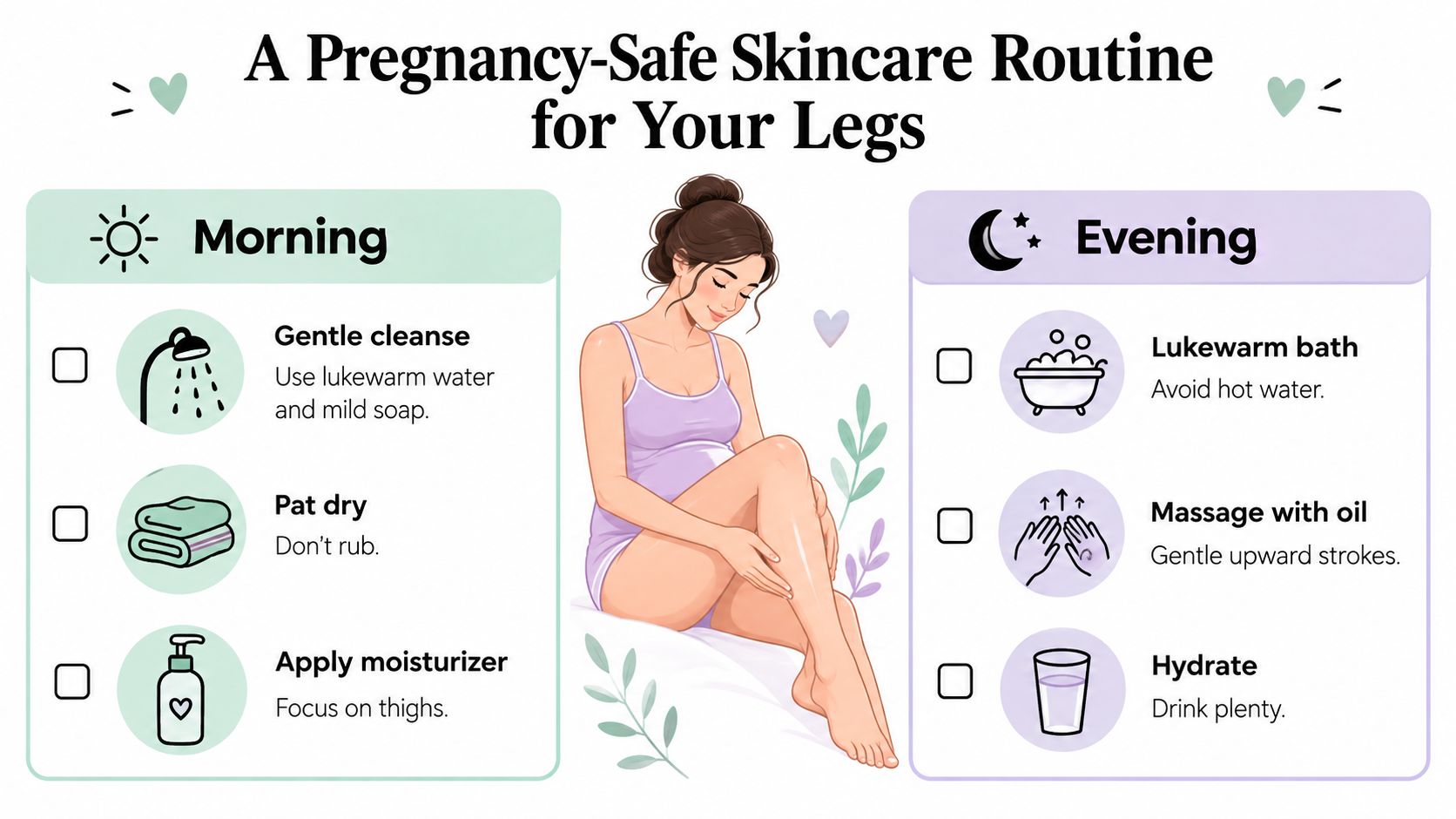
A leg routine should leave your skin calmer, not give you another pregnancy task to manage. Start with the basics: wash gently, avoid very hot water and moisturise while the skin is still slightly damp. This helps reduce the dry, tight feeling that can make stretching skin itchier.
Morning care
Use a mild, fragrance-light cleanser or soap and keep the shower lukewarm. Pat your legs dry rather than rubbing them briskly, then apply a body moisturiser to the upper thighs, hips, knees and any area that feels tight.
Look for familiar moisturising ingredients such as:
- Glycerin, which helps draw water into the outer skin.
- Shea butter and cocoa butter, which create a richer emollient feel.
- Squalane and ceramides, which support a comfortable skin barrier.
- Hyaluronic acid and vitamin E, which can add hydration and softness.
Ingredients are only part of the decision. Pregnancy can make skin more reactive, so patch-test a new product and stop if it causes burning, swelling or a rash. If you have eczema or another skin condition, ask your maternity clinician or pharmacist for advice.
Evening comfort
After a lukewarm bath or shower, apply a richer cream or body oil and use gentle strokes rather than vigorous rubbing. Avoid retinoids during pregnancy, and don't use high-dose salicylic acid or concentrated essential oils without checking with a qualified clinician. “Natural” doesn't automatically mean pregnancy-safe.
For a practical example, The Happy Bump Co Belly Oil for Stretch Marks is a pregnancy body oil designed to nourish skin and support hydration and elasticity on areas prone to stretching. You can read more about building a manageable routine in this pregnancy skincare routine, then choose products based on ingredients, comfort and how consistently you'll use them.
Weekly exfoliation should stay gentle. Skip abrasive scrubs and dry brushing if your skin feels sore, itchy or inflamed. A richer overnight layer can be more useful than adding several harsh steps.
How to Massage and Moisturise Legs Without Overdoing It
Apply your chosen cream or oil after a shower, when the skin feels clean and slightly damp. Use the flats of your hands, not fingertips or nails, and spread the product over the thighs, hips and lower legs with slow, comfortable movements.
A simple upward technique
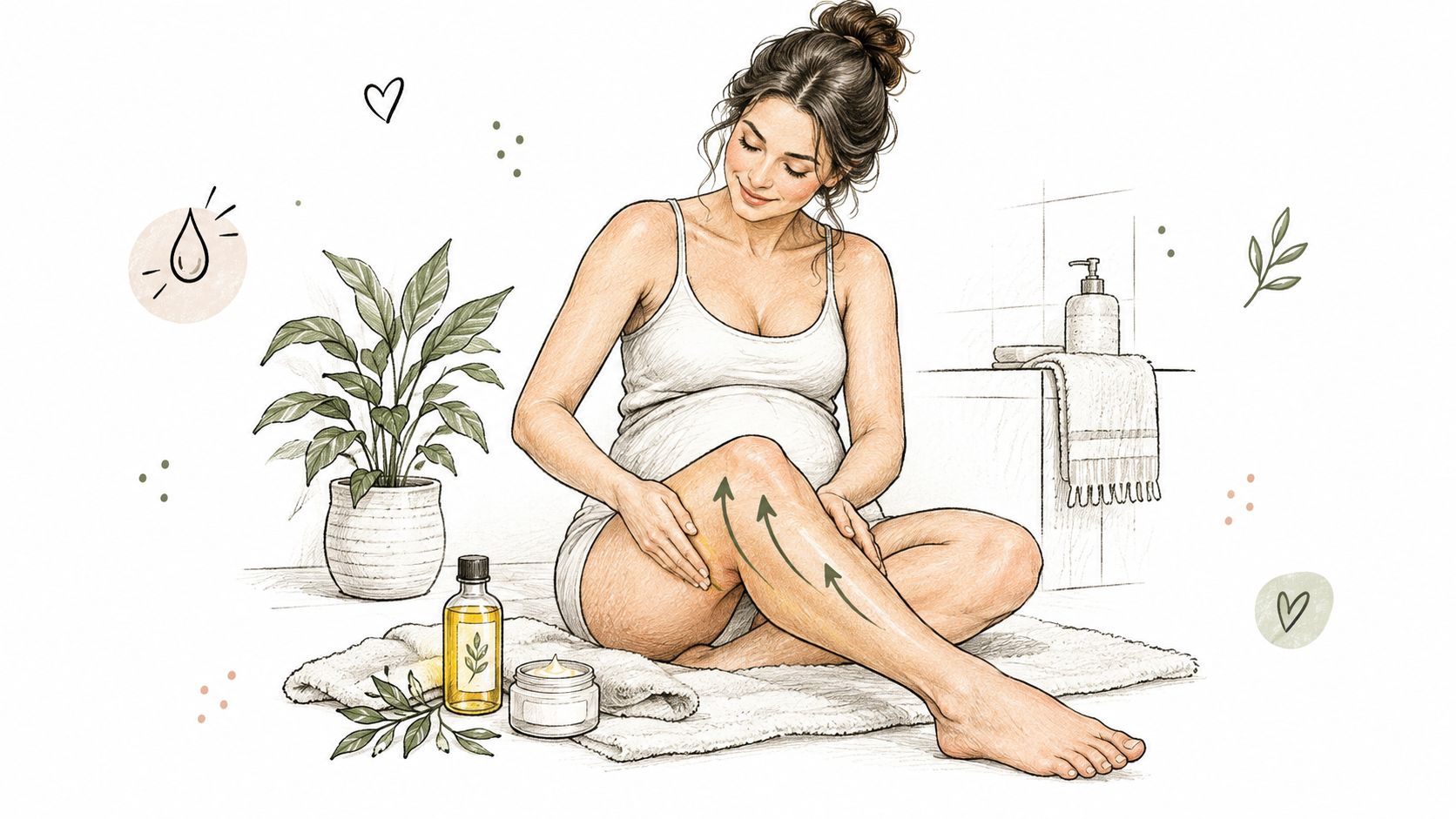
Begin at the ankles and move upwards towards the calves, knees and hips. Keep the pressure light, as though you're smoothing fabric rather than trying to work product into muscle. This spreads moisturiser evenly and can feel soothing when your legs feel heavy.
Work in sections:
- Lower legs: Glide from ankle towards calf with open palms.
- Knees: Use small circles around the kneecap, avoiding direct pressure if the area feels tender.
- Thighs: Sweep upwards towards the hips, concentrating on areas that feel dry or tight.
- Hips and outer thighs: Use broad movements and keep the skin comfortable rather than pulling it.
Aim for roughly three to five minutes per leg if that feels pleasant. The exact duration isn't a treatment requirement. A short ritual before bed is enough if it helps you apply moisturiser consistently.
Massage should feel calming, never painful, hot or bruising.
Avoid areas with varicose veins, broken skin or significant swelling. Don't massage a leg that suddenly becomes much more swollen, red, warm or painful. Contact your maternity team promptly about sudden or unusual leg symptoms rather than trying to rub them away.
You can compare textures and application styles in this guide to massage lotion for stretch marks. A few quiet minutes after bathing may help you notice how your skin feels, but massage can't guarantee that marks won't develop.
The visual routine below shows the same gentle approach in motion.
Common Myths About Stretch Mark Creams
Marketing often turns a normal pregnancy change into a problem that needs an urgent purchase. Creams and oils can make skin feel softer, reduce dryness and support a pleasant self-care habit. They can't reliably rebuild altered dermal tissue or remove established stretch marks.
Myth one, cocoa butter prevents every mark
Cocoa butter is a rich moisturiser, so it can be useful if your thighs feel dry or tight. It doesn't cancel out genetics, hormonal changes or the speed at which your body shape changes. Use it for comfort, not as a guarantee.
Myth two, the most expensive product works best
Price doesn't prove that a formula will prevent striae. A simpler fragrance-light moisturiser with glycerin, ceramides, shea butter or squalane may suit your skin better than a costly product that irritates you or sits unused in a cupboard.
Myth three, a particular oil is a guaranteed fix
Bio-Oil and other stretch-mark oils may feel pleasant and help reduce surface dryness. No oil should be treated as a promise that you won't develop marks or that existing lines will vanish.
Myth four, scrubbing erases stretch marks
Stretch marks form in the dermis, below the outermost skin surface. Aggressive exfoliation or dry brushing can make sensitive pregnancy skin sore without removing the underlying scar. If you exfoliate, choose a gentle method and stop when the skin stings or becomes red.
What to look for instead
Choose products that are comfortable, easy to apply and suitable for pregnancy. Check the full ingredient list, avoid retinoids unless your clinician specifically advises otherwise, and be cautious with strong fragrance and concentrated essential oils.
Spend thoughtfully: Buy the formula your skin tolerates and your routine can sustain, not the product with the boldest promise.
A good result from skincare may be less itching, less tightness and softer-feeling skin. That is worthwhile even if marks still appear.
Living Comfortably with Leg Stretch Marks
Leg and thigh stretch marks belong to the ordinary story of pregnancy skin. The dermis responds to physical expansion and hormonal changes, while family history and individual biology influence who develops visible lines. The NHS describes them as common and usually harmless, and the clinical evidence confirms that thigh involvement is well documented rather than an odd exception.
Marks may start reddish, pink or purplish before becoming paler and more silver after birth. They can remain visible, but their colour and texture often soften gradually. Give your skin time to settle before judging how it will look long term.
A gentle daily checklist
- Cleanse carefully: Use lukewarm water and a mild cleanser instead of hot showers and harsh soap.
- Moisturise consistently: Apply cream or oil to damp skin, especially over the upper thighs and hips.
- Massage lightly: Use open palms and comfortable upward strokes, avoiding painful or swollen areas.
- Protect healing marks: Cover exposed skin or use suitable sun protection after pregnancy, since sun exposure can make colour differences more noticeable.
- Choose soft clothing: Reduce rubbing with breathable fabrics and a comfortable fit.
- Be patient: Fading is gradual, and established lines may not disappear completely.
Intense widespread itching, a new rash, blistering, infected-looking skin or sudden significant swelling needs medical advice. Those symptoms aren't something to manage with extra moisturiser alone.
You haven't failed if marks appear despite a careful routine. Your body has stretched, shifted and made room for your baby. Caring for your legs can be a small act of comfort and connection, not a daily attempt to control a process your skin was never designed to avoid completely.
The Happy Bump Co offers pregnancy-focused body care, including Belly Butter, Belly Oil for Stretch Marks and Pregnancy Tummy Scrub, designed to nourish and support changing skin. Visit The Happy Bump Co to explore a simple, pregnancy-conscious ritual for dry, tight or stretching skin on your bump and body.