

You catch sight of your bump in the mirror while getting dressed. The skin feels tight, perhaps a little itchy, and faint pink, purple or brown lines have appeared across your stomach. You may wonder whether you've done something wrong, or whether a particular oil could have stopped them appearing.
You haven't failed. Pregnancy stretch marks on the stomach are a normal response to changing skin, and they don't say anything about how well you're caring for yourself or your baby. The NHS says they affect around 8 out of 10 pregnant women in the UK, often appearing on the stomach, breasts, thighs or bottom as the skin stretches during pregnancy. You can read more about the experience and care of stretch marks during pregnancy.
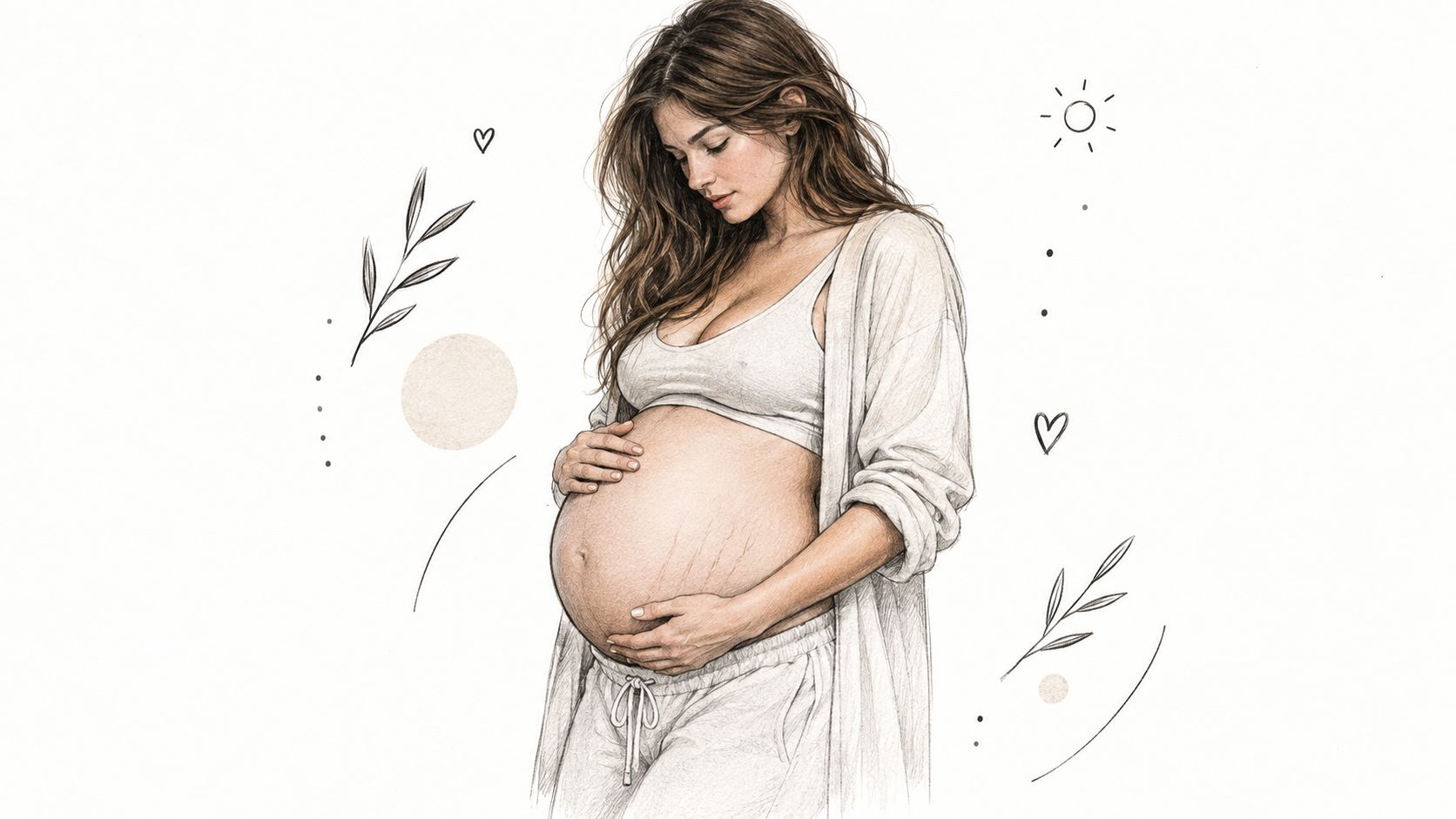
This guide won't promise that a cream can prevent every mark, because current NHS guidance doesn't support that claim. Instead, it will help you understand what's happening beneath the surface, what you can realistically do for tightness and itching, and how marks often change after birth. A gentle ritual can still be worthwhile, not as a guarantee, but as a practical way to keep your skin comfortable and give yourself a few calm minutes each day.
Table of Contents
- Introduction to Pregnancy Stretch Marks on the Stomach
- Why Stomach Stretch Marks Happen During Pregnancy
- Risk Factors and When Stomach Marks Typically Appear
- What Prevention Can and Cannot Do for Stomach Skin
- Daily Bump Care Ritual for Hydration and Comfort
- Fading and Treatment Options After Pregnancy
- Your Calm Plan for Stomach Stretch Marks Going Forward
Introduction to Pregnancy Stretch Marks on the Stomach
Stomach stretch marks can appear gradually. One morning, your skin may look unchanged. Later, you might notice a narrow line near your navel or lower bump, followed by several more as your abdomen continues to grow. The marks can feel more noticeable when the skin is dry or tight, but their presence isn't a sign that your body is struggling.
The NHS describes pregnancy stretch marks as common and harmless. They may look pink, red, purple or brown, depending on your skin tone, and they often develop on parts of the body experiencing substantial stretching. Their appearance can be emotionally difficult, especially if you expected pregnancy skincare to prevent them altogether, but genetics and the way your skin remodels are important influences that you can't control through effort alone.
A kinder way to view them: stretch marks are evidence of your skin adapting to pregnancy, not evidence that you've neglected it.
You may find that someone close to you used a particular oil and didn't develop marks, while another person moisturised daily and still did. Those experiences don't prove that one product works or that another person used the wrong routine. Skin behaves individually, and a product that makes your stomach feel soft may still be unable to prevent the deeper changes that create striae.
The practical aim is therefore more honest. You can support hydration, comfort, softness and confidence while your bump changes. You can also learn what fading may look like after birth and understand when professional treatment might be worth discussing. That balance, care without overpromising, is more useful than chasing a miracle product.
Why Stomach Stretch Marks Happen During Pregnancy
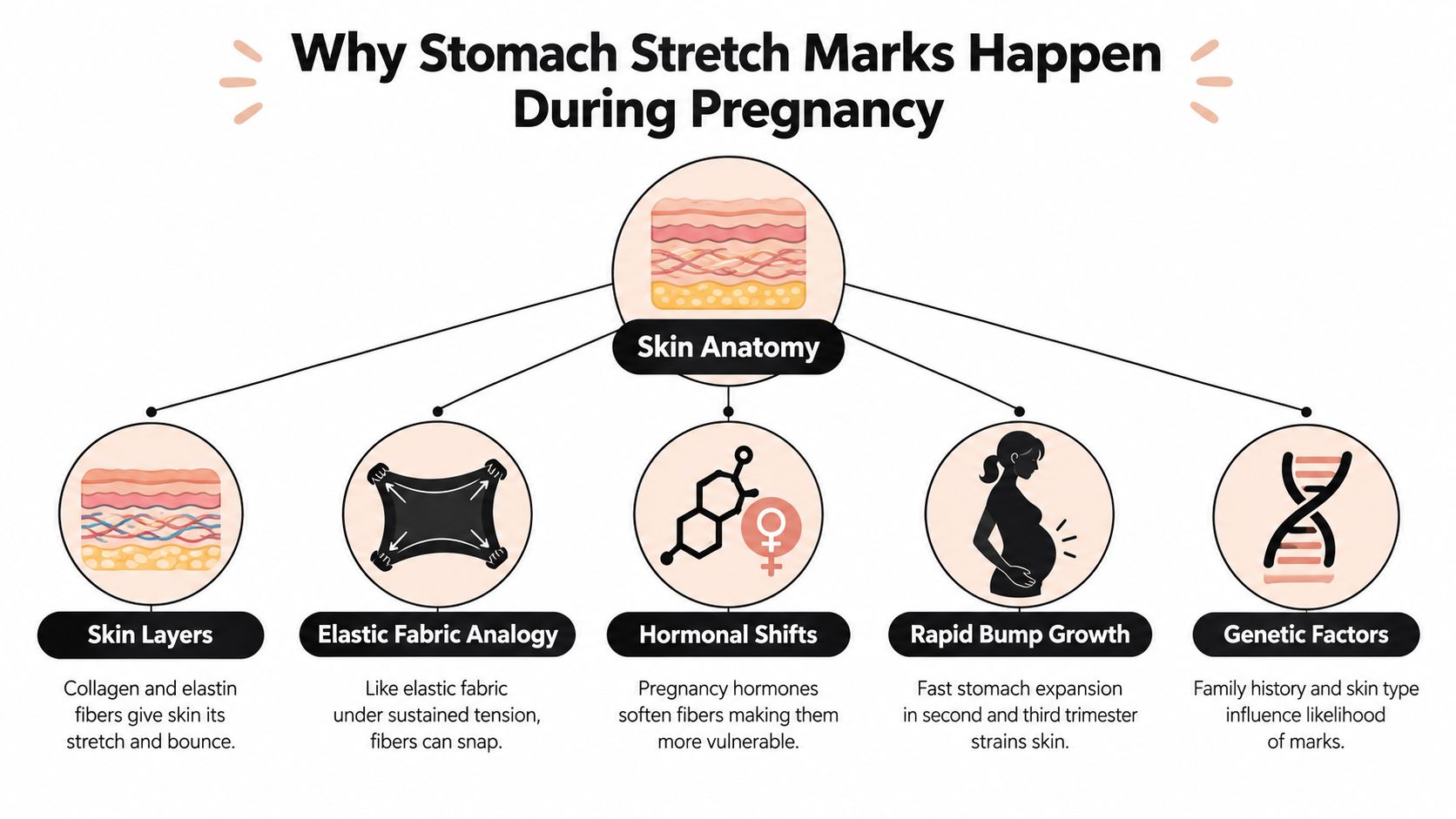
Think of your skin as layered fabric. The outer layer provides protection, while deeper layers contain collagen and elastic fibres that help the skin hold its shape, stretch and recover. During pregnancy, the stomach must accommodate a steadily changing abdomen, so the deeper support network experiences sustained tension.
This isn't best understood as a simple surface tear. A British Journal of Dermatology study found that early striae had significantly disorganised elastic-fibre architecture in the mid-to-deep dermis, including short tropoelastin-rich fibrils and increased expression of tropoelastin and fibrillin-1, as described in the study on elastic-fibre changes in early striae. In plain English, the structural network beneath the surface is being remodelled in an unusual way.
Why the stomach is often affected
The stomach is a prominent site because it changes substantially as pregnancy progresses. The skin over the abdomen has to accommodate the growing bump, and the deeper dermal network must adjust to that ongoing tension. The breasts, thighs and bottom can also change, which explains why marks aren't limited to the belly.
Hormonal changes may influence how the skin behaves during pregnancy, but they don't give you a controllable switch that skincare can override. Your inherited skin characteristics also matter. Two pregnant women can have similar routines and very different results because their elastic-fibre networks respond differently.
What the colour means
New marks can appear pink, red, purple or brown, with the visible shade influenced by skin tone and the stage of the mark. They may stand out more at first because the developing striae contrast with the surrounding skin. Over time, the lines commonly become paler and more silver in appearance.
The important distinction is between supporting the skin's surface and changing its deeper architecture. An oil can reduce the feeling of dryness, while a butter can make tight skin feel more comfortable. Neither can reliably direct the dermis to rebuild its elastic fibres in a particular way.
Risk Factors and When Stomach Marks Typically Appear
There's no reliable personal score that tells you whether you'll develop stomach stretch marks. Family history, individual skin behaviour and the pace of physical change all influence susceptibility, and several of these factors are outside your control. A relative's experience may offer a clue, but it can't predict your pregnancy with certainty.
The NHS says marks often begin to show around 22 to 24 weeks of pregnancy and may become more visible as the bump continues to grow, as outlined in its pregnancy stretch mark guidance. Some people notice them earlier or later, while others don't see them until after birth.
| Factor | Why It Matters | What You Can Do |
|---|---|---|
| Family tendency | Skin structure and the likelihood of striae can run in families. | Treat this as useful context, not a verdict. Focus on comfort rather than blame. |
| Individual skin structure | Elastic-fibre behaviour varies from person to person. | Choose gentle products and avoid aggressive rubbing or scratching. |
| Bump expansion | The abdominal skin adapts to changing shape and tension. | Keep the skin comfortable with regular moisturisation and breathable clothing. |
| Skin dryness | Dryness can make tightness and itching feel more distracting. | Apply a suitable moisturiser after washing, while the skin is slightly damp. |
| Pregnancy timing | Marks commonly become noticeable as the bump grows through the middle and later stages. | Check your skin calmly rather than repeatedly inspecting it for changes. |
Normal changes to expect
Fresh lines may look darker than you expected, then gradually soften in colour. The NHS notes that pregnancy stretch marks often fade to silver and become much less noticeable after birth. Fading doesn't mean they'll vanish completely, and it may happen slowly rather than in a neat, predictable pattern.
Itching can occur when the skin feels dry or stretched, but intense or widespread itching deserves medical advice rather than being automatically blamed on stretch marks. Speak with your midwife or maternity team if the itching is severe, widespread, or accompanied by a rash or other concerning skin changes.
What Prevention Can and Cannot Do for Stomach Skin
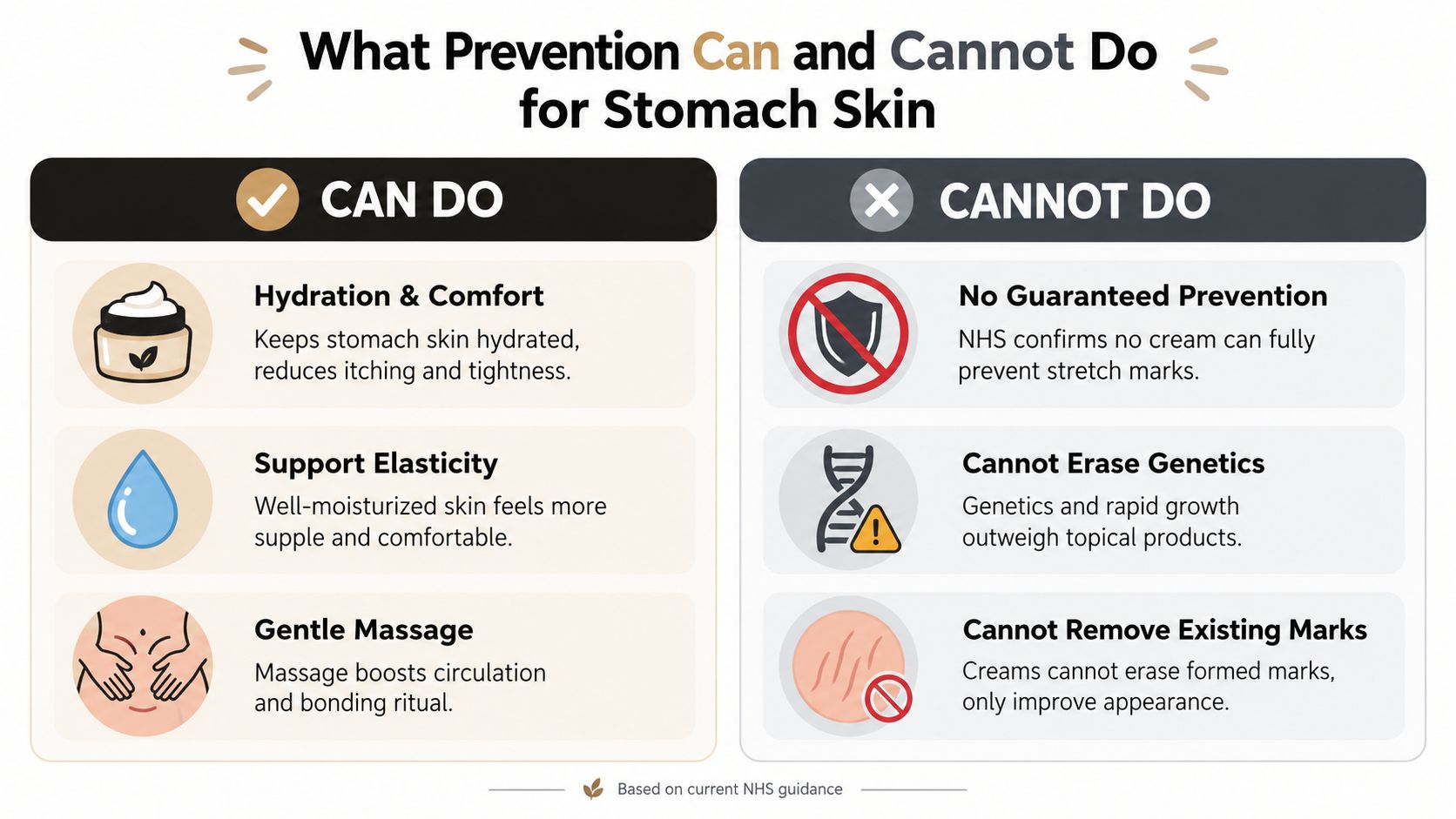
You may apply an oil each morning, moisturise after a shower and still notice new lines on your stomach. The honest NHS position is that there is little evidence that creams, oils or lotions prevent pregnancy stretch marks. Prevention is not a test of effort, and a careful routine cannot guarantee unchanged skin.
Stretch marks reflect remodelling in the deeper dermis, where elastic fibres adapt to the skin's changing shape. The process is more like fabric adjusting its weave than the surface splitting. A topical product works at the surface, so it may soften dryness and reduce a tight or itchy sensation without stopping that deeper change.
If marks appear despite regular application, the product has not necessarily failed. Its realistic role is comfort, hydration and helping the skin feel more supple.
What topical care can offer
Moisturiser, belly oil or body butter can make dry stomach skin feel softer. Applying it slowly can also create a calming pause when your bump feels uncomfortable. Measure success by how your skin feels, not by whether every mark is prevented.
Be cautious about claims that a product will erase existing lines, stop every new mark or permanently change your skin's inherited response. This guide to stretch mark prevention in pregnancy explains the limits of topical products in more detail.
Marketing check: promises of guaranteed prevention or complete removal go beyond the available NHS evidence.
Choose skincare suitable for pregnancy. If you are unsure about an ingredient, ask your midwife, GP or pharmacist, especially before using a medicated product. Stop applying a product if your skin becomes sore, inflamed or unusually reactive, and seek advice rather than adding more layers.
Daily Bump Care Ritual for Hydration and Comfort
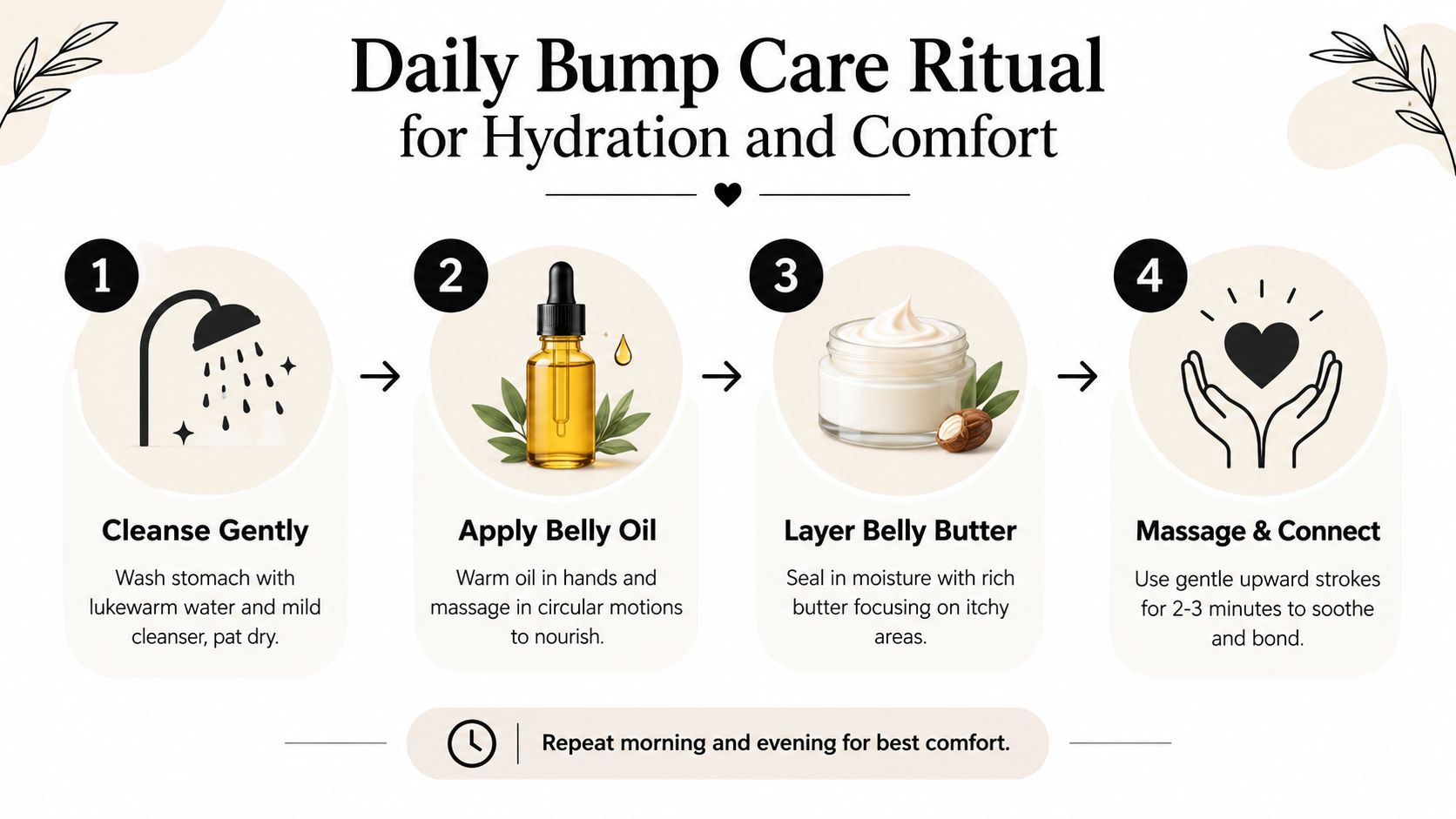
A useful routine doesn't need to be complicated. It should leave your stomach feeling comfortable, fit around your day and use products that you're happy to apply consistently. Think of it as moisture layering, not a treatment that guarantees prevention.
Start with a gentle cleanse
Wash your stomach with lukewarm water and a mild cleanser, then pat rather than rub the skin dry. Very hot water can leave already-sensitive skin feeling drier, and vigorous towel rubbing can aggravate itching.
You don't need to scrub the abdomen each day. If the skin feels tight, a short, gentle wash followed by immediate moisturising is usually more comfortable than a long, hot shower.
Apply oil to slightly damp skin
Warm a small amount of belly oil between your palms before spreading it over the stomach. Use slow circular movements with light pressure, covering the sides and lower bump without dragging the skin.
The point is even coverage and comfort. Massage may help you notice areas that feel particularly dry, but pressing harder won't make the product work more or prevent marks.
For practical guidance on using an oil during pregnancy, explore belly oil for pregnancy.
Layer a richer moisturiser
Follow the oil with a nourishing belly butter if your skin still feels dry or tight. Concentrate on itchy areas, the sides of the bump and any places where clothing rubs. Applying the butter while the skin remains slightly damp can help the surface feel cushioned.
The Happy Bump Co offers a Belly Butter, Belly Oil for Stretch Marks and Pregnancy Tummy Scrub as pregnancy-focused body-care options. Use any product according to its instructions, patch test if your skin is reactive, and ask a healthcare professional about ingredients if you have a specific concern.
Keep exfoliation gentle
A pregnancy tummy scrub can help the skin feel smoother, but use it sparingly and with a light touch. Don't exfoliate over broken, inflamed, painful or intensely itchy skin, and stop if the area becomes red or sore. Exfoliation won't remove established stretch marks because it works at the surface, not within the dermis.
Use this short demonstration as a visual reminder of a calm, unhurried application:
A simple morning and evening habit may feel reassuring, but you don't need to massage until the skin is flushed or tender. Comfortable, repeatable care is the better standard.
Fading and Treatment Options After Pregnancy
After birth, stomach stretch marks often change in colour and become less noticeable. They are not harmful, and usually fade into paler scars, although they probably won't disappear completely, as explained in the NHS guidance on stretch marks after pregnancy. The change is gradual because the deeper elastic fibres are remodelling over time, rather than a surface wound closing.
Moisturiser remains useful for comfort during this stage. It cannot erase established marks, but softer, hydrated skin may feel less tight and make the lines seem less prominent as your postnatal routine settles.
When procedures may be considered
Some women consider professional treatment if their stomach marks continue to cause distress. The NHS notes that treatments such as fractional CO₂ laser and microneedling may improve stretch marks. It also notes that fractional CO₂ laser carries a higher risk of post-inflammatory hyperpigmentation.
That risk matters when choosing a procedure. Your skin tone, pigmentation history and tendency to darken after inflammation can affect how suitable a treatment is. Improvement in texture or colour is more realistic than complete removal.
How to choose cautiously
Speak with a qualified dermatologist or regulated practitioner who can assess your skin in person, rather than selecting a treatment from social media photographs. Ask about:
- Pigmentation risk: Find out how the procedure may affect your skin tone and whether post-inflammatory darkening is possible.
- Timing: Check whether it is suitable after pregnancy and whether breastfeeding changes the recommendation.
- Expected change: Ask for a realistic description of likely improvement, not a promise that the marks will disappear.
- Aftercare: Understand healing, sun protection and possible irritation before booking.
You do not need to decide straight away. Give your body time to recover, continue gentle care for comfort, and seek professional advice if the marks remain a significant source of distress.
Your Calm Plan for Stomach Stretch Marks Going Forward
Your stomach skin is adapting to pregnancy through deeper elastic-fibre remodelling, not suffering a surface tear. That understanding can remove some of the guilt from skincare decisions. You can care for your bump without treating every new line as a problem to solve.
Keep your plan simple:
- Notice without judging: New pink, red, purple or brown lines can be part of normal pregnancy skin change.
- Moisturise for comfort: Apply a gentle oil or butter after washing if your stomach feels dry, tight or itchy.
- Massage lightly: Use slow movements that feel soothing, never forceful rubbing.
- Avoid miracle claims: Current NHS guidance doesn't find strong evidence that creams, oils or lotions prevent marks.
- Get advice when needed: Speak with your midwife or GP about intense itching, a rash, soreness or a treatment you're considering.
After birth, expect marks to become paler and less noticeable, while accepting that they may not disappear completely. Your bump doesn't need to meet a cosmetic standard to deserve care, patience and kindness.
The Happy Bump Co offers pregnancy-focused options including Belly Butter, Belly Oil for Stretch Marks and Pregnancy Tummy Scrub to support a gentle stomach-care ritual for hydration and comfort. Visit The Happy Bump Co to explore the range and choose the products that fit your routine.