

You apply a new retinol serum on a Monday, feel a promising tingle by Wednesday, and then wake up several mornings later with skin that looks like crumpled tissue paper. Your face feels tight after cleansing, foundation catches around your nose, and even your usual moisturiser suddenly stings.
That reaction can feel alarming, particularly if you started retinol to make your skin look smoother and healthier. Retinol dry skin is often treated as a hurdle to push through, but that isn't always sensible. Sometimes your skin is adjusting. Sometimes it's asking you to slow down, repair the barrier, or stop altogether.
Table of Contents
- When Retinol Meets Already Dry Skin
- What Retinol Actually Is and Why Skin Reacts to It
- Why Retinol Causes Dryness, Flaking and Tightness
- Buffering, Sandwiching and Other Ways to Soften the Hit
- Reading Your Skin During the Adjustment Phase
- Retinol and Pregnancy in the UK
- Pregnancy-Safe Alternatives for Dry or Dull Skin
- A Gentle Routine You Can Start Tomorrow
When Retinol Meets Already Dry Skin
A reader in her thirties might begin with a modest retinol serum, expecting a gradual improvement in fine lines or uneven tone. For the first few applications, everything seems manageable. Then the skin around the mouth and jaw becomes tight, the chin flakes, and cleansing feels less like washing and more like stripping away the last comfortable layer.
That fear is reasonable. Dryness can make you wonder whether you've damaged your skin or triggered an allergy. In many cases, the reaction is a predictable response to retinoid use, particularly when already dry or reactive skin is asked to adapt too quickly. But predictable doesn't mean you have to tolerate severe discomfort.
The useful question isn't “Can I endure this?” It's “What is my skin telling me about the current dose?”
Dry skin usually has less room for error. If the barrier is already struggling to hold on to water, an ingredient that increases cell turnover may make tightness and flaking more obvious. Cold weather, indoor heating, frequent cleansing and fragranced products can add to the strain, especially during a British winter.
It also helps to separate dry skin from dehydrated skin, because they can feel similar while needing slightly different support. The distinction matters when you're choosing between a richer moisturiser, a humectant serum or a simpler routine, as this guide to dry skin versus dehydrated skin explains.
This article takes a calmer approach. You'll learn why retinol can create tightness, how to buffer it without abandoning your goals, how to recognise a genuine warning sign, and what to use instead during pregnancy. The best retinol routine isn't the strongest one you can force yourself to use. It's the one your skin can tolerate consistently.
What Retinol Actually Is and Why Skin Reacts to It
Retinol is a cosmetic, over-the-counter form of vitamin A. It belongs to the wider retinoid family, which also includes vitamin A esters, retinaldehyde and prescription treatments such as tretinoin. These ingredients are related, but they are not interchangeable. Their strength, conversion in the skin and likelihood of irritation can differ.
Retinol accelerates the skin's natural shedding and renewal cycle. Skin is always releasing older cells and replacing them with newer ones. Retinol encourages that process to become more active, which helps explain its use for the appearance of fine lines, uneven tone, rough texture and blemishes.
The same process can bring both visible improvement and temporary discomfort. As the outer layers adapt, the skin may hold water less effectively. It can feel tight, look dull or shed more visibly before its surface becomes comfortable again. For already dry or reactive skin, that adjustment can feel like asking a delicate hinge to move faster before it has been lubricated.
Adjustment is not the same as allergy
Mild dryness or light flaking may be an adjustment response. Intense itching, swelling or a rash points to a different concern. Burning, cracking and painful rawness also deserve attention rather than a decision to push through.
Retinoids can increase epidermal cell turnover, which may impair the skin barrier and increase transepidermal water loss. UK consumer guidance from Which? on retinol and dryness connects this process with skin that feels tighter, rougher and drier, particularly when it is already short of moisture.
That distinction matters when choosing a product and deciding whether to continue. Dry skin may still tolerate retinol, but it usually benefits from a slower introduction, moisturiser and fewer application nights. During pregnancy or breastfeeding, understanding the difference between cosmetic retinol and prescription retinol and Retin-A also supports a more cautious conversation about what to pause or replace.
Why Retinol Causes Dryness, Flaking and Tightness
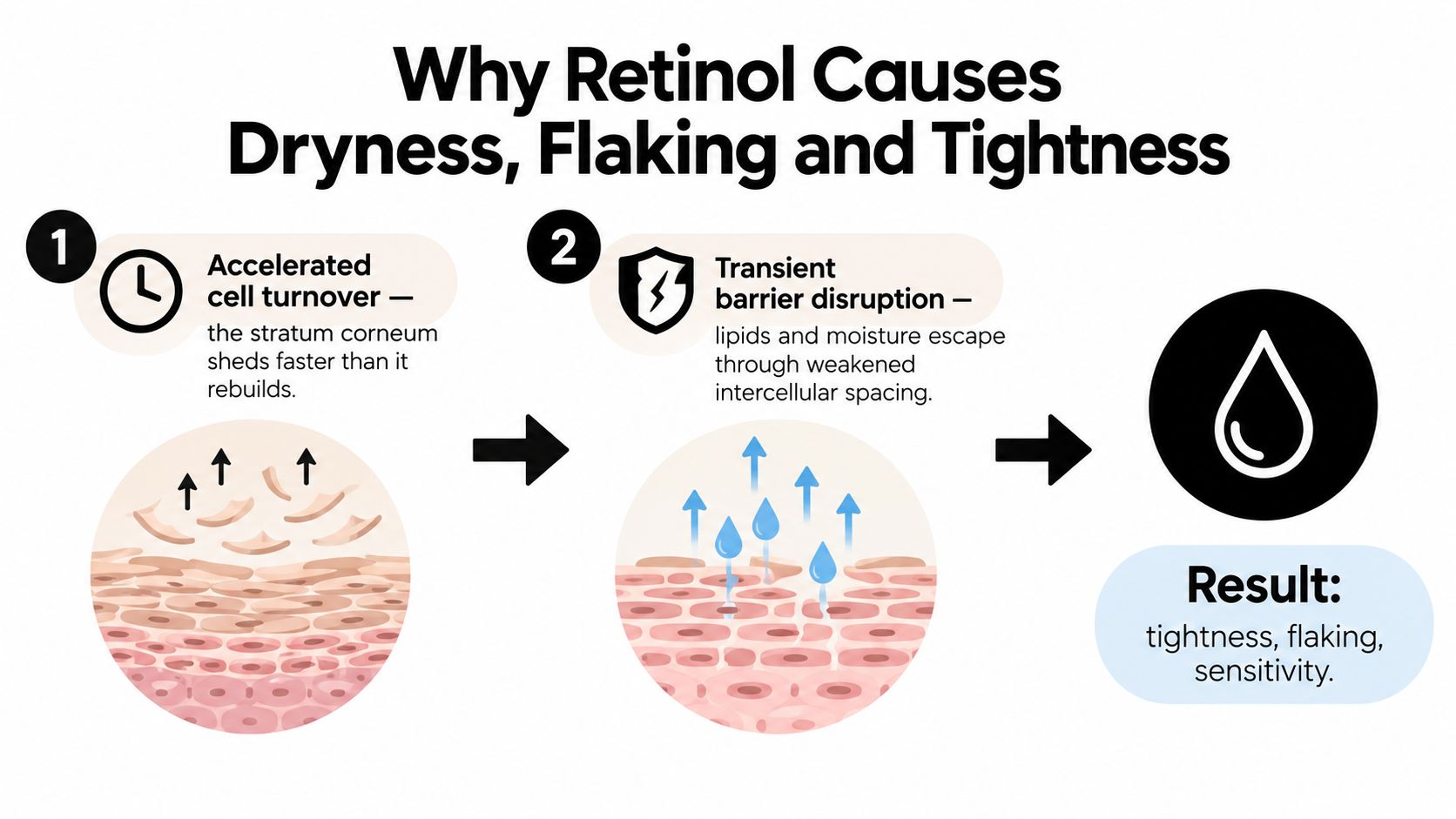
A face that feels tight after cleansing, flakes around the nose and stings when moisturiser goes on is often showing a stressed barrier, rather than merely “getting used to” retinol. Retinol-related dryness usually has two connected causes: skin renewal speeds up, while the barrier temporarily becomes less effective at keeping moisture in.
The outer layer relies on tightly organised cells and lipids between them to limit water loss. When retinol encourages cells to shed faster, that organisation can become temporarily less effective. Water escapes more readily through the skin, a process known as transepidermal water loss.
Tightness is often the first sign. You may notice it after washing your face, smiling or applying make-up. The skin has not necessarily become permanently thinner. It may just be struggling to maintain a comfortable water balance during the adjustment period.
The barrier can become leaky
Retinol can also disturb the lipid structure that helps seal the spaces between skin cells. Once that seal weakens, products that were previously comfortable may sting. The nose, corners of the mouth and chin often show the problem first because these areas move frequently and may receive more product than intended.
Common signs include:
- Tightness: Your skin feels pulled or uncomfortable after cleansing.
- Flaking: Small dry pieces appear around the nose, chin or jaw.
- Sensitivity: Moisturiser, cleanser or make-up suddenly causes stinging.
- Roughness: The surface feels uneven even when it looks relatively calm.
Several choices can intensify the reaction. Applying a strong product too often, using it on damp skin, skipping moisturiser, adding exfoliating acids or facing cold, dry outdoor air can all place extra strain on the barrier. Applying retinol to already dry or reactive skin can make the same routine feel harsher, so the pace matters as much as the product.
UK dermatology guidance lists burning, irritation, peeling and dryness among common early effects of retinoid-type medicines. It recommends introducing treatment less often and using generous moisturisation, as outlined in this UK acne treatment guidance.
“Push through the peeling” is poor universal advice. Mild adjustment may be manageable, while burning, cracking or painful rawness calls for less stimulation. Pregnancy and breastfeeding also change the decision, because pausing retinol and choosing a different approach may be safer than persevering.
Buffering, Sandwiching and Other Ways to Soften the Hit
If you are not pregnant and have only mild dryness, these application methods can reduce how sharply retinol reaches the skin without changing the product itself. They are gentler ways to introduce it, rather than methods for pushing through burning or cracked skin.
Start with the sandwich method
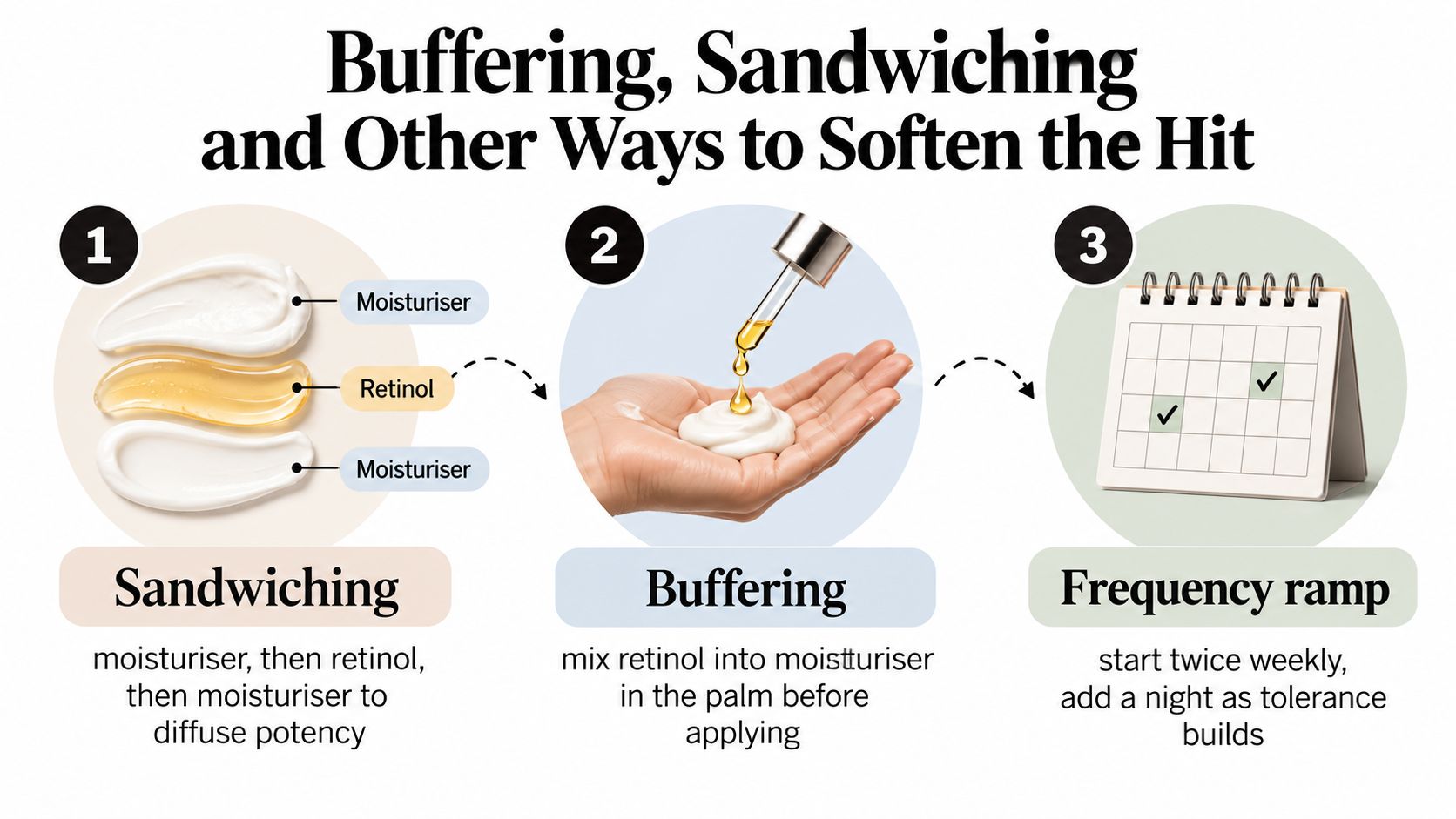
Apply a thin layer of plain moisturiser to clean, completely dry skin. Add a small amount of retinol, then finish with another light layer of moisturiser. The first layer acts like a cushion, while the second adds comfort after application.
Choose a simple formula without exfoliating acids, fragrance or several other active ingredients. A cream containing ceramides may suit dry skin, but keep the rest of the routine quiet while you learn how your skin responds.
Try buffering when your skin is very reactive
Buffering means mixing a small amount of retinol with moisturiser in your palm before applying it. The active ingredient is spread through more cream, so less reaches any one area at once. It is similar to diluting a strong cup of tea with water, the ingredient remains present, but the experience is milder.
Use this approach if sandwiching still leaves your skin feeling tight or flaky. It can also help you avoid delicate areas. Keep retinol away from the corners of the nose, lips and eyelids unless a clinician or product label specifically advises otherwise.
Use short contact if leave-on feels too much
Short-contact therapy means applying retinol for a limited period, rinsing it away, then moisturising. This may provide a gentler introduction than leaving it on overnight. Follow the product instructions, and seek professional advice if your skin is highly reactive.
The strength and schedule should both be modest. Product-label guidance commonly suggests a low strength, under 0.5% for beginners, applied to clean, dry skin and followed with moisturiser. Begin occasionally, leave recovery nights between applications, and increase only while your skin remains comfortable.
A useful evening order is:
- Cleanse gently: Remove make-up without scrubbing.
- Dry thoroughly: Wait until the skin is fully dry before applying retinol.
- Moisturise first: Use the sandwich method when dryness is your main concern.
- Apply sparingly: Use a small amount and avoid fragile areas.
- Moisturise again: Aim for comfort, not the strongest possible application.
For help arranging hydrating products around retinol, read this guide to choosing between hyaluronic acid and retinol.
If you are pregnant or breastfeeding, do not use buffering or sandwiching to keep retinol going. Set it aside and ask a clinician or pharmacist about a suitable non-retinoid option, such as a simple hydrating routine. Pregnancy and breastfeeding are reasons to change the plan, not occasions to tolerate more irritation.
Practical rule: If your skin feels progressively tighter after each application, hold the routine steady or pause it. Let comfort return before considering any increase.
Reading Your Skin During the Adjustment Phase
You are ready to apply retinol, but your face feels different from the night before. It may look almost normal while feeling tight, prickly or unusually tender. This is the point for a short decision check, not an automatic application.
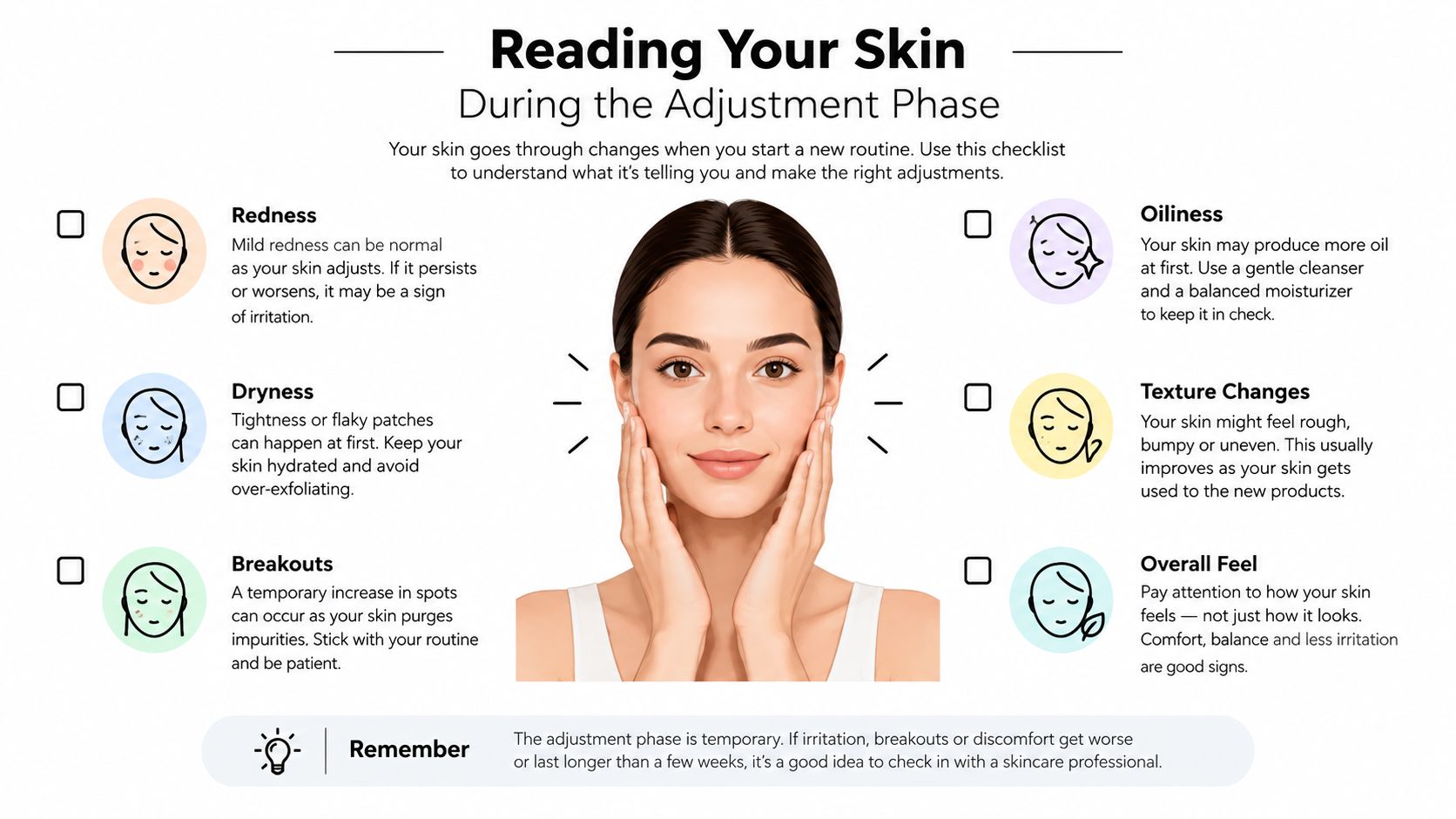
The aim is to decide whether to continue cautiously, hold the routine steady, or pause. Mild, stable changes can be observed. Symptoms that are spreading, intensifying or changing the way products feel need a slower response. Skin is giving you information, much like a warning light on a dashboard. You do not need to wait for a major problem before responding.
A simple evening check
Before applying anything, examine your face in good light. Ask:
- Does the skin feel comfortable after cleansing?
- Is redness confined to a familiar area, or is it spreading?
- Do products that normally feel comfortable now sting?
- Does the skin feel sore, papery or unusually fragile when touched lightly?
- Are the changes settling between applications, or becoming more noticeable each time?
Keep going cautiously when:
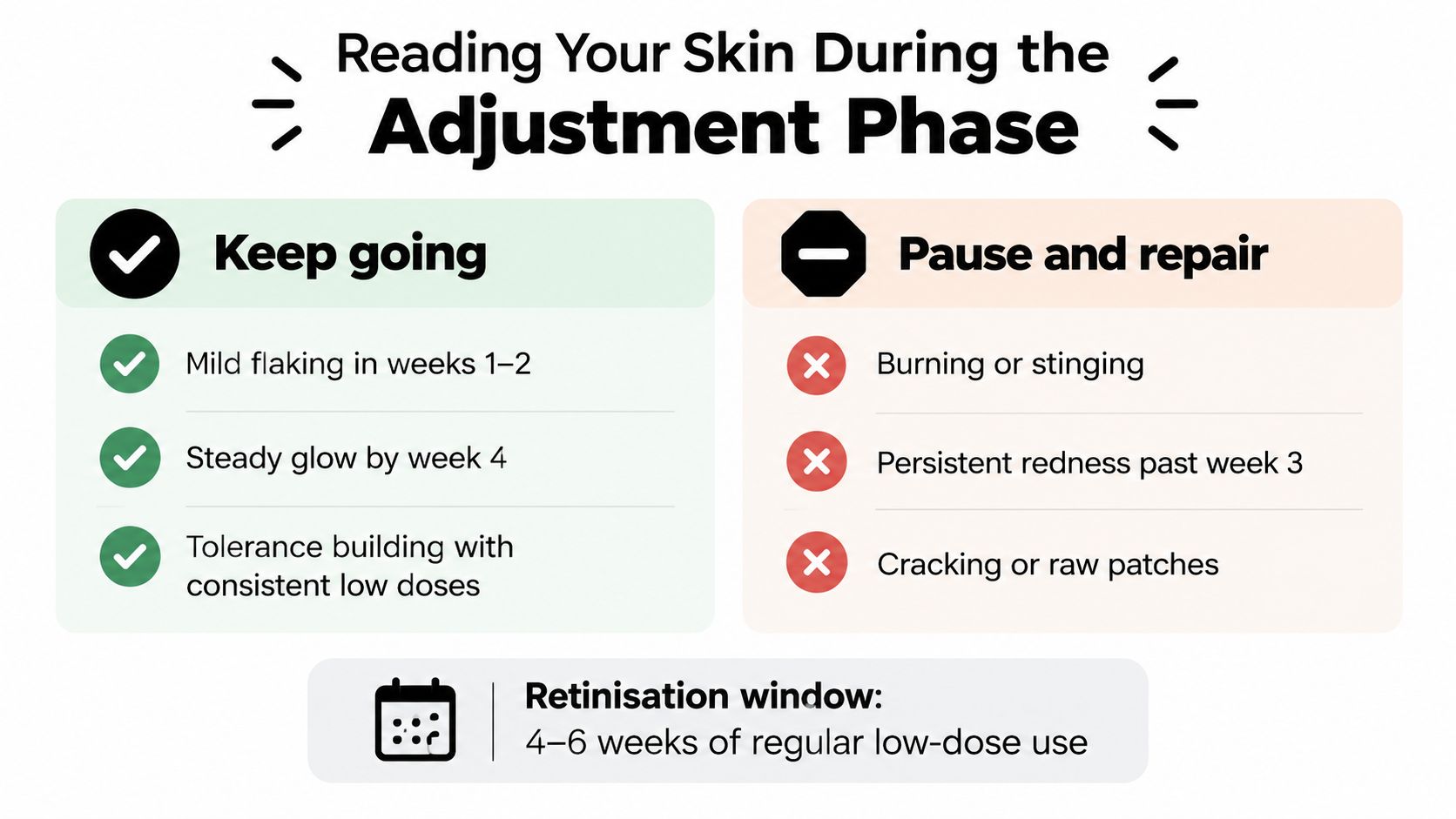
- Flaking is light: Small dry areas settle with moisturiser and do not spread.
- Comfort is improving: The next application feels no more irritating than the last.
- The skin remains intact: There are no cracks, raw patches or weeping areas.
- Your routine is manageable: You can follow it without dreading the next application.
Pause and seek advice when:
- Burning continues: Stinging remains rather than fading soon after application.
- Redness persists: Your complexion stays visibly inflamed or the affected area grows.
- The surface cracks: Split skin around the mouth or nose needs protection before retinol is reconsidered.
- A rash develops: Itching, swelling or eczema-style weeping warrants medical advice.
For broader context on retinoid-related dryness and practical acne treatment care, see this UK acne treatment information. If you are pregnant or breastfeeding, do not use this check to justify carrying on. Set retinol aside and ask a clinician or pharmacist what to use instead.
A pause is useful feedback, not failure. The routine that leaves your skin calm enough to assess will teach you more than one that keeps you guessing.
Retinol and Pregnancy in the UK
Pregnancy changes the decision completely. The UK position is precautionary: pregnant women should avoid topical retinoids, including retinol and prescription retinoid medicines, rather than trying to adjust the strength or frequency.
The UK medicines guidance on topical retinoids explains that systemic exposure from topical use is thought to be negligible, but risk cannot be excluded. The same guidance notes that isolated case reports have described malformations after topical tretinoin exposure, while larger cohort studies did not show an increased risk of congenital malformation. That evidence history is reassuring in one respect, but it doesn't change the precautionary advice to avoid topical retinoids during pregnancy.
The NHS takes a similarly careful position on vitamin A. Its pregnancy vitamins and supplements guidance advises against cod liver oil and supplements containing vitamin A in the form of retinol because excessive vitamin A can harm a baby's development. UK government guidance also links very high retinol doses with dry skin and related effects such as dry thickening, cracked lips, hair loss and sight problems.
What to do with your routine
If you're trying to conceive, pregnant or unsure whether a product contains a retinoid, stop and check with your GP, midwife, pharmacist or dermatologist. Don't try to solve the issue by using less frequently. Switch to a simple barrier-focused routine and use pregnancy-appropriate alternatives selected with professional advice.
Breastfeeding needs individual guidance rather than assumptions. Ask your GP, midwife or pharmacist before restarting a retinoid, particularly if you're using prescription treatment or your baby may come into contact with treated skin. A clinician can consider the product, the application site and your personal circumstances.
Stopping retinol can feel like losing progress, especially if you were finally seeing smoother or brighter skin. It isn't a backwards step. Keeping the barrier calm protects your comfort now and leaves you with a more stable foundation for future skincare decisions.
Pregnancy-Safe Alternatives for Dry or Dull Skin
Retinol often has several jobs in a routine, including improving the look of uneven tone, supporting smoother texture and helping skin appear more refreshed. During pregnancy, you can approach those goals separately instead of searching for one ingredient that does everything.
The alternatives below are commonly used in pregnancy-focused skincare, but product suitability still depends on the full formula and your medical circumstances. If you're pregnant or breastfeeding, check unfamiliar actives with a qualified healthcare professional.
| Active | Best For | Notes for Pregnancy | Realistic Timeline |
|---|---|---|---|
| Niacinamide | Uneven tone, visible redness and barrier support | Often used in gentle, uncomplicated formulas. Choose a product your skin already tolerates. | Skin may feel more comfortable before visible tone changes appear. |
| Bakuchiol | A retinol-like approach to the look of texture and tone | Evidence is still developing. Discuss use with your midwife or clinician rather than assuming it is automatically suitable. | Expect gradual cosmetic changes, not an overnight retinol replacement. |
| Peptides | The look of firmness and smoother skin | Usually found in hydrating serums and creams. Check the complete ingredient list. | Results are subtle and build with regular use. |
| Hyaluronic acid | Dehydration and tight-feeling skin | Useful in a simple hydrating serum, followed by moisturiser to reduce water loss. | Comfort can improve quickly, while overall plumpness takes consistent care. |
| Ceramides | A weakened or flaky barrier | Particularly useful in a cream or lotion designed for dry, sensitive skin. | Dryness and roughness may settle as the barrier receives steady support. |
| Squalane | Surface comfort and softness | A lightweight oil can reduce the feeling of tightness when layered over moisturiser. | Skin may feel softer promptly, with longer-term benefit from routine use. |
Vitamin C and azelaic acid are often discussed as closer alternatives for brightening, but pregnancy and breastfeeding decisions should still be based on the specific product and your clinician's advice. Avoid turning your replacement routine into an active-heavy experiment. Adding several new products at once makes it harder to identify what causes stinging.
A practical pregnancy-safe toolkit might pair niacinamide for tone, ceramides for barrier care, hyaluronic acid for water-based hydration and squalane for comfort. That won't copy every effect of retinol, but it can create a smoother, brighter-looking complexion without asking dry skin to tolerate unnecessary irritation.
A Gentle Routine You Can Start Tomorrow
Keep tomorrow's routine deliberately unexciting. Dry, reactive skin usually benefits from fewer changes, gentle application and enough time to show you what it needs.
Morning
- Cleanse lightly: Use a gentle cream cleanser, or just rinse if cleansing leaves your skin tight.
- Choose one serum: Apply niacinamide or a pregnancy-appropriate vitamin C product if your skin tolerates it.
- Moisturise well: A ceramide-rich cream can support a fragile barrier.
- Protect from daylight: Finish with broad-spectrum sun protection. Follow the product label and ask a clinician or pharmacist if you need help choosing a pregnancy-suitable formula.
Evening
- Remove make-up gently: An oil or cream cleanser can be more comfortable than a foaming wash for dry skin.
- Add water-based hydration: Apply hyaluronic acid to slightly damp skin if it doesn't sting.
- Seal with a barrier moisturiser: Use enough cream to leave the surface comfortable, not greasy or tight.
- Finish with squalane if needed: Press a thin layer over the top when your cheeks or jaw still feel dry.
If you aren't pregnant or breastfeeding and your complexion has recovered, retinol can be reintroduced cautiously on occasional nights using the sandwich method. Keep the other evenings focused on hydration, and don't increase frequency while your skin is still flaking, burning or persistently red.
Caring for dry skin through different life stages isn't about punishment or proving your tolerance. A modest routine that keeps your barrier comfortable will serve you better than a complicated one that leaves you frightened to touch your face.
The Happy Bump Co creates gentle, hydrating pregnancy body care, including Belly Butter, Belly Oil for Stretch Marks and Pregnancy Tummy Scrub, for changing skin that needs comfort rather than harsh actives. Visit The Happy Bump Co to find a UK-made routine for dry skin, bump care and everyday pregnancy self-care.