

Shea butter is an excellent emollient for hydration and comfort during pregnancy, but there's no reliable clinical evidence that it prevents or removes stretch marks. The NHS says stretch marks affect around 8 out of 10 pregnant women, or approximately 80%, so developing them isn't a sign that you've failed to care for your skin.
You may notice your bump becoming tight, dry or itchy as pregnancy progresses. Reaching for a rich belly butter can feel reassuring, especially when your skin feels uncomfortable, but it helps to understand what shea butter can realistically do. It can soften the skin's surface, support moisture retention and make a daily self-care ritual more comfortable. It can't change the deeper dermal structure where stretch marks form.
Table of Contents
- What to Expect from Shea Butter During Pregnancy
- Understanding Shea Butter Composition and Skin Benefits
- The Evidence on Shea Butter and Stretch Mark Prevention
- How to Use Shea Butter During Pregnancy
- Comparing Shea Butter with Other Skincare Ingredients
- Safety Considerations and When to Seek Advice
What to Expect from Shea Butter During Pregnancy
A few months into pregnancy, you might run your hand over your bump and notice that your skin feels less flexible than before. It may feel tight after a shower, slightly itchy at night or dry around the sides of your abdomen. That change can prompt an understandable question: will shea butter stop stretch marks from appearing?
The honest answer is no product can promise that. According to NHS guidance on pregnancy stretch marks, around 8 out of 10 pregnant women develop them. They commonly appear on the abdomen, although the breasts and upper thighs can also be affected. Hormonal changes may make skin more susceptible, while stretching can damage the dermis, the middle layer of the skin.
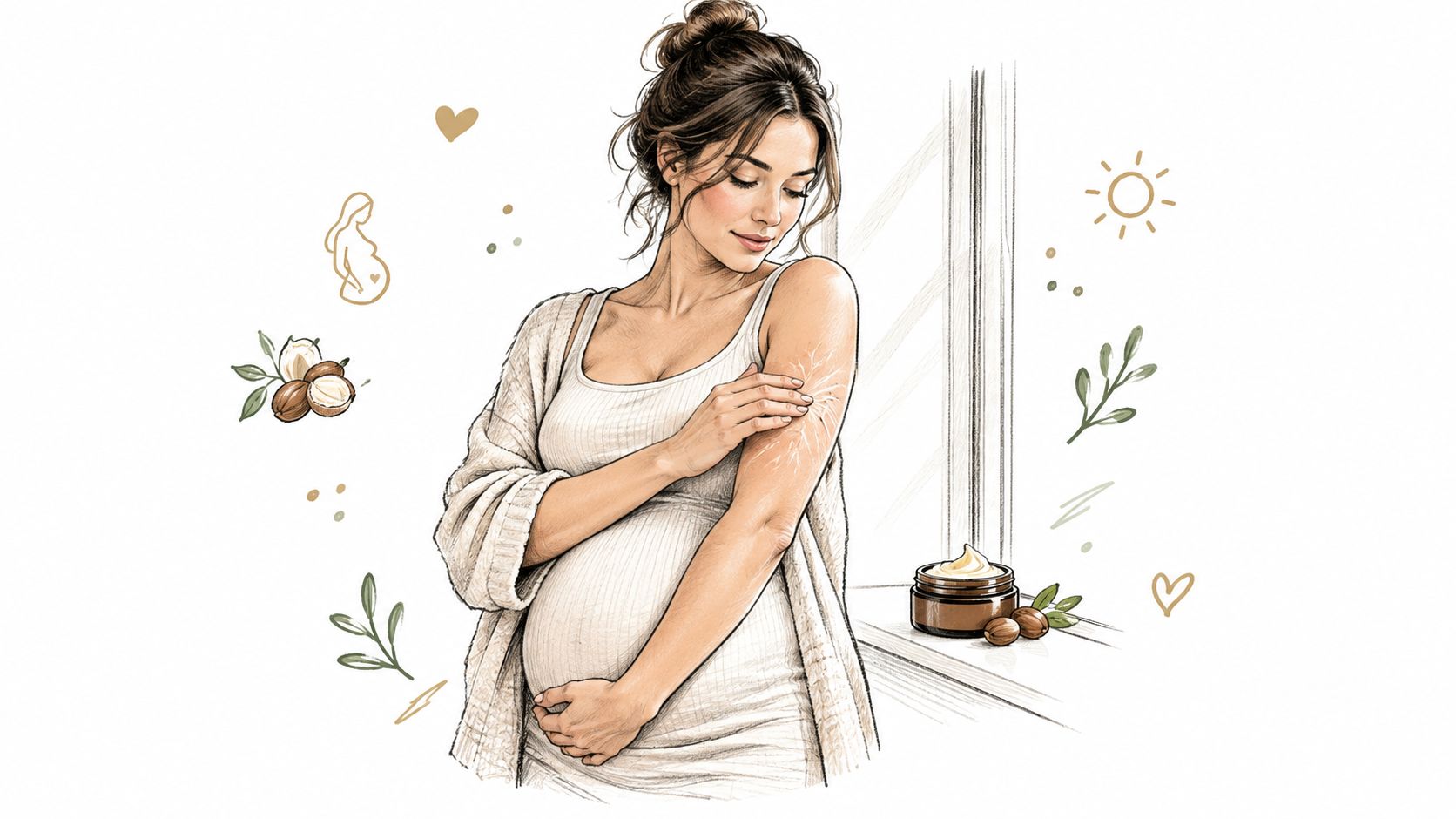
What shea butter can do
Shea butter works mainly at the skin surface. As an emollient, it helps smooth rough areas and reduce the uncomfortable feeling associated with dryness. A moisturised surface may feel softer and more supple, which can be valuable when your body is changing quickly.
It may also help relieve dryness, tightness and itchiness. Those benefits matter even if stretch marks still develop. Caring for your skin shouldn't become a test of whether you've prevented a particular outcome, especially because hereditary and hormonal factors can influence stretch marks and they can occur despite careful skincare.
A realistic expectation: use shea butter to support comfort and hydration, not as a guaranteed stretch-mark prevention or removal treatment.
Stretch marks can initially look pink, red, purple or brown, depending on your skin colour. They generally become paler after birth, but they usually don't disappear completely. The NHS describes them as harmless and says they don't usually need medical treatment. A nourishing belly butter can still be part of a calming routine, from early pregnancy through the weeks after delivery.
Understanding Shea Butter Composition and Skin Benefits
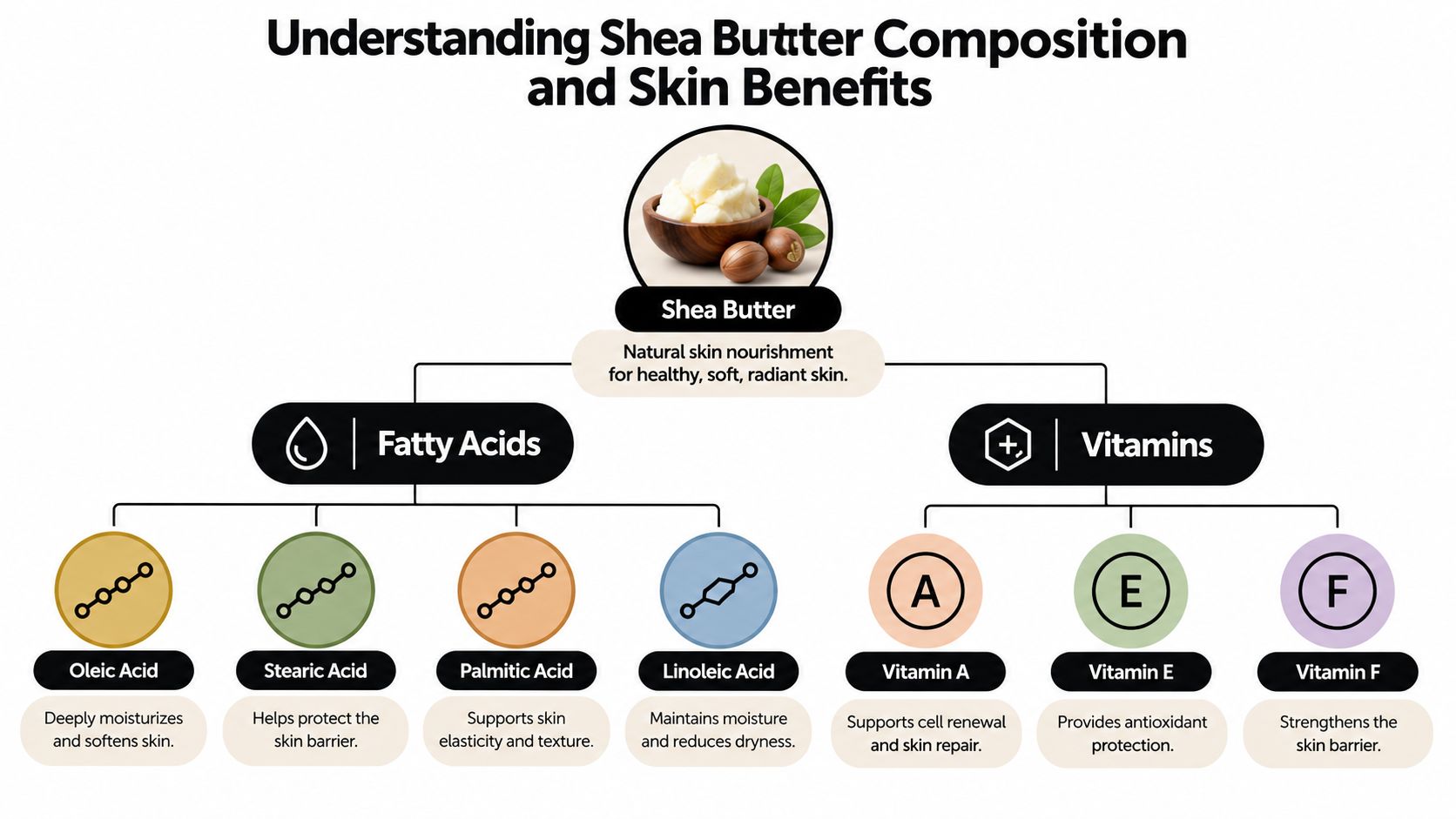
Shea butter feels rich because it contains a blend of naturally occurring fatty acids and other skin-conditioning compounds. Commonly discussed fatty acids include oleic, stearic, palmitic and linoleic acids, while vitamins such as A and E contribute to its nourishing profile. Together, these components help explain why shea butter is widely used in body care for dry skin.
You don't need to understand every chemical detail to see how an emollient works. Think of the skin barrier as a protective outer layer. When that layer becomes dry, tiny spaces between skin cells can allow moisture to escape. Shea butter helps smooth those spaces and leaves a richer layer over the surface, rather like a protective coat that helps keep the skin from feeling exposed.
Why the texture matters
A dense butter can be useful when your bump feels particularly dry or tight. It stays on the skin for longer than a very lightweight lotion, which gives you time to massage it over the abdomen, hips, breasts or thighs. That slower absorption can feel comforting before bed, although some people prefer a lighter texture in the morning.
The fatty acids contribute to the butter's softening and barrier-supporting qualities. Stearic and palmitic acids are associated with a richer, more protective feel, while oleic and linoleic acids form part of the lipid profile that helps condition the skin. These properties support surface comfort, but they shouldn't be confused with proof that shea butter repairs the dermal changes behind stretch marks.
Vitamins are often highlighted in shea butter descriptions, but a product's vitamin content doesn't turn it into a proven stretch-mark treatment. The sensible interpretation is narrower: shea butter can help provide a nourishing layer for changing skin, especially when dryness makes your bump feel uncomfortable.
Choose a texture you'll use consistently. A product that feels pleasant on clean, slightly damp skin is more likely to become part of your morning or evening routine than one that feels sticky, heavily fragranced or difficult to spread.
The Evidence on Shea Butter and Stretch Mark Prevention
During pregnancy, a rich butter may make tight, itchy skin feel more comfortable, while the same product may be marketed as a way to prevent stretch marks. Those are different claims. UK guidance does not support the idea that creams or oils reliably prevent, reduce, or remove pregnancy stretch marks. The NHS reports very little evidence for that purpose, and National Childbirth Trust guidance on pregnancy skincare says there is no strong evidence that creams or oils prevent stretch marks or reduce them after birth.
Moisturising can still have a practical benefit. NCT notes that a normal moisturiser may make affected skin feel more comfortable. For someone searching for a shea butter stretch mark solution, this means shea butter may ease a dry, tight sensation without showing that it changes the deeper skin process behind striae.
What independent research tells us
A Cochrane review of topical preparations for preventing stretch marks in pregnancy found no high-quality evidence of prevention across six trials involving 800 women. The products studied included cocoa butter, olive oil, and vitamin E preparations, rather than shea butter itself. Compared with placebo or no treatment, the review found no statistically significant benefit from topical preparations. Its reported risk ratio was 0.74, with a 95% confidence interval of 0.53 to 1.03.
Shea butter was not tested, so these findings do not prove that shea butter is ineffective. They do show why broad product claims need careful interpretation. Results for other ingredients cannot automatically be applied to shea butter, and keeping skin moisturised is not the same as preventing stretch marks. For a closer look at the evidence around oils, read our guide to oil and stretch marks.
Stretch marks can develop even when someone follows a careful skincare routine. Their appearance isn't a measure of how responsibly you've cared for your body.
A pregnancy survey reported that 46.7%, or 344 participants, developed stretch marks during their current pregnancy, while 46.3%, or 342 participants, had experienced them before that pregnancy, as described in the NHS's wider stretch-mark guidance. These figures describe people's experiences, not the effectiveness of shea butter. The clearest conclusion is to use it for softness and comfort, while treating prevention claims as unproven.
How to Use Shea Butter During Pregnancy
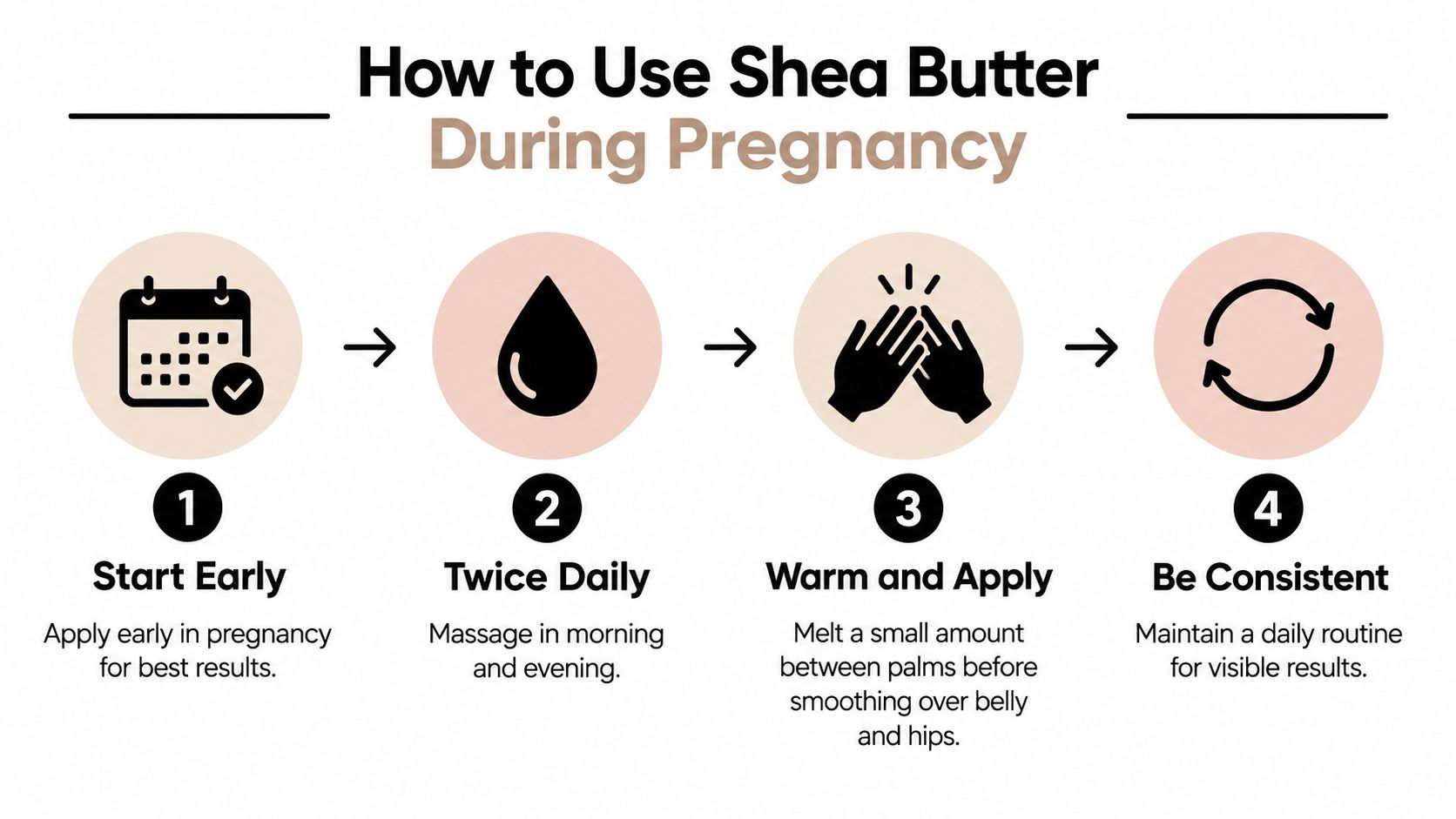
A good routine should be easy to repeat, gentle enough for sensitive skin and flexible enough to fit around tired mornings. You can start using shea butter whenever your skin begins to feel dry or tight. Some people prefer introducing it early in pregnancy so application becomes an established habit before their bump grows more noticeably.
Apply it to clean skin after bathing, when the surface is still slightly damp. Water on the skin won't replace moisturiser, but applying an emollient afterwards can help leave the surface feeling less dry. Warm a small amount between your palms, then smooth it over the abdomen and around the sides rather than dragging or scrubbing the skin.
Build a comfortable application habit
You might apply it once a day after your evening shower, or use it morning and evening if your skin feels persistently dry. There's no reliable evidence that applying more frequently prevents stretch marks, so let comfort and practicality guide you rather than treating a schedule as a guarantee.
Use slow, gentle circular movements. Massage can turn application into a moment of connection with your changing body, but pressure isn't necessary. If the butter tugs, add a little more product or apply it while the skin is damp.
- For a richer feel: Choose a thicker butter for the abdomen, hips and thighs, particularly before sleep.
- For quicker mornings: A lighter lotion or oil may spread more easily beneath clothing.
- For layered hydration: You can apply a pregnancy-safe oil first and follow with a small amount of butter to reduce surface moisture loss. Check the complete ingredient list rather than assuming that every “natural” blend suits pregnancy.
- For sensitive skin: Select an uncomplicated, lightly scented or fragrance-free formula and stop if burning, redness or worsening itch develops.
A product guide from The Happy Bump Co on shea butter lotion can help you think about how a butter fits alongside other body-care formats. The important factor is consistency for comfort, not using a large amount in the hope of forcing a different biological result.
Continue after delivery if your skin still feels dry or tight, and if you enjoy the ritual. Stretch marks may naturally become paler after birth, but that change shouldn't be presented as proof that a particular product removed them. Treat postpartum use as ongoing moisturisation and self-care.
Comparing Shea Butter with Other Skincare Ingredients
Different ingredients solve different practical problems. Shea butter is a rich, protective option, while a lightweight humectant may be preferable if you dislike an occlusive feel. Cocoa butter, olive oil and vitamin E have all appeared in pregnancy skincare discussions, but their presence in a product doesn't establish that the product prevents stretch marks.
| Ingredient | Moisturising level | Texture | Absorption | Best for |
|---|---|---|---|---|
| Shea butter | Rich and protective | Dense, creamy butter | Gradual | Dry, tight skin and an evening body ritual |
| Cocoa butter | Rich and conditioning | Firm, waxy butter | Gradual | People who prefer a heavier texture |
| Olive oil | Conditioning | Fluid and oily | Moderate | Simple body massage, if tolerated by the skin |
| Vitamin E | Depends on the formula | Usually oily or blended | Varies | Supporting a conditioning skincare blend |
| Hyaluronic acid | Hydrating but lightweight | Serum-like or gel-like | Usually quick | A lighter layer that helps the skin feel hydrated |
Choosing by skin feel
If your bump feels rough or uncomfortable, shea butter's richer barrier effect may suit you better than a fast-absorbing gel. If you're prone to feeling greasy or warm, a lotion or serum texture may be easier to use consistently. Your preference matters because a product left unopened cannot support your daily comfort.
Cocoa butter can feel similarly rich, but the evidence discussed in the earlier section doesn't establish that topical preparations prevent pregnancy stretch marks. Olive oil spreads easily for massage, although an oil can stain clothing and may not feel comfortable for everyone. Vitamin E is often included in blends, but the ingredient alone shouldn't be treated as a guarantee.
Hyaluronic acid attracts and holds water within the skin's surface layers, so it can offer a lighter hydration experience. It may work well beneath a richer cream or butter, but you should assess the whole formula, including fragrance and any ingredients you've previously reacted to.
For a practical discussion of choosing between formats, see The Happy Bump Co's guide to stretch-mark oil or cream. A useful decision rule is to match the product to the problem: choose a rich butter for persistent surface dryness, a lighter product for daytime wear and a simple oil for easy massage.
Safety Considerations and When to Seek Advice
Shea butter can form part of a pregnancy skincare routine, but “natural” doesn't automatically mean irritation-free. Check the ingredient list, especially if your skin has become more reactive, and patch test a small area before applying a new product widely. Stop using it if you develop a rash, stinging, swelling or worsening redness.
Avoid retinoid creams during pregnancy. The NHS warns that retinoids may harm the baby, so don't use a stretch-mark or scar product containing a retinoid unless a qualified healthcare professional has specifically advised you. Ask your midwife, GP or pharmacist if you're unsure about an ingredient.
Contact a healthcare professional if itching becomes severe, spreads beyond areas of ordinary dryness or appears with an unusual rash. A moisturiser may ease surface discomfort, but it shouldn't replace assessment of a pregnancy-related skin condition.
Remember that stretch marks are generally harmless, and their appearance isn't something you can always control. A gentle shea butter routine can support softness and comfort without making promises the evidence doesn't support.
The Happy Bump Co offers bump-focused body care, including Belly Butter, Belly Oil for Stretch Marks and Pregnancy Tummy Scrub, formulated for nourishing changing skin during pregnancy. If you want a UK-made option for a moisturising self-care routine, visit The Happy Bump Co and explore the range.