

Most advice on skin texture starts in the wrong place. It tells you to scrub harder, exfoliate more often, and chase a perfectly smooth surface, even though pregnancy skin is usually asking for the opposite, more protection, more water support, and less irritation.
That matters because skin texture during pregnancy is rarely just a surface issue. UK dermatology evidence shows skin problems are common enough to be a real health burden, with 24% of the UK population, around 13 million people, consulting a GP each year because of a skin complaint (British Association of Dermatologists evidence to the UK House of Commons Health Committee). In practice, that means roughness, flaking, acne, pigmentation, and sensitivity can overlap, and a one-size-fits-all exfoliation routine often misses the actual cause.
The safer starting point is simple: skin texture skincare in pregnancy is a barrier-and-water-balance problem first. Once you understand that, it becomes much easier to tell the difference between dryness, inflammation, pigmentation, and breakouts, and to choose what helps without irritating skin that's already under strain.
Table of Contents
- Why Smoother Skin Starts With the Barrier, Not the Scrub
- What Skin Texture Actually Means and How Pregnancy Changes It
- The Six Texture Triggers Pregnant Skin Faces
- Pregnancy-Safe Ingredients That Support a Smoother Surface
- A Simple Daily Routine That Actually Improves Texture
- When to Moisturise, When to Pause, and When to See a Clinician
- Why Your Bump Deserves the Same Texture Care as Your Face
- Common Myths About Smoothing Skin Texture in Pregnancy
Why Smoother Skin Starts With the Barrier, Not the Scrub
Pregnancy can make skin feel less predictable, so the urge to polish it smooth is understandable. Rough texture often shows up when the skin barrier is already under strain, and scrubbing usually makes that worse by removing more of the protection the surface needs.
The outer layer of skin, the stratum corneum, holds water in and keeps irritants out. When it is compromised, skin can look flaky, tight, dull, or bumpy. UK NHS-aligned emollient guidance treats that as a barrier-and-water-balance issue and points to humectants and occlusives as the tools that support the surface (NHS-aligned emollient guidance).
That is why simpler routines usually work better while hormones are changing. A gentle cleanse, a well-chosen moisturiser, and a steady routine often improve visible texture more than a crowded shelf of actives. For a body-care example that follows the same logic, this dry-skin oil guide is a useful reference.
Practical rule: if skin stings after washing, barrier support should come before any scrub.
Ask what is making the surface rough in the first place, and the rest of the routine becomes much easier to choose.
What Skin Texture Actually Means and How Pregnancy Changes It
Skin texture is the way skin feels and looks at close range. Some skin feels smooth and even, some feels bumpy, dry, patchy, or a bit thickened. In pregnancy, those changes can happen quickly because more than one part of the skin system shifts at once.
Think of the top layer of skin like a brick wall. The “bricks” are skin cells, and the “mortar” is the lipids and water balance that hold everything together. When that wall gets drier or more uneven, light catches it differently, and the skin can look rough even before you feel it with your hand.
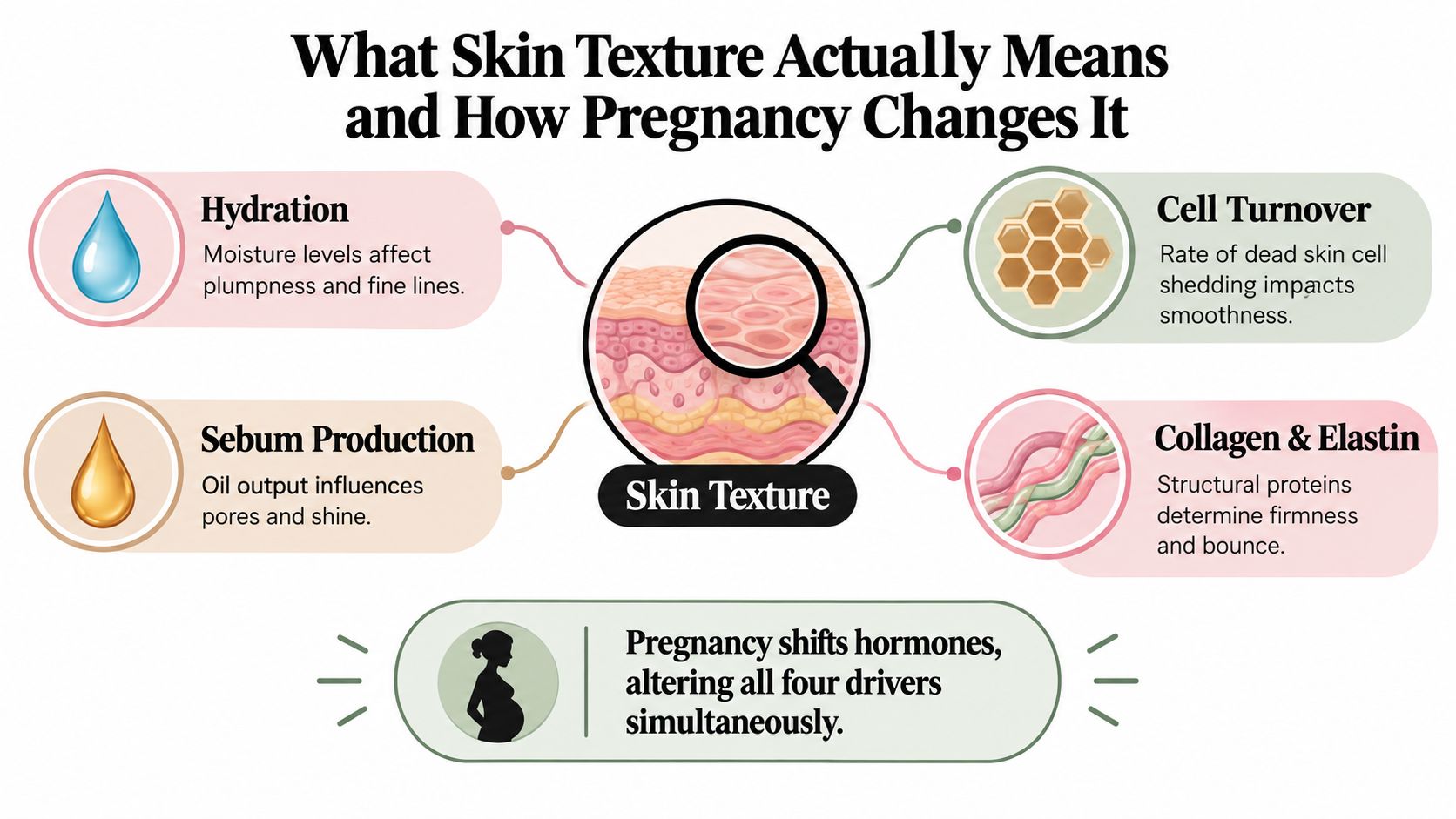
Four moving parts, one changing face
Pregnancy shifts hydration, cell turnover, sebum production, and inflammation together. That's why one person can have dry cheeks, a shinier chin, and a few stubborn bumps at the same time. Hormones don't act like a single switch, they work more like a dimmer that changes the whole surface mood of the skin.
Sebum matters because it affects how “slippery” or congested the skin feels. Cell turnover matters because dead cells that don't shed evenly can build up and make texture look dull or rough. Hydration matters because water loss makes the surface less flexible, and inflammation matters because redness and irritation change the feel of the skin even when the skin isn't visibly broken.
The UCL-hosted review on dry, flaky and sensitive skin shows how common dryness is, with 26% to 60% of adults affected depending on the study, and notes that drier skin often appears on areas with fewer sebaceous glands (UCL review). That helps explain why a bump, thighs, arms, or chest can feel rough even if your face seems oily.
How increased collagen support fits into changing skin is a useful side conversation, but texture in pregnancy still starts with surface balance, not chasing a quick fix.
The Six Texture Triggers Pregnant Skin Faces
Pregnancy skin rarely changes for just one reason. More often, several triggers overlap, and each one asks for a different response. If everything is treated as “dry skin”, the wrong product can make the problem feel worse.
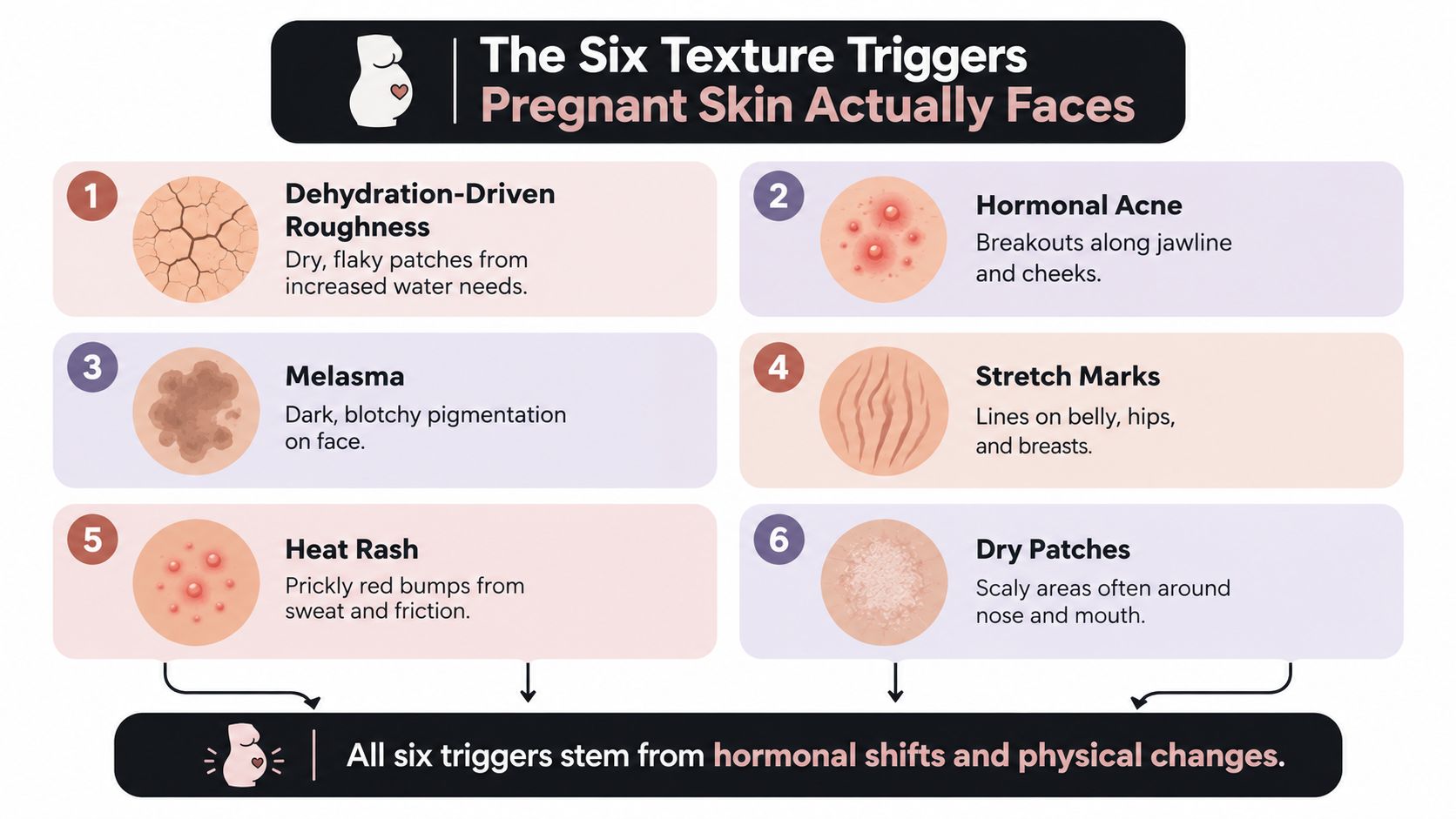
1. Dehydration-driven roughness
This is the familiar “tight, papery, flaky” feeling. Skin may sting after cleansing, look a little scaly, and feel like nothing quite settles on top of it.
The answer is usually more water support and less disruption. A richer moisturiser, a gentle cleanser, and regular reapplication often help more than scrubbing ever will, especially if the skin is already dry or sensitive.
2. Hormonal acne
Pregnancy acne often changes the feel of the jawline, cheeks, chin, or back. The skin can feel raised, inflamed, and sore, not just uneven.
That difference matters. Inflamed acne is not the same as dry texture, and rubbing it can make scarring or lingering marks more likely. A gentler cleanse and, if needed, pregnancy-compatible acne care with a clinician's input is the safer route.
3. Melasma and post-inflammatory pigmentation
Pigmentation does not always feel textured, but it can make the surface look patchy or shadowed. That visual unevenness is often what people mean when they say their skin looks rough.
UK clinical guidance notes that melasma affects around 70% of pregnant women, particularly those with darker complexions, and recommends broad-spectrum SPF 50+ to limit UV-related darkening (Dermatology UK pregnancy guidance). If the issue is colour change, more exfoliation will not solve it.
4. Sensitivity and barrier disruption
This shows up as stinging, redness, or the feeling that a product suddenly bites. Pregnancy can make skin less tolerant of the cleanser or serum that worked before.
Barrier disruption needs calming, not pushing through. A simpler routine often helps more than adding another active.
5. Keratosis pilaris flare-ups
Some people notice small, rough bumps on the upper arms, thighs, or buttocks. They can feel like sandpaper and often stand out more when skin is drier.
This is a good example of why “smooth skin” advice can miss the point. The texture often comes from retained keratin alongside dryness, so steady moisturising and patient care usually help more than harsh scrubs.
6. Stretching and friction
As the bump grows, the skin on the abdomen, hips, and breasts stretches. That can create tightness, itch, and a slightly uneven surface even without acne or flakes.
Body-specific care matters here. Stretching is not something you can scrub away. Consistent hydration, gentle massage, and products that support comfort rather than strip the surface are the better fit.
Pregnancy-Safe Ingredients That Support a Smoother Surface
A smoother-looking surface usually needs more water and less irritation, not a harsher scrub. Choose ingredients according to the problem: dehydration needs water and barrier support, while acne, inflammation, and pigmentation need different care.
| Pregnancy-Safe Texture Ingredients Versus Ingredients to Avoid | Safe in Pregnancy | Avoid in Pregnancy |
|---|---|---|
| Water-binding support | Glycerine, urea, and other humectants draw water into the skin (NHS-aligned emollient guidance) | Products marketed as “instant resurfacing” if they leave skin stinging or stripped |
| Barrier support | Petrolatum and mineral oil form a protective film that helps reduce water loss | Sodium lauryl sulphate-containing aqueous cream, which may worsen barrier function |
| Gentle exfoliation support | Lactobionic acid or gluconolactone, both PHAs, used once or twice weekly at most if skin tolerates them | Retinoids, especially in pregnancy |
| Acne support | Pregnancy-appropriate acne care, with clinical advice when spots are painful, widespread, or persistent | Oral tetracyclines in pregnancy and when planning pregnancy |
| Pigmentation support | Sun protection, especially SPF 50+, for UV-related darkening | Hydroquinone, unless a clinician specifically advises otherwise |
A formula's strength matters as much as its headline ingredient. A mild product used consistently can support the barrier better than a potent one applied occasionally to already reactive skin.
The same logic applies to exfoliation. PHAs work like small, careful polishers rather than rough sandpaper, but pregnancy does not make every “gentle” product suitable for every person. Read more about polyhydroxy acids for gentler exfoliation, then introduce one product at a time.
Practical rule: if a product smells strongly active, tingles on contact, or leaves skin tight afterwards, pause it. That reaction suggests irritation, not useful smoothing.
If texture comes with persistent redness, painful acne, marked itching, or a rapidly changing rash, stop experimenting and ask a midwife, GP, or dermatologist for individual guidance.
A Simple Daily Routine That Actually Improves Texture
A texture-friendly routine doesn't need to be complicated. It needs to be repeatable, gentle, and realistic enough that you'll do it every day.
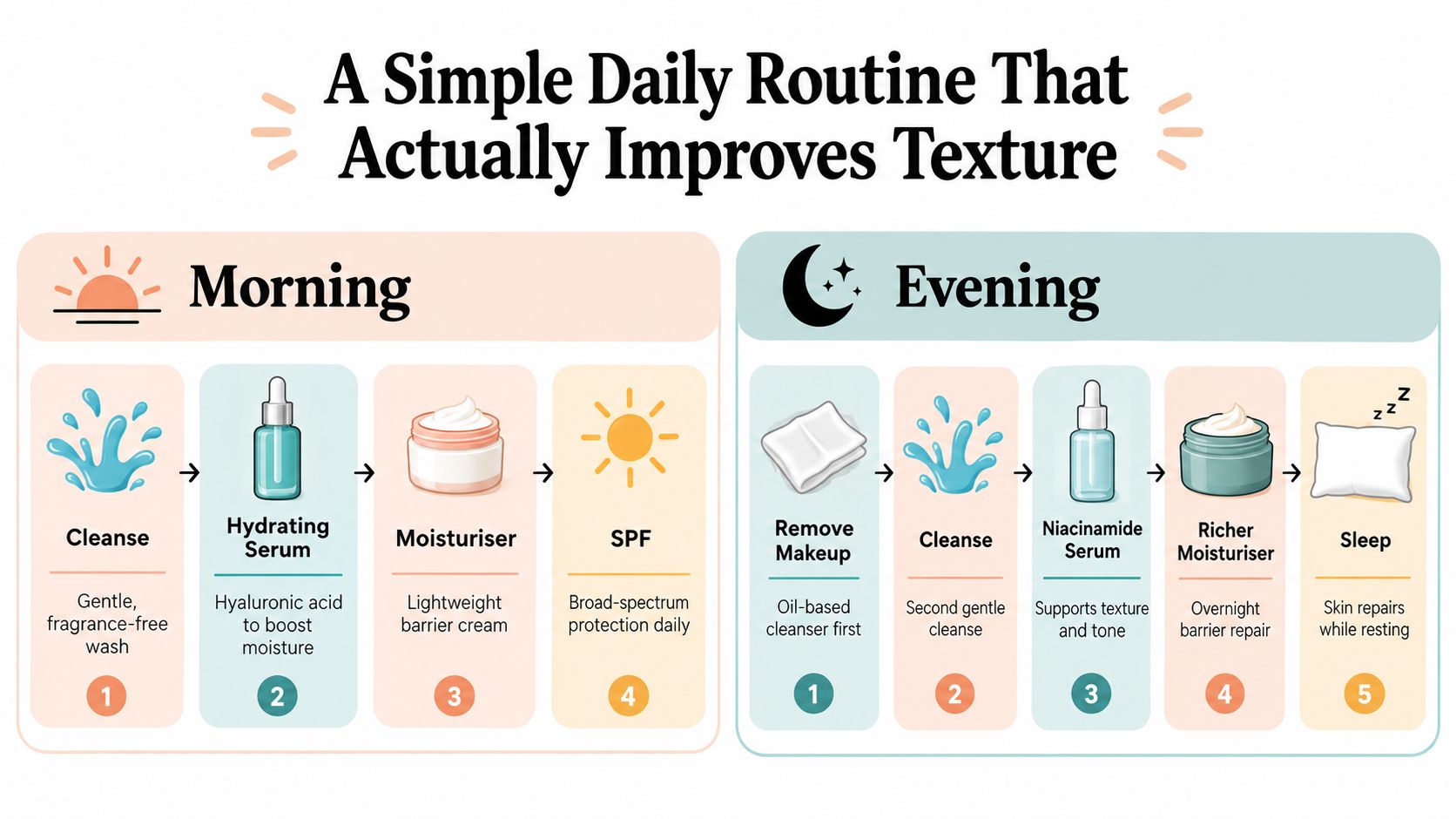
Morning
Start with a gentle, fragrance-free cleanser if your skin feels oily or sweaty, or just a splash of lukewarm water if it feels dry. Pat the skin dry rather than rubbing, because friction can make roughness look worse.
Then apply a moisturiser that suits the trigger you're managing. If dehydration is the main issue, look for humectants like glycerine or urea. If the skin feels tight and easily irritated, a richer barrier cream can be more comfortable.
Finish with broad-spectrum SPF, especially if pigmentation is part of the problem. That matters most on exposed areas, because UV can darken pigment that's already trying to settle.
Evening
If you wear makeup or sunscreen, remove it gently first, then cleanse without overworking the skin. The point is to get the day off the surface, not to leave the skin feeling “squeaky clean”.
After washing, moisturise while the skin is still slightly damp. UK evidence review guidance cites a randomised trial in 132 Leeds volunteers without active skin disease in which moisturising after washing supported skin integrity, and NHS-derived advice often recommends two to four emollient applications daily for clinically dry skin, with more for severe dryness (UK evidence review on skincare and hand hygiene).
If you're tempted to exfoliate, keep it infrequent and stop if there's stinging, redness, or more tightness. That's usually a sign the barrier wants rest, not more pressure.
When to Moisturise, When to Pause, and When to See a Clinician
Texture often persists because the skin problem has been misread. Roughness may come from low water levels, while bumps, dark patches, or redness point towards acne, pigmentation, or inflammation. Choosing the right response prevents the cycle of buying another product and scrubbing harder.
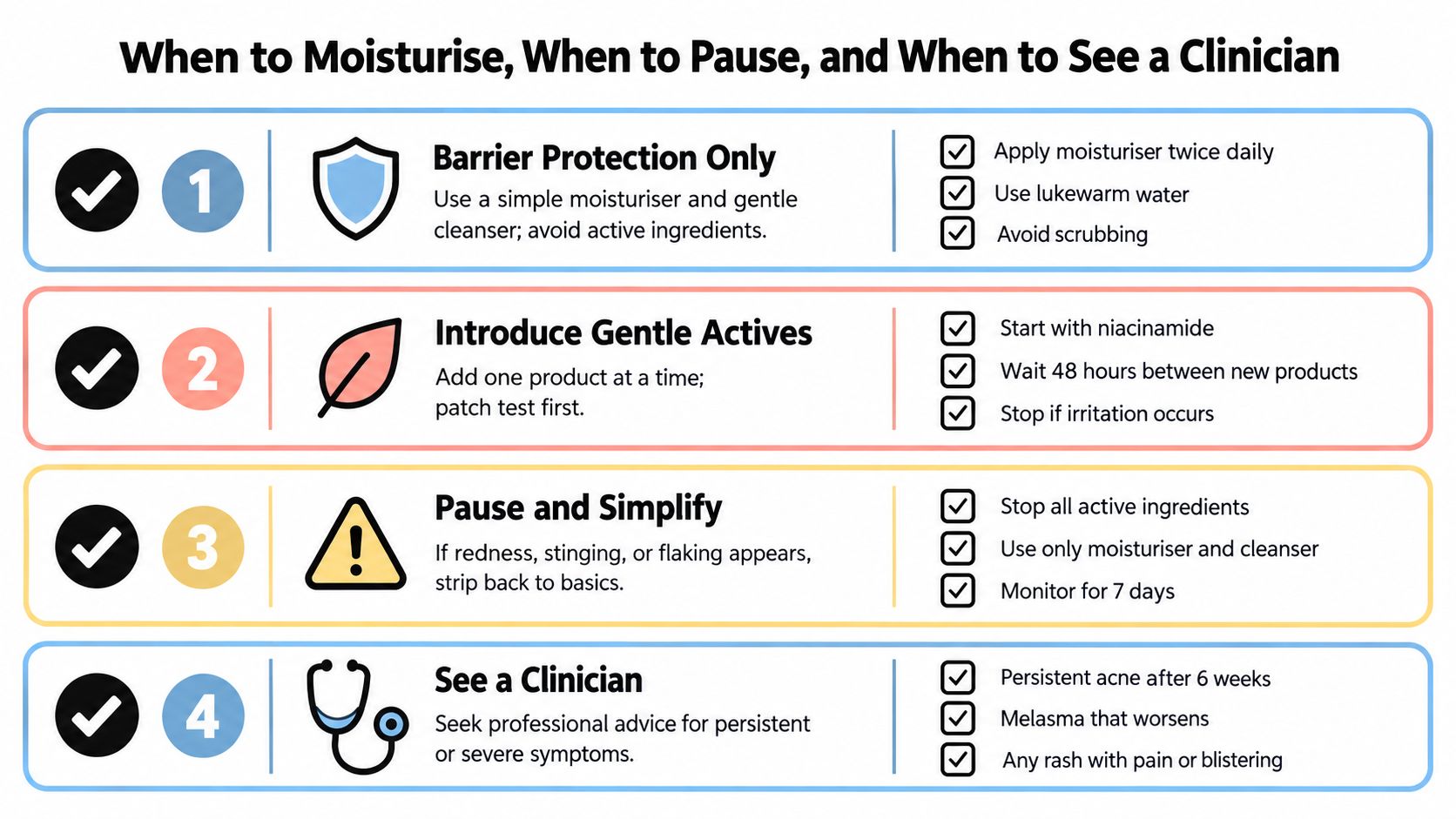
A simple escalation path
Stage 1, protect the barrier. Use a gentle cleanser, moisturise regularly, and keep water lukewarm. For dry or reactive skin, this basic approach may soften roughness because it restores comfort rather than stripping away more surface oil.
Stage 2, introduce one pregnancy-compatible active. Acne and uneven tone need different care from simple dryness. Choose one product, patch test it first, and give your skin time to respond. Adding several products at once makes irritation harder to identify.
Stage 3, pause when the skin complains. Redness, stinging, flaking, or increasing tightness means the active should stop. Return to cleansing and moisturising until the skin settles. Irritation is a warning light, not proof that a product is working.
Stage 4, arrange professional advice for persistent or severe symptoms. Dermatology UK advises professional review when pregnancy acne is severe, painful, distressing, or hasn't improved after two months of over-the-counter treatment. Seek help sooner if the skin is painful, spreading, blistering, or leaving marks that worsen instead of fade.
A changing surface can be a symptom, not merely a cosmetic concern.
A GP, midwife, or dermatologist can help distinguish dryness from acne, pigmentation, eczema, or another rash. That matters during pregnancy, when a clinician can also check whether an ingredient or treatment is suitable before you continue using it.
Why Your Bump Deserves the Same Texture Care as Your Face
Body skin isn't just a bigger version of facial skin. The bump, hips, and breasts are stretching, rubbing against clothing, and often feeling drier before the face does. That means they deserve the same kind of thoughtful, evidence-aligned care.
A dedicated bump routine usually looks boring on paper, and that's a good sign. Gentle cleansing, daily moisturising, and very cautious exfoliation, if any, are usually more helpful than trying to “resurface” skin that's already under tension. On exposed skin, SPF still matters when pigmentation is part of the picture.
That's also why bump-focused products can be useful when they're built around barrier support rather than stripping. The Happy Bump Co's body-care range, including Belly Butter, Belly Oil for Stretch Marks, and Pregnancy Tummy Scrub, sits in that kind of routine-based approach, where the aim is comfort and support rather than harsh correction.
Common Myths About Smoothing Skin Texture in Pregnancy
The biggest myth is that more scrubbing always means smoother skin. In pregnancy, that often means more irritation, more dryness, and a surface that looks worse by the end of the week.
Another common one is that all chemical exfoliants are automatically off-limits. That's too blunt to be useful. Some pregnancy-safe texture care is about careful ingredient choice and limited use, not banning everything with a technical name. The problem is usually the wrong formula, too much frequency, or using an active on already inflamed skin.
People also get told that stretch marks can be scrubbed away or that fragrance-free means pregnancy-safe by default. Neither is true. Fragrance-free can be kinder to sensitive skin, but it doesn't tell you whether a product is barrier-supportive, and stretch marks are a stretching issue, not a dirt issue.
Tanning doesn't even out texture either. It can make pigment and uneven tone more obvious, especially where melasma is already developing. And postpartum doesn't automatically mean stronger products are fine, because feeding plans, sensitivity, and skin recovery still matter.
The simplest takeaway is the one that keeps you out of trouble. Protect first. Treat second. Escalate when the signs look medical. That is the difference between random skincare and skin texture skincare that respects pregnancy.
The Happy Bump Co focuses on bump-friendly body care that supports changing skin with gentle, hydrating formulas designed for pregnancy. If you want practical options for dry, rough, or stretching skin, visit The Happy Bump Co and choose products that fit a barrier-first routine.