

You catch sight of your bump in the mirror after a shower and pause for a second longer than usual. Maybe your skin feels tighter this week. Maybe your belly button looks different. Maybe you're wondering whether now is the moment to buy a stretch mark prevention cream before the changes become more obvious.
That mix of feelings is common. Pregnancy can feel joyful, strange, tender, and overwhelming all in the same afternoon. Most women aren't only asking, “Will this cream stop stretch marks?” They're also asking, “How do I care for this changing body kindly?”
That's the better place to start. A good bump cream routine can be useful even when the science on prevention is mixed. It can help skin feel comfortable, soften that dry, stretched sensation, and give you a small daily pause to reconnect with your body instead of scrutinising it. Used that way, a stretch mark prevention cream becomes more than a promise on a label. It becomes part of a ritual that supports you through a season of rapid change.
Table of Contents
- Embracing Your Changing Body with a Daily Ritual
- The Science of Stretch Marks and Creams
- Decoding the Ingredient List What Your Cream Needs
- Your Daily Bump Care Application Ritual
- Beyond the Cream Holistic Support for Your Skin
- Pregnancy Skincare FAQs and Final Thoughts
Embracing Your Changing Body with a Daily Ritual
One of the loveliest shifts I see in pregnancy care happens when women stop treating skincare as a race against their own bodies. Early on, it's easy to slip into checking the skin for signs of what might go wrong. A new line. A patch of itchiness. A sense that your body is changing faster than your mind can catch up.
A daily ritual softens that. Instead of asking your cream to perform a miracle, you ask it to do something more grounded. Keep the skin supple. Ease that stretched, thirsty feeling. Turn two hurried minutes into a steady moment of care.
That ritual might look simple. After your shower, you warm the cream in your palms, press your hands over your belly, and move slowly instead of rushing. You notice where your skin feels dry. You breathe. You let your shoulders drop. If your baby is far enough along for movements, it can even become a quiet little check-in with the bump.
Stretch marks aren't a sign that you've failed to care for yourself. They're one way skin responds to growth.
There's also something reassuring about having a repeatable routine when so much else in pregnancy feels unpredictable. You may not control whether marks appear, but you can control how consistently and kindly you care for your skin.
A good stretch mark prevention cream fits best into that mindset. Think of it as part skincare, part comfort measure, part reminder that your body deserves gentleness while it does demanding work. That frame is both more honest and more useful than any bold claim on the front of a jar.
The Science of Stretch Marks and Creams
One of the harder parts of pregnancy skincare is sorting honest advice from hopeful marketing. Women often ask me whether a cream can stop stretch marks. The fair answer is that stretch mark creams can improve comfort and support the skin well, but prevention is never guaranteed.
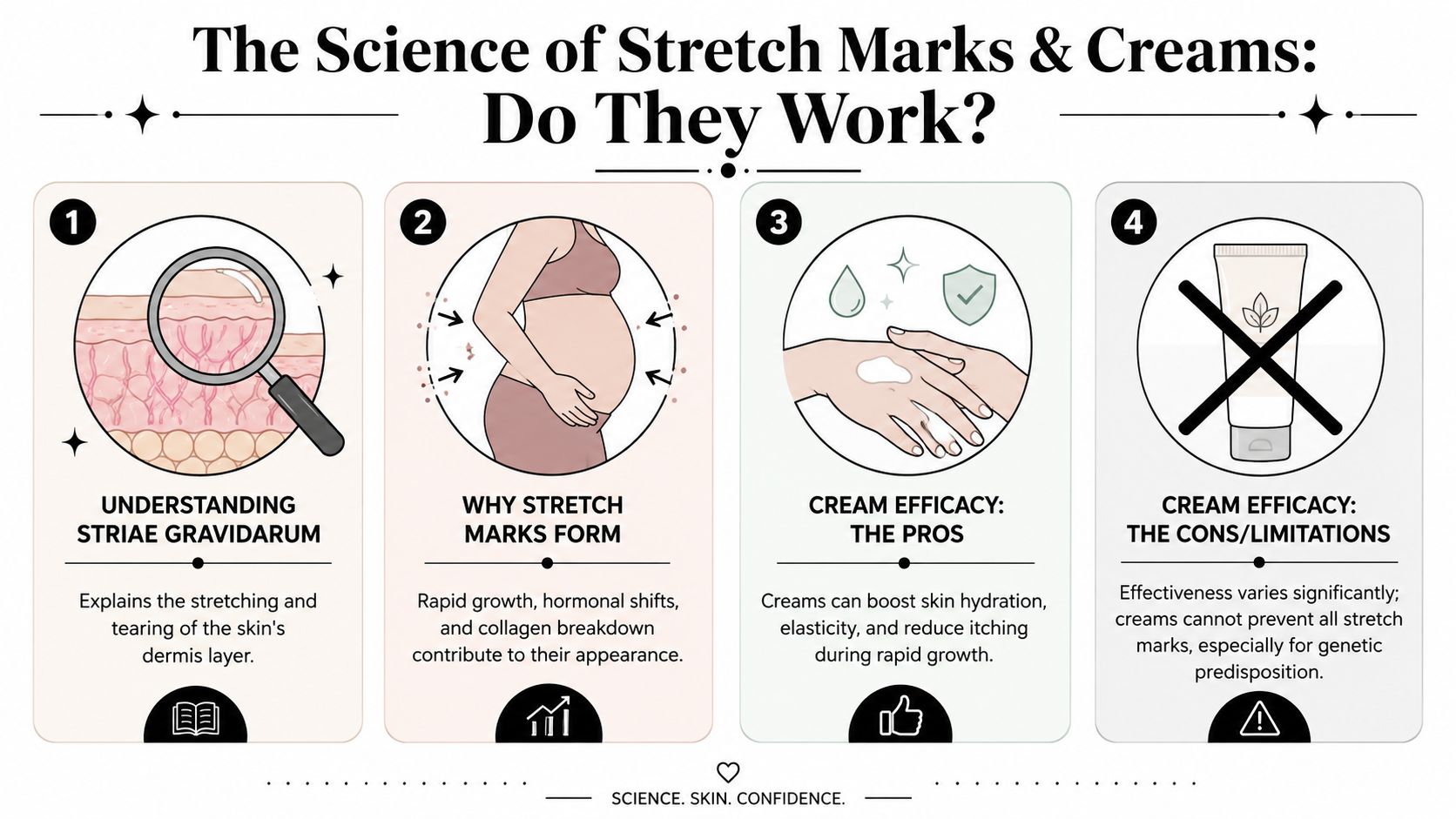
Stretch marks in pregnancy are called striae gravidarum. They form when the skin is asked to stretch quickly and the deeper support network, especially collagen and elastin, cannot remodel fast enough. Hormones appear to influence this process too, which is why two women with similar body changes can have very different outcomes.
What stretch marks actually are
Most women notice marks first where tension is highest. The abdomen is common, but breasts, hips, thighs, and the lower back can change as well. Early marks often look pink, red, or purple, then usually fade and flatten with time.
That detail matters because it explains why a moisturiser has limits. Dryness on the surface can make skin feel tighter and itchier, but stretch marks develop deeper down. A cream can help the skin feel more comfortable and better hydrated. It cannot fully overrule genetics, skin structure, hormone shifts, or the speed of growth.
What the evidence says
The clearest summary comes from a Cochrane review on topical preparations for preventing stretch marks in pregnancy. The review found no clear evidence that topical products reliably prevent stretch marks in pregnancy. Clinically, that means creams, oils, and lotions should be sold and used with realistic expectations.
I find that honesty helpful, not discouraging. Once you stop expecting certainty, it becomes much easier to choose a product for benefits you can feel. Better hydration. Less tightness. Less itch. A small daily pause that helps you stay connected to a body that is changing quickly.
Some individual formulations may still be more promising than others, especially if they are designed to support the skin barrier and are used consistently from early pregnancy. That does not mean any one jar has solved stretch marks. It means formula quality still matters, particularly if the product includes ingredients aimed at hydration and skin support. If you want more context on ingredients discussed for skin structure support, this guide on the best peptide for skin adds useful background.
Practical rule: Buy a cream for comfort, hydration, and a steady routine. If it also helps reduce the look or severity of marks for you, treat that as a bonus rather than a promise.
That approach is usually kinder on both your skin and your expectations.
Decoding the Ingredient List What Your Cream Needs
The front of the bottle usually tells a pleasant story. The back tells the useful one. If you want a stretch mark prevention cream that's appropriate for pregnancy, the ingredient list is where your decision should happen.
Ingredients worth spotting on the label
A practical formula usually does two jobs at once. First, it helps the skin hold water. Second, it supports a comfortable skin barrier so stretching skin feels less dry, itchy, and fragile.
Consumer guidance notes that hyaluronic acid and Centella asiatica have some supporting evidence for stretch-mark-related benefits, and the same guidance also highlights ingredients to avoid during pregnancy, particularly retinoids and products with unclear fragrance disclosure. You can read that advice in this Consumer Reports guide to stretch mark creams for pregnancy.
Here's how I'd interpret that at shelf level:
- Hyaluronic acid: Useful when skin feels tight and dehydrated. It helps draw water into the upper layers of the skin, which can make the belly feel more comfortable.
- Centella asiatica: One of the few ingredients with some supportive signal in this category. It's worth recognising on a label.
- Rich barrier-supporting bases: Butters, creams, and oils can still have value for comfort, even when they aren't proven preventatives on their own. Their strength is usually softness and skin feel, not miracle prevention.
One myth is worth letting go of early. “Natural” doesn't automatically mean effective. Common moisturising favourites often get more credit than the evidence supports.
Ingredients to be mindful of in pregnancy
Pregnancy is not the time to gloss over label reading. Some ingredients deserve a firmer line, and others deserve a pause.
- Retinoids: Avoid them in pregnancy. If you see names linked to vitamin A derivatives, put the product back unless your clinician has told you otherwise.
- Undisclosed fragrance blends: Be cautious, especially if your skin has become more reactive during pregnancy.
- Strong acid-heavy formulas: If a product markets itself more like an exfoliating body treatment than a gentle daily cream, it may not be the best fit for already stretched, sensitive skin.
A second useful mindset shift is this: you don't need the longest ingredient list. You need a calm, well-built one. Pregnancy skin often prefers consistency over experimentation.
For example, many women still reach for cocoa butter first because it's traditional and familiar. The evidence review discussed by Mayo Clinic notes that cocoa butter and olive oil were not found to be effective for prevention, while centella asiatica and possibly massage with bitter almond oil had only limited evidence of benefit. That's why simple kitchen-style remedies shouldn't be treated as guaranteed solutions, even if they smell lovely. If you want a fuller look at why people still gravitate toward that ingredient, this piece on cocoa butter lotion helps explain the appeal.
Pregnancy Skincare Ingredient Cheat Sheet
| Ingredients to Look For | Ingredients to Be Mindful Of |
|---|---|
| Hyaluronic acid for hydration support | Retinoids to avoid in pregnancy |
| Centella asiatica for limited evidence-backed support | Undisclosed fragrance if you want a clearer safety profile |
| Barrier-supporting cream bases that reduce tightness and dryness | Overly aggressive active blends that may irritate sensitive skin |
A good pregnancy cream should feel boring in the best possible way. Comfortable, consistent, easy to tolerate, and realistic about what it can do.
Your Daily Bump Care Application Ritual
You step out of the shower, catch sight of your changing shape in the mirror, and notice that familiar mix of wonder and tension. This is a good moment to reach for your cream. Not because a jar can promise prevention, but because a steady routine can keep skin more comfortable and give you a few quiet minutes to check in with your body.
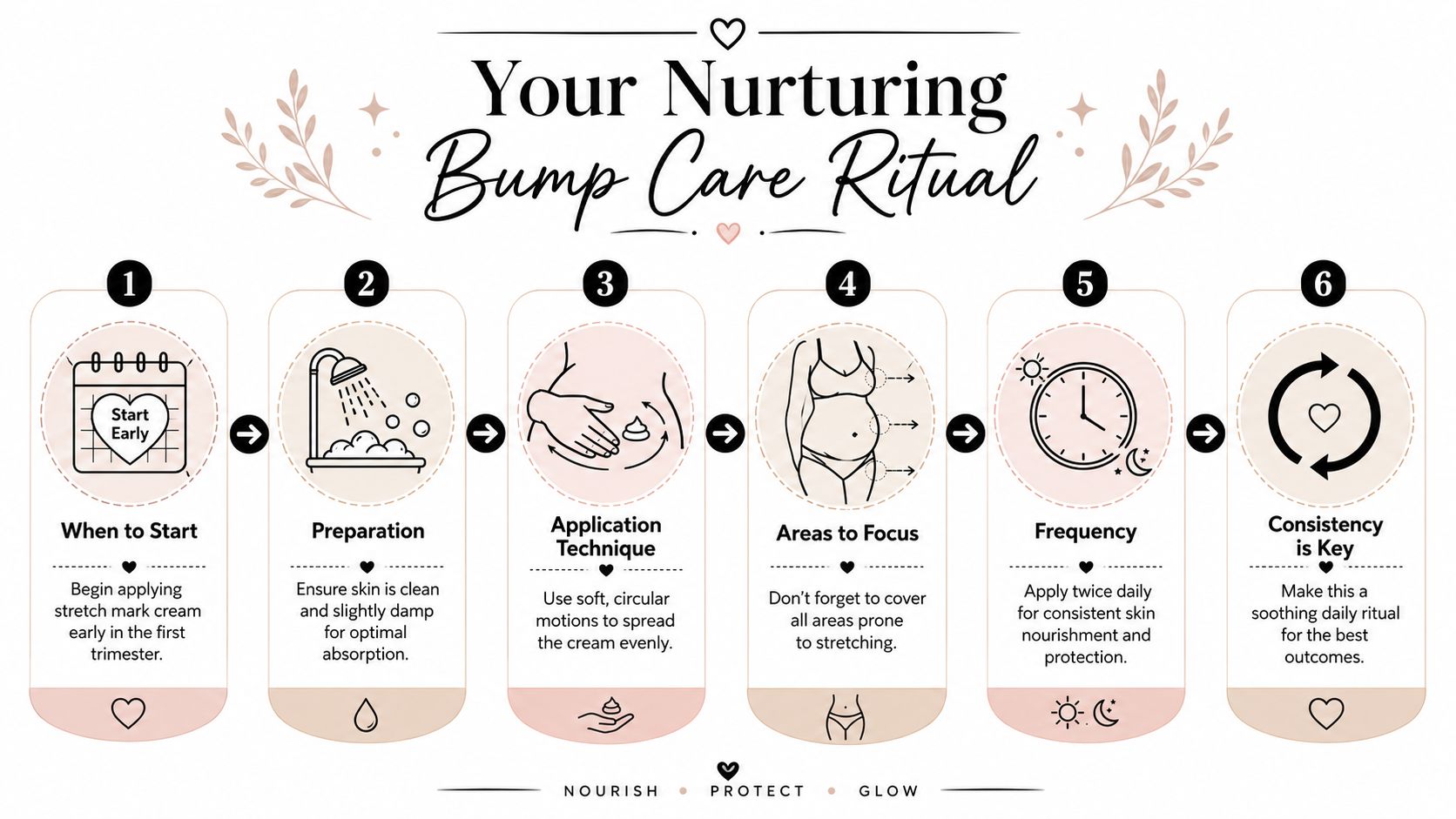
To make the process easier to follow, keep this visual guide in mind.
When to begin and where to apply
Start before your skin feels obviously strained. Earlier application gives you the best chance of keeping the skin hydrated and supple through the months when your body is expanding quickly, and it is far easier to build the habit early than to begin once tightness and itching are already bothering you.
In practice, that often means starting as soon as your bump, breasts, or hips begin to change. If you already have visible marks, the routine still has value. Cream can support comfort, reduce that dry, stretched feeling, and turn skin care into a regular pause rather than a worry.
Cover the areas that commonly change during pregnancy, not just the center of the bump:
- Abdomen: Give extra attention to the lower belly and sides as the skin starts to feel taut.
- Breasts: These often change before the abdomen does and can become surprisingly sensitive.
- Hips and thighs: Gradual stretching here is easy to miss until clothes fit differently.
- Lower back and flanks: Often forgotten, especially if you are applying in a hurry.
If you want help fitting this into a broader pregnancy skincare routine that feels realistic day to day, keep the rest of your products simple and easy to tolerate.
How to massage it in
Technique matters less than comfort and consistency, but a few small habits make the ritual feel better and help the product spread evenly. Apply after a bath or shower, while the skin is still slightly damp. Use enough cream that your hands glide easily without dragging over the skin.
A simple method works well:
- Warm the product in your palms: This helps thicker creams spread more evenly.
- Start with broad circular motions: Slow circles cover the area well and encourage you to relax your shoulders and hands.
- Keep the pressure light: Pregnancy skin can be tender, and deep massage is unnecessary here.
- Finish with long, gentle strokes: Smooth the cream over the area so you leave an even, comfortable layer.
If you'd like a visual demonstration, this video can help you picture the rhythm and pressure more clearly.
Making it feel like care rather than another task
The women who keep up this habit usually make it pleasant. They keep the cream where they will see it. They tie it to a moment that already happens, after an evening shower, before getting dressed, or at bedtime.
I often suggest aiming for once or twice a day, depending on what your skin likes and what your routine can hold. Twice daily suits women with very dry or itchy skin, but one calm, consistent application is better than an ambitious plan that lasts three days.
Missing a day does not undo anything.
Some of the value is in the cream. Some of the value is in the daily pause.
That pause matters. It gives you a chance to notice irritation early, appreciate the work your body is doing, and turn a practical skin care step into a small act of steadiness.
Beyond the Cream Holistic Support for Your Skin
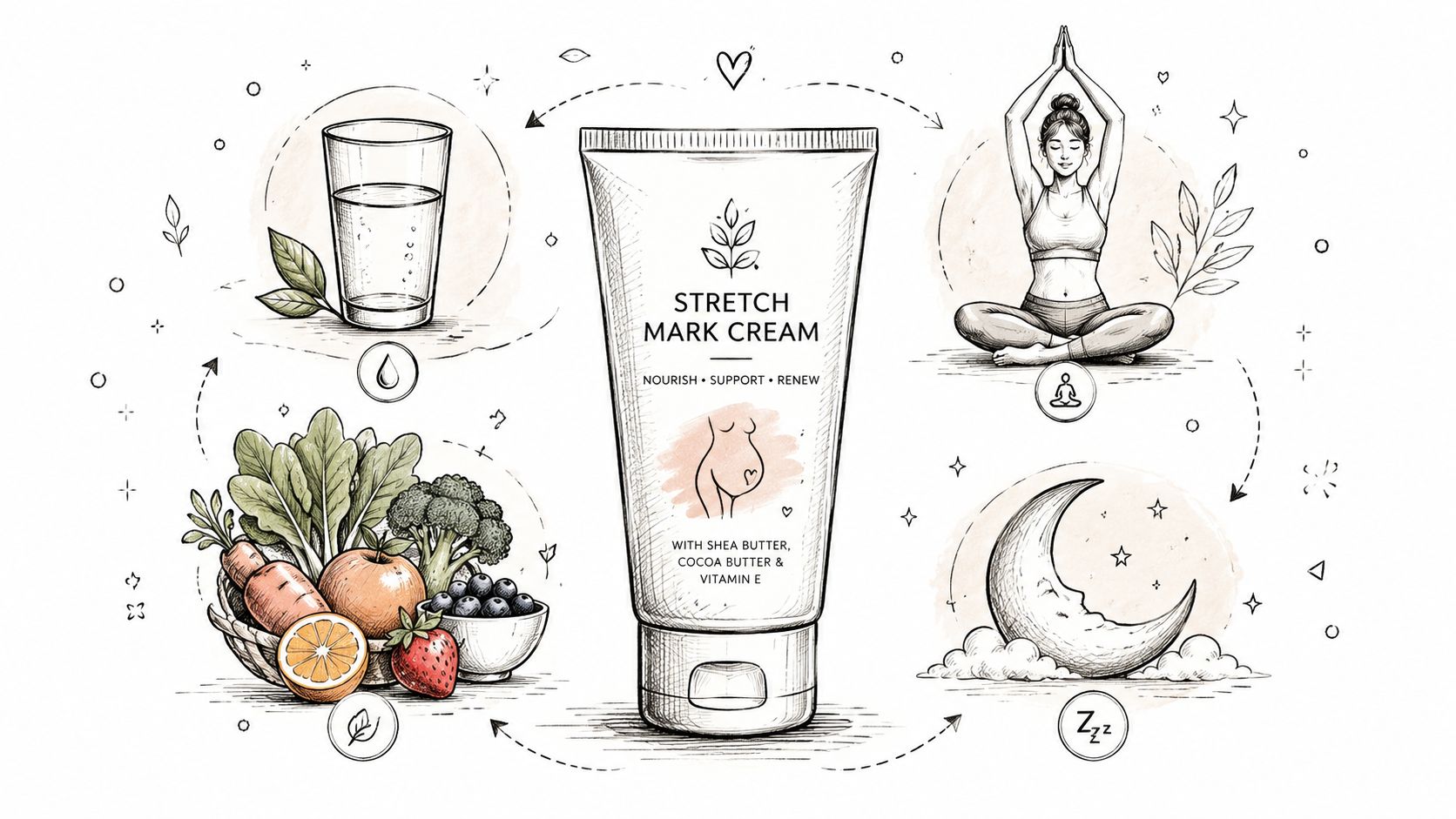
A topical product can support comfort at the surface, but skin doesn't exist in isolation. During pregnancy, how your skin feels is tied to hydration, nourishment, rest, and circulation too.
Hydration and nourishment from the inside
Well-hydrated skin usually feels more supple and less uncomfortable. That doesn't mean water prevents stretch marks on its own, but it does support general skin comfort and overall pregnancy wellbeing. Many women notice that tight, itchy skin feels worse when the rest of them feels run down too.
Food matters in the same practical way. Skin relies on the body's overall nutritional support. A balanced diet with enough protein and foods that provide nutrients involved in normal skin maintenance is a sensible foundation during pregnancy. It's not glamorous advice, but it's often the most useful.
A few habits help this routine feel realistic:
- Keep water visible: A bottle on your desk or bedside table is more effective than good intentions.
- Pair skincare with meals: Breakfast and bedtime often create the most consistent routine anchors.
- Choose comfort over perfection: Regular, decent habits beat elaborate plans that last two days.
Movement rest and the bigger picture
Gentle movement can also support how your body feels in your skin. Walking, stretching, and prenatal yoga can help you feel less stiff and more connected to your changing shape. That body awareness often makes skincare feel less cosmetic and more nurturing.
Rest counts too. Skin that feels reactive, itchy, or generally “too much” is often harder to ignore when you're overtired. The bigger goal is not perfect skin management. It's steadier support for a body doing a great deal.
If you want to build these habits into a fuller routine rather than treating your cream as a standalone step, this guide to a pregnancy skincare routine is a sensible place to start.
Pregnancy Skincare FAQs and Final Thoughts
Can I use stretch mark cream while breastfeeding
Often, yes, but it depends on the formula. Keep using the same common-sense screening you used in pregnancy, especially if the product contains active ingredients you're unsure about. If you're applying anything to the breast area, keep the nipple area clean before feeds and check with your midwife, GP, or health visitor if you're uncertain.
What if I already have stretch marks
It's not too late to care for your skin. A cream may still help with comfort, dryness, and the stretched feeling even if marks have already appeared. What it shouldn't do is pressure you into chasing complete erasure.
Can I use it on a C-section scar
Not on a fresh scar unless your surgical team has told you it's appropriate. Fresh healing skin needs a different level of caution. Once the area has healed and your clinician is happy with it, scar care can be discussed separately.
One last myth is worth putting to bed. A review of evidence discussed by Mayo Clinic notes that common moisturisers like cocoa butter and olive oil were not found to be effective for stretch mark prevention. That's a useful reminder to choose products for comfort, formulation quality, and pregnancy-appropriate ingredients, not because a traditional remedy has been repeated often enough to sound proven.
Pregnancy asks a lot of your body. Your skincare routine doesn't need to promise perfection to be worthwhile. If your stretch mark prevention cream helps your skin feel softer, eases tightness, and gives you a few calm minutes to put your hands on your bump with care, that's already valuable.
If you want pregnancy skincare that feels gentle, reassuring, and purpose-built for changing skin, explore The Happy Bump Co. Their UK-made range is designed for expectant mums who want deep hydration, thoughtful formulations, and a bump care ritual that feels good to keep.