

You've found a sunscreen that promises strong protection, but after applying it your face feels tight, flaky and faintly chalky. Add pregnancy-related pigmentation to the worry, and choosing a daily SPF can feel like another decision you shouldn't have to make. The right product must do two jobs at once: provide reliable UVA and UVB protection while helping dry, sensitive skin stay comfortable.
The best sunscreen for dry skin during pregnancy is usually a broad-spectrum formula with SPF 30 or above, strong UVA protection and a moisturising, fragrance-conscious base. Mineral filters can be a sensible starting point for reactive skin, but the finish matters. A sunscreen you dislike wearing generously and regularly won't protect you as well as a comfortable formula you'll use consistently.
Table of Contents
- The Unique Sunscreen Challenge for Expectant Mums
- Understanding Pregnancy Skin Changes and UK Safety Guidance
- Mineral Versus Chemical Filters for Sensitive Skin
- Decoding SPF Ratings and Hydrating Ingredients
- Comparing Sunscreen Textures and Formulations
- Application and Reapplication Strategies for Daily Wear
- Building Your Complete Pregnancy Sun Protection Routine
The Unique Sunscreen Challenge for Expectant Mums
You apply your morning moisturiser, wait for the tightness to settle, then smooth on a mineral sunscreen. Instead of a calm, comfortable finish, your cheeks look pale and feel stretched. By lunchtime, dry patches have appeared around your nose. Yet skipping SPF feels risky because your skin has become more prone to uneven pigmentation.
That conflict is common. Pregnancy can make skin feel more sensitive and dryness-prone, while hormonal changes can make pigmentation concerns more noticeable. Protection and comfort aren't separate goals. The formula needs enough richness to support the skin barrier without becoming so greasy that you avoid applying the amount required.
A useful distinction is whether your skin lacks water, oil, or both. The guide to dry skin versus dehydrated skin can help you identify whether you need a richer emollient cream, water-binding ingredients, or a combination.
What usually goes wrong
Many high-protection products fail dry skin in predictable ways:
- A chalky finish: Mineral filters can leave visible residue when the formula isn't well balanced or blended.
- Tightness after application: A lightweight, alcohol-heavy base may evaporate quickly and leave sensitive skin uncomfortable.
- Stinging: Fragrance, essential oils and certain solvents can aggravate a weakened-feeling barrier.
- Poor layering: A sunscreen that pills over moisturiser encourages rubbing, which can worsen flaking and irritation.
Your answer isn't to use less sunscreen. It's to choose a product that spreads easily, gives you enough working time to blend it and contains supportive ingredients such as glycerin, hyaluronic acid, ceramides or shea butter. A tinted mineral formula can also reduce the visible cast, particularly if pigmentation is your main concern.
Practical rule: If a sunscreen leaves your skin tight within minutes, treat that finish as useful feedback. Change the formula, not the protection level.
For most expectant mums with dry skin, I'd prioritise a hydrating cream or lotion, a UVA logo or strong UVA star rating, and a low-fragrance or fragrance-free formula. SPF 50 is a practical choice if melasma or heightened sensitivity is a concern, while SPF 30 remains the UK dermatology baseline.
Understanding Pregnancy Skin Changes and UK Safety Guidance
Pregnancy changes the way many people experience sunlight and skincare. Hormonal shifts can make pigmentation more reactive to ultraviolet exposure, while dryness and sensitivity can make familiar products feel harsher than before. That's why a sunscreen that worked well before pregnancy may suddenly sting, flake or leave an unpleasant finish.
The NHS advises pregnant people that they may burn more easily in sunlight during pregnancy and recommends using a high-factor sunscreen. UK dermatology guidance commonly sets a baseline of broad-spectrum SPF 30 or higher with strong UVA protection, while some UK sources advise SPF 50 for additional protection against pregnancy-related pigmentation such as melasma. See the NHS pregnancy guidance on common health problems for the medical baseline.
What the label should tell you
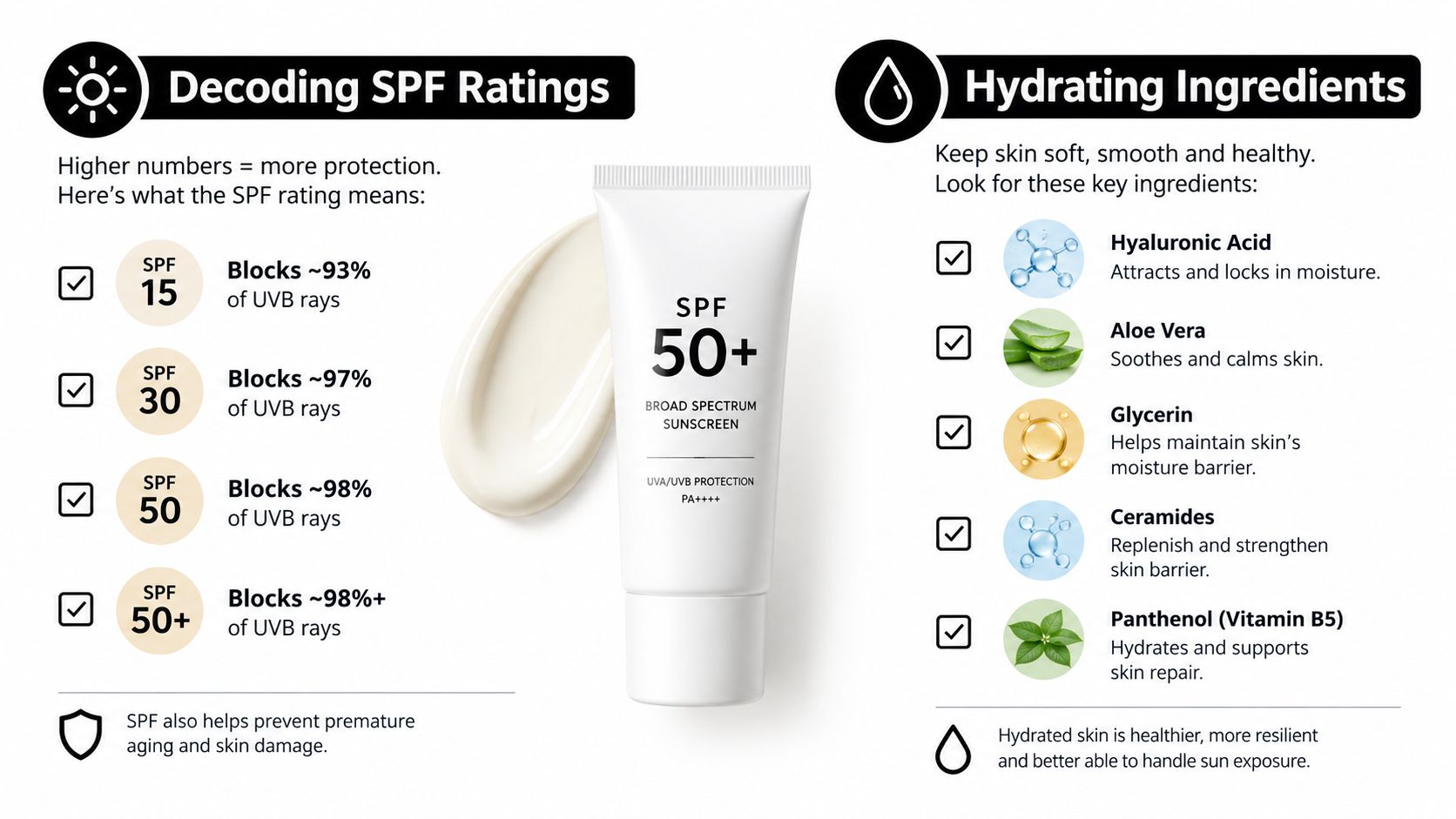
SPF mainly describes protection against UVB, the ultraviolet radiation associated with sunburn. The UVA circle logo or star system indicates UVA protection, which matters because UVA exposure can contribute to pigmentation and longer-term skin damage.
Look for these features together:
- Broad-spectrum coverage, so the product addresses both UVA and UVB.
- SPF 30 minimum, with SPF 50 a sensible preference for pigmentation-prone skin.
- A UVA logo or strong UVA rating, rather than relying on the SPF number alone.
- A comfortable, hydrating base, especially if your skin feels tight or flaky.
- A formula you can reapply, because real-world protection depends on ongoing use.
Mineral filters are often favoured for sensitive or dry skin because zinc oxide and titanium dioxide are generally considered less irritating. That preference doesn't mean every chemical sunscreen is automatically unsuitable. UK guidance doesn't require avoiding chemical filters during pregnancy, so your decision should consider tolerance, finish and whether you'll apply the product properly.
The NHS recommendation is straightforward, but it needs practical interpretation. High factor does not excuse a drying texture, and a nourishing formula doesn't compensate for weak UVA protection. Choose both.
For a quick reminder of why higher protection matters, compare broad everyday protection with the limitations of lower-factor products in this guide to factor 20 sun cream. Your face, neck and exposed bump area deserve a product selected for pregnancy's changing needs, not whatever is already in the bathroom cabinet.
Mineral Versus Chemical Filters for Sensitive Skin
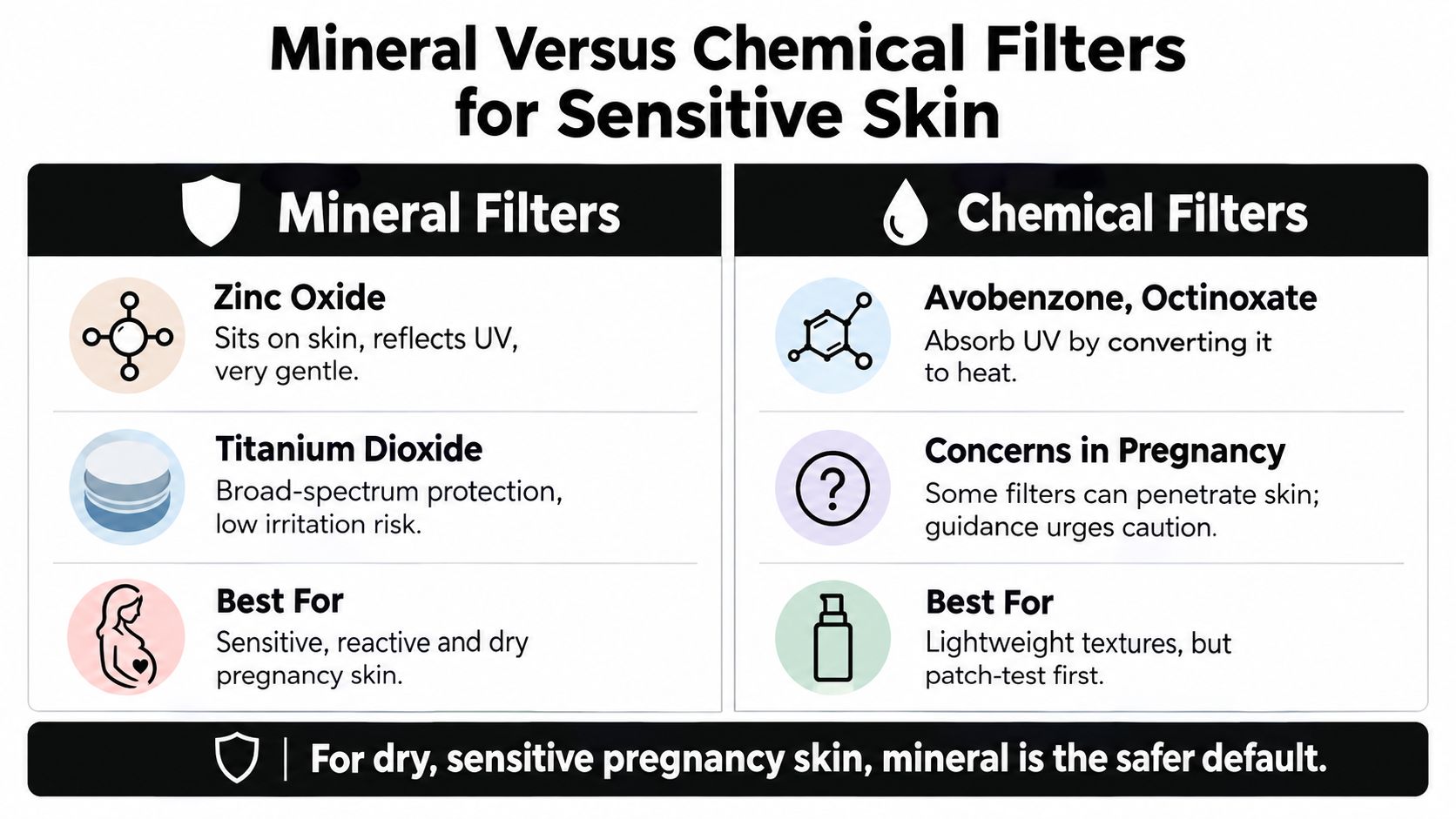
Mineral and chemical sunscreens both exist to reduce ultraviolet exposure, but they create different experiences on the skin. Mineral filters, including zinc oxide and titanium dioxide, sit on the skin's surface and are often chosen when sensitivity is a priority. Chemical filters absorb UV and convert it into another form of energy, allowing manufacturers to create thinner, more invisible textures.
The popular claim that every chemical sunscreen is unsafe in pregnancy is too simplistic for UK skincare advice. Chemical filters sold in the UK and EU aren't universally prohibited during pregnancy, and many dermatologists consider suitable products acceptable. If your skin tolerates a chemical formula and you'll use it generously, its elegant finish can be a genuine advantage.
Mineral filters suit the most reactive skin
Zinc oxide and titanium dioxide are the clearest starting point when your skin is dry, reactive or easily irritated. They're particularly useful if sunscreen tends to sting or if you're trying to reduce the number of potentially irritating ingredients in your routine.
The drawback is cosmetic. Some mineral products can appear white, drag across flaky areas or leave a powdery feel. That's a formulation problem, not a reason to abandon mineral protection. Look for tinted versions, creamy bases and hydrating ingredients. Apply in manageable sections rather than rubbing a large amount across the entire face at once.
Chemical filters can win on texture
A well-formulated chemical sunscreen often feels lighter and blends with less visible residue. That can make it easier to wear under make-up, particularly if you dislike the look of mineral products. However, lightweight doesn't always mean comfortable for dry skin. A fluid containing fragrance or a drying alcohol may feel less forgiving than a richer mineral cream.
Use this decision guide:
- Choose mineral first if your skin is stinging, reactive, flaky or newly intolerant of familiar products.
- Consider chemical filters if your priority is an invisible finish and your skin handles them without discomfort.
- Try a hybrid approach only if the formula is clearly labelled, moisturising and comfortable after patch testing.
- Prefer tinted mineral protection if visible cast and pigmentation are your main concerns.
- Stop using any formula that causes persistent burning, rash or worsening irritation, and seek professional advice if the reaction doesn't settle.
UK expert advice emphasises that ultraviolet exposure can worsen melasma and recommends generous sunscreen use, regular reapplication, shade and hats. It also notes that mineral formulas containing zinc oxide or titanium dioxide may be better tolerated by sensitive or dry skin. The London Dermatology Centre's pregnancy skincare guidance supports that practical approach.
The most sensible verdict is personal but direct: mineral is the safer default for dry, sensitive skin, while a well-tolerated chemical formula remains a reasonable alternative. Don't let a fear-based ingredient list push you towards a sunscreen you can't comfortably wear.
Decoding SPF Ratings and Hydrating Ingredients
Read the front of the tube first, then inspect the ingredient list. A high SPF number is useful, but it doesn't tell you whether the product protects well against UVA or whether it will leave your dry skin uncomfortable.
SPF measures UVB protection. The UVA logo or star system communicates UVA protection, so you need both markers for a well-rounded daily sunscreen. A product labelled SPF 50 but lacking clear UVA information isn't giving you the complete information needed for a confident choice.
Use this label-reading order
Start with the protection claims:
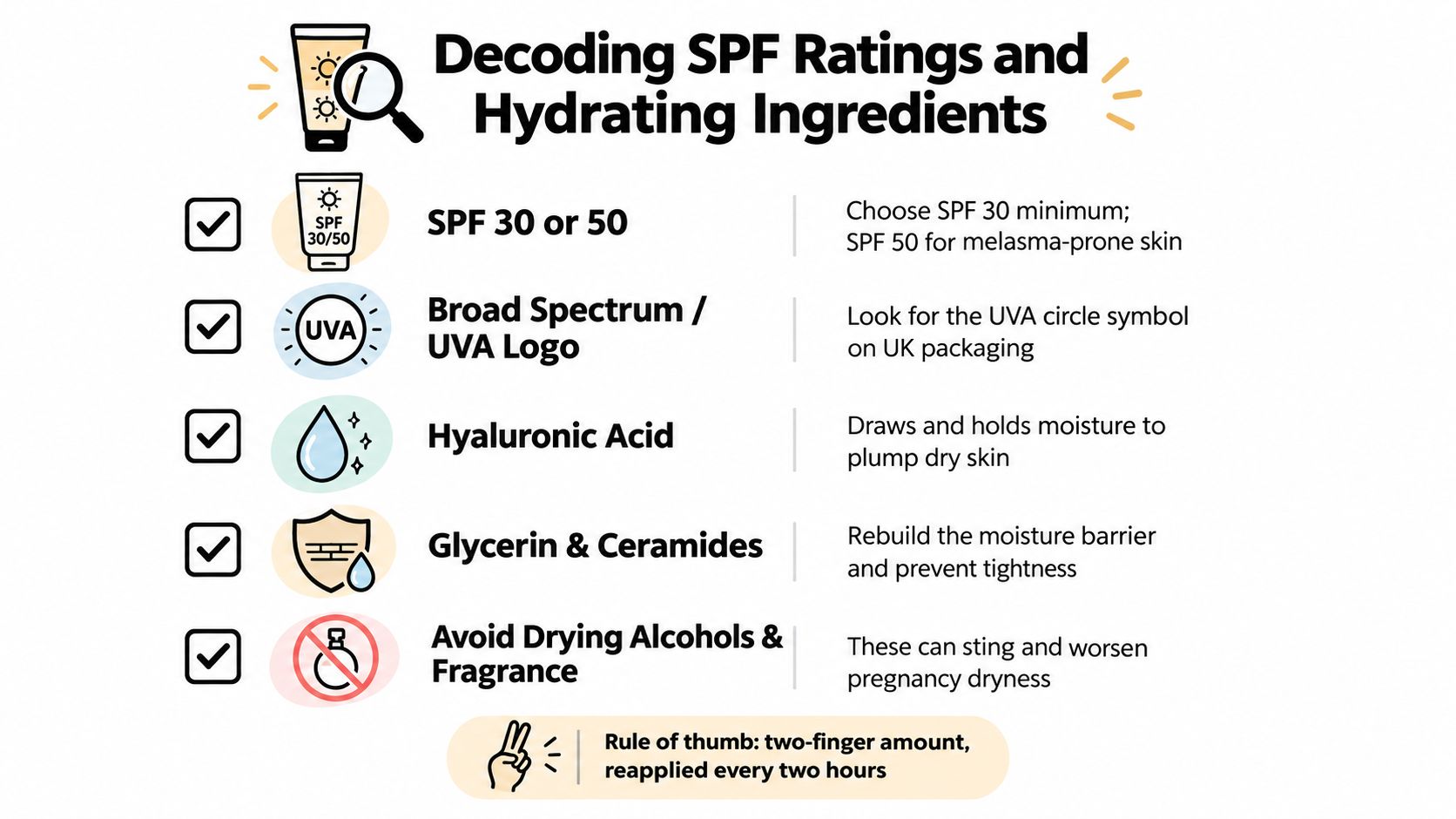
- SPF 30 or SPF 50: SPF 30 is the minimum practical baseline; SPF 50 is a strong preference when pigmentation is a concern.
- Broad-spectrum wording: This indicates coverage across UVA and UVB rather than UVB alone.
- UVA circle or star marking: This helps you judge the UVA side of the product.
- Water and sweat guidance: Treat these claims as reminders to reapply, not permission to apply once and forget it.
Then assess the supporting ingredients. Dry skin usually benefits from a blend of humectants, which bind water, and emollients, which soften and condition the surface. Glycerin and hyaluronic acid can support hydration, while ceramides and shea butter can help the skin feel less stripped.
Ingredients worth favouring
Look for:
- Glycerin, a familiar humectant that helps the formula feel less drying.
- Hyaluronic acid, which supports a hydrated, cushioned finish.
- Ceramides, useful in barrier-supporting skincare.
- Shea butter, an emollient suited to skin that feels rough or tight.
- A creamy or lotion base, which usually spreads more comfortably over dry patches than a very watery fluid.
Be cautious with fragrance, essential oils and denatured alcohol if your skin is sensitive or dry. These ingredients don't make every product unsuitable for every person, but UK pregnancy skincare guidance warns that they can increase sensitivity or worsen dryness. The British Association of Dermatologists sunscreen fact sheet explains the distinction between SPF and UVA marking and provides useful label context.
Don't judge hydration by the first five seconds after application. Let the formula settle, check how it feels around the mouth and nose, and see whether it pills over your moisturiser. If your dry skin needs extra support, apply a thin layer of moisturiser first and allow it to settle before sunscreen. Guidance on choosing a moisturiser for dry skin during pregnancy can help you build that base.
Comparing Sunscreen Textures and Formulations
Texture is not a cosmetic afterthought. It controls how easily you can apply enough product, how much rubbing your skin receives and whether you'll reapply later. For dry pregnancy skin, I'd choose a rich cream in cold or windy weather, then move to a creamy lotion if you need something lighter under make-up.
| Formulation Type | Best For | Key Benefits | Potential Drawbacks |
|---|---|---|---|
| Rich moisturising cream | Very dry, flaky skin | Cushions the skin, reduces drag and supports a comfortable finish | May feel heavy or shiny under make-up |
| Creamy lotion | Dry skin needing everyday wear | Easier to spread than a thick cream while still offering comfort | Can pill if layered over a rich moisturiser |
| Hydrating fluid | Mild dryness and make-up users | Lightweight feel and quick blending | May not be enough for tight, barrier-stressed skin |
| Tinted mineral cream | Pigmentation concerns and visible cast | Adds colour, disguises residue and can simplify the morning routine | Shade range and finish vary between products |
| Mist or spray | Body top-ups and hard-to-reach areas | Convenient for exposed body skin | Easy to under-apply, so it shouldn't replace careful lotion application |
Match the finish to your skin
If your cheeks flake, choose a cream with emollients rather than a fast-drying fluid. Press it into the skin instead of repeatedly rubbing across the surface. This reduces friction and helps the product sit more evenly over texture.
If you wear make-up, a creamy lotion or tinted mineral product is usually the better compromise. Apply your moisturiser sparingly, give it time to settle, then work sunscreen in thin sections. Tinted products can make mineral filters look less stark, but test the shade in natural light before committing.
A spray can be useful for body reapplication, but it's a poor choice as your only face sunscreen. It's difficult to see whether you've covered every area, and dry skin benefits from the controlled application of a lotion or cream. For your face, neck and exposed chest, use a product you can measure and spread deliberately.
The best texture is the one that lets you apply enough without rubbing, pilling or abandoning it halfway through the day.
Application and Reapplication Strategies for Daily Wear
A good sunscreen can't compensate for a thin, patchy application. The NHS advises applying sunscreen twice before sun exposure and reapplying every two hours, while UK dermatology guidance also recommends reapplication after swimming, sweating or towel-drying. The NHS sunscreen and sun safety advice explains why regular top-ups matter, including the fact that sunlight can dry sunscreen from the skin.
Build the morning layer
Use this order:
- Cleanse gently or rinse, especially if your skin feels dry in the morning.
- Apply hydrating skincare, such as a serum or moisturiser containing glycerin or hyaluronic acid.
- Let the moisturiser settle, so sunscreen doesn't slide or pill.
- Apply sunscreen before make-up, covering the face, ears, neck and any exposed chest.
- Apply a second layer before going outside, as advised by the NHS.
Work in sections across the forehead, cheeks, nose and chin. Press and smooth rather than aggressively rubbing. If your mineral formula looks pale, warm a small amount between your fingertips, then apply another thin layer. This approach is more comfortable than trying to force one thick layer across flaky skin.
Reapply without wrecking your skin
At home, cleanse or gently wipe away obvious sweat, add a small amount of moisturiser if your skin feels tight, then reapply sunscreen. At work, press away excess oil or perspiration first and apply fresh sunscreen over clean, settled make-up where possible.
Don't rely on a powder SPF or mist as your only top-up if you can't see how much product has reached the skin. Use a cream or lotion for the areas where protection matters most, then use a hat, shade and sunglasses to reduce direct exposure. Reapply promptly after physical activity, water exposure or towel-drying.
Application reminder: A comfortable sunscreen encourages generous use. If yours drags, flakes or stings, replace it rather than applying less.
Building Your Complete Pregnancy Sun Protection Routine
Your morning routine can stay simple. Start with a gentle cleanse or rinse, apply a hydrating moisturiser, then use a broad-spectrum sunscreen with SPF 30 or above and strong UVA protection. Choose SPF 50 if melasma is a particular concern, and select mineral filters when your skin is reactive or easily irritated.
Physical protection makes the routine more dependable. Use shade when available, wear a hat and cover exposed skin with clothing. UK expert advice specifically recommends combining generous sunscreen application and regular reapplication with shade and hats, rather than treating SPF as your only defence.
A practical dry-skin checklist
- For very dry skin: Choose a rich cream with glycerin, ceramides, hyaluronic acid or shea butter.
- For visible pigmentation: Consider a tinted mineral product with strong UVA marking.
- For sensitive skin: Favour zinc oxide or titanium dioxide and avoid unnecessary fragrance.
- For make-up wearers: Choose a creamy lotion that layers without pilling.
- For outdoor days: Reapply regularly and plan shade, clothing and a hat.
The gap in much pregnancy skincare advice is practical. It says “choose mineral” without explaining how to prevent the tight, chalky finish, or it discusses dry-skin care without showing how to preserve serious UV protection. Your solution is a hydrating, well-tolerated sunscreen applied generously and supported by physical barriers.
The Happy Bump Co offers pregnancy-focused body care, including Belly Butter, Belly Oil for Stretch Marks and Pregnancy Tummy Scrub, which can support a moisturising routine for changing, dry skin alongside your chosen facial sunscreen. Visit The Happy Bump Co to explore its UK-made pregnancy skincare range and choose products for your daily self-care routine.