

Coconut body butter is a rich, coconut-oil-based moisturiser that helps trap water in the skin and ease dryness and tightness, but it can't reliably prevent stretch marks. Those marks involve deeper changes in the skin, so a topical butter can support comfort without guaranteeing prevention.
Is coconut body butter worth adding to your pregnancy routine, then, or is it just another jar promising more than it can deliver? The useful distinction is between what the product can do for the skin's surface and what it can't change beneath it. A comfortable, moisturised bump may feel less tight, but that doesn't mean the skin is protected from stretch marks.
The jar's coconut-derived emollient is only one part of the story. The complete formula matters too, particularly if your skin is sensitive to fragrance or you've had reactions to skincare before. Understanding how the butter works, where its ingredients come from, and how to assess the label can help you choose a product for comfort rather than marketing promises.
Table of Contents
- Why Coconut Body Butter Matters for Pregnancy Skin
- What Coconut Body Butter Actually Does to Your Skin
- How Coconut Became a UK Beauty Staple
- Reading the Label on Pregnancy-Sensitive Skin
- The Truth About Coconut Body Butter and Stretch Marks
- How to Use Coconut Body Butter on Your Bump
- Comparing Coconut Body Butter with Oils and Other Butters
- Your Next Step for a Happy Bump
Why Coconut Body Butter Matters for Pregnancy Skin
As your bump grows, your skin may feel dry, tight, or itchy. A rich body butter can help with surface dryness and make your skin feel more comfortable. Think of it as moisturising support, not a shield against stretch marks.
That difference matters when product labels suggest a cream or butter can stop marks from appearing. Stretch marks involve changes deeper in the skin, while a moisturiser acts mainly at the surface. Coconut body butter can soften skin and support a soothing daily routine, but it can't promise to prevent those deeper changes.
A realistic expectation: Choose a body butter for how it makes your skin feel, not for a guarantee about how your skin will change.
The word “coconut” also doesn't tell you everything about what you're putting on your skin. Coconut oil may be the main emollient, but the finished product may contain fragrance, essential oils, or other ingredients that don't suit everyone. If your skin is reactive, the whole ingredient list deserves your attention.
This guide looks at what coconut body butter does, why coconut became familiar in UK skincare, and how to read a formula with pregnancy-sensitive skin in mind. It also covers the limits of stretch-mark claims, a practical application routine, and how butter compares with oils and creams. The aim is simple: help you pick a product for comfort and barrier support, without feeling pressured to treat normal skin changes as a problem you must prevent.
What Coconut Body Butter Actually Does to Your Skin
Coconut body butter works mainly as an occlusive and emollient. An occlusive helps form a film on the skin's surface, slowing water loss. An emollient helps soften and smooth the outer layer by replenishing lipids, the fats that sit between the flat cells of the skin barrier.
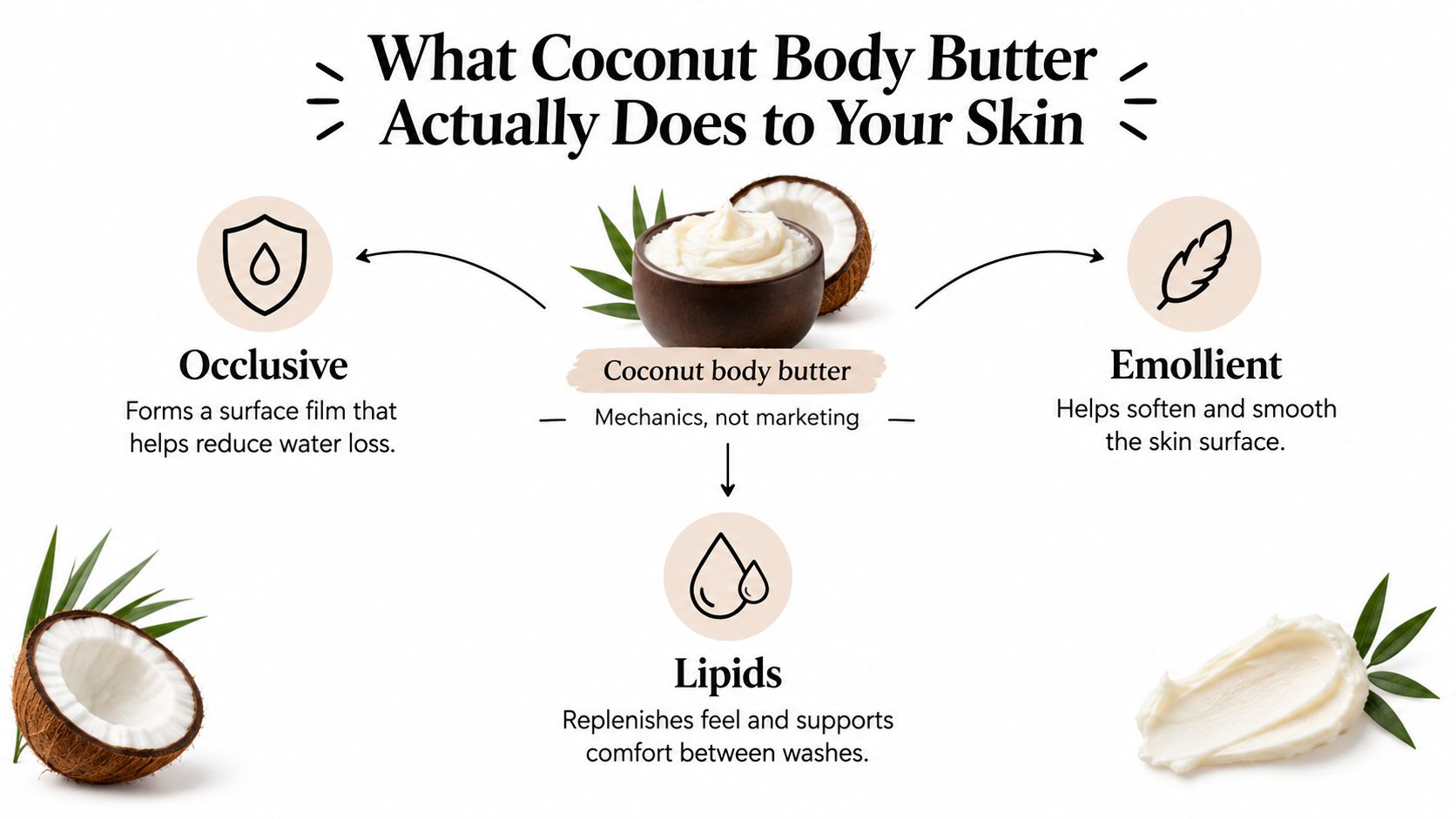
A simple way to picture the occlusive effect is to imagine putting a lid on a saucepan. The butter doesn't add water to your skin from outside. Instead, its surface film can slow evaporation, helping the moisture already present stay put for longer. That's one reason applying it to damp skin after bathing can feel more effective than smoothing it over completely dry skin.
A clinical comparison involving 34 people with mild-to-moderate dry skin found that twice-daily applications of coconut oil and mineral oil over two weeks both significantly improved skin hydration and surface lipid levels. This supports a moisturising and skin-conditioning role, but it doesn't prove that every coconut body butter will work the same way: the finished formula, how you apply it, and your own skin all matter. NHS guidance also describes emollients as products that coat skin and help trap moisture. Read the NHS guidance on emollients.
Why the rich texture feels different
A dense butter can stay on the skin longer than a light lotion, which may suit areas that feel especially dry or tight. The trade-off is texture: a rich layer can feel greasy, transfer to clothing, or feel too heavy in warm weather. A smaller amount on damp skin may spread more easily and leave less residue.
That surface support is useful for comfort, but it isn't the same as changing the deeper structure of skin. Treat the butter as a moisturiser, not a treatment for stretch marks.
How Coconut Became a UK Beauty Staple
Coconut body butter has an international supply chain behind its British bathroom shelf. The UK doesn't grow coconuts commercially, so coconut-derived ingredients arrive from overseas, even when a product is made or formulated in Britain.
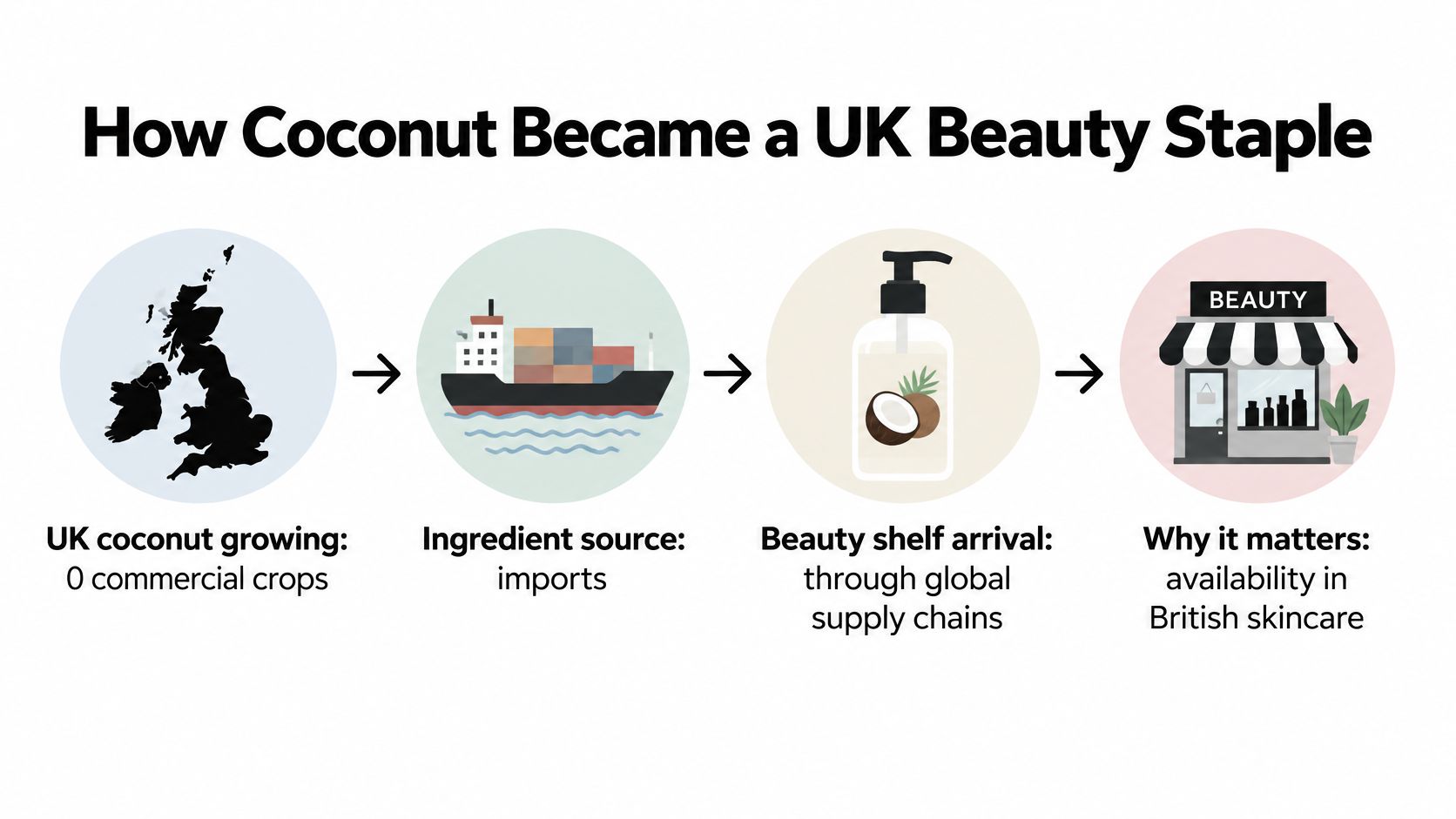
Between 2011 and 2018, the value of coconut-oil imports into the UK increased by 28%, reaching €40.4 million in 2018. Nearly 75% of those imports came through intra-EU trade, while Malaysia, Indonesia, and other producing countries supplied much of the underlying raw material. See the UK coconut-oil import background.
That history helps explain why a UK-made butter doesn't necessarily use locally grown ingredients. A brand may manufacture and formulate its product domestically while relying on coconut-derived inputs sourced through global trade. UK production and UK-grown coconut aren't the same thing.
From ingredient to familiar beauty product
Consumer awareness and retail availability picked up during the mid-2010s. A 2016 academic review reported that Whole Foods sold six tonnes of coconut oil across the UK in February 2015. It also reported UK sales of virgin coconut oil rising from £4.4 million in 2014 to £14 million in 2015, an increase of approximately 218%. Read the academic review of coconut oil and UK consumer culture.
The same review noted that coconut oil wasn't reported in participants' diets in either the 2008–2009 or 2011–2012 UK National Diet and Nutrition Survey periods. These figures concern coconut oil broadly, not body butter specifically, but they show how the ingredient moved into wider British consumer awareness. Its promotion for moisturising and other beauty uses helped make coconut familiar in personal care.
So, when you pick up a coconut body butter, you're seeing the end of a wider ingredient journey: overseas raw materials, supply and retail networks, and local formulation or manufacturing. The origin of the coconut and the place where a finished product is made are separate label questions.
Reading the Label on Pregnancy-Sensitive Skin
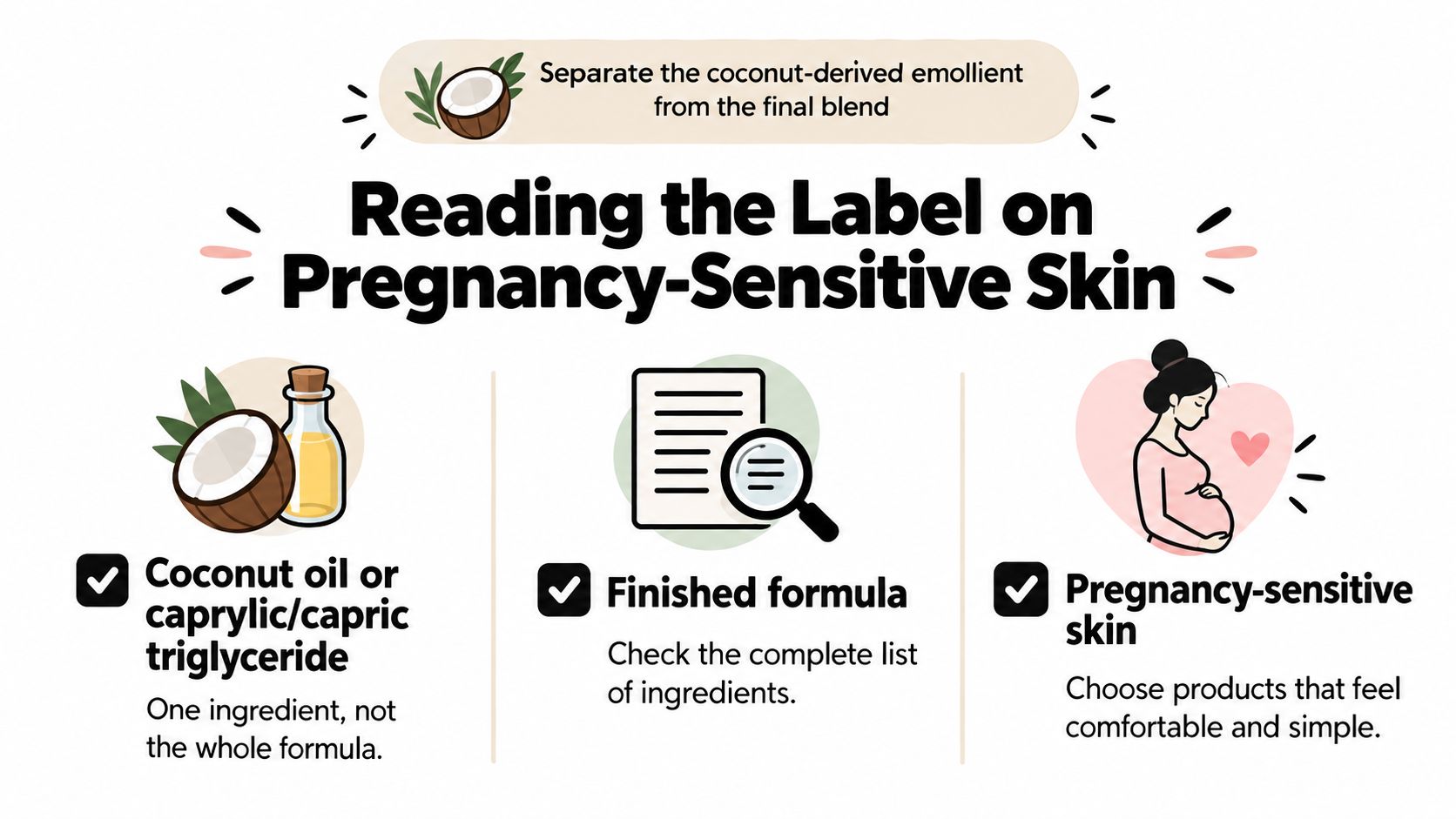
A coconut-derived emollient and a finished body butter aren't the same thing. Coconut oil or caprylic/capric triglyceride may provide the moisturising base, but other ingredients determine the character of the full formula. For sensitive skin, check the entire ingredient list rather than treating “coconut” or “natural” as a guarantee of gentleness.
Fragrance deserves particular attention. Fragrance is reported as the commonest cause of allergic contact dermatitis from cosmetics and toiletries, and limonene and linalool are recognised contact allergens often used in fragranced products. A UK epidemiological survey found that 23% of women experienced some type of adverse reaction to a personal-care product within a year. Read the UK contact dermatitis information.
That doesn't mean every fragranced product will cause a reaction, or that coconut itself is necessarily the concern. It means that people with eczema, previous product reactions, or easily irritated skin may prefer a simpler, fragrance-free formula. Essential oils are still fragrance ingredients, even when they come from plants, and “natural” doesn't mean “non-allergenic.”
A practical label check
- Find the coconut-derived ingredients. Look for coconut oil or caprylic/capric triglyceride, then remember they're only part of the blend.
- Scan for fragrance. Check for perfume or fragrance, essential oils, and separately declared fragrance allergens such as limonene or linalool.
- Consider your own skin history. If a product is new to you, test it on a small area first, especially if you have eczema or have reacted to cosmetics before.
- Keep pregnancy claims in perspective. Pregnancy-specific cosmetic safety evidence is limited, and the National Childbirth Trust notes that there aren't many clinical trials of beauty products during pregnancy.
For a closer look at common moisturiser components, see this guide to body butter ingredients. If you're unsure about a particular ingredient or have a history of significant skin reactions, ask a pharmacist, midwife, or clinician for advice that takes your situation into account.
The Truth About Coconut Body Butter and Stretch Marks
A rich butter can ease dry, tight-feeling skin. It can't reliably prevent stretch marks. Stretch marks involve deeper structural changes in the skin, so a moisturising layer shouldn't be presented as a guaranteed way to stop them appearing.
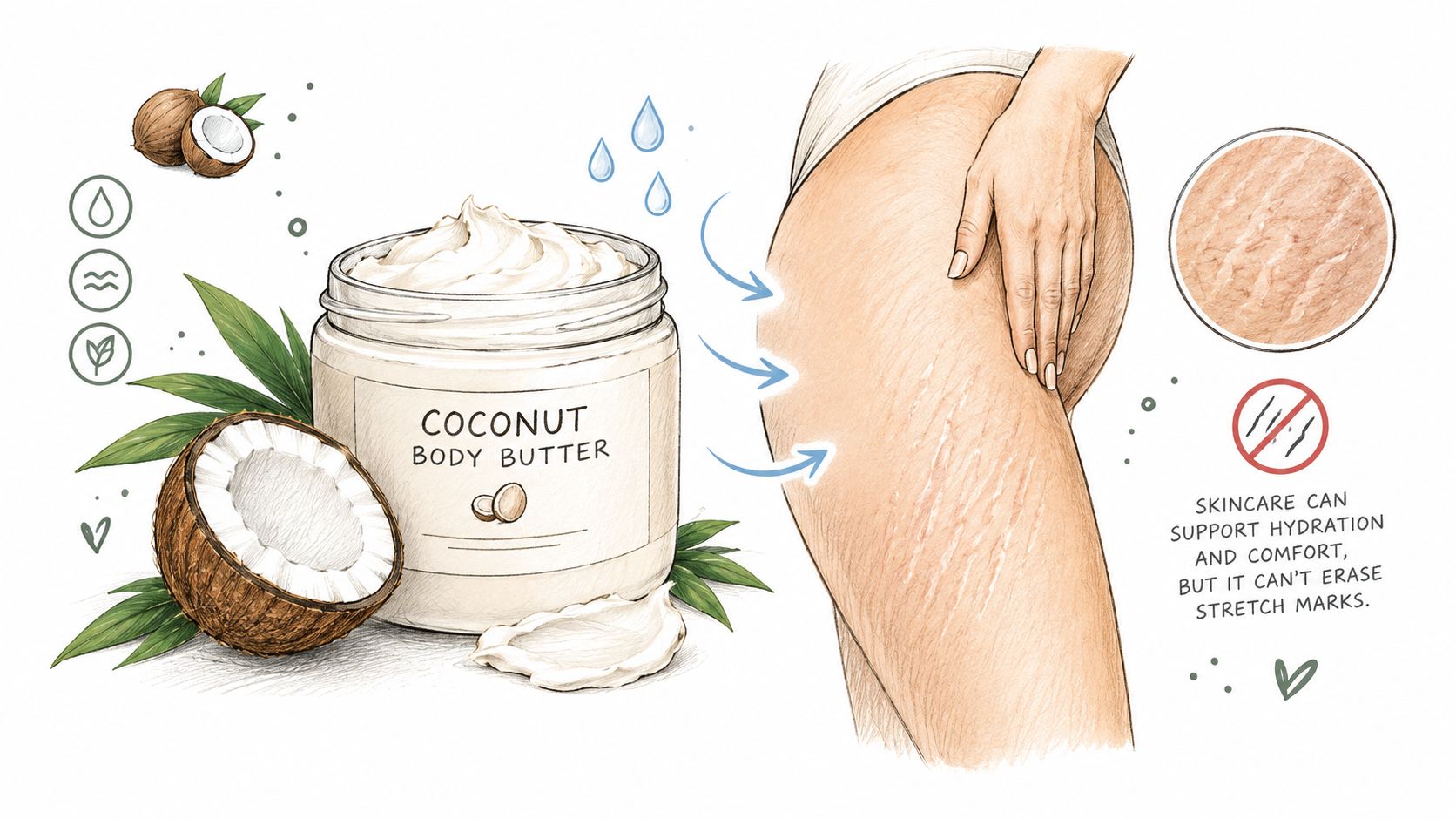
That doesn't make moisturising pointless. If your bump feels uncomfortable, applying a butter may soften the surface and give you a soothing moment in your day. The honest claim is about skin conditioning and comfort, not medical prevention. For more on how stretch marks change during pregnancy, read this guide to stretch marks during pregnancy.
Comfort, timing, and skin feel
For many people, applying butter after bathing is practical because the skin is still damp and the product spreads more easily. You don't need a thick coating; start with a small amount and add more only if the skin still feels dry. A dense, occlusive layer may feel heavy, particularly in warm conditions or in skin folds. If you notice irritation, heat rash, or bumps that could be folliculitis, stop applying it to that area and reassess the product and routine.
A rich formula won't be the right texture for everyone. Some people may prefer a lighter cream or oil, while others like the lasting feel of a butter on dry areas. The best choice is the one that feels comfortable and doesn't prompt you to keep adding more in search of stretch-mark prevention.
If you develop severe itching, a rash, or symptoms that worsen quickly, seek professional advice rather than layering on more product. Those symptoms need more than a cosmetic promise.
You can also watch this short video alongside the practical guidance above.
How to Use Coconut Body Butter on Your Bump
A simple routine can make a rich product easier to spread and less likely to feel like a heavy coating. After bathing, gently pat your skin so it's damp rather than dripping wet. Then warm a small amount of butter between your palms before smoothing it over your bump and any other dry areas.
Damp skin helps the butter spread, so you may need less than you expect. Use gentle strokes and add a little more only if the skin still feels dry. You don't need to massage forcefully or try to stretch the skin into submission.
Practical rule: Aim for comfortable, moisturised skin, not a thick layer that sticks to clothes.
If the butter feels greasy, reduce the amount or apply it less often. You could reserve it for the driest areas or use it when you're not dressing straight afterwards. In warm weather, pay attention to skin folds where a heavy layer may feel uncomfortable. If a rash or persistent irritation develops, stop using the product on that area and seek advice if symptoms are severe or worsening.
Keep the product in good condition
Store the jar according to its label, away from excessive heat and direct sunlight, and close it after use. Use clean hands or a clean spatula to scoop, rather than dipping fingers into the product repeatedly. Plant oils and butters can be affected by oxidation, so changes in smell, colour, or texture are reasons to check the product instructions and consider replacing it.
A routine should fit your day, not become another pregnancy task to perfect. For more application guidance, see how to use body butter.
Comparing Coconut Body Butter with Oils and Other Butters
The right format depends on the feel you prefer and how dry your skin gets. Coconut body butter is typically richer than a body oil or a lighter cream, but products vary with their complete formulas. Shea and cocoa butters can also create a rich feel, while fragrance-free creams may suit someone who wants a less occlusive texture or is cautious about added fragrance.
| Format | Skin Feel | Barrier Support | Best For | Pregnancy-Sensitive Skin |
|---|---|---|---|---|
| Coconut body butter | Rich and substantial | Helps reduce surface water loss and soften skin | Dry, tight-feeling areas and a slower moisturising routine | Check the full formula, particularly fragrance and essential oils |
| Body oil | Slippery and often lighter | Can soften skin and help limit moisture loss | People who prefer a lighter spread or want to apply over damp skin | Choose a formula that suits your sensitivities; plant-based oils can still cause reactions |
| Shea or cocoa butter | Dense and cushioning | Provides surface conditioning and an occlusive feel | People who enjoy a rich texture on dry areas | Review all added ingredients rather than judging by the butter alone |
| Fragrance-free cream | Often lighter and easier to spread | Emollients help condition the skin; the feel depends on the formula | Those who dislike greasy residue or want a simpler-feeling option | A fragrance-free label can help, but check the complete ingredient list |
A lighter oil may feel more comfortable in warm weather or if you dislike a lingering coating. A dense butter may suit dry, tight areas or an evening routine, while a cream may be easier to spread over a larger area. No format can promise stretch-mark prevention, so choose according to comfort and the way your skin responds.
The Happy Bump Co offers a UK-made, bump-focused range that includes Pregnancy Belly Butter containing coconut oil, alongside Belly Oil for Stretch Marks and Pregnancy Tummy Scrub. Those are options for people looking for pregnancy-focused body care, but the same principle applies: check the finished formula and choose what feels comfortable for your skin.
Your Next Step for a Happy Bump
Use coconut body butter for what it can offer: moisturising comfort and barrier support, not a guarantee against stretch marks. Choose a formula that suits your skin, patch test it, and try applying a small amount to damp skin after bathing. Let the routine feel like care for your changing skin, not a race to control how it changes.
The Happy Bump Co offers bump-focused body care, including Pregnancy Belly Butter, Belly Oil for Stretch Marks, and Pregnancy Tummy Scrub. Explore The Happy Bump Co to find a format that fits your routine and choose the one that feels comfortable for your skin.