

You've just stepped out of the shower, and your bump feels tight before you've even reached for a towel. Later, when the house is quiet, an itch wakes you at 3 a.m. A rich moisturiser can make ordinary dryness feel more comfortable, but it helps most as part of a steady routine, not as a one-off rescue.
Pregnancy can bring changing sensations as skin stretches, and dry skin isn't only a beauty concern. It can be a cue to care for the skin barrier with gentle washing and regular moisturising. If you're unsure whether your skin feels dry or dehydrated, this guide to dry skin versus dehydrated skin can help clarify the difference.
Table of Contents
- Why Dry Skin Deserves a Daily Ritual
- What Body Butter Actually Is
- How Body Butter Helps Dry Skin
- Ingredients to Welcome and Avoid
- How to Apply Body Butter for the Best Results
- Pregnancy-Specific Safety and When to Seek Help
- Common Myths and Smart Body Butter Habits
Why Dry Skin Deserves a Daily Ritual
A warm shower may feel soothing, but afterwards your skin can feel taut, especially across the bump, hips or thighs. You might notice rough patches where clothing rubs, or find yourself scratching absent-mindedly while getting dressed. Those moments don't mean you've done anything wrong. They're a practical reminder to make moisturising easy to repeat.
Think of body butter as one tool in a daily barrier-care ritual. The aim isn't to chase perfect skin or prevent every change that comes with pregnancy. It's to soften dry areas and help your skin feel more comfortable, using a product you'll want to apply.
A routine can be simple enough for tired days: keep the butter beside your towel, smooth it on after washing, and put the lid back before you leave the bathroom. If your skin feels tight again later, apply more to the areas that need it. Consistency matters more than turning moisturising into a long, elaborate task.
A gentle starting point: Choose a product that feels comfortable on your skin and fits naturally into a moment you already have, such as after a shower or before bed.
Pregnancy can also make you more cautious about ingredients and symptoms. An unperfumed formula is often a sensible choice if your skin is sensitive or itchy, and persistent or widespread itching deserves attention from a healthcare professional rather than repeated product changes. A tub of moisturiser can support everyday comfort, but it can't answer every question about what's causing an itch.
The reassuring idea is that care doesn't need to be complicated. A dependable routine gives you a way to respond to ordinary dryness while noticing when your skin needs something beyond a cosmetic product.
What Body Butter Actually Is
Body butter is a rich leave-on moisturiser, usually made with plant butters and oils. It softens the skin and helps reduce water loss from its surface. Its thicker feel makes it different from a light lotion, but richer doesn't automatically mean better for every person or every part of the body.
It can help to imagine moisturisers as layers of clothing for your skin. A lotion is like a light cotton T-shirt: easy to spread and quick to wear. A cream is more like a cosy jumper, offering a little more substance. Body butter is a winter coat, while an ointment is closer to a waterproof outer shell: very rich and more occlusive.
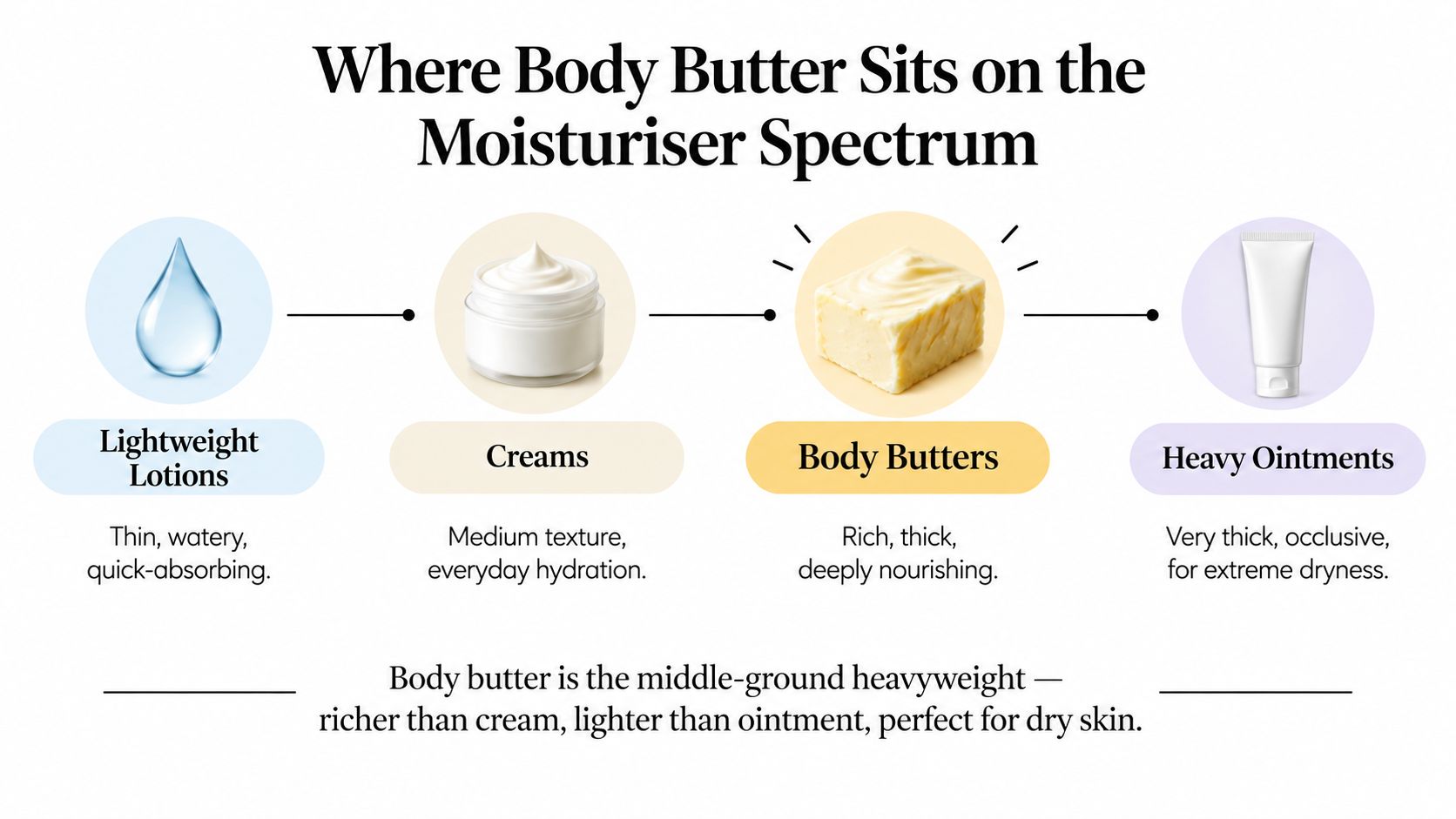
Choose texture for the job
A lightweight lotion may suit areas that feel only mildly dry or anyone who dislikes a rich finish. Creams sit between lotion and butter, and may feel like a useful everyday option. Body butter can suit rough or persistently dry patches when a light formula doesn't feel substantial enough. Ointments are often greasier, which may make them less convenient for getting dressed or using across larger areas.
There's no need to use one texture everywhere. You might prefer a lighter cream on your arms and a richer butter on dry shins or elbows. If a product feels unpleasant, leaves you avoiding moisturising, or seems to irritate your skin, another texture or formulation may be a better fit.
Understanding the spectrum also explains why body butter is best seen as a routine choice, rather than a miracle product. Its richness can make it helpful for dry skin, but your skin's comfort, the product's ingredients and how regularly you apply it all matter.
How Body Butter Helps Dry Skin
The skin barrier helps keep water in and irritants or pathogens out. When skin is dry, it can feel tight, rough or flaky, and may become uncomfortable. An emollient such as body butter softens the surface and supports the barrier by helping reduce water loss.
That's why regular leave-on moisturising is central to dry-skin care. NICE estimates that atopic eczema affects approximately 15–20% of school-aged children and 2–10% of adults in the UK, and recommends emollients as first-line treatment. Emollients are leave-on moisturisers designed to soften skin and reduce water loss, but this general clinical guidance doesn't mean that a particular cosmetic body butter treats eczema. NICE guidance on emollients for atopic eczema provides the relevant context.
A richer texture may feel more protective than a thin lotion on very dry areas. It can be particularly comfortable on skin that feels stretched or rough, provided the formula suits you. Applying it when skin is slightly damp can help make moisturising part of the moment after washing, rather than a separate task you have to remember later.
Keep expectations realistic
Body butter can help skin feel softer and more comfortable, but it can't erase established stretch marks, treat an infection or replace prescribed care. If the skin is persistently inflamed, cracked, weeping or severely itchy, ask a pharmacist, midwife, GP or dermatologist for advice.
Barrier care supports comfort. It doesn't diagnose the cause of a symptom.
For everyday dryness, the useful question isn't whether a product promises a dramatic transformation. Ask whether it feels comfortable, whether you can apply it regularly, and whether the skin feels less tight afterwards. If symptoms continue despite gentle care, seek advice instead of assuming you need a richer butter.
Ingredients to Welcome and Avoid
Ingredient lists can feel like a test you didn't prepare for, especially when you're choosing a product during pregnancy. Start with a simple principle: choose a formula your skin tolerates, and keep the routine gentle. Plant butters and oils can contribute richness, while ingredients such as glycerin help attract water to the skin. Ceramides and oat-derived ingredients may also appear in moisturisers intended for dry or sensitive skin.
Shea, cocoa and mango butters are familiar examples of ingredients used to create a rich texture. Squalane is another emollient ingredient found in some formulas. No single ingredient guarantees that a product will suit you, so pay attention to the complete formula and how your skin responds.
Read the label with your skin in mind
If you're itchy or sensitive, fragrance deserves particular attention. UK dermatology guidance recommends fragrance-free, non-irritating formulations as a lower-risk choice for sensitive or stretched skin, and notes that sodium lauryl sulphate (SLS) can irritate and inflame skin. British Association of Dermatologists guidance on emollient use explains this caution.
Some labels use terms such as “natural” or “botanical”, but those words don't tell you whether a formula will be gentle for your skin. Essential oils and strongly scented blends can still irritate some people. If you have a known sensitivity or are unsure about a particular ingredient during pregnancy, ask your midwife, pharmacist or GP rather than relying on a product claim.
A practical way to check any new product is to read the ingredient list before buying, choose an unperfumed option if you're prone to itching, and test a small amount on a limited area first. If it causes burning, redness or worsening irritation, stop using it and seek advice if the reaction persists.
For a closer look at how to assess a formula, read this guide to body butter ingredients. The habit is simple: look for a formula that suits your skin, avoid ingredients you already know cause problems, and don't assume that a longer or more “natural” ingredient list is automatically kinder.
How to Apply Body Butter for the Best Results
The easiest time to apply body butter is after washing, when your skin is clean and still slightly damp. Use warm rather than hot water, then pat your skin with a towel instead of rubbing it briskly. Smoothing butter over damp skin makes the step easier to build into a routine and helps you cover dry areas without turning application into a lengthy task.
Use a generous layer where skin feels dry, but don't force yourself to use so much that you feel uncomfortable or slippery. Smooth the product over the skin rather than vigorously rubbing it in, particularly if the area is irritated. If a jar is the format you prefer, use clean hands or a clean spatula and replace the lid after use.
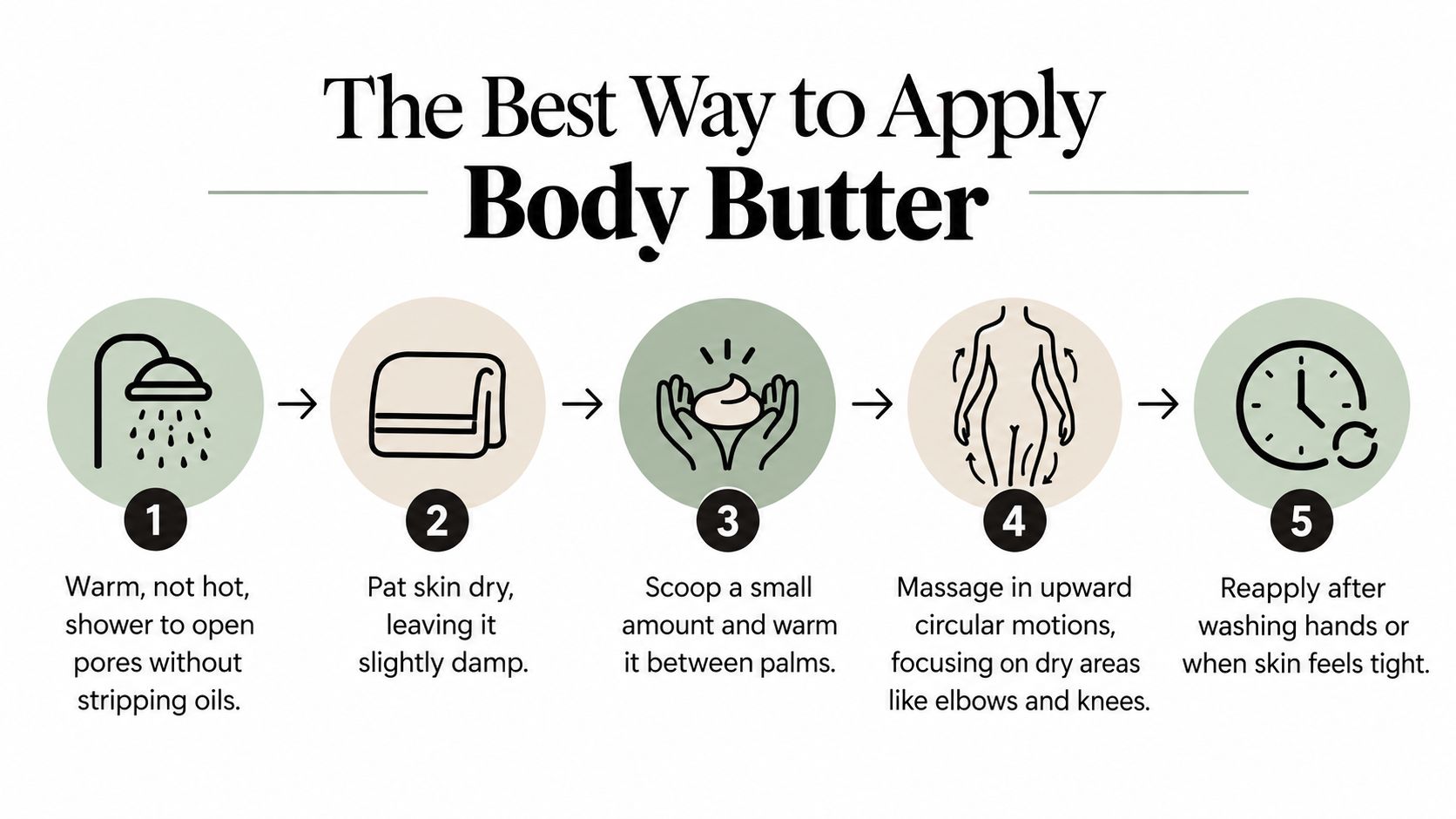
Set a repeatable rhythm
NHS-linked UK prescribing guidance advises applying emollients two to four times daily, while very dry skin may need them every two to three hours. NHS Dorset emollient guidance gives these frequency benchmarks. The amount you need depends on your skin and symptoms; if your dryness is severe or you have a diagnosed skin condition, ask a healthcare professional what routine is appropriate.
A body butter can be one of those applications if it suits your skin. You could keep a smaller container near your bedside for dry patches, or use a lighter cream during the day if the richer texture feels inconvenient under clothes.
| Time of day | When to apply | Where to focus |
|---|---|---|
| After washing | Pat skin until slightly damp, then apply | Bump, hips, thighs or any area that feels tight |
| During the day | Reapply if skin feels dry or uncomfortable | Rough patches, such as elbows or shins |
| Before bed | Smooth on as part of your evening routine | Areas that tend to feel driest overnight |
Emollient residue can make floors slippery and may increase fire risk. Wash your hands after application and take care on bathroom floors. For a jar, clean hands or a spatula also help keep the product tidy. Adjust the routine to your day: a small, repeatable habit is more useful than a complicated schedule that's hard to maintain.
Pregnancy-Specific Safety and When to Seek Help
Ordinary dryness and stretching can feel itchy, and a gentle unperfumed moisturiser may make that discomfort easier to manage. But pregnancy-related itching doesn't always come from dry skin. A body butter can support the skin barrier; it can't treat eczema, infection or an unexplained medical cause of itching.
UK guidance recommends using an unperfumed moisturiser or emollient regularly during pregnancy and avoiding perfumed moisturisers when itchy. It also advises that pregnancy-related itching can sometimes need medical assessment, particularly if it's widespread or intense. See the NHS guidance on itching and intrahepatic cholestasis of pregnancy for information about when itching needs clinical attention.
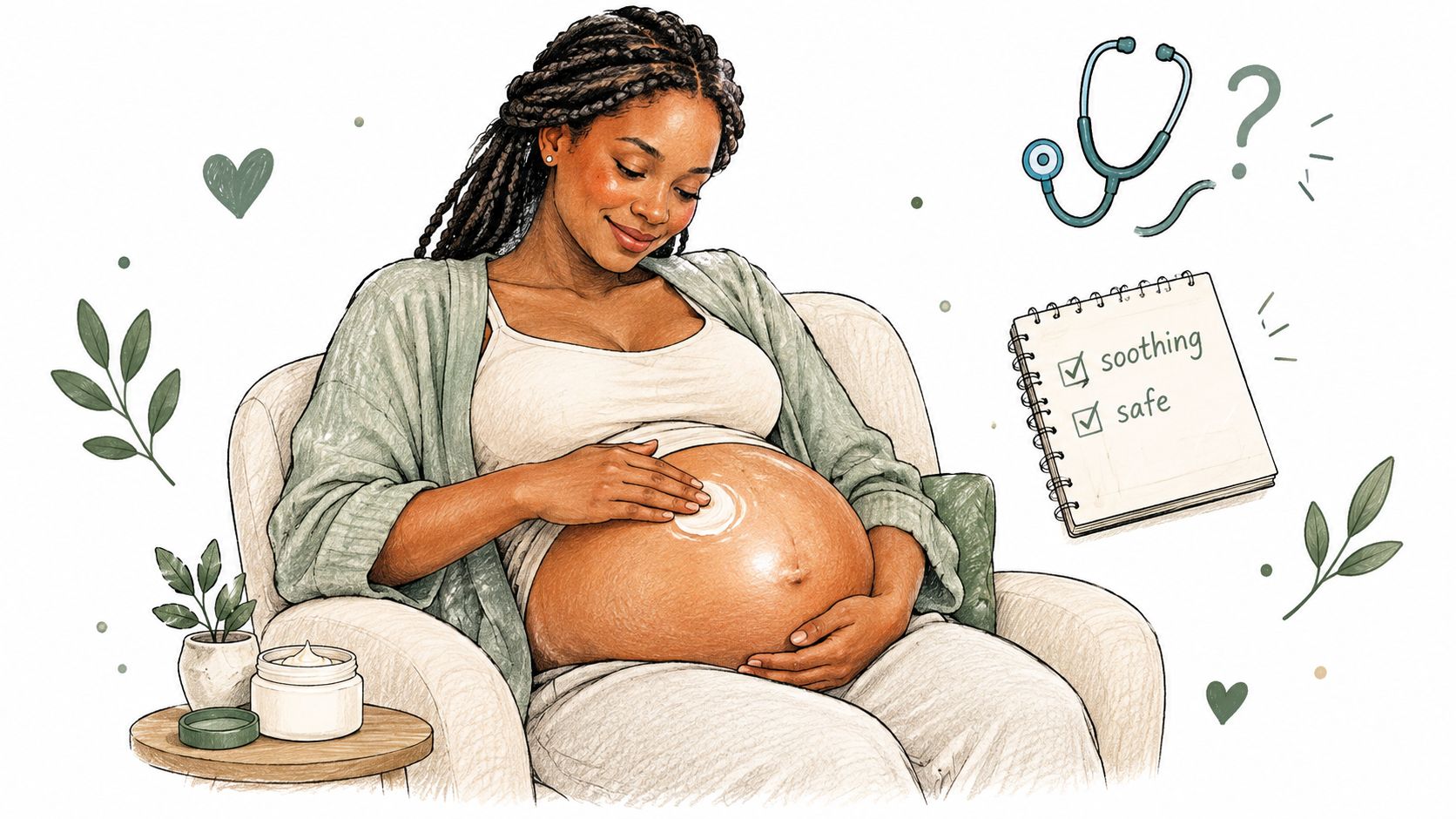
Know when moisturiser isn't enough
Contact your midwife, GP, pharmacist or maternity unit if itching is widespread, intense, or persists without a clear explanation. Itching on the palms of your hands or soles of your feet, itching without a rash, or a sudden change in symptoms should also prompt a conversation with a healthcare professional. Don't wait for a product to work if you're worried.
Severe dryness that cracks or oozes needs attention too, particularly if the skin is painful, looks inflamed or is getting worse. These signs can have different causes, and a clinician can help decide whether you need a treatment beyond everyday moisturising.
If the itch feels mild and localised to dry or stretched areas, try a fragrance-free moisturiser and notice whether it brings comfort. If symptoms remain or change, speak to someone qualified rather than just applying more butter. This guide to itching during pregnancy may also help you think through the difference between self-care and seeking advice.
Common Myths and Smart Body Butter Habits
The richest formula isn't always the best one. A product only helps if it suits your skin and feels comfortable enough to use regularly. Choose a texture that fits your routine, whether that's body butter for dry patches or a lighter cream for everyday use.
Body butter won't erase stretch marks. It can moisturise skin that feels tight, but don't treat it as a cure for established marks or a substitute for clinical advice about a skin problem.
More product isn't the answer to every itch. Apply consistently and generously to dry areas, but seek advice if symptoms are severe, widespread or unusual. A recent review of English prescribing policies found that published local guidance universally recommended leave-on emollients as first-line eczema care for children and adults, a reminder of the role of routine skin moisturising, not evidence that a cosmetic butter treats eczema. NIHR Evidence on eczema care
Fragrance isn't required for a luxurious routine. If you're itchy or sensitive, a simple unperfumed formula may be more comfortable. The best body butter for dry skin is the one you can use consistently without irritation, even on the tired days when self-care needs to stay simple.
The Happy Bump Co offers bump-focused body care, including Belly Butter for dry, tight and stretching skin during pregnancy and after birth. If a rich moisturiser would fit your routine, explore The Happy Bump Co and choose the care that feels right for your changing skin.