

You've just stepped out of the shower, your bump feels tight, and the bathroom light is picking up every dry patch on your arms, belly and legs. You want that soft, lit-from-within finish, but the last body butter you tried left you sticky, overheated and reluctant to put your clothes on.
A good body butter glow routine isn't about covering skin with the thickest product you can find. It's about combining water, barrier-supporting ingredients and a controlled layer of oils so your skin feels comfortable and looks evenly hydrated. Pregnancy makes that balance more important, because skin may become drier, more reactive or less tolerant of complicated active-ingredient routines.
Table of Contents
- What a Body Butter Glow Routine Actually Means
- The Morning and Evening Glow Routine
- Best Ingredients for a Pregnancy-Safe Glow
- Layering Body Butter With Oils, Serums and SPF
- What Body Butter Can and Cannot Do for Stretch Marks
- Common Mistakes That Kill Your Glow
- Keeping Your Glow Going Beyond Pregnancy
What a Body Butter Glow Routine Actually Means
A pregnant client once described her ideal glow as “healthy skin that catches the light, not oil sitting on top of it”. That distinction matters. Shine can come from excess product, but radiance comes from a smoother surface that reflects light more evenly.
A proper body butter glow routine works through three connected mechanisms:
- Barrier support helps reduce the rough, uneven texture that makes dry skin look dull.
- Humectant hydration brings water into the outer layers of skin, creating a softer and more supple surface.
- A light occlusive layer slows moisture loss and gives the skin a gentle sheen without relying on glitter or heavy fragrance.
Body butter suits this finish because it usually contains a richer blend of plant butters and oils than a lightweight lotion. That richness can be useful on the belly, hips, thighs, elbows and shins, especially after bathing. It can also become uncomfortable if the formula is waxy, heavily fragranced or applied too generously.
Practical rule: A glow should look like hydrated skin at arm's length. If you can see a greasy film before you see your skin, the formula or the amount needs adjusting.
Skin optics are simple in practice. Smooth, hydrated skin has a more even surface, so light reflects across it consistently. Flaking, irritation and roughness interrupt that reflection, creating the grey or ashy appearance many people call dullness. A body butter can improve the look by supporting softness and reducing visible dryness, but it can't replace gentle cleansing, sensible sun protection or medical care for inflamed skin.
Pregnancy changes the decision-making. Clinician-reviewed UK guidance recommends a straightforward routine built around emollients such as shea butter, humectants such as glycerin and hyaluronic acid, and barrier lipids such as ceramides. It also advises avoiding unnecessary complexity, particularly high-strength salicylic acid and hydroquinone, while prioritising barrier support instead. You can read the full UK pregnancy-safe skincare guidance for additional ingredient context.
The most reliable finish comes from timing. Apply your hydrating layer while skin is still damp, seal it with body butter, then give the formula enough time to settle before dressing. The morning and evening protocol below keeps the glow visible without turning your routine into a full-body coating.
The Morning and Evening Glow Routine
Morning application works best immediately after a warm shower, while the skin still feels slightly damp. Pat rather than rub, then press a simple humectant serum or hydrating mist over the areas that feel tight. Hyaluronic acid and glycerin can support this water-first stage, provided the finished product is designed for body use and doesn't sting.
Warm a modest amount of butter between your palms before spreading it. Use long, gentle strokes over the arms and legs, then take more time over the belly, hips and thighs where stretching skin often feels uncomfortable. The product should glide, then settle. If it remains slippery after you've dressed, reduce the amount next time rather than rubbing harder.
Allow a few minutes for absorption before putting on clothes. Loose cotton or breathable fabrics are more comfortable than tight synthetic layers, particularly if your skin is warm after bathing. Keep a small amount available for a daytime refresh on the backs of the hands, shoulders and décolletage, the areas that often catch the light and lose moisture through washing or friction.
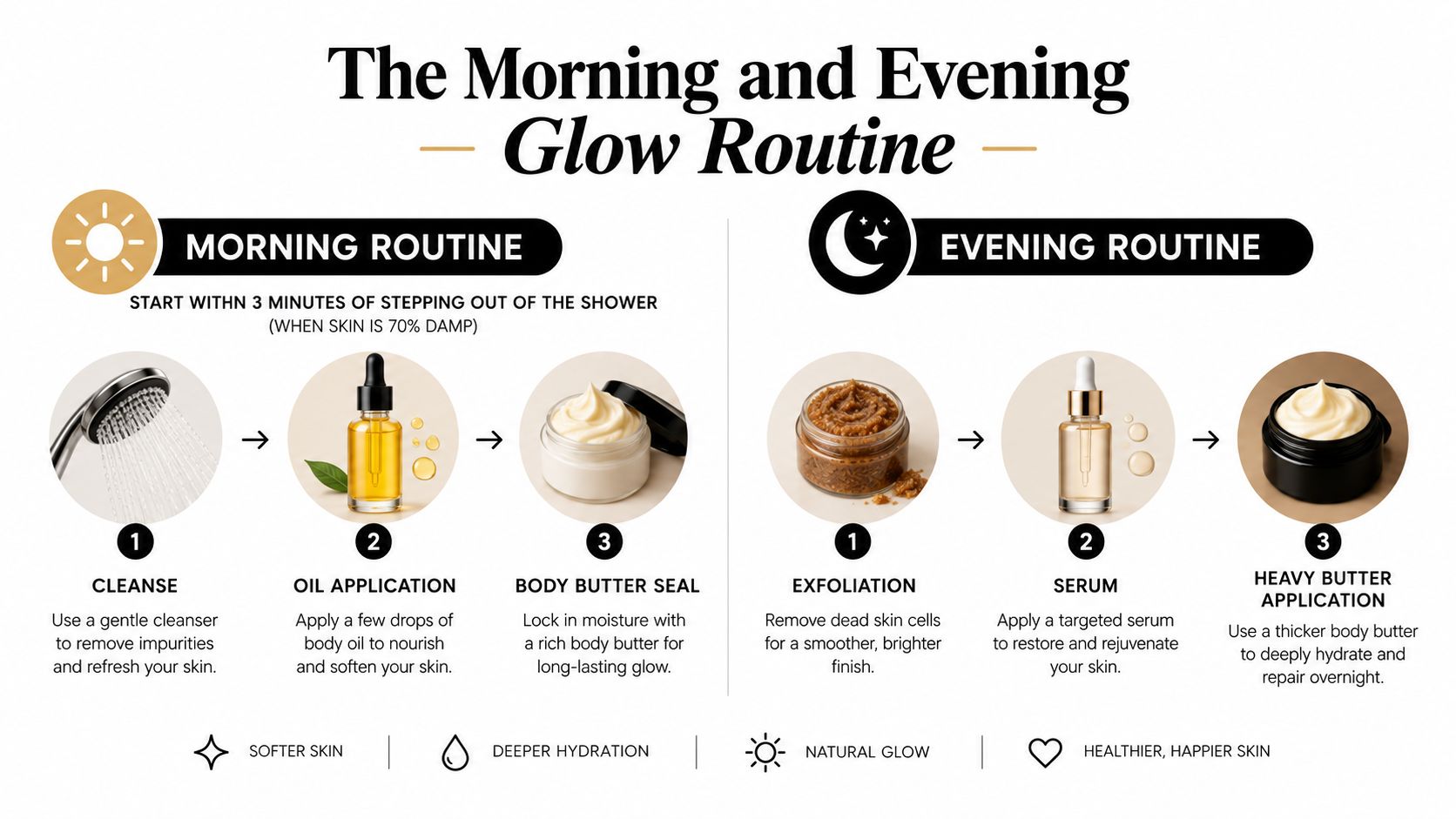
Evening care can be richer. Keep the shower warm rather than hot, cleanse only where necessary and leave the skin slightly damp. If you're using an oil, smooth a thin layer over wet skin first for slip, then apply butter to the areas that need longer-lasting comfort. This order makes sense when the oil is light and the butter is the thicker sealing layer, but always follow the texture of your own products.
Give the butter time to absorb before bed. Loose cotton nightwear can reduce friction and stop the product transferring straight onto bedding. Reapply after handwashing whenever the hands are part of your glow plan, because frequent cleansing removes the finish as well as surface oils.
Twice-daily emollient use has a useful evidence base for dry skin. In a UK randomised comparison, a twice-daily emollient maintained hydration more consistently across the observation period than a comparator cream whose effect moved back towards baseline between applications. A separate study in eczema-prone skin found that a ceramide-containing emollient improved hydration and reduced dryness for at least a day after one use. The UK emollient trial evidence supports testing for sustained moisturisation, not just choosing the product that feels richest at first application.
Best Ingredients for a Pregnancy-Safe Glow
The best butter depends on how your skin behaves and how you want the finish to look. Shea tends to feel cushiony and protective, cocoa butter is denser and more noticeable on the surface, mango butter can feel cleaner and less waxy, while murumuru is often used to create a smooth, conditioning texture. These are formulation tendencies, not guarantees. The rest of the ingredient list, the refining process and the amount used can change the result considerably.
| Ingredient | Texture | Glow finish | Best for |
|---|---|---|---|
| Shea butter | Rich, creamy and protective | Soft satin sheen | Dry, tight or barrier-stressed skin |
| Cocoa butter | Dense, firm and more occlusive | Noticeable polished shine | Very dry areas and overnight use |
| Mango butter | Smooth, lighter and less heavy | Subtle, clean glow | People who dislike a greasy finish |
| Murumuru butter | Silky, conditioning and structured | Smooth reflective finish | Formulas needing slip without a heavy feel |
| Glycerin | Lightweight and water-binding | Plump, fresh appearance | Everyday hydration at a lower texture weight |
| Hyaluronic acid | Gel-like and hydrating | Soft, temporarily fuller look | Damp-skin layering beneath butter |
| Squalane | Dry, silky oil texture | Non-greasy sheen | People who want slip without heaviness |
| Colloidal oat | Comforting and soothing | Calm, softened appearance | Reactive, itchy or easily irritated skin |
Ingredient selection should stay barrier-first during pregnancy. A useful formula may combine a butter with glycerin, hyaluronic acid, ceramides or colloidal oat, rather than trying to create instant radiance through strong exfoliation. UK pregnancy skincare guidance also highlights simple emollients and barrier-supporting ingredients as practical choices for changing skin. The pregnancy body butter ingredient guide can help you compare common bases before choosing a product.
Avoid retinoids, including retinol and retinal, during pregnancy unless your own clinician has given you specific advice. Be cautious with high-strength salicylic acid and hydroquinone as well. Fragrance and essential oils deserve a personal tolerance check, particularly if nausea, itching or sensitivity has appeared during pregnancy. A plain formula that you'll use consistently is more useful than an exciting blend that makes your skin sting.
Unrefined shea can retain more of its naturally occurring colour and characteristic fatty-acid profile, while ultra-refined shea may feel lighter and more neutral. Neither is automatically right for everyone. If scent is a trigger, choose a low-fragrance or fragrance-free formula, and patch test any product containing nut-derived ingredients or essential oils.
Layering Body Butter With Oils, Serums and SPF
Layering works when each product has a clear job. Start with clean, damp skin. A water-based serum containing glycerin or hyaluronic acid belongs closest to the skin because it supplies lightweight hydration without creating a greasy surface.
Next comes a thin body oil if you need more slip or want a more reflective finish. The oil helps reduce water loss and makes massage easier, but it can also make a butter feel heavier. Use less of both products when combining them. If your oil already leaves a comfortable satin finish, you may only need butter on dry or stretch-prone areas rather than over the entire body.
Body butter follows when you want a richer seal. It should sit over the lighter layers, not fight them underneath a thick, dry film. The practical order is therefore cleanse, hydrate, oil, butter, with adjustments based on the actual textures in your cupboard. The guide to using body oil before or after lotion explains why product consistency matters more than rigid rules.
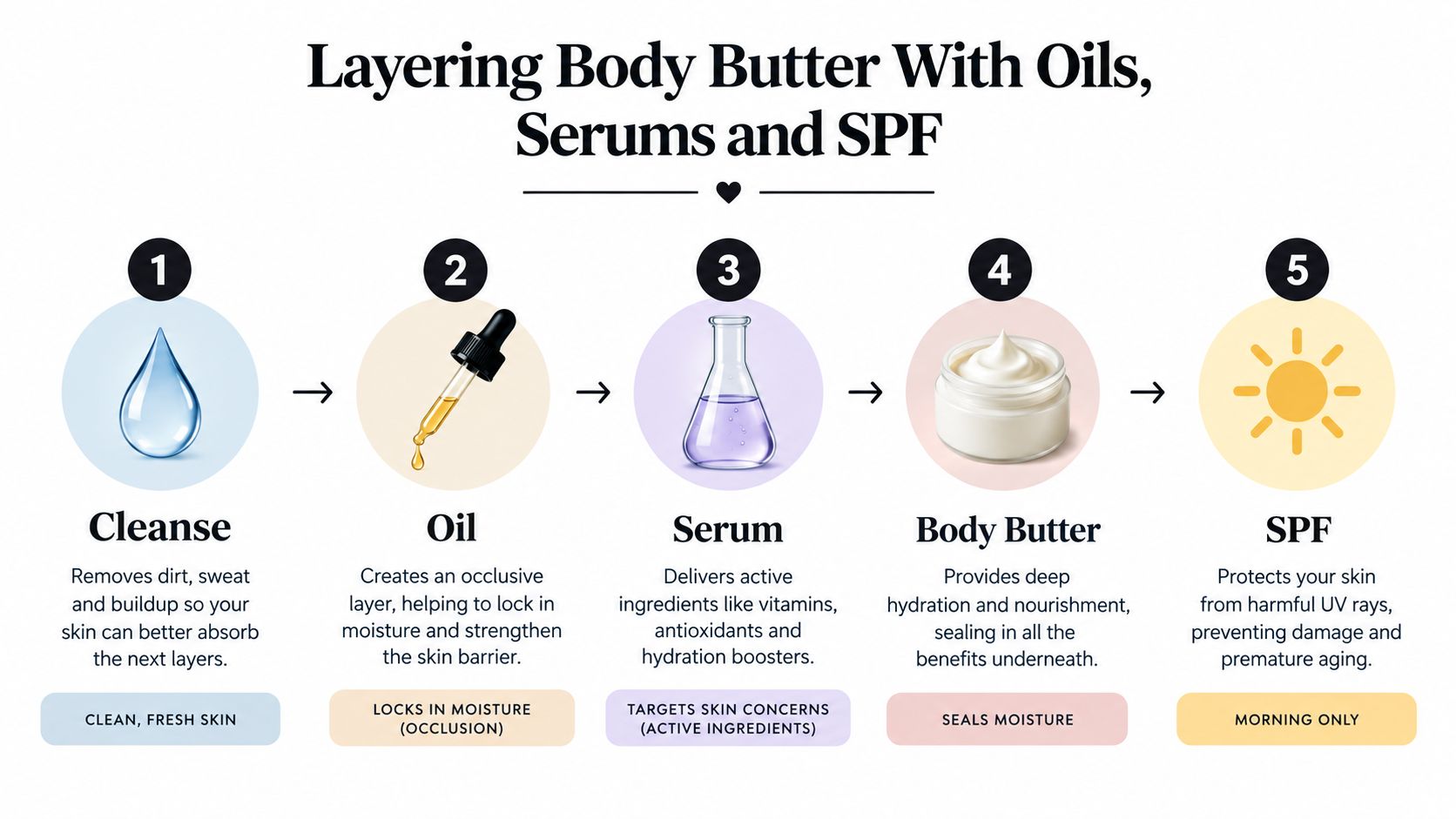
In the morning, sunscreen is the outermost layer on exposed skin. Choose a broad-spectrum SPF 30 or higher and apply it evenly after your moisturiser has settled. Butter should never be treated as sun protection, even when it leaves a glossy finish.
Pregnancy is not the time to add retinol, retinal, exfoliating acids or vitamin A derivatives to a glow stack. The same applies to any product that repeatedly causes warmth, tingling or redness. Radiance is a poor trade for irritation, especially when the skin is already changing.
What Body Butter Can and Cannot Do for Stretch Marks
After a shower, stretching skin may feel tight, rough or noticeably itchy. A well-formulated body butter can soften that surface, reduce the feeling of dryness and make temporarily dehydrated skin look smoother. On early marks, that added suppleness may make contrast less obvious for a while.
That is a cosmetic and comfort benefit, not a promise of prevention. Specialist pregnancy guidance is clear that stretch marks cannot be fully prevented or removed, as explained in our analysis of whether stretch mark oil works. The UK stretch-mark cream guidance also helps keep expectations realistic, presenting body butters as support for softer, better-hydrated skin rather than a proven way to stop marks forming.
A comfortable bump is a worthwhile outcome, even when a topical product can't control the biology of stretch marks.
Stretch marks reflect factors a jar cannot fully change, including inherited skin characteristics, hormonal shifts and how quickly the body changes. Barrier-first moisturising still has a clear role. It supports comfort and helps limit surface dryness, while the marks themselves may appear, fade or remain independently of the product.
Use a suitable butter on the belly, hips, breasts and thighs when those areas feel tight. Massage gently, particularly where skin is itchy or tender. Look for straightforward emollient formulas, with ceramides, glycerin, hyaluronic acid or colloidal oat useful when dryness is the main complaint. A richer texture should leave skin comfortable and flexible, not coated in persistent grease.
Intense or widespread itching, or itching with a rash, needs advice from a midwife or doctor rather than another fragranced layer.
Common Mistakes That Kill Your Glow
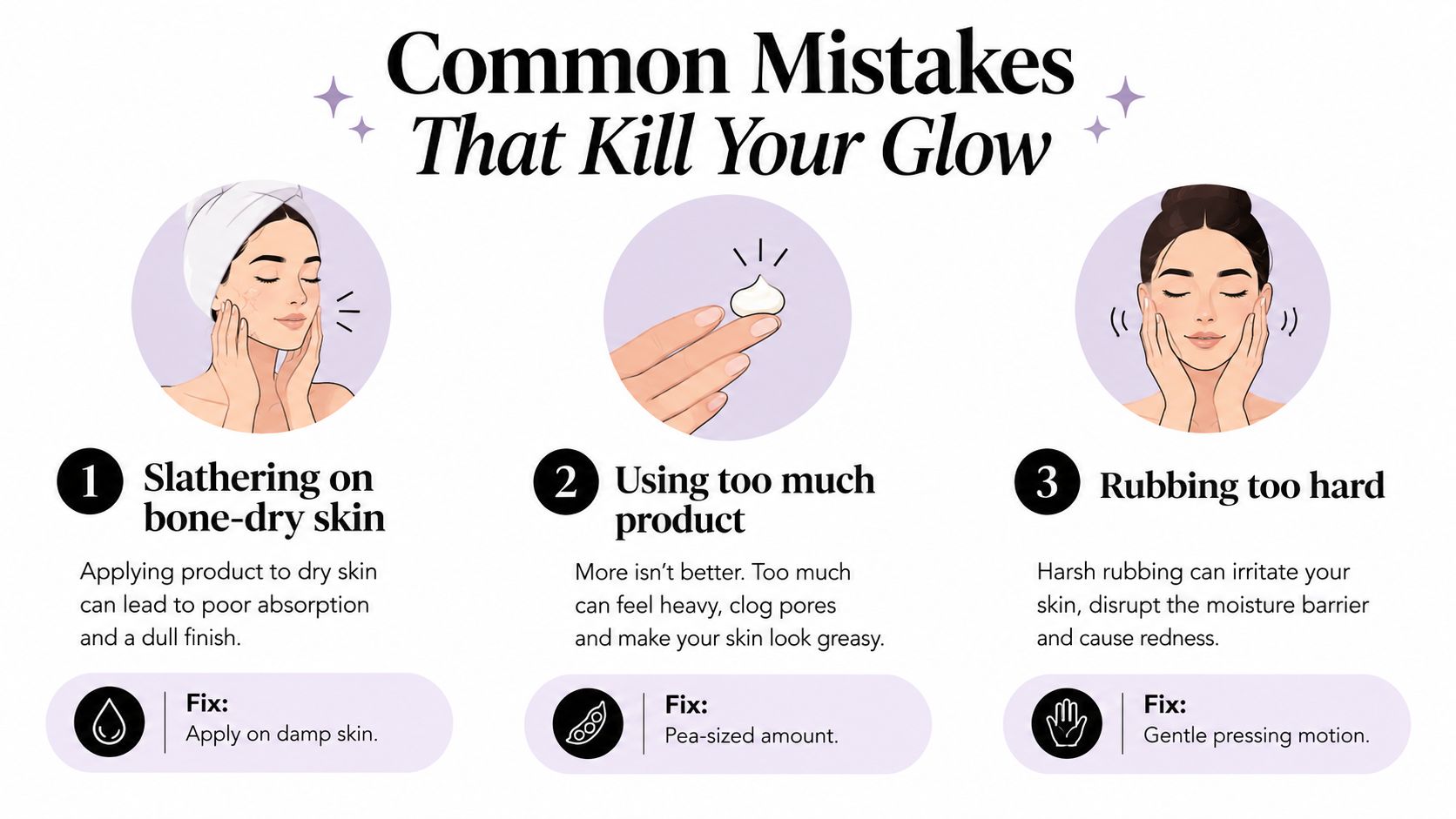
The most common problem is applying a rich butter to completely dry skin and then adding more because it doesn't spread. Damp skin gives the formula a better surface to move across, so you can use less and achieve a more even finish. Pat dry after bathing, leave some moisture on the skin and press the butter in rather than scrubbing it around.
A patch test is also essential. Apply a small amount to the inner arm and observe how your skin responds before covering the belly or chest. Fragrance, essential oils and nut-derived butters can be comfortable for one person and irritating for another, particularly during pregnancy.
Check the INCI list rather than relying on words such as “natural”, “firming” or “glow”. During pregnancy, avoid retinoids and be cautious with high-strength salicylic acid and hydroquinone. Don't assume an essential-oil blend is mild just because it's plant-based. If a product doesn't disclose its full ingredient list, choose one that does.
Over-application creates its own problems. Thick layers across the chest and upper back can feel congested, especially in warm or humid conditions. Start with a small amount per limb, then add more only to areas that still feel dry. A light sheen is the target, not a coating.
Finally, don't trap a fresh layer under tight synthetic clothing. Heat, friction and occlusion can make the skin feel prickly and uncomfortable. Loose cotton or linen gives the butter time to settle and reduces the temptation to wipe it off before it has done its job.
Keeping Your Glow Going Beyond Pregnancy
A useful routine should flex with your body rather than force the same texture through every trimester. Nausea or scent sensitivity may make a rich, fragranced butter difficult during the first trimester, so a lighter, low-fragrance lotion or serum can be the more realistic choice. Later, you may prefer a richer shea-based formula as the belly and limbs feel drier.
Ceramides, glycerin, hyaluronic acid and colloidal oat remain practical barrier-focused options. Centella asiatica and other botanical ingredients may appeal to people seeking elasticity-focused care, but they don't change the need for patch testing or realistic stretch-mark expectations.
Keep the maintenance plan simple:
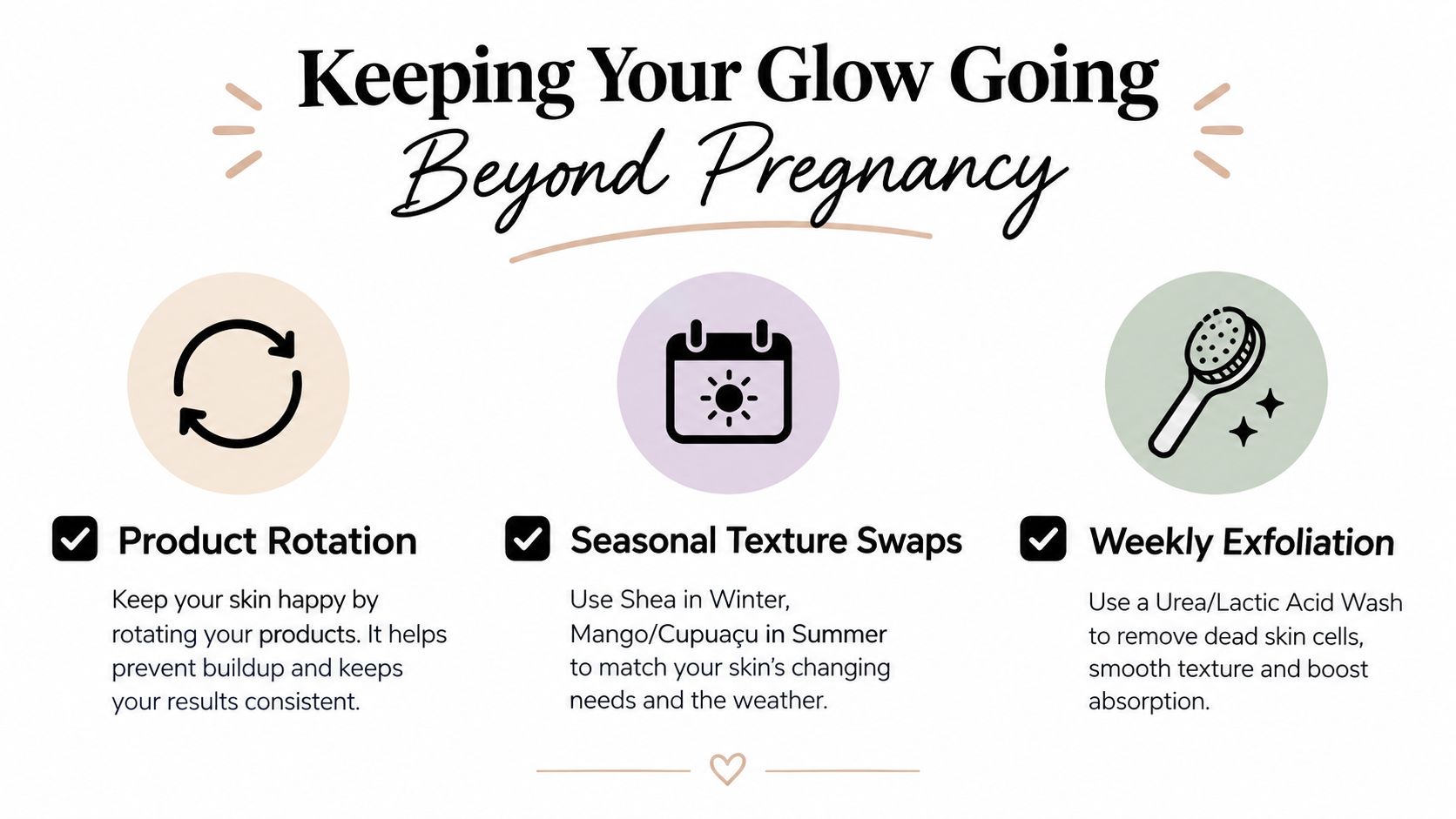
- Rotate by comfort: Use a lighter texture when warmth or nausea makes rich butter unpleasant, and a denser formula when skin feels persistently dry.
- Swap seasonally: Shea-rich textures can suit colder, drier weather, while mango or cupuaçu-style textures may feel more comfortable in summer.
- Exfoliate gently: Outside pregnancy, a urea or lactic-acid body wash may help with rough texture, but introduce it gradually and stop if skin becomes irritated.
- Audit the INCI list: Check products after pregnancy or when changing brands, particularly for retinoid derivatives, high-strength salicylic acid and essential oils.
- Keep the core routine: Damp skin, a humectant layer, a suitable butter and daytime SPF are more dependable than constant product switching.
Postpartum skin can change quickly as hormones shift. Dryness, sensitivity and pigment concerns may need a simpler routine rather than an immediate return to strong actives. If you're breastfeeding, ask your GP, pharmacist or dermatologist when it's appropriate to reintroduce ingredients such as bakuchiol or low-strength retinol. Your care team can also advise on persistent itching, rash or melasma.
The wider UK moisturiser market supports this focus on routine rather than novelty. One industry estimate places UK body moisturiser retail sales at £1.1 billion to £1.4 billion in 2026, with 92% to 96% of UK households using at least one body moisturising product regularly, while daily moisturisation accounts for 55% to 60% of volume. The UK body moisturiser market estimate also distinguishes daily products from richer intensive-repair formats, showing why a well-formulated butter can occupy a premium, comfort-led role within an established habit.
Another UK market estimate says masstige and prestige products are projected to represent 45% to 55% of retail sales value by 2026, while premium and specialty-natural segments are projected to grow at 7% to 10% CAGR and capture 30% to 35% of total market value by 2030. These are projections from the UK moisturisers market analysis, not a reason to buy the most expensive jar. They do, however, reflect the growing place of ingredient-led, sensorial body care in everyday routines.
The Happy Bump Co offers pregnancy-focused body care, including a Belly Butter, Belly Oil for Stretch Marks and Pregnancy Tummy Scrub, designed to support changing skin with hydrating, gentle formulas. Visit The Happy Bump Co to explore options for building a comfortable, barrier-first body butter glow routine during pregnancy and beyond.