

You've stepped out of a warm shower, your bump feels tight and itchy, and a jar of chocolate-scented scrub is waiting on the windowsill. You want softer skin, but you also want an honest answer: will a cocoa butter body scrub help with stretch marks, and is it safe to use during pregnancy?
The short answer is that it can support surface smoothness and comfort, but it isn't a proven stretch-mark treatment. Cocoa butter is mainly an emollient, while the scrub particles provide exfoliation. The safest choice depends on the whole formula, your skin's condition, and how gently you use it.
Table of Contents
- What a Cocoa Butter Body Scrub Does
- Stretch Marks, and What Cocoa Butter Can Realistically Offer
- Reading the Label Like a Pregnancy-Savvy Shopper
- Making Your Own Cocoa Butter Scrub at Home
- How to Use It in the Shower
- Aftercare and How Often to Scrub While Pregnant
What a Cocoa Butter Body Scrub Does
You scoop out a dense, chocolate-scented scrub and wonder whether the grains are helping or merely irritating already sensitive skin. The answer depends on the particle size, the pressure you use, and the condition of your skin.
A cocoa butter body scrub pairs a rich solid fat with an exfoliant, such as fine sugar, salt, or finely milled oat. On damp skin, the particles lift some loose cells from the outer layer. Thighs, hips, arms, and other dry areas can feel smoother afterwards, provided you massage lightly and rinse thoroughly.
Cocoa butter appears on an INCI list as Theobroma cacao seed butter. It softens around skin temperature, giving the scrub a cushioned glide and leaving a conditioning film after rinsing. The butter supports comfort and surface softness, though the grains do the exfoliating work.
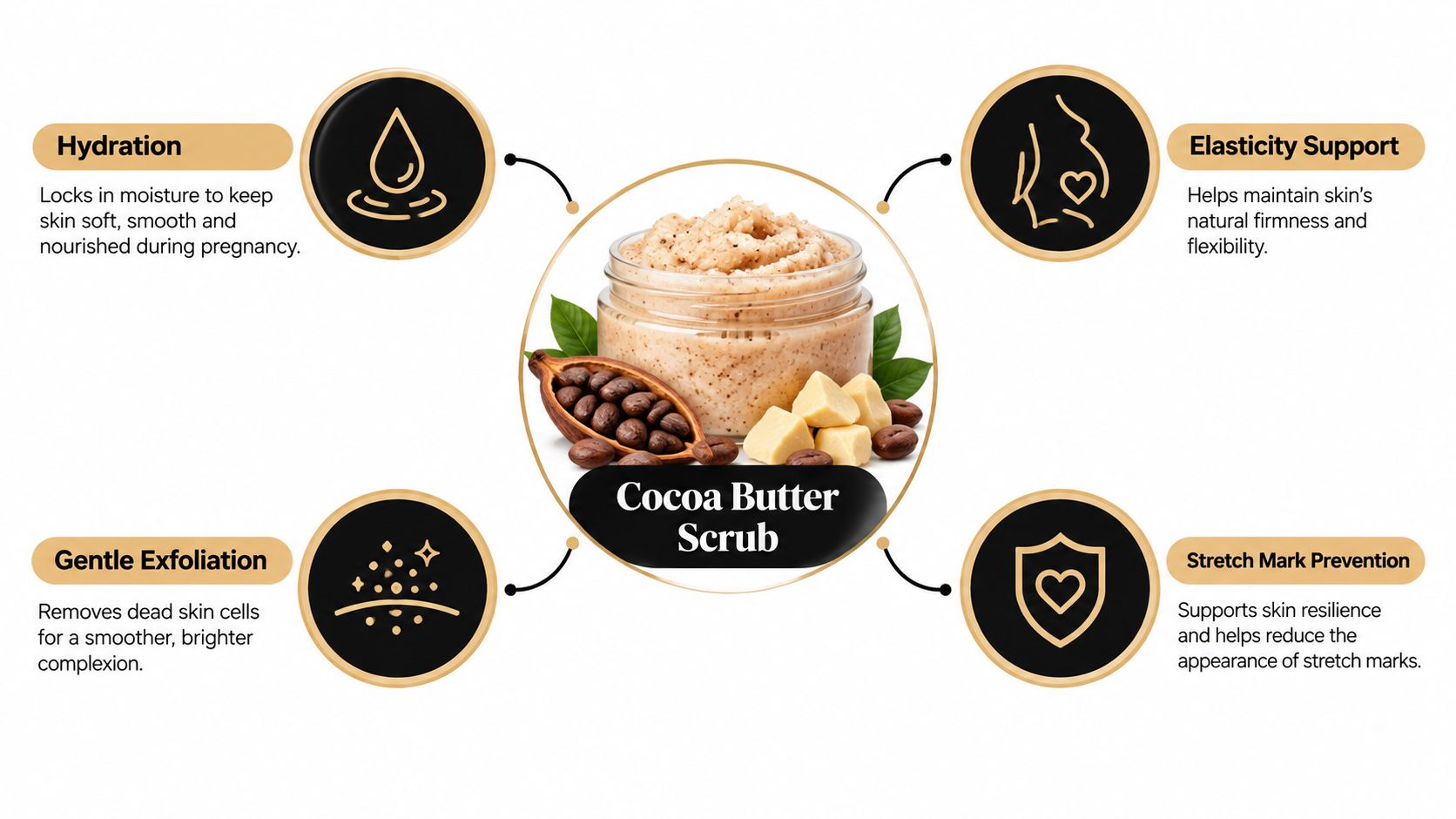
The useful benefits
The practical gains are modest:
- Gentle resurfacing: Fine particles can reduce rough, flaky texture with light pressure.
- Emollient comfort: Cocoa butter coats the skin, helping it feel less dry and tight.
- Smoother moisturising: Removing loose flakes can help body moisturiser spread more evenly.
- A soothing ritual: Slow application can make a rushed shower feel more manageable.
Cocoa butter contains fatty acids, including stearic acid, and naturally occurring antioxidant compounds. These support the butter's conditioning feel, but they don't rebuild damaged collagen, erase scars, or reverse stretch marks.
Practical rule: Use the scrub for hydration support and surface texture, not as a medical treatment for changing skin.
If your bump feels particularly sensitive, choose a richer leave-on product instead. This guide to cocoa butter body butter compares a daily moisturising format with an exfoliating one. The grains are optional. For dry skin, the emollient step usually offers more lasting comfort.
Stretch Marks, and What Cocoa Butter Can Realistically Offer
Cocoa butter has a powerful reputation in pregnancy skincare, but reputation isn't the same as clinical evidence. Stretch marks, or striae gravidarum, form in deeper skin during rapid stretching and are influenced by factors such as genetics, age, and hormonal changes. A moisturiser can improve surface softness and reduce the uncomfortable feeling of dryness, but it can't reliably prevent dermal fibres from changing.
The evidence summarised in independent dermatology guidance is particularly useful here. Randomised trials found no significant difference between cocoa butter and placebo for preventing pregnancy stretch marks. That means you can use cocoa butter because you enjoy its texture and because it helps dry skin, but you shouldn't feel responsible if marks appear.
| Study | Intervention | Outcome for Stretch Marks |
|---|---|---|
| 2008 Archives of Dermatology trial | Cocoa-butter cream compared with placebo | No significant preventive difference |
| 2015 BJOG systematic review | Evidence on topical preparations, including cocoa butter products | No reliable proof that cocoa butter prevents stretch marks |
The dermatology guidance on cocoa butter also makes the important distinction between moisturising and prevention. Cocoa butter may make skin feel more supple and reduce the sensation of tightness, yet that doesn't demonstrate collagen repair or scar reversal.
Use the ritual without the guilt
If you like the warm scent, dense slip, and comforting massage, keep using it for those reasons. Apply it gently, moisturise consistently, and let your skin change without treating every mark as a failure.
Some people with oily or acne-prone skin may find cocoa butter too occlusive or pore-blocking. If spots develop, stop using it on that area and switch to a lighter, fragrance-free emollient. For a broader discussion of the evidence behind topical products, see whether stretch-mark oil works.
The more useful question isn't “Which scrub guarantees no marks?” It's “Which formula and technique are least likely to irritate my skin while helping it feel comfortable?”
Reading the Label Like a Pregnancy-Savvy Shopper
A jar showing a cocoa pod may still contain a complicated formula. Turn it over and read the full INCI list, particularly when the product is marketed as a pregnancy scrub rather than a plain butter.
Look first at the base. Theobroma cacao seed butter can be raw, unrefined, or refined. Any of these may suit you, depending on your preferences and the rest of the formulation. Sweet almond oil and fractionated coconut oil can improve slip, while fine sucrose, sodium chloride, or ground oat provide exfoliation. The particle shape and size matter more than the ingredient's marketing name.
Ingredients that deserve caution
Cocoa butter's reputation does not make every cocoa butter scrub suitable for pregnancy or sensitive skin. Check the rest of the formula carefully:
- Vitamin A derivatives: Retinoids and retinaldehyde are not ingredients to choose casually during pregnancy. Ask your midwife, pharmacist, or dermatologist about any product containing a vitamin A derivative.
- Strong exfoliating actives: A scrub containing a high-strength acid may irritate skin, even if the butter makes the product feel creamy.
- Essential oils: Concentrated rosemary, sage, and clove bud oils require particular caution. “Natural” does not automatically mean appropriate during pregnancy.
- Fragrance: Parfum and declared fragrance allergens, including limonene and linalool, can aggravate reactive skin. Choose fragrance-free if you are itchy or sensitised.
Cocoa butter itself generally has a reassuring safety profile, but that does not apply automatically to every finished scrub. The complete INCI list determines what else your skin is exposed to.
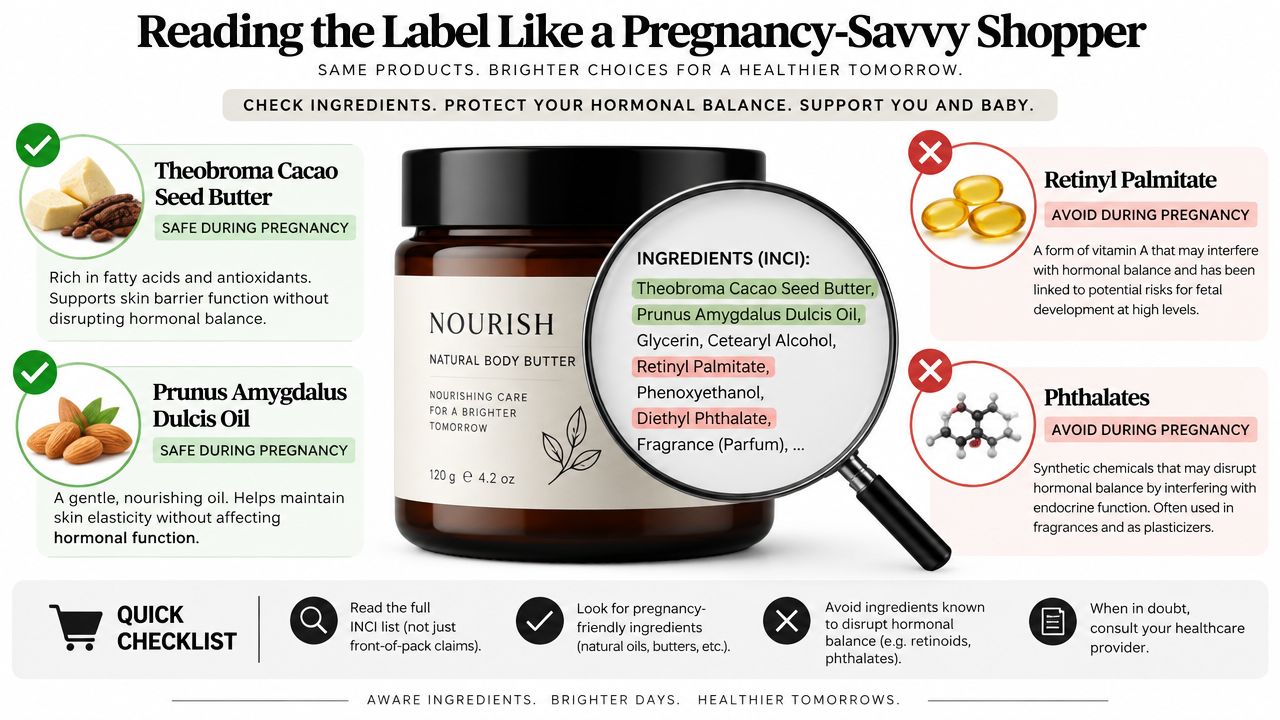
A quick screenshot checklist
Before buying, check that:
- The base is clear: Cocoa butter and the carrier oils are identifiable in the INCI list.
- The grains are fine: The scrub feels gritty, never sharp or scratchy.
- The formula is simple: It contains no unnecessary acids, retinoids, or strongly fragranced extras.
- Your skin agrees: Stop using it if persistent redness, burning, or new itching develops.
- The packaging is practical: A wide jar can be awkward in a wet shower. Use a clean scoop instead of repeatedly dipping wet fingers into it.
A pregnancy-safe label is useful, but it cannot replace ingredient checking. If you have eczema, widespread itching, a diagnosed allergy, or a pregnancy complication affecting your skin, speak with a qualified healthcare professional before introducing a new product.
Making Your Own Cocoa Butter Scrub at Home
A homemade scrub gives you control over the butter, oil, particle size, and scent. It also removes the guesswork from a long fragrance list, although you still need clean equipment and sensible storage.
A gentle small-batch formula
Use:
- 50 g raw or refined cosmetic-grade cocoa butter
- 100 ml sweet almond oil or fractionated coconut oil
- 100 g fine caster sugar or colloidal oatmeal
Caster sugar gives a traditional scrub texture. Colloidal oatmeal produces a softer, less abrasive paste and may be the better choice when your bump or limbs feel reactive. Skip coarse salt, crushed kernels, coffee grounds, and sharp particles. They can scratch or sting, particularly when pregnancy has made your skin more sensitive.
Melt the cocoa butter in a heatproof bowl over a bain-marie. Keep the heat gentle and avoid placing the butter directly in a saucepan over a flame. Once it has liquefied, remove it from the heat, stir in the carrier oil, and allow the mixture to cool until it feels warm rather than hot.
Add the dry exfoliant gradually. Stir until the texture is even, then spoon the batch into a sterilised, completely dry jar. Don't introduce water, damp hands, or a wet spoon, because water can encourage contamination in a product without a tested preservative system.
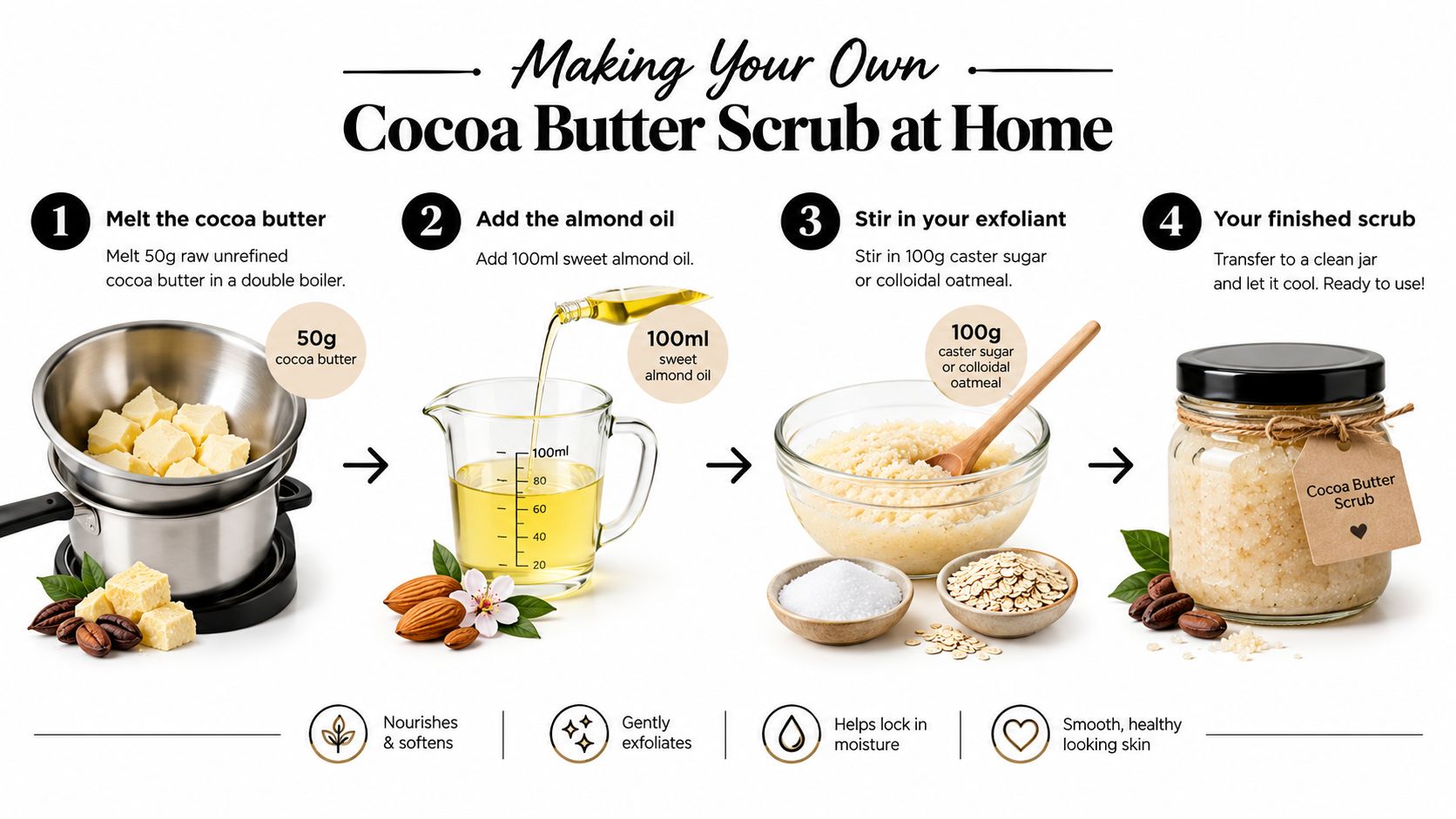
Keep it simple: An unscented scrub is the most cautious option for a reactive bump.
Store the closed jar in a cool, dark place and use it within two to four weeks. If the smell, colour, or texture changes, discard it. A homemade water-free scrub doesn't have the same stability testing as a manufactured cosmetic, so make small batches rather than trying to store it for months.
If you want fragrance, use only an ingredient you've already checked for pregnancy suitability with a qualified professional, and keep the amount very low. Leaving it scent-free avoids a common source of irritation and lets you judge the base formula properly.
Here's a visual demonstration of the basic process:
How to Use It in the Shower
Test the formula before applying it widely. Place a small amount on the inner wrist or upper arm, leave it alone, and check the area the next day. A patch test can't predict every reaction, but it can help you avoid covering your bump with a product your skin already dislikes.
Use warm water rather than a very hot shower. Hot water can leave dry pregnancy skin feeling tighter, and standing for too long may be uncomfortable as your centre of gravity changes. Keep one hand on a stable surface if you need support, and put the jar where you can reach it without twisting.
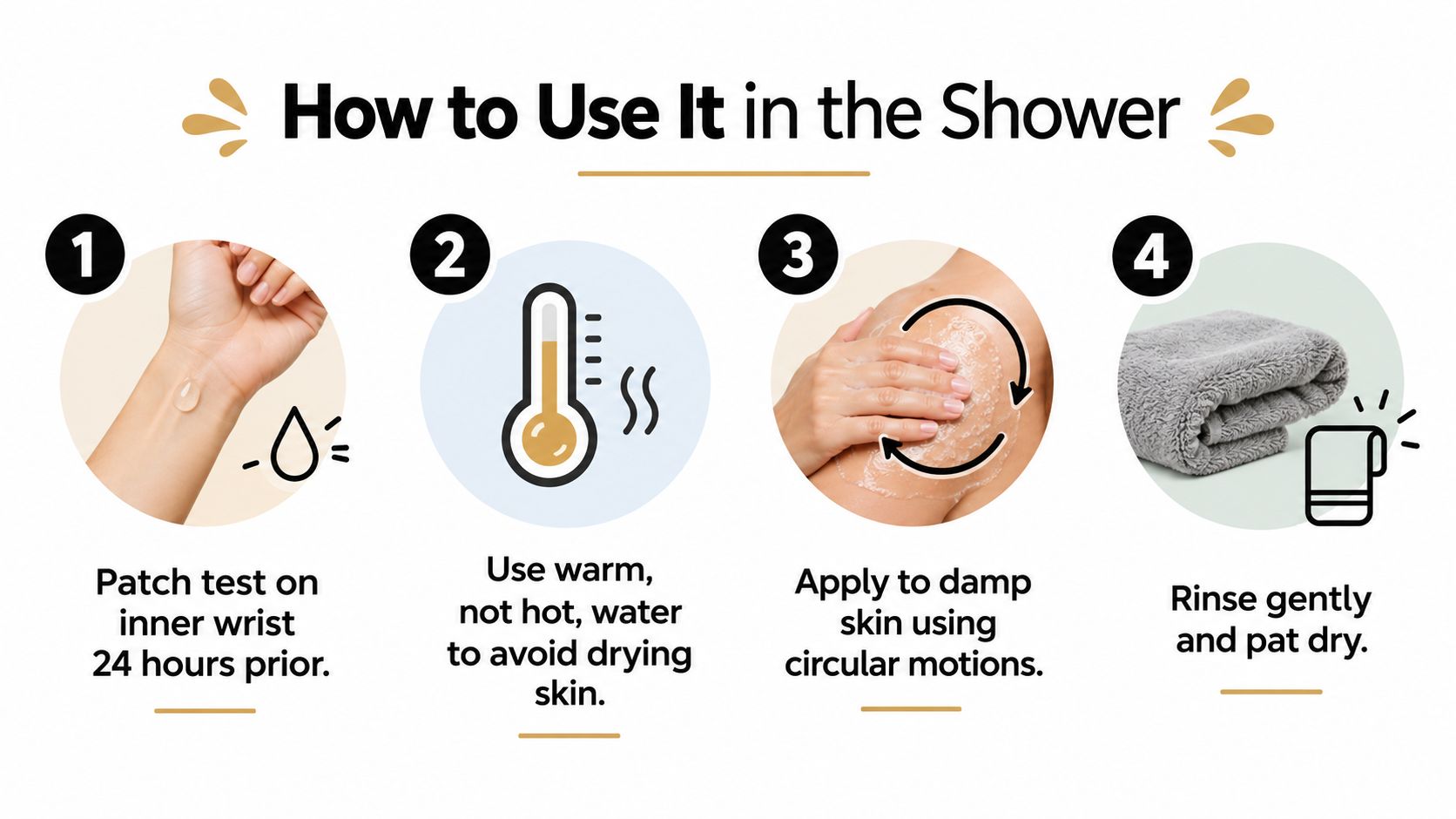
Scoop a small amount into your palms and warm it between your hands. Work over damp thighs, hips, buttocks, and upper arms using slow, light circles. Let the product glide over stretch-marked skin rather than pressing harder in an attempt to change the marks.
Treat delicate areas differently
The bump needs a lighter touch than your elbows. Stroke the abdomen gently, or skip it if the skin feels sore, hot, itchy, or unusually sensitive. Treat breasts and the areola with care, and avoid the bikini line, broken skin, irritated patches, and any area affected by a rash.
Rinse with lukewarm water until the loose particles are gone, while allowing a thin film of cocoa butter to remain. Take extra care because the butter can make the shower floor slippery. A pregnancy-focused guide to safe exfoliating scrubs can help you compare textures and application habits.
Step out slowly and press a soft towel against the skin. Rubbing vigorously removes the very moisture and comfort you've just worked to preserve.
Aftercare and How Often to Scrub While Pregnant
A scrub is only one part of the routine. After rinsing, leave a little moisture on the skin and apply a plain cocoa-butter product or unscented emollient soon after stepping out. This helps reduce the dry, tight feeling that can return as the skin dries.
Loose cotton clothing can make the next few hours more comfortable, particularly if fragrance or heat tends to trigger itching. Drinking water supports normal hydration, but it won't replace an emollient on the surface. Skin comfort usually improves through consistent, uncomplicated care rather than aggressive treatments.
A sensible rhythm
Most pregnant skin doesn't need frequent physical exfoliation. Once or twice a week is generally plenty, and the abdomen should be treated no more often than every five to seven days. Use a plain moisturiser on the days between scrubs instead of trying to polish away every rough patch.
Reduce or pause exfoliation when your skin feels thin, sore, hot, or unusually itchy. Pay attention to areas that need protection rather than resurfacing:
- Broken or inflamed skin: Wait until the barrier has recovered.
- Varicose veins: Avoid direct friction over prominent veins.
- Haemorrhoid-prone skin: Don't apply body scrub to this delicate area.
- Caesarean scar tissue: Follow your clinician's advice, especially while the incision is healing.
- Moles under observation: Leave them alone and follow the monitoring advice you've been given.
The next morning gives you useful feedback. Mild pinkness that settles quickly may reflect friction, but lingering sting, raised welts, or new itchiness means the product or technique isn't working for you. Stop the scrub and use a plain emollient instead. If symptoms persist, spread, or feel severe, contact your midwife, GP, pharmacist, or dermatologist.
Listen to the skin, not the jar: A product that promises intensive exfoliation isn't a good choice if your skin remains uncomfortable afterwards.
The Happy Bump Co offers bump-focused products including Belly Butter, Belly Oil for Stretch Marks, and Pregnancy Tummy Scrub for expectant mums who prefer ready-made pregnancy skincare. Explore the range and choose the format that suits your routine at The Happy Bump Co .