

If you're reading this with one hand on your bump and the other scratching a suddenly dry hip, you're in very good company. Pregnancy skin can feel different almost overnight. One week your usual moisturiser seems fine. The next, your belly feels tight after a shower, your sides itch in bed, and every product label starts to look a bit more important than it used to.
That's often when Cocoa Butter Body Butter enters the picture. It has a familiar reputation, a rich texture, and a comforting feel that makes sense for stretched, thirsty skin. But it also comes with a lot of baggage, especially around stretch marks. Many mums-to-be are sold the idea that if they just find the right butter and apply it faithfully, they can prevent every mark. Real life is kinder, and more honest, than that.
Table of Contents
- Introduction to Cocoa Butter Body Butter in Pregnancy
- What Cocoa Butter Body Butter Is and How It Works
- Key Skin Benefits for Hydration and Comfort
- The Truth About Stretch Marks and Cocoa Butter Body Butter
- How to Use Cocoa Butter Body Butter for Best Results
- How to Choose a Gentle Pregnancy Friendly Formula
- Final Thoughts on Choosing Your Bump Butter With Confidence
Introduction to Cocoa Butter Body Butter in Pregnancy
A common pregnancy routine goes like this. You step out of the bath, your tummy feels a bit snug, and you reach for something thicker than lotion because light creams just disappear. You want relief, not hype. You want skin to feel softer, calmer, and less irritable by bedtime.

That's where Cocoa Butter Body Butter fits best. Think of it less as a miracle product and more as a barrier-support ritual. It's a rich moisturising format built for comfort. For many pregnant women, that matters far more than dramatic promises.
There's also a practical reason cocoa butter is so visible in the UK. It's not a niche ingredient with a tiny local footprint. The UK imported US$317 million of cocoa butter in 2023, making it the world's 7th largest importer, while exports totalled US$44.6 million, ranking 18th globally. Monthly trade data also showed a sharp upswing, with November 2024 exports at £16.2 million and imports at £73.2 million, leaving a negative trade balance of £57 million. Compared with November 2023, exports rose 288% and imports rose 217%, according to UK cocoa butter trade data from OEC. In plain terms, UK skincare brands using cocoa butter are drawing from a large, active imported ingredient supply, not a tiny specialist stream.
What this means for your bump care
Pregnancy skincare gets confusing when marketing mixes comfort, prevention, and safety into one message. Those are not the same thing.
Here's the calm version:
- Hydration matters: Dry, tight skin usually feels better when you use a richer product consistently.
- Texture matters: A body butter behaves differently from a lotion or oil.
- Evidence matters: Moisturised skin can feel more comfortable without a product being a proven stretch mark preventive.
- Formula matters: During pregnancy, the ingredient list often matters as much as the headline ingredient.
Practical rule: Choose your bump butter for comfort, gentleness, and consistency of use. Not for miracle claims.
What Cocoa Butter Body Butter Is and How It Works
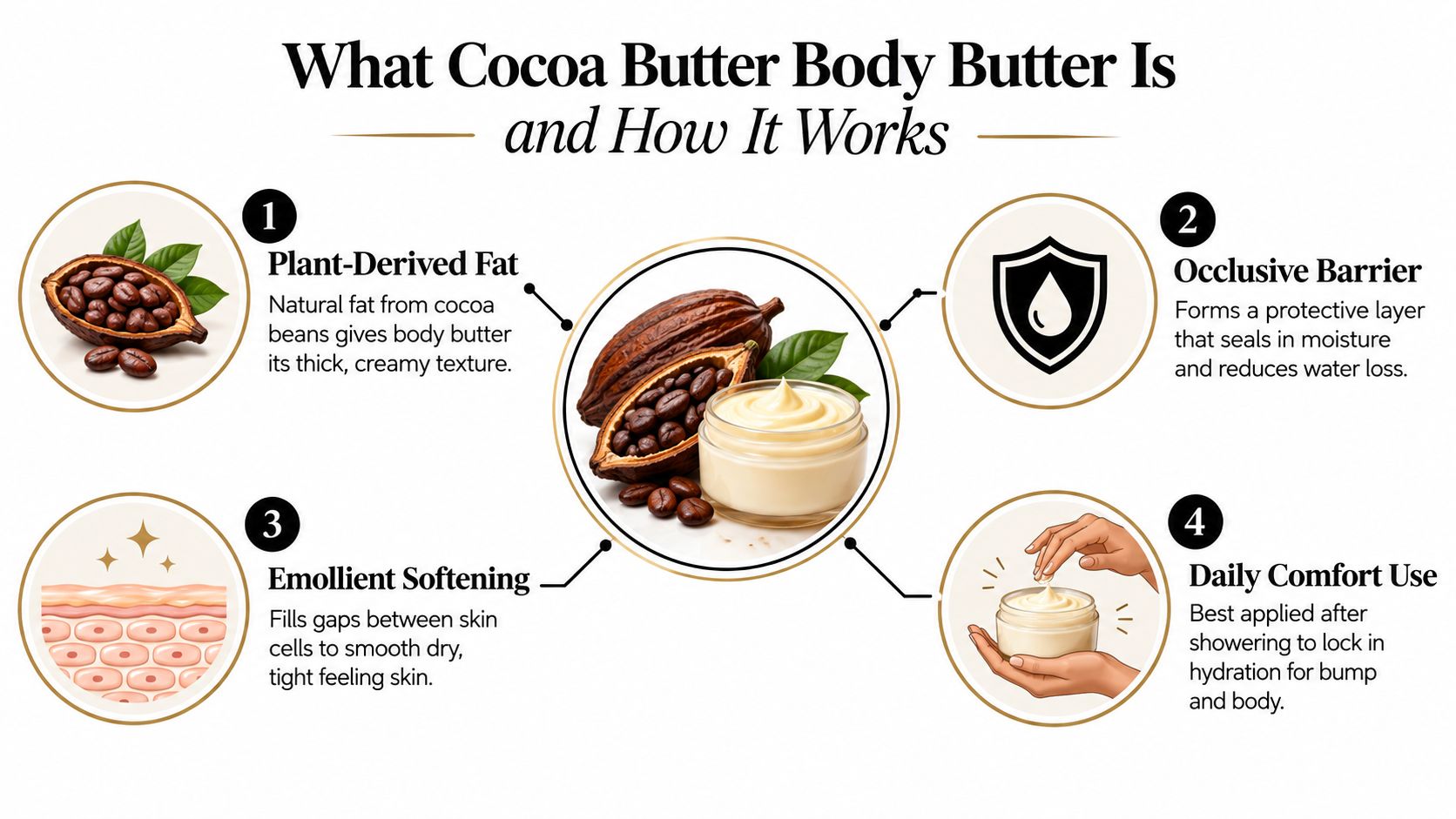
Cocoa Butter Body Butter is a thick moisturising product built around cocoa butter, a plant-derived fat. That fat gives the product its dense, cushiony feel. When you smooth it onto skin, it doesn't behave like water-based lotion. It behaves more like a soft seal over the surface.
The easiest way to understand it
A simple analogy helps. If a light lotion is like giving your skin a drink, a body butter is like tucking that drink in under a blanket. The blanket doesn't replace water. It helps stop moisture escaping too quickly.
That's why body butter often feels especially helpful on a growing belly, hips, thighs, elbows, and anywhere skin feels rough or taut. The richness isn't just a cosmetic extra. It changes how the product sits on the skin.
A guide to organic cacao butter can be useful if you want a fuller ingredient background, but the key practical point is simple. Cocoa butter is usually chosen for surface comfort and moisture retention, not for deep active delivery.
Why it feels different from lotion or oil
These formats can all moisturise, but they do it differently:
- Lotion: Usually lighter, quicker to spread, and often better if you dislike any residue.
- Oil: Great for slip and massage, but it may feel too slick on its own for very dry patches.
- Body butter: Thicker, slower to absorb, and often better when skin feels persistently dry or itchy.
UK evidence and expert review material support cocoa butter more as a barrier-supporting emollient than a penetration-heavy delivery system. A UK review notes that cocoa butter products can reduce transepidermal water loss, increase moisturisation, and improve elasticity, with effects seen as early as 1 hour and still significant at 8 hours after application. The same verified evidence also notes poor bioavailability and lower absorption compared with some other oils, which is why formulation pairing matters, as described in the cocoa butter emollient review and absorption discussion.
Why the rest of the formula matters
Cocoa butter does one job very well. It helps seal and soften. But many pregnant women need more than sealing alone.
Helpful supporting ingredients often include:
- Humectants: These help attract water to the skin surface.
- Ceramides: These support the skin barrier.
- Simple emollients: These smooth rough-feeling areas and improve spread.
- Low-irritation fragrance choices: Important if your skin has become more reactive in pregnancy.
If cocoa butter is the cosy outer layer, these supporting ingredients are what help make the comfort last.
Key Skin Benefits for Hydration and Comfort
When pregnant skin feels uncomfortable, most women aren't asking for perfect skin. They want the itching to settle, the tightness to ease, and their belly not to feel papery by the end of the day. That's where Cocoa Butter Body Butter tends to earn its place.
What realistic benefits look like
The best way to think about the benefits is in layers of comfort rather than dramatic transformation.
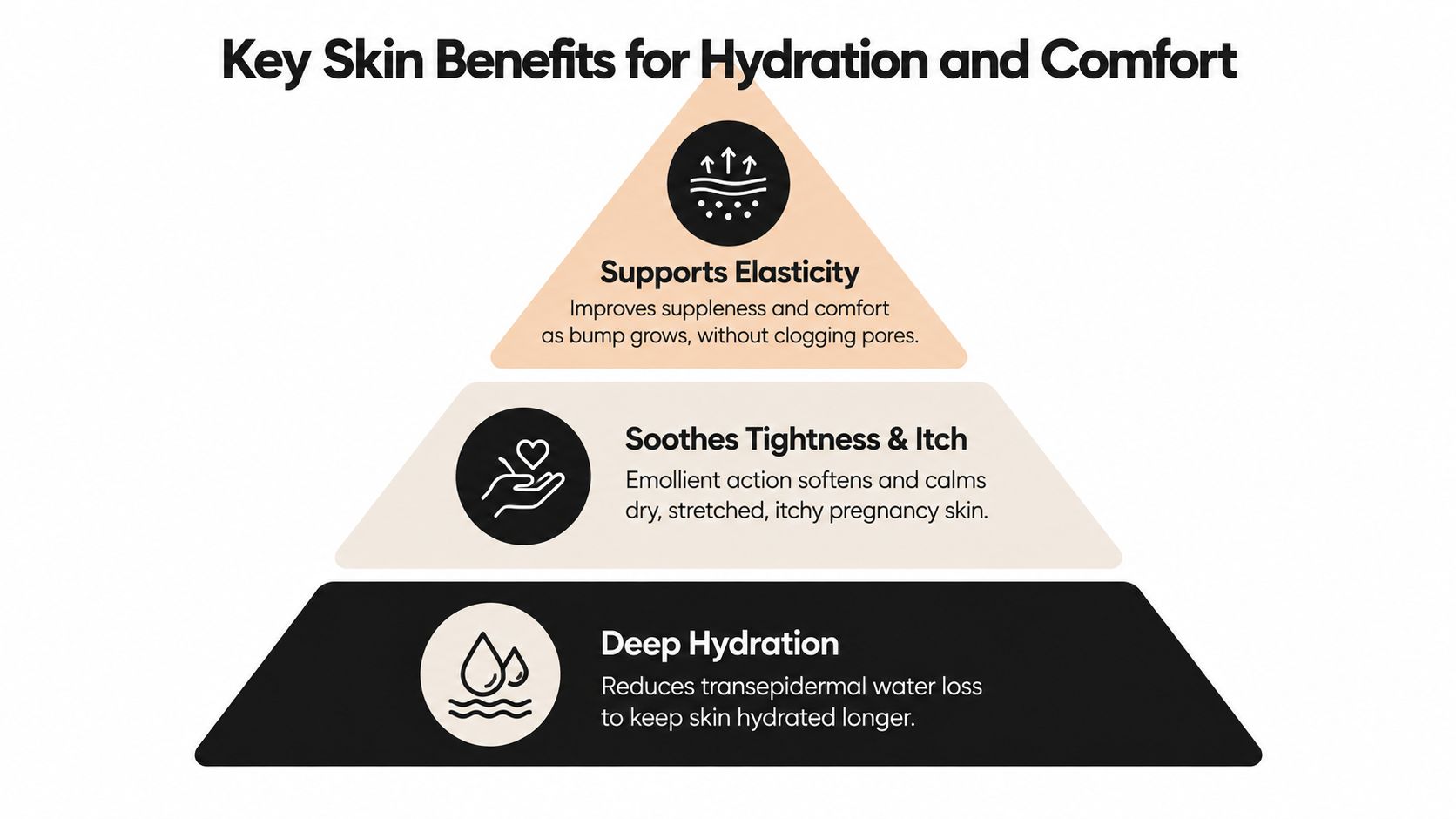
First, a rich body butter helps reduce water loss from the skin surface. When skin loses less moisture, it usually feels less rough and less stingy after washing. That's especially useful during pregnancy, when frequent temperature changes, longer showers, and stretching skin can all make dryness more noticeable.
Second, it can improve the feel of the skin. Softer skin often feels less tight during movement, whether you're getting dressed, turning in bed, or sitting for long periods.
Third, it supports a more supple surface. That doesn't mean it changes your genes or hormones. It means the outer layers of skin can feel more flexible and comfortable.
Well-moisturised pregnancy skin often feels less “pulled” during the day, even when the bump is growing quickly.
Why richer textures can feel better for itchy pregnancy skin
Light lotions are lovely when your skin is only mildly dry. They can be less satisfying when your belly or thighs feel persistently itchy. In those moments, texture is part of the treatment experience.
A richer butter can help because it:
- Stays put longer: You're not always reapplying an hour later.
- Creates more cushion: This can make stretched skin feel less exposed.
- Works well after bathing: Damp skin gives it something to hold on to.
That said, not every rich formula feels good on every person. Some women like a whipped butter that melts quickly. Others prefer a denser balm-like texture for overnight use.
Sensitive skin needs a narrower target
Pregnancy can make skin fussier. A product that once felt luxurious may suddenly feel overpowering if it's heavily fragranced or packed with lots of extras.
Recent UK retail coverage also shows cocoa butter products being positioned for dry, sensitive, or itchy skin, yet there's still a gap in neutral guidance comparing texture, absorption, and suitability for reactive skin, as reflected in this UK cocoa body butter retail example.
If your skin is feeling unpredictable, keep your expectations practical:
- Comfort over perfume
- Barrier support over “glow” language
- Consistency over constant product switching
A simple comfort check
Ask yourself these three questions after a few uses:
| Sign to Notice | What It Usually Means |
|---|---|
| Skin feels softer after application | The emollient texture suits you |
| Tightness returns quickly | You may need a richer formula or to apply on damp skin |
| Skin stings or becomes red | The formula may be too fragranced or too active for your skin right now |
When a butter suits you, the main result is often very ordinary in the best possible way. Your skin feels less bothersome.
The Truth About Stretch Marks and Cocoa Butter Body Butter
This is the part many women wish brands would say more clearly. Cocoa Butter Body Butter is not a proven stretch mark cure.
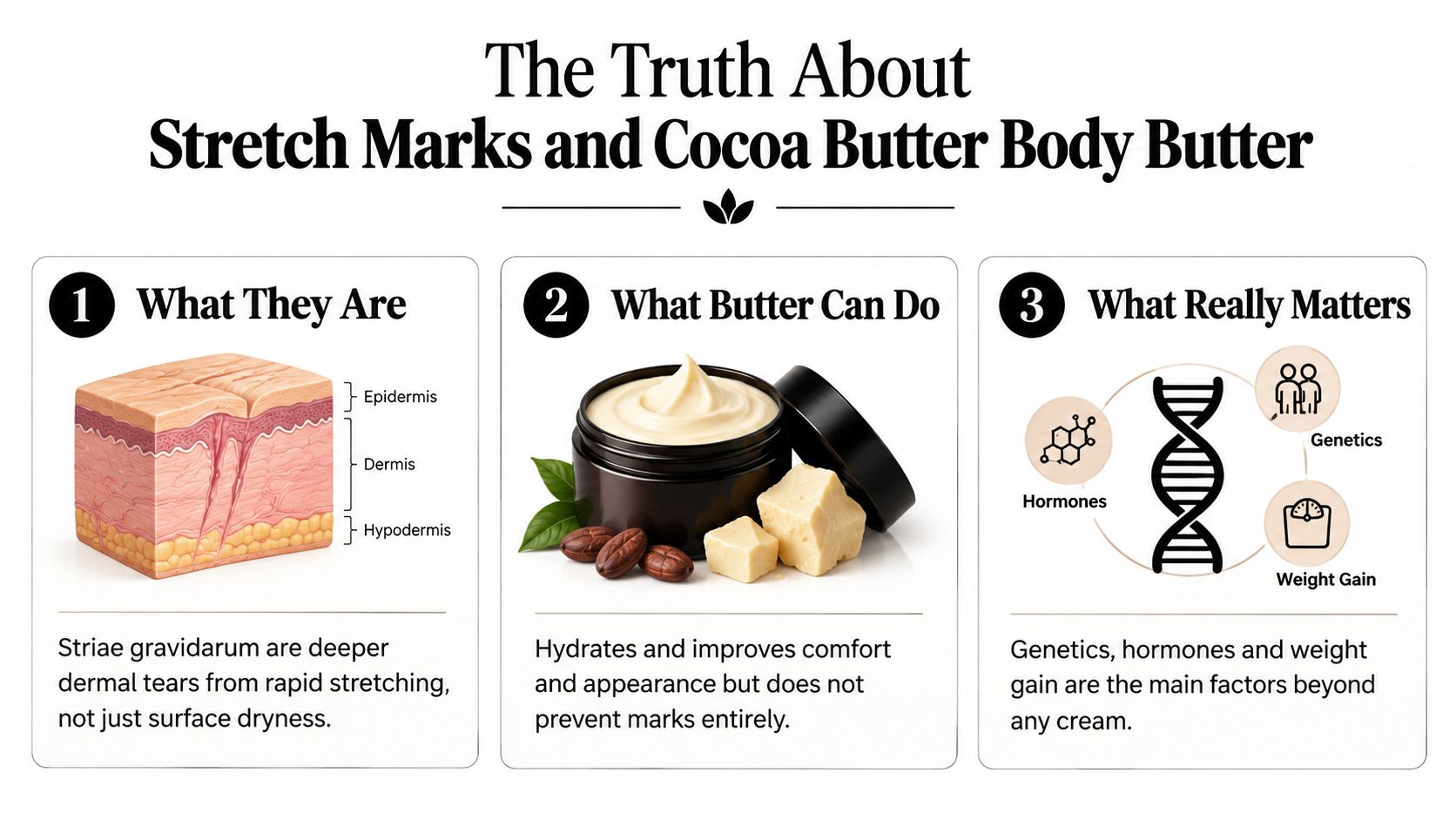
That doesn't make it pointless. It just means we need to separate two different things. One is keeping skin comfortable and hydrated. The other is preventing striae gravidarum, which are stretch marks linked to deeper changes in the skin.
Why hydration and stretch marks aren't the same question
Dryness happens at the surface. Stretch marks involve deeper dermal remodelling. That means surface softness and deeper structural change are related only loosely.
A moisturiser can make skin feel better, improve glide, and reduce that itchy, stretched sensation. It can't promise control over all the biological factors involved in whether stretch marks form.
A UK-linked multicentre, double-blind, randomised placebo-controlled trial involving 210 nulliparous women found that daily cocoa butter lotion did not reduce striae gravidarum. 45.1% of the cocoa butter group developed stretch marks versus 48.8% of the placebo group, with no statistically significant difference in severity (P=0.730), according to the trial evidence on cocoa butter and striae gravidarum.
Here's a helpful explainer if you want a visual walk-through of the topic:
What to take from that evidence
The takeaway isn't “don't bother moisturising.” It's “use moisturiser for the right reason.”
Use cocoa butter body butter because it can help with:
- Dryness
- Surface softness
- Massage and daily skin awareness
- Comfort when your belly feels tight or itchy
Don't put pressure on yourself to use it as if it's an exam you can pass or fail. Stretch marks are influenced by factors well beyond whether you remembered your body butter on Tuesday night.
Your body butter can support comfort beautifully. It doesn't need to carry the burden of guaranteeing an outcome no topical product can honestly promise.
A gentler way to think about bump care
For many women, the ritual matters almost as much as the formula. A few quiet minutes massaging your belly can help you notice what your skin needs that day. More on the sides. Less near the bra line. A second layer before bed.
That's still worthwhile, even when the promise is comfort rather than prevention.
How to Use Cocoa Butter Body Butter for Best Results
A good body butter routine doesn't need to be elaborate. In fact, the best one is usually the one you'll keep doing when you're tired, warm, and ready for bed.
Timing changes the feel
The easiest win is applying body butter to slightly damp skin after a bath or shower. Not dripping wet, just not fully dry. That helps the butter trap some of that surface moisture instead of sitting on already-dehydrated skin.
Morning and evening can both work, but they serve different purposes:
- Morning use: Better if your skin feels dry under clothes through the day.
- Evening use: Better if you prefer a richer layer and don't mind a slower-absorbing feel.
- Twice daily: Often the most comfortable option when your belly and hips are feeling persistently tight.
If you want a fuller routine example, this guide on how to use body butter shows the basic application rhythm clearly.
How much to use and where to focus
You don't need to scoop out a huge amount and hope for the best. Start with a small amount, warm it between your palms, and add more only where needed.
Common pregnancy focus areas include:
- Belly: Use broad circular motions rather than vigorous rubbing.
- Hips and sides: These areas often get overlooked until they start itching.
- Thighs and lower back: Helpful if your skin feels dry beyond the bump itself.
Pairing textures without making skin feel overloaded
Some women love using body butter alone. Others prefer layering depending on the season and how dry their skin feels.
A simple comparison helps:
| Approach | How It Feels | When It Suits |
|---|---|---|
| Body butter alone | Rich and protective | Everyday bump care |
| Light hydrator first, butter second | More cushioned | Very dry or tight skin |
| Oil over butter | More slip, slower feel | Massage-focused evening routine |
| Oil instead of butter | Smoother but less cocooning | When you dislike heavier textures |
If products pill or roll, it usually means you've used too much or layered too quickly. Let the first layer settle before adding another.
Keep the massage gentle. The goal is to comfort the skin, not work the product in as if it needs to disappear completely.
Small practical details matter
Storage can affect texture. If your butter becomes firmer in cooler weather, warming it in your hands first usually solves the problem. If it softens in a warm bathroom, use a smaller amount and apply in thinner layers.
Consistency beats intensity. A modest routine you repeat is usually more helpful than one very thick application followed by three missed days.
How to Choose a Gentle Pregnancy Friendly Formula
The phrase “pregnancy friendly” can sound obvious until you start reading labels. Then it gets murky fast. Some product pages focus on softness, glow, or a lovely scent, but skip the question many expectant mums care about most. Is this a sensible everyday formula for pregnancy skin?
Start with the full ingredient list
Cocoa butter may be the star ingredient, but it's never the whole story. Two body butters can both feature cocoa butter and feel completely different on sensitive skin.
A useful place to build label-reading confidence is this breakdown of body butter ingredients.
Independent UK pregnancy guidance often centres more on ingredient caution than on broad marketing claims. Product listings for pregnancy body care also tend to emphasise hydration and itch relief while being less direct about ingredient screening, which leaves a real gap for clear pregnancy FAQs, as shown by this UK pregnancy shopping example highlighting the guidance gap.
What to look for first
When you scan a label, focus on the things most likely to affect daily comfort:
- Fragrance level: If your skin is more reactive than usual, lighter fragrance or fragrance-free options are often easier to tolerate.
- Essential oils: Some women prefer to be more cautious with heavily essential-oil-led formulas during pregnancy, especially if scent sensitivity has kicked in.
- Barrier helpers: Humectants and ceramides can make a cocoa butter formula more rounded.
- Simple construction: Fewer unnecessary extras can be useful when your skin is unpredictable.
One factual example of a bump-focused option is The Happy Bump Co Belly Butter, which is presented as a pregnancy skincare product for nourishing changing skin. That may suit women specifically looking for a bump-centred formula rather than a general body moisturiser.
Choosing Your Cocoa Butter Body Butter Texture
| Formula Type | Best For | Texture and Absorption | Pregnancy Tip |
|---|---|---|---|
| Rich body butter | Very dry, tight-feeling bump skin | Thick, slower to absorb, more protective | Good for night use or after bathing |
| Whipped butter | Women who want richness with easier spread | Airier feel, still cushioned | Often easier to massage over a larger area |
| Butter with humectants | Dehydrated skin needing extra water support | Rich with a slightly more hydrated finish | Apply to slightly damp skin for best feel |
| Lighter cream-butter hybrid | Mild dryness or dislike of heavy residue | Faster absorption, less occlusive | Useful in warmer weather or under clothes |
A calm decision checklist
If you're unsure, ask these simple questions:
- Does my skin need deep comfort or just a light daily moisturiser?
- Am I reacting to fragrance, not cocoa butter itself?
- Will I use this texture every day?
- If I have a medical skin condition or strong sensitivity, should I check with my midwife, GP, or pharmacist before trying something new?
The gentlest choice is often the one your skin tolerates well enough to use consistently.
Final Thoughts on Choosing Your Bump Butter With Confidence
By the time many women look up Cocoa Butter Body Butter, they're not looking for luxury. They're looking for relief. They want something that softens the dry, stretched feeling of pregnancy skin and helps them feel more at home in a changing body.
That's why it helps to judge cocoa butter. It works well as a rich emollient and barrier-support step. It can help reduce that tight, itchy, uncomfortable feeling that often shows up across the belly, hips, and thighs. It can make a daily massage feel soothing instead of like another task.
What it shouldn't have to do is carry a false promise. The evidence doesn't support cocoa butter as a proven way to prevent stretch marks. Once you let go of that pressure, the product becomes easier to use for what it does offer. Comfort. Softness. A more settled skin feel.
There's also reassurance in knowing cocoa butter is a well-established ingredient in the UK, supported by a large and active market. UK cocoa butter consumption reached 121K tons in 2024, a 47% increase in a single year, while market value climbed 69% to $740M. The same industry analysis reports imports jumping 81% to 109K tons, domestic production staying flat at about 29K tons, and exports rising 148% to 17K tons. Longer-term projections expect the UK market to keep growing at a 1.1% CAGR in volume and 1.6% in value through 2035, reaching 137K tons and $878M respectively, according to the UK cocoa butter market overview. For you, that mainly means cocoa butter isn't a fringe ingredient. It's a familiar part of a broad skincare supply chain.
Choose a texture you'll enjoy using. Pick a formula with a thoughtful ingredient list. Apply it in a way that feels calming, not compulsory. That's usually where value lives.
If you want pregnancy skincare that keeps this gentle, practical approach in mind, The Happy Bump Co offers UK-made bump-focused body care designed for changing skin. Their range includes products for dryness, daily nourishment, and supportive self-care rituals, so you can build a routine that feels comforting rather than complicated.