

You've just washed the pans, stepped back into a cold kitchen, and noticed it again, that tight, papery feeling across your knuckles. Cocoa butter hand cream gets attention in moments like that because it sounds comforting, familiar, and simple. The useful question is not whether cocoa butter sounds good, but what the full cream is doing on your skin, how it fits UK rules, and whether the label suits dry hands, pregnancy, or frequent washing.
Table of Contents
- Why Hands Get Dry and Why Cocoa Butter Keeps Appearing on the Label
- What Cocoa Butter Actually Is
- How a Cocoa Butter Hand Cream Works on Skin
- Reading the Label Beyond Cocoa Butter
- Suitability During Pregnancy and for New Mums
- Building a Hand-Care Routine That Actually Works
- How to Choose a Cocoa Butter Hand Cream Wisely
Why Hands Get Dry and Why Cocoa Butter Keeps Appearing on the Label
Dry hands usually start with a barrier problem, not a “lack of moisture” in the vague sense people often mean. Soap, water, wind, heating, and repetitive handwashing all push water out of the outer skin layers, so hands can feel rough, tight, and stingy long before they look visibly cracked. That is why a cocoa butter hand cream turns up in so many bathroom cabinets, changing bags, and desk drawers. It promises comfort in a form people recognise.
A cocoa butter formula can feel reassuring because it leaves a soft film on the skin. That film matters, but it is only part of the story. The label still has to tell you what else is in the jar or tube, because a single ingredient can't guarantee a good hand cream.
Why the ingredient keeps showing up
Cocoa butter is popular in leave-on products because it is rich, solid, and easy to build into balms and creams. It tends to appeal to people who want something more substantial than a light lotion, especially in colder weather or after lots of washing. The problem is that “rich” does not automatically mean “right for every hand” or “safe for every skin type”.
Practical rule: if your hands are dry because of frequent washing, the best product is usually the one you will actually reapply, not the one with the most romantic ingredient list.
That is the thread running through the rest of this guide. Cocoa butter matters, but it sits inside a wider formulation, and that formulation decides whether the cream feels soothing, greasy, fragranced, bland, or irritating. UK rules also matter, because a hand cream is still a cosmetic product with safety and labelling obligations, not a loose collection of nice-sounding ingredients.
What Cocoa Butter Actually Is
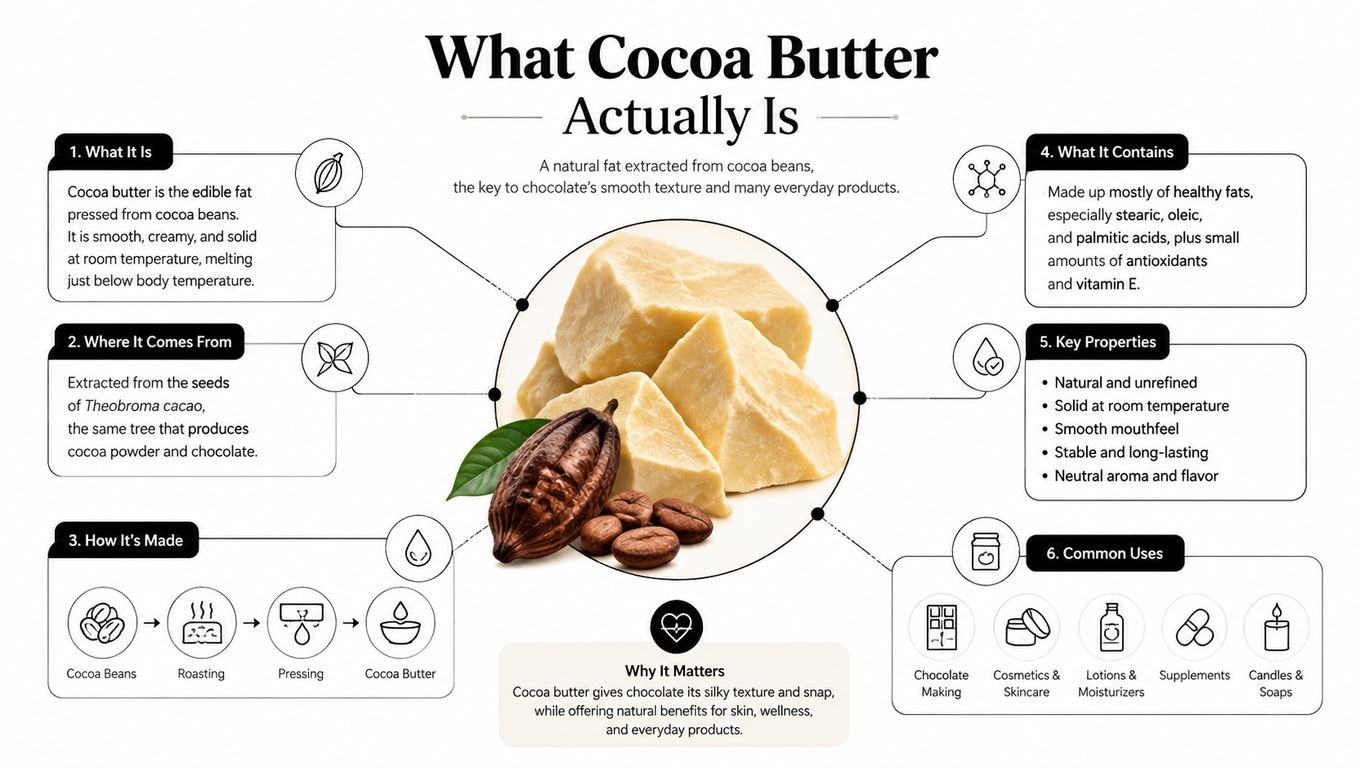
Cocoa butter comes from cocoa beans. Under the Cocoa and Chocolate Products (England) Regulations 2003, UK law defines it as fat obtained from cocoa beans, and it gives composition limits for press cocoa butter, including a maximum of 1.75% free fatty acids and 0.35% unsaponifiable matter legislation.gov.uk. That definition matters because it tells you cocoa butter is not just a marketing phrase, it is a specific raw material with recognised quality characteristics.
What the fatty acids mean in plain English
Cocoa butter is a solid, lipid-rich fat. Its main fatty acids are mostly stearic acid at about 34 to 36%, oleic acid at 30 to 40%, and palmitic acid at 24 to 29%, with linoleic acid at about 2.4%. Those numbers explain the texture people notice first. Cocoa butter is firm at room temperature, yet it softens with body heat and can sit on the skin as a protective, greasy-feeling layer.
That layer is useful because it behaves as an occlusive emollient. In everyday language, it helps slow water escaping from the skin surface. The ingredient itself does not “repair” everything, but it can help hold the skin in a more comfortable state while the rest of the formula does its work.
Why the raw ingredient is not the finished answer
This is where label reading becomes important. Cocoa butter may be the hero ingredient on the front of the pack, but the finished cream can also contain humectants, preservatives, fragrance, colourants, and other lipids. The final product needs to be assessed as a whole, not judged by the cocoa butter line alone.
For hands, that distinction matters more than many shoppers realise. Two products can both contain cocoa butter and still behave very differently on skin, one may feel waxy and heavy, another may spread well, and a third may sting on damaged skin because of the rest of the formula. The ingredient identity is useful, but it is only the starting point.
How a Cocoa Butter Hand Cream Works on Skin
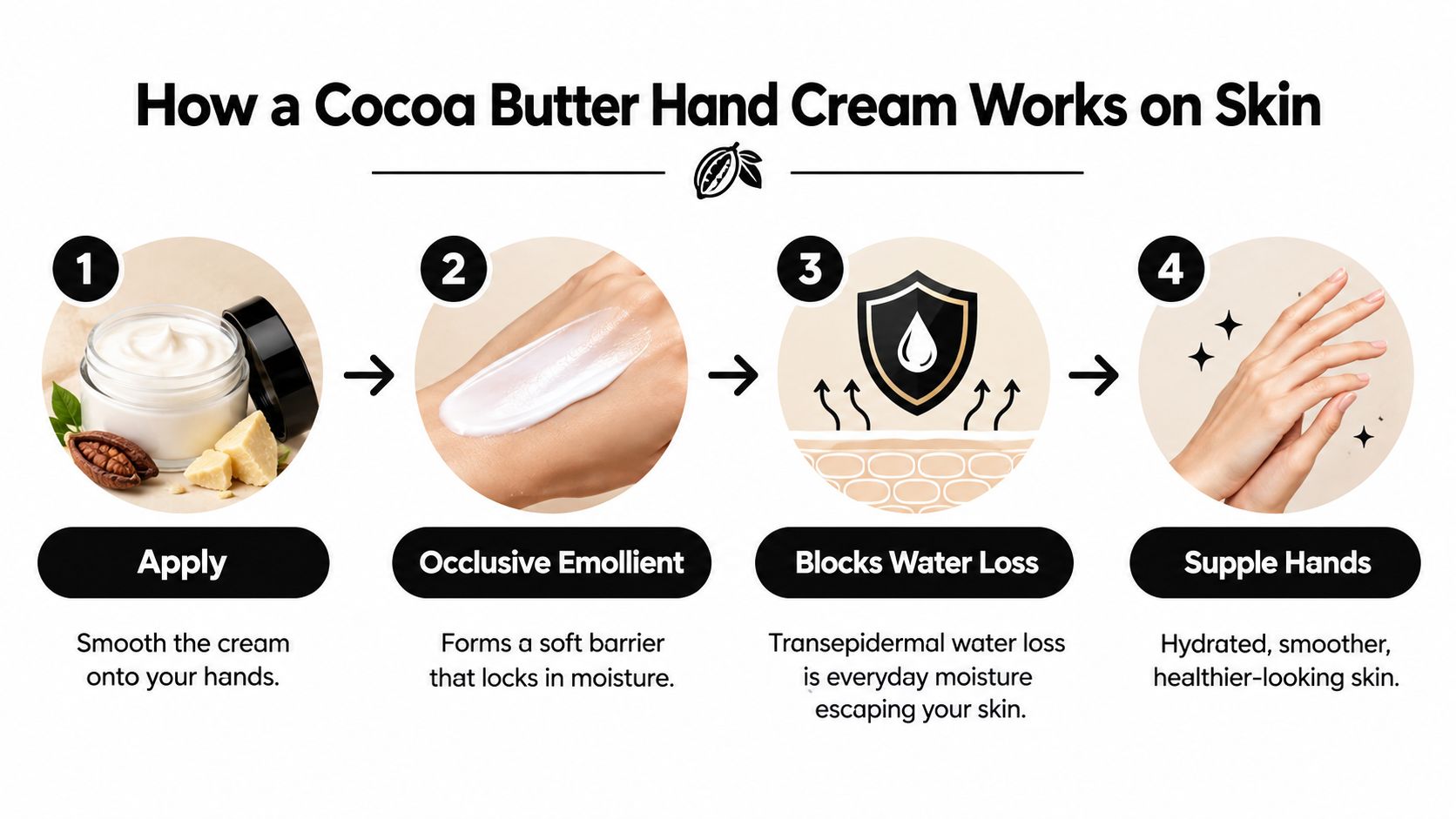
A hand cream works best when it behaves a bit like a weatherproof layer on a wooden worktop. It does not replace the wood, and it does not seal every crack forever, but it can reduce how quickly water escapes and make the surface feel less exposed. Cocoa butter helps because it forms part of that surface layer, giving skin a richer, more protected feel.
Occlusion, in normal language
An occlusive ingredient slows water loss by sitting on top of the skin. Cocoa butter does this because it is a dense, lipid-rich fat, so it can support a softer surface and reduce the feeling of tightness. That is why richer hand creams often feel better after a cold walk, a day of dishwashing, or a run of hand sanitiser use.
The point is not that occlusion solves everything. It's that it can make the skin more comfortable while the barrier is under pressure. For people who wash their hands repeatedly, that little bit of help adds up.
Why handwashing changes the picture
A UK-linked evidence review found that washing hands with soap and water more than 10 times a day was linked to a 73% increase in the odds of developing hand eczema NIPCM skin care review. That doesn't mean every frequent washer will develop eczema, but it does show why hand care has to be practical, not decorative.
Practical rule: after washing, apply hand cream while the skin is still slightly damp if you can, then cover the backs of the hands, palms, fingertips, and the skin between the fingers.
A cocoa butter cream can fit that routine well if the formula spreads easily and leaves enough slip without becoming unbearable during the day. Richer versions often suit evening use better, while lighter textures are easier to tolerate when you're working, driving, typing, or caring for children. The ingredient is part of the answer, but the cream's texture and supporting ingredients decide whether you keep using it.
Reading the Label Beyond Cocoa Butter
The front of the pack may say cocoa butter, but the back of the pack decides whether the cream suits dry skin, sensitive skin, or hands that get wet again ten minutes later. In Great Britain, every cosmetic product, including hand creams, must be safety-assessed by a qualified professional, ingredients are tightly regulated, and the product must be notified to the Office for Product Safety and Standards before sale, following GOV.UK guidance published in October 2021 GOV.UK cosmetics guidance. That framework matters because the whole formula has to be considered, not just the marketing headline.
The ingredients that change the feel
A stronger cocoa butter hand cream often includes a humectant such as glycerol or urea. Humectants help draw water into the outer skin layers, which is useful because occlusives and humectants do different jobs. A cream with cocoa butter alone may feel rich but still not give the same day-to-day comfort as one that also contains a water-binding ingredient.
Preservatives matter too. They keep a water-containing cream safe to use over time, especially once a tube or jar is opened and handled repeatedly. If you are pregnant or your skin is reactive, fragrance and essential oils deserve close attention, because a “natural” scent is not automatically gentler than an unscented formula.
Questions that make the label useful
A label doesn't need to become a chemistry exam. It needs to answer a few plain questions:
- Is there a humectant? Glycerin or urea can make the formula more useful for very dry hands.
- Is the fragrance strong? Fragrance can be a poor match for sensitive or cracked skin.
- Is the texture realistic for my day? A heavy cream may suit evening use, while a lighter one may be easier for daytime reapplication.
- Does it feel compatible with frequent washing? A cream that disappears too quickly may not stay on the skin long enough to be helpful.
| Cream style | Key ingredients | When it suits | Watch out for |
|---|---|---|---|
| Rich cocoa butter cream | Cocoa butter, oils, waxier lipids | Very dry hands, evening use, colder weather | Can feel heavy or greasy during the day |
| Humectant-led cream | Glycerin, urea, lighter emollients | Frequent washing, daily desk use | May feel less cushioned than richer creams |
| Fragrance-free sensitive-skin cream | Mild emollients, low fragrance or none | Reactive or cracked skin | Some people still need a richer texture |
| Fragranced natural-style cream | Cocoa butter plus essential oils or perfume | If your skin tolerates scent well | Not ideal for very dry or irritated hands |
If you want a deeper look at butter-led formulas in general, this guide to body butter ingredients helps show how different fats behave in leave-on skincare.
Suitability During Pregnancy and for New Mums
Pregnancy often changes the way skin behaves. Some people become drier, some become more reactive, and many notice that repeated washing, childcare, and colder weather make their hands feel stripped faster than usual. A cocoa butter hand cream can still fit well here, but only if the formula is built for comfort rather than just smell or richness.

What to prefer on the label
The safest way to judge a product in pregnancy is still the same UK baseline. It needs proper cosmetic safety assessment, and the full ingredient list matters more than the front label. A simple, fragrance-free or low-fragrance hand cream is often easier to live with if your skin is reactive, and a formula with humectants can be more practical than a very waxy cream alone.
NHS dermatology guidance recommends bland, fragrance-free, low-preservative products for hand eczema and notes that stinging on cracked skin does not necessarily indicate an allergy NHS contact dermatitis treatment. That matters for pregnancy too, because soreness and stinging can come from damaged skin, not just ingredient sensitivity.
What to be careful with
A richer cream is not automatically better. A heavily fragranced or oil-scented product may be lovely on intact skin and annoying on hands that are already sore from washing or wiping surfaces. If a product contains essential oils, strong perfume, or a long ingredient list that you cannot easily read, it may be less appealing when your skin is already asking for simplicity.
If your hands sting, crack, or stay red after use, stop the product and ask a pharmacist or clinician what to try next.
There's also a practical family-life angle. New mums often wash their hands more often, use wipes, handle detergents, and move between hot indoor air and cold outdoor air. That means the best cream is usually the one that feels bland enough to tolerate, rich enough to soften, and simple enough to reapply without fuss.
Later in the evening, when your hands are not constantly going back into water, a thicker cream may make more sense. During the day, a lighter formula may be easier to keep using. If you're comparing pregnancy-focused body care routines, this note on cocoa butter lotion is useful as a texture reference.
Building a Hand-Care Routine That Actually Works
A cream only helps if it becomes part of a repeatable habit. After every wash, smooth it over the backs of the hands, palms, fingertips, and the skin between the fingers, then give any extra attention to the knuckles and cuticles. Rubbing hard is usually less helpful than spreading it evenly and letting it sit.
Daytime and night-time need different textures
A richer cocoa butter cream is often best saved for the evening, when there's no pressure to type, hold paperwork, or grab a pram handle straight away. During the day, many people prefer something that absorbs faster and feels less slippery. That is not a judgement on the product, it's just how real hands behave in real life.
A simple routine can look like this:
- After washing: apply a small amount while the skin is still slightly damp.
- During the day: reapply whenever dryness starts to show, especially after outdoor cold or indoor heating.
- Before bed: use the richer cream if your hands need a longer-lasting layer.
- On very dry days: add a second layer to the knuckles and backs of the hands.
If you want a practical texture-and-application guide, this body butter usage article helps translate the idea of rich leave-on care into a routine you can repeat.
What makes the routine stick
The best routine is the one that fits around washing up, nursery runs, commuting, and tired evenings. A hand cream that smells too strong, feels too greasy, or pills under your habits tends to get abandoned. A formula that feels calm and predictable usually gets used again tomorrow.
That is why cocoa butter is best treated as one useful part of the routine, not the routine itself. The cream has to match the timing of your day, the dryness of your skin, and how often your hands go back into water.
How to Choose a Cocoa Butter Hand Cream Wisely
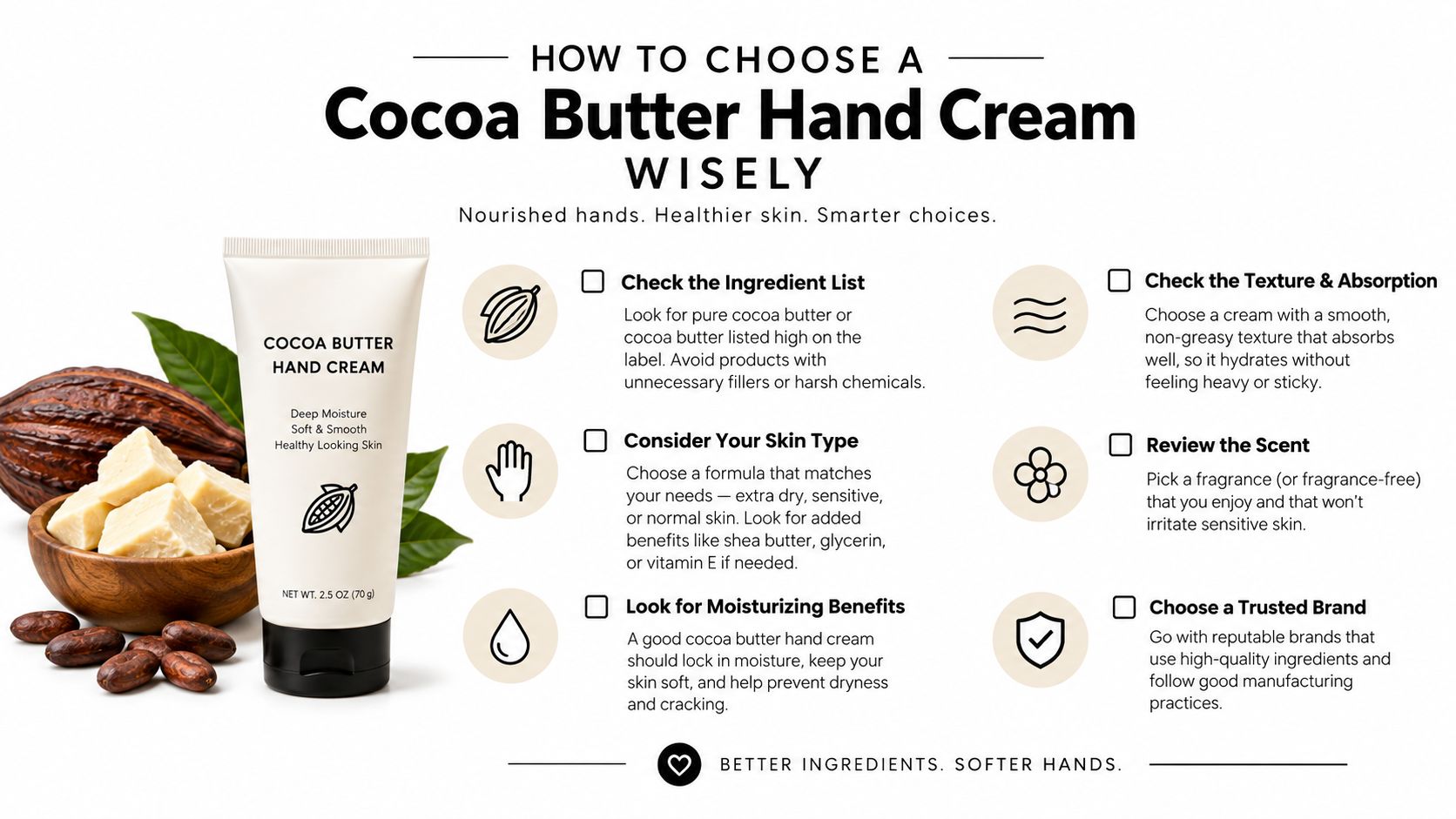
Start with the full ingredient list, not the front-of-pack promise. If the cream is for sensitive or pregnancy-aware use, a shorter, gentler formula is often easier to trust than a heavily scented one. If your hands are very dry, look for a cream that combines cocoa butter with other skin-supportive ingredients rather than relying on cocoa butter alone.
A calm buying checklist
- Check the fragrance first. If your skin is reactive, fragrance-free is usually the safer starting point.
- Look for humectants. Glycerin or urea can make a cream more useful for frequent washing.
- Match texture to timing. Richer creams suit evening use, lighter ones suit daytime carry-on use.
- Read the rest of the formula. Essential oils, strong perfumes, and lots of extras can make a cream harder to tolerate.
- Watch your skin, not the label story. If it stings, keeps stinging, or leaves you red, stop using it.
- Ask for help if the reaction persists. A pharmacist or GP can help you work out whether it's irritation, eczema, or something else.
If you are unsure whether a reaction is allergy or irritation, the NHS guidance above gives a helpful clue, stinging alone doesn't prove allergy. That's why a gentle, low-fragrance cream is often the most sensible first try.
A cocoa butter hand cream can be a very good everyday product when the formula is balanced and the label is honest. If you want pregnancy-friendly body care built around gentle, UK-made routines, visit The Happy Bump Co and explore products designed to support changing skin with simple, careful formulations.