

By the time many mums reach the second or third trimester, the bathroom mirror becomes a little skin check-in station. Your belly feels tight after a shower. The sides of your bump itch by evening. Your usual body lotion suddenly seems to disappear into your skin without doing much. Then you open social media or a shop page and see coconut butter everywhere, usually wrapped in words like glow, softness, and natural nourishment.
That's where a lot of the confusion starts.
Coconut butter can be helpful for dry, stretched pregnancy skin, but it isn't magic, and it isn't the right fit for everyone. The useful way to think about it isn't “Will this make my bump glow?” It's “Will this help my skin barrier hold onto water and feel calmer?” That question matters more, especially when skin is expanding, rubbing against clothing, and reacting differently from week to week.
Table of Contents
- A Quick Word Before We Start
- What Coconut Butter Actually Is
- What Coconut Butter Does for Your Skin
- How to Use Coconut Butter Safely in Pregnancy
- Coconut Butter Versus Other Popular Butters
- When Coconut Butter Is Not the Right Choice
- Choosing the Right Coconut Butter in 2026
A Quick Word Before We Start
One common scene goes like this. A pregnant mum stands in front of the mirror after an evening shower, one hand under her belly, the other holding a jar she bought because someone said it was “great for stretch marks”. She scoops a little out, pauses, and wonders if this is a smart choice or just another product with good branding.
That hesitation makes sense.
Coconut butter is showing up in more bump-care conversations because it feels rich, simple, and familiar. It sounds less clinical than “barrier support”, and for many people that makes it approachable. But pregnancy skin usually needs more than a pleasant texture. It needs something that helps reduce that tight, papery feeling and supports skin that's working hard to stretch.
What matters most: comfort, moisture retention, and skin-type fit.
If you've been trying to work out whether coconut butter belongs in your routine, it helps to slow the question down. What is it, exactly? How is it different from coconut oil? Why does it feel soothing on some people and too heavy on others? And where does it sit beside shea, cocoa, and mango butter when your goal is practical skin support, not a trend-driven purchase?
That's the lens for the rest of this guide. Think barrier first, glow second.
What Coconut Butter Actually Is
Coconut butter is made from the flesh of coconut, blended until its natural oils are released and the mixture turns into a creamy paste. At room temperature, it's usually semi-solid or firm, depending on how warm your bathroom is. It tends to smell softly of coconut and melts quickly when warmed between your palms.
The easiest way to picture it is this. Coconut butter is to coconut oil what peanut butter is to peanut oil. One keeps more of the whole ingredient's body and texture. The other is the extracted fat.
Coconut butter and coconut oil are not the same thing
That distinction matters because many people use the terms as if they mean the same thing.
Coconut oil is the oil portion separated from the coconut and then processed to varying degrees. It's smoother, clearer, and more obviously oily. Coconut butter is thicker and more balm-like because it includes the blended coconut flesh rather than only the pressed oil.
On skin, that changes the experience. Coconut oil tends to glide faster and feel simpler. Coconut butter usually feels denser, creamier, and a bit more cushiony on dry body areas.
Why the texture matters on pregnant skin
Pregnancy skin often doesn't just need “moisture” in the vague beauty sense. It needs help slowing water loss from the surface. A thicker butter can be useful here because it sits on the skin more deliberately than a light lotion.
You'll notice this most on:
- Belly skin when it feels tight after bathing
- Hips and thighs where clothing rubs and dryness builds up
- Breasts where stretching can make skin feel more sensitive
- Hands if frequent washing has left them rough
Coconut butter usually suits body care better than facial care, because the texture is richer and more occlusive.
What's inside it in simple terms
Coconut-derived butters and oils are known for being rich in fatty acids, especially lauric acid. You may also see small amounts of naturally occurring compounds such as vitamin E and polyphenols mentioned in skincare discussions. For everyday use, the practical takeaway is simpler than the chemistry. Coconut butter is a lipid-rich product that helps coat the skin and soften rough, dry-feeling areas.
If you open a jar and it looks hard, grainy, or slightly separated, that doesn't always mean it has gone bad. Natural butters shift with temperature. Warm bathrooms soften them. Cool rooms firm them up. That's normal, and it's one reason the same product can feel lovely one week and awkward the next if the weather changes.
What Coconut Butter Does for Your Skin
The big reason people reach for coconut butter skin products during pregnancy is comfort. Not glamour. Comfort. When your belly feels stretched and thirsty, a rich butter can make skin feel more flexible and less scratchy.
That comfort comes mostly from how coconut lipids behave on the outermost layer of skin, called the stratum corneum. This top layer acts like your body's seal. When it's dry or disrupted, water escapes more easily and skin starts feeling flaky, tight, or prickly.
It helps reduce water loss
A coconut-based butter works mainly as an occlusive and softening layer. In plain language, it helps trap water near the skin rather than letting it evaporate quickly after washing.
Evidence from a UK-facing summary of a randomised double-blind trial found that virgin coconut oil improved xerosis in 81% of participants compared with 72% for mineral oil, and transepidermal water loss fell from 26.68 to 7.09 in the coconut oil group, alongside increased skin hydration, according to Typology's review of coconut oil for dry skin.
For a pregnant mum, that matters most after a shower. You step out, your skin still holds some water, and a richer product can help keep more of that hydration where you want it.
It supports a stressed skin barrier
Dry, stretched skin isn't only lacking water. It often also feels short on lipids, the fats that help the barrier stay smooth and less reactive. Coconut-derived butters bring those lipids back onto the surface.
A pilot study on virgin coconut oil and dry skin reported increased stratum corneum hydration over two weeks, with participant preference comparable to white petrolatum, as described in the pilot study summary on Zendy. That's useful because it lines up with what many mums notice in real life. Skin feels less papery and more supple when a lipid-rich layer is used consistently.
It may feel calming on compromised dry skin
There's also some reassurance around gentleness, though this needs a careful reading. In vitro skin-model work on virgin coconut oil found it was non-skin-irritant and non-phototoxic, with an irritation threshold reported as IC50 > 1000 μg/mL and phototoxicity index PIF < 2, according to the published skin-model study on PMC.
That doesn't mean every coconut butter product will suit every pregnant person. Formula matters. Fragrance matters. Added essential oils matter. Still, it supports the idea that coconut-based lipids themselves can sit in the “low-irritancy moisturiser” category when the overall product is simple.
Practical reading of the evidence: coconut butter is most useful as a barrier-support step for dry body skin, not as a promise to fix every pregnancy skin concern.
How to Use Coconut Butter Safely in Pregnancy
Using coconut butter well is less about quantity and more about timing. You get better results when you apply a small amount to damp skin rather than a thick layer onto very dry skin hours later.
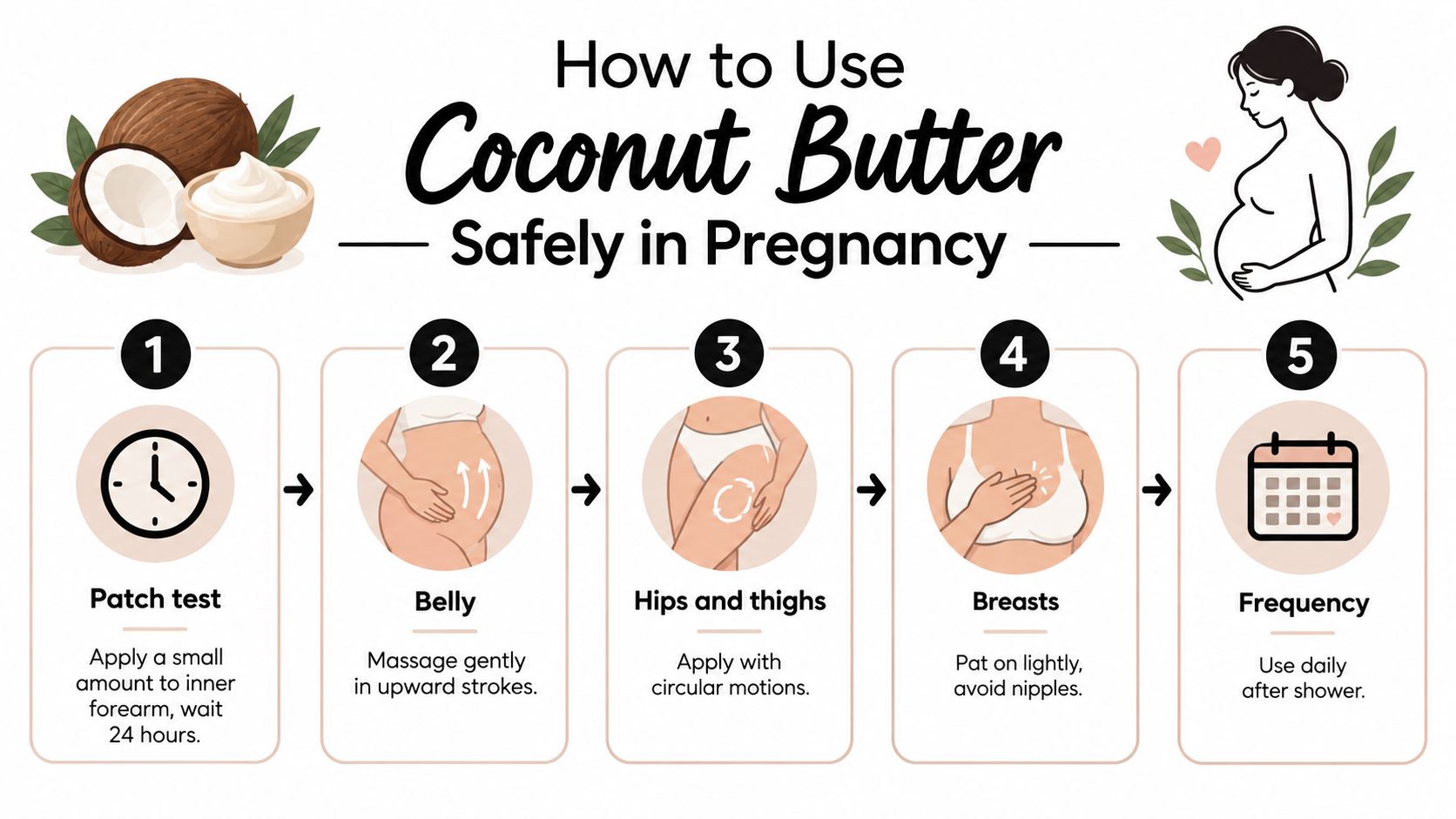
Start with the visual routine below, then fine-tune based on how your skin feels.
Patch test first, then go zone by zone
Before using any new butter regularly, patch test it on the inner forearm and leave it for 24 hours. If your skin becomes itchy, bumpy, or red, skip it.
After that, apply it where pregnancy dryness usually shows up first:
- Belly. Warm a pea-to-small-scoop amount between clean palms and press it over damp skin using gentle upward strokes.
- Hips and thighs. Use circular motions where tightness and rubbing tend to build.
- Breasts. Pat on lightly and avoid the nipple area if you're close to feeding preparation or feeling more sensitive there.
- Hands and elbows. Use whatever is left on your palms rather than washing it away.
A clean scoop helps keep the jar tidy. If the butter is very firm, holding the closed jar in your hands for a minute usually softens it enough to work with.
The order matters
For many people, the most comfortable routine is hydrate first, seal second.
That could look like this:
- After your shower apply a water-based layer first if you use one, such as a simple hydrating mist or a pregnancy-safe hydrating serum.
- Next use a thin oil layer if that suits your routine.
- Last apply coconut butter to seal everything in.
If you want an example of how coconut can appear in a bump routine, The Happy Bump Co's coconut oil balm guide shows one coconut-based option used for dry, changing skin.
A quick visual demo can help if you're more of a routine learner than a product-label reader.
Adjust by trimester and by weather
Your skin won't behave exactly the same way throughout pregnancy.
- Earlier pregnancy often calls for lighter, once-daily use if dryness is mild.
- Mid to late pregnancy may suit daily application after showering, with a second small application at night if the belly feels tight again.
- Cold weather usually increases the need for a richer seal.
- Warm weather may make a full butter feel too heavy, in which case you can use less or reserve it for the driest spots.
If your skin feels sticky for hours, you're probably using too much. A thin layer on damp skin usually works better than a thick layer on dry skin.
Store the jar somewhere cool and away from direct heat. Natural butters can soften, harden, and sometimes become grainy with temperature swings. That affects texture more than usefulness.
Coconut Butter Versus Other Popular Butters
Coconut butter gets a lot of attention, but it's only one type of body butter. If your pregnancy skin is fluctuating, choosing by skin type and climate is smarter than choosing by trend.
The simplest difference is feel. Coconut butter often gives a glossy, coated finish. Shea tends to feel calmer and richer. Cocoa usually feels heavier and more sealing. Mango often lands lighter and quicker.
A side-by-side decision guide
| Butter | Texture & Absorption | Best For | Watch Out For |
|---|---|---|---|
| Coconut Butter | Creamy, balmy, can feel glossy on the skin | Dry belly skin, post-shower sealing, areas that feel tight | May feel heavy on acne-prone or easily congested skin |
| Shea Butter | Rich and cushiony, usually less glossy than coconut | Very dry, itchy, reactive-feeling body skin | Can feel dense in hot weather |
| Cocoa Butter | Thick, slow to absorb, strongly occlusive | Winter routines, rough patches, overnight body care | Can feel waxy if you dislike a heavy finish |
| Mango Butter | Softer, often faster-absorbing than heavier butters | Sensitive-feeling skin, warmer months, people who dislike residue | May not feel rich enough for very dry skin on its own |
How to match the butter to the skin in front of you
If your belly feels tight but your shoulders and chest break out easily, coconut butter might work well on the bump and poorly everywhere else. If your skin is flaky, itchy, and bothered by central heating or cold wind, shea may feel more comforting. If winter has turned your skin rough and roughened patches need a stronger seal, cocoa often makes more sense. If you hate that coated feeling but still want softness, mango is often easier to live with.
For readers comparing richer options, this shea butter lotion guide is useful if your skin tends to prefer a calmer, more enveloping texture.
Simple examples by stage and season
A few everyday scenarios make this easier.
- Second trimester, mild dryness, warmer weather. Mango or a light layer of coconut butter may be enough.
- Third trimester, evening itch, clothing rubbing at the sides of the bump. Shea or coconut butter usually makes more sense than a light lotion alone.
- Cold months, very dry shins and belly. Cocoa butter often earns its place here because it sits on the skin longer.
Some mums do best with two butters, not one. A lighter one for daytime and a richer one for night can make more sense than forcing a single product to do every job.
Blending is also an option. If your skin changes week to week, you might use shea on your driest nights and coconut butter when you want a smoother, more spreadable finish.
When Coconut Butter Is Not the Right Choice
Coconut butter has limits, and this is the part people often skip. A product can be nourishing for dry body skin and still be a poor match for other areas.
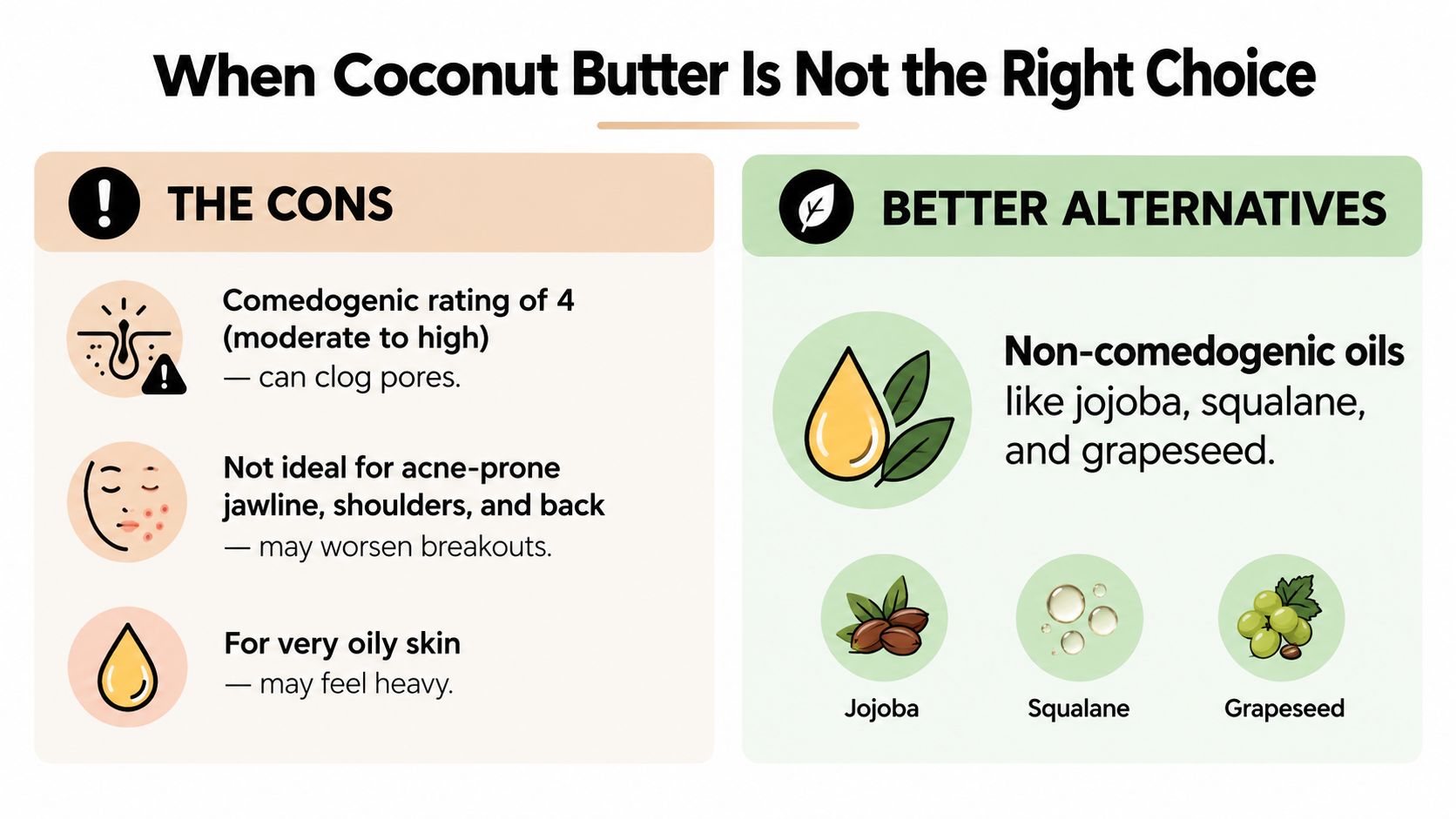
The biggest issue is pore clogging potential. Pregnancy can make some people drier and others much more breakout-prone. If your jawline, shoulders, chest, or back are already congested, coconut butter may not help.
Acne-prone and reactive skin needs a different plan
Pregnancy-safe guidance can describe coconut-based ingredients as broadly safe, while other coverage warns that coconut oil is highly comedogenic and may worsen blackheads or breakouts, as discussed in Medical News Today's pregnancy skin care guide. That doesn't mean coconut butter is “bad”. It means body-safe and skin-type-safe aren't the same thing.
If you're acne-prone, a better rule is to keep coconut butter for the belly if it suits you, and use lighter options on breakout-prone areas. Many people prefer jojoba- or squalane-based products for the face because they feel less congesting.
It won't cure stretch marks
This is another place where marketing often gets ahead of evidence.
UK-facing information notes that coconut oil may help prevent the appearance of stretch marks and can be used twice daily, but there's no clinical data showing it can reduce stretch marks once formed, according to Typology's discussion of coconut oil and stretch marks. So if coconut butter helps, think of that help as comfort care. It may soften dryness, reduce the tight feeling, and make skin more comfortable. It's not a guaranteed anti-striae treatment.
Other times to skip it
A few situations call for extra caution:
- Facial acne. Rich body butters often overwhelm facial skin.
- Very oily body skin. The finish may feel unpleasant.
- Heat-prone folds or sweat-heavy areas. Heavy occlusion can feel stuffy on some people.
- Highly fragranced formulas. Added perfume is often the bigger problem than the coconut itself.
If you're very reactive, choose simpler formulas with fewer extras. The shorter the ingredient list, the easier it is to work out what your skin is responding to.
Choosing the Right Coconut Butter in 2026
A good coconut butter choice isn't the one with the prettiest jar. It's the one that matches your skin's behaviour.
Start with a quick mental checklist. Is your main issue dryness or congestion? Do you want a thick overnight seal or a lighter after-shower finish? Do you react to fragrance? Are you buying for the belly only, or for larger body areas?
What to look for on the label
For pregnancy body care, simpler is usually better.
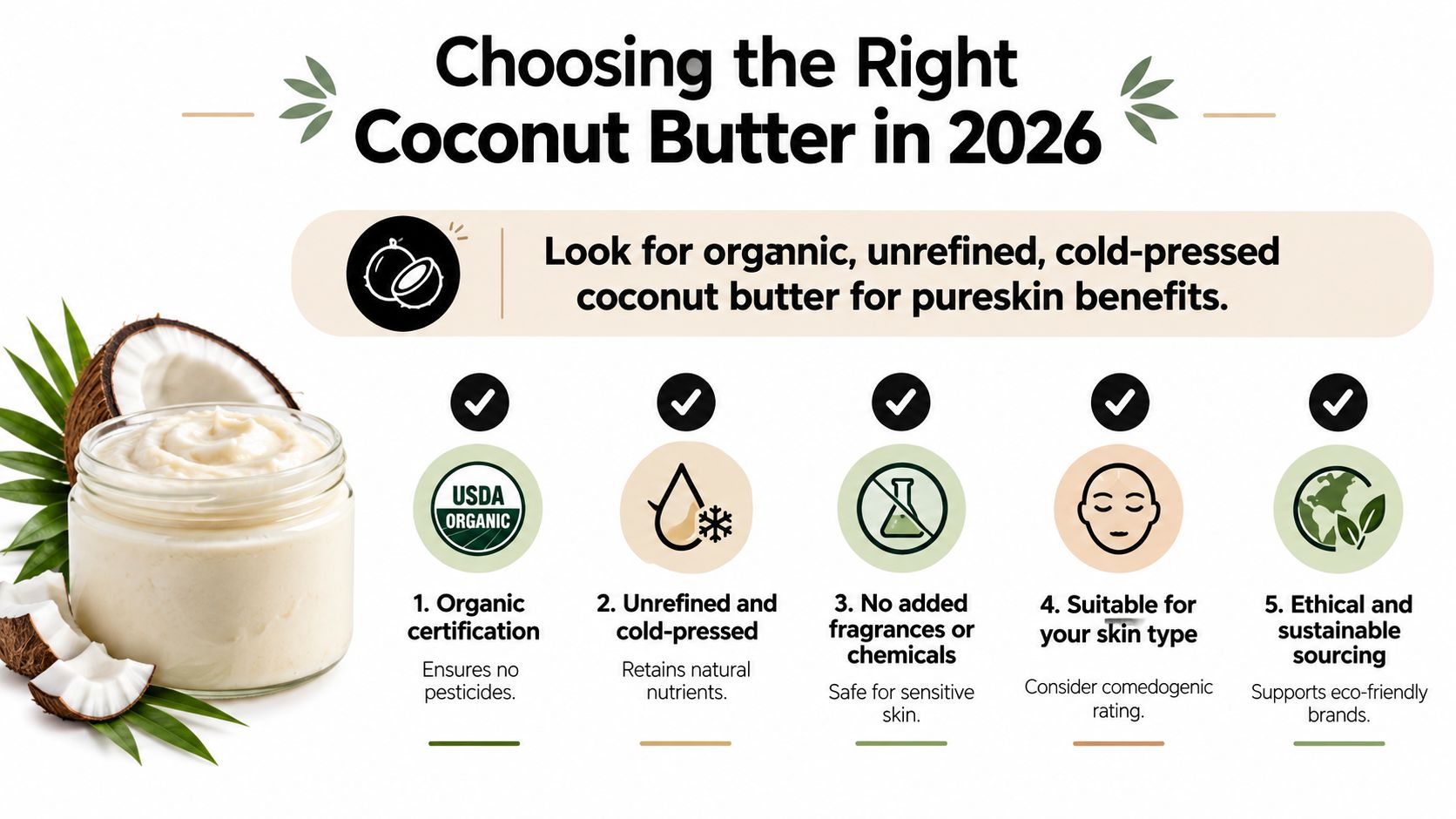
Green flags include:
- Short ingredient lists that make the product easy to understand
- Unrefined or cold-pressed positioning if you prefer minimal processing
- No added fragrance if your skin has become more reactive
- Texture that suits your routine because a butter you dislike using won't be used consistently
Red flags are mostly practical. Strong perfume, lots of decorative plant extracts, and formulas that feel more like scented body dessert than skincare can become irritating fast when skin is already stretched and sensitive.
If you're comparing ingredient lists across bump products, this body butter ingredients guide can help you sort useful components from filler.
Choose by skin type, not ingredient fashion
This is the most useful 2026 mindset shift. Don't ask whether coconut butter is trendy, clean, or popular. Ask whether it fits your body skin.
A good match often looks like this:
- Dry, tight belly with little body acne. Coconut butter may work well.
- Very dry and itchy skin. Shea may be a stronger everyday staple.
- You want the heaviest overnight seal. Cocoa may suit better.
- You dislike residue or live in warm weather. Mango may be easier to wear.
That skin-type-first approach also helps you avoid the all-or-nothing trap. You don't have to become “a coconut butter person”. You can use it only where it's helpful.
A sensible routine pairing
For many pregnant mums, the most effective way to use coconut butter is as the final step after water has already reached the skin. Damp skin after a shower is ideal. If you enjoy using a pregnancy-safe oil underneath, keep that layer thin and let the butter do the sealing work on top.
And if your skin changes, let your routine change too. Some weeks need lighter care. Some need thicker support. Listening to the skin you have today is more useful than sticking rigidly to a trend you bought into a month ago.
The Happy Bump Co offers UK-made pregnancy skincare designed for changing bump skin, including belly care products that focus on moisture, comfort, and gentle daily use. If you want a routine built around barrier support rather than hype, you can explore The Happy Bump Co for bump-focused options that fit alongside the kind of approach covered here.