

Dry skin patches on your legs during pregnancy are usually caused by stretching skin, hormonal shifts, and increased circulatory pressure, and most can be managed with gentle hydration and leg elevation. If patches persist, crack, bleed, hurt, or appear with swelling or colour changes, they may need medical assessment.
You may notice them while getting dressed, perhaps as rough shins, flaky skin around your ankles, or an itchy patch behind one knee. It's easy to assume the problem is just the weather or a lotion that no longer suits you. Pregnancy can make ordinary skin dryness more noticeable, but recurring lower-leg changes deserve a little more attention because circulation can contribute too.
Table of Contents
- Why Dry Skin Patches Appear on Legs During Pregnancy
- The Role of Circulation and Skin Stretching
- Identifying the Cause of Your Leg Patches
- Safe Home Treatments and Moisturising Guidance
- When to Seek Professional Medical Advice
- Building a Long-Term Skin Care Routine
Why Dry Skin Patches Appear on Legs During Pregnancy
While getting dressed, you might notice pale flakes on your shins, roughness around your ankles, or tight skin that was not there before. During a first pregnancy, an unfamiliar patch can quickly become worrying. Dry skin patches on legs are often part of normal skin changes, not evidence that you have done anything wrong.
Pregnancy alters the skin's surroundings in several ways. Hormonal shifts can weaken the skin barrier, while stretching leaves the surface feeling tight and less comfortable. The thighs and lower legs may therefore need regular emollient care to replace lost moisture. Pregnancy guidance recognises itching on stretching skin, including the thighs, but patches limited to the lower legs can also reflect changes in venous circulation. The NHS-linked pregnancy guidance on itching and rash provides useful context.
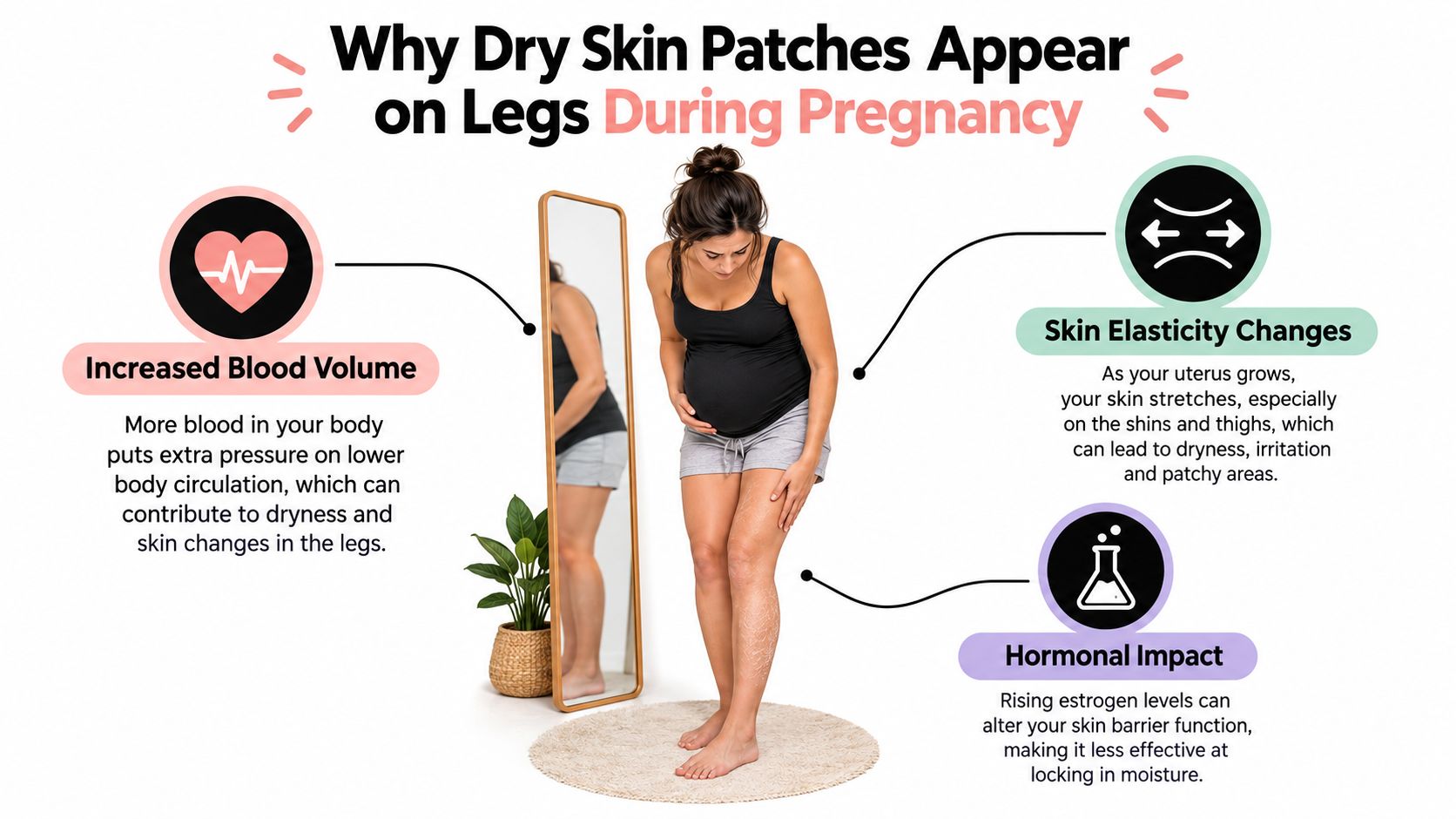
What changes beneath the surface
Circulation also has more work to do. Increased fluid and pressure around the pelvis can slow the return of blood and fluid from the legs, especially after long periods of standing or sitting. The result may be tightness or ankle swelling, which can make a fragile skin barrier feel even more irritated. A patch that repeatedly appears around the lower leg deserves attention beyond moisturising alone.
The lower legs can act like the end of a busy drainage route. If fluid returns more slowly, the surrounding skin may become itchy, flaky, inflamed, or altered in colour. These signs can overlap with ordinary dryness, which is why tracking when patches appear, and whether swelling accompanies them, can help distinguish surface moisture loss from a circulation-related problem.
Eczema is common in the UK and can affect the limbs, bends, and creases, including behind the knees. Allergy UK's eczema factsheet explains this recognised pattern. Pregnancy does not make every patch eczema, but it can make existing barrier problems more noticeable.
Reassurance: Rough, itchy skin is common during pregnancy. Look for improvement with gentle care, and seek advice if patches keep returning or come with swelling, inflammation, or colour change.
For a plain-language explanation of pregnancy-related moisture changes, read this guide to what causes dry skin during pregnancy. It can help you separate simple surface dryness from changes that may need assessment.
The Role of Circulation and Skin Stretching
Moisture loss explains some patches, but it doesn't explain every lower-leg symptom. During pregnancy, increased blood volume and pressure around the pelvic veins can make the upward return of blood from the legs less efficient. Fluid may then collect around the ankles, particularly after a day spent standing, travelling, or working at a desk.
Think of the leg veins as a hose carrying water uphill. The valves inside the veins help keep the flow moving in the right direction. If the route is under extra pressure, the return journey becomes slower. The skin may respond with tightness, itching, scaling, or a change in colour. These signs can occur alongside ordinary dryness, so applying moisturiser alone may not address the whole problem.
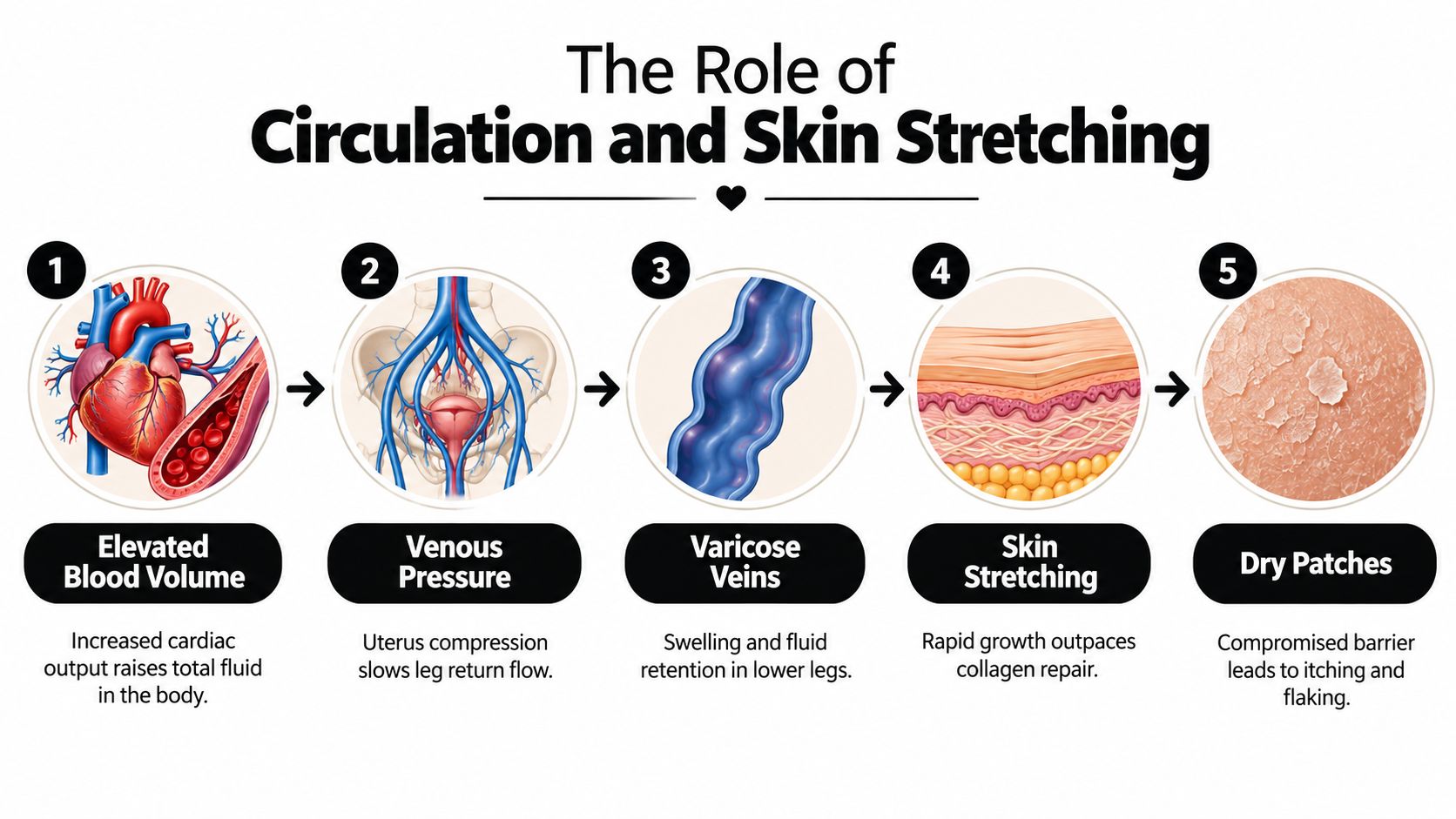
When circulation is part of the picture
Varicose eczema, also called gravitational or stasis eczema, is a lower-leg condition associated with venous insufficiency. UK eczema guidance describes it as common in adults with varicose veins and recommends treating the skin while addressing impaired circulation. Eczema UK's guidance for adults explains that emollients should cover the whole lower leg, not only the visible patch, and that compression hosiery or bandaging may be used when circulation is impaired, unless peripheral artery disease is present.
Look for a pattern rather than one isolated symptom:
- Ankle swelling: Socks may leave deeper marks, or one or both ankles may look fuller by evening.
- Visible veins: Varicose veins or prominent veins may appear near the affected area.
- Brownish discolouration: The skin may look darker around the ankles or shins instead of just flaky.
- Heaviness: Your legs may feel tired, heavy, or uncomfortable after standing.
- Recurring patches: The same area may improve briefly and then flare again.
Varicose eczema affects the lower legs and is linked to circulation changes, not just dehydration. Specialist UK guidance discusses measures such as emollients, leg elevation, weight management, and compression support, with treatment adjusted for the individual. Read more about varicose eczema and circulation-related leg changes.
Raise your legs when you can, keep gently moving, and mention persistent swelling or discolouration to your midwife or GP. Don't start compression hosiery without professional advice during pregnancy, particularly if you have other circulation concerns.
The following video provides a visual explanation of the circulation cycle and why pressure in the lower legs can affect the skin.
Identifying the Cause of Your Leg Patches
Not every rough patch has the same cause. Colour, location, sensation, and response to moisturiser can provide useful clues, but they can't replace an examination when the appearance is unusual or the problem persists.
| Possible cause | What you may notice | What it suggests |
|---|---|---|
| Simple dryness | Tightness, fine flaking, or mild itch without swelling | The skin barrier may need gentler washing and more consistent emollient care |
| Atopic eczema | Itchy, inflamed areas that may occur on limbs or behind the knees | A recurring inflammatory skin condition may be involved |
| Varicose eczema | Lower-leg patches with ankle swelling, visible veins, or brownish colour changes | Circulation and venous pressure may be contributing |
| Psoriasis | Sharply defined, thicker, scaly patches, often around the knees or lower legs | A different inflammatory condition may need assessment and tailored treatment |
Observations that help your clinician
Notice whether the patch is on the front of the shin, around the ankle, behind the knee, or over the knee itself. Record whether it feels itchy, sore, warm, tight, or tender, and whether the colour changes after you've been standing. A photograph taken in similar light can help you describe how the area evolves, but don't rely on photographs if the skin is painful, broken, or rapidly changing.
Psoriasis commonly affects the lower legs and knees. Actinic keratoses can also appear as dry, scaly patches on sun-exposed skin and carry a small cancer risk, so a persistent scaly lesion shouldn't automatically be treated as pregnancy dryness. NHS-linked guidance on itching and rash in pregnancy reinforces the need to consider more than one explanation when a rash doesn't follow the usual pattern.
One useful distinction is how the patch behaves after care. Simple dryness often feels calmer after regular moisturising and avoiding hot water. Varicose eczema may continue alongside swelling or discolouration, while psoriasis may remain sharply outlined and thick despite ordinary body lotion.
For a plain-language comparison of moisture loss and dehydration, read about dry skin versus dehydrated skin. When speaking to your maternity team, describe the location, duration, colour, swelling, and any products or treatments you've already tried.
Safe Home Treatments and Moisturising Guidance
Most mild dryness improves when you protect the skin barrier consistently rather than treating the visible patch only when it itches. Pregnancy is a good time to simplify your routine. Choose fewer products, avoid strong fragrance where possible, and give your skin regular support after washing.
A gentle daily routine
- Keep showers lukewarm. Hot water can strip the oils that help the outer skin retain moisture. Keep washing gentle, especially over flaky or irritated areas, and pat your legs dry rather than rubbing them.
- Use a fragrance-free cleanser. A soap substitute or mild, unperfumed wash is often kinder to dry skin than heavily fragranced soap. You don't need to scrub away every flake. Friction can increase irritation and encourage scratching.
- Moisturise while skin is still slightly damp. Apply a fragrance-free emollient soon after bathing, when a little water remains on the surface. Thick creams or ointments usually provide more barrier support than a light lotion when patches are rough.
- Cover the whole lower leg. If swelling, visible veins, or ankle discolouration accompanies the dryness, don't apply emollient only to the most obvious area. UK eczema guidance recommends covering the whole lower leg in circulation-related eczema, while your clinician can advise whether additional treatment is appropriate.
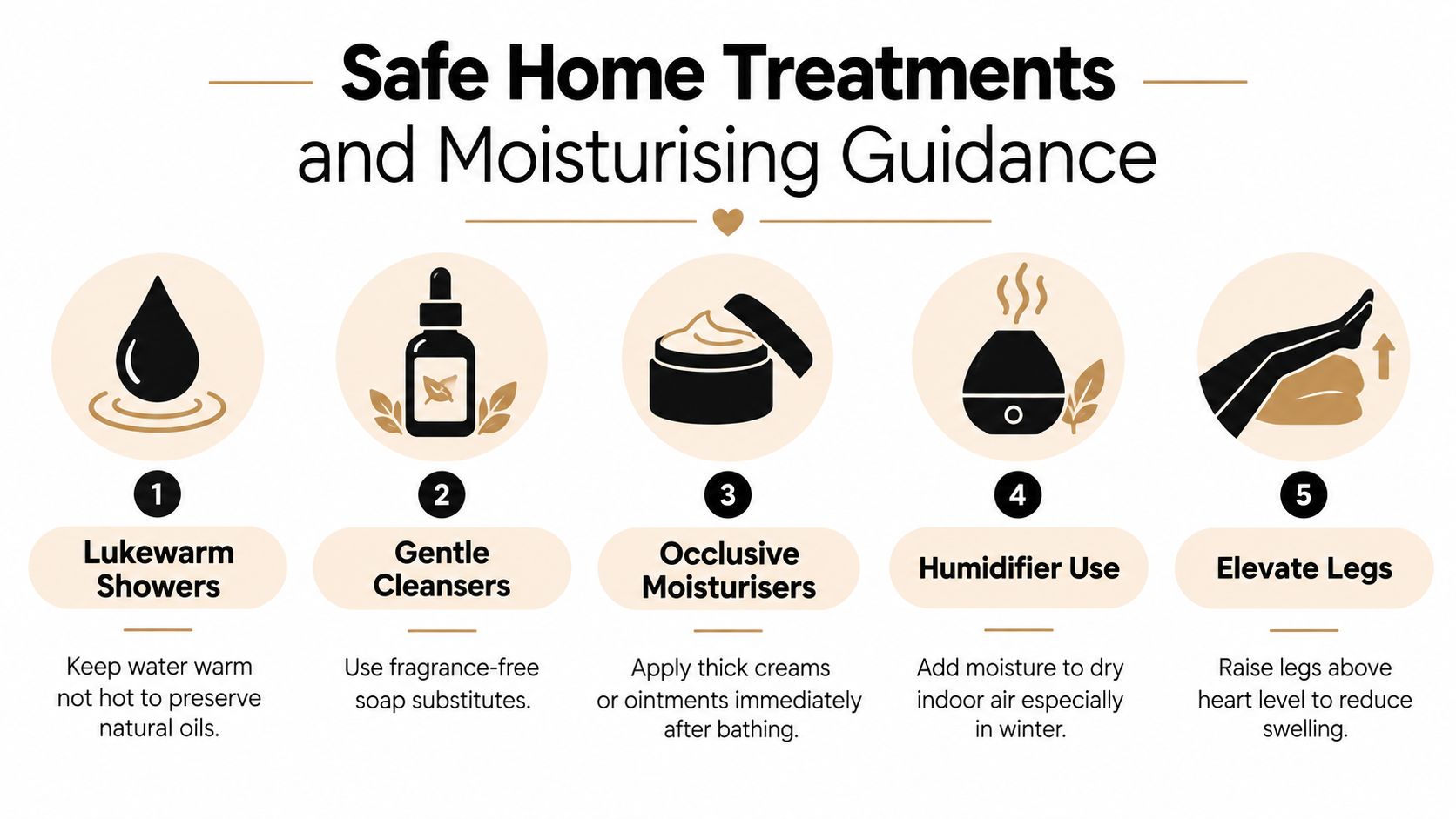
Support your legs as well as your skin
Change position regularly if you've been sitting or standing. Gentle walking and ankle movements can keep your legs from feeling so still and heavy. When you rest, place your legs up comfortably, taking care not to create pressure or discomfort.
A humidifier may help if indoor air feels dry, particularly during colder months, but it won't replace emollient care. Keep it clean according to the manufacturer's instructions so it doesn't introduce another source of irritation.
Small habit, repeated often: Keep your moisturiser beside your towel or nightwear. Making application part of bathing or bedtime is more reliable than waiting until the itching becomes distracting.
Avoid scratching, even when the urge is strong. Keep nails short, press or cool the area instead, and ask your midwife, pharmacist, or GP before using medicated creams. Some treatments are suitable in pregnancy, but the right choice depends on the diagnosis, the area affected, and the strength of the product. For more practical guidance, see this advice on choosing moisturiser for dry skin during pregnancy.
When to Seek Professional Medical Advice
Pregnancy can make many skin changes feel normal, but “common” doesn't mean every symptom should be ignored. Arrange a review if basic care isn't helping or if the patch looks different from ordinary dryness.
UK-linked NHS patient guidance advises seeing a GP when widespread dry, cracked, itchy skin continues beyond two weeks. The NHS guidance on mild dry skin makes persistence an important point for escalation, particularly when discomfort continues despite sensible home care.
Arrange an assessment for these signs
- Persistent cracking or bleeding: Open skin can become painful and more vulnerable to infection.
- Sharp borders or thick scaling: A clearly defined scaly patch may need a diagnosis rather than repeated moisturising.
- Pain, warmth, or tenderness: These symptoms suggest more than simple surface dryness.
- Swelling with colour change: Ankle swelling, brownish discolouration, or visible veins can point towards circulation-related eczema.
- Failure to improve: If the patch doesn't settle after consistent gentle care, ask a GP, midwife, pharmacist, or dermatologist for advice.
- A rapidly changing lesion: A patch that grows, bleeds, or changes noticeably deserves prompt review.
Seek urgent medical help for sudden, marked swelling in one leg, especially if it comes with significant pain, warmth, or breathlessness. Those symptoms need assessment rather than home skincare.
A clinician can inspect the skin, ask about your pregnancy and circulation, and decide whether you need an emollient plan, a pregnancy-suitable anti-inflammatory treatment, or further assessment for veins. Getting help isn't overreacting. It protects your comfort and makes sure a treatable circulation or inflammatory problem isn't mistaken for dry skin.
Building a Long-Term Skin Care Routine
A workable routine should fit around pregnancy, not become another task to manage. In the morning, use a gentle cleanser if needed and apply a fragrance-free emollient to slightly damp skin. During the day, change position regularly, take comfortable movement breaks, and rest with your legs raised.
At night, check the patches without repeatedly picking or scratching them. Note changes in swelling, colour, pain, or texture, and arrange advice if the pattern is persistent or unusual. Keep the routine simple enough to repeat, because steady barrier care is more useful than occasional intensive treatment.
Remember the central distinction. Stretching and hormonal changes can make skin feel dry and tight, while lower-leg swelling, varicose veins, or brownish discolouration can indicate that circulation is contributing. Moisturiser supports the surface, but it can't diagnose or correct an underlying vein problem.
The Happy Bump Co creates UK-made pregnancy body care, including Belly Butter, Belly Oil for Stretch Marks, and Pregnancy Tummy Scrub, designed to nourish changing skin with a gentle daily ritual. Visit The Happy Bump Co to explore pregnancy-focused care for dry skin, stretch marks, and everyday comfort.