

You've finally got the baby down, but your skin won't settle. Your face feels tight when you smile, your hands sting after washing, and your legs are so flaky that getting dressed creates a trail of dry skin on the floor. You're exhausted, short on time, and probably wondering why the skincare that worked before pregnancy suddenly isn't enough.
Extremely dry skin after pregnancy is common, understandable, and usually manageable with a much simpler routine than you might expect. The priority isn't a complicated collection of serums. It's protecting the skin barrier, reducing irritation, and making moisturising easy enough to repeat when your day revolves around feeding, nappy changes, and broken sleep.
Table of Contents
- Why Your Skin Feels So Tight and Flaky Postpartum
- A Gentle Bathing and Moisturising Routine
- Safe Ingredients for Breastfeeding and New Mums
- Lifestyle Adjustments That Support Skin Hydration
- When to Seek Professional Clinical Advice
- Your Daily Postpartum Skin Rescue Checklist
Why Your Skin Feels So Tight and Flaky Postpartum
Your skin hasn't suddenly become difficult because you've done something wrong. After delivery, the sharp fall in oestrogen and progesterone reduces the skin's ability to retain moisture. That hormonal withdrawal can leave skin feeling tight, flaky, itchy, or unusually sensitive as your body adjusts. UK dermatology guidance on postpartum skin changes recognises that these symptoms can continue from a few weeks to several months while hormones stabilise.
That explains the morning shock when your cheeks feel papery, your stomach feels stretched and dry, or your hands itch after handling your baby. Your previous cleanser or body lotion may not have changed, but your skin's needs have. You may find it helpful to understand the difference between dry skin and dehydrated skin, because postpartum hormonal changes can make the surface feel both lacking in oil and poor at holding water.
A transition, not a personal failure
The postpartum period isn't a single event that ends when you leave hospital. Hormonal shifts continue as your body recovers, and breastfeeding-related changes can also affect skin texture and hydration. That means waiting for your skin to look and feel exactly as it did before pregnancy may create unnecessary pressure.
The right target is comfort and barrier support, not a perfect overnight reset.
Treat tightness early, before the skin becomes sore. Dry skin can move from a mildly uncomfortable feeling to visible flaking and irritation, especially when hot water, frequent washing, rough towels, central heating, and fragranced products add more stress. You don't need to diagnose every change yourself, but you do need to stop treating very dry skin as a cosmetic nuisance that will automatically disappear.
Start with a rich, fragrance-free moisturiser and apply it consistently. Keep one beside the shower, another near the bed, and a small hand cream by the sink if handwashing is making your skin crack. The best routine is the one you can complete while the baby is safe nearby and before you lose the next five minutes to another feed.
A Gentle Bathing and Moisturising Routine
A good postpartum routine should take minutes, not become another job. Use less heat, less friction, and more consistency. The aim is to cleanse without stripping the skin, then replace moisture before the surface has time to dry out.
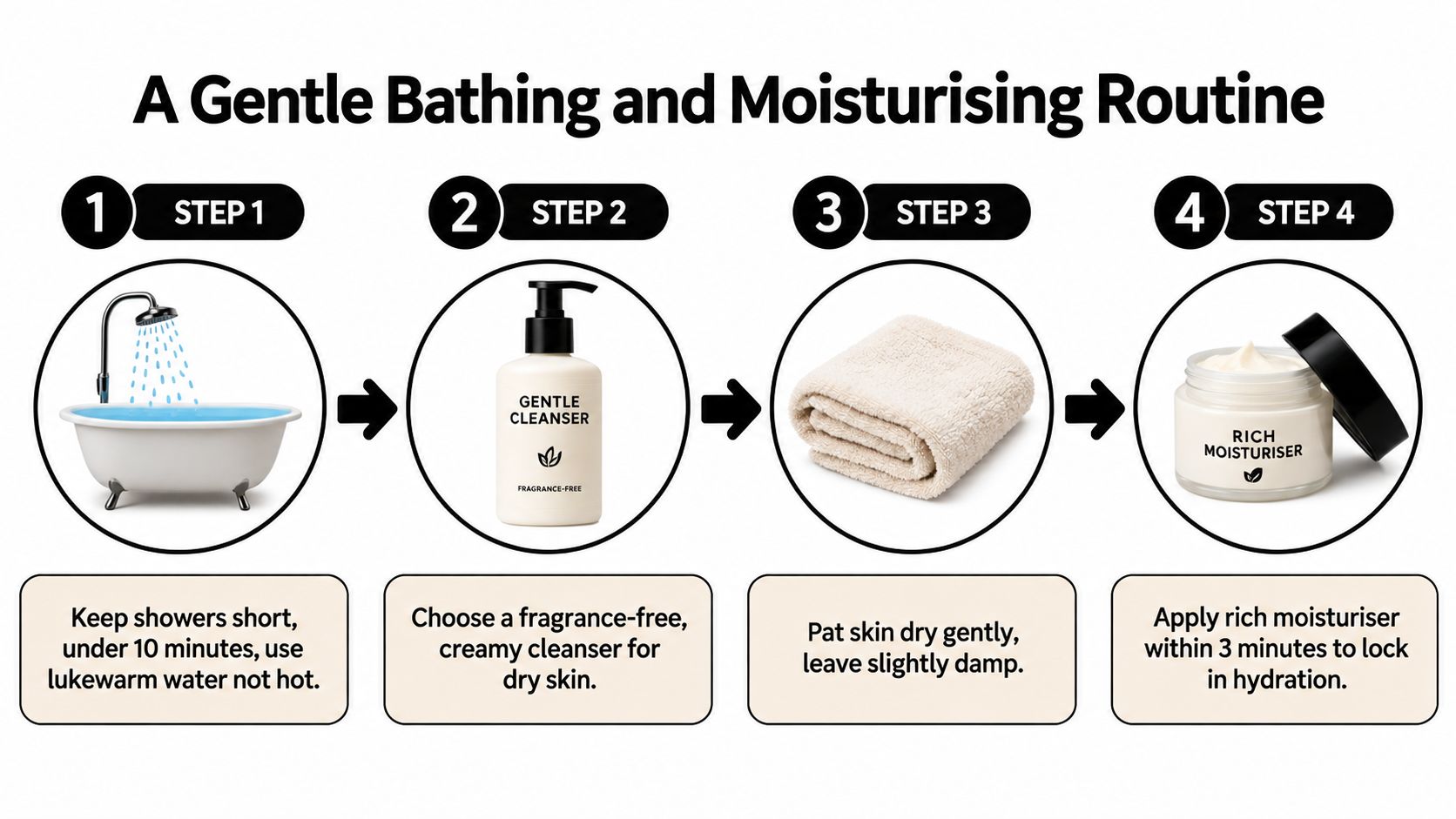
Four practical steps
- Turn the temperature down. Choose lukewarm water rather than a hot shower or bath. Keep washing brief, especially if your skin feels tight immediately afterwards. Hot water can make already uncomfortable skin feel more irritated, while a shorter wash leaves more of the protective surface oils in place.
- Clean only what needs cleaning. Use a gentle, fragrance-free creamy cleanser or a soap substitute instead of a strongly foaming body wash. Focus on areas that need cleansing, and avoid scrubbing flaky patches. You don't need a body brush, exfoliating mitt, or grainy scrub while your barrier is unsettled.
- Pat, don't rub. Use a soft towel and press away excess water. Leave the skin slightly damp rather than drying it until it feels completely tight. Rubbing can aggravate sensitive areas and turn ordinary dryness into soreness.
- Moisturise straight away. Apply a fragrance-free emollient or thick moisturiser while the skin is still slightly damp. The UK self-care guidance for itching and rash recommends frequent emollient use, soap substitutes, shorter bath or shower times, and reassessment if symptoms don't improve after 7–14 days.
Make the routine easier to repeat
Don't wait until the bathroom is perfectly tidy or the baby is asleep. Put the lid-open moisturiser where you can reach it, apply it in sections, and dress immediately afterwards. If a full body application feels impossible, start with the driest areas, such as hands, shins, abdomen, elbows, and any patch that feels tight or cracked.
Choose a cream or ointment over a thin lotion when the dryness is severe. A lighter lotion may feel pleasant but often needs more frequent application. Avoid products that sting on contact, contain heavy fragrance, or leave the skin feeling tight after absorption. If a product burns, stop using it rather than trying to push through.
Safe Ingredients for Breastfeeding and New Mums
With a baby in your arms and little time to read labels, skincare decisions need to stay simple. Choose a bland, nourishing formula for dry body skin, leave unnecessary actives aside, and ask a pharmacist, GP, or health visitor about anything used on the breast or nipple area.
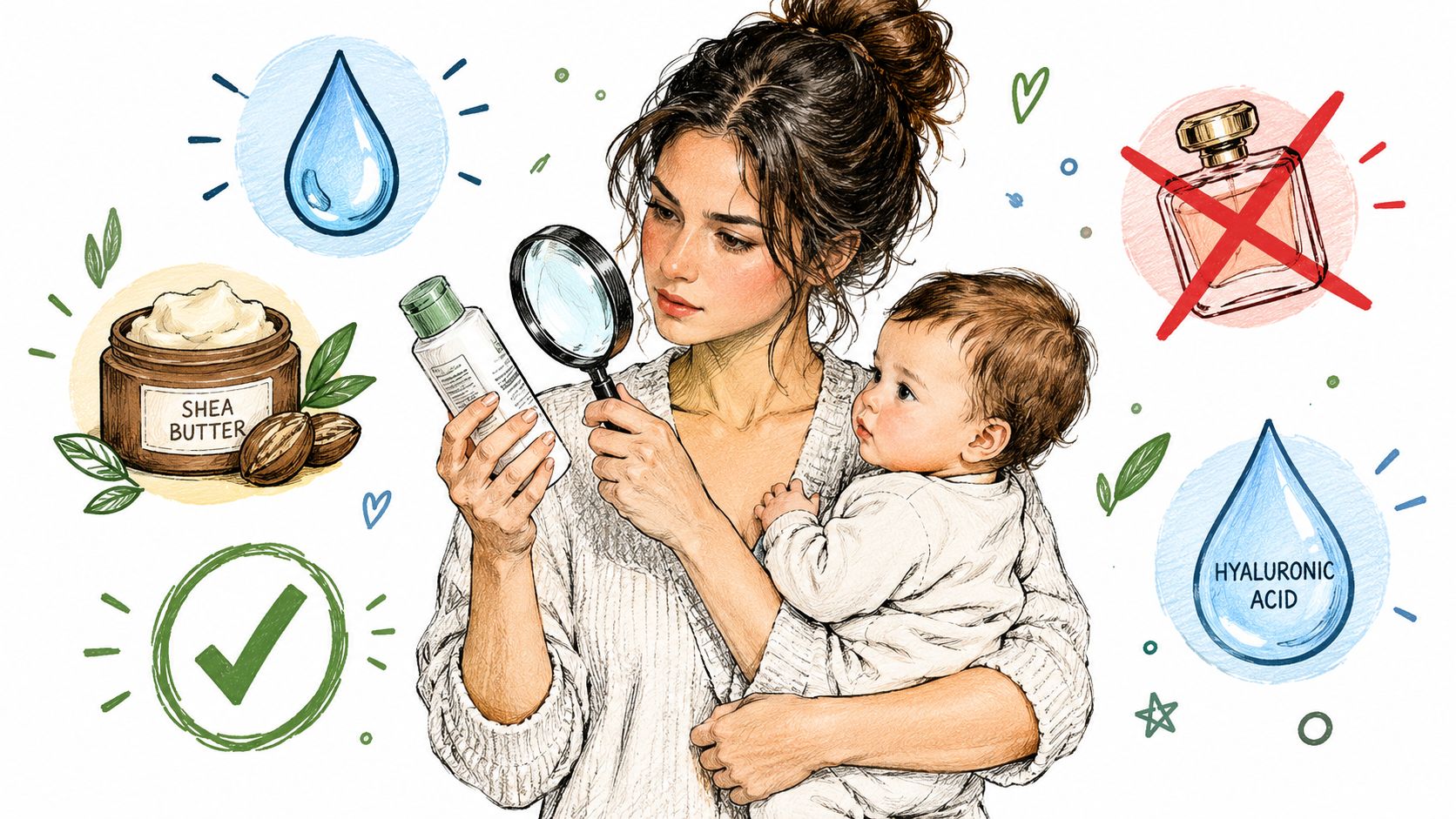
Favour barrier-supportive formulas
Choose fragrance-free emollients, rich creams, and ointments with familiar moisturising ingredients such as shea butter, cocoa butter, plant oils, glycerine, or ceramides. They soften and comfort dry skin without adding a complicated active-treatment routine. A body butter suits rough, tight areas, while an oil is easy to smooth over damp skin after bathing. Read our guide to oil for dry skin when deciding which format fits your routine.
The Happy Bump Co's Belly Butter and Belly Oil for Stretch Marks are examples of pregnancy and postpartum body-care formats based on rich butters and nourishing oils, including sweet almond, argan, coconut, and avocado oils. Apply any body product away from areas your baby's mouth or hands may touch, and follow the product directions.
Put strong actives on hold
Retinoids, intense exfoliating acids, heavily fragranced products, and high-strength treatment formulas are poor choices for sore or reactive skin. They may increase irritation without addressing the damaged barrier. Leave flaky skin alone. As comfort improves, roughness usually becomes easier to manage.
Take particular care around the breasts and nipples. A product suitable for your legs may not be suitable where your baby could touch or ingest it. Use products intended for that area, remove them according to professional advice before feeding, and seek individual guidance if the skin is cracked, painful, or persistently itchy.
“Natural” does not guarantee suitability after pregnancy. Essential oils and botanical fragrance can irritate sensitive skin, so patch-test a new body product on a small area first. Introduce one product at a time, making it easier to identify what your skin tolerates.
Keep the routine manageable. One gentle cleanser, one rich moisturiser, and one optional oil are enough for dry body skin. Apply them when you have a spare minute, rather than waiting for a longer skincare routine that rarely fits around feeds and naps.
Use this short video as a visual reminder to keep postpartum skincare uncomplicated and focused on comfort.
Lifestyle Adjustments That Support Skin Hydration
Your environment can undo a good moisturising routine. Central heating often leaves indoor air feeling dry, while repeated handwashing removes the oils that protect your hands. Breastfeeding and night feeds can also make you forget to drink, eat, or reapply cream until your skin is already uncomfortable.
Build hydration into places you already spend time. Keep a large bottle beside the feeding chair, put hand cream next to the sink, and leave a small balm on the bedside table. These are not elaborate wellness projects. They're reminders placed directly in the path of habits you already have.
Reduce friction and irritation
Choose soft, breathable fabrics for nightwear, bras, and bedding. Tight waistbands and rough seams can irritate skin that's already dry and sensitive, particularly across the abdomen and hips. Wash new clothing before wearing it and choose a gentle, fragrance-free laundry product if your skin reacts to scented detergent.
A humidifier may make a heated bedroom feel more comfortable, but keep it clean and follow its care instructions. It's a support, not a replacement for emollient use. Likewise, drinking regularly supports your general wellbeing, but water alone won't repair a damaged skin barrier. Your skin still needs a moisturiser applied directly to the surface.
Sleep is harder to control with a newborn, so don't turn rest into another standard you're failing to meet. Ask someone else to handle a feed, meal, or household task when possible, and use that time to shower, moisturise, or lie down. A five-minute reduction in daily irritation is more useful than an ideal routine you can't maintain.
When to Seek Professional Clinical Advice
Most postpartum dryness can be managed with gentle cleansing and regular emollient use, but persistent symptoms deserve attention. Itching, redness, and cracking are signs that the skin barrier needs more than occasional lotion. NHS Somerset guidance treats dry skin as a self-care issue that may need frequent emollient use for protection and symptom control, with review if it doesn't improve after 7–14 days of regular treatment. The UK guidance discussed for dry and itchy skin provides that practical review point.
Use the response of your skin as a guide
Arrange advice from your GP, pharmacist, health visitor, or a dermatologist if:
- Cracking continues: Open or deep cracks are painful, repeatedly reopen, or make washing and feeding difficult.
- Redness worsens: Expanding or increasingly uncomfortable redness needs assessment rather than another cosmetic product.
- The skin weeps or becomes sore: Moisture, crusting, or significant soreness may indicate that the problem needs clinical treatment.
- Your routine isn't helping: If regular emollient use hasn't brought clear improvement after the NHS-referenced period, stop experimenting and ask for help.
- You're losing sleep to itching: Severe itch affects recovery and daily care, so it's a valid reason to seek support.
Don't apply a prescribed treatment near the nipple or breast without checking how to use it while feeding. A clinician can advise on the right product, where to apply it, and whether the area needs to be cleaned before the next feed. Bring a list or photographs of everything you've applied, including body wash, laundry products, oils, and creams.
You can also use this practical guide to understand itching skin after pregnancy, but online advice shouldn't replace an examination when symptoms are severe or persistent. Your GP can distinguish straightforward dryness from eczema, contact irritation, infection, or another postpartum skin condition.
Your Daily Postpartum Skin Rescue Checklist
Save this routine somewhere visible and remove every step you can't realistically maintain. Your skin needs repetition, not perfection.
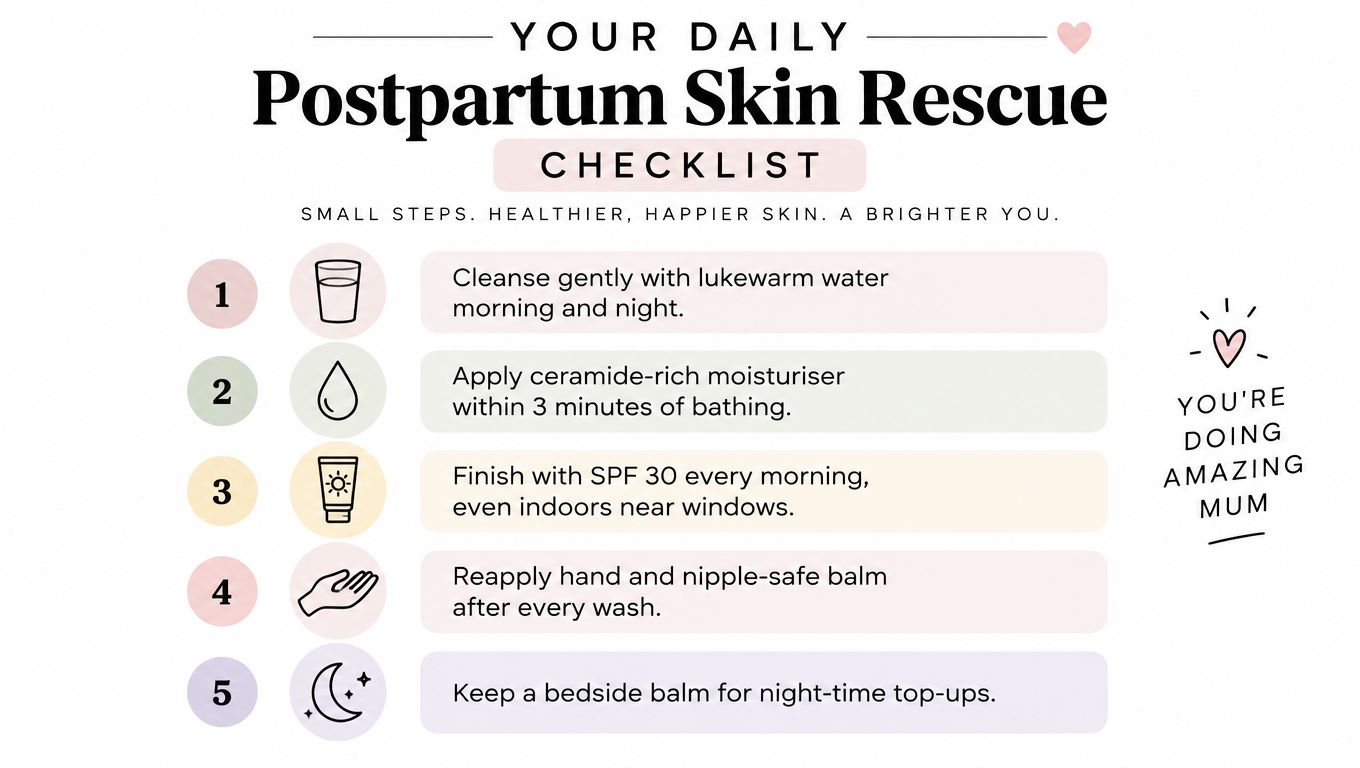
Morning
- Cleanse gently: Use lukewarm water and a mild cleanser where needed. Don't scrub flakes or use a rough cloth.
- Moisturise dry areas: Apply your fragrance-free cream to the face, hands, abdomen, legs, and any other tight areas.
- Use SPF 30: Finish with SPF 30 in the morning, particularly on exposed skin and when you'll be near windows or outside with the pram.
After bathing
- Pat skin dry: Leave the surface slightly damp instead of rubbing until it feels tight.
- Apply cream within 3 minutes: Use a rich moisturiser over the driest areas to help lock in the water left on the skin.
- Reapply where needed: Handwashing can remove product quickly, so keep a tube by the sink and use a hand and nipple-safe balm only as directed for the relevant area.
Evening
- Keep bedside supplies ready: A small balm or moisturiser beside the bed means you can top up dry patches without starting a full routine.
- Check for changes: Notice whether itching, redness, soreness, or cracking is improving. If it isn't, seek professional advice rather than adding more products.
- Choose comfort over complexity: One gentle cleanser and one dependable emollient are enough to start repairing your routine.
Your immediate goal is simple: cleanse gently, moisturise promptly, and remove anything that stings or strips. Repeat that plan tomorrow, even if today was chaotic.
The Happy Bump Co offers nourishing pregnancy and postpartum body care, including Belly Butter and Belly Oil for Stretch Marks, to support dry, stretched-feeling skin as your body changes. Visit The Happy Bump Co to explore a simple body-care routine that fits around life with your new baby.