

Low-concentration topical salicylic acid under 2% used on small areas is generally considered low risk during pregnancy, but high-strength peels and extensive application should be strictly avoided. The safest approach is to assess the product's strength, format, contact time, skin condition and complete ingredient list rather than treating every salicylic acid product as identical.
You're standing in front of the bathroom cabinet, pregnancy test positive, wondering whether the cleanser you've used for breakouts is still appropriate. The label says “salicylic acid”, and suddenly a familiar skincare ingredient feels much more complicated.
That anxiety is understandable. Pregnancy skincare advice often compresses a nuanced question into a simple “avoid” or “use it”, even though a quick rinse-off cleanser and an intensive peel create very different exposure patterns. The practical answer is reassuring but not careless: limited, low-concentration topical use is generally less concerning, while high-strength, extensive or irritating applications deserve avoidance or professional guidance.
Table of Contents
- Navigating Skincare Labels During Pregnancy
- Topical Application Versus Systemic Exposure
- Decoding UK Cosmetic Safety Concentrations
- Comparing Daily Cleansers and Chemical Peels
- Building a Risk-Controlled Skincare Routine
- Gentle Alternatives for Pregnancy Breakouts
- Embracing a Nourishing Bump Care Ritual
Navigating Skincare Labels During Pregnancy
A pregnancy skincare audit can feel surprisingly stressful. You may already be checking moisturisers, sunscreen and body oils, then find yourself decoding words such as beta hydroxy acid, BHA, salicylate and active ingredient on the back of an acne product.
Salicylic acid is a beta hydroxy acid used to loosen dead skin cells and help clear blocked pores. The name can sound alarming because it belongs to the same broader chemical family associated with salicylates, but the risk question depends on how much reaches the body and how the product is used.
The useful starting point: a small amount of low-concentration product on intact facial skin is not the same exposure as a strong peel applied over a wide area.
For a pregnant person deciding what to do tonight, that means asking practical questions rather than abandoning every product immediately:
- What is the concentration? A legally compliant, low-concentration cosmetic is a different proposition from an unusually strong treatment.
- Is it rinse-off or leave-on? A cleanser has brief contact with the skin. A serum, toner or treatment remains in place.
- Where will it go? A small spot is not the same as the chest, back, arms or legs.
- Is the skin intact? Cracked, inflamed, freshly shaved or irritated skin can change exposure and tolerance.
- What else is in the formula? Salicylic acid may be combined with other exfoliating acids or ingredients that require separate pregnancy advice.
If you're replacing products, choose gentle, uncomplicated formulas and avoid making several major changes at once. A plain moisturiser can support comfort while you decide whether an active treatment is necessary. You can also read this guide to choosing a pregnancy-safe moisturiser in the UK for practical help with the rest of your routine.
The aim isn't to create fear around one ingredient. It's to match the product to the lowest reasonable level of exposure, while recognising that pregnancy-specific evidence for topical salicylic acid is limited. If you're using a prescription product, treating a large area or considering a peel, take the exact packaging to your midwife, pharmacist, dermatologist or maternity clinician.
Topical Application Versus Systemic Exposure
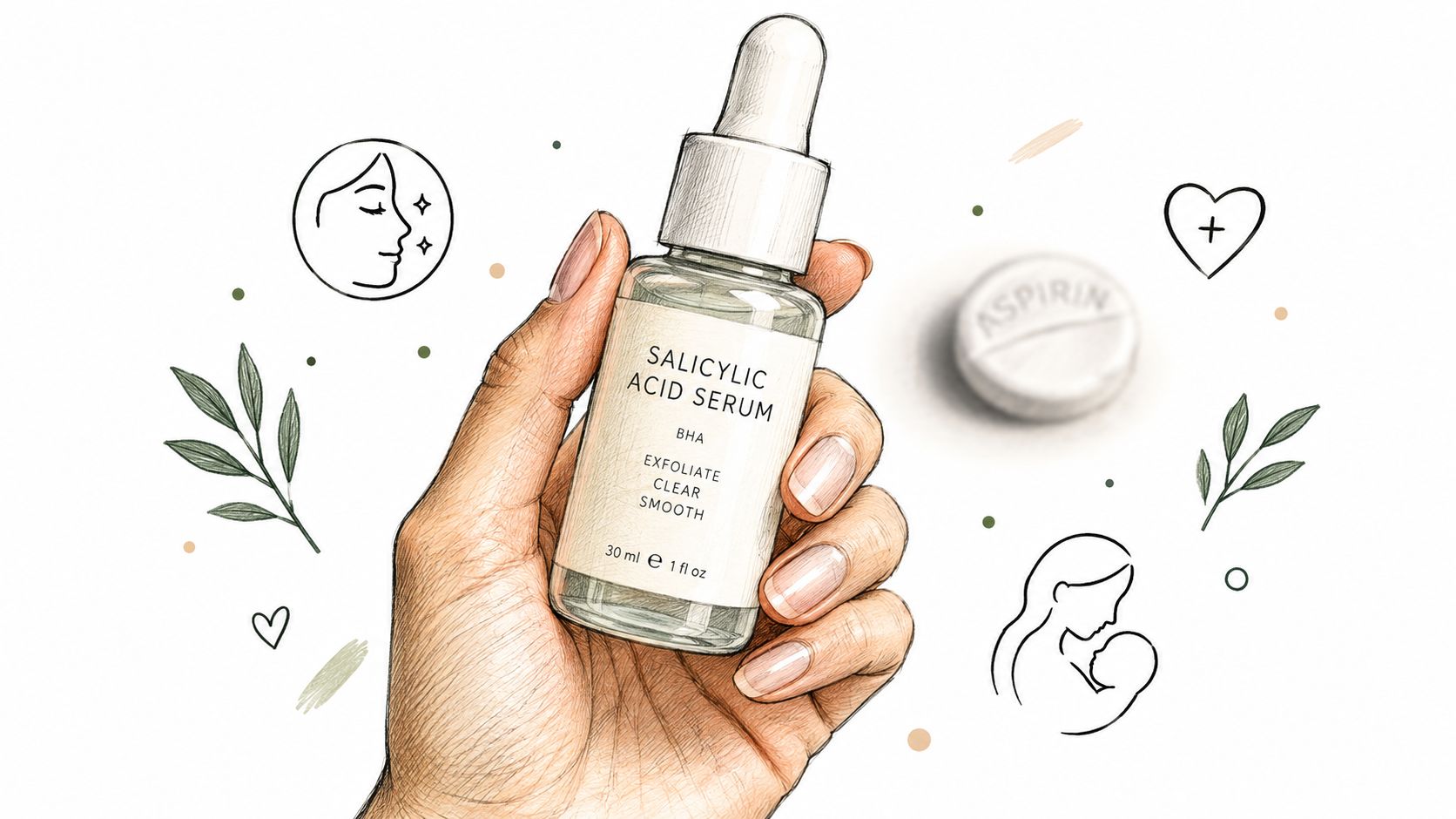
The most common confusion begins with aspirin. Aspirin is taken by mouth and enters the digestive system before circulating through the bloodstream. A salicylic acid cleanser or spot treatment is applied to the skin, where the outer layers act as a barrier and limit how much ingredient can pass through.
That doesn't mean topical exposure is automatically zero. Absorption can vary with the concentration, the amount applied, the area treated, contact time and the condition of the skin. The peer-reviewed dermatology review on topical salicylic acid in pregnancy notes that relatively little is absorbed through intact skin, while also making clear that direct pregnancy studies of topical salicylic acid are lacking.
This is why “salicylic acid” isn't a complete exposure description. The route and conditions matter. A small spot treatment used briefly on healthy facial skin sits at one end of the exposure spectrum. Repeated application over a large area, particularly on irritated skin or under an occlusive covering, sits at a more concerning end.
Why product format changes the question
Consider two routines. In the first, someone washes the face with a low-strength product and rinses it away. In the second, someone applies a leave-on treatment across the face and body every day, then covers the area with clothing or a dressing. Both products may display the same ingredient name, but the opportunity for exposure is not equivalent.
UK medicine information takes a particularly cautious position because medicines can involve more concentrated or prolonged treatment. The UK electronic Medicines Compendium information for Salicylic Acid Ointment BP states that pregnancy data are absent or limited and safety has not been established. It advises caution and says the ointment should not be used during pregnancy except for short-term treatment of a small single skin area.
That advice is not a declaration that one accidental application causes harm. It demonstrates the distinction between brief treatment of a small area and ongoing treatment across a broad surface. Medical guidance becomes more conservative when the exact fetal exposure cannot be quantified.
What this means for aspirin worries
Don't use a skincare article as a reason to start or stop aspirin prescribed for a pregnancy-related medical indication. Oral aspirin and topical salicylic acid are different products, routes and clinical decisions. Likewise, an over-the-counter face product shouldn't be judged as though it delivers the same systemic exposure as a swallowed medicine.
A sensible interpretation is neither “all topical use is harmless” nor “every topical application is dangerous”. It is a risk-managed middle ground: keep exposure limited, protect the skin barrier and seek advice when the product is strong, extensive, prolonged or medicinal.
Decoding UK Cosmetic Safety Concentrations
The UK cosmetic rules provide a useful baseline, but they aren't a pregnancy-specific guarantee. Retained cosmetic legislation distinguishes between salicylic acid used as a preservative and salicylic acid used for another cosmetic purpose, such as helping exfoliate skin.
Under Commission Regulation (EU) 2019/1966, retained as relevant UK cosmetics legislation, salicylic acid is permitted as a preservative at concentrations up to 0.5%, subject to existing restrictions. The same regulation permits non-preservative use up to 2.0% in many cosmetic products and up to 3.0% in rinse-off hair products.
Those limits need careful reading. Body lotions and several other product categories are excluded from the 2.0% non-preservative allowance, and applications that could expose the lungs through inhalation are prohibited. The category, intended use and method of application all matter.
How to audit a bottle
Use this sequence when you're holding a product in your bathroom:
- Find the stated percentage. Look for salicylic acid, BHA or beta hydroxy acid and check whether the strength appears on the front, back or product information page.
- Identify the product category. A face wash, serum, lotion, hair product and peel aren't interchangeable under cosmetic controls.
- Check whether it's compliant and clearly labelled. Be cautious with products that have no clear responsible business, ingredient information or instructions.
- Read the directions. The label should tell you where to apply the product, how often to use it and whether to rinse it away.
- Inspect the whole formula. Pregnancy suitability depends on the complete product, not one isolated ingredient.
| Label detail | What it tells you |
|---|---|
| Up to 0.5% as a preservative | A regulated preservative use, subject to restrictions |
| Up to 2.0% in many cosmetic products | A non-preservative cosmetic allowance in relevant categories |
| Up to 3.0% in rinse-off hair products | A separate allowance for that product type |
| Excluded categories or inhalation exposure | The general allowance does not apply automatically |
The legal limits establish controls for consumer cosmetic safety generally. They don't promise that a product is appropriate for every pregnant person, every body area or every pattern of use. Concentration, frequency, skin damage, occlusion and treatment duration can all alter the practical risk profile.
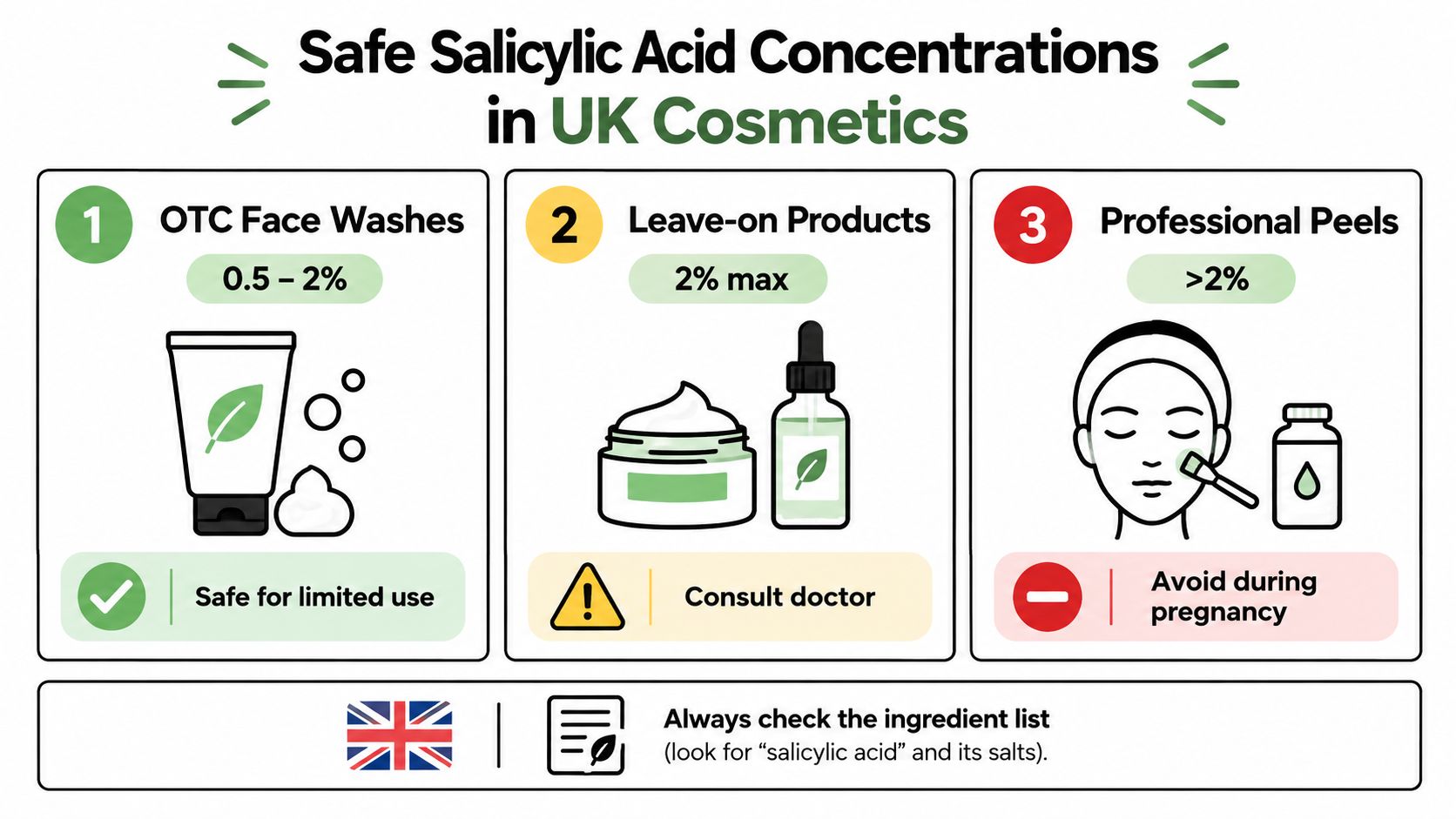
For pregnancy skincare, the most useful conclusion is simple: favour a reputable, legally compliant, low-concentration product used exactly as labelled. Don't assume that a product is suitable merely because its percentage falls within a cosmetic limit. Ask for professional advice before using prescription-strength preparations, unusually high percentages or treatments designed to penetrate.
Comparing Daily Cleansers and Chemical Peels
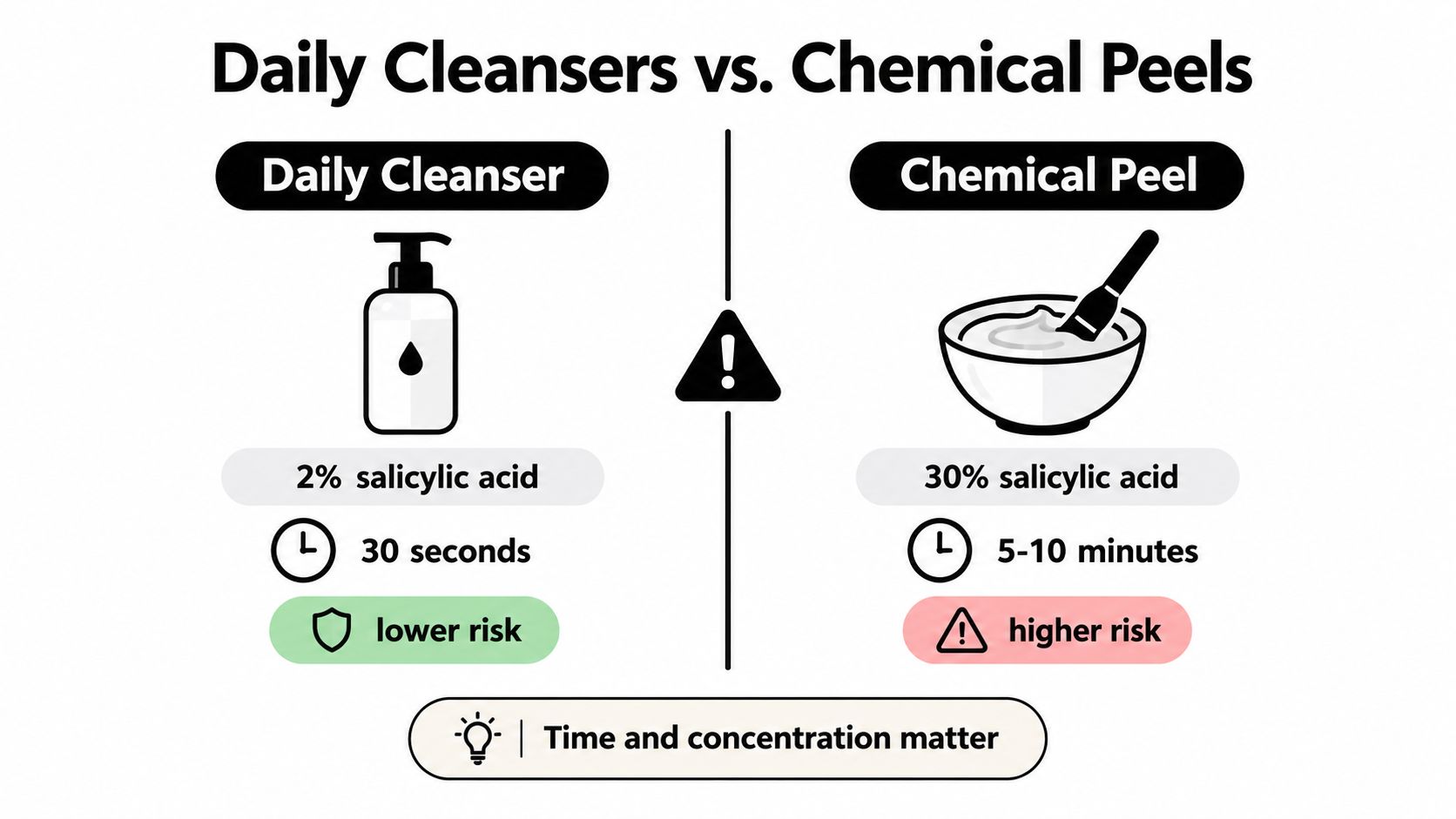
A cleanser and a chemical peel may both contain salicylic acid, but they create different exposure conditions. The cleanser is designed for brief contact followed by rinsing. A peel is designed to remain on the skin for longer and create a more intensive exfoliating effect.
That difference becomes more important during pregnancy because direct studies of topical salicylic acid are limited. The safest comparison focuses on the whole exposure pattern, not the ingredient name printed on the label.
Lower-exposure formats
A rinse-off cleanser used on a small area generally gives you more control. You apply it to damp skin, avoid the eye area, follow the instructions and rinse it away. That doesn't make irritation impossible, but it limits contact compared with a leave-on treatment.
A small spot product also has a narrower application area than a body treatment. If you choose to use one, apply it only where needed and don't spread it across unaffected skin just because the product feels familiar.
A leave-on toner or serum requires more thought. It remains on the skin, may be used frequently and can be layered with moisturisers or other acids. If your face is stinging, peeling, cracked or unusually reactive, pause rather than trying to push through the discomfort.
Higher-exposure treatments
Peels, peel pads, wart treatments and professional procedures shouldn't be treated like ordinary acne cleansers. They may involve greater strength, longer contact, more extensive application or already-irritated skin. High-strength peels should be avoided during pregnancy unless the relevant pregnancy clinician and dermatologist specifically review the treatment.
Time and concentration matter, but so do area and skin condition. A product's percentage alone can't describe the complete exposure.
The same caution applies to large-area leave-on use. Treating scattered spots on the face is a different decision from applying an active product across the back, chest or limbs. Occlusive clothing, dressings, shaving and skin inflammation can also increase irritation and potentially alter absorption.
If you're considering an at-home exfoliating treatment, read this practical guide to home glycolic peels, but remember that pregnancy-specific advice should come from your own clinician when an intensive peel is involved.
A brief educational video can help demonstrate why product format matters, but it can't replace a review of your exact formula and medical history.
Building a Risk-Controlled Skincare Routine
A risk-controlled routine starts with two questions: how much product is needed, and where? Treat salicylic acid as a targeted tool rather than a blanket step. If you decide to keep a low-concentration product, use the smallest useful amount and reassess before expanding use.
Start with the smallest useful application
Choose the lowest effective concentration for the concern you are treating. One blemish does not require application across the whole face, and facial congestion does not automatically justify treating the body. Apply only to intact skin, following the product label rather than adding extra applications.
Keep a simple record in your phone: product name, percentage, body area and date of use. This gives your midwife or pharmacist a clear usage history if you need advice. Stop if burning, marked redness, swelling, cracking or heavy peeling develops, then ask a healthcare professional or pharmacist what to do.
Keep the routine uncomplicated
Salicylic acid does not need to become part of a full exfoliation programme. Using it alongside other acids, scrubs or strongly fragranced products can increase irritation, particularly if pregnancy has made your skin more reactive. Introduce only one change at a time, so you can identify which product is causing a problem.
Read the full ingredient list before use. A product promoted for acne may also contain retinoids or high-strength chemical-peel acids. Those ingredients require their own pregnancy assessment, so the front label cannot provide the whole safety picture.
Review medicines and treatment areas
Tell your clinician if you take aspirin or another salicylate medicine, especially if you are considering extensive topical use. Do not stop a prescribed medicine without medical advice, and do not add an oral salicylate because a skincare ingredient seems familiar.
For prescription-strength ointments, large treatment areas or prolonged use, show the exact product to your midwife, obstetrician, dermatologist or pharmacist. The UK medicine information discussed earlier takes a cautious approach because medicinal exposure can differ from ordinary cosmetic use.
A practical routine might look like this:
- Cleanse gently: Use a mild cleanser without scrubbing.
- Treat selectively: If advised to continue salicylic acid, restrict it to the chosen area and follow the label.
- Moisturise afterwards: Support the skin barrier with a plain, fragrance-conscious moisturiser.
- Stop when skin protests: Persistent irritation calls for reassessment, not increased frequency.
- Escalate persistent acne: Painful, widespread or scarring breakouts deserve professional care rather than repeated experimentation.
Gentle Alternatives for Pregnancy Breakouts
Some pregnant women will prefer to avoid salicylic acid altogether, even when limited topical use appears less concerning. That's a reasonable choice. Peace of mind is part of a workable skincare routine, and you don't have to use an active ingredient just because it's available.
Start with the problem you're trying to solve. Blocked pores, inflamed spots, redness, uneven tone and dryness don't all require the same approach. A gentle cleanser, a non-comedogenic moisturiser and consistent sun protection may be enough to reduce irritation while you decide whether you need a targeted treatment.
Ingredient options to discuss
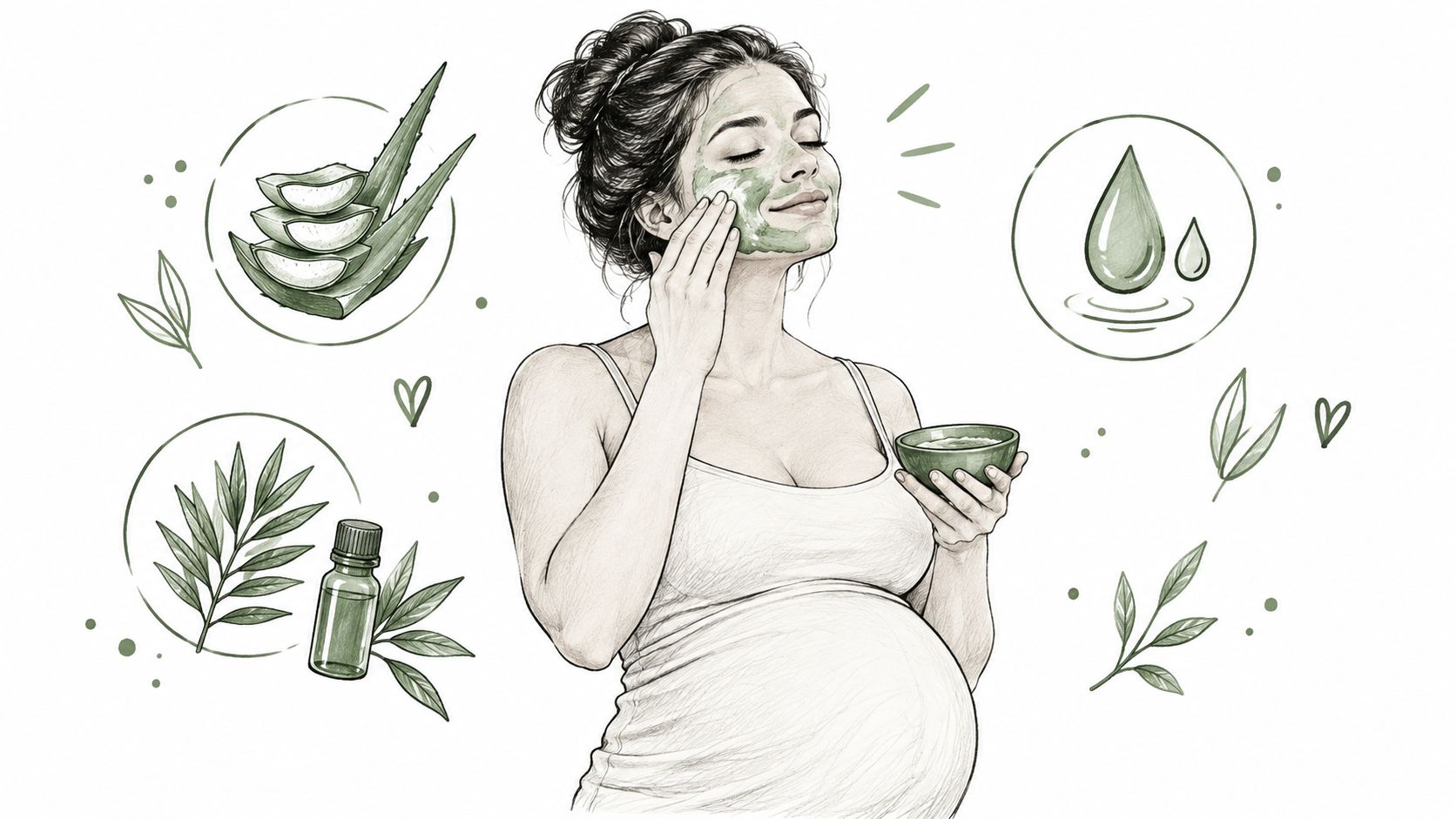
Azelaic acid is often considered when acne, redness or post-blemish marks overlap. It may be available in cosmetic or medicinal formulations, so strength and intended use still matter. For a focused explanation of the ingredient, read whether azelaic acid is safe during pregnancy and take prescription-strength questions to your clinician.
Niacinamide can suit a barrier-focused routine when the main concerns are sensitivity, visible redness or excess oil. It's often easier to introduce than a strong exfoliant, but the rest of the formula still deserves attention.
Lactic acid or mandelic acid may appeal if you want gentle exfoliation, although “gentle” doesn't mean every product is automatically suitable. Concentration, frequency and skin tolerance remain relevant, especially if the product is leave-on or combined with other acids.
Benzoyl peroxide or prescription antibiotics may be considered for inflamed acne, but these are treatment decisions rather than casual ingredient swaps. Ask your maternity clinician, GP, pharmacist or dermatologist before starting a medicated routine.
Protect the barrier first
Pregnancy can make skin feel drier, oilier or more reactive than usual. When the barrier is compromised, adding more exfoliation often makes the surface feel worse. Keep water lukewarm, avoid abrasive cleansing tools and introduce only one new product at a time.
If acne is painful, spreading, leaving marks or affecting your confidence, professional support is worthwhile. A clinician can separate ordinary pregnancy breakouts from a condition that needs a more structured treatment plan and can check whether any other ingredient in your current products should be paused.
Embracing a Nourishing Bump Care Ritual
Pregnancy skincare doesn't need to become a daily test of courage. You can simplify the routine, remove products that make you uneasy and keep the focus on comfort. A calm cleanser, a suitable moisturiser and gentle bump care can be more valuable than an elaborate collection of actives.
For salicylic acid, remember the hierarchy. Small-area, low-concentration topical use is generally the lower-concern pattern, while intensive peels, extensive application, damaged skin and prolonged treatment deserve avoidance or clinical supervision. Cosmetic concentration limits help define how products are regulated, but they don't provide a pregnancy-specific guarantee for every person or every formulation.
If you've used a salicylic acid product before realising you were pregnant, don't panic or make abrupt changes to prescribed medicines. Write down the product name, concentration if stated, application area and frequency, then show the packaging to your midwife, pharmacist or dermatologist. That information allows them to give advice based on the exposure rather than a vague ingredient name.
Your bump care routine can be a small daily pause instead of another source of worry. Choose nourishing, gentle products, listen to changes in your skin and ask for personalised advice whenever the product is strong, leave-on, extensive or irritating.
The Happy Bump Co offers UK-made, bump-focused body care including Belly Butter, Belly Oil for Stretch Marks and Pregnancy Tummy Scrub, created to nourish changing skin with gentle, pregnancy-conscious formulas. Explore a comforting routine for dry skin and daily bump care at The Happy Bump Co .