

You're pregnant, your skin has suddenly changed, and the products that used to feel simple now come with a layer of worry. One night you're checking a serum label under the bathroom light, the next you're deep in UK forums trying to work out whether “acid” means dangerous, helpful, or both.
That confusion is completely normal. Pregnancy can bring dryness, dullness, sensitivity, breakouts, and dark patches that seem to appear overnight. Lactic acid serums often come up as an option for smoothing and brightening skin, but many mums-to-be still aren't sure where the safety line sits, especially with strength, layering, and how often to use them.
There's a good reason lactic acid keeps showing up in skincare conversations. The global lactic acid serums market was valued at $2.8 billion in 2025 and is projected to reach $5.1 billion by 2034, with anti-ageing holding a 38.5% share of demand according to Dataintelo's lactic acid treatment products market report. But popularity alone doesn't answer the main question a pregnant woman is asking, which is whether it's a sensible choice for her skin right now.
If you're trying to rebuild your routine carefully, this guide sits alongside a broader pregnancy skincare routine for expectant mums. The focus here is narrower and more practical. What lactic acid serums are, why they can work well during pregnancy, how to use them safely in the UK, and what to choose instead if your skin says no.
Table of Contents
- Navigating Skincare During Pregnancy
- What Is a Lactic Acid Serum
- Key Benefits for Pregnancy and Beyond
- Is Lactic Acid Safe During Pregnancy
- How to Use Lactic Acid in Your Routine
- Gentle Alternatives and Postpartum Care
Navigating Skincare During Pregnancy
Pregnancy has a way of making even confident skincare users second-guess everything. A cleanser you've used for years suddenly stings. A serum you loved now feels too strong. And every search result seems to disagree with the one before it.
Many women go through the same pattern. They notice new pigmentation around the cheeks, a rougher skin texture, or dryness that no moisturiser seems to fully fix. Then comes the ingredient audit. Retinoids are out. Strong peels feel risky. Scrubs can make sensitive skin angrier. That's usually when lactic acid serums appear on the shortlist.
What makes them so interesting in pregnancy is that they sit in a middle ground. They're active enough to improve dull, uneven skin, but they're often gentler than the ingredients people are trying to replace.
Why this ingredient gets so much attention
Lactic acid belongs to the AHA family, which means it exfoliates the skin's surface. But unlike a grainy face scrub, it doesn't work by rubbing the skin physically. It works more neatly than that.
For pregnant women, that can matter a lot. Skin often becomes more reactive during this stage, so harsh products that once felt fine may now leave redness or tightness behind.
You don't need a dramatic routine during pregnancy. You need a calm one that still gets results.
The most common worries mums have
Most of the questions I hear are practical, not theoretical:
- Is it safe? Women want a clear answer, not vague reassurance.
- What strength should I use? Concentration matters more in pregnancy because the aim is effectiveness with a strong margin of safety.
- Can I use it with other products? Layering mistakes are one of the main reasons skin becomes irritated.
- Will it help with melasma and dullness? These are two of the biggest complaints during pregnancy and early motherhood.
Lactic acid can be a very sensible option, but only when the formula and routine make sense for pregnant skin. That's where most general skincare articles fall short. They mention pregnancy briefly. They don't build the advice around it.
What Is a Lactic Acid Serum
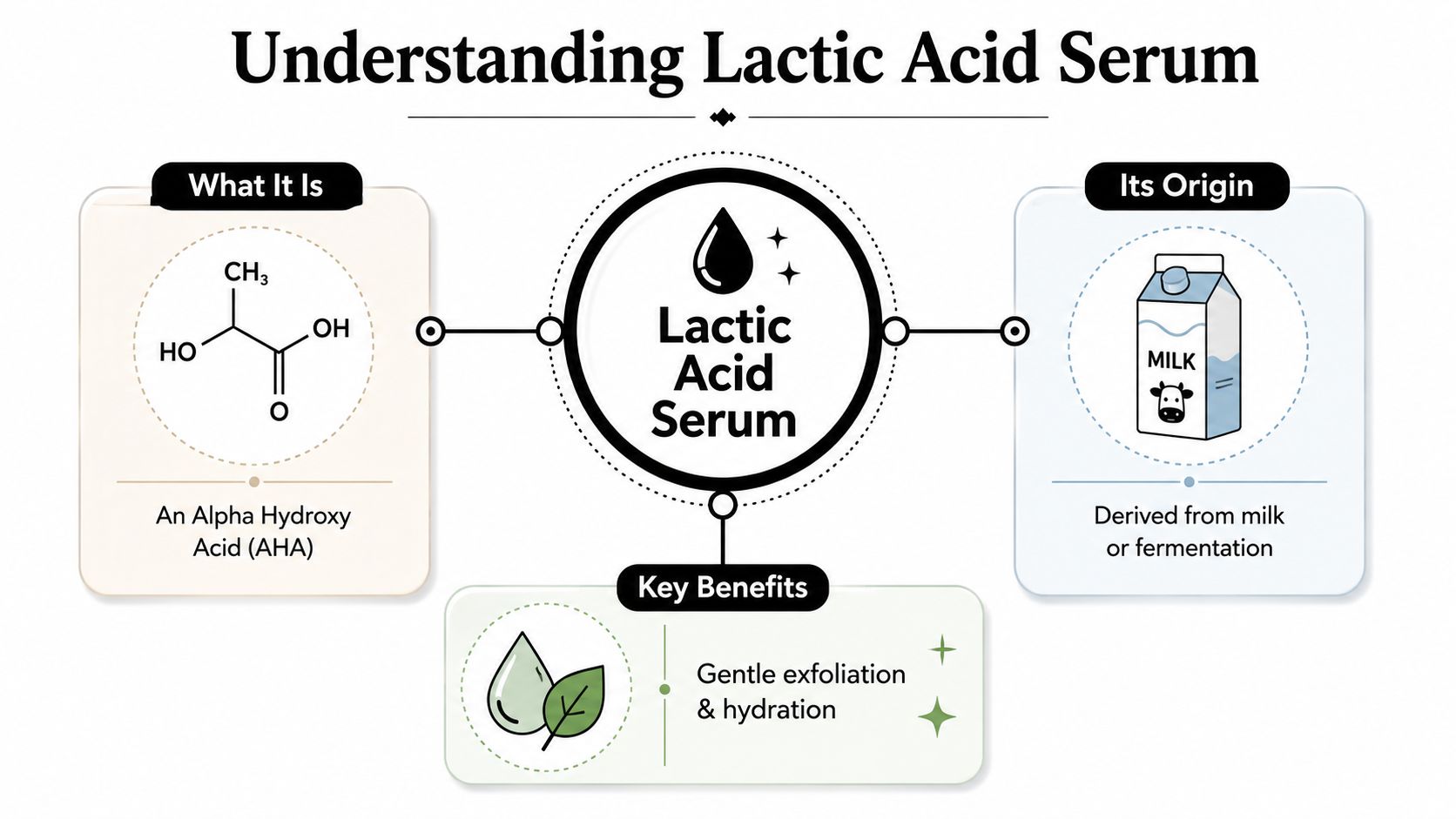
A lactic acid serum is a leave-on product designed to exfoliate gently while supporting hydration. The active ingredient, lactic acid, belongs to the alpha hydroxy acid (AHA) family. It helps loosen the dead skin cells sitting on the surface, which is often the layer that makes skin look dull, feel rough, or seem less even.
For many pregnant women in the UK, that description matters because “acid” can sound harsher than the product really is. A well-formulated lactic acid serum usually works in a controlled, gradual way. It smooths the skin's surface rather than scrubbing it, so it often feels more manageable than gritty exfoliants or stronger at-home peels.
A gentle surface exfoliant
Skin sheds dead cells naturally, a bit like a duvet cover collecting lint over time. When that shedding slows or becomes uneven, the surface can start to look flat and feel slightly bumpy. Lactic acid helps dissolve the bonds that keep those old cells hanging on, so newer skin can show through more evenly.
That is why a lactic acid serum is often used for:
- Brighter-looking skin
- Smoother texture
- A softer feel
- More even makeup application
It is often linked with milk in basic skincare explanations, but modern cosmetic formulas are made specifically for skincare use. You are not putting anything yoghurt-like on your face.
Why it can suit dry or pregnancy-prone skin
This is the part that confuses many mums-to-be. If it exfoliates, how can it also feel gentler on dry skin?
Lactic acid is unusual because it is associated with both exfoliation and moisture support. Typology's guide to using lactic acid for skin notes its moisturising qualities, its connection to the skin's Natural Moisturising Factors, and the fact that over-the-counter formulas in the UK and Europe are limited in strength and work best within a specific pH range.
In practical terms, that means a lactic acid serum can sit in a useful middle ground for pregnancy skin. It helps lift away surface buildup, but it is often chosen by women who also want to avoid the stripped, overworked feeling that stronger acids can cause.
Practical rule: If an exfoliating serum leaves your skin feeling squeaky, hot, or tight, it is probably too strong for pregnancy skin.
Concentration still matters. The legal maximum you might see on the market is not the same as the best choice during pregnancy. For mums-to-be, lower-strength formulas are usually the more sensible starting point, especially if your skin has become unpredictable, dry, or easily irritated.
A good lactic acid serum is there to encourage smoother, calmer, brighter-looking skin. It should feel like a gentle nudge, not a shock to the system.
Key Benefits for Pregnancy and Beyond
Pregnancy skin rarely sticks to one issue. You might have dryness on the cheeks, hormonal dullness across the whole face, and sudden pigmentation around the upper lip or forehead. That's why lactic acid serums can be so useful. They don't just do one job.
When skin looks tired and feels rough
One of the first changes many women notice is that their skin loses its usual freshness. It can look flat, feel slightly uneven, and stop reflecting light the way it used to. That isn't vanity. It's a real, visible shift in the skin's surface.
Lactic acid helps by removing that buildup of dead skin cells that sits on top and makes everything look more tired. The result is often skin that feels smoother to the touch and looks a bit more awake, even on days when you definitely don't.
Its moisturising character also makes it a better fit than harsher exfoliants for women whose skin has become drier in pregnancy. Instead of chasing “glow” with rough scrubs or overuse of active products, you're choosing a route that's usually kinder.
A lot of new mums also like that it can make skin feel more refined without needing a long, complicated routine. When time is short, one well-chosen serum can do more than a shelf full of products used inconsistently.
Why pigmentation is such a big reason mums choose it
Pigmentation is one of the biggest emotional triggers in pregnancy skincare. Melasma can feel stubborn and unpredictable. It often shows up in exactly the places you can't ignore.
Lactic acid is especially relevant here because it can help even the look of skin tone. UK skincare guidance notes that it helps by inhibiting tyrosinase, the key enzyme involved in melanin production, which is why it's often chosen for visible dark marks and tone irregularity.
That doesn't mean overnight results. Pigmentation usually needs patience, consistency, and daily sun protection. But a gentle ingredient that exfoliates while supporting a brighter-looking complexion can be a very smart part of that plan.
Here's where the benefits tend to matter most in real life:
- Texture concerns. Skin feels less rough and makeup sits more evenly.
- Dryness and dehydration. The skin can feel more comfortable, not just more polished.
- Post-blemish marks or hormonal unevenness. Tone may gradually look more balanced.
- Fine lines from tired, dehydrated skin. A smoother surface can make skin appear fresher.
For many pregnant women, the appeal isn't “anti-ageing” in the dramatic sense. It's wanting skin to look calm, rested, and even when hormones are doing the opposite.
Outside pregnancy, those same benefits still matter. Lactic acid serums are often kept in routines long after birth because they suit people who want regular gentle maintenance rather than a stronger treatment approach.
Is Lactic Acid Safe During Pregnancy
The short answer
You're in the skincare aisle, your skin is suddenly drier, more reactive, and more unpredictable than it was a few months ago, and the label says “lactic acid serum.” The obvious question is whether it is suitable for pregnancy, not just for skin in general.
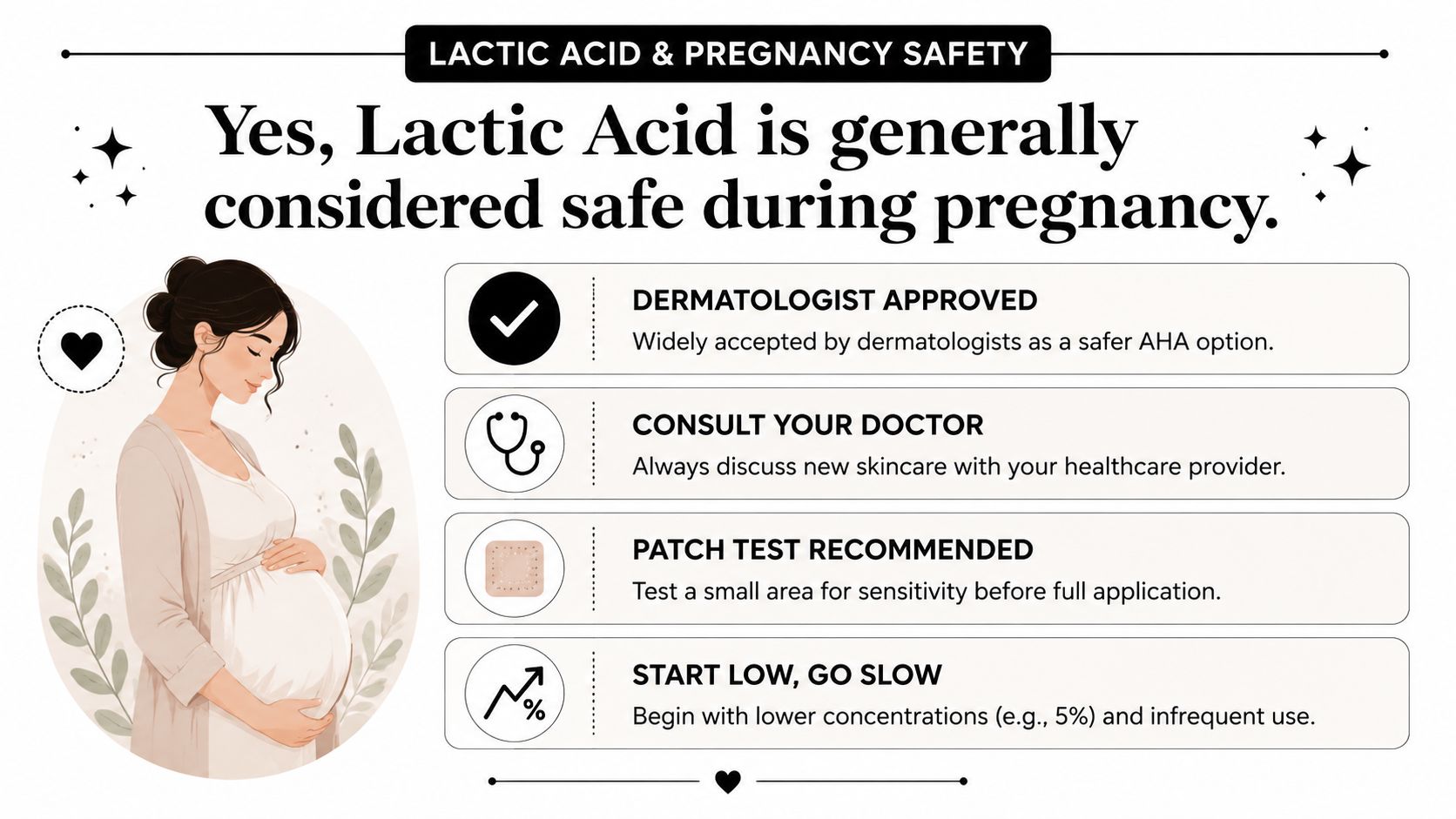
Yes, lactic acid is generally considered safe during pregnancy when used carefully. For UK mums-to-be, the detail that matters is not just whether lactic acid appears on the ingredient list. What matters is the concentration, the rest of the formula, and how often you apply it.
UK pregnancy skincare guidance states that lactic acid is considered a safe AHA during pregnancy when kept at 5% or lower to support minimal systemic absorption, as explained in Dr Laura Nicholas's guide to acids that are safe in pregnancy.
That more cautious approach matters because pregnancy skin often behaves differently. A serum that felt perfectly fine before pregnancy can suddenly sting, leave skin tight, or make redness easier to trigger. Safe and suitable are related, but they are not always the same thing.
Your pregnancy-safe lactic acid checklist
A helpful way to judge a serum is to treat it like checking a baby product label. You are not looking for marketing promises first. You are checking the practical details that affect safety and comfort.
- Keep the concentration low. Aim for 5% or lower during pregnancy.
- Check the pH if the brand shares it. Formulas around 3.5 to 4.5 are often the sweet spot between effectiveness and comfort.
- Choose straightforward formulas. Fewer extra exfoliants or strong actives make reactions easier to avoid and easier to trace.
- Patch test before full use. Hormonal skin can become sensitive with very little warning.
- Use it as your main active that evening. Skin usually copes better when you do not layer multiple exfoliating products together.
Another point often mentioned in pregnancy-safe skincare guidance is that topical lactic acid at 5% has low skin uptake, which supports its place in a cautious routine, according to Veracity Health's doctor-approved pregnancy skincare guide.
For product-specific body care advice, our guide to body cream with lactic acid during pregnancy can help you assess leave-on formulas beyond facial serums.
If your skin has become newly reactive, a product can be pregnancy-safe and still feel too strong on your face.
Lactic Acid in Pregnancy Do's and Don'ts
| Do ✅ | Don't ❌ |
|---|---|
| Choose a low-strength serum made for regular at-home use | Start with a high-strength formula because you want quicker results |
| Patch test before full use | Apply it across your whole face on night one |
| Use it in a simple evening routine | Combine it with several other active products in the same routine |
| Watch for stinging, redness, or tightness | Assume irritation means it is “working” |
| Ask your midwife, GP, or dermatologist if you are unsure | Rely on online opinions alone if your skin is reacting |
Many pregnant women want a clear yes-or-no answer before trying any active ingredient. That caution makes sense. With lactic acid, the reassuring answer comes from keeping your routine conservative and boring in the best way. Low strength, slow introduction, simple layering, and close attention to comfort are what make it a sensible option for many pregnant and newly postpartum women in the UK.
How to Use Lactic Acid in Your Routine
You cleanse your face at night, glance at your serum, and hesitate. If you are pregnant or newly postpartum, that pause is sensible. The goal is not to build a clever routine. It is to build one your skin can handle calmly and consistently.
A good lactic acid routine should feel simple and predictable. If your face is stinging, getting hot, or looking increasingly blotchy, the routine is too much for your skin right now.
Start with a patch test
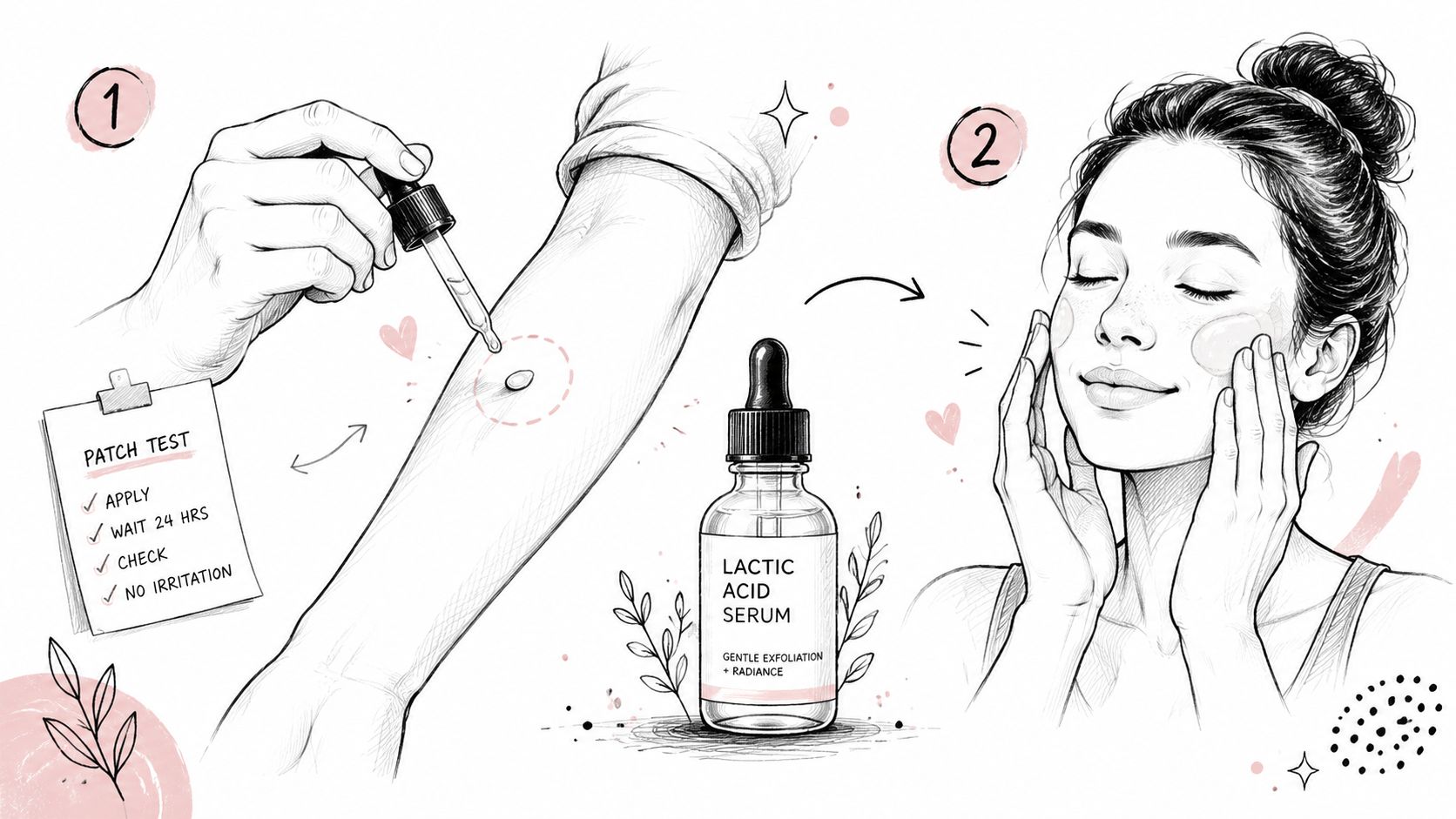
Before using it on your whole face, test the serum on a small area for a few days. The side of the jaw or just below the ear is usually practical. Check for more than instant redness. Itching, warmth, tightness, or dryness the following day can all be signs that the product is not a good match.
Then go slowly.
Pregnancy skin often behaves like skin with a shorter fuse. A product that once felt fine can suddenly feel harsh. That is why low frequency matters just as much as low strength.
A simple starting pattern looks like this:
- Cleanse gently and pat skin dry.
- Apply one thin layer of your lactic acid serum.
- Follow with a plain moisturiser.
- Use it in the evening only.
- Start a few nights a week, then adjust based on comfort.
If you are unsure whether your formula counts as mild enough, stay on the cautious side and judge it by how your skin feels over several uses, not by how quickly you want results.
How to layer it without overdoing it
Lactic acid usually goes on after cleansing and before heavier creams or oils. If you use a basic hydrating toner and know your skin tolerates it well, that can come first. The order is a bit like getting dressed. Light layers go on first, thicker layers seal everything in.
Keep the rest of the routine quiet. A bland moisturiser, a hydrating serum, and patience will usually serve pregnant skin better than stacking multiple actives at once. If your skin is already reactive, you may even prefer to skip every other treatment on lactic acid nights and keep those evenings very plain.
Avoid using it in the same routine as:
- Other exfoliating acids if your skin is easily irritated
- Retinoids, which are already off the table during pregnancy
- Anything that routinely makes your skin sting
If you know your skin dislikes acids but you still want gentle smoothing, poly-hydroxy acids for pregnancy skincare may be worth reading about as a milder alternative.
A visual guide can help if you like seeing routines in action.
One habit matters every morning once lactic acid is in your routine. Wear broad-spectrum SPF. AHAs can leave skin more sun-sensitive, which is especially frustrating if you are already prone to pregnancy-related pigmentation or lingering post-inflammatory marks.
Morning SPF is part of the plan when you use lactic acid.
If your skin becomes persistently red, flaky, sore, or hot, stop using the serum and return to a very basic routine. In practice, the best lactic acid routine for UK mums-to-be is often the least exciting one. Gentle cleanser, careful spacing, simple layering, and sunscreen the next day.
Gentle Alternatives and Postpartum Care
Not every pregnant woman will love lactic acid, and that's fine. Sensitive skin doesn't read trend reports. It only tells you whether a product feels workable on your face.
If lactic acid doesn't suit your skin
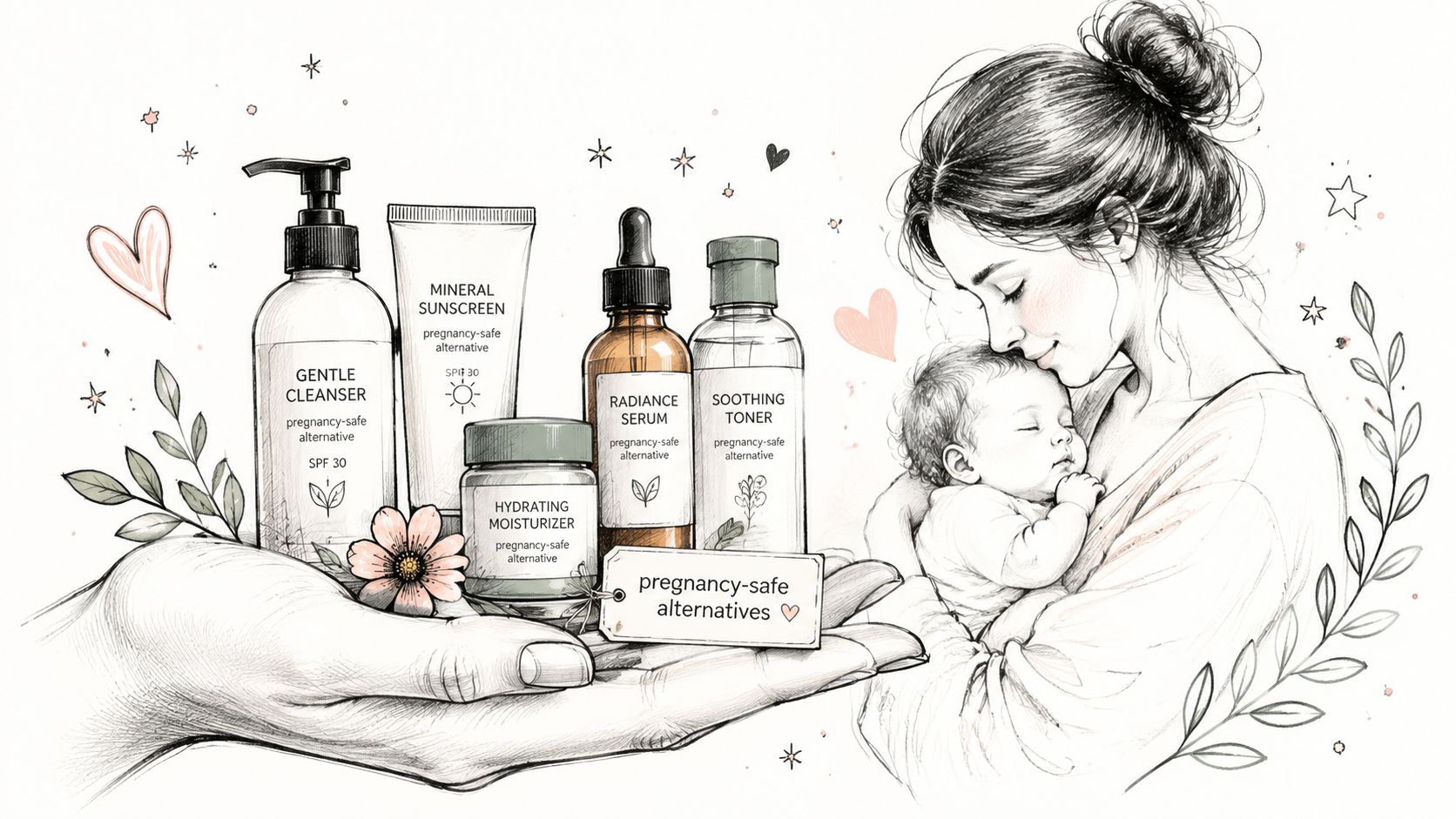
Some women need an even gentler route. Others prefer a different ingredient profile. A few alternatives often make more sense depending on the concern.
- Mandelic acid can appeal if you want an AHA-style option that many people find mild.
- Azelaic acid is often considered when redness, blemishes, and visible uneven tone are all in the mix.
- Fruit enzyme products may suit women who want a softer exfoliating feel and don't want a traditional acid serum.
The point isn't to force one ingredient. It's to find a routine your skin can tolerate consistently.
If you're interested in very mild exfoliating options, this guide to poly-hydroxy acids in pregnancy skincare is a useful next read.
Postpartum skin still needs a gentle approach
Birth doesn't instantly reset your skin. In the postpartum months, many women still deal with sensitivity, dehydration, breakouts, and pigmentation that lingers longer than expected. Sleep deprivation can also make skin look flatter and more reactive.
That's why the same principles still apply after baby arrives:
- keep routines short
- favour gentle, consistent products
- avoid chasing fast results with aggressive exfoliation
- protect your skin daily with SPF
New-mum skin often responds better to steady care than to “bounce back” routines.
If lactic acid serums suit you, they can remain a useful part of that maintenance phase. If they don't, there are other gentle routes. The best skincare choice in pregnancy and beyond is the one that respects both safety and your skin barrier.
If you're building a bump-friendly routine and want products created specifically for changing pregnancy skin, explore The Happy Bump Co. Their UK-made range is designed for expectant and new mums who want gentle, nourishing body care that supports skin through pregnancy and beyond.