

You're standing in the bathroom, one hand resting on your bump and the other smoothing over a faint line you hadn't noticed yesterday. It may look pink, red, purple or slightly darker than the surrounding skin. You search for Palmer's cocoa butter stretch mark advice because you want something comforting and useful, but you also want an honest answer about what a cream can achieve.
The balanced answer is simple. Palmer's Cocoa Butter Formula can help moisturise dry, tight-feeling skin and make a daily bump massage more comfortable. It isn't a guaranteed way to prevent stretch marks, and current evidence doesn't support presenting cocoa butter as a treatment that changes the deeper skin processes behind them.
Table of Contents
- Why Stretch Marks Show Up During Pregnancy
- What Cocoa Butter Actually Does to Your Skin
- Inside the Palmer's Cocoa Butter Formula Range
- What the Evidence Says About Cocoa Butter and Stretch Marks
- A Safe Pregnancy Routine With Palmer's Cocoa Butter
- How Palmer's Compares With Oils and Pregnancy-Focused Brands
- Common Misconceptions About Cocoa Butter and Stretch Marks
- Choosing the Right Cocoa Butter Routine for Your Bump
Why Stretch Marks Show Up During Pregnancy
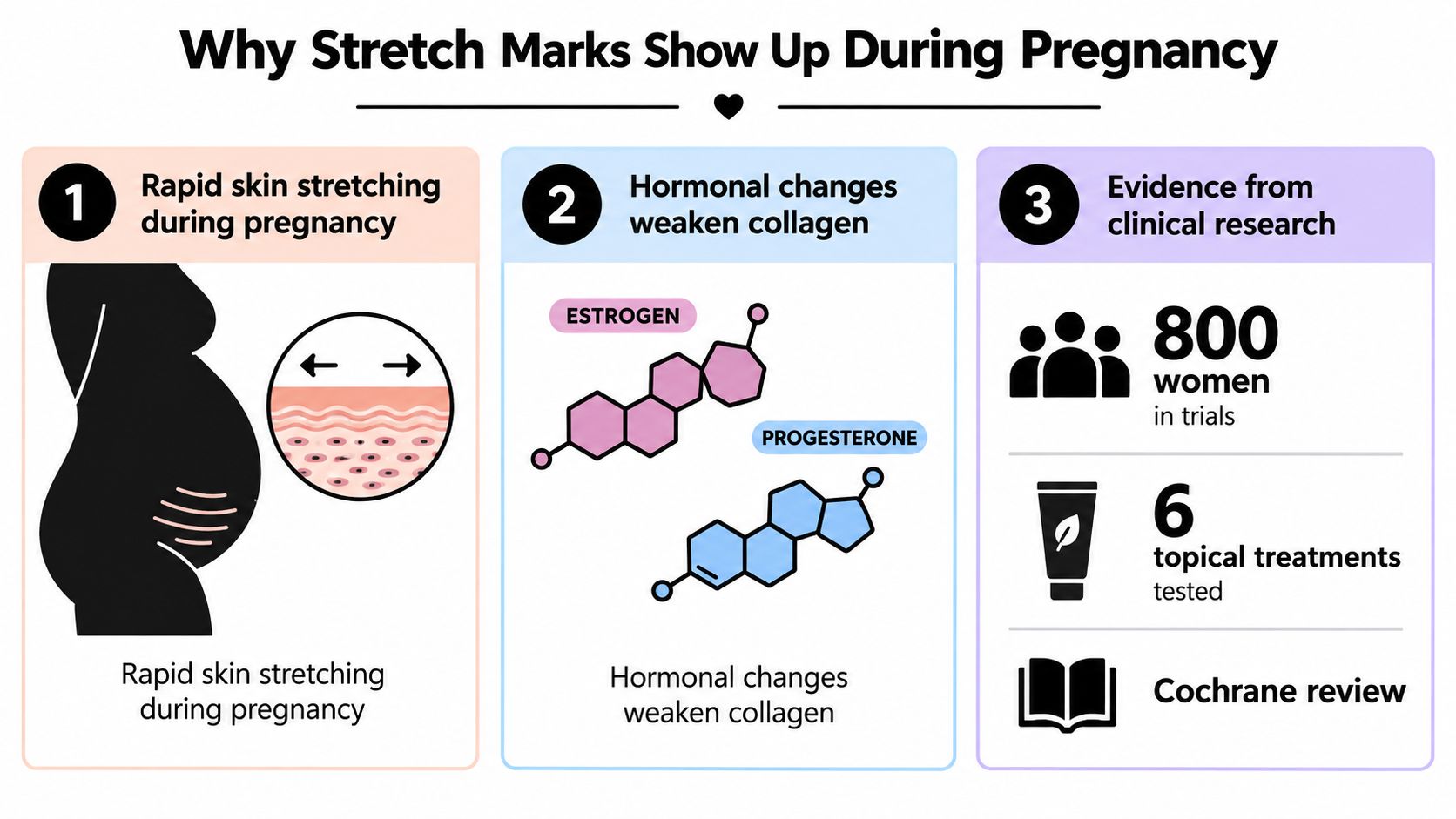
Stretch marks can appear gradually, often before you feel any discomfort. One morning, the skin on your lower abdomen may look unchanged. A few days later, you might notice fine lines across the bump, or marks on your breasts, hips, thighs or buttocks. Their appearance can feel surprisingly emotional, even though they're a normal part of pregnancy for many people.
The NHS says stretch marks affect around 8 out of 10 pregnant women, and they commonly develop on the abdomen, breasts, hips, thighs and buttocks. You can read the NHS guidance on pregnancy stretch marks for a straightforward explanation of where they occur and what to expect.
The skin is adapting, not failing
Pregnancy changes the body quickly. As the abdomen grows, skin stretches over expanding tissue. Hormonal changes also affect the way skin behaves, while inherited skin characteristics influence who develops stretch marks and where they appear. These factors vary from person to person, so two pregnant women using the same product may have very different experiences.
Stretch marks form in deeper supporting tissue, not just because the surface is dry. That distinction matters. A moisturiser can make the outer layer feel softer, but it can't promise to control every biological factor involved in striae gravidarum, the medical term for pregnancy stretch marks.
A realistic expectation: skincare can support comfortable, supple skin, but stretch marks aren't a sign that you've done anything wrong.
The NHS describes stretch marks as harmless, and they often become less visible with time, although they may not disappear completely. Still, “harmless” doesn't mean emotionally irrelevant. It's reasonable to want to soothe itching, reduce tightness and enjoy a few quiet minutes of care during a physically demanding stage of life.
That's why cocoa butter appeals to so many mums-to-be. It feels rich, protective and easy to massage into a growing bump. Understanding its role helps you choose it for the benefits it can realistically offer, rather than placing pressure on yourself to prevent a change your skin may be biologically inclined to make.
What Cocoa Butter Actually Does to Your Skin
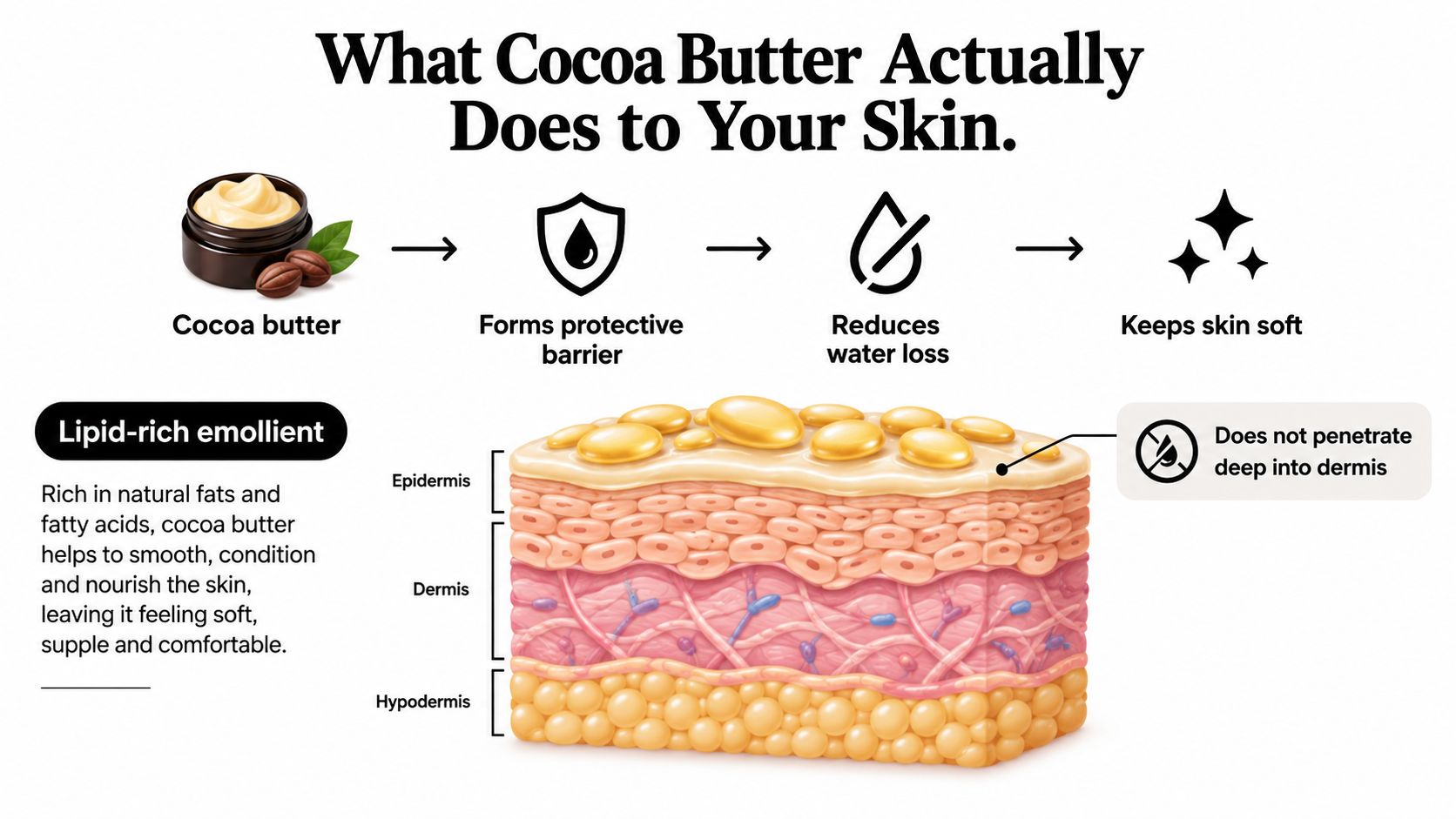
Cocoa butter is a lipid-rich emollient. In plain language, it helps soften the outer skin and forms a surface film that slows the escape of water. This can leave skin feeling smoother, more flexible and less uncomfortable when pregnancy makes it feel dry or tight.
Think of the outer layer of skin as a wall made from cells and natural oils. Cocoa butter behaves a little like a water-resistant coat over that wall. It doesn't rebuild the wall underneath, but it can help keep moisture in and reduce the rough, parched feeling that comes with dryness.
Surface comfort versus deeper change
The outermost layer of skin is called the stratum corneum. Cocoa butter can make this layer feel more supple and reduce transepidermal water loss. The medical review of cocoa butter and pregnancy stretch marks describes cocoa butter as an occlusive emollient, while also making clear that surface hydration doesn't demonstrate prevention of deeper connective-tissue changes.
That deeper area is the dermis. It contains structural proteins and connective tissue involved in skin strength and elasticity. Stretch marks are associated with changes in that deeper support network as the body expands, so a rich surface product shouldn't be described as a dermal repair treatment.
This is the distinction many product comparisons blur:
- What cocoa butter can do: soften the surface, reduce the sensation of dryness and support a more comfortable massage.
- What it hasn't been shown to do: reliably prevent the deeper tissue changes that lead to pregnancy stretch marks.
- Why it still matters: moisturised skin may feel more pleasant, especially when your bump, breasts or thighs feel tight.
If you enjoy a richer texture, a dedicated cocoa butter body butter routine can turn application into a calming part of your day. The product doesn't need to be a miracle to be worthwhile. Its defensible role is hydration, softness and comfort, not a promise that marks won't appear.
Inside the Palmer's Cocoa Butter Formula Range
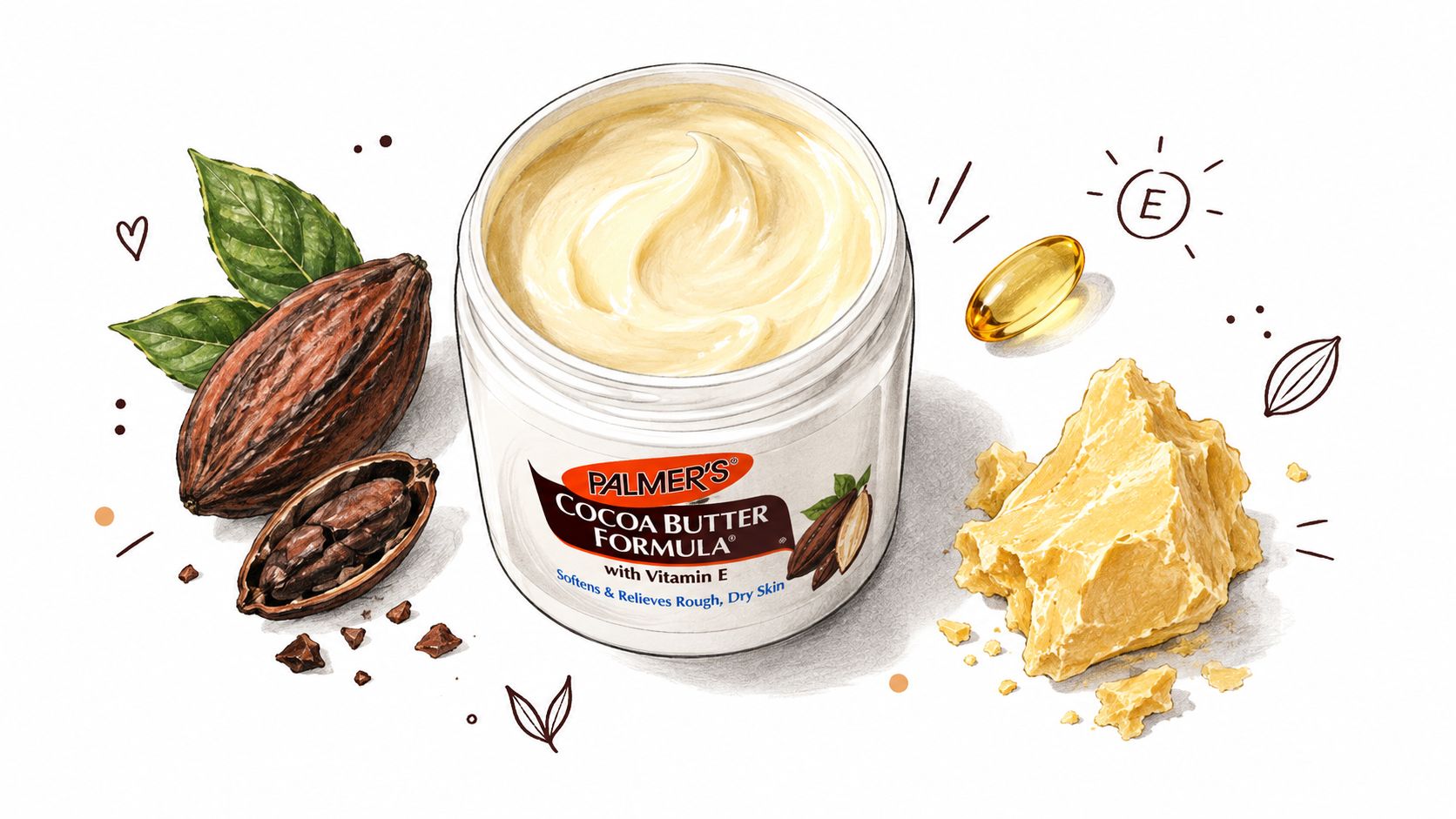
Palmer's Cocoa Butter Formula stretch-mark products are built around cocoa butter, with other ingredients intended to support the feel and appearance of stretched skin. Palmer's UK says cocoa butter has been its core ingredient for more than 40 years, and reports purchasing more than 265,000 pounds of cocoa butter annually. These are company-reported product and supply-chain details, not independent proof that cocoa butter prevents stretch marks.
What the main ingredients are there to do
Cocoa butter is the hero emollient. Its rich, occlusive texture helps reduce moisture loss at the surface, which can make dry skin feel smoother and less tight.
Vitamin E is included as part of the formula's skin-conditioning approach. It's commonly used in skincare to support the feel of moisturised skin, but its presence doesn't turn a cosmetic product into a proven stretch-mark preventive.
Collagen and elastin appear in Palmer's UK description of its Cocoa Butter Formula stretch-mark products. These ingredients contribute to the product's positioning around elasticity, texture and appearance, but applying proteins to the skin's surface shouldn't be confused with rebuilding the deeper dermal structures involved in stretch marks.
Palmer's states that its products are dermatologically tested and designed to help improve the appearance of stretch marks and relieve dryness linked with stretched skin. “Dermatologically tested” tells you that the product has undergone dermatological assessment. It doesn't mean the product has been clinically proven to prevent pregnancy stretch marks.
The company's product information also presents consumer-perception findings from home-use trials. After 8 weeks, one claim reports improved elasticity, texture and tone among more than 98% of 102 female panellists, while another reports that 92% of 200 panellists saw an improvement in the appearance of stretch marks. These figures come from Palmer's own reporting and describe how panellists perceived their skin. They shouldn't be treated as definitive medical evidence of prevention.
If you're comparing the product with a lighter lotion, Palmer's skin-firming lotion guide may help you think about texture and everyday use. The practical question is whether you like the feel enough to apply it consistently, especially when your skin is changing.
What the Evidence Says About Cocoa Butter and Stretch Marks
The most useful evidence comes from separating consumer experience from controlled clinical evidence. People may notice softer skin, a more comfortable bump and a smoother-looking surface after using Palmer's. Those experiences can be genuine without proving that cocoa butter prevents stretch marks.
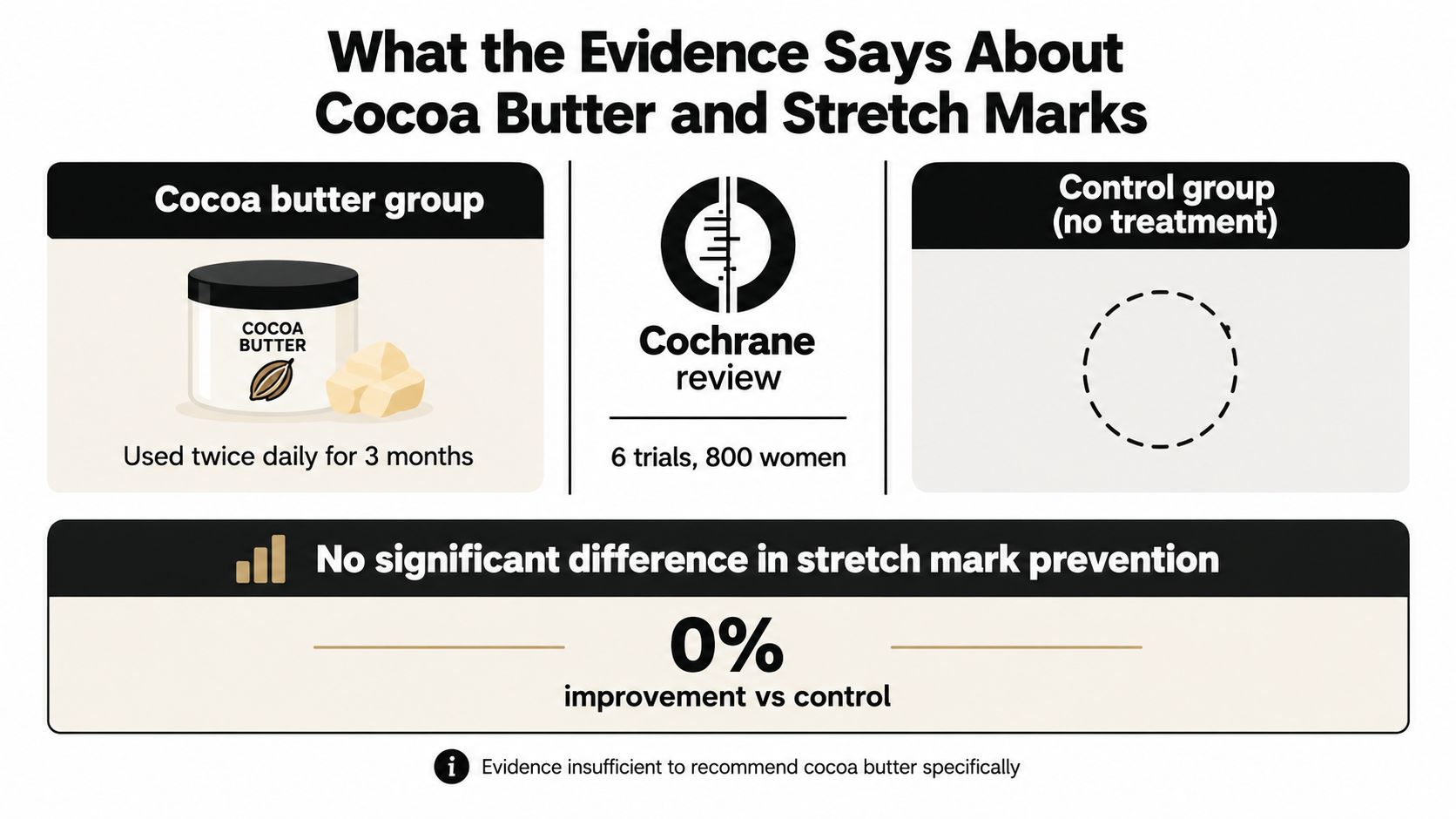
A Cochrane review of topical preparations for pregnancy stretch marks identified six trials involving 800 pregnant women. Among five trials involving 474 women, topical preparations didn't significantly reduce stretch-mark development compared with placebo or no treatment. The review included cocoa-butter preparations among the interventions assessed.
Reading the result without getting lost in statistics
The review reported a risk ratio of 0.74, with a 95% confidence interval of 0.53 to 1.03, and I² = 65%. The confidence interval crosses the point where researchers would regard the groups as showing no clear difference, so the result doesn't establish that topical preparations prevent marks. The I² value also indicates variation between the studies, which makes a simple, confident conclusion harder.
The review concluded that there was no high-quality evidence supporting any topical preparation for prevention. That doesn't mean moisturiser is useless. It means the evidence doesn't justify a promise that cocoa butter will stop stretch marks from forming.
Palmer's reported home-user results answer a different question. They describe how participants perceived changes in elasticity, texture, tone or appearance while using the product. Those outcomes can support a cosmetic claim about how skin looks or feels, but they don't replace independent, controlled evidence about prevention.
The honest reading: Palmer's may help your skin feel moisturised and comfortable, while the evidence doesn't show that cocoa butter reliably prevents stretch marks.
The distinction protects you from two opposite mistakes. You don't need to dismiss the product as pointless because it can be useful for dryness and massage. Equally, you shouldn't feel that you've failed if you apply it regularly and still develop marks. Skin stretching, inherited susceptibility and individual biology remain important influences.
A Safe Pregnancy Routine With Palmer's Cocoa Butter
A simple routine works best when it feels pleasant rather than like another task on your pregnancy checklist. Apply Palmer's Cocoa Butter Formula to clean, slightly damp skin, using enough to spread without dragging across the surface.
A gentle application method
- Warm the product. Rub a small amount between clean hands so it spreads more easily.
- Start with the bump. Use slow, light circular movements over the abdomen, without pressing hard.
- Include other changing areas. If they feel dry, apply it to the breasts, hips, thighs and buttocks.
- Let it settle. Give the product time to absorb before dressing, particularly if you've used a generous layer.
- Repeat when useful. Many people prefer a morning and evening ritual, but comfort matters more than forcing a rigid schedule.
Use it as a moisturiser and massage product, not as insurance against stretch marks. Applying it to slightly damp skin can help the surface retain moisture, while massage gives you a chance to notice whether the product feels soothing or irritating.
Pregnancy-friendly precautions
Patch-test a small amount on the inner arm before applying it widely, especially if your skin is reactive or you're trying a fragranced formula. Don't apply it to broken or inflamed skin. Stop if you develop a rash, burning, persistent itching or swelling, and ask a midwife, pharmacist, GP or other qualified healthcare professional for advice.
If you're using the routine during summer, remember that a moisturiser doesn't replace sun protection. Let the product absorb, then use a suitable SPF on exposed skin according to the product instructions.
Comfort first: if the scent makes nausea worse or the texture feels unpleasant, changing products is sensible. Consistency only helps when the routine feels manageable.
How Palmer's Compares With Oils and Pregnancy-Focused Brands
There isn't one universally best format for bump skincare. Palmer's suits people who like a familiar, rich cocoa-butter texture and want a widely available body product. Oils spread easily during massage, while pregnancy-focused ranges often place more emphasis on a bump-specific ritual, scent choices and ingredients selected with expectant mums in mind.
The comparison below focuses on practical differences, not promises of prevention. None of these formats should be treated as a guaranteed way to stop stretch marks.
| Approach | Key ingredients | Pregnancy positioning | Best for |
|---|---|---|---|
| Palmer's Cocoa Butter Formula | Cocoa butter, vitamin E, collagen and elastin | Mainstream moisturising and appearance-focused body care | People who prefer a rich, familiar product |
| Natural oils | Varies by oil, such as sweet almond, coconut or rosehip | Massage-led hydration and a simple ingredient style | Those who prefer a spreadable, oil-based ritual |
| Pregnancy-focused body care | Varies by brand and product | Formulated around changing pregnancy skin and bump care | People who want a dedicated maternity routine |
| Butter and oil layering | A richer butter combined with a lighter oil | Extra slip for massage and a more indulgent texture | Dry skin that responds well to layered hydration |
What to compare before buying
Texture affects whether you'll use the product. A dense butter can feel reassuring on very dry skin, while an oil may spread more quickly across a growing bump.
Scent matters during pregnancy. Fragrance that once felt pleasant can become overwhelming, particularly during nausea or headaches. Choose an unscented or gently scented option if that's more comfortable.
Ingredient philosophy is personal. Palmer's centres its range on cocoa butter and includes ingredients such as vitamin E, collagen and elastin. A dedicated maternity brand may focus more narrowly on pregnancy body care and avoid ingredients its audience would rather not use.
Availability and price can shape consistency too. Palmer's is a familiar, accessible option for many shoppers, while specialist ranges may appeal if you want a product designed specifically around pregnancy.
For a broader look at oil textures and routines, this guide to oils for stretch marks offers useful comparison points. Choose the product you can tolerate, enjoy and apply without turning skincare into a source of worry.
Common Misconceptions About Cocoa Butter and Stretch Marks
Cocoa butter is often discussed as though it can either erase every mark or do absolutely nothing. Both conclusions miss the useful middle ground.
Myth and fact
-
Myth: Cocoa butter can erase existing stretch marks.
Fact: It can soften and moisturise the surrounding skin, while stretch marks may naturally become less visible over time. It isn't proven to remove them. -
Myth: A more expensive product must work better.
Fact: Price doesn't establish that a formula prevents stretch marks. Texture, tolerability and whether you'll use it consistently are more practical considerations. -
Myth: If moisturiser doesn't prevent marks, there's no point using it.
Fact: Moisturising can reduce dryness and tight-feeling discomfort, even when it doesn't alter deeper skin remodelling. -
Myth: Developing stretch marks means you didn't look after your skin.
Fact: Pregnancy stretch marks are influenced by stretching, hormones and individual susceptibility. Skincare can't give you complete control over those factors.
The Cochrane evidence doesn't support promising prevention, and the medical explanation of cocoa butter supports a surface moisturising role. That combination gives you a calmer way to judge claims. Use cocoa butter because it makes your skin feel better and the ritual gives you a few minutes of care, not because you've been told you can control every mark.
Choosing the Right Cocoa Butter Routine for Your Bump
Start with three questions. Do you want a familiar supermarket option such as Palmer's, a simple natural oil, or a dedicated UK pregnancy-skincare range? Do you prefer a rich butter, a silky oil or a lighter lotion? Can you use the product comfortably without irritation or an overpowering scent?
A sensible routine is to patch-test first, apply to clean, slightly damp skin and massage gently wherever dryness or tightness bothers you. Swap products if your skin reacts. The best option is the one you'll use comfortably and consistently.
Palmer's cocoa butter is a meaningful self-care choice, but it's a hydration and comfort ritual, not a guaranteed prevention strategy. That honest expectation lets you care for your skin without blaming yourself for its natural changes.
The Happy Bump Co offers UK-made bump care, including Belly Butter, Belly Oil for Stretch Marks and Pregnancy Tummy Scrub, created for changing skin during pregnancy. If you want a dedicated routine focused on hydration, gentleness and everyday comfort, visit The Happy Bump Co to explore the range.