

You're standing in the bathroom after a quick shower, baby waking in the next room, and your tummy feels unfamiliar. The skin may look looser, feel dry or tight, itch across the stretch marks, or seem more finely textured than it did before pregnancy. None of that means you've done anything wrong.
Postpartum belly skin care isn't about forcing your body back to an old version. It's about easing discomfort, protecting a vulnerable skin barrier and giving changing tissue time to recover. Creams and oils can make skin feel softer and more comfortable, but they can't promise to erase stretch marks or remove loose skin. A realistic routine is gentler, more useful and much kinder.
Table of Contents
- Understanding Your Postpartum Belly Skin After Birth
- Your Daily Postpartum Belly Skincare Routine Made Simple
- Choosing Safe and Effective Ingredients While Breastfeeding
- Recovery Timelines and When to Step Up Treatment
- Caring for Sensitive Eczema Prone and Very Dry Belly Skin
- Practical Self Care Habits That Support Lasting Results
Understanding Your Postpartum Belly Skin After Birth
In the first weeks after birth, the abdomen can feel as though it belongs to several different bodies at once. The upper skin may be dry and papery, the lower tummy softer and folded, while areas around the navel feel tight or itchy. A new mum may notice these changes while getting dressed, then wonder why moisturiser hasn't immediately changed the texture.
Pregnancy stretches the skin and the connective tissue beneath it. The NHS describes stretch marks as a common pregnancy skin change, affecting around 8 out of 10 pregnant women. They commonly develop on the abdomen, breasts and thighs as the skin stretches, and they're not harmful or a medical problem. You can read the NHS guidance on pregnancy stretch marks for that reassuring clinical context.

What can feel normal after birth
Hormonal changes, stretched tissue and altered moisture levels can leave the tummy feeling less supple. Stretch marks often begin red, pink, purple or brown, then gradually become paler and less noticeable. They usually fade rather than disappear completely, so the useful measure of progress is often reduced tightness, less itching and improved softness, not perfect unmarked skin.
Loose skin and abdominal muscle changes also aren't the same thing. Moisturiser can support surface comfort, but it won't rebuild separated muscles or remove excess skin. If you notice abdominal pain, a painful bulge, significant weakness, wound concerns or symptoms that worry you, speak with your midwife, health visitor or GP rather than trying to solve the issue with a cosmetic product.
A mark that's visible needs a different response from skin that's hot, increasingly painful, weeping, blistered or covered in a spreading rash. Sudden swelling of the lips or face, breathing difficulty or feeling acutely unwell needs urgent medical help.
A helpful expectation: care for the skin you have today, while allowing the deeper tissues to recover at their own pace.
The NHS states that there's no specific treatment that removes stretch marks. That doesn't make moisturising pointless. It means the purpose of a belly routine is hydration, soothing and barrier support, not a guaranteed cosmetic result. For a more detailed discussion of realistic changes, see this guide to stretch marks after birth.
Your Daily Postpartum Belly Skincare Routine Made Simple
A useful routine should work around feeding, nappy changes and broken sleep. You don't need a bathroom shelf full of products. You need a mild cleanser, a plain emollient and a few minutes when the skin is clean.
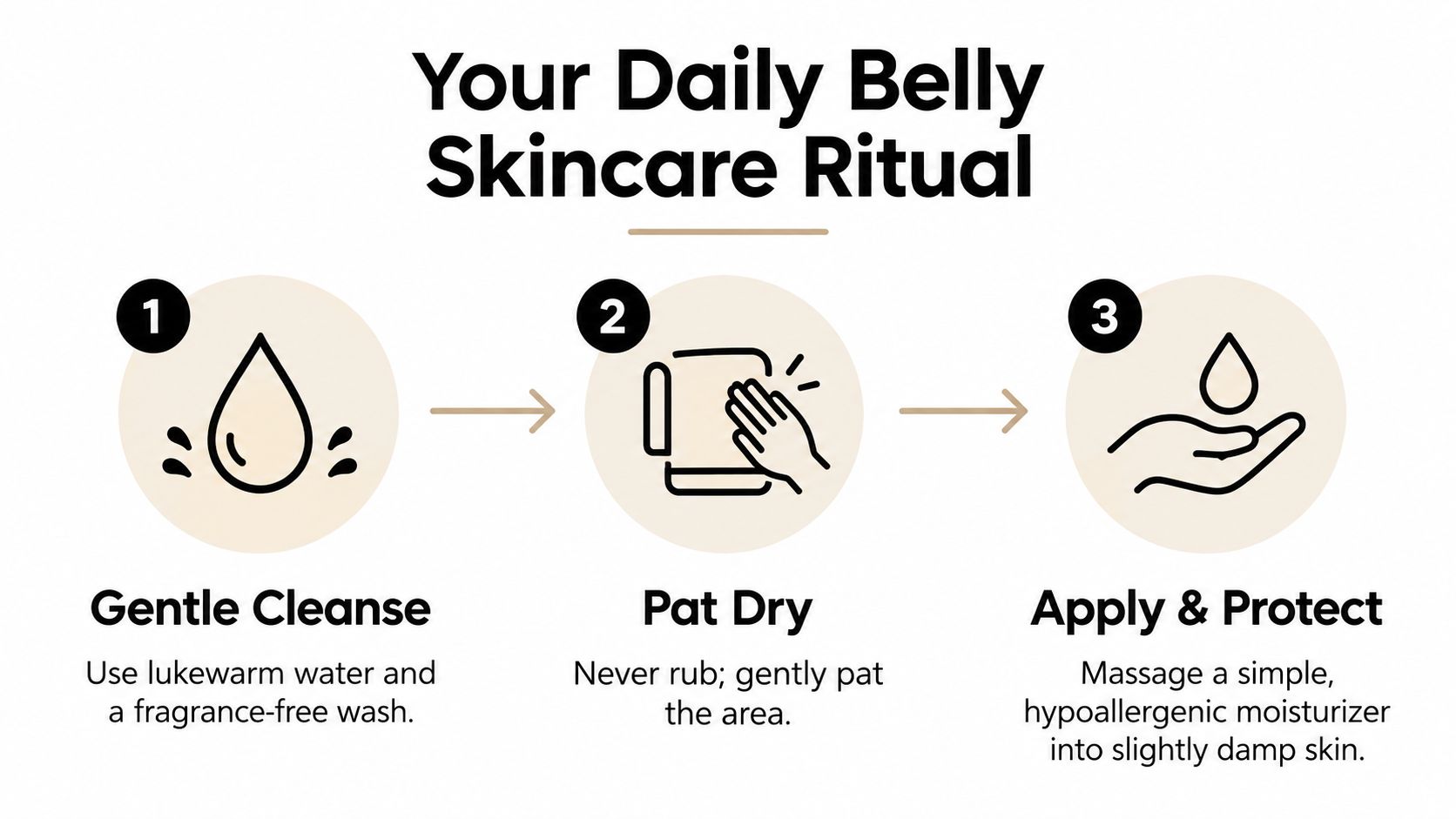
Begin in the shower or bath with lukewarm water, not a very hot temperature that can worsen dryness and itch. Use a gentle, fragrance-free wash on the tummy, and avoid scrubbing across stretch marks or any area that feels sore. Cleanse with your hands, rinse thoroughly and leave exfoliating gloves, brushes and gritty scrubs aside while the skin is reactive or healing.
The damp-skin window
Pat the abdomen dry with a soft towel. Don't rub briskly, particularly if the skin is itchy or tender. Within a few minutes, smooth on a rich, fragrance-free moisturiser or emollient while the skin is still slightly damp. This helps reduce water loss and gives the product a better chance of easing tightness.
Choose a texture you'll use. A cream or butter may suit very dry skin, while a lighter lotion can be easier in warm weather. If you enjoy oil, apply a small amount after your moisturiser for slip and massage, rather than treating oil as a replacement for all barrier care. The practical difference between these layers is explained in this guide to body oil before or after lotion.
Massage should feel calming, never forceful. Use the flats of your hands and slow circles across the abdomen, avoiding pressure over a healing incision, scabs or painful areas. You're aiming for comfort and a pleasant ritual, not vigorous manipulation or “breaking down” stretch marks.
Making it manageable with a newborn
Keep the moisturiser beside your clean clothes, near the changing station or in a wash bag you carry between rooms. Apply after your morning wash and again before bed if the skin feels tight. If you can only manage one application, make it the one immediately after bathing.
After a C-section, follow your surgical team's instructions for the incision. Don't apply oils, creams or fragrance over the wound unless you've been told to do so, and don't massage directly across it until it's healed and you've received appropriate clearance. The surrounding skin can still receive gentle care, but wound care takes priority over cosmetic goals.
Simple beats elaborate: a routine you repeat on tired days will serve your skin better than an expensive product used occasionally.
Choosing Safe and Effective Ingredients While Breastfeeding
Breastfeeding changes the way many mums assess skincare. The question isn't only whether an ingredient sounds effective. It's also where you'll apply it, whether the skin is intact, how often you'll use it and whether your baby could touch or ingest residue.
For most dry postpartum abdominal skin, start with bland, barrier-supporting ingredients. Glycerin helps attract water, while hyaluronic acid can add lightweight hydration. Petrolatum and other occlusive emollients reduce moisture loss, and simple plant oils or butters can improve softness and massage comfort. None should be sold as a guaranteed way to prevent or remove stretch marks.
The evidence supports that caution. A UK evidence review summarised by NICE in its discussion of topical products for stretch marks covered six randomised trials involving 800 women and found no high-quality evidence that any topical product prevents stretch marks during pregnancy. The sensible conclusion is not that every cream is useless. It's that comfort is a defensible benefit, prevention and removal are not promises to make.
A practical ingredient comparison
| Concern | Prioritise | Use With Caution or Delay |
|---|---|---|
| Dryness and tightness | Glycerin, hyaluronic acid, petrolatum and fragrance-free emollients | Strongly fragranced formulas or products that sting |
| Itch with sensitive skin | Thick, bland moisturisers and prescribed emollients where needed | Essential oils, exfoliating acids and vigorous massage |
| Uneven texture | Consistent moisturising and gentle application | Aggressive scrubs and unregulated “firming” claims |
| Pigmentation | Gentle hydration and protection from sun exposure | Strong actives without professional advice, especially on irritated skin |
| Stretch-mark appearance | Patience, softness and barrier maintenance | Products promising guaranteed prevention or complete removal |
Retinoids deserve particular care. NHS guidance says retinoids should be avoided during pregnancy, while some topical options may be considered after pregnancy has ended. Breastfeeding adds another layer of individual advice, particularly if you're applying an active over a large area or close to where your baby's skin might touch. Discuss retinoids and other stronger ingredients with a GP, pharmacist or dermatologist before restarting them. This guide to retinoids and peptides can help you understand why ingredient choice needs context.
Reading the label without getting overwhelmed
Look for a short ingredient list and terms such as fragrance-free, hypoallergenic and emollient. “Natural” doesn't automatically mean gentle. Lavender, citrus and other essential oils may smell pleasant but can irritate reactive skin, especially when the barrier is already compromised.
Patch test a new product on a small area first. Stop if you develop burning, worsening redness, swelling or a rash. Keep all topical products away from the nipple and areola unless specifically prescribed, and wash your hands after application if your baby may soon have direct contact with your abdomen.
Recovery Timelines and When to Step Up Treatment
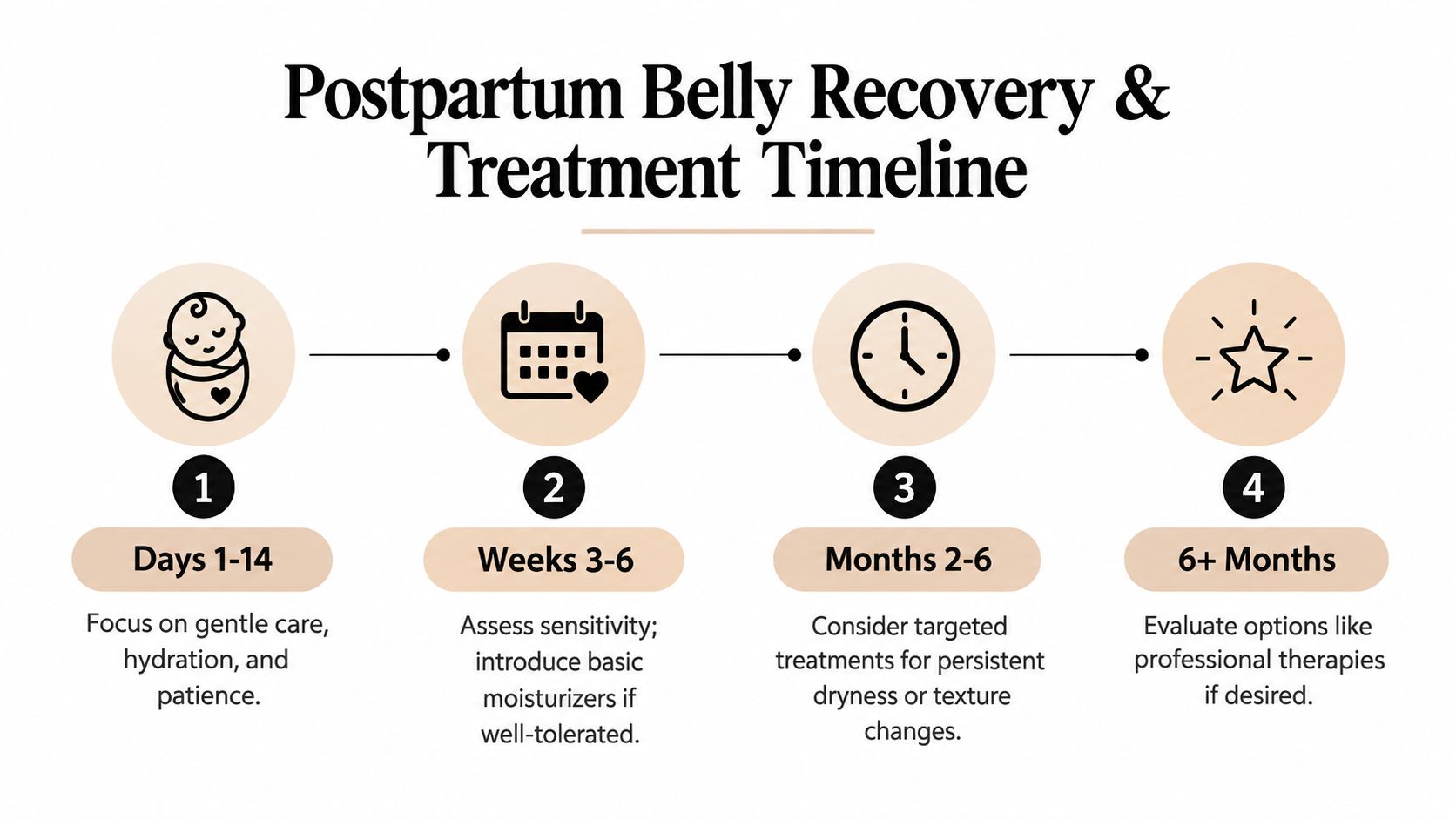
Early postpartum skin needs protection more than intensity. The abdomen has expanded, the body is healing from birth and, for some mums, an incision is still closing. Introducing acids, retinoids, devices or professional procedures too soon can create irritation without accelerating normal recovery.
During the first days and couple of weeks, focus on cleanliness, damp-skin moisturising and leaving wounds alone. A vaginal birth and a C-section create different healing considerations, but both call for low-friction care. If the abdomen feels increasingly painful, hot or swollen, or if an incision changes, seek clinical advice rather than adding another product.
A gentler progression
By the early weeks, you can assess whether a basic moisturiser is comfortable and whether the skin is becoming less tight or itchy. That's a better test than expecting the marks to look different every morning. Take an occasional photograph in similar lighting if tracking visual change helps, but don't let daily checking turn care into criticism.
Around three months postpartum, UK-facing aesthetic guidance commonly places non-invasive treatments, provided healing is complete and a clinician has cleared you, particularly after a C-section. See the post-pregnancy body restoration treatment timeline for that timing guidance. The right moment depends on wound healing, breastfeeding considerations, skin sensitivity and your own priorities.
Red or purple marks are generally more responsive to targeted treatment than older silver or white marks, but “more responsive” doesn't mean removable. A clinician can explain whether a treatment is appropriate, what risks it carries and whether waiting would be wiser.
Knowing when to escalate
Consider professional advice if persistent texture, pigmentation or loose skin continues to bother you after your body has had time to recover. Ask what the treatment is designed to improve, what it cannot change and how it fits around breastfeeding or scar care.
The safest sequence is gradual: heal first, support the barrier, assess the concern, then consider targeted treatment with informed guidance.
Caring for Sensitive Eczema Prone and Very Dry Belly Skin
For eczema-prone skin, adding more ingredients often makes matters worse. The postpartum abdomen may already be itchy from dryness and stretching, and fragrance, essential oils, hot water or exfoliation can push a fragile barrier into a flare.
The UK Eczema Society describes emollients as an essential part of regular skincare and recommends using them consistently, including for pregnancy-related eczema on the growing bump. Its guidance on pregnancy and eczema supports a barrier-led approach that remains useful after birth.
Simplify the flare routine
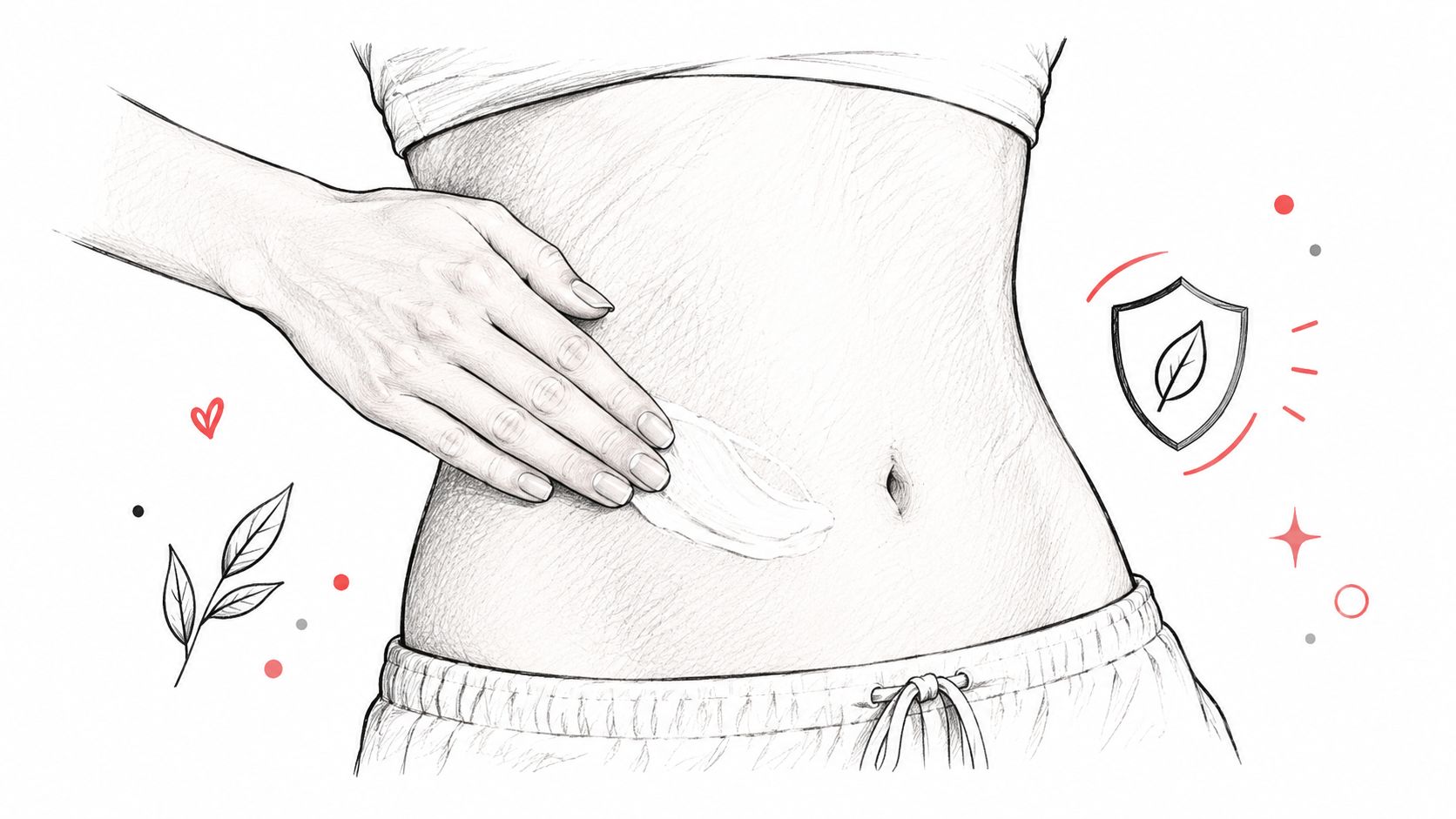
Use a fragrance-free wash only where needed, and keep showers short and lukewarm. Pat dry, then apply a thick emollient straight away. Plain petrolatum can be useful for very dry patches because it forms an occlusive layer, but a pharmacist or GP can recommend a product suited to your skin and any existing diagnosis.
Avoid applying new products over actively inflamed skin until you've patch tested them. Scented bump oils, botanical blends, alcohol-heavy formulas and exfoliating acids may feel attractive, but they can sting or trigger more itching in sensitised skin. A bland cream that feels unexciting is often the more intelligent choice.
Soft, loose cotton clothing reduces rubbing across the tummy. Keep nails short, press or cool an itchy patch rather than scratching it, and use a cool damp cloth for temporary relief. If moisturisers burn, the rash spreads, the skin cracks or weeps, or itch prevents sleep, contact your GP, midwife or dermatologist. You may need diagnosis or prescribed treatment rather than another over-the-counter product.
Separate eczema from ordinary dryness
Dryness usually feels tight or rough and improves with regular emollient use. Eczema may bring persistent itch, redness, scaling, cracking or recurring patches. A sudden raised or migrating rash can also have a different cause, so don't assume every postpartum bump is a stretch mark or dry skin.
A clinician can help identify triggers and prescribe breastfeeding-compatible treatment where necessary. Tell them which products you're using, where you apply them and whether your baby has skin contact with the area. That detail helps them give practical advice rather than just telling you to stop everything.
Practical Self Care Habits That Support Lasting Results
A moisturiser can't compensate for a routine that constantly irritates the skin. Lasting comfort comes from small decisions repeated through ordinary days, even when sleep is fragmented and your attention belongs to your baby.
Drink regularly, eat nourishing meals when you can and avoid judging your skin by how quickly it changes. General recovery affects how you feel in your body, but no food, drink or supplement can guarantee that stretch marks will disappear. Gentle walking and postnatal movement, when cleared and comfortable, can support wellbeing and confidence without pretending to tighten stretched skin.
Sun protection matters when pigmentation is a concern. UK expert skincare guidance recommends mineral SPF and limiting sun exposure because hormonal pigmentation can deepen in sunlight. The UK pregnancy skincare guidance from Cult Beauty also reflects the broader preference for gentler exfoliation and ingredient caution. The abdomen is often covered, but use protection if it's exposed, particularly during outdoor walks or holidays.
Turn care into a check-in
Once a week, ask yourself three practical questions:
- Comfort: Is the tummy less tight, flaky or itchy?
- Tolerance: Has any product caused stinging, redness or new bumps?
- Function: Can you move, dress and care for your baby without the skin becoming more painful?
If the answer to comfort is improving, keep the routine steady. If tolerance is worsening, remove the newest product first and return to a bland emollient. If function or pain is a concern, speak with a clinician.
Massage can become a moment of connection with yourself, not a test of whether you're “fixing” your body. Use slow movements while applying moisturiser, stop around sore areas and let the ritual end when your baby needs you. Consistency matters more than a premium label, and reduced itch or softer skin are meaningful results.
The Happy Bump Co offers bump-focused body care, including its Belly Butter and Belly Oil for Stretch Marks, formulated for hydration and daily use during pregnancy and beyond. If you're looking for a simple product to fit into a comfort-led routine, visit The Happy Bump Co and choose the texture that feels most practical for your skin.