

You're standing in the bathroom with a half-used moisturiser in one hand and a phone full of conflicting pregnancy advice in the other. Your usual cream suddenly looks suspicious, your bump feels tight, and every search seems to produce another ingredient blacklist.
A calmer way to decide is to ask what your skin needs and how serious the concern is. Self-care is suitable for everyday dryness and tightness. A pharmacist can help you assess an over-the-counter active or a new acne treatment. A midwife or GP should review symptoms that look medical, such as persistent or severe itching, a new rash, or a sudden skin change.
Pregnancy skin care products should support comfort, not create another source of worry. The routine below helps you choose what to use, what to leave on the shelf, and when another jar of butter isn't the right answer.
Table of Contents
- What Changes When You're Pregnant and Why Your Routine Matters
- Understanding Pregnancy Skin Care Products and What Each One Does
- How UK Regulation and Dermatology Guidance Shape Your Choices
- Ingredients to Avoid and Ingredients to Seek in Pregnancy
- Building Your Daily Bump Routine Step by Step
- The Overlooked Safety of Emollients Around Heat and Fabrics
- What a Pregnancy Skincare Product Can and Cannot Do
- Your Bump Routine Checklist and When to Escalate
What Changes When You're Pregnant and Why Your Routine Matters
Pregnancy can make familiar skin behave differently. Skin may feel drier, tighter, itchier or more reactive, and the expanding abdomen can make ordinary clothing and shower products feel irritating. You don't need to replace every product immediately, but you do need a simple way to review what touches your skin.
Stretch marks are one of the most common visible changes associated with pregnancy. The NHS explains that they affect around 8 out of 10 pregnant women, and that they can appear on the abdomen, breasts, thighs, hips and lower back. They may look red, purple, pink, reddish-brown or dark brown at first, depending on skin tone, before gradually fading.
That makes bump-focused body care a reasonable part of pregnancy self-care. It doesn't make a cosmetic product a medical treatment, and it doesn't mean you can control every change your skin makes. A comfortable, moisturised routine can help dry or tight skin feel better, while a new or intense symptom may need a clinician's assessment.
Three useful levels of support
Think of your bathroom shelf as only one part of the decision.
- Self-care: Use a gentle cleanser, an unperfumed moisturiser or emollient, and a simple body oil or butter for ordinary dryness and tightness.
- Ask a pharmacist: Check before starting an over-the-counter acne product, exfoliating active or treatment aimed at pigmentation.
- Contact a midwife or GP: Seek advice for symptoms that are persistent, severe, rapidly changing or difficult to explain, rather than repeatedly trying new cosmetics.
This approach is more useful than treating every ingredient as equally alarming. It also recognises that pregnancy skincare advice is cautious for a reason. The National Childbirth Trust notes that there aren't many clinical trials of beauty products during pregnancy, so uncomplicated routines built around gentle cleansing, moisturisation and sun protection are often the sensible starting point.
Practical rule: If the problem is comfort, start with gentle care. If the product is treating a condition, ask a professional whether you need more than moisturiser.
Understanding Pregnancy Skin Care Products and What Each One Does
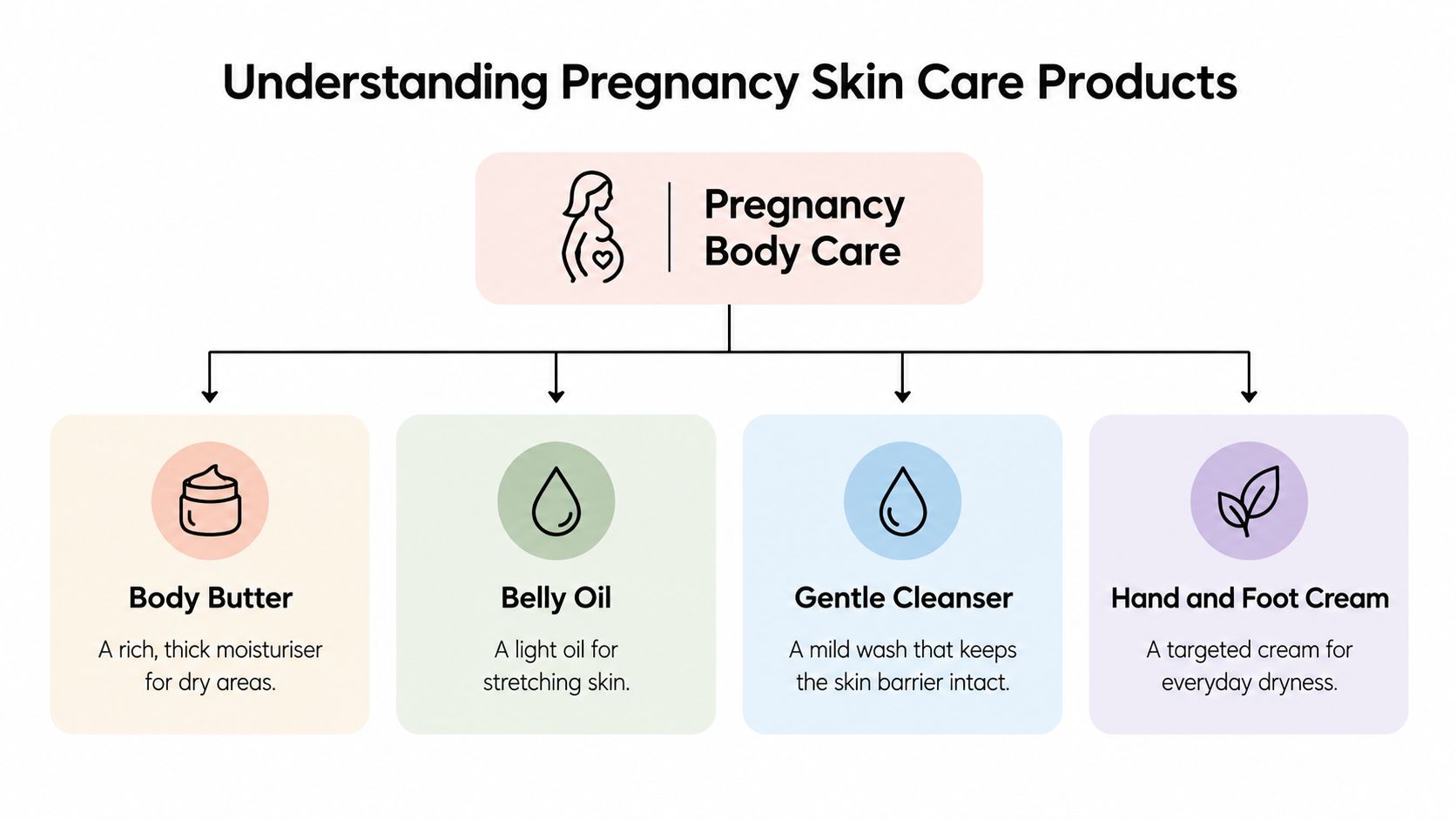
“Pregnancy skin care products” is a broad term. It includes everyday body care for changing skin, as well as products marketed specifically for the bump. The important question isn't whether a product has a pregnancy-themed label. It's what the formula is designed to do and whether that purpose matches your concern.
Match the product to the skin goal
Body butter is a rich moisturiser for areas that feel dry, tight or rough. Its thicker texture can be useful after bathing, especially across the abdomen, hips, thighs and breasts. Apply it to slightly damp skin so the product spreads comfortably without vigorous rubbing.
Belly oil is an oil-based leave-on product that helps soften the feel of stretching skin and reduce surface dryness. It won't replace a medical treatment, and it shouldn't be judged by whether it prevents stretch marks. Choose a formula you can apply consistently and check its full ingredient list if your skin is sensitive.
A gentle cleanser removes sweat, sunscreen and everyday residue without leaving the skin feeling stripped. Lukewarm water and a mild, fragrance-free wash are usually more comfortable than hot water or a strongly scented shower gel.
A gentle scrub is an optional cosmetic step, not a pregnancy requirement. If you use one, avoid aggressive rubbing over tender, itchy or broken skin. A product such as a body exfoliating lotion should be considered according to its ingredients, strength and application area, not just its name.
Mineral SPF helps protect exposed skin from ultraviolet radiation. Dermatology guidance recommends broad-spectrum SPF 30 or higher for exposed areas, with zinc oxide or titanium dioxide sometimes preferred when reducing irritation is a priority.
Cosmetic care isn't the same as treatment
A body butter can moisturise. It can't diagnose eczema, explain severe itching or replace an acne treatment prescribed or recommended for you. Likewise, an oil can make dry skin feel more supple, but it isn't proof that stretch marks will be prevented or removed.
Read the product's directions, keep the routine small, and introduce one new item at a time. That makes it easier to identify what suits your skin and easier to stop a product if it stings, reddens or worsens discomfort.
How UK Regulation and Dermatology Guidance Shape Your Choices
Two separate checks matter when you choose pregnancy skincare in Great Britain. The first concerns whether a cosmetic can legally and safely be placed on the market. The second concerns whether a particular ingredient or product type is sensible for your personal situation during pregnancy.
For the first layer, Great Britain requires every cosmetic to undergo a safety assessment by a qualified professional and be notified to the Office for Product Safety and Standards before sale. The same guidance includes restrictions on substances classified as carcinogenic, mutagenic or toxic to reproduction. This is a product-safety requirement, not a decorative badge a brand can add to packaging.
What responsible labelling should show
A responsible pregnancy-focused product should make it possible for you to identify what you're buying and how to use it. Look for:
- A complete ingredient list: Ingredients should use recognised cosmetic nomenclature so consumers and healthcare professionals can review the formula.
- Clear directions: The label should explain where and how often to apply the product.
- Relevant warnings: These may cover irritation, allergens, eye contact, damaged skin or other use conditions.
- A measured claim: “Moisturises dry skin” is more precise than implying a cosmetic guarantees a particular pregnancy outcome.
The second layer comes from clinical and dermatology advice. A product can meet cosmetic safety requirements and still not be the right choice for every pregnancy concern. For example, a formula for treating acne or pigmentation deserves more scrutiny than a bland moisturiser used for dryness.
“Pregnancy-safe” on the front of a bottle is therefore a starting point, not the end of your check. Turn the bottle around, identify the purpose of the product, and ask a pharmacist or clinician when the formula is active or the symptom is not behaving like simple dryness.
Ingredients to Avoid and Ingredients to Seek in Pregnancy
Ingredient lists become less intimidating when you divide them into two practical groups. Some ingredients deserve avoidance or professional advice during pregnancy. Others support a low-irritancy routine focused on hydration and barrier comfort.
The British Association of Dermatologists advises avoiding hydroquinone and retinoid creams during pregnancy because of potential fetal harm. It also supports gentle, fragrance-free skincare when irritation is a concern.
Pregnancy skincare avoid and seek at a glance
| Avoid or use with caution | Prefer instead |
|---|---|
| Retinoids, including retinol and prescription retinoids, unless your clinician specifically advises otherwise | Bland emollients and occlusives for dryness and tightness |
| Hydroquinone, which pregnancy guidance advises against | Simple moisturising products that don't claim to treat pigmentation |
| Strong or extensive salicylic acid use, particularly across large areas, without professional advice | A gentle cleanser and a pharmacist-approved option if acne needs treatment |
| Strong fragrance blends when your skin is reactive or scent feels overwhelming | Fragrance-free or low-fragrance bases |
| Undiluted essential oils applied directly to skin | A tested cosmetic formula with transparent ingredients |
| Aggressive scrubs on itchy, inflamed or broken skin | A soft moisturiser and minimal cleansing |
Salicylic acid needs context. It's common in acne products, but pregnancy guidance recommends caution, particularly with stronger or extensive use. Don't assume that a rinse-off cleanser and a leave-on treatment create the same exposure. If the product is active, covers a large area or is intended to treat a condition, ask a pharmacist.
“Natural” doesn't automatically mean gentle. Plant extracts and essential oils can still irritate sensitised skin, especially when used undiluted or in a heavily fragranced formula. If you want to explore a specific active, read a focused guide such as whether azelaic acid is safe during pregnancy, then confirm your personal choice with a pharmacist or clinician.
Patch testing is sensible. Apply a small amount to a limited area, follow the product directions, and stop if you develop burning, swelling, a spreading rash or worsening itch.
Building Your Daily Bump Routine Step by Step
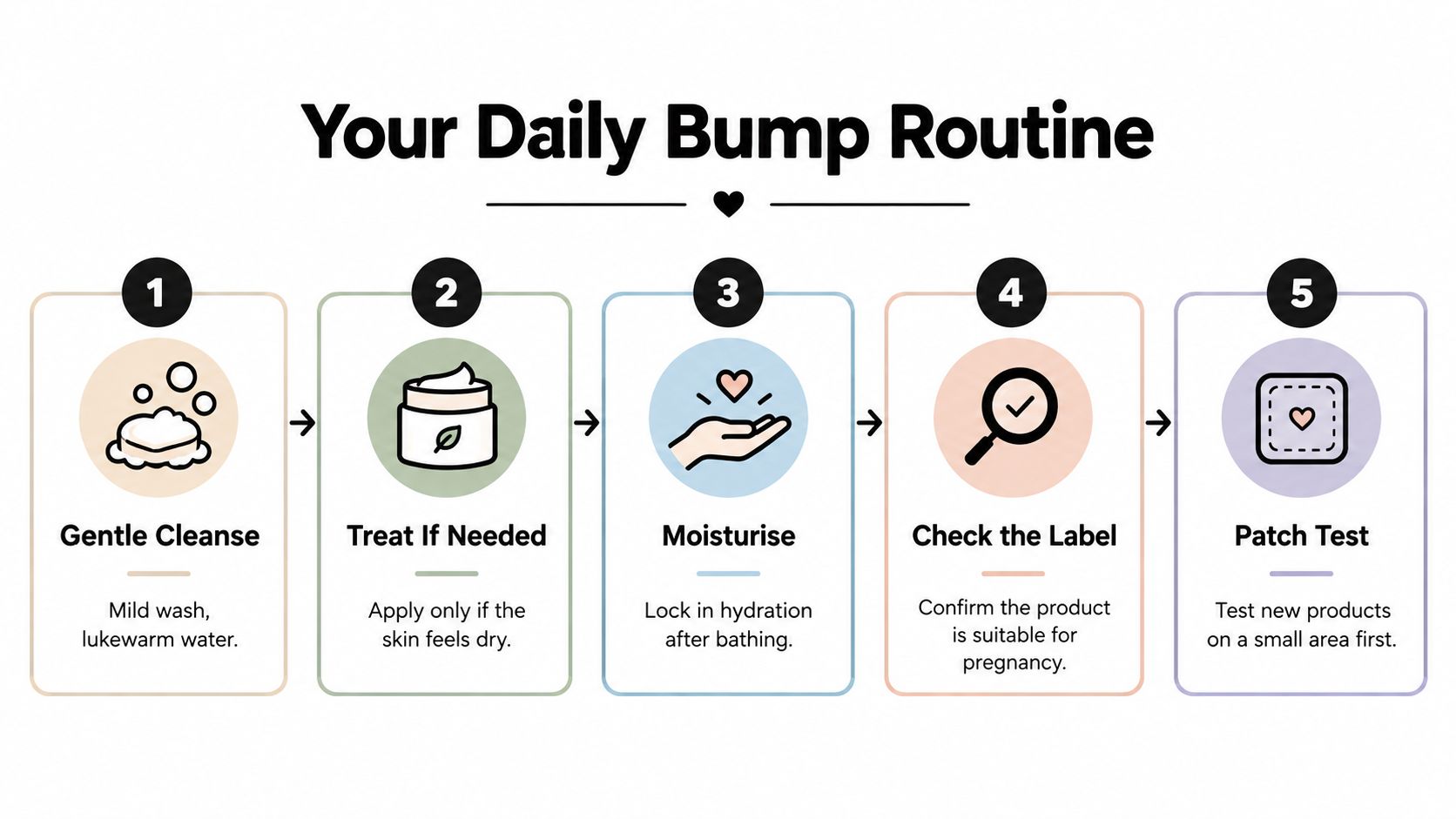
A useful routine doesn't need to be elaborate. The aim is to keep skin clean without stripping it, add moisture where you need it, protect exposed areas and pause before introducing active treatments.
A simple five-step flow
1. Cleanse gently. Use a mild wash and lukewarm water when you shower. You don't need to scrub your bump to make it clean, and repeated hot washing can leave already-dry skin feeling tighter.
2. Treat only a checked concern. If you're managing acne, pigmentation or another specific condition, don't automatically add an active because it appears in a pregnancy-themed product. Ask a pharmacist about an over-the-counter option, particularly if it contains an exfoliating acid.
3. Moisturise after bathing. Pat your skin rather than rubbing it dry, then apply a body butter, cream or unperfumed emollient while the skin still feels slightly damp. This is the comfort step that can be repeated consistently.
4. Protect exposed skin. Use broad-spectrum SPF 30 or higher on exposed areas, following the product's directions. Mineral filters such as zinc oxide or titanium dioxide may suit people who find other sunscreens irritating. UK dermatology guidance supports regular moisturising and broad-spectrum SPF 30 or higher.
5. Patch test new products. Try one new product at a time on a small area. A reaction can be harder to identify if you've changed your cleanser, oil, scrub and laundry products in the same week.
The routine can be shorter at night. If your skin isn't dirty or sweaty, a full cleanse may not be necessary. A comfortable moisturiser is often enough for a quiet evening ritual.
Choose the right pathway
| Concern | First response | Escalate when |
|---|---|---|
| Dry, tight skin | Gentle moisturiser or emollient | It becomes painful, cracked or persistently inflamed |
| Mild itch | Unperfumed moisturiser and a simple routine | It is severe, persistent or worrying you |
| Acne | Ask a pharmacist about suitable treatment | It is extensive, painful or not improving |
| Pigmentation | Sun protection and professional advice before active products | It changes suddenly or appears with other symptoms |
| New rash | Pause new products and contact a midwife or GP for advice | It spreads, blisters, swells or feels severe |
This keeps facial skincare and bump care separate without making either complicated. Your face may need its own routine, while your abdomen mainly needs gentle cleansing, moisturisation and careful product selection.
The Overlooked Safety of Emollients Around Heat and Fabrics
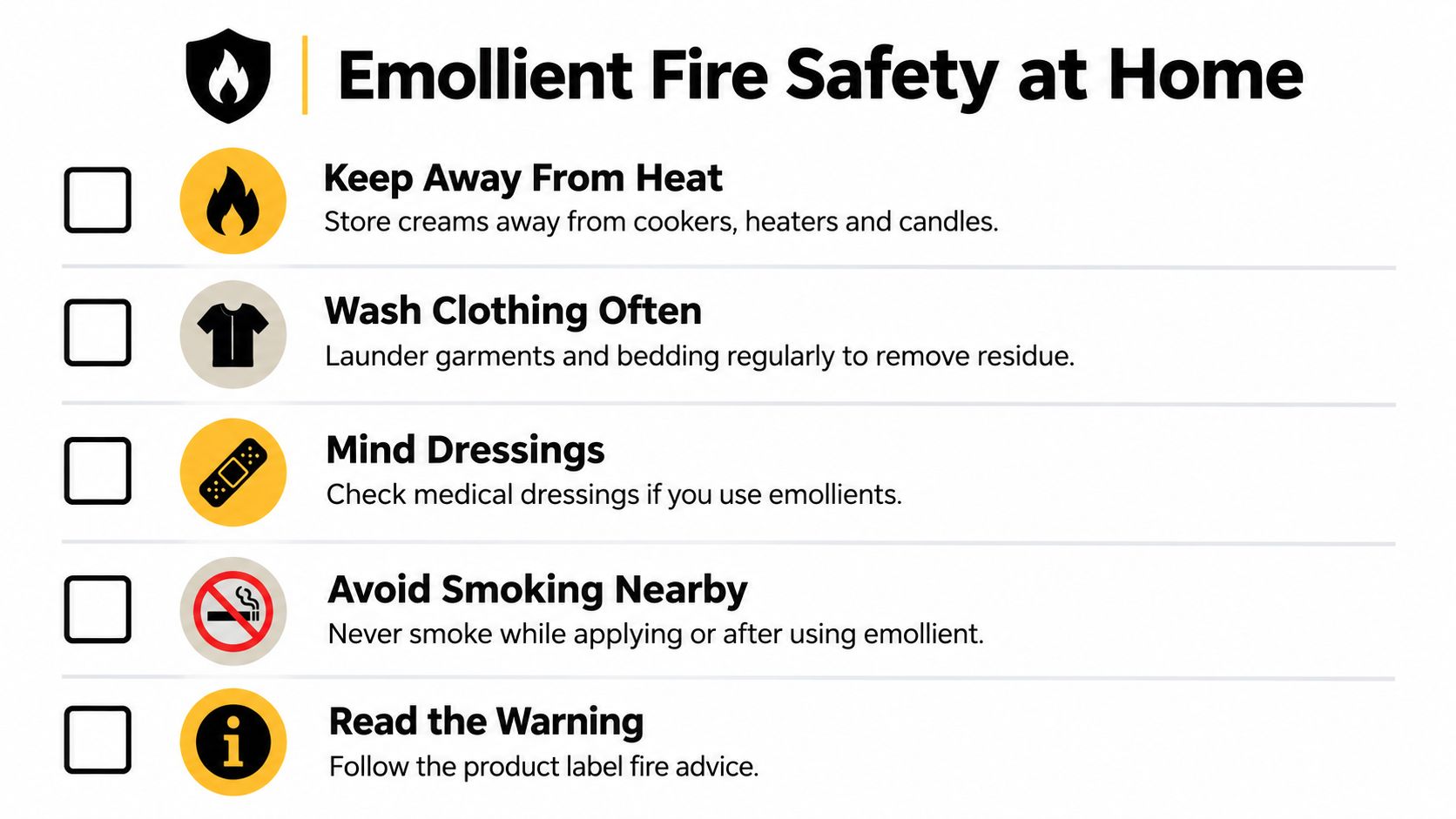
Moisturiser is usually discussed as a comfort measure, but leave-on emollients carry a practical household warning that many people miss. Oils in creams, lotions and ointments can build up on clothing, bedding, dressings and hair. Those residues can catch fire if they meet a naked flame or another strong heat source.
That doesn't mean the moisturiser itself is dangerous to use. It means you need to manage the residue, particularly if you apply large amounts regularly to your bump or other areas.
Everyday precautions
- Keep treated fabrics away from flames: Take care around candles, gas hobs, heaters, smoking materials and other naked flames.
- Wash clothing and bedding regularly: Laundering helps remove residue from nightwear, sheets and towels.
- Check dressings: If you use an emollient beneath or around a dressing, follow the product and healthcare instructions carefully.
- Read the label: Use the warnings supplied with the specific product rather than assuming every cream has identical directions.
The NHS recommends regular unperfumed moisturiser or emollient for pregnancy-related itching, while British Association of Dermatologists guidance explains the fire risk associated with emollient residue. These points work together. Moisturise for comfort, then reduce household risk through fabric care and sensible distance from heat.
For a practical discussion of application order, see whether body oil should go before or after lotion. Whatever order you choose, let products absorb as directed and avoid applying them immediately before contact with a heat source.
What a Pregnancy Skincare Product Can and Cannot Do
You smooth on a cream after a shower, your skin feels less tight, and for a while your bump feels more comfortable in your clothes. That is the lane a pregnancy skincare product sits in. It can soften dry skin, add slip, reduce that stretched feeling, and make a daily routine feel calmer.
It cannot diagnose why your skin has changed. It also should not promise to prevent or remove stretch marks.
As noted earlier, stretch marks are extremely common in pregnancy. They happen deeper in the skin, where a cosmetic moisturiser does not reach in the same way. A body butter or oil can help the surface feel more supple, which matters if your skin feels dry or itchy, but modest claims are usually the more believable ones.
Why modest claims are easier to trust
Pregnancy skincare is a bit like choosing comfortable shoes for swollen feet. Good ones can make the day easier. They do not change the fact that your body is adapting. The same principle applies here. A useful product supports comfort and skin barrier care. It does not replace clinical advice, and it does not turn a normal pregnancy change into a problem that needs fixing.
The National Childbirth Trust notes that clinical trials of beauty products in pregnancy are limited. That is one reason simple, well-described products often make more sense than dramatic language about repair, correction, or guaranteed results.
A product description is more helpful when it tells you four plain things:
- What it does: moisturises, softens, cleanses, or protects exposed skin.
- Where to use it: the abdomen, hips, thighs, breasts, or any dry area.
- What it cannot do: diagnose a rash, act like a prescription, or guarantee a stretch-mark outcome.
- When to stop self-care: if itching persists, a rash appears, acne suddenly worsens, or pigment changes noticeably.
That last point matters most. Daily dryness usually sits in the self-care lane. A treatment product with active ingredients belongs in the ask-a-pharmacist lane. Severe itch, a new rash, or a sudden skin change belongs in the contact-your-midwife-or-GP lane.
The goal is comfort, not perfection. Choose products that help your skin feel settled, and treat anything unusual as a reason to get the right kind of help.
Your Bump Routine Checklist and When to Escalate
Keep this short list near your bathroom shelf:
- Cleanse gently with lukewarm water.
- Moisturise dry or tight skin with a simple emollient.
- Use SPF 30 or higher on exposed skin.
- Avoid retinoids and hydroquinone, and ask before using stronger acids.
- Patch test new products.
- Wash fabrics regularly and keep emollient residue away from flames.
- Ask a pharmacist about active treatments.
- Contact your midwife or GP for persistent or severe itch, a new rash, sudden acne or a noticeable pigmentation change.
Pregnancy skincare is mostly about consistency, not perfection. Start with comfort, escalate thoughtfully, and don't let a long ingredient list replace professional advice when your skin is telling you something has changed.
The Happy Bump Co offers bump-focused body care, including Belly Butter, Belly Oil for Stretch Marks and Pregnancy Tummy Scrub, for moisturising and supporting changing skin during pregnancy. Explore the range and choose a simple daily ritual at The Happy Bump Co .