

You're standing in a shop aisle, bump still new enough that everything feels like a decision, reading the back of a body wash you've used for years. The front says gentle, natural and nourishing, but the ingredient list looks long and unfamiliar. That's a very common pregnancy moment. You don't need to fear every bottle, and you don't need a chemistry degree. You need a calm way to judge a safe body wash for pregnancy by how it's formulated, how you'll use it, and how your skin responds.
Table of Contents
- Why Pregnancy Changes Your Body Wash Choice
- Understanding UK Cosmetic Safety Rules
- Ingredients to Avoid and Gentle Alternatives
- How to Read a Body Wash Label
- The Truth About Natural and Fragrance-Free Claims
- Building a Bump-Friendly Washing Routine
- Testing a New Body Wash Safely
Why Pregnancy Changes Your Body Wash Choice
You might notice the change gradually. Your usual wash leaves your bump feeling tight after a shower, your legs itch by evening, or a scent you once loved now feels overpowering. Pregnancy can make skin drier, more reactive and less predictable, so a product that worked before may stop suiting you, even though nothing is seriously wrong.
That doesn't mean ordinary cleansing has suddenly become dangerous. It means comfort and skin barrier protection deserve more attention. A body wash is used often, over a large area, so repeated dryness or stinging matters in daily life. The aim is to choose a simple, low-irritation cleanser and pay attention to your own response.
What Safe Means in Practice
Safe isn't a single word on the front of a bottle. It depends on the complete formulation, the concentration of ingredients, how long the product stays on your skin, and whether you're using it as directed. A rinse-off wash is different from a cream you leave on all day, but a rinse-off product can still dry or irritate you.
Think of two questions together. Is this product legally and transparently sold for cosmetic use? Does my skin stay comfortable when I use it? If you're also unsure whether tightness means a lack of oil or water, guidance on dry skin compared with dehydrated skin can help you describe what you're feeling.
Everyday rule: A product that repeatedly burns, tightens or leaves you itching isn't right for you, whatever reassuring words appear on the packaging.
Many women feel calmer once they stop searching for a perfect universal list. You can learn a few checks, choose an uncomplicated product, test it cautiously, and adjust if your skin changes again. That's informed care, not alarm, and it fits easily into your normal shower routine.
Understanding UK Cosmetic Safety Rules
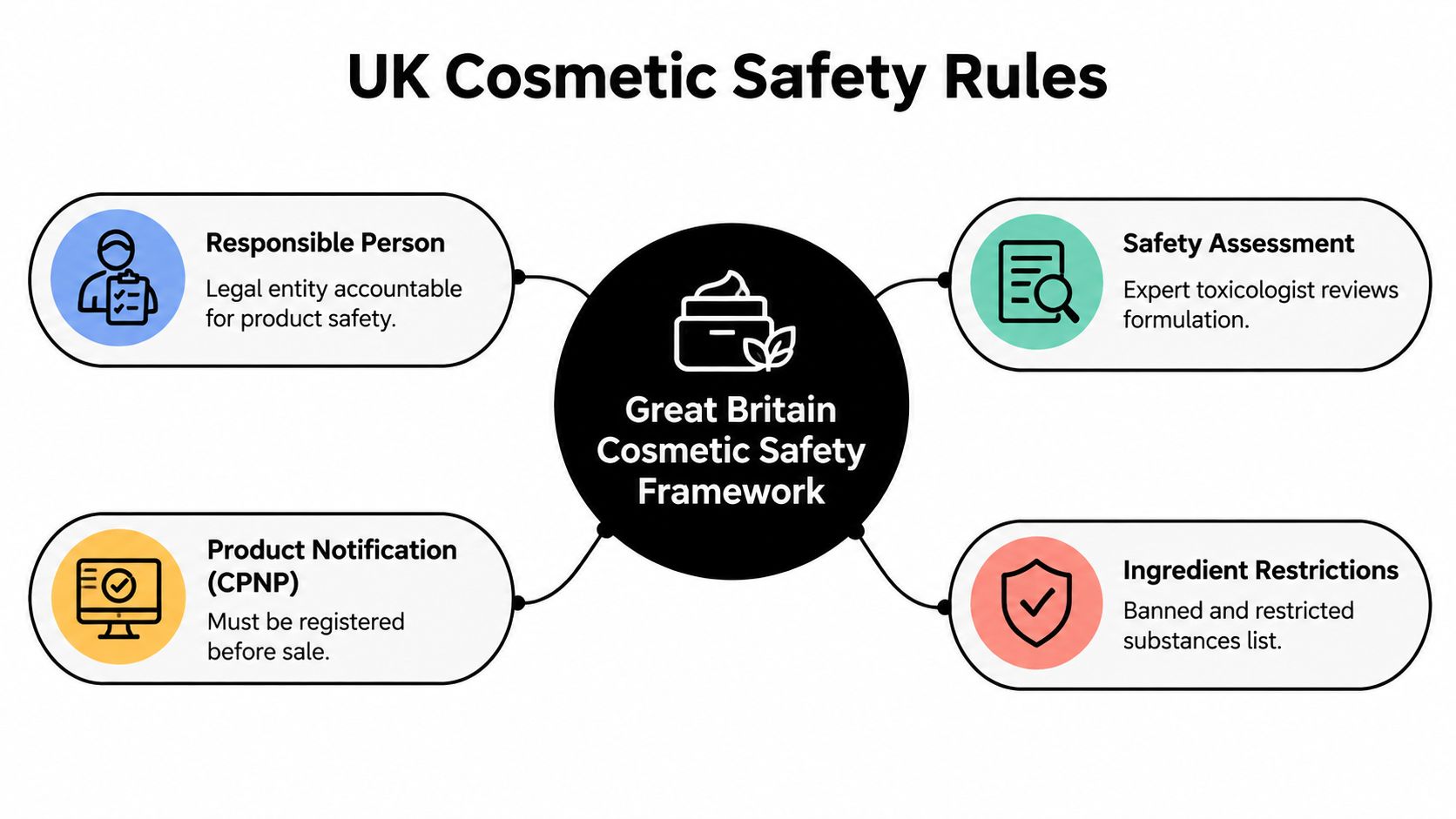
In Great Britain, a body wash isn't judged by marketing claims alone. UK Government guidance on cosmetic product safety states that every cosmetic product must be safe whether it's sold, given away or used professionally. Cosmetic formulations are also subject to bans and restrictions on specific substances.
Before a new product is made available, a qualified safety assessor must evaluate it. Products placed on the GB market must be notified to the Office for Product Safety and Standards. Packaging should also identify a responsible person and list the ingredients, giving you someone accountable and something concrete to check.
The diagram below summarises how those protections fit together.
Why the Whole Formula Matters
UK rules restrict substances classified as carcinogenic, mutagenic or toxic for reproduction, often shortened to CMR. Category 1A, 1B and 2 CMR substances are generally prohibited in cosmetics unless a formal exemption applies and scientific evidence demonstrates safe cosmetic use. That framework looks at more than whether an ingredient sounds natural or synthetic.
A safety assessment considers the finished product, its intended use and likely exposure. For a wash, that includes the fact that you'll dilute it, apply it briefly and rinse it away. One ingredient name by itself doesn't tell you the whole story because concentration and contact time shape exposure.
Your Practical Baseline
- Buy products legally marketed in Great Britain: Look for clear packaging, an ingredient list and a responsible person.
- Value transparency over branding: Pregnancy-themed artwork doesn't replace a safety assessment.
- Be cautious with unclear sellers: If you can't identify who's responsible for the product, choose something else.
- Keep your skin response in the picture: Legal safety and personal comfort are related, but they're not identical questions.
This gives you a useful starting point before you compare individual ingredients. You're not expected to audit a laboratory. You're checking that a product sits within a regulated system and gives you enough information to make a sensible choice.
Ingredients to Avoid and Gentle Alternatives
The ingredient question often causes the most worry, partly because pregnancy-specific evidence is limited. National Childbirth Trust guidance on beauty treatments in pregnancy notes that there are not many clinical trials of beauty products in pregnancy. Because of that, recommendations often favour the mildest treatments rather than intensive cosmetic products.
For a daily safe body wash for pregnancy, simplicity is helpful. You're cleansing sweat, sunscreen and everyday dirt, not delivering a treatment. A wash doesn't need strong exfoliating or medicated ingredients to do that basic job well.
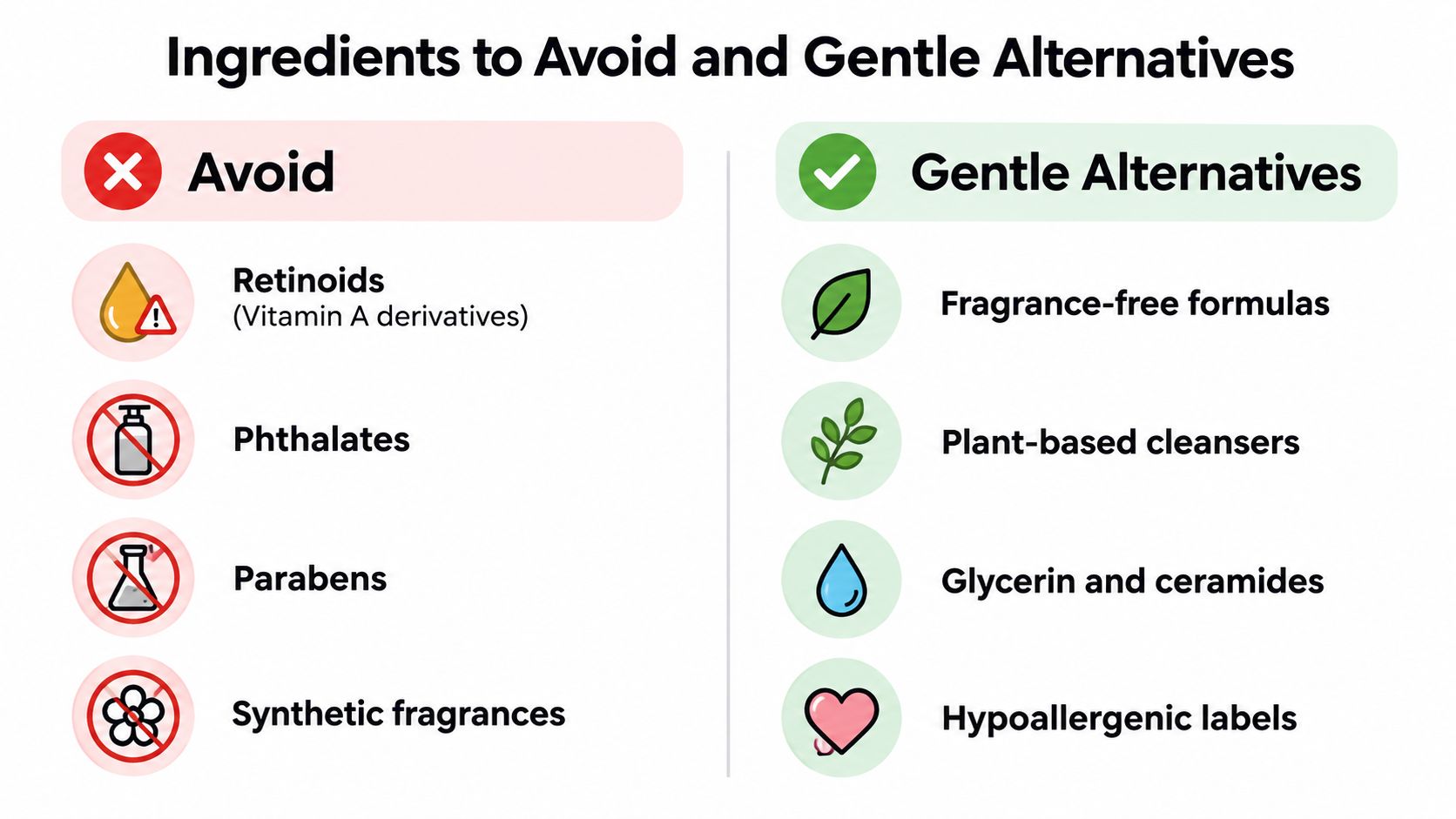
This comparison gives you a visual starting point before you read the detail below.
Ingredients to Treat Carefully
- Retinoids: Avoid products listing retinol, retinal, tretinoin, adapalene or tazarotene during pregnancy.
- Salicylic acid: Pay attention to strength, frequency and whether the product is rinsed off or left on, and ask a pharmacist or clinician if a wash is treatment-led.
- Hydroquinone: UK-focused guidance identifies it as unsuitable during pregnancy because of high systemic absorption potential.
- Strong fragrance: This is mainly a comfort and allergy consideration, especially if your skin has become reactive.
A rinse-off cleanser normally gives shorter contact than a leave-on product. That distinction matters, but it doesn't make every ingredient choice irrelevant. If a product is marketed as an intensive exfoliant or medicated wash, it's reasonable to ask your midwife, GP, pharmacist or dermatologist before using it regularly.
The video below offers another way to think through gentle cleansing choices.
Gentle Alternatives to Look For
Choose an uncomplicated cleanser designed for frequent use, ideally one that rinses cleanly without leaving your skin squeaky or tight. If you want broader context beyond the shower, this overview of safe skincare choices during pregnancy can help you keep your whole routine consistent. The goal isn't to eliminate every ingredient you've heard mentioned online. It's to avoid clear pregnancy concerns and keep daily cleansing mild.
How to Read a Body Wash Label
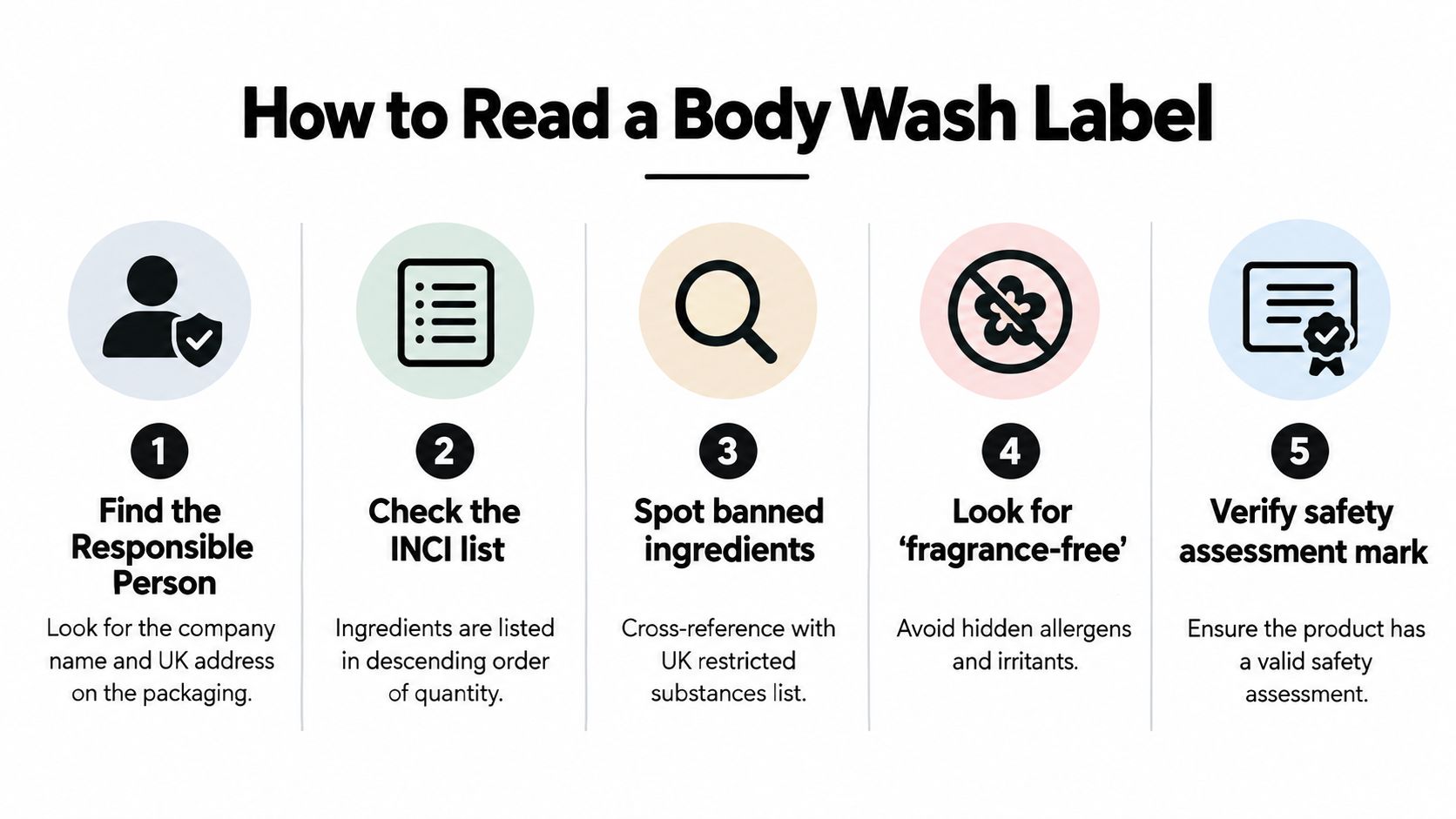
A label becomes less intimidating when you read it in the same order every time. Start with accountability, then look at the formula, then decide whether the product suits your skin today. You don't need to recognise every technical name before you can spot the main issues.
First, find the responsible person and check that the packaging includes a full ingredient list. Then scan for the retinoids and treatment ingredients covered above, plus parfum or fragrance if scent is a problem for you. Finally, read the directions so you know whether the product is meant to be rinsed away and how often it's intended to be used.
This checklist turns those checks into a quick routine you can use in a shop.
A Five Minute Comparison
- Check identity: Confirm the product name, responsible person and ingredient list are clear.
- Scan for avoid ingredients: Look carefully for retinoid names and hydroquinone.
- Notice treatment claims: Words suggesting intensive exfoliation or medication deserve extra questions.
- Check fragrance language: Unperfumed or fragrance-free may suit itchy or reactive skin better than a strongly scented formula.
- Judge after use: Tightness, stinging or new itching are useful information, not something to push through.
Where Natural Claims Can Mislead
It's easy to assume a botanical illustration means a gentler product. That isn't always true because essential oils and plant-derived fragrance can still irritate skin. Read the finished formula rather than sorting ingredients into natural and chemical as if those labels alone predict comfort.
Also compare how the product cleans. A harsh-feeling, heavily fragranced wash may be less suitable than a plain cleanser with a less attractive bottle. If two products both look acceptable, choose the simpler one first. That makes it easier to work out what helps if your skin changes.
The Truth About Natural and Fragrance-Free Claims
Natural doesn't automatically mean safer, and fragrance-free doesn't guarantee a product will suit everyone. Those two ideas clear up much of the confusion around pregnancy skincare marketing. What matters is whether the finished cleanser is low-irritant, appropriate for sensitive skin and comfortable with repeated use.
Eczema UK guidance on pregnancy and eczema warns that products marketed as natural may contain fragrance that irritates skin. A wash scented with botanical ingredients can therefore bother you just as a synthetic fragrance might. Your skin responds to the substances touching it, not to the story on the front label.
Fragrance and Detergents Deserve Attention
NHS advice says not to use perfumed soaps, deodorants or moisturisers when managing pregnancy itching. Guidance for eczema also identifies detergent-based wash products as problematic and recommends an emollient soap substitute instead for some people. That's especially relevant if washing leaves you dry, flaky or more itchy than before.
A cleanser can be rinse-off and still disrupt comfort. Short contact reduces exposure, but detergents and fragrance can still worsen dryness or irritation.
How to Judge the Claim
Ask what the claim tells you. Fragrance-free should mean scent isn't a feature of the formula, but cleansers, preservatives or other ingredients may still trouble an individual. Unscented can be less clear because a product may smell neutral while still containing fragrance-related ingredients, so the ingredient list remains important.
For ordinary, comfortable skin, a mildly scented wash may be perfectly tolerable. For itchy, eczema-prone or newly reactive skin, an unperfumed product is usually easier to troubleshoot. If a safe body wash for pregnancy leaves you stinging, stop using it rather than assuming the label knows your skin better than you do.
Building a Bump-Friendly Washing Routine
A good routine can make as much difference as the bottle you choose. Hot water, long showers and vigorous scrubbing can leave skin dry even when the cleanser itself is mild. Small changes often improve comfort quickly, and they're easy to keep up when you're tired.
NHS guidance on itching in pregnancy recommends cool or warm, not hot, showers, unperfumed moisturisers or emollients, and avoiding perfumed soaps. It also advises seeking medical help for a new rash or swelling. Tepid bathing and applying an emollient after washing help protect the barrier while your skin is still slightly damp.
A Simple Daily Routine
- Use lukewarm water: Keep showers comfortable rather than steaming, particularly during an itchy spell.
- Wash where needed: Use a small amount of cleanser, apply gently with your hands and rinse well.
- Pat rather than rub: Leave a little moisture on your skin before applying moisturiser.
- Moisturise straight after: An unperfumed emollient can reduce that tight feeling after washing.
- Take care underfoot: Emollients can make shower floors slippery, so rinse the tray and move steadily.
If you'd like a routine built around persistent dryness, a step-by-step dry skin care routine can help you organise cleansing and moisturising together. Consistency usually helps more than frequently swapping products.
Choose According to Your Skin Today
For ordinary dry skin, a gentle wash, shorter showers and moisturiser afterwards may be enough. For eczema-prone skin, avoid ordinary soap if it irritates you and ask a pharmacist about using an emollient as a soap substitute. During a flare, reduce friction and fragrance, and don't add several new products at once.
For unexplained severe itching, don't assume a cleanser change is the answer. Contact your midwife or maternity team, especially if itching is persistent, unusual or accompanied by a new rash or swelling. A body wash can support comfort, but it can't assess a pregnancy symptom.
Testing a New Body Wash Safely
Once you've chosen a product, introduce it slowly. A cautious personal-use test helps you judge tolerance before you use the wash all over, especially if your skin has become reactive. It isn't proof that a product is safe in pregnancy, and it isn't a substitute for clinical patch testing.
British Association of Dermatologists guidance on cutaneous allergy services supports a cautious approach followed by escalation if symptoms develop. Specialist patch testing is described as having approximately 70 to 80% sensitivity and specificity, while pre-prepared panels alone may miss an estimated 60 to 70% of relevant allergic reactions. Fragrance also deserves care because the guidance cites an estimated 1.9% fragrance contact-allergy prevalence in the general population.
How to Do a Cautious Personal-Use Test
- Choose intact skin: Pick a small area that isn't already sore, broken or eczematous.
- Use the finished product as directed: Apply a small amount, then rinse in the normal way rather than leaving it on.
- Watch immediately: Note burning, redness, swelling or stinging.
- Keep watching for 48 to 72 hours: Delayed eczema-like symptoms can appear after the first use seems fine.
- Introduce it gradually: If there's no reaction, use it on a larger area before making it your everyday wash.
Don't test near your eyes or vulva, and don't apply a concentrated amount to inflamed skin. Test only one new product at a time so you can identify the likely cause if symptoms appear. A calm test gives you information without turning your shower into an experiment.
Stop-use signal: Discontinue the product if a reaction appears, and don't continue through worsening dermatitis to see whether your skin gets used to it.
If You React
Stop the wash and return to the simplest routine your skin tolerates. Seek medical advice promptly for widespread symptoms, facial swelling or breathing difficulty. For persistent or recurring dermatitis, contact your GP, midwife or a dermatologist rather than repeatedly testing new scented products.
Keep a short record while symptoms are fresh in your mind. Note the product, batch, exposure site, timing, and every rinse-off and leave-on product used around the same time. That ingredient-led history helps a clinician decide whether specialist patch testing is appropriate and which substances should be considered.
Bringing Your Decision Together
Start with a product legally marketed in Great Britain and supported by clear safety information. Read the full label, avoid retinoid-containing products, question treatment-level ingredients, and treat natural branding as marketing rather than evidence. Then wash gently in lukewarm water, moisturise afterwards and test anything new before full use.
That framework works for any brand you consider. Readers who want bump-focused body care alongside their cleansing routine may also consider The Happy Bump Co, whose Belly Butter, Belly Oil for Stretch Marks and Pregnancy Tummy Scrub are formulated to nourish changing skin during pregnancy. Those leave-on and body-care products don't replace your label checks for a safe body wash for pregnancy, but they fit the same principle of gentle, pregnancy-focused care.
Most of all, trust the pattern you can observe. If your skin feels calm, clean and comfortable, your routine is doing its job. If itching persists, a rash develops or symptoms feel unusual for you, ask your maternity team or GP for advice rather than relying on another bottle.
When you're ready to build the rest of your bump care ritual, visit The Happy Bump Co to explore hydrating body care made for changing pregnancy skin, including Belly Butter, Belly Oil for Stretch Marks and Pregnancy Tummy Scrub. Choose the products that fit your routine, read each label with the checks above, and give your bump gentle care you can feel confident about.