

You're standing in the bathroom after a shower, one hand resting on your growing bump, when you notice a faint silvery line near your hip. Your first instinct is probably to reach for whatever cream is already on the shelf. Then you search for a pregnancy stretch marks cream and find a wall of promises, from “prevents every mark” to “creams are completely pointless”.
Neither extreme is helpful. No cream can guarantee that you won't develop stretch marks, but good skincare can make stretching skin feel more comfortable, support the skin barrier and turn an anxious daily task into a reassuring ritual. The right product should nourish your bump, not sell you a miracle.
Table of Contents
- Why Your Bump Deserves Better Than Guesswork
- What Stretch Marks Actually Are and Why They Appear
- Ingredients That Genuinely Support Changing Pregnancy Skin
- What the Evidence Really Says About Stretch Mark Creams
- Butter, Oil or Lotion Finding Your Pregnancy Skincare Format
- A Simple Daily Routine for Your Bump from Trimester Two Onwards
- How The Happy Bump Co Products Fit Into a Real Pregnancy Routine
Why Your Bump Deserves Better Than Guesswork
A pregnant woman once told me she'd bought three different products in one week. One was a thick butter, one was a scented oil and one promised to “stop stretch marks before they start”. She didn't know which one to use, so she used all three whenever she remembered. Her skin still felt itchy, and she felt she'd somehow failed when new marks appeared.
You haven't failed if stretch marks appear. They're a normal response to pregnancy changes, not evidence that you chose the wrong cream or didn't apply enough. The NHS says stretch marks are common during pregnancy, often appearing on the tummy, upper thighs and breasts, and they usually fade after birth without disappearing completely. The NHS pregnancy guidance on stretch marks also states that there's no specific treatment for them.
That doesn't make bump care useless. It changes what you should expect from it. A well-formulated cream, butter or oil can help relieve dry, tight and itchy skin, while the act of applying it gives you a few quiet minutes to check in with your changing body.
The sensible promise: choose skincare for hydration, comfort and a pleasant routine. Don't choose it because an advert says it can override your biology.
The rest of this guide takes the practical middle ground. You'll learn why marks form, which ingredients earn their place in a pregnancy routine, what UK research found about actual product use, and how to choose between a butter, oil and lotion. You'll also get a straightforward routine that doesn't require a bathroom shelf full of products.
What Stretch Marks Actually Are and Why They Appear
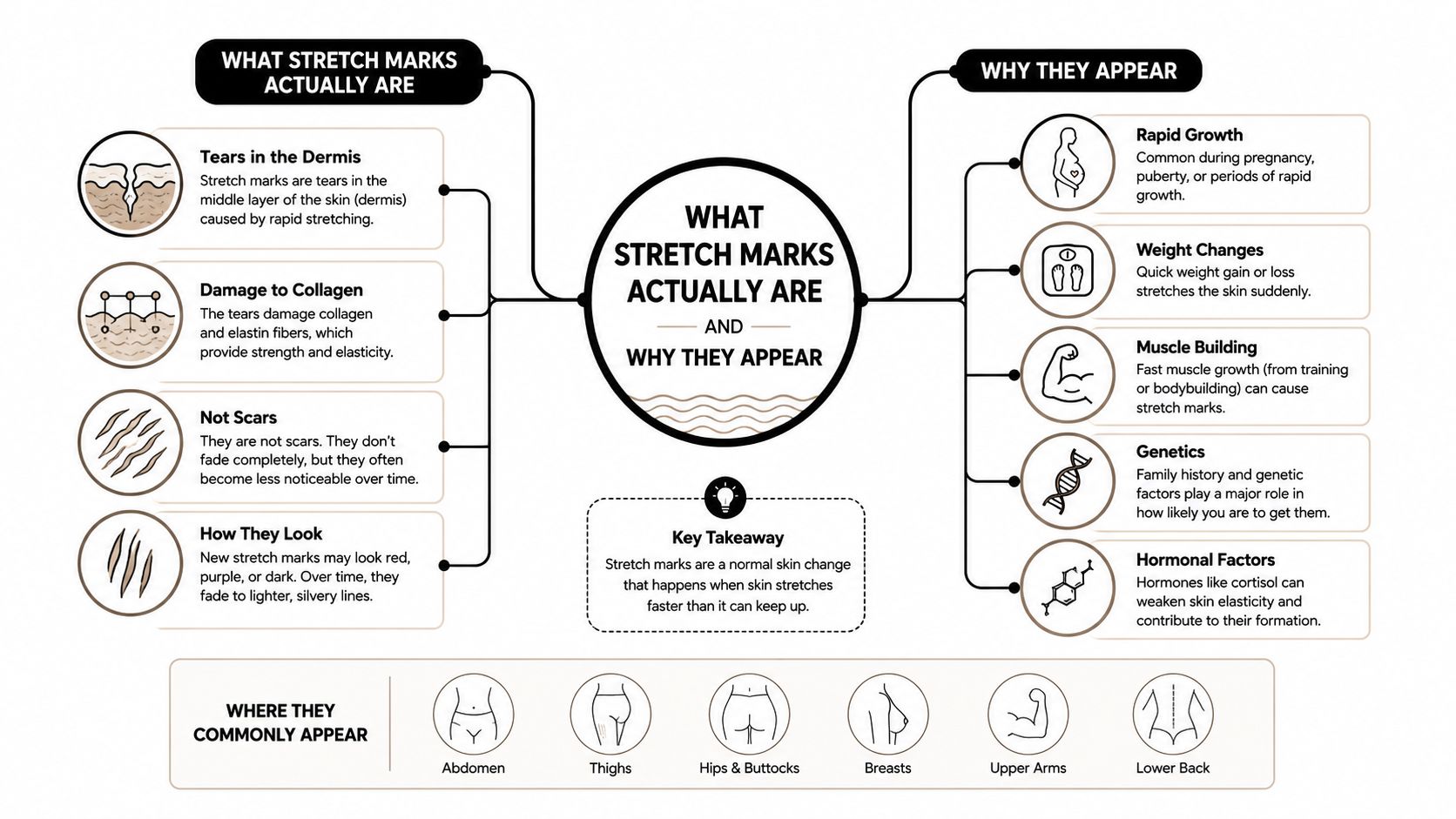
Stretch marks, medically called striae gravidarum, form in the dermis, the middle layer of the skin. During pregnancy, areas such as the abdomen, breasts, hips and thighs can expand quickly. The deeper collagen and elastin framework may not adapt at the same pace, leaving lines where the tissue has been stretched and repaired.
Early marks can look pink, red, purple, brown or deeper than the surrounding skin, depending on your skin tone. Over time, they generally become paler and less noticeable, although the texture may remain slightly different. They aren't dangerous, and they don't mean your skin is unhealthy.
Why some women develop more marks
Several factors can affect how much stretching your skin experiences and how it responds:
- The pace of change: Faster expansion gives skin less time to adapt.
- Your pregnancy: Carrying multiples or having a larger baby can place greater physical demand on the abdomen.
- Where your body changes: The bump isn't the only area affected. Breasts, upper thighs, hips and the bottom can stretch too.
- Family history: Your inherited skin structure appears to influence whether you develop marks.
- Hormonal changes: Pregnancy hormones alter many body systems, including the way skin behaves.
Cream can't reach into the dermis and rebuild stretched fibres. It works mainly at the surface, where it can soften dry skin and reduce water loss. That's why a moisturiser can improve how your skin feels without guaranteeing that a mark won't form.
The scale of this experience is reassuring. The NHS reports that stretch marks affect around 8 out of 10 pregnant women in the UK, making them one of the most common pregnancy skin changes. This NHS overview of stretch marks also explains that marks commonly affect the tummy, breasts, upper arms, thighs and bottom, and often fade with time.
If you'd like a more detailed explanation of the mechanics behind pregnancy marks, read this guide to what causes pregnancy stretch marks. The useful takeaway is simple: your routine can support the outer barrier, but genetics, hormones and the pace of physical change remain powerful influences.
Ingredients That Genuinely Support Changing Pregnancy Skin
A good pregnancy body product doesn't need a dramatic ingredient list. It needs ingredients that perform a clear job, a texture you'll use regularly and a formula that avoids ingredients you've been advised to avoid during pregnancy.
Start with barrier support
Shea butter, cocoa butter and mango butter are rich emollients. They sit on the skin, soften rough areas and help reduce moisture loss. They're particularly useful when your bump feels tight or flaky, and they suit an evening routine because their heavier texture takes longer to absorb.
Plant oils offer a different kind of nourishment. Sweet almond, jojoba, rosehip, coconut and olive oils can soften the outer skin and make massage easier. Jojoba has a comfortable, wax-like feel, while lighter oils can spread quickly across a large bump. If you have a nut allergy, check the label carefully and patch test before applying any sweet almond oil.
Hyaluronic acid is a humectant, meaning it helps attract water to the skin's surface. It can work well in a lotion or cream, especially when followed by an emollient that helps keep that moisture from evaporating. It won't prevent a dermal stretch mark, but it can make dry, tight skin feel more supple.
Add supportive actives carefully
Vitamin E is commonly included for antioxidant and conditioning support. Vitamin C can support normal collagen production in skincare formulations, although a pregnancy body product should still be judged by its full formula rather than one fashionable active.
Centella asiatica and peptides are sensible choices when you want a formula focused on the look and feel of changing skin. They're not magic repair agents, but they can sit alongside moisturisers and oils in a well-designed body treatment. For a closer look at peptide choices, explore this guide to the best peptide for skin.
Lactic acid can be useful in gentle, pregnancy-suitable body formulas because it helps loosen dry surface cells while also supporting hydration. Avoid using a strong exfoliating treatment on irritated, broken or very itchy skin. A scrub should feel comfortable, never scratchy.
A label-reading rule: if the formula hides its essential oils, fragrance blend or active ingredients behind vague wording, choose something more transparent.
Retinoids, including retinol and prescription-strength vitamin A derivatives, should be avoided during pregnancy unless your own clinician gives you specific advice. High-dose salicylic acid products also aren't appropriate for casual, large-area use without professional guidance. Undisclosed essential oil blends are another reason to put a product back on the shelf, particularly if you don't know the concentration or the purpose of each oil.
| Ingredient | What it does | Pregnancy notes |
|---|---|---|
| Shea, cocoa and mango butter | Softens skin and supports the moisture barrier | Useful for dry, tight areas and overnight care |
| Sweet almond, jojoba, rosehip, coconut and olive oils | Conditions the outer skin and supports massage | Check for allergies and choose a transparent formula |
| Hyaluronic acid | Attracts water to the skin's surface | Works well in a lotion or cream |
| Vitamin E | Provides conditioning and antioxidant support | Common in oils and richer body products |
| Vitamin C | Supports antioxidant care and normal collagen production | Judge the complete formula, not just the active |
| Centella asiatica and peptides | Support a skin-structure-focused routine | Use products specifically formulated for pregnancy |
| Lactic acid | Gently smooths dry surface skin and supports hydration | Choose a gentle body formula, not a strong peel |
| Retinoids and high-dose salicylic acid | Intensive skin actives | Avoid retinoids and seek clinical advice for high-dose acids |
What the Evidence Really Says About Stretch Mark Creams
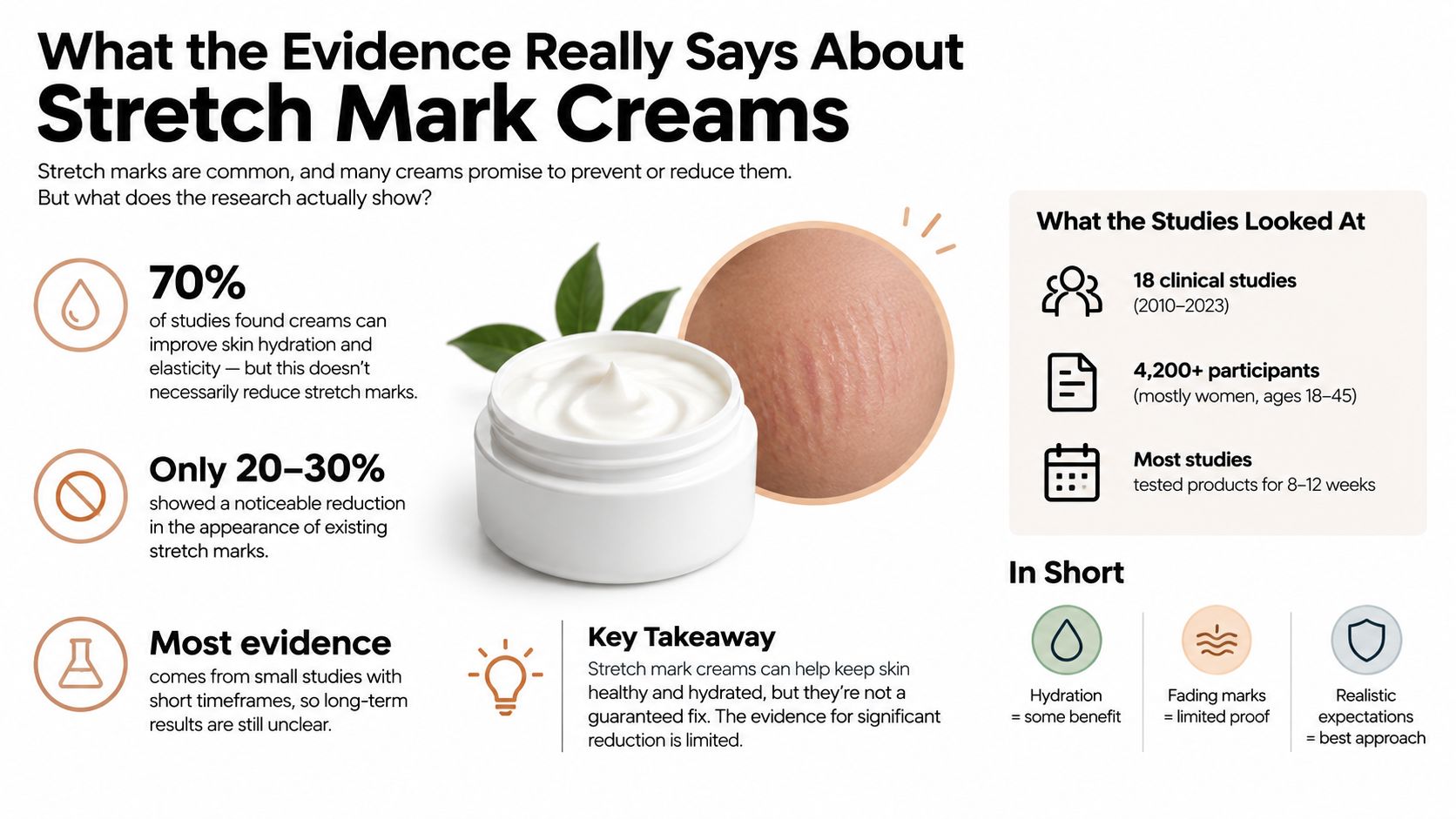
Here's the honest answer to the question most women ask: no topical cream has been proven to prevent stretch marks during pregnancy. The NHS baseline is that around 8 in 10 pregnant women develop them, so any product promising complete prevention is asking you to believe more than the evidence supports.
That doesn't mean all creams are identical or that applying one is pointless. It means the product's realistic job is to moisturise, soften and soothe the skin. It may make existing marks look less dry as they fade, but it can't promise to stop every new line.
The claims I'd question
- “Cocoa butter prevents stretch marks.” Cocoa butter is a useful emollient, but it isn't a guaranteed shield.
- “The most expensive cream works best.” Price doesn't tell you whether the formula suits your skin or whether you'll use it consistently.
- “Apply more and you'll prevent them.” A thicker layer won't change the genetic and physical factors involved.
- “Marks mean you used the wrong product.” No. Marks can appear even when you've cared for your skin diligently.
UK research from Queen's University Belfast gives useful context. In a survey, 707 pregnant women were invited to participate and 589 responded, with 78.2% reporting that they used at least one product to prevent or reduce stretch marks. The NHS page reporting this survey also states that 36.5% of those women used two or more products, while Bio-Oil was the most frequently used product among respondents.
The same research found that 46.7% developed stretch marks during their current pregnancy and 46.3% had them before that pregnancy. The authors noted that earlier evidence reviews found no high-quality evidence supporting topical preparations for prevention. That's why I'd frame a pregnancy stretch marks cream as nourishing body care, not medical treatment.
Butter, Oil or Lotion Finding Your Pregnancy Skincare Format
The best format is the one you'll apply consistently. A luxurious butter that stays untouched in a drawer is less useful than a simple lotion you use after every shower.
Body butter is the richest option. Shea, cocoa or mango butter formulas create a more substantial layer and suit very dry areas or evening use. They're slower to absorb, which can be exactly what you want before bed, but they may feel too heavy under clothes.
Oil spreads quickly across a large surface area, making it practical for the bump, breasts, hips and thighs. Sweet almond, jojoba and rosehip oils are common choices. Oil also makes gentle massage easier, whether you apply it yourself or ask your partner to help. The trade-off is that it can transfer to clothing if you dress immediately.
Lotion usually feels lightest because it contains more water. It's a good daytime choice under clothing and suits people who dislike a rich finish. A lotion may not feel sufficient when the skin is extremely dry, so you might prefer a butter at night.
| Format | Texture and absorbency | Best time to use | Best for |
|---|---|---|---|
| Body butter | Rich, occlusive and slower to absorb | Evening or before bed | Very dry, tight skin and a longer self-care ritual |
| Body oil | Spreadable, conditioning and potentially greasy | After a shower or during massage | Fast coverage across the bump and larger areas |
| Lotion | Light and water-based | Daytime and under clothing | Quick application and lighter skin types |
Use the simple decision rule: lotion for speed, oil for spreadability and butter for lasting comfort. You can use different formats at different times of day, and you don't need to commit to just one. This comparison of stretch marks oil or cream can help if you're deciding between the two richer options.
A Simple Daily Routine for Your Bump from Trimester Two Onwards
A routine only works if it fits real life. Keep the products beside your towel, not hidden in a cupboard, and make application part of something you already do.
In the morning
After a warm shower, pat your skin so it remains slightly damp. Apply a light lotion or oil to the bump, breasts, hips and thighs, then give it a moment to settle before dressing. Damp skin helps the product spread more easily and reduces the temptation to rub hard.
You don't need to press hard. Use broad, gentle movements and pay attention to areas that feel tight or itchy. If your skin reacts, stop using the product and wash the area.
In the evening
Use a richer butter before bed. Warm a small amount between your hands, then massage it across the bump and other stretching areas with gentle circular movements. Take a few minutes, not because massage guarantees prevention, but because slow application helps the product cover evenly and turns skincare into a calming wind-down habit.
Make consistency easy: keep the lighter product for daytime and the richer one beside your bed.
Support the routine with simple habits. Avoid very hot showers, which can leave dry skin feeling tighter. Pat rather than rub yourself dry, and drink regularly according to your normal pregnancy needs. These steps won't control whether marks form, but they can make your skin feel less uncomfortable.
Patch test every new product on a small area and wait 48 hours before applying it widely. Check the ingredient list, particularly if you have sensitive skin, allergies or a history of eczema. If itching becomes severe, spreads beyond the usual stretching areas or comes with a rash, speak to your midwife or GP rather than treating it as ordinary dry skin.
How The Happy Bump Co Products Fit Into a Real Pregnancy Routine
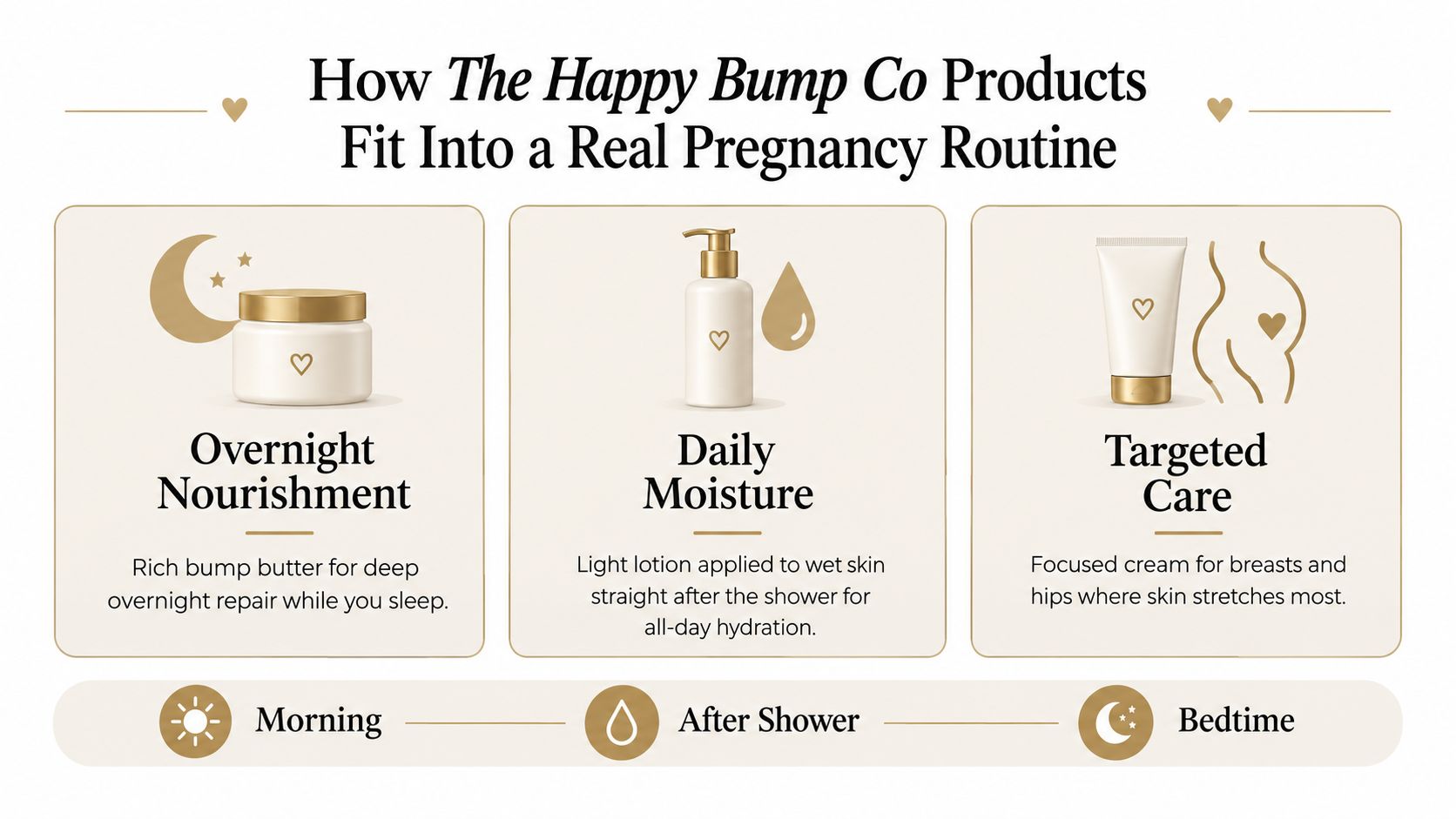
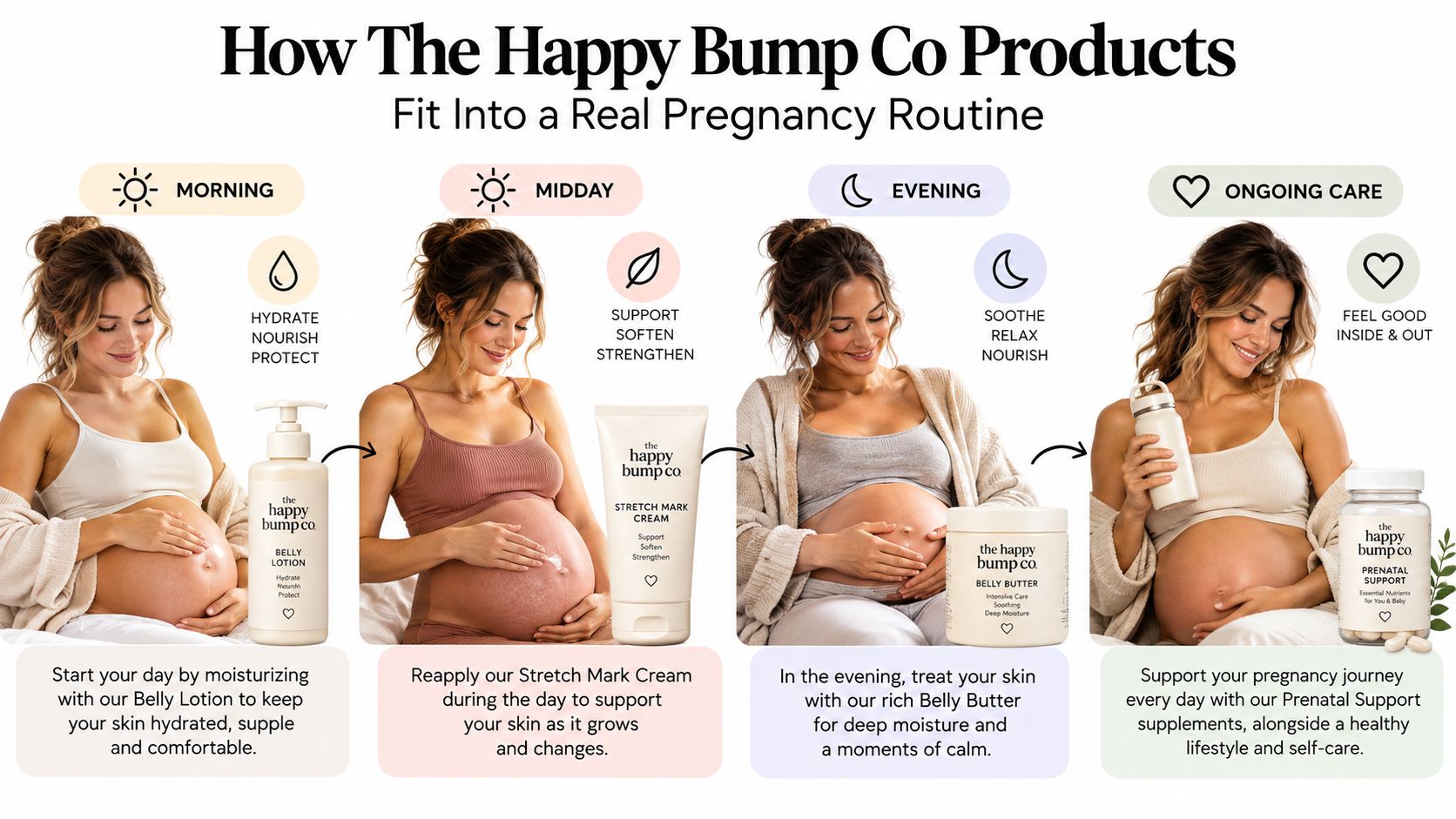
The Happy Bump Co range is built around three straightforward bump-care jobs rather than one grand promise. The Belly Butter is the richer evening option, suited to skin that feels dry, tight or in need of a more comforting layer before sleep.
The Belly Oil for Stretch Marks is the quick, spreadable choice after a shower. It can be applied to the belly, breasts and other areas prone to stretching, making it practical when you want broad coverage without spending long working in a thick cream.
The Pregnancy Tummy Scrub has a different role. It can help you manage dry surface skin when used gently, but it shouldn't be applied to sore, broken or actively irritated skin. Exfoliation is an occasional supporting step, not a replacement for daily moisturising.
Match each product to the moment
- After your shower: Use the oil while skin is still slightly damp.
- At bedtime: Apply the butter to areas that feel dry or tight.
- When skin feels rough: Use the tummy scrub gently and sparingly, then moisturise.
- When choosing any formula: Check the current ingredient list and patch test first.
The range is described as free from retinol, salicylic acid and synthetic fragrance, and designed for pregnancy-focused use. That makes it easier to slot into a second-trimester routine without adding a complicated series of steps. It still isn't a promise that stretch marks won't appear. Its practical value is hydration, comfort and a repeatable way to care for changing skin.
If your skin develops marks, keep moisturising because it feels good, not because you need to correct your body. Stretch marks are common, they often fade, and they're not a sign that you've done pregnancy badly.
The Happy Bump Co offers bump-focused care including Belly Butter, Belly Oil for Stretch Marks and Pregnancy Tummy Scrub, giving you practical options for overnight nourishment, daily moisture and gentle surface care. Visit The Happy Bump Co to choose a simple pregnancy skincare routine that supports your skin without promising a miracle.