

You may notice it while getting dressed, or when you pause in front of the mirror after a shower: a faint line on your bump that wasn't there before. It can be surprising, especially if you've been carefully moisturising and thought that might stop stretch marks appearing.
The reassuring truth is that stretch marks are a common, harmless part of pregnancy. The NHS says they affect around 8 out of 10 pregnant women. Skincare can still make dry, tight or itchy skin feel more comfortable, but no cream can promise to prevent or erase the marks.
Table of Contents
- The Moment Most Mums First Spot Their First Line
- What Pregnancy Actually Does to Your Skin
- What the Evidence Really Says About Prevention
- Your Pregnancy-Safe Ingredient Triage
- Building a Gentle Daily Bump Care Routine
- Professional and Clinical Options and Timing
- After Birth, Setting Kind Expectations
The Moment Most Mums First Spot Their First Line
At first, a stretch mark might look like a fine streak across your abdomen, breast, hip or thigh. You may wonder whether you've missed a step in your skincare routine, or whether a different oil could have stopped it. Finding a line doesn't mean you've done anything wrong.
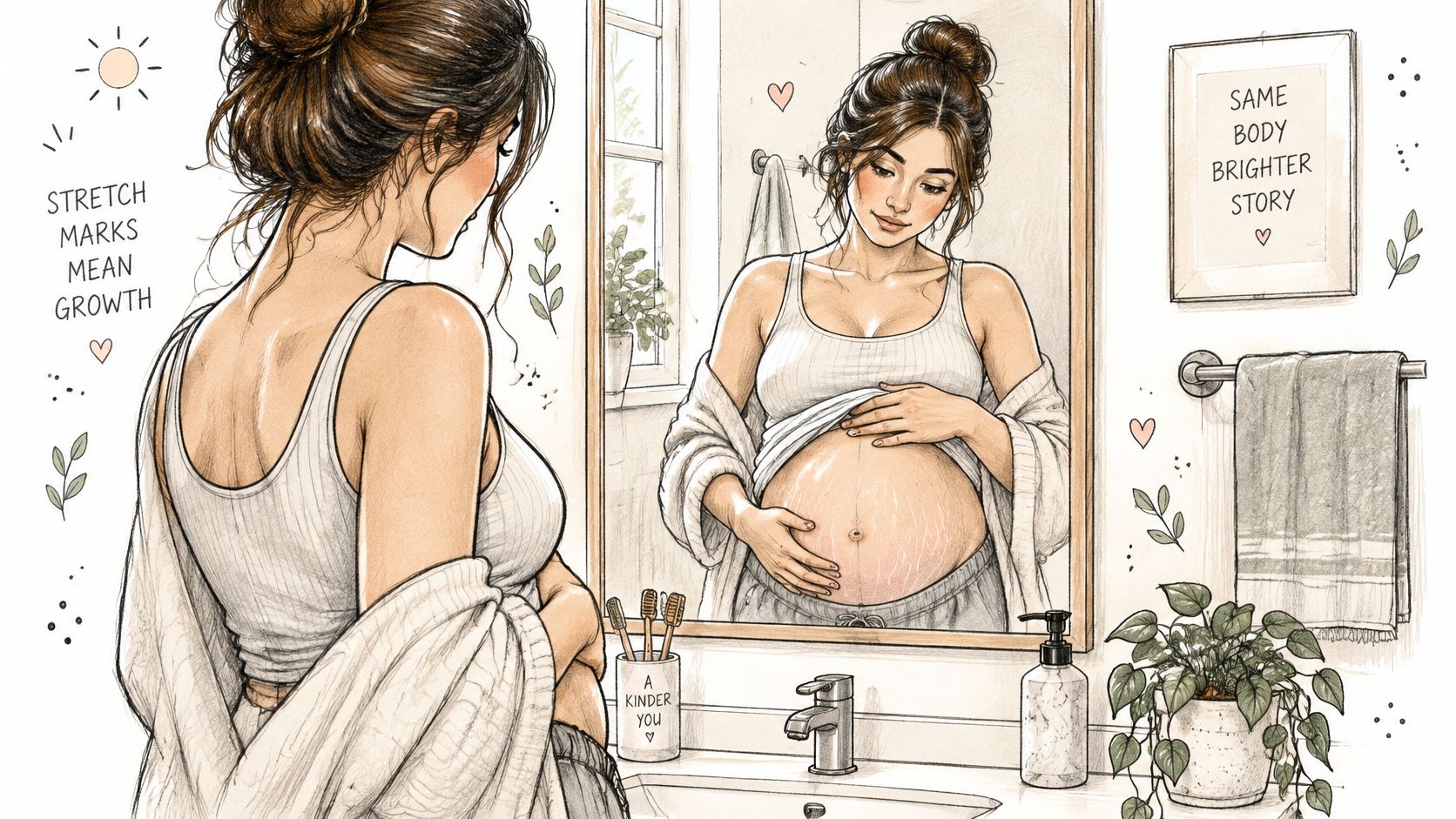
The medical name is striae gravidarum. The NHS describes pregnancy stretch marks as a normal skin change, not a medical disorder. They commonly develop where skin expands, including the abdomen, breasts, hips and thighs. Hormonal and hereditary factors can contribute too, so they aren't merely a reflection of how well you've looked after your skin. The NHS guide to stretch marks in pregnancy explains that they're harmless and don't cause medical problems.
After birth, marks may gradually become paler and less noticeable, although they're unlikely to disappear completely. That's a useful expectation to hold on to when a product's packaging suggests it can make marks vanish. Moisturising may help your skin feel more comfortable; it isn't a guarantee of prevention or removal.
A kinder measure of skincare: Does it soothe tightness or dryness, and does it feel pleasant to use? Those are worthwhile benefits, even if marks appear.
What Pregnancy Actually Does to Your Skin
Think of a balloon being inflated. As it expands, the surface has to accommodate a change in size. Your skin also stretches as your body changes during pregnancy, but the skin's deeper supporting structure is more complex than a balloon. Stretch marks form as part of that change, which helps explain why a product applied to the surface can't reliably undo them.
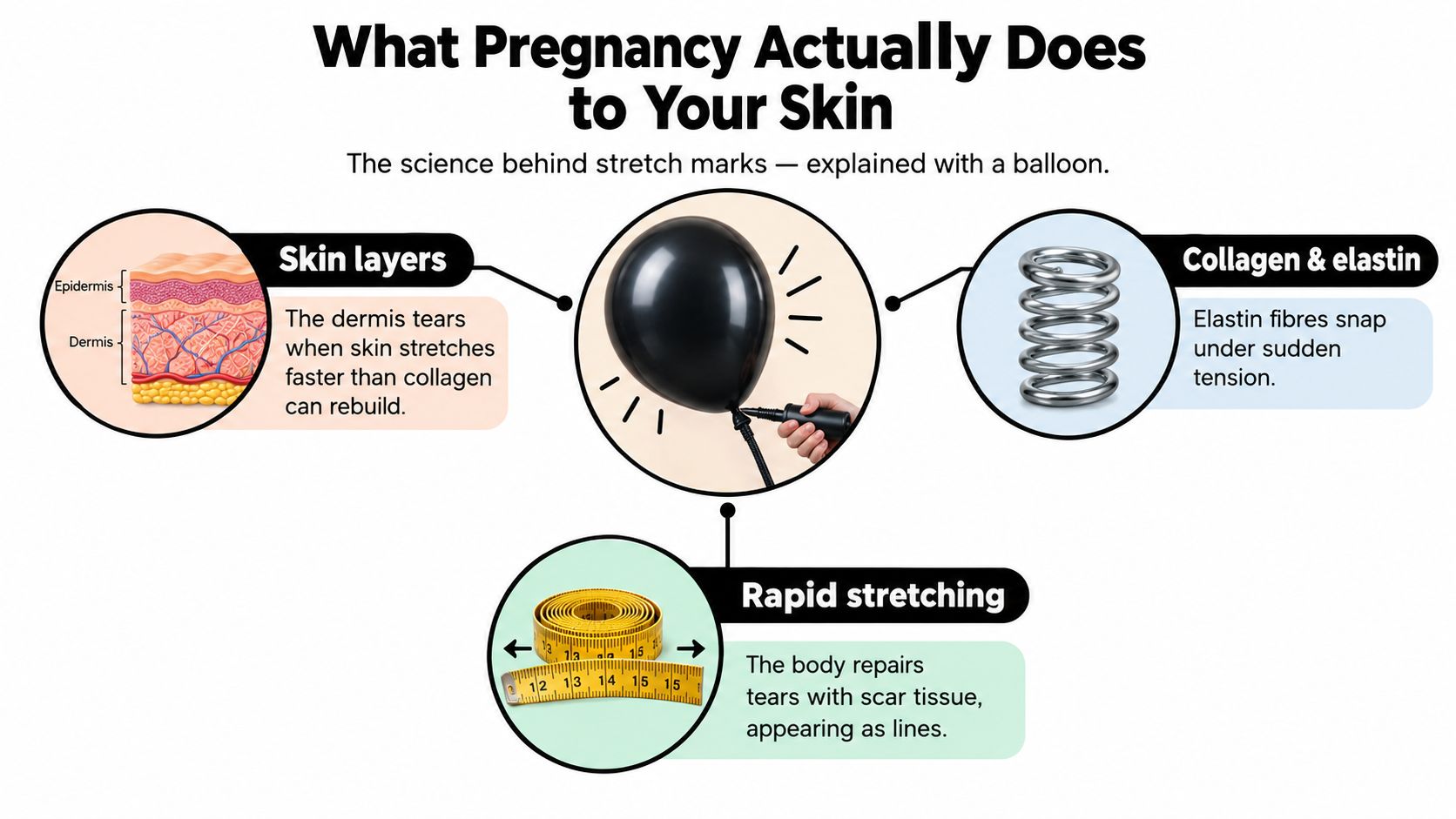
It's helpful to separate what you can do for comfort from what you can control about whether marks develop. You can choose a moisturiser that suits your skin and apply it gently if that feels good. But you can't choose your family history or switch off the hormonal and hereditary factors the NHS identifies as contributors.
The guide to what causes pregnancy stretch marks can help make sense of the changes without framing them as a skincare failure. The practical takeaway is simple: stretch marks aren't just a surface-level dryness issue, so hydration may support comfort without guaranteeing that marks won't appear.
What the Evidence Really Says About Prevention
A cream may feel lovely on your bump, but that doesn't mean it prevents stretch marks. The evidence for prevention is limited. A Cochrane review summarised in the British Journal of General Practice included six trials involving 800 participants and found no statistically significant overall reduction in stretch-mark development with active topical preparations compared with placebo or no treatment. The review summary in the British Journal of General Practice also describes limited and methodologically weak evidence for several topical approaches.
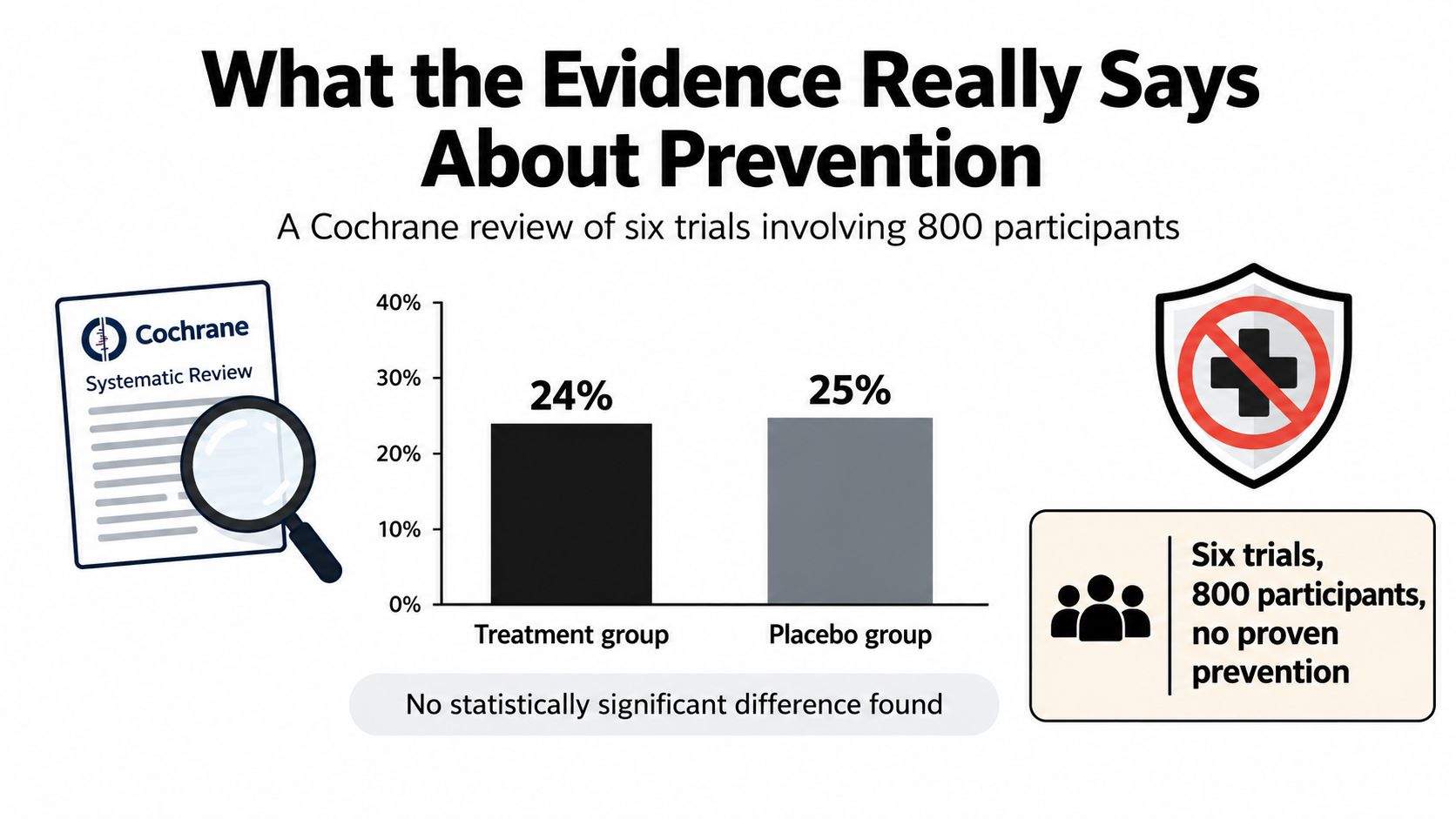
That evidence doesn't make moisturising pointless. It means you should judge a product by realistic benefits, such as helping dry skin feel softer or easing tightness and itch, rather than expecting it to stop marks from forming. The same review found no clear benefit for reducing severity in the smaller group of trials that assessed it.
Be cautious with claims that a particular oil, butter or massage technique will prevent marks. The evidence described in the review found that cocoa butter and olive oil didn't prevent stretch marks or reduce their severity, while evidence for other ingredients was limited. A comforting routine can still be part of caring for yourself, just not a promise that your skin won't change.
If you'd prefer to hear the topic discussed aloud, you can use this video as another way to explore pregnancy skincare:
Your Pregnancy-Safe Ingredient Triage
When you're pregnant, skincare labels can raise questions, particularly if a product is marketed for acne or anti-ageing as well as stretch marks. You don't need to treat every unfamiliar ingredient as a danger. But if a product contains a medicinal or active ingredient, check before using it rather than relying on a general product roundup.
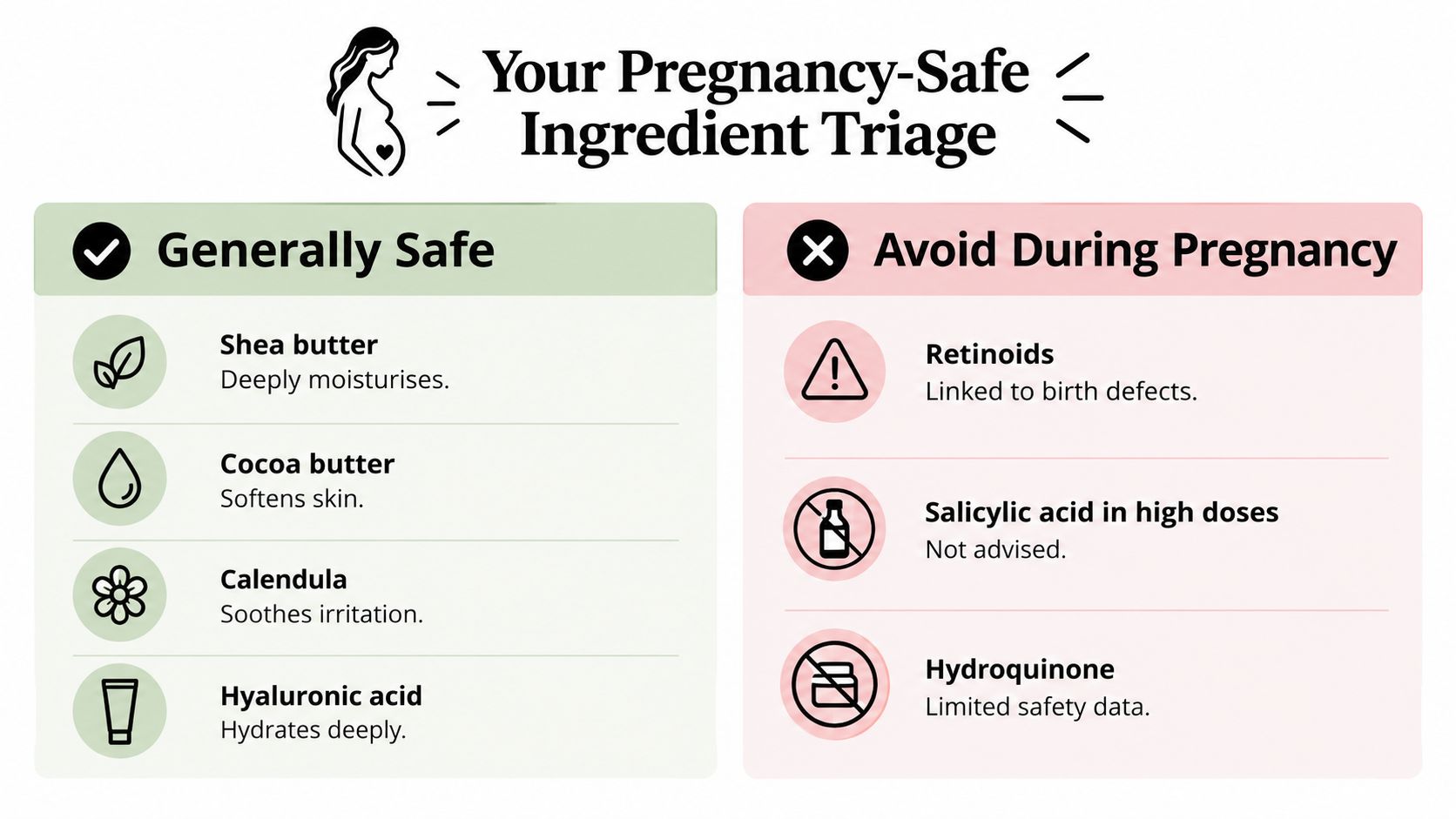
Retinoids need particular care. These include ingredients such as tretinoin and retinol, which may appear in some skincare products. UK Government guidance says topical retinoid exposure is thought to be negligible, but risk cannot be excluded; as a precaution, topical retinoids are contraindicated during pregnancy. The UK Government's retinoid safety guidance explains the precaution. If you're already using a product and spot a retinoid on its label, stop and ask your midwife, GP or pharmacist for advice.
For a basic moisturising routine, choose a product that feels comfortable on your skin and follow its directions. Do not assume an ingredient is suitable because it is natural, or unsuitable because its name sounds unfamiliar. If you use acne products, have an imported cosmetic with unclear labelling, or are not sure what a product contains, ask a pharmacist or clinician to check it with you. The pregnancy skincare ingredient guide can be a starting point, but personal advice is best for a specific product.
If you're unsure, pause: Keep the product label or take a clear photo of its ingredients, then ask a midwife, GP or pharmacist before using it.
Building a Gentle Daily Bump Care Routine
A routine doesn't need to be elaborate to feel good. Try a lukewarm shower, then apply a simple moisturiser while your skin is still comfortable and easy to reach. Use a light touch, especially if your skin feels sensitive or itchy.
You can choose a cream, oil or butter based on the texture you enjoy and whether it suits your skin. The evidence doesn't establish these products as reliable prevention, so think of them as supportive care for comfort, not treatment that will change whether marks appear. If you want to try a product with a particular active ingredient, check its suitability in pregnancy with a pharmacist or clinician.
A belly oil can be one option among other moisturisers. The Happy Bump Co's Belly Oil for Stretch Marks is made with sweet almond, argan, coconut and avocado oils and is intended for daily application to moisturise skin.
Make the routine fit your real life. You might apply moisturiser after washing, ask a partner to help with areas you can't comfortably reach, or take a moment to notice how your body feels rather than scanning for new lines. If massage feels soothing, keep it gentle; you don't need to rub hard or follow a special technique.
The point is care, not control. A repeated moment of comfort can be valuable in its own right, whether or not stretch marks develop.
Professional and Clinical Options and Timing
You may see retinoid creams, hyaluronic acid, light or laser treatments, and microdermabrasion mentioned as possible ways to improve the appearance of stretch marks. NHS-linked guidance says some of these options may improve the appearance of some marks, particularly newer ones, but it also states there's no specific medical treatment for pregnancy stretch marks. NHS 111 Wales guidance on stretch marks notes that treatments have limited effectiveness and that marks may fade without disappearing completely.
The important distinction is timing. During pregnancy, gentle topical care for comfort is the sensible default. Retinoid creams shouldn't be used in pregnancy, and any clinical procedure should be discussed with an appropriately qualified clinician rather than chosen from an online recommendation. After birth, a clinician can explain whether a treatment is suitable for your marks and circumstances.
| Treatment | During pregnancy | Postnatal / after weaning | Evidence note |
|---|---|---|---|
| Moisturiser or body oil | Can be used for skin comfort, following the label | Can continue if it suits your skin | Not proven to prevent or remove marks |
| Retinoid cream | Avoid during pregnancy | Ask a clinician whether it's appropriate | Pregnancy use is contraindicated as a precaution |
| Hyaluronic acid | Ask a clinician about the specific product or procedure | Discuss topical or clinical options with a qualified professional | Some options may improve appearance, but results are limited |
| Light or laser treatment | Discuss with a qualified clinician; don't assume it's suitable | A future option to explore with a clinician | May improve the appearance of some marks |
| Microdermabrasion | Discuss with a qualified clinician | A future option to explore with a clinician | May improve the appearance of some marks |
This isn't a promise that a procedure will remove marks. It's a way to know what's relevant now and what can wait for a proper conversation after pregnancy.
After Birth, Setting Kind Expectations
Once your baby arrives, stretch marks may gradually become paler and less noticeable. They're unlikely to disappear completely, so it's kind to yourself to allow your body time to change without making your wellbeing depend on a particular result. If you're curious about options later, guidance on stretch marks after birth can help you prepare questions for a clinician.
You don't need to seek treatment for stretch marks themselves. If you're concerned about a skin change, or want to discuss a procedure, speak with your GP or another appropriately qualified clinician. Tell them if you're breastfeeding, and ask about any product or treatment that could come into contact with your baby.
For everyday care, keep it simple: use a moisturiser that feels comfortable, be gentle with skin that's dry or itchy, and make room for the occasional pause to check in with yourself. Your marks don't need to be treated as a problem before you're allowed to care for them.
Stretch marks are a normal, harmless change, not proof that your skincare routine failed. Looking after your skin can be one small way of looking after yourself, without turning every new line into something that needs fixing.
The Happy Bump Co makes bump-focused body care, including Belly Butter, Belly Oil for Stretch Marks and Pregnancy Tummy Scrub, for moisturising and supporting changing skin during pregnancy. If a gentle daily routine sounds right for you, explore The Happy Bump Co and choose the product that suits your skin and preferences.