

You notice a new line while getting dressed. It may be a pink or purple streak across your abdomen, or a raised blue vessel behind your knee that wasn't visible before pregnancy. Both can look alarming at first, especially when you're unsure whether you're looking at a skin change or a circulation change.
Stretch marks and pregnancy veins are common, but they aren't the same thing. Stretch marks, medically known as striae gravidarum, develop in the skin's structural layer. Varicose veins involve blood vessels, usually in the legs. Knowing which change you're seeing helps you choose sensible comfort measures and recognise when a midwife or GP should assess you.
The NHS explains that stretch marks affect around 8 in 10 pregnant women, so they're a normal part of many pregnancies rather than evidence that anything has gone wrong. Pregnancy-related veins are also common, but symptoms such as one-sided swelling or persistent pain need a different level of attention. This guide puts the two changes side by side, so you can match what you see with what's happening underneath.
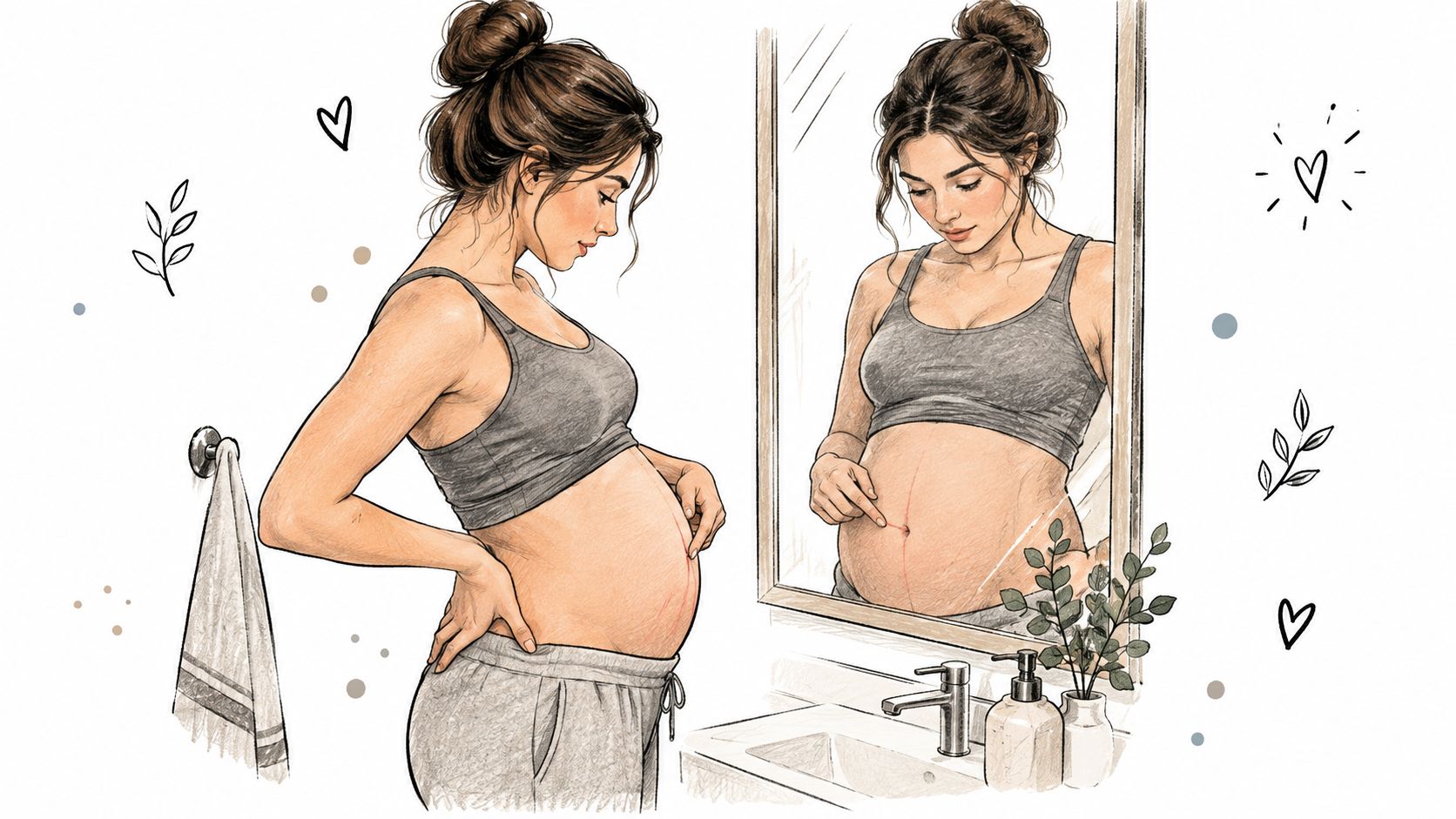
For more detail on how marks can appear beyond the bump, read this guide to pregnancy stretch marks on the legs.
Table of Contents
- Noticing a New Mark on Your Bump or Legs
- What Causes Stretch Marks During Pregnancy
- What Causes Pregnancy Veins
- Side-by-Side Comparison of the Two Changes
- Safe At-Home Care for Stretch Marks
- Safe At-Home Care for Pregnancy Veins
- When to Seek Medical Evaluation
- Putting It All Together for a Realistic Routine
Noticing a New Mark on Your Bump or Legs
A new mark on your abdomen usually looks like a line, streak or band within the skin. It may be pink, red, purple, brown or, later, paler than the surrounding area. It can feel slightly itchy or sensitive, particularly while the skin is changing quickly, but it generally lies in the same plane as the skin rather than forming a twisted, raised cord.
A vein looks different. It may appear as a blue or dark-purple vessel, with a raised, winding or branching shape. You're more likely to notice it on the legs, behind the knees or around the vulva. A cluster of fine lines can be a spider-vein pattern, while larger, rope-like vessels are more consistent with varicose veins.
Two changes, two systems
Stretch marks reflect change in the dermis, the supportive middle layer of the skin. The skin expands as the abdomen, breasts or other areas grow, while pregnancy hormones affect connective tissue. A vein change reflects the way blood travels back towards the heart. Pregnancy increases the demands on that system, and the growing uterus can make return flow from the legs more difficult.
That difference matters when choosing care. A moisturiser, belly butter or oil may make stretching skin feel more comfortable, but it isn't a treatment for an enlarged vein. Likewise, elevating your legs may ease heaviness from veins, but it won't alter a stretch mark's structure.
A useful first check: a flat streak that follows the direction of skin stretching is more likely to be a stretch mark. A blue or purple vessel that looks raised, twisted or branching is more likely to be vein-related.
You can have both changes at once. For example, you might develop stretch marks across the lower abdomen and notice visible veins on your calves during the same pregnancy. The two should be considered separately, even when they appear during the same stage.
What Causes Stretch Marks During Pregnancy
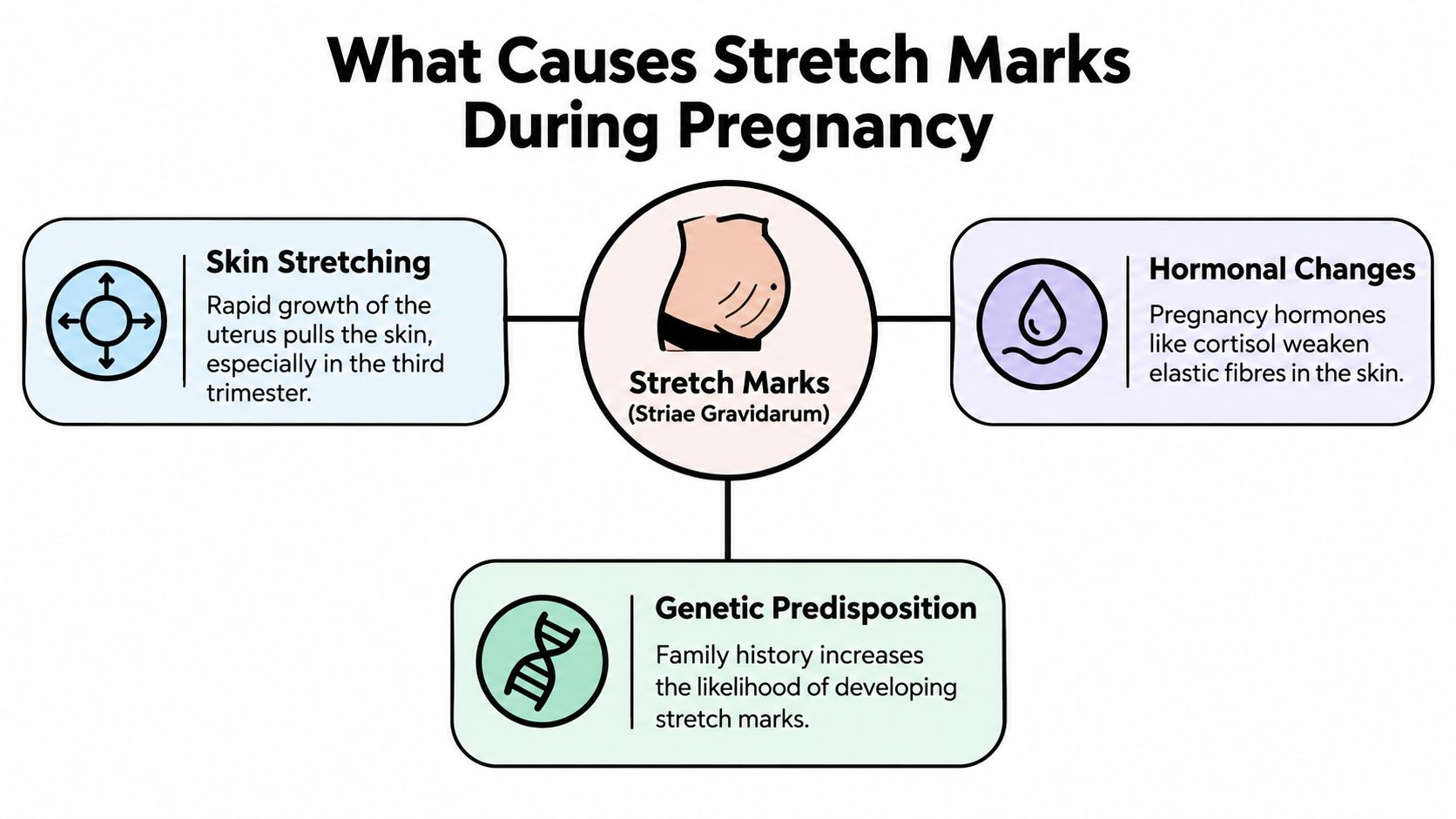
Stretch marks form when the skin's supportive structure has to adapt to rapid expansion. Pregnancy brings together physical stretching, hormonal influence and individual susceptibility. These factors vary from person to person, which is why one woman may develop several visible marks while another develops few or none.
The three influences behind striae gravidarum
Skin stretching is the most obvious part of the process. As the uterus grows, the abdomen expands, and the breasts, hips and thighs may also change shape. The skin's deeper supporting fibres have to accommodate that movement. When the pace of change exceeds how readily those fibres adapt, streaks can become visible at the surface.
Hormonal changes also affect how connective tissue behaves. Pregnancy alters the skin's structure and elasticity, so the same amount of physical stretching may affect one person differently from another. The skin doesn't need to be damaged by an accident or injury for a stretch mark to appear.
Genetics and skin type influence likelihood and appearance. Family patterns can matter, and the colour of a new mark may look different against different skin tones. The NHS describes stretch marks as narrow streak-like lines that may be pink, red, purple or brown, depending on skin colour.
Where they appear and what happens afterwards
The usual areas are the abdomen, breasts, hips, thighs and buttocks. They can first appear as coloured streaks, then gradually become lighter and less noticeable after birth. That fading is biological and gradual. A topical product can't guarantee that marks won't form or make them disappear overnight.
Stretch marks aren't usually harmful and don't generally cause medical problems. Their presence doesn't indicate that your baby is unwell. New marks can itch, especially when the surrounding skin is dry or tight, but significant or persistent itching should be discussed with your maternity team because not every itchy pregnancy rash is a stretch mark.
What Causes Pregnancy Veins
Pregnancy veins develop through changes in the circulation rather than breaks or lines in the skin. The veins carry blood back towards the heart, and pregnancy places extra demands on that return journey. Hormones, circulating blood volume and the physical position of the growing uterus all contribute.
Why veins become more visible
Pregnancy hormones can relax the walls of veins, allowing them to stretch more readily. The circulatory system also handles increased blood volume, which places additional work on the veins. As the uterus grows, it can press on pelvic vessels and slow the return of blood from the legs.
The result may be an enlarged, twisted or visibly raised vein. Varicose veins most often appear in the legs, although pregnancy-related veins can also develop around the vulva. Smaller spider veins tend to look like fine red, blue or purple branching lines and usually sit flat against the skin.
How they may feel
Vein changes may be visible without causing discomfort, but some women notice aching, heaviness, swelling, itching or a tired feeling in the legs. Symptoms can become more noticeable after standing for a long time, later in pregnancy or in warm conditions because blood return is already under greater strain.
UK clinical guidance estimates that varicose veins affect about 40% of pregnant women, and NICE recommends giving pregnant women information about pregnancy's effect on varicose veins. Most pregnancy-related varicose veins aren't serious and often improve within a few months after birth, although they may be less likely to disappear completely after successive pregnancies.
The key distinction is practical. These are vascular changes, so bump oils and stretch mark creams aren't positioned as treatment for them. Circulation measures, symptom monitoring and medical advice are more relevant.
Side-by-Side Comparison of the Two Changes
The easiest way to compare stretch marks and veins is to look at shape, location, sensation and texture, rather than colour alone. Early stretch marks can be pink, red or purple, while veins can also appear red, blue or purple. Colour by itself can't identify the cause.
| Feature | Stretch Marks | Pregnancy Veins |
|---|---|---|
| Appearance | Wider streaks or narrow bands in the skin, often following a roughly parallel direction | Blue or dark-purple raised, twisted vessels, or fine branching spider veins |
| Texture | May feel slightly raised when new or become paler and softer over time | Larger veins can feel raised or rope-like, while spider veins generally remain flat |
| Common locations | Abdomen, breasts, hips, thighs and buttocks | Legs, especially the lower legs, and sometimes around the vulva |
| Sensation | May itch or feel sensitive as the skin stretches | May cause aching, heaviness, swelling, itching or discomfort |
| Body system | Change in the skin's supportive structure | Change in superficial blood vessels and venous return |
The NHS describes the typical locations of stretch marks and pregnancy-related varicose veins, which helps explain why an abdominal streak and a raised calf vessel call for different responses.
When the picture isn't obvious
Some marks overlap visually. Redness on the abdomen may be confused with irritation, and fine spider veins may be hard to distinguish from a coloured skin line without looking closely. A stretch mark usually follows the direction in which skin has expanded and doesn't look like a branching network. A vein follows the path of a vessel and may appear more blue, purple or web-like.
Don't diagnose a painful or swollen area from appearance alone. If a new mark comes with significant discomfort, warmth, one-sided swelling or skin damage, treat it as a reason to seek clinical advice rather than as a cosmetic concern.
Safe At-Home Care for Stretch Marks
Stretch mark care during pregnancy should focus on comfort, moisture and consistency, not promises of prevention or removal. A moisturiser can reduce the tight, dry feeling that makes expanding skin uncomfortable. It can't reliably control the deeper biological factors that determine whether marks form.
Build a simple skin routine
Apply a gentle, pregnancy-suitable moisturiser to the abdomen, breasts, hips and thighs after bathing, when the skin still feels slightly hydrated. Use slow, comfortable strokes rather than vigorous rubbing, especially if the skin is tender or itchy. If a product stings, causes redness or makes itching worse, stop using it and ask your midwife, GP or pharmacist for advice.
A belly butter can suit someone who prefers a richer texture, while a body oil may feel easier to spread over a larger area. The important choice is a formula you can use comfortably and consistently, with ingredients suitable for pregnancy and without ingredients you prefer to avoid.

Keep expectations grounded
Stretch marks may fade after birth and become less noticeable, but no cream or oil can promise that they won't appear. The NHS notes that they may remain as paler scars, so a product should be judged by whether it supports skin comfort and makes your routine pleasant, not by an unrealistic cure claim.
You can compare textures and ingredients in this practical guide to oils for stretch marks. The Happy Bump Co's Belly Butter and Belly Oil for Stretch Marks are examples of bump-focused products designed to moisturise changing skin on areas such as the belly, breasts and thighs.
Try not to turn skincare into a test you can fail. Applying a product regularly may support comfort, but developing marks isn't evidence that you used the wrong product or didn't care for your skin properly.
Safe At-Home Care for Pregnancy Veins
Vein-related care starts with supporting circulation, not treating the surface of the skin. Small daily changes can reduce the amount of time blood spends pooling in the legs and may make heaviness or swelling easier to manage.
Make movement part of the day
Avoid standing still for prolonged periods where possible. If your routine involves sitting, change position regularly and avoid crossing your legs for long stretches. When you rest, raise your legs so they're supported rather than left hanging down.
Walking, swimming and antenatal foot exercises are practical options when your maternity team says they're suitable for you. Gentle movement helps the calf muscles contribute to blood return from the lower legs. It won't make an existing vein vanish, but it can support comfort while your body is managing pregnancy-related pressure.
NHS guidance also recommends these circulation measures and explains that compression stockings may help symptoms. Choose compression hosiery with appropriate fit and advice from a healthcare professional, particularly if swelling is significant or you have another circulation condition.
Know what compression can and can't do
Compression hosiery may ease leg swelling and discomfort, but it doesn't prevent varicose veins. It should feel supportive, not painfully tight, and a poor fit can make wearing it unpleasant. Ask your midwife, GP or pharmacist for guidance if you're unsure which type is appropriate.
Invasive treatment is generally avoided during pregnancy because many pregnancy-related veins improve after delivery. A belly oil or butter can still be part of a soothing self-care ritual, but it won't correct slowed venous return or treat a raised vessel. Persistent symptoms deserve clinical assessment rather than increasingly frequent product application.
When to Seek Medical Evaluation
Most stretch marks and pregnancy veins are benign, but not every new leg symptom should be filed under “normal pregnancy”. The difference is often found in how the area feels, whether the change is one-sided and whether the skin around it is changing.
Contact your maternity team or GP promptly if you notice
- Persistent or worsening pain: A painful vein or leg that doesn't settle with rest needs assessment.
- One-sided swelling: Noticeably greater swelling in one leg is more concerning than mild, symmetrical swelling.
- Heat or redness: Warmth, redness or tenderness tracking along a vein should not be managed as a cosmetic issue.
- Skin damage around the ankle: Discolouration, irritation or changes in the skin around the ankle warrant medical advice.
- Possible thrombosis: If you suspect a blood clot, seek urgent medical help rather than waiting to see whether elevation or compression improves it.
- Severe vulval discomfort: Varicose veins around the vulva can occur in pregnancy and should be discussed if they cause substantial pain or interfere with daily activities.
These signs don't mean you have a serious condition, but they do mean that self-care has reached its limit. A clinician can decide whether you need examination, monitoring or further investigation.
When itching needs a closer look
Stretch marks can itch as skin becomes tight and dry. However, rapidly spreading or intense itching, especially when there isn't a typical streak-like appearance, should be reported to your midwife or GP. Pregnancy has several causes of itching and rash, so it's safer not to assume every itchy patch is a developing stretch mark.
Likewise, a mark that changes quickly, becomes very painful or looks unlike the surrounding stretch marks deserves review. You don't need to wait until symptoms become severe before asking for help. Describe when the change began, where it is, whether it's one-sided and whether you have swelling, warmth or pain.
Putting It All Together for a Realistic Routine
Stretch marks and pregnancy veins are both common biological changes. They need different kinds of care, and neither should be judged through cure promises.
A realistic routine can be simple. After bathing, moisturise the abdomen, breasts, hips and thighs if the skin feels tight or dry. Treat that step as comfort-focused body care, not insurance against stretch marks. If you develop marks, remember that their appearance doesn't reflect a failure in your routine.
For your legs, avoid long periods of standing still, take gentle walks or swim if appropriate for your pregnancy, and raise your legs when resting. Antenatal foot exercises and properly advised compression hosiery may help with symptoms. Keep a note of changes that are painful, one-sided, hot, increasingly swollen or associated with skin damage.
The two changes can coexist without one causing the other. You might use a belly moisturiser for skin comfort and circulation habits for leg heaviness on the same day. If you're interested in the relationship between skin support and collagen production, keep the same boundary in mind: skincare can support the skin's feel and appearance, but it isn't a treatment for venous disease.
Common questions
Can a stretch mark cream help pregnancy veins?
No. It may moisturise the skin over a visible vein, but it won't change the vein or improve blood return. Use circulation measures for vein symptoms and seek advice if warning signs appear.
Will pregnancy varicose veins go away?
They often improve within a few months after birth, although some may remain, particularly after successive pregnancies. A persistent or troublesome vein should be discussed with a healthcare professional.
Do stretch marks or veins mean something is wrong with the baby?
On their own, these are common pregnancy-related changes and aren't an indication that your baby is unwell. Symptoms such as significant pain, one-sided swelling or suspected thrombosis need medical assessment because they concern your health, not because they predict a problem with the baby.
Can I have both at the same time?
Yes. Stretch marks affect the skin, while pregnancy veins affect blood vessels. Identify each change by its appearance and sensation, then use the appropriate care for that body system.
The Happy Bump Co offers pregnancy-focused Belly Butter and Belly Oil for Stretch Marks to moisturise and support changing skin on areas such as the belly, breasts and thighs. Visit The Happy Bump Co to explore bump care that can make daily skin comfort part of your pregnancy routine.