

You're halfway through pregnancy, or perhaps well into the third trimester, and your bump has started to feel different. The skin across your abdomen may feel tight after a shower, dry by bedtime and unexpectedly itchy when your baby seems to be growing fastest. It's natural to search for tummy butter for stretch marks and hope that a rich cream can keep your skin comfortable while protecting it from visible changes.
That hope needs a realistic answer. Stretch marks are common during pregnancy, and NHS guidance on stretch marks says they affect around 8 out of 10 pregnant women in the UK. The same guidance says there's little evidence that creams, oils or lotions prevent stretch marks from forming. A tummy butter can still have a worthwhile role, but its strongest purpose is usually hydration, comfort, itch relief and a soothing daily ritual, not a promise of mark-free skin.
A comfort-first approach
Think of your tummy butter as a moisturising treatment for changing skin. It can help your bump feel softer and less tight, make massage more comfortable and give you a quiet moment to connect with your changing body. It can't reach deep enough to reverse the dermal changes that create stretch marks, and no honest product should guarantee prevention or removal.
This guide looks at what tummy butter is, how it differs from oils and lotions, which ingredients deserve attention, and how to build a gentle routine. It also considers how to choose a pregnancy-safe formula in the UK, particularly if your skin has become more reactive to fragrance or richer textures.
Table of Contents
- A comfort-first approach
- Introduction to Tummy Butter for Stretch Marks in Pregnancy
- What Tummy Butter Is and How It Differs From Other Bump Products
- How Tummy Butter Supports Stretch Mark Prone Skin
- Key Ingredients to Look For in a Pregnancy Safe Tummy Butter
- How to Use Tummy Butter for Best Results
- How to Choose the Right Tummy Butter and Why The Happy Bump Co Belly Butter Fits
- Final Thoughts on Caring for Your Bump With Tummy Butter
Introduction to Tummy Butter for Stretch Marks in Pregnancy
A growing bump can make ordinary skincare feel suddenly inadequate. A lightweight body lotion that worked well before pregnancy may disappear quickly, leaving the abdomen feeling dry again soon afterwards. An oil may spread beautifully but still leave you wanting a more cushioned layer, especially across the sides of the bump, hips, breasts or thighs.
Tummy butter is designed for this kind of body care. Its thicker texture gives you time to massage it over the skin, while its richer base helps reduce the feeling that moisture has vanished as soon as you get dressed. For someone dealing with evening itchiness, tightness or flaky patches, that sensory difference can matter more than a dramatic label claim.
A realistic goal: choose a product that helps your skin feel comfortable, nourished and supple, rather than one that promises to prevent every stretch mark.
Stretch marks develop when the deeper dermis is placed under stress as the body changes. The surface can be moisturised and supported, but a butter can't guarantee that deeper tissue won't change. That doesn't make daily application pointless. It means success should be judged by how your skin feels, how easily you can maintain a routine and whether the product suits your pregnancy needs.
UK readers also have a useful reason to take a calm approach. NHS advice recognises how common stretch marks are while cautioning against prevention claims. That combination supports a more helpful form of pregnancy skincare, one centred on barrier care and comfort instead of anxiety.
A good routine might happen after your shower, before bed or whenever your bump feels particularly tight. The act of warming butter between your palms and applying it slowly can become a small pause in a busy day. You're caring for changing skin, not trying to control every change pregnancy brings.
What Tummy Butter Is and How It Differs From Other Bump Products
Tummy butter is a rich, balm-like moisturiser made to sit comfortably on areas that are stretching and becoming dry. It commonly has a thicker feel than a lotion because it contains a higher proportion of solid butters and oils. You'll usually apply it to the abdomen, but the same approach can suit the hips, thighs and breasts when those areas feel tight.
A simple kitchen comparison helps. A lotion is like milk, light and easy to spread, but it may need frequent reapplication on very dry skin. An oil is like olive oil, fluid, slippery and useful for massage, but it doesn't always provide the cushioned finish some people want. A butter is closer to softened butter, dense enough to form a richer layer and melt as it warms against your skin.
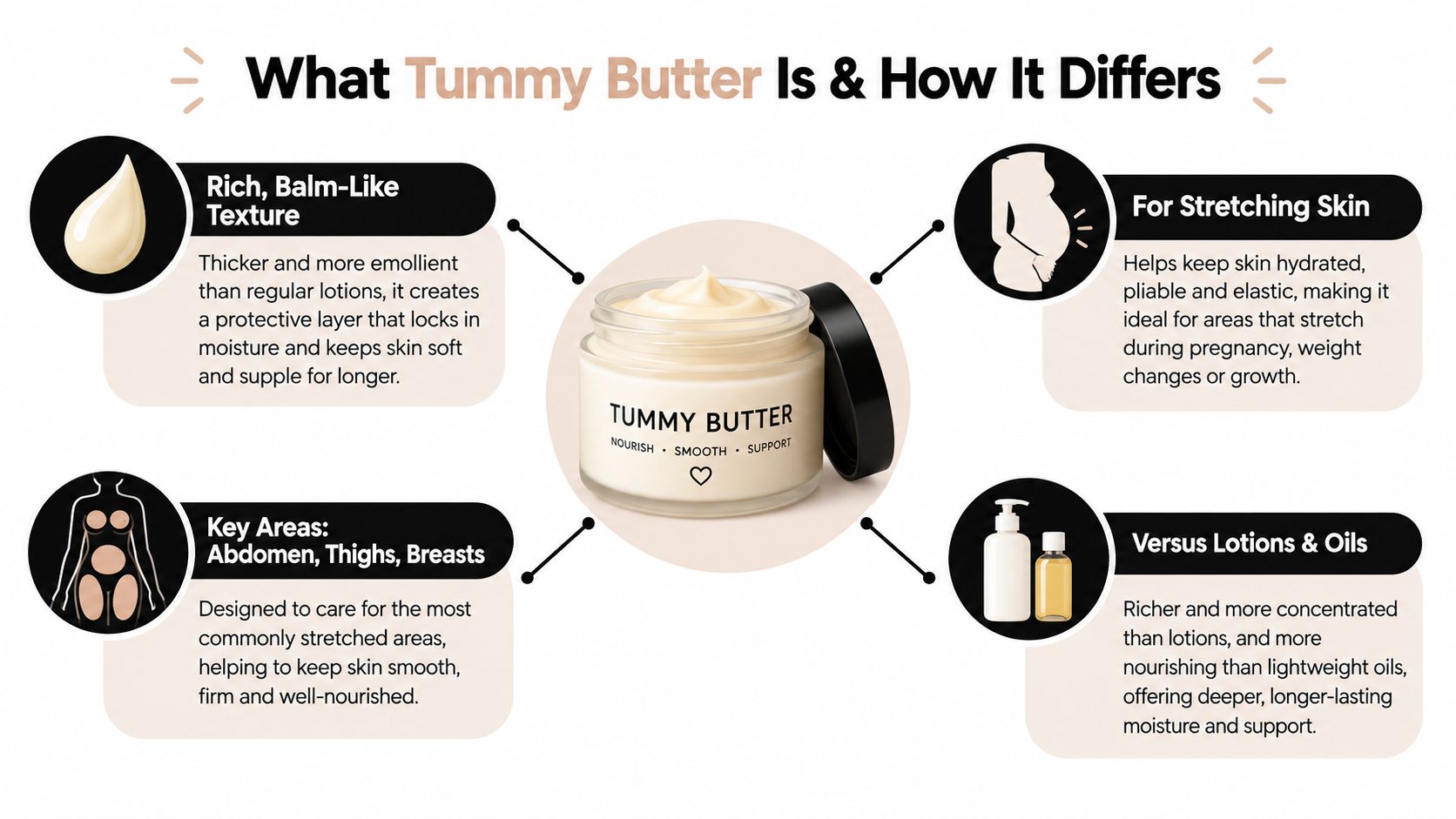
Why texture affects bump care
The best format depends on your skin and your habits. If your abdomen feels persistently dry, a thicker butter may feel more comforting than a fast-absorbing lotion. If you dislike residue or need to dress immediately, you may prefer a lighter cream or use a smaller amount of butter.
Texture also changes with temperature. A butter can feel firm in a cool bathroom and softer in warm hands. Rather than scooping out a large amount and rubbing hard, take a small portion, press it between your palms and let it soften before applying.
Oils and butters can complement one another. An oil gives you slip for gentle massage, while a butter can provide a richer finishing layer. You don't need to use both, though. A product you enjoy using consistently is more useful than a complicated routine you avoid.
Choosing by skin feel
Look for a formula that spreads without tugging. A product that drags over the skin may encourage vigorous rubbing, which can worsen irritation when pregnancy has made your skin sensitive. On the other hand, an overly fluid product may feel insufficient if your bump becomes dry again quickly.
A practical test is to apply a small amount to clean skin and notice how it feels after several minutes. You're looking for softness without stinging, comfortable slip without excessive greasiness and enough richness to keep the skin feeling supported.
How Tummy Butter Supports Stretch Mark Prone Skin
Pregnancy can change the abdomen quickly. As the bump expands, the deeper dermis experiences tension beneath the outer epidermis. Stretch marks form within that deeper structure, so applying moisturiser to the surface can't reverse or reliably prevent the underlying tearing.
The NHS explains that stretch marks are common in pregnancy and that rapid skin expansion and weight changes can make them more likely. Its guidance also says there's little evidence that creams, oils or lotions prevent them, which is why tummy butter should be framed as supportive skincare rather than a prevention treatment.
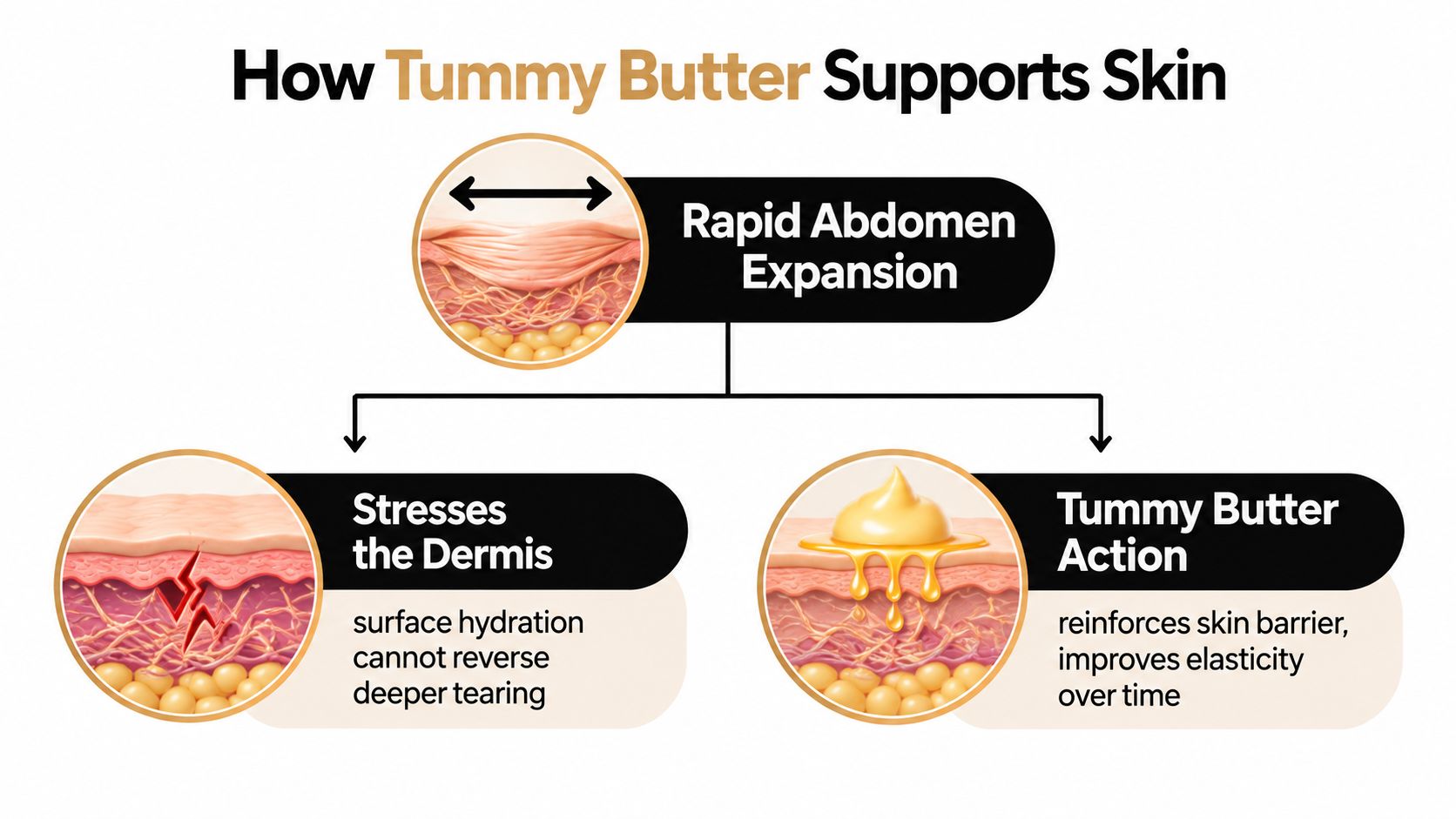
What hydration can do
Hydration still matters. A well-moisturised skin barrier can feel softer and more flexible at the surface, which may reduce the uncomfortable sensation of pulling as the abdomen grows. Rich emollients smooth roughness, while occlusive ingredients help slow moisture loss from the outer layer.
That benefit is practical rather than cosmetic. You may notice less flaking, reduced tightness after bathing and less temptation to scratch itchy areas. The butter isn't repairing a dermal tear. It's helping the skin you can reach feel calmer and better conditioned.
NHS Wales describes hyaluronic acid as a more pregnancy-compatible topical option for moisture retention and improved epidermal flexibility, while warning that retinoid creams shouldn't be used during pregnancy. The distinction is important. Moisture retention can support surface comfort, but it shouldn't be presented as the same thing as removing or preventing stretch marks.
Massage as a soothing ritual
Massage adds a sensory benefit. Slow, light movements help distribute the product evenly and give you a chance to notice dry or irritated areas. The purpose isn't to force the butter into deeper tissue. Pressing too firmly can make sensitive skin feel worse.
Use broad circles across the abdomen and gentle strokes around the sides of the bump. You can include the hips, breasts and thighs if those areas feel dry, but stop if the skin becomes sore, hot or more irritated.
Let comfort define the result. If your skin feels less tight and your routine gives you a calm moment each day, the product is doing something useful even if stretch marks still appear.
Stretch marks may be pink, red, purple or brown, depending partly on skin tone, and they can appear on the tummy, thighs and breasts. A formula shouldn't be judged only by whether it reduces redness. Comfort, softness and compatibility with your skin matter across a wider range of appearances.
Key Ingredients to Look For in a Pregnancy Safe Tummy Butter
Ingredient lists can look intimidating, but you don't need to memorise every cosmetic term. Start by asking what the formula is meant to do. For pregnancy bump care, the most useful categories are emollients for softness, humectants for water retention and barrier-supporting ingredients for reducing moisture loss.
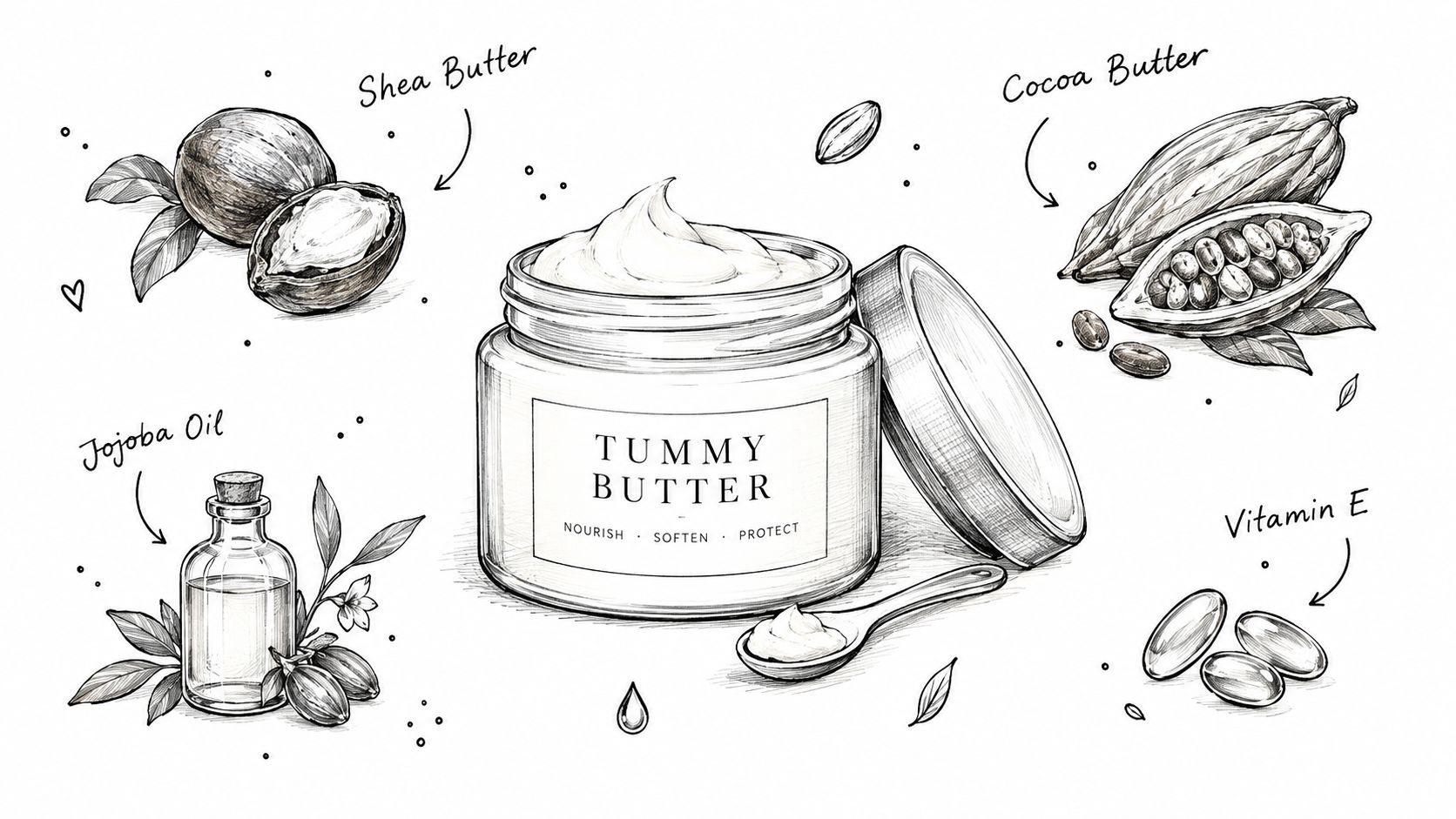
Shea butter and cocoa butter are familiar rich emollients. They help smooth the outer skin and create the buttery texture many people want from a bump product. Plant oils such as jojoba or sunflower oil can add slip, making application easier when the skin feels tight.
Moisture-binding ingredients
Humectants attract and hold water in the outer layers of the skin. Glycerin is a common example, while hyaluronic acid is another ingredient used to support moisture retention. NHS Wales identifies hyaluronic-acid products as a more pregnancy-compatible option among the topical treatments discussed in its guidance, linking their role with moisture retention and improved epidermal flexibility. Read the guide to body butter ingredients alongside the product's own ingredient list so you can understand the formula rather than relying only on front-label promises.
Hyaluronic acid doesn't make a product a guaranteed stretch-mark treatment. It can help the surface feel hydrated, which is especially welcome when the bump feels tight or itchy. A formula that combines a humectant with richer oils or butters may feel more balanced than one that relies on only one type of moisturising ingredient.
Vitamin E and ceramides may also appear in a barrier-focused formula. Vitamin E is often used as a conditioning antioxidant, while ceramides are skin-identical lipids that help support the outer barrier. Their presence doesn't prove that a product will prevent marks, but they can fit a sensible comfort-first approach.
Ingredients to treat carefully
Pregnancy changes the standard for ingredient choices. NHS Wales notes that retinoid creams shouldn't be used in pregnancy, even though they may help new stretch marks outside pregnancy. Check labels for terms associated with vitamin A derivatives, and ask your midwife, GP or pharmacist if you're uncertain about a product.
Fragrance also deserves attention. A scented butter may be pleasant for one person and uncomfortable for another, particularly if nausea or sensitivity is part of pregnancy. Fragrance-free options can be a sensible choice for reactive skin, while essential oils should be considered individually rather than assumed to be automatically gentle.
Patch-test a new product on a small area first, especially if your skin is already itchy or irritated. Stop using it if you develop burning, swelling or a persistent rash, and seek medical advice if symptoms continue.
How to Use Tummy Butter for Best Results
A simple routine is easier to maintain than a complicated one. You can start using a pregnancy-safe moisturiser when your abdomen begins to feel dry or tight, or earlier if you want to establish the habit. Starting earlier doesn't guarantee prevention, but it gives you time to find a texture and scent your skin accepts.
Apply the butter to clean skin, ideally after bathing while the surface is still slightly damp. Damp skin gives the product a more comfortable surface to spread across, and you won't need to rub as firmly to cover the area.
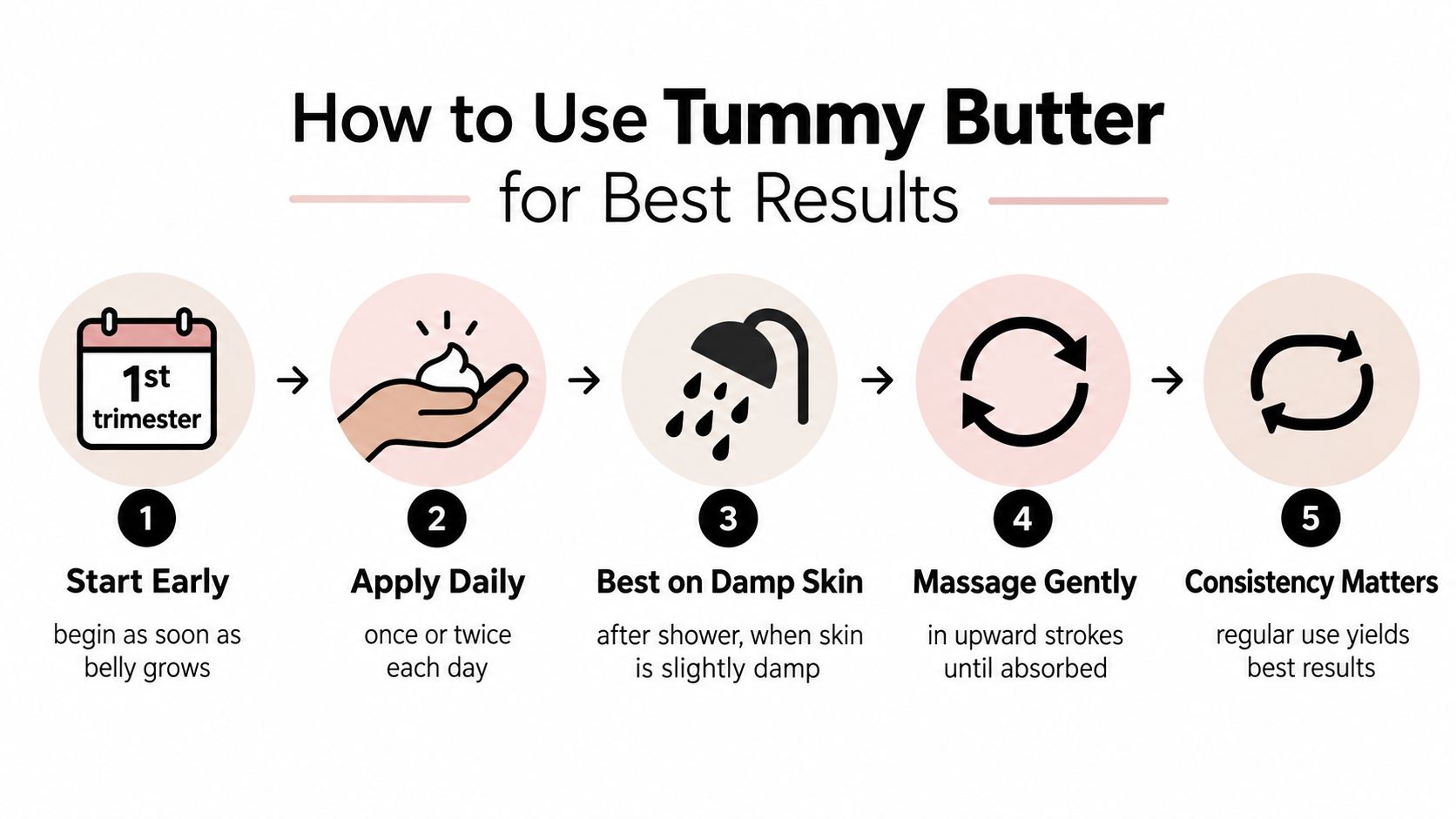
A gentle application method
- Warm a small amount. Place a little butter in your palms and press your hands together until it softens. This helps prevent dragging across the skin.
- Cover the full area. Work over the front and sides of the bump, then include the hips if they feel dry. Extend the routine to the breasts and thighs when needed.
- Use slow movements. Massage in broad circles or light upward strokes. Keep the pressure comfortable, particularly where the skin feels itchy or tender.
- Give it time to settle. Allow the butter to absorb before putting on close-fitting clothing. If it feels too rich during the day, reserve it for an evening routine.
The guide to using body butter can help you adapt the technique to your preferred texture. If you like layering, apply a thin layer of belly oil first, allow it to settle, then add butter over particularly dry areas. You don't need to layer products if one formula already gives you enough comfort.
Here's a short visual guide you can use to reinforce the application sequence:
Avoid common mistakes
Rubbing harder won't make the butter work deeper. Using far more product won't change the biology of stretch marks either, and may leave clothing greasy. Apply enough to leave the skin comfortable, then adjust the amount according to the weather, your skin and how quickly the product absorbs.
Judge the routine over time by changes in dryness, tightness and itch, rather than expecting an overnight visual difference. If itching becomes severe, widespread or associated with a rash, contact your maternity care team instead of assuming it's ordinary stretching.
How to Choose the Right Tummy Butter and Why The Happy Bump Co Belly Butter Fits
Choosing a tummy butter becomes easier when you separate comfort requirements from marketing promises. You might want a dense balm for very dry skin, a lighter texture for daytime or a fragrance-free formula because scents now feel overpowering. A product should also have clear usage instructions and an ingredient list you can check.
| Criteria | What to Look For | What to Avoid |
|---|---|---|
| Pregnancy-safe formulation | Clear ingredients and guidance suitable for pregnancy | Retinoids or unclear active ingredients |
| Hydration level | Humectants, oils, butters or barrier-supporting ingredients | Claims that confuse hydration with prevention |
| Texture and absorption | A finish you'll use consistently | A formula that drags, stings or feels uncomfortably greasy |
| Scent sensitivity | Fragrance-free or a mild scent you tolerate | Strong fragrance or essential oils that irritate you |
| UK-made credentials | Transparent information about manufacturing | Unclear origin or unsupported quality claims |
| Ritual appeal | Packaging and texture that make daily use pleasant | A product you avoid because application feels like a chore |
A UK survey of women using anti-stretch-mark products found that 46.7% developed stretch marks during their current pregnancy, while 48.1% of primigravida women and 45.9% of multigravida women developed them during the pregnancy studied, as reported in this UK pregnancy skincare survey summary. The similar figures for first-time and experienced mothers reinforce a useful point: this isn't an issue that only affects people in their first pregnancy.
Weighing a product's practical fit
A formula can be beautifully rich yet unsuitable if it aggravates sensitivity. Conversely, a lightweight butter may suit someone who wants quick absorption but feel inadequate for someone whose skin remains dry after applying lotion. Read the ingredients, consider how your skin behaves and choose a product you can use regularly.
The Happy Bump Co Belly Butter is one UK-made, bump-focused option for daily nourishment and comfort. You can view the The Happy Bump Co Pregnancy Belly Butter and compare its format with your needs, including whether you prefer a dedicated butter or want to build a routine with a belly oil or scrub.
No product can remove the uncertainty around stretch marks. The better decision is a formula that supports your skin barrier, feels pleasant during application and avoids claims that go further than the evidence.
Final Thoughts on Caring for Your Bump With Tummy Butter
A tummy butter can be a valuable part of pregnancy skincare without being a guaranteed stretch-mark solution. Its practical strengths are surface hydration, softness, reduced tightness and relief from the uncomfortable feeling of dry, itchy skin. Those benefits deserve attention because comfort affects how you sleep, dress, move and feel in your body.
The most useful routine is gentle and repeatable. Apply the butter to slightly damp skin after bathing, warm it in your hands and massage it over the bump without pressing hard. Include the hips, breasts or thighs if they feel dry, and change the amount or timing if the finish doesn't suit your clothing or daily schedule.
Ingredient choices should support that aim. Rich plant butters and oils can soften the outer layer, humectants can help retain moisture, and barrier-supporting ingredients can make skin feel more conditioned. Avoid retinoids during pregnancy, as NHS Wales advises, and treat fragrance as a personal tolerance issue rather than a mark of quality.
Stretch marks may still appear, even when you've followed a thoughtful routine. That isn't a sign that you've failed or neglected your skin. Pregnancy changes the deeper structure of the skin, and a moisturiser can support comfort without controlling every biological outcome.
Your bump doesn't need to remain unchanged to be cared for. It needs a routine that feels kind, safe and realistic.
Choose a pregnancy-safe tummy butter that you'll enjoy applying, then give yourself permission to treat the ritual as more than a cosmetic task. Slow massage can become a quiet moment of connection, whether you're preparing for the day, winding down at night or sharing the routine with a partner.
The Happy Bump Co offers UK-made bump care, including Belly Butter, Belly Oil for Stretch Marks and Pregnancy Tummy Scrub, to support hydration and comfort during pregnancy and beyond. Visit The Happy Bump Co to explore the range and choose a gentle daily ritual for your changing skin.