

You catch your reflection while changing your baby and notice your belly button doesn't look like it used to. Perhaps it's flatter, more stretched, or suddenly protrudes. That can feel unsettling, but a changed navel is often part of how the skin and abdominal wall have adapted to pregnancy. What matters is distinguishing gradual changes in appearance from symptoms that deserve a clinician's attention.
Table of Contents
- Why Your Belly Button Looks Different After Pregnancy
- The Most Common Visible Changes to the Navel
- How to Tell If It's Diastasis Recti at the Navel
- Warning Signs That Need a Clinician, Not a Cream
- A Gentle Daily Care Routine for the Navel Area
- Rehab and Cosmetic Options Worth Considering
- Your Postpartum Belly Button Checklist and Common Questions
Why Your Belly Button Looks Different After Pregnancy
During pregnancy, your abdomen makes room for your growing baby. As the uterus expands, the abdominal wall and the skin over it stretch. The connective tissue running down the middle of the abdomen, called the linea alba, can widen as the two central abdominal muscles move apart. The navel sits in this changing tissue, so its appearance can reflect changes happening both at the skin's surface and deeper in the abdominal wall.
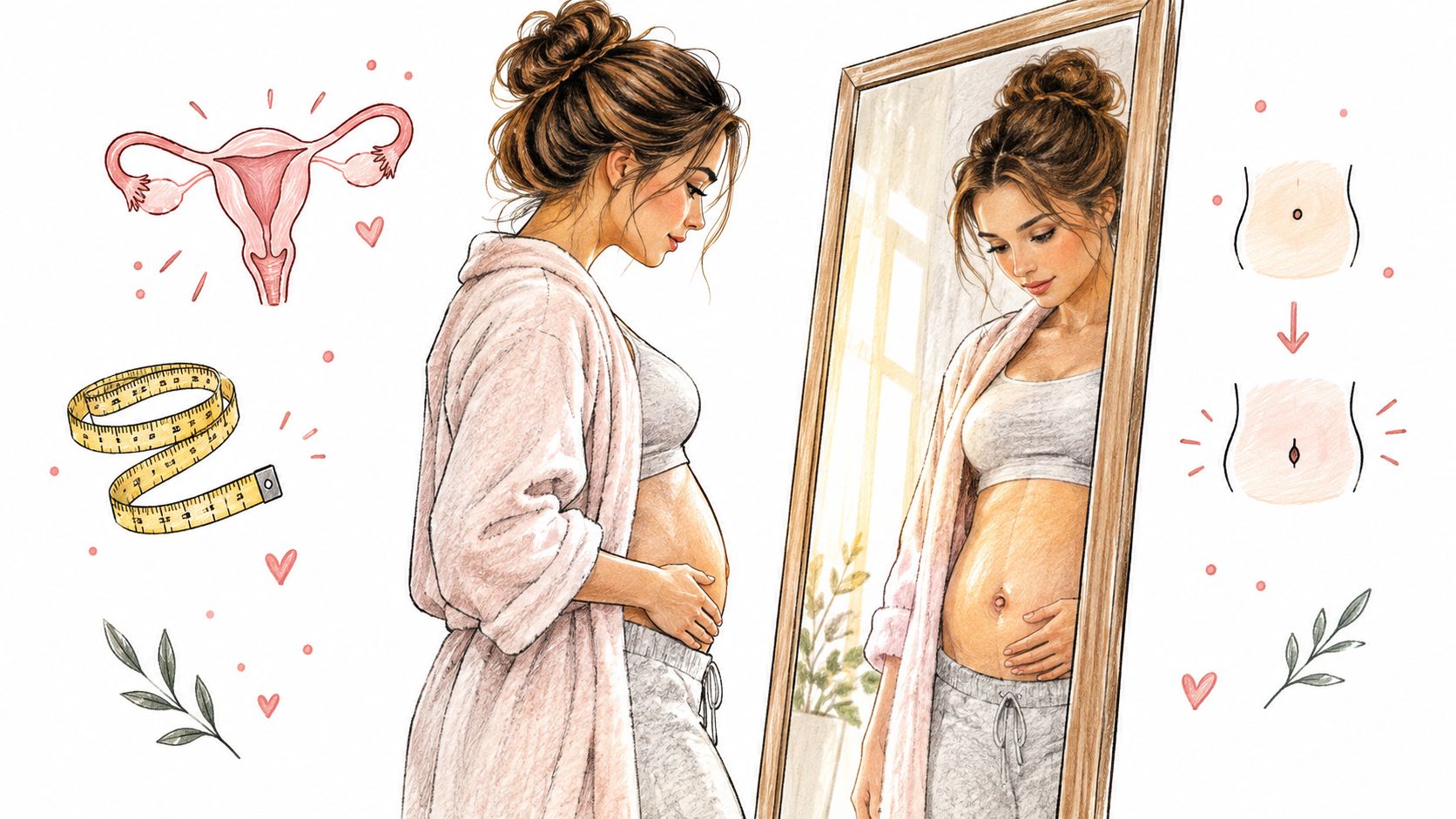
The belly button is the scar left where the umbilical cord attached before birth. It's part of the abdominal wall, not a separate piece of skin that can be pulled back into its old shape. As the abdomen stretches, the navel and the surrounding skin stretch with it. After birth, the uterus and abdomen begin to reduce, but the skin and connective tissue may take longer to adapt.
Pregnancy-related hormonal changes also affect the body, including the skin. Together with the physical stretching of the abdomen, they can contribute to changes in colour, texture and firmness around the navel. The amount of change varies from person to person, and the navel may look different even when recovery is progressing normally.
The abdominal muscles can also remain separated and lengthened after birth. This separation is known as diastasis recti, or divarication. It can affect the way the area around the navel looks and feels, but a change in appearance alone doesn't tell you whether you have diastasis recti or another condition. A protruding navel can have more than one explanation, which is why symptoms and how the area changes over time matter.
Think of the navel as a visible marker within tissue that has stretched. It can show changes at the surface, but it may also sit over changes in the abdominal wall. That doesn't make every new shape a medical problem. It does mean that skin care and assessment of the underlying muscles are different things.
The Most Common Visible Changes to the Navel
A post-pregnancy navel may look unfamiliar without being a sign that something is wrong. These common changes can help you describe what you're seeing and decide whether it's changing gradually or needs a closer look.
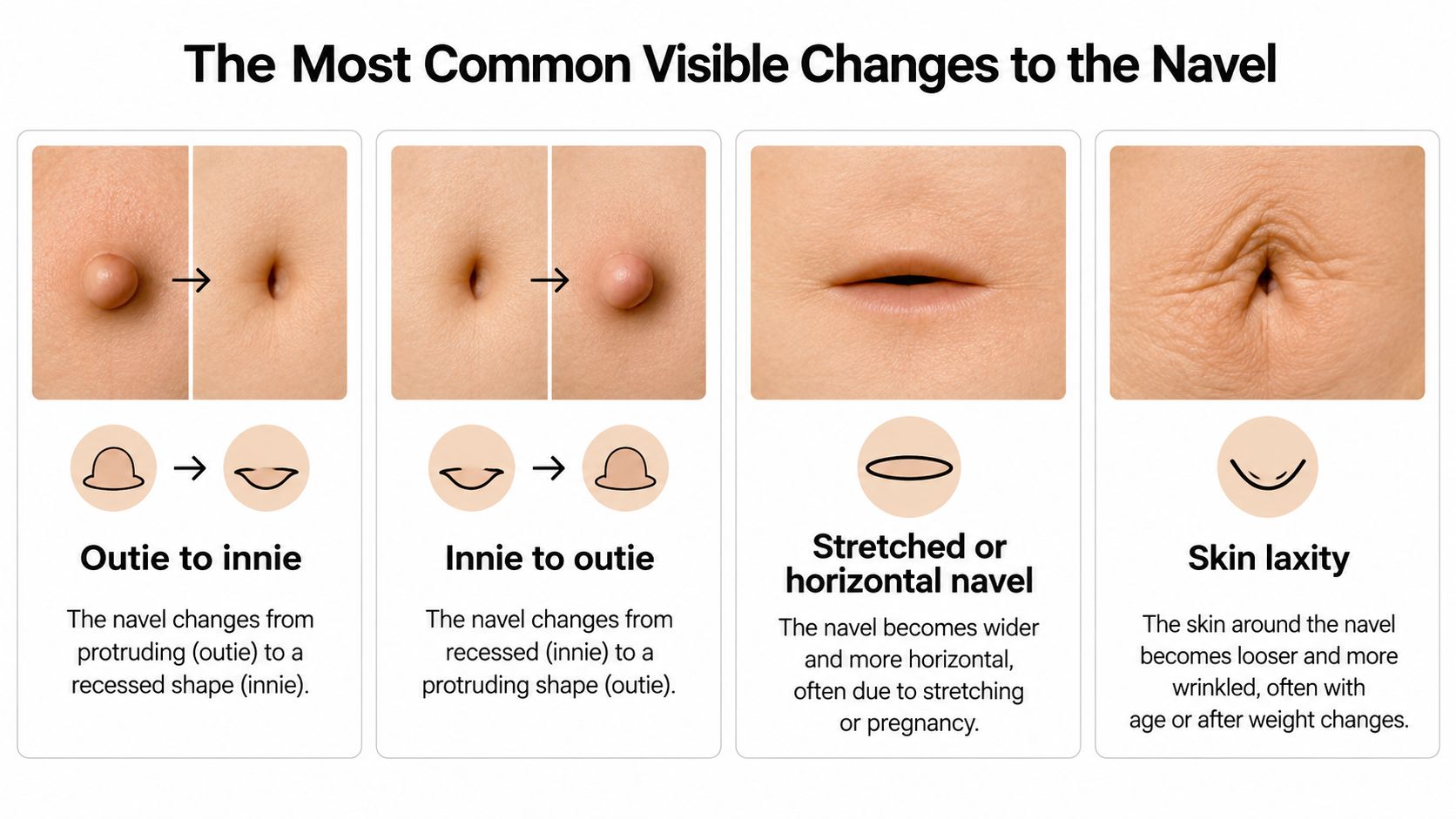
A navel that changes from in to out, or out to in
As the abdomen stretches and then changes shape after birth, a navel that was an innie may become more prominent, or an outie may appear flatter. Pregnancy-related stretching can alter the shape of the opening and the surrounding skin. The change may settle as your body recovers, though there isn't one timeline or final shape that applies to everyone.
A flat or horizontal shape
Some navels look wider, flatter or more horizontal after pregnancy. This can happen as the skin and abdominal wall stretch around the navel. The shape may continue to change as the abdomen adapts after birth, but creams can't restore the underlying tissue to its previous position.
Loose or crepey skin
Skin around the navel may look looser, wrinkled or softer than before. Stretch marks can appear on the tummy as the bump grows. The NHS says they affect around 8 out of 10 pregnant women and result from stretching in the middle layer of the skin, the dermis (NHS guidance on pregnancy stretch marks). After birth, marks can fade and become less noticeable, but they probably won't disappear completely. They're harmless and don't cause medical problems.
For more on what to expect as marks change after birth, see this guide to stretch marks after birth.
Darker skin around the navel
The skin around the navel may look darker after pregnancy, including along the vertical line down the middle of the abdomen, known as the linea nigra. Pigment changes can be part of pregnancy-related skin changes. Colour may gradually fade after birth, but the timing and degree of change vary.
How to Tell If It's Diastasis Recti at the Navel
The appearance of your navel can prompt a useful question: does the area also feel weak, or does the middle of your abdomen bulge when you move? A gentle self-check can give you a sense of what's happening, but it can't confirm a diagnosis.
A gentle check at home
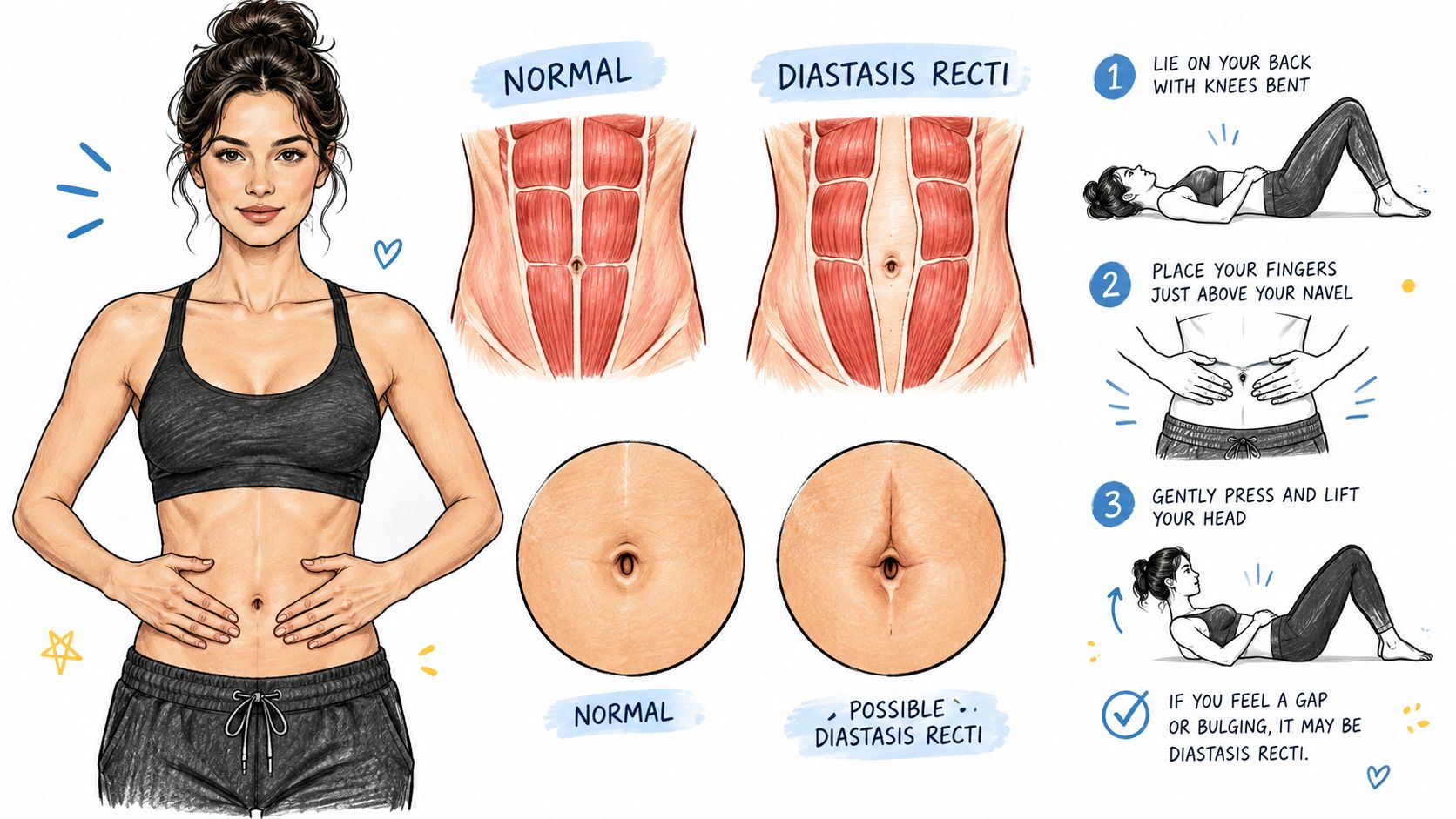
Lie on your back with your knees bent and feet resting on the floor. Relax your abdomen, then gently lift your head and shoulders as if beginning a small crunch. With your fingertips, feel along the midline of your abdomen, checking above and below the navel as well as at its level. You're feeling for a gap between the two sides of the abdominal muscles, not trying to force them together.
The NHS notes that some separation is common during or after pregnancy and is usually about two finger widths (NHS guidance on your post-pregnancy body). If you notice a wider gap, or the gap remains obvious around 8 weeks after birth, contact your GP for advice. The NHS also recommends seeking advice when separation remains obvious at that point, as it may be associated with abdominal discomfort or a greater risk of back problems.
A central ridge or doming that appears when you lift your head, sit up or strain can be another reason to ask for an assessment. The area around the navel is a useful place to check because the muscles may remain lengthened and weaker there after birth. Don't use the size of a gap alone to decide what treatment you need.
This check is only a screening check, not a diagnosis. A GP or postnatal physiotherapist can assess your abdominal wall, consider your symptoms and advise on next steps. Stop if the movement causes pain or feels uncomfortable.
If you're unsure what you're seeing, this video may help you follow the movement and hand placement:
Warning Signs That Need a Clinician, Not a Cream
You're rubbing moisturiser into the skin around your navel and your fingertip finds a tender spot that wasn't there last week. Skin comfort is one thing. A painful lump, spreading redness or discharge sits in a different category, one that no amount of cream will settle. The useful question isn't "how does it look?" but "what is the tissue underneath doing?"
Signs to get checked
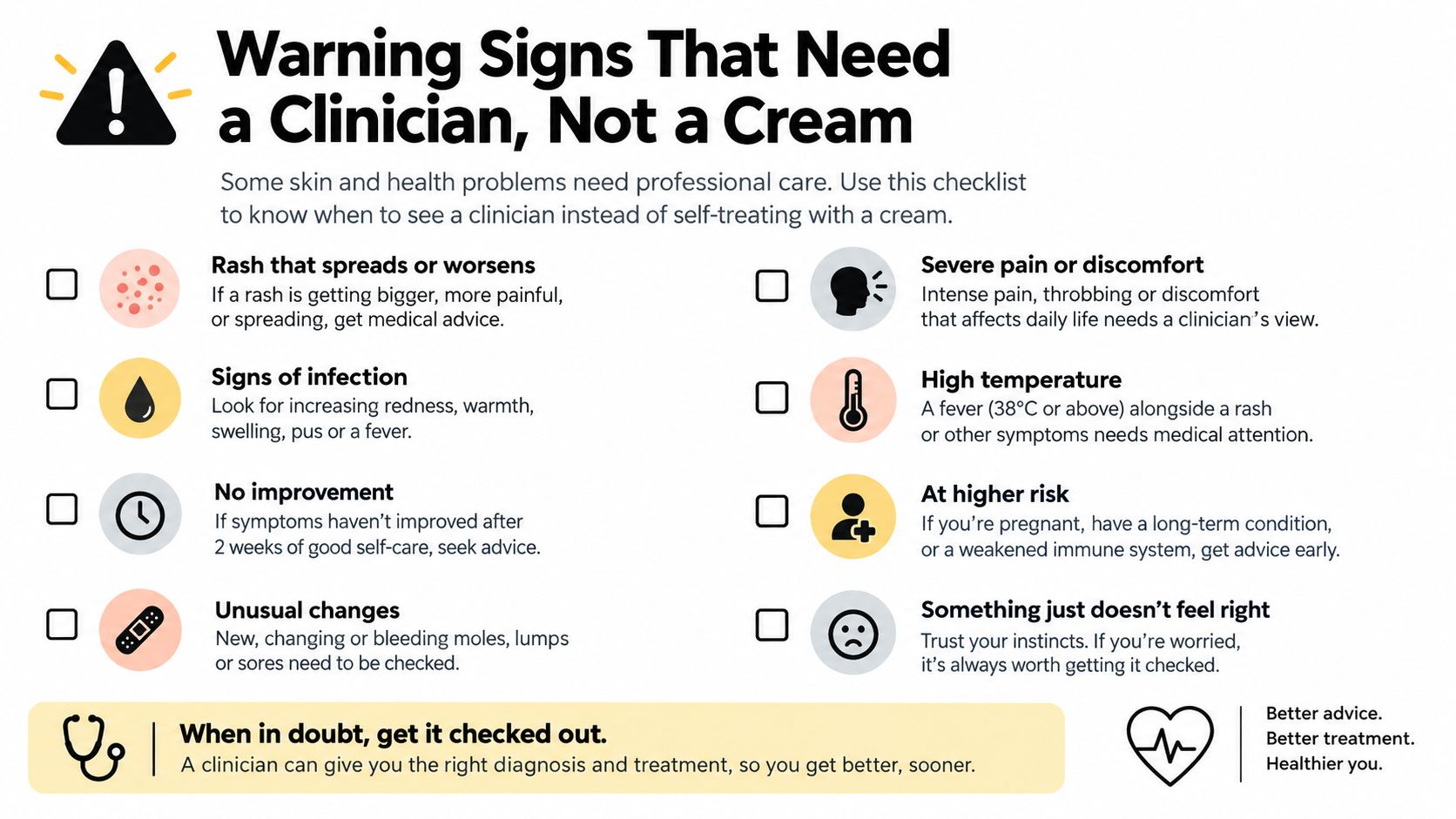
Contact your midwife, health visitor or GP if you notice:
- A distinct lump: a discrete lump at the navel, particularly if it's painful, increasingly tender or becoming firmer, should be assessed. A soft bulge that only appears when you move or strain can also merit advice.
- Worsening pain: a sore or tender abdomen that's getting worse deserves attention rather than more massage or another product.
- Skin changes: redness, swelling, heat, discharge or bleeding around the navel need medical advice. Seek prompt help if these appear with fever or tummy pain.
- Symptoms around a caesarean wound: increasing redness, swelling, pain or discharge from the wound can indicate infection. Contact your midwife or GP rather than applying products to the area.
A protruding navel doesn't automatically mean you have a hernia. Diastasis recti is a widening of the abdominal muscles and isn't an abdominal hernia, while a distinct lump can have another cause entirely. Appearance alone can't tell you which one you're looking at, so let a clinician feel the area, consider your symptoms and decide whether anything else needs checking.
A check that turns out fine is still a good outcome.
Stop using products and seek help if pain, heat, redness, swelling, bleeding or discharge is worsening. Contact your midwife or GP, or NHS 111 if you need urgent advice and it isn't an immediate emergency. For severe or rapidly worsening symptoms, use emergency services.
Gentle care can support comfort, but it shouldn't delay medical advice. If itching or irritation is your main concern, this guide to itching skin after pregnancy may help you tell the difference between skin discomfort and symptoms that need checking.
A Gentle Daily Care Routine for the Navel Area
If the skin is intact and you don't have warning signs, keep navel care simple. The aim is to clean gently and reduce dryness or discomfort. A routine can support the skin, but it won't reverse a stretched navel or repair muscle separation.
Start with warm water and a mild, fragrance-free wash. Clean the navel gently with your fingertips, then rinse away any residue. Avoid digging into the area or scrubbing folds of skin, which can irritate already sensitive tissue.
Pat the area dry with a clean towel, paying attention to any folds where moisture may collect. Then, if your skin feels dry, apply a small amount of a moisturiser or body oil to the surrounding skin. Choose a product suitable for your needs, and stop using it if it stings or causes a rash.
Gentle massage may feel soothing on comfortable, intact skin. Keep the pressure light and avoid massaging a painful lump, broken skin, a healing caesarean wound or an area that's hot, red or swollen. Don't use massage to try to push a protruding navel back in.
Stretch marks around the abdomen can be included in the same gentle routine. The NHS notes that stretch marks are harmless and that there isn't a specific medical treatment that reliably removes them, so think of moisturising as skin comfort rather than a promise of removal.
| Do | Don't |
|---|---|
| Clean with warm water and a fragrance-free wash. | Scrub hard or use harsh, perfumed products on stretched skin. |
| Pat dry carefully, especially in skin folds. | Apply products to broken skin or a healing wound without clinical advice. |
| Moisturise surrounding skin if it feels dry. | Expect oil or cream to change the navel's structure. |
| Stop and seek advice if symptoms worsen. | Massage a painful or increasingly firm lump. |
For broader advice on caring for changing abdominal skin, read this guide to postpartum belly skin care.
Rehab and Cosmetic Options Worth Considering
A moisturiser can calm dry skin around your navel. It cannot close a gap in the abdominal wall or settle a hernia, so match the option to the problem a clinician has named.
Physiotherapy and postnatal core rehabilitation
If assessment confirms diastasis recti or ongoing weakness, a postnatal physiotherapist can watch how your abdomen manages pressure while you breathe, lift, roll, feed and get out of bed. Rehabilitation usually comes before any surgical conversation, and the work is practical: coordination first, then graded strength, then a return to exercise that does not make doming, leaking or pain worse.
Pilates-based rehabilitation may fit some recoveries, although it still needs to be adapted to symptoms. A class is not the right place to investigate a new lump.
If appearance is the main concern, ask which layer is driving it: stretched skin, fat distribution, a muscle gap or a hernia. Each has a different route. Skin-only change may soften with time and comfort care, while texture treatments can be discussed for selected concerns without any promise of restoring the pre-pregnancy navel.
Surgery addresses different problems
An umbilical hernia repair is considered only when a clinician diagnoses a hernia and advises repair. A protruding navel alone is not a diagnosis.
Abdominoplasty, often called a tummy tuck, may be discussed for persistent excess skin or contour change after recovery has had time to settle. It carries its own suitability checks, recovery demands and risks, and specialist repair decisions tend to wait until healing, family plans and symptoms are clear.
Skin care supports comfort. Rehabilitation targets function. Surgery is reserved for selected structural problems.
Your Postpartum Belly Button Checklist and Common Questions
A practical checklist
- Notice the pattern: Is the change gradual, or is there a distinct new lump, pain or worsening skin change?
- Check function gently: Look for central doming or a gap, but treat a home check as a prompt for advice, not a diagnosis.
- Care for intact skin: Clean gently, pat dry and moisturise if needed.
- Escalate symptoms: Contact a clinician for a tender lump, worsening pain, redness, swelling, heat, discharge, bleeding or fever.
Common questions
Will my outie go back to an innie? It may change as your abdomen recovers, but no one can predict the final shape from appearance alone. A new or painful lump should be assessed rather than treated as a cosmetic change.
Will loose skin disappear? Skin can soften and change over time, but a precise timeline isn't possible to promise. Stretch marks may fade without disappearing completely.
Can belly oil make my navel look as it did before pregnancy? Oil can support comfort on dry, intact skin. It can't reverse changes in the abdominal wall or reliably restore the navel's previous shape.
When might a protruding navel be a hernia? You can't confirm that at home. A distinct, painful or increasingly firm lump needs assessment by a GP or another appropriate clinician.
The Happy Bump Co makes UK-made pregnancy skincare, including Belly Butter and Belly Oil for Stretch Marks, to nourish and support changing skin. If a gentle daily routine would help you care for dry or stretched skin, explore The Happy Bump Co .